
Bath bombs turn an ordinary soak into something special, the fizz, the colour, the fragrance. But if your skin tends to react to, well, everything, that fizzy luxury can quickly become a red, itchy nightmare. So, are bath bombs safe for sensitive skin? The short answer: it depends entirely on what's inside them.
As makers of handmade bath products here at Coorong Candle Co., we spend a lot of time thinking about ingredients. We craft our bath bombs in small batches using considered formulations, and we know first-hand that not all bath bombs are created equal. Mass-produced options often contain synthetic dyes, fragrances, and preservatives that can irritate reactive skin or throw off your skin's natural pH balance.
This guide breaks down the specific ingredients that commonly cause problems, what to look for on labels, and how to choose bath bombs that won't punish your skin for wanting a moment of indulgence. Whether you've had a bad reaction before or you're just being cautious, you'll walk away with clear, practical answers.
What sensitive skin means for bath products
Sensitive skin isn't a single condition. It's a broad category that covers skin which reacts more intensely than average to external triggers, whether that's a new moisturiser, a laundry detergent, or the water you bathe in. For some people, sensitivity shows up as redness or a rash. For others, it's persistent dryness, tightness, or that crawling itch you can't quite explain. Understanding your specific type of sensitivity is the first step to making smarter choices about every product that touches your skin, including bath bombs.
Why skin sensitivity varies from person to person
Skin sensitivity can stem from a few different sources. Some people have a compromised skin barrier, meaning the outermost layer of skin doesn't hold moisture effectively or keep irritants out. Conditions like eczema, rosacea, and psoriasis fall into this category. Others experience sensitivity as a form of contact dermatitis, where the skin reacts to a specific chemical or ingredient rather than being broadly reactive. Knowing which applies to you directly shapes which ingredients you need to watch for on a label.
If your skin reacts more in the bath than it does in daily life, the issue is likely the combination of heat, prolonged water exposure, and product ingredients all working together.
How bath water itself affects your skin
Before you even drop a bath bomb in, hot water alone can strip your skin's natural oils and disrupt the moisture barrier that keeps irritants out. People with sensitive skin tend to feel this effect more strongly and more quickly than others.
Add a bath product loaded with synthetic fragrance or artificial colourants on top of that, and the result is compounded irritation that's hard to trace back to one single cause. This is why asking are bath bombs safe for sensitive skin is really a question about the full picture of what your skin encounters during a soak, not just one ingredient in isolation.
Why bath bombs can irritate sensitive skin
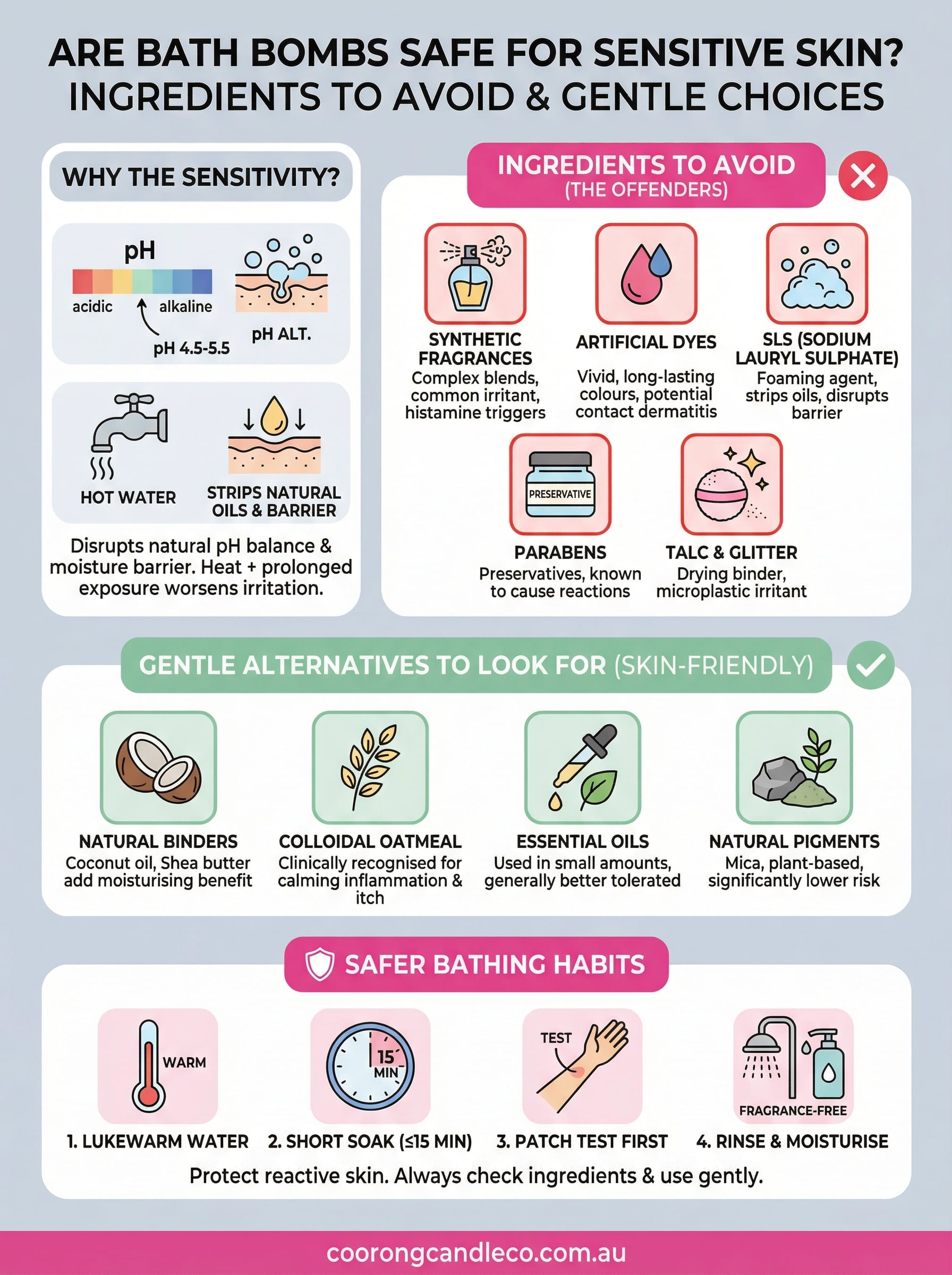
Bath bombs combine several reactive ingredients in one hit, and that combination is exactly what makes them tricky for sensitive skin. The fizzing reaction itself comes from citric acid and baking soda, two ingredients that shift the natural pH of your bath water. Your skin sits at a slightly acidic pH of around 4.5 to 5.5, and soaking in altered water for 20 minutes can disrupt that balance, leaving your skin feeling tight, dry, or reactive after you step out.
The role of fragrance and colour
Synthetic fragrance is one of the most common skin irritants found in bath products, and most commercial bath bombs contain it. These fragrances are complex chemical blends that can trigger contact dermatitis, histamine responses, or simple surface irritation in people with reactive skin. Artificial colourants are another common offender. When you ask are bath bombs safe for sensitive skin, the honest answer is that these two ingredients alone account for a significant portion of reactions.
If a bath bomb turns the water a vivid, long-lasting colour, that level of dye concentration is worth questioning before it touches your skin.
Ingredients to avoid in bath bombs
When you're asking are bath bombs safe for sensitive skin, reading the ingredient list is the most direct way to find your answer. Certain ingredients consistently show up in reactions, and learning to spot them on labels gives you real control over what your skin is exposed to.
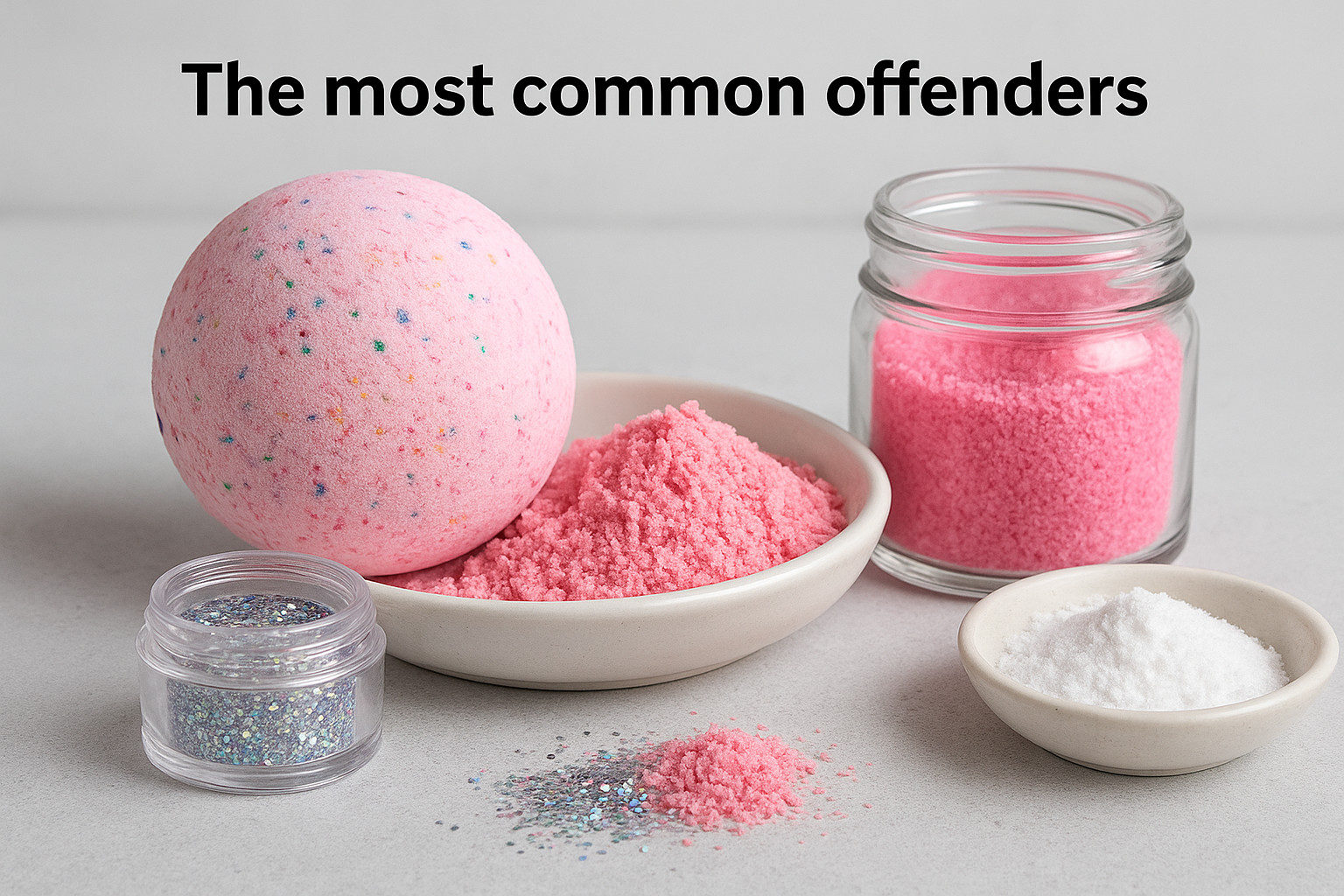
The most common offenders
Synthetic fragrances and artificial dyes top the list, as covered earlier, but there are several other ingredients worth flagging. Sodium lauryl sulphate (SLS) is a common foaming agent that strips natural oils and disrupts your skin barrier. Parabens, used as preservatives, are known to cause reactions in sensitive individuals. Talc is another ingredient to approach with caution.
If an ingredient list reads more like a chemistry exam than a food label, that's a reasonable signal to put the product back.
Glitter used in bath bombs is almost always plastic-based microplastic, and it irritates both skin and waterways. Alcohol, found in some formulations as a binder, dries skin out quickly. Checking for these specific ingredients by name before purchasing is a straightforward habit that protects your skin without requiring expert knowledge.
What to look for in gentler bath bombs
Knowing what to avoid gets you halfway there. The other half is knowing what actually supports sensitive skin rather than just tolerating it. When you're asking are bath bombs safe for sensitive skin, a genuinely good answer comes from finding products built around skin-compatible ingredients from the start. Short ingredient lists and transparent labelling are strong early signals that a product has been made with care.
Skin-friendly ingredients to prioritise
Natural binders like coconut oil or shea butter add a layer of moisturising benefit to your soak rather than stripping what's already there. Colloidal oatmeal is another standout ingredient worth seeking out. It is clinically recognised for calming inflammation and reducing itch in reactive skin, and it works well alongside other gentle emollients.
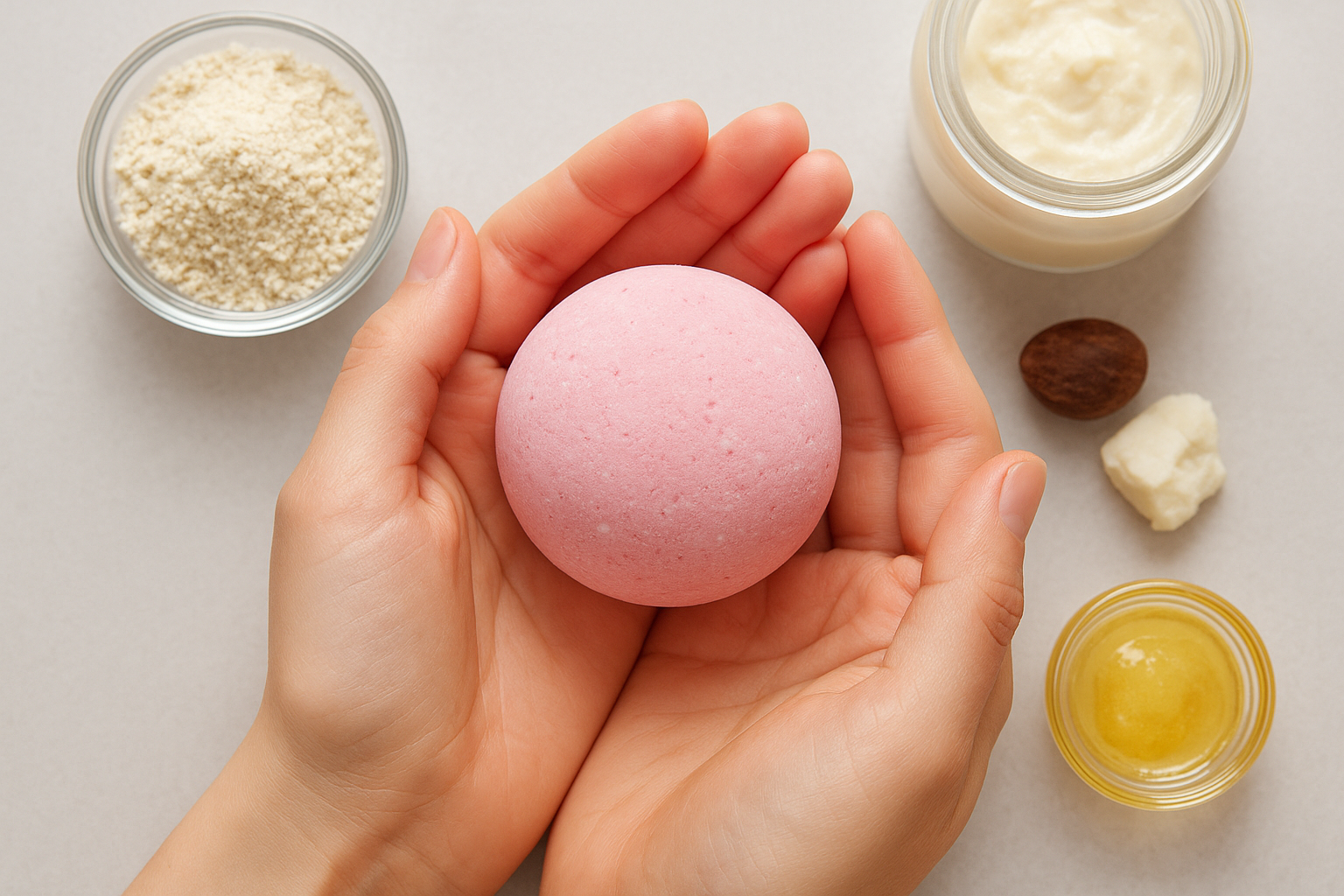
A bath bomb that leaves your skin feeling softer afterwards, rather than tighter, is doing its job correctly.
Fragrance and colour choices that matter
Essential oils used in small amounts are generally better tolerated than synthetic fragrance blends, though individual sensitivities vary. For colour, natural options like mica or plant-based pigments carry a significantly lower risk of triggering a reaction than synthetic dyes. Choosing a product with a short, readable ingredient list is one of the simplest ways to reduce your overall exposure to potential irritants.
How to use a bath bomb more safely
Even if you've chosen a bath bomb with a clean ingredient list, how you use it matters just as much as what's in it. Start with lukewarm water rather than hot water. Hot water amplifies the stripping effect on your skin's natural oils, and for sensitive skin, that extra heat turns a small irritation into a significant reaction.
Keeping your soak to 15 minutes or less gives your skin the benefit of the bath without prolonged exposure to altered water chemistry.
Test before you commit
Before you drop an entire bath bomb into a full bath, do a patch test first. Dissolve a small piece in a bowl of water and apply it to the inside of your wrist or elbow for a few minutes. This simple step answers the question of are bath bombs safe for sensitive skin far more accurately than any label ever could.
After your bath, rinse off with clean water and apply a fragrance-free moisturiser while your skin is still slightly damp. This locks in hydration and helps restore your skin barrier before it has a chance to dry out completely.
Key takeaways
Whether are bath bombs safe for sensitive skin is a question you've been asking after a bad reaction or before your first soak, the answer always comes back to ingredients and how you use them. Synthetic fragrances, artificial dyes, SLS, and parabens are the ingredients most likely to cause irritation, and most commercial bath bombs contain at least one of them. Choosing products with shorter, readable ingredient lists and skin-supportive additions like coconut oil, shea butter, or colloidal oatmeal genuinely reduces your risk.
Your habits matter just as much as the product itself. Lukewarm water, shorter soaks, and a patch test before committing to a full bath are practical steps that protect reactive skin without removing the enjoyment. Follow up with a fragrance-free moisturiser and your skin has a much better chance of feeling good after. If you're ready to try a gentler option, explore our handmade bath bombs crafted from naturally sourced ingredients.