
Lighting a candle might seem like a small act, but the benefits of aromatherapy candles go well beyond a pleasant scent. Research continues to show that specific fragrances can shift how we feel, easing tension, sharpening concentration, and helping us wind down at the end of the day. For anyone chasing a calmer, more intentional home environment, aromatherapy candles offer a surprisingly simple entry point.
At Coorong Candle Co., we hand-pour every soy candle in small batches right here in South Australia. Our fragrances are inspired by the natural landscape of the Coorong region, think coastal air, native botanicals, and open skies. We've seen firsthand how the right scent can transform a room into a genuine retreat, which is exactly why we wanted to break down the science and practical benefits behind aromatherapy candles.
Below, you'll find five evidence-backed reasons to make aromatherapy candles part of your daily routine, from stress relief and better sleep to sharper focus. Whether you're new to aromatherapy or already burning candles regularly, there's a good chance you'll walk away with a fresh perspective on what that little flame can do.
1. Lower stress with a calming scent ritual
One of the most well-documented benefits of aromatherapy candles is their ability to reduce stress quickly and without much effort. Creating a consistent scent ritual gives your nervous system a reliable signal that it's time to slow down.
Why fragrance can reduce stress in the moment
Your sense of smell connects directly to the limbic system, the part of the brain that governs emotion and memory. When you inhale a calming scent, it can lower cortisol levels and trigger a relaxation response within minutes.
Scent reaches the emotional centre of the brain faster than any other sense, which is why a familiar fragrance can shift your mood almost instantly.
Stress-soothing scent families to look for
Not all fragrances produce the same result. For stress relief, focus on calming, grounding scent families rather than sharp or intensely sweet ones. The most widely studied options include:
- Lavender: reduces anxiety and slows the nervous system
- Sandalwood and cedarwood: earthy and deeply grounding
- Bergamot: lifts anxious energy without overstimulating
How to build a simple after-work candle routine
Pick a specific transition moment, like changing out of work clothes or making a cup of tea, and light your candle at the same time each day. Your brain will start to associate that scent with relaxation, making the response faster and more automatic over time.
Choose a cleaner burn to keep the space relaxing
Paraffin candles can release synthetic chemicals and soot into the air, which works against the calm you're trying to create. Soy candles with lead-free cotton wicks burn cleaner and fill your space with fragrance without adding harsh fumes to the mix.
2. Improve sleep with a consistent wind-down cue
Poor sleep affects everything from your concentration to your mood. One of the quieter benefits of aromatherapy candles is how reliably they signal the brain that rest is near when used as part of a regular bedtime routine.
How scent and low light support a bedtime transition
Your brain responds to both fragrance and dim candlelight as cues that sleep is approaching. Combining these two signals around 30 minutes before bed helps your body begin its natural wind-down and ease away from the alertness of the day.
A consistent pre-sleep ritual can meaningfully shorten the time it takes to fall asleep.
Sleep-friendly aromas and what to avoid at night
For bedtime, choose scents that slow the nervous system rather than stimulate it. Below are the most useful options and the ones to skip:
- Good choices: lavender, chamomile, cedarwood, sandalwood
- Avoid at night: citrus, peppermint, eucalyptus
Timing, burn length, and where to place the candle
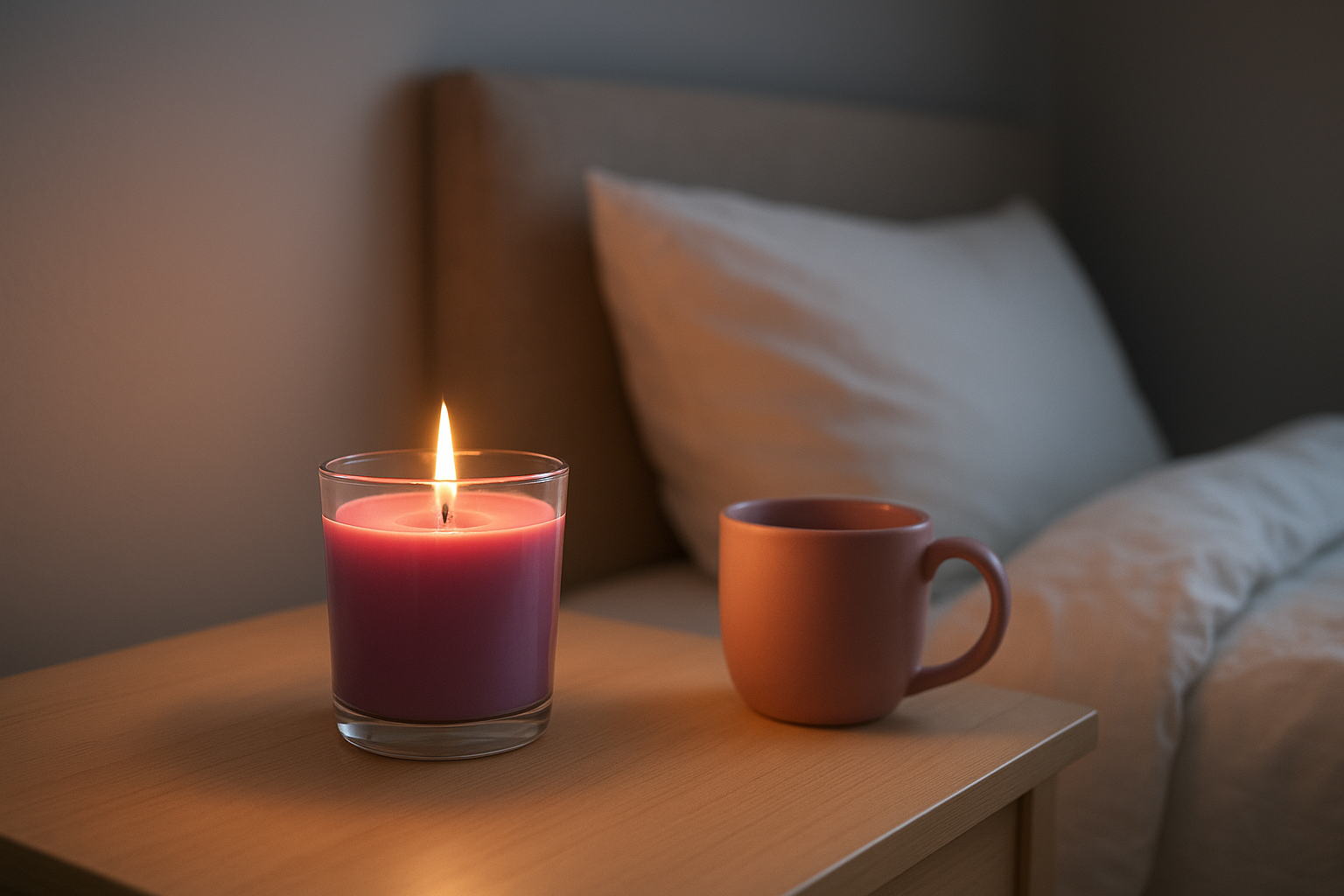
Light your candle 30 to 45 minutes before bed and place it on a stable, heat-resistant surface away from your pillow. A burn time of around 30 minutes fills the room with scent without overwhelming the space before sleep.
Safety basics for bedrooms and evening use
Never leave a burning candle unattended, and always extinguish it before you fall asleep. Keep it away from curtains, bedding, and other flammable materials, and use a snuffer rather than blowing it out to avoid scattering hot wax.
3. Boost focus with alert, fresh aromas
Staying focused at home is genuinely hard, especially when your environment lacks structure. One of the lesser-known benefits of aromatherapy candles is their ability to prime your brain for concentration through stimulating, alert fragrances.
How certain scents support attention and mental clarity
Certain aromas activate the sympathetic nervous system in a mild, useful way. Scents like rosemary have shown measurable improvements in working memory and speed of recall in research settings, making them a practical addition to any focused work session.
Studies on rosemary aroma suggest it can improve memory performance compared to unscented environments.
Focus-leaning notes for work, study, and chores
For focus, reach for sharp, clean, and herbal scent profiles rather than soft or heavily floral ones. The best options include:
- Rosemary: memory and alertness
- Peppermint: mental energy and concentration
- Citrus: uplifting and motivating
How to use aromatherapy candles without getting distracted
Light your candle before you sit down to work, not during. Letting the scent settle into the room first means you won't interrupt your flow when the match comes out.
Pair scent with the right room setup for deep work
Your physical environment amplifies the effect of scent. Keep the room tidy, well-lit, and consistent so your brain links that combination of conditions with productive focus every time you return to it.
4. Lift mood by linking scent to memory
Scent is one of the most direct routes to emotional change. Unlike sound or sight, smell bypasses rational processing and connects straight to the parts of the brain tied to how you feel. This makes it one of the more personal benefits of aromatherapy candles: the right fragrance can shift your mood without any active effort on your part.
How smell connects to emotion and memory pathways
Your olfactory system links directly to the amygdala and hippocampus, the brain regions responsible for emotion and memory. A single familiar scent can trigger a strong emotional response almost instantly, which is why fragrance works faster than almost any other mood tool.
This connection explains why certain fragrances can make you feel calm, grounded, or genuinely happy within seconds of inhaling them.
How to choose a mood-lifting scent that feels personal
Choose a fragrance that already carries a positive memory for you. If a coastal or botanical scent recalls somewhere you loved, that personal association amplifies the mood-lifting effect far beyond the chemistry alone.
Ways to use scent to reset after a rough day
Light a candle at the start of your reset activity, whether that is a bath, quiet reading, or stretching. Pairing the scent with a low-effort routine reinforces the emotional lift every time you return to it.
When scent can feel overwhelming and how to dial it down
If a fragrance feels too intense, shorten your burn time to 15 to 20 minutes rather than switching to a different candle entirely. Good airflow lets you enjoy the scent at a gentler level without losing the benefit.
5. Create a cosy, comforting home sanctuary
One of the quieter benefits of aromatherapy candles is how quickly they reshape the atmosphere of a room. Combine a warm flame with a thoughtful fragrance and your home starts to feel like a deliberate, calming place.
How candlelight changes atmosphere and helps you unwind
Warm, flickering light lowers visual stimulation in a way overhead lighting simply cannot. Your brain reads it as a natural signal to shift from active mode into rest.
Soft light and scent together create a stronger wind-down response than either does on its own.
Room-by-room scent choices for a calmer home
Match fragrance to room function to get the most from each session:
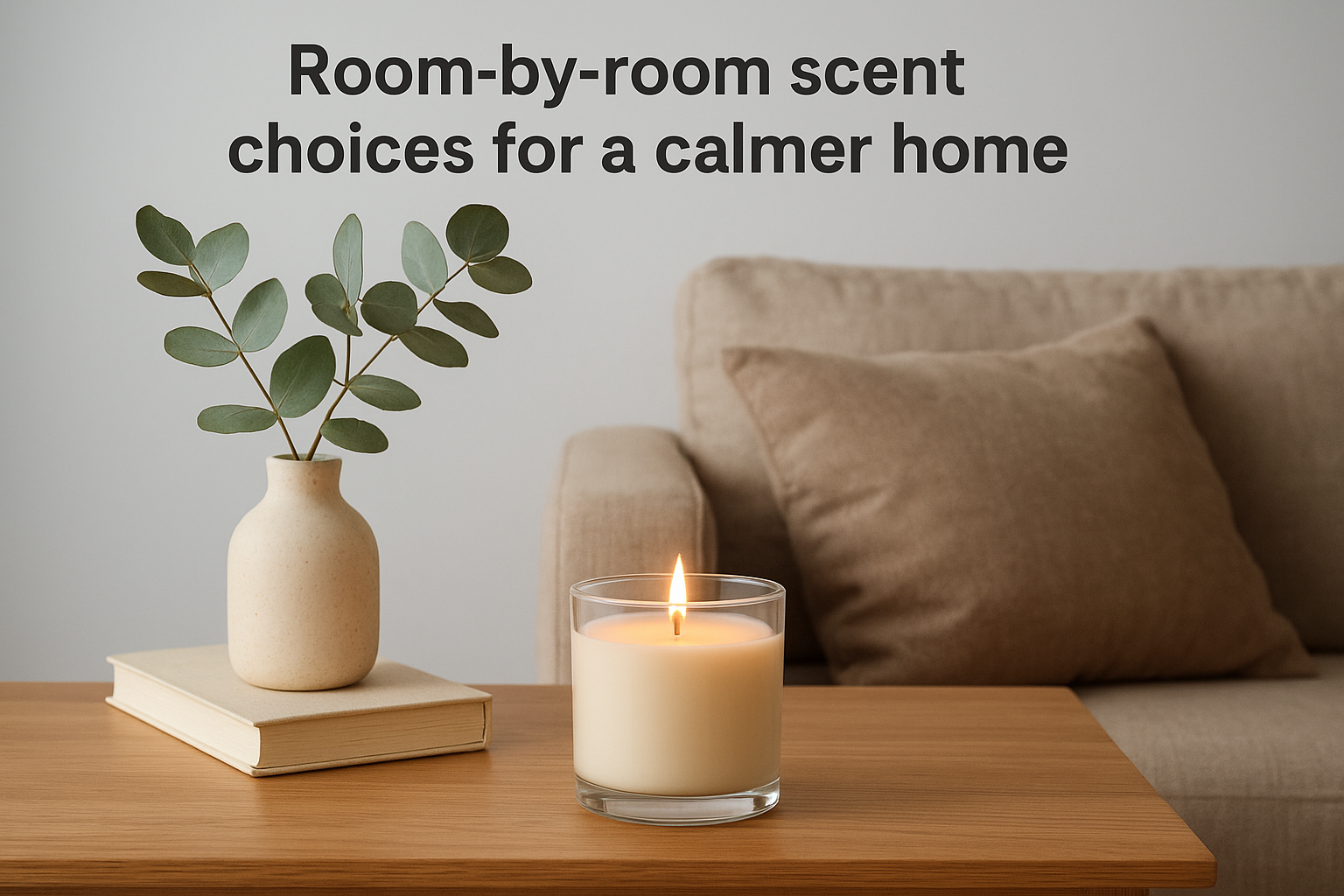
- Living areas: cedarwood or warm botanical blends
- Bedroom: lavender or sandalwood
- Bathroom or entryway: fresh citrus or coastal notes
Practical candle care that improves performance and reduces soot
Trim your wick to around 5mm before every burn. This step produces a cleaner, more even flame and reduces soot buildup on the glass.
A well-maintained candle also delivers stronger scent throw throughout the full burn duration, so the fragrance reaches more of the room consistently.
Safe burn rules, including the 3 to 4 hour limit
Cap each session at a maximum of 3 to 4 hours. Longer burns cause the wax to overheat and pool unevenly, shortening the candle's life noticeably.
Always extinguish fully before leaving the room and keep the candle clear of any draughts or flammable materials.
Make your next burn count
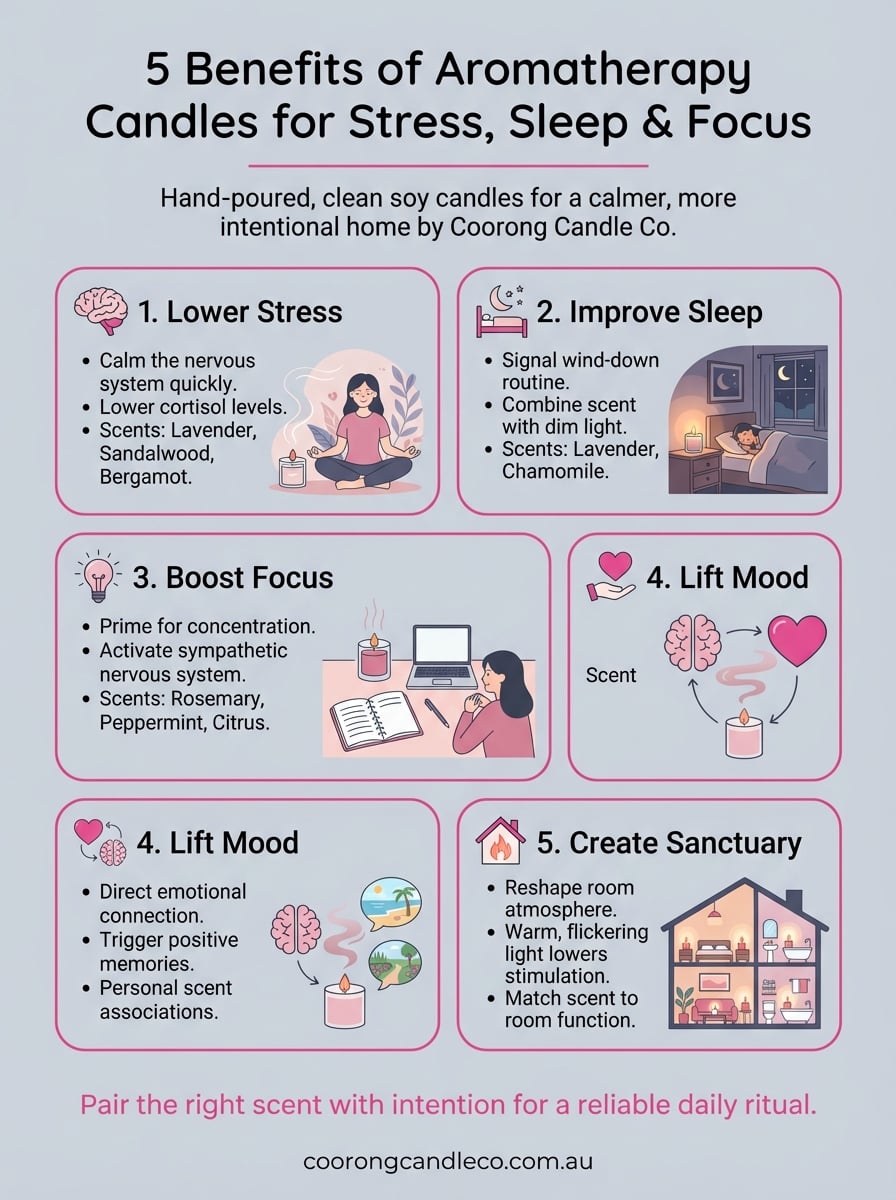
The benefits of aromatherapy candles are real, but they build when you use them with intention. Pair the right scent with a consistent daily ritual and you give your brain a reliable cue to shift into the state you actually need, whether that is calm, sharper focus, or deeper sleep.
Start small by picking one moment in your day and one fragrance that matches your goal. You do not need a full routine overhaul to feel the difference; a single 30-minute burn at the right time can reshape how an entire evening feels.
When you are ready to find a scent rooted in the natural landscape of South Australia, explore the Coorong Candle Co. soy candle range. Every candle is hand-poured in small batches using clean soy wax and lead-free cotton wicks, so your ritual stays as restorative as it should be.