
Choosing the best wicks for soy container candles can make or break your finished product. The wrong wick leads to tunnelling, mushrooming, poor scent throw, or, worst case, a candle that won't stay lit. At Coorong Candle Co., we hand-pour every soy candle in small batches from South Australia, so we've tested our fair share of wick types and sizes to get each vessel burning cleanly from edge to edge.
Soy wax behaves differently to paraffin. It has a lower melting point and denser structure, which means it needs a wick that can generate enough heat to create a full melt pool without producing excess soot. That's why generic "one-size-fits-all" wicks rarely cut it, and why understanding the differences between series like ECO, CD, and HTP matters if you want consistent, clean results.
In this guide, we're sharing the six wick types we trust most for soy container candles, along with practical advice on how to size them correctly for your specific jar diameter and fragrance load.
1. ECO cotton wicks
ECO wicks are a braided cotton wick series with a paper filament running through the core. That paper thread keeps the wick upright during the pour and helps it self-trim as it burns, which makes it one of the most forgiving wick types for candle makers working with soy wax containers.
Why ECO wicks suit soy container candles
These wicks burn cooler and slower than many alternatives, which suits soy wax well. Soy has a lower melt point than paraffin, so a wick that runs too hot will overheat the wax, cause soot, and burn through your fragrance oil too quickly. The controlled burn rate of ECO series wicks means you get a steadier melt pool and a more consistent scent throw from the first light to the last.
If you're working through the best wicks for soy container candles and want a reliable starting point, ECO wicks are the most beginner-friendly option available.
Best jar sizes and starting points for testing
This series covers a wide range of vessel diameters. As a starting guide:
- ECO 4 to ECO 6: 5 cm to 6 cm diameter containers
- ECO 8 to ECO 10: 6.5 cm to 8 cm diameter containers
- ECO 12 to ECO 14: 8 cm to 9 cm diameter containers
These are starting points only. Your fragrance load and dye concentration will influence how the wick performs, so always test a minimum of three burns before committing to a final size.
Common issues and quick adjustments
The most common problem with ECO wicks in soy wax is tunnelling, where the melt pool doesn't reach the edges of the jar. If you see this after the first full burn, size up by one or two numbers in the series. On the other side, if your wick is producing a large mushroom-shaped carbon deposit at the tip after burning, size down. Trim your wick to 6 mm before every burn to reduce mushrooming and extend the life of your candle.
2. CD cotton wicks
CD wicks use a flat braid construction without a paper core. This design gives them a consistent curl toward the flame as they burn, which acts as a natural self-trimming mechanism and keeps the flame height stable throughout the life of your candle. That stability makes them one of the more dependable options when you need repeatable results across multiple production batches.
What makes CD wicks different in soy wax
The curl in a CD wick reduces the risk of a tall, wandering flame that can overheat your wax. In soy containers specifically, this controlled burn helps maintain a steady melt pool without pushing excess heat into the wax too early in the burn cycle. The result is a more even burn with less wax left clinging to the jar walls.
When to choose CD over ECO
CD wicks perform especially well when your fragrance load sits above 8% or when you're working with heavier, denser fragrance oil compositions. ECO wicks can struggle to generate enough heat through thick soy blends, whereas CD wicks handle those formulas more reliably. They're one of the best wicks for soy container candles that carry complex or resinous scent profiles.
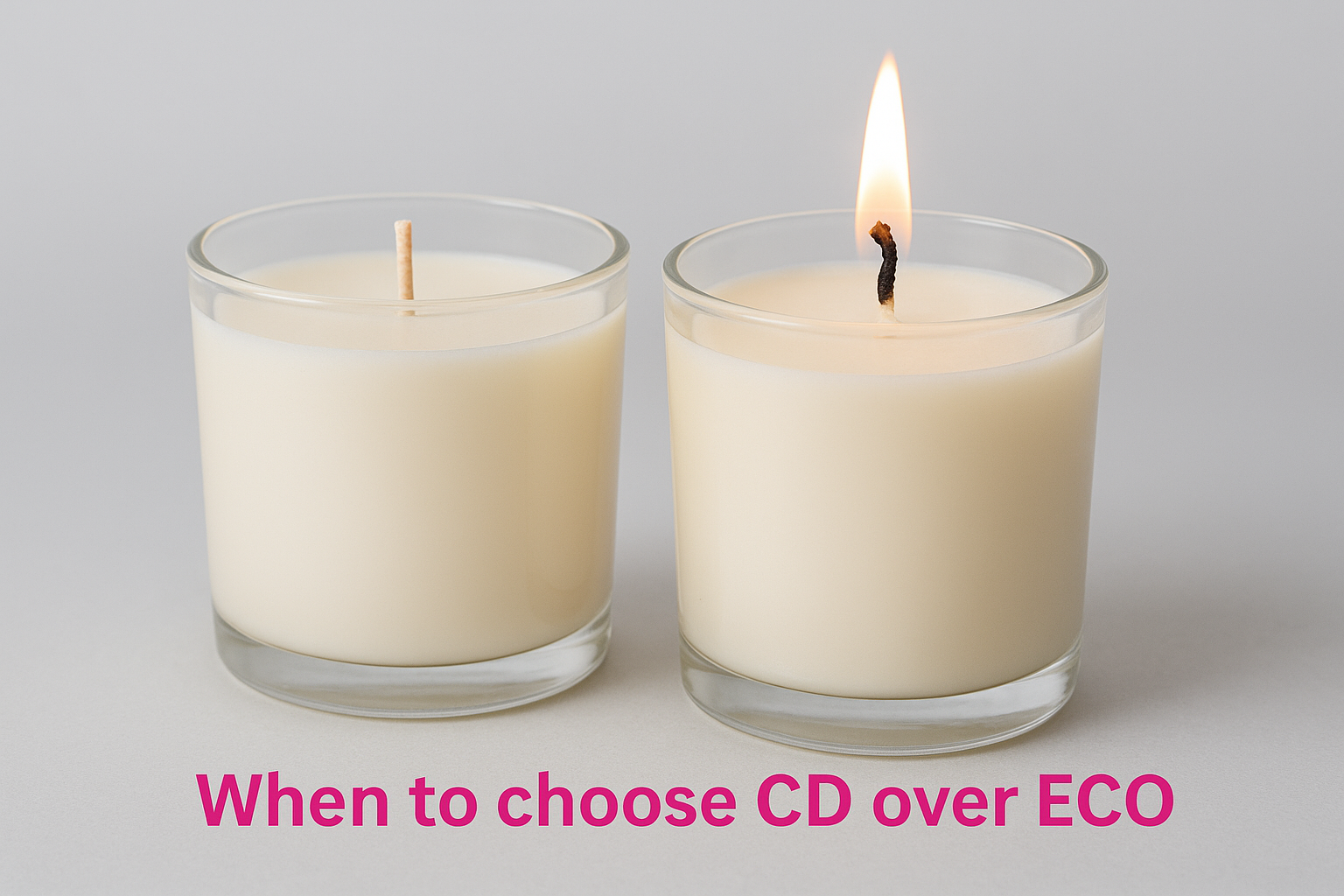
If your fragrance oil has a high vanilla or resin content, test CD wicks before settling on the ECO series.
Common issues and quick adjustments
The most common problem with CD wicks in soy wax is incomplete melt pools caused by undersizing. If unburned wax clings to the jar wall after a full first burn, size up by two numbers in the series and run three more test burns before making a final call.
3. HTP wicks
HTP wicks use a flat braid construction reinforced with paper threads woven through the core. That reinforcement gives the wick excellent rigidity during the pour and helps it hold its position in the centre of your container throughout the entire burn. This structural stability is what sets HTP wicks apart from other braided cotton series and makes them worth testing when other wick types have let you down.
Why HTP can outperform in harder-to-burn scents
Some fragrance oils are genuinely difficult to burn through. High concentrations of certain compounds can thicken your soy wax blend and suppress the wick's ability to draw fuel up the braid efficiently. HTP wicks generate a slightly hotter burn than ECO or CD equivalents, which gives them the extra heat needed to push through dense or high-viscosity fragrance loads and maintain a consistent melt pool across the full surface of your jar.
If you're searching for the best wicks for soy container candles with a heavy floral or woody fragrance, test HTP wicks as your first alternative when CD wicks underperform.
Best jar sizes and starting points for testing
These ranges give you a practical starting position based on container diameter. Your fragrance concentration and wax blend will shift these numbers, so treat them as a baseline for your first test burn rather than a fixed answer.
- HTP 62 to HTP 73: 5.5 cm to 7 cm diameter containers
- HTP 83 to HTP 93: 7 cm to 8.5 cm diameter containers
- HTP 104 to HTP 126: 8.5 cm to 10 cm diameter containers
Common issues and quick adjustments
The most common issue with HTP wicks is excess flame height, particularly in lower fragrance load candles where the wick generates more heat than the blend requires. If your flame runs tall and the jar feels hot to touch after 30 minutes of burning, size down by one number in the series and run three fresh test burns before making a final call.
4. LX wicks
LX wicks are a flat braided cotton series treated with a resin coating that keeps the braid rigid and upright throughout each burn. That structure produces a self-trimming flame with minimal intervention, making LX one of the cleaner-burning wick series available for soy container candles.
Why LX works well for clean burns and stable flames
The resin treatment in LX wicks produces a cooler, steadier flame than many other cotton series, which suits soy wax particularly well given its lower melt point. That cooler burn reduces both mushrooming and soot deposits, leaving your jar walls cleaner over the life of the candle. When you're narrowing down the best wicks for soy container candles and carbon buildup has been a recurring problem, LX is worth moving to the top of your test list.
LX wicks perform especially well in lightly fragranced or single-note soy blends where a clean, consistent burn matters more than raw heat output.
Best jar sizes and starting points for testing
Use the ranges below as a starting position for your first test burn. Fragrance concentration and vessel shape will shift these numbers, so run a minimum of three full test burns before finalising your wick selection.
- LX 10 to LX 14: 5.5 cm to 7 cm diameter containers
- LX 16 to LX 18: 7 cm to 8.5 cm diameter containers
- LX 20 to LX 22: 8.5 cm to 10 cm diameter containers
Common issues and quick adjustments
The most frequent problem with LX wicks in soy wax is underwicking, where the melt pool stays shallow and wax clings to the jar edge after a full first burn. If you see this after two hours of burning, size up by two numbers and run three fresh test burns before making a production call.
Overwicking is less common with this series but still possible. If your flame runs consistently tall or you notice excess carbon building on the wick tip, size down by one number and confirm the adjustment holds across multiple burn cycles.
5. Premier 700 series wicks
Premier 700 series wicks use a flat braided cotton construction engineered specifically to handle higher fragrance loads without sacrificing flame stability. That focus makes them worth testing when your soy blend carries a dense or complex scent profile that other wick types struggle to push through from the first burn to the last.
Where Premier 700 shines in soy containers
This series performs best in medium to large diameter containers where the wax volume demands sustained, even heat output across the full melt pool. Premier 700 wicks carry fragrance-heavy soy blends without generating the excess mushrooming that affects other series under the same conditions, which means less trimming between burns and a cleaner jar wall throughout the candle's life.
If you've worked through the more common series and are still searching for the best wicks for soy container candles with heavy fragrance loads, Premier 700 is a practical next step.
Best jar sizes and starting points for testing
Use these ranges as your baseline for an initial test burn. Fragrance concentration will shift the numbers, so run at least three full burns before locking in a final size.
- Premier 700 to 740: 6 cm to 7.5 cm diameter containers
- Premier 745 to 755: 7.5 cm to 9 cm diameter containers
- Premier 760 to 780: 9 cm to 11 cm diameter containers
Common issues and quick adjustments
The most frequent problem with Premier 700 wicks is oversizing, where the melt pool forms too quickly and the jar runs hot within the first hour. If you notice rapid wax consumption or a flame consistently above 2.5 cm, drop one size in the series and confirm the result holds across three consecutive test burns.
6. Wooden wicks
Wooden wicks offer a fundamentally different burn experience to cotton series wicks. Instead of a vertical flame, you get a wide, horizontal flame that crackles softly as it burns, similar to a small fireplace. That sensory element makes wooden wicks a popular choice for premium or gift-focused soy candles where the overall experience matters as much as the scent.
When wooden wicks make sense for soy containers
Wooden wicks work best when you want to add a distinct visual and auditory element to your finished candle. They suit wider container openings particularly well, since the horizontal flame needs room to spread and generate an even melt pool across the full surface. If you're searching for the best wicks for soy container candles that deliver a premium, artisan feel straight out of the box, wooden wicks are worth adding to your test schedule.
Wooden wicks pair especially well with warm, resinous, or woody fragrance profiles where the crackling flame reinforces the overall scent experience.
How to size wooden wicks for a full melt pool
Sizing wooden wicks follows the same logic as cotton series wicks, with container diameter driving your starting point. A single-ply wooden wick suits containers between 6 cm and 8 cm in diameter, while a double-ply or booster configuration performs better in wider vessels above 8 cm. Always test the smallest size first and work up based on your melt pool results.
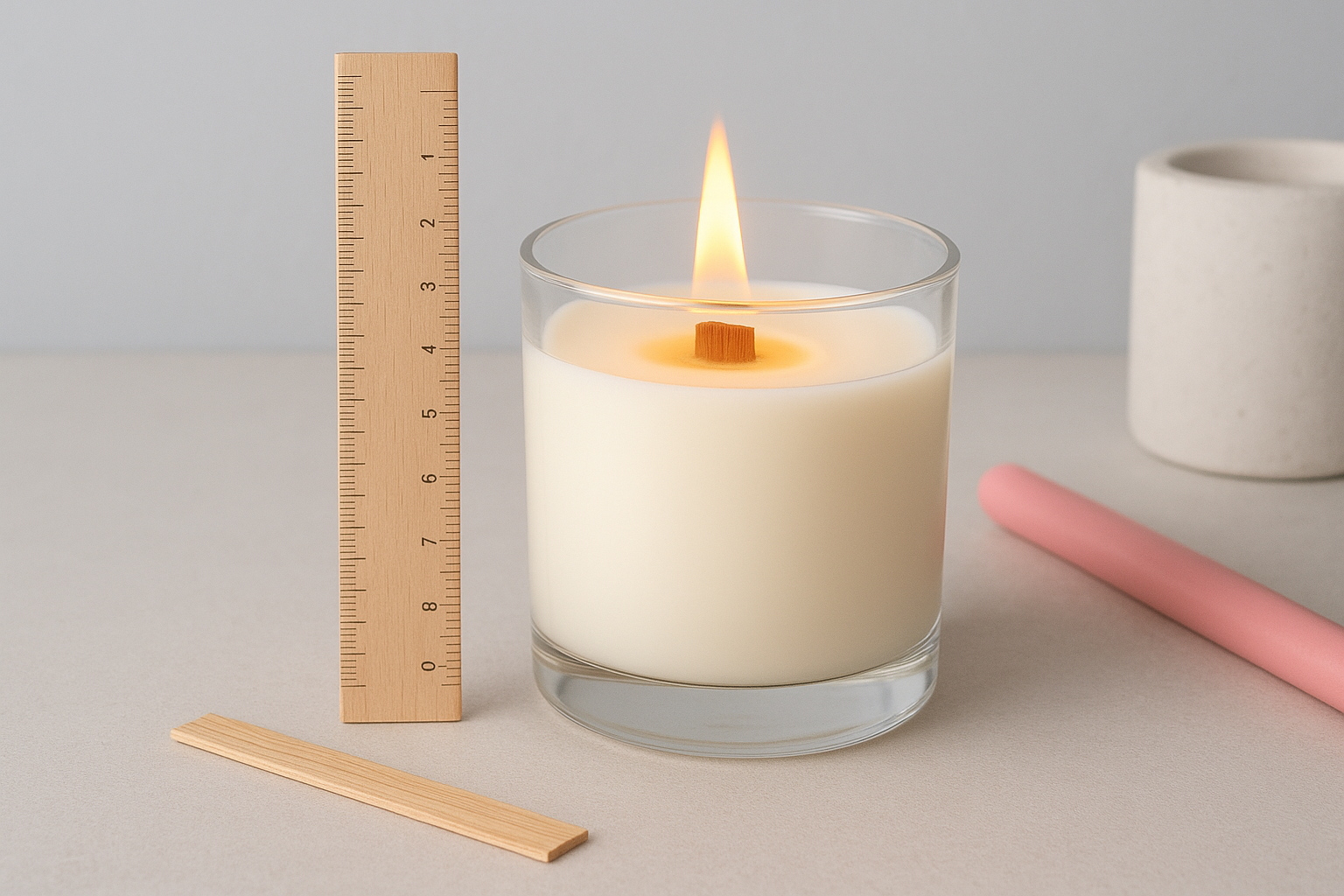
Common issues and quick adjustments
The most common problem with wooden wicks in soy wax is poor re-light performance after the first burn. If your wick struggles to catch flame again, trim the burnt tip back to 3 mm using sharp scissors before relighting. Excess carbon buildup on the wooden tip is the leading cause of relighting failure, and keeping it trimmed resolves the issue in most cases.
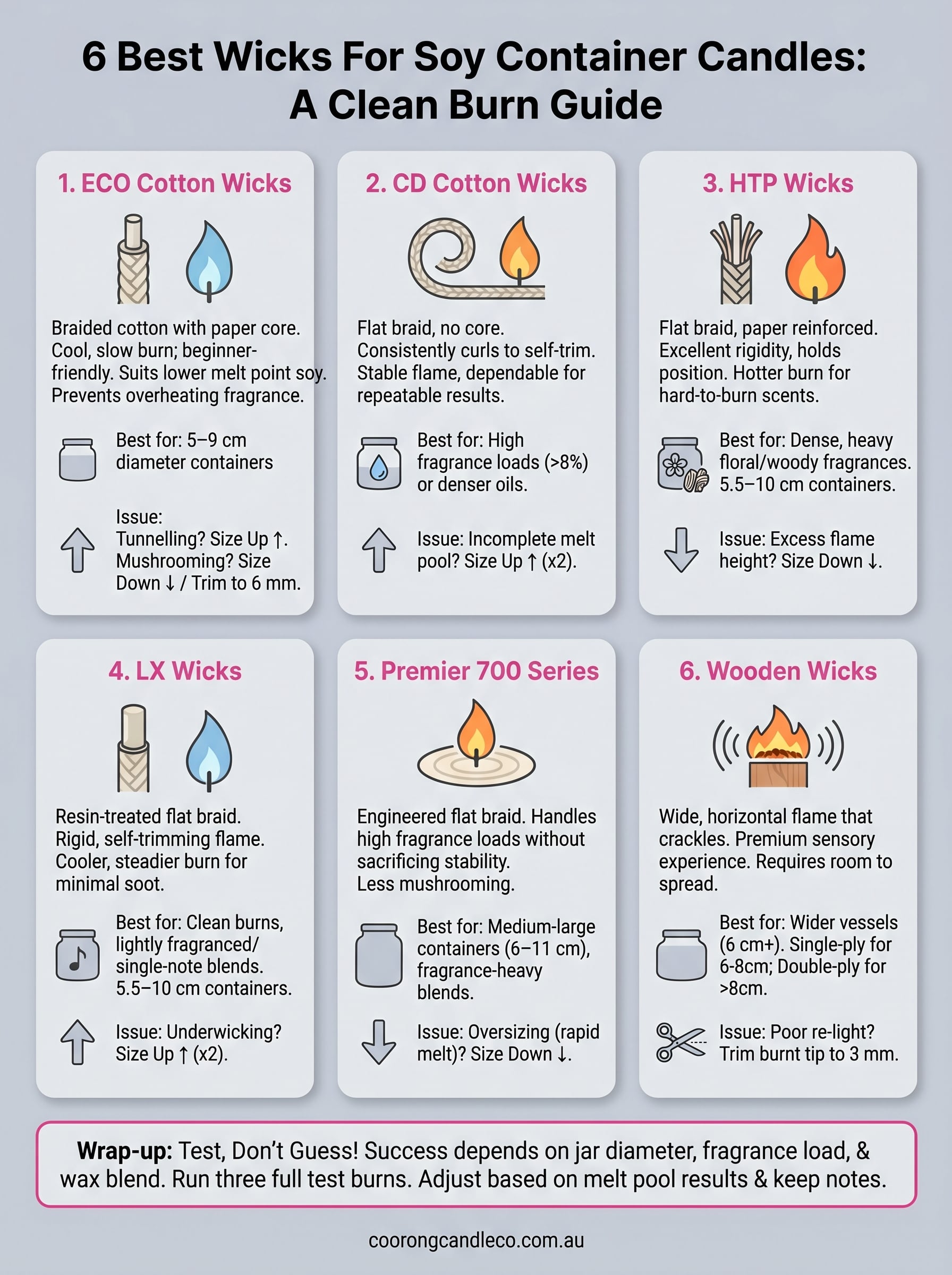
Wrap-up
Finding the best wicks for soy container candles comes down to testing, not guessing. Every wick series covered in this guide, from ECO and CD through to wooden wicks, behaves differently depending on your jar diameter, fragrance load, and wax blend. There is no universal answer, but there is a reliable process: start with the recommended size range, run three full test burns, and adjust up or down based on your melt pool results.
Your first few test batches will teach you more than any guide can. Keep notes on each burn, including flame height, melt pool depth after two hours, and any carbon buildup on the wick tip. Those records will save you time and wasted materials as you scale production. If you're looking for inspiration on what a well-crafted soy candle can achieve, browse our hand-poured soy candles to see how wick selection and fragrance come together in a finished product.