
Packing for a trip shouldn't mean leaving your values at the front door. Whether you're road-tripping through the Coorong or flying interstate, the right eco friendly travel accessories make it easy to cut single-use waste without adding bulk to your bag.
At Coorong Candle Co., we pour our travel tin candles from natural soy wax right here in South Australia, because we believe sustainable choices should follow you wherever you go. That same thinking applies to every item on this list: reusable, thoughtfully made, and better for the planet than its disposable alternative.
Below, we've rounded up seven practical picks that suit carry-on luggage, weekend getaways, and longer adventures alike. Each one has been chosen for durability, low environmental impact, and genuine usefulness on the road, no greenwashing fluff, just gear that earns its place in your pack.
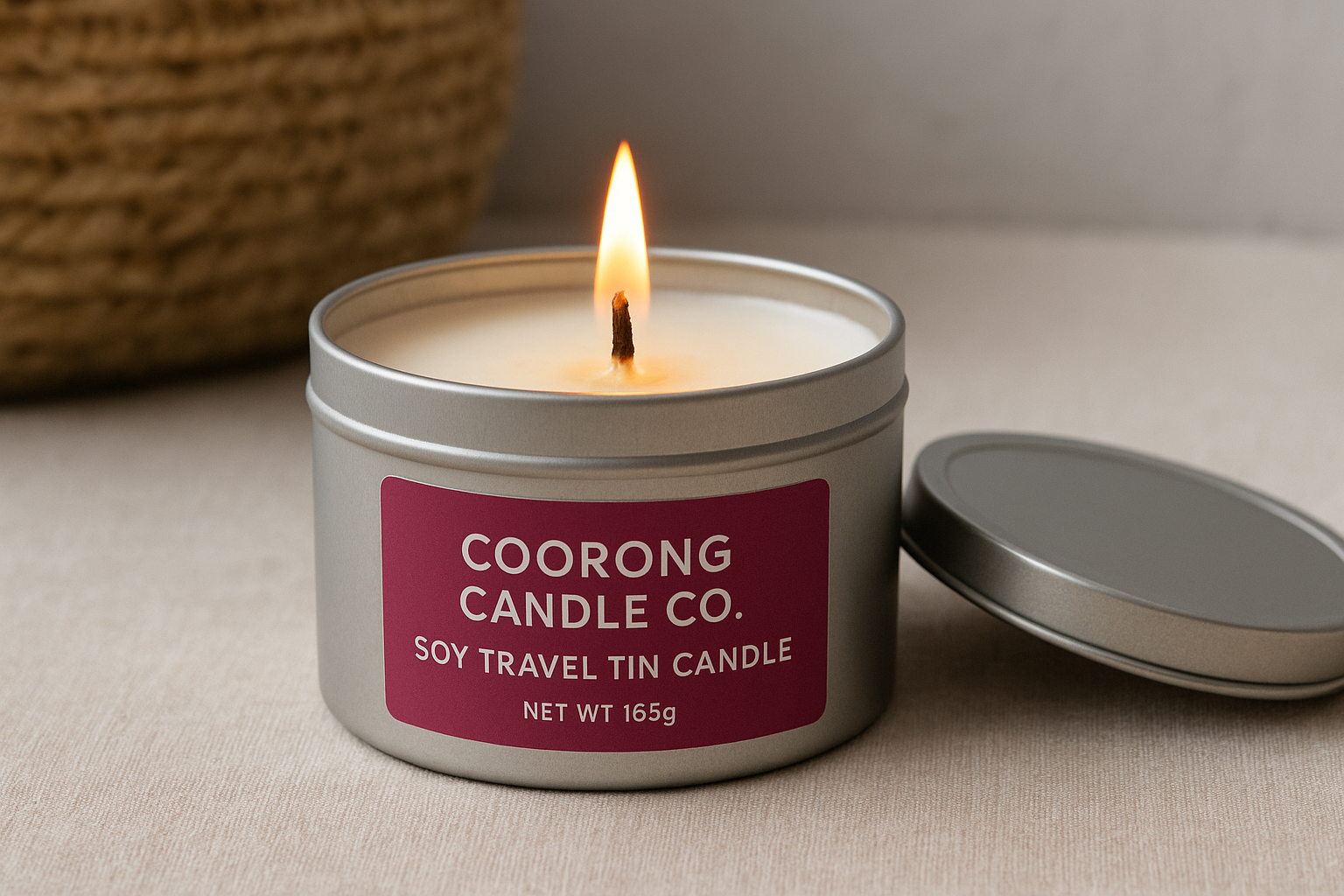
1. Coorong Candle Co. soy travel tin candle
The Coorong Candle Co. 165g soy travel tin is one of the most practical eco friendly travel accessories you can tuck into a carry-on. It's small, it's sturdy, and it brings a familiar scent into a hotel room or holiday rental the moment you arrive.
What it replaces and why it cuts waste
Most scented candles sold at airport gift shops or service stations use paraffin wax, a petroleum by-product that releases toxins when burned. The Coorong Candle Co. travel tin uses 100% renewable soy wax and a lead-free cotton wick, so you burn cleaner and skip the single-use plastic packaging that those impulse buys usually come wrapped in.
Soy wax is biodegradable and burns up to 50% longer than paraffin, so one small tin carries you further through a longer trip.
How to choose a travel candle that travels well
When you're picking a candle for travel, size and lid security matter more than you might expect. The 165g tin sits flat in a bag without rolling, and a tight-fitting metal lid keeps the fragrance contained and the wax protected from heat during transit. Look for candles with a burn time of at least 30 hours so the tin lasts the full length of a holiday rather than burning out on night two.
Best ways to use it on the road
Light the candle for the first 30 minutes after checking into accommodation to clear that generic hotel smell and settle into your space faster. You can also use an unlit tin as a subtle drawer freshener by leaving the lid slightly ajar, which works particularly well in a closed suitcase or luggage bag between uses.
Typical price in Australia
The 165g travel tin retails at around $24.95 AUD through the Coorong Candle Co. online store, with free shipping available on orders over the qualifying threshold. That places it in line with comparable artisan candle tins from other small Australian producers, though few pair strong eco credentials with regional South Australian storytelling the way this one does.
2. Reusable water bottle or coffee tumbler
A reusable water bottle or insulated coffee tumbler is one of the most impactful eco friendly travel accessories you can carry. Australians discard millions of single-use plastic bottles each year, and most travel days involve at least two or three of them.
What it replaces and why it cuts waste
Every time you refill instead of buying, you keep a plastic bottle out of landfill and avoid the carbon cost of manufacturing and transporting that disposable. On a week-long trip, one reusable bottle can replace ten or more single-use plastics, which adds up quickly across a year of travel.
Airports across Australia now provide free water refill stations, so you can fill up after security and skip the $5 bottle at the gate.
How to pick one that fits travel days
Look for a bottle with a leak-proof lid and double-wall insulation so your coffee stays hot and your water stays cold for hours. A 500ml to 750ml capacity sits inside most bag pockets and covers daily hydration needs without adding unnecessary weight.
Cleaning and upkeep while travelling
Rinse your bottle with hot water and a small drop of dish soap each evening, then leave the lid off overnight so the interior dries fully. For longer trips, a compact bottle brush takes up almost no space and makes thorough cleaning straightforward wherever you are.
Typical price in Australia
A quality insulated tumbler from a reputable Australian retailer typically runs between $35 and $65 AUD. Stainless steel options at this price point last for years, which makes the cost per use very low over time.
3. Refillable toiletry containers
Swapping single-use travel-size toiletries for refillable containers is one of the simplest ways to cut waste from your packing routine. A set of small bottles lets you carry your preferred products in exactly the right amount, with nothing wasted.
What it replaces and why it cuts waste
Those miniature shampoo, conditioner, and shower gel bottles found in hotel bathrooms and airport chemists generate an enormous amount of plastic waste. Most are used once and thrown out, and the combined volume across hotels worldwide adds up to billions of non-recyclable containers each year. Choosing a refillable set keeps that waste out of landfill entirely.
Filling containers at home also means you travel with products you already trust for your skin and hair, not whatever brand the hotel stocks.
What to look for in leakproof travel containers
Look for containers made from food-grade silicone or BPA-free plastic with screw-top lids that seal tightly under pressure changes in aircraft holds. Flip-cap lids tend to pop open during flights, so a threaded cap is the more reliable choice for liquids you cannot afford to lose into your bag.
How to pack liquids and stay airline-compliant
Australian domestic flights allow liquids in your carry-on without restriction, but international flights require containers of 100ml or less stored in a single, clear zip-lock bag. Labelling each container with a permanent marker saves you time at security and avoids confusion at your destination.
Typical price in Australia
A set of five to eight refillable containers typically costs between $15 and $30 AUD from major Australian retailers, making them one of the most cost-effective eco friendly travel accessories you can buy.
4. Solid shampoo and soap bars
Solid shampoo and soap bars are among the most underrated eco friendly travel accessories you can carry. They pack down small, last longer than their liquid equivalents, and remove the need for plastic pump bottles entirely.
What it replaces and why it cuts waste
A standard 250ml bottle of liquid shampoo is mostly water, packaged in a non-recyclable plastic container that gets discarded after a single trip. A concentrated solid bar contains no added water, which means less product delivers the same number of washes, with far less packaging waste to deal with.
One solid shampoo bar typically replaces two to three standard 250ml liquid bottles.
How to choose bars that work for your hair and skin
Look for bars labelled sulphate-free if you have colour-treated or dry hair, as sulphates strip moisture and fade colour faster than most people expect. For skin, a glycerin-rich soap bar suits the majority of skin types and rinses cleanly without residue, which matters when you are showering in unfamiliar water conditions on the road.
How to store and dry bars while travelling
A small ventilated tin or soap dish stops bars from turning soft and disintegrating inside a wet toiletry bag. After each use, shake off the excess water and let the bar air-dry on the tin lid before sealing it for transit, which extends its lifespan considerably across a longer trip.
Typical price in Australia
Solid shampoo and soap bars from Australian natural brands typically cost between $12 and $22 AUD each. That price covers multiple trips, making the cost per wash noticeably lower than buying new travel-size liquids every time you head away.
5. Reusable silicone snack bags
Reusable silicone snack bags are a compact and versatile addition to any set of eco friendly travel accessories. They take up almost no space in a bag, handle everything from fruit to crackers, and cut out a category of single-use plastic that most travellers barely notice they are generating.
What it replaces and why it cuts waste
Every time you pack a snack in a zip-lock plastic bag, you use a product that gets thrown out after one trip. Multiply that across a week of travel and the waste adds up fast. A silicone bag handles the same job repeatedly for years without degrading, which removes that entire category of disposable from your packing list.
Silicone is derived from silica, a naturally abundant material, and does not leach chemicals into food the way some plastics do under heat.
How to choose food-safe materials and sizes
Look for bags labelled food-grade, BPA-free silicone with a secure seal along the top. A stand-up base makes the bag easier to fill and stops it tipping over in a bag. A set that includes two or three sizes covers everything from a handful of nuts to a full sandwich.
Easy ways to use them beyond snacks
Beyond food, silicone bags work well for organising cables, toiletry items, and wet swimwear inside your pack. They also hold small jewellery or medication securely and keep damp items separated from dry ones during a long travel day.
Typical price in Australia
A set of three to four silicone snack bags from Australian retailers typically costs between $20 and $40 AUD, with higher-quality sealed sets sitting toward the upper end of that range.
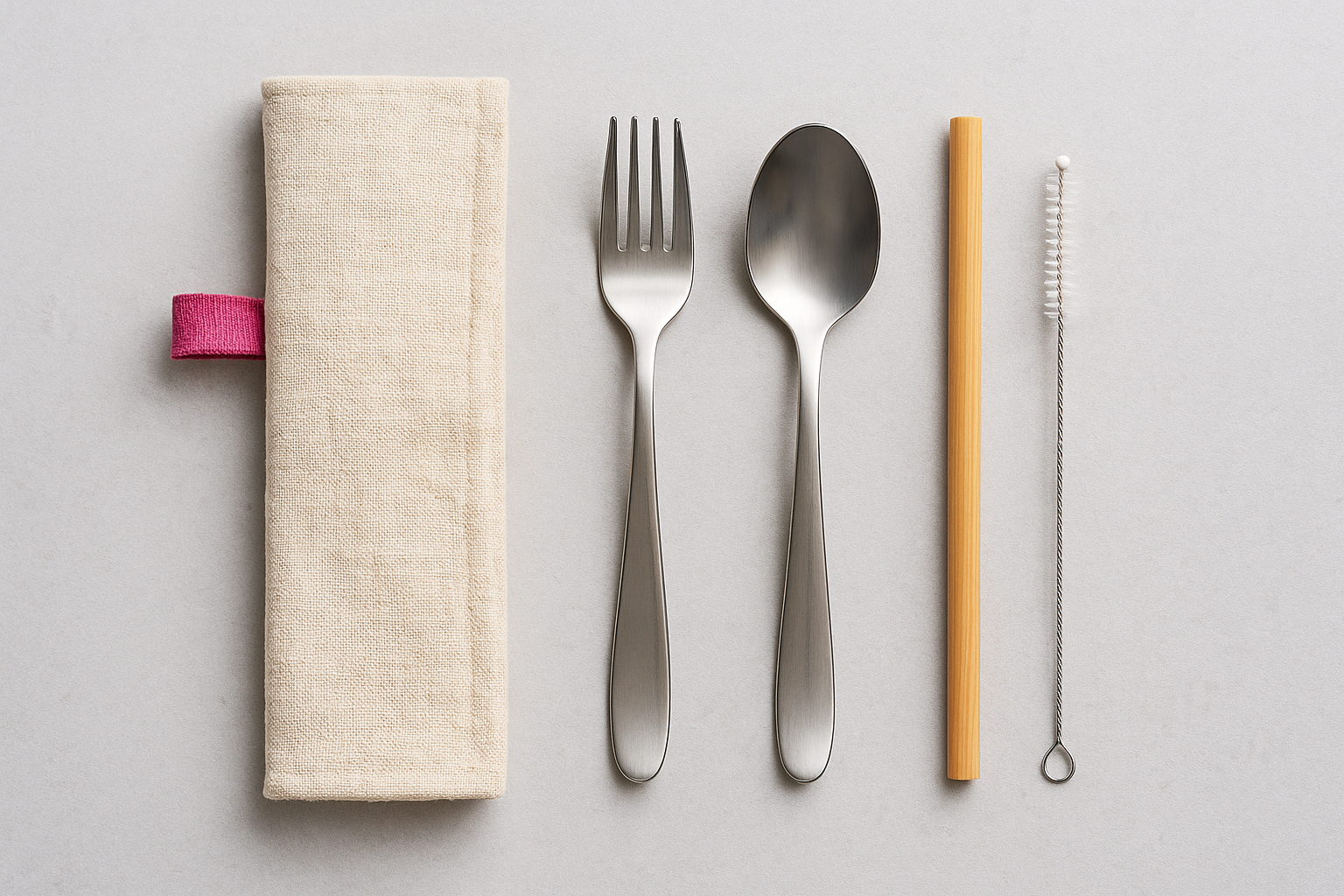
6. Reusable cutlery and straw kit
A reusable cutlery and straw kit is one of those eco friendly travel accessories that earns its place the moment you sit down at a food court or grab takeaway on a road trip. It takes up almost no room in a bag, and it removes one of the most common sources of single-use plastic from your daily travel routine.
What it replaces and why it cuts waste
Plastic forks, knives, spoons, and straws are handed out billions of times each year, and the vast majority end up in landfill or waterways within hours of being used. Most cannot be recycled through standard kerbside collection in Australia. Carrying your own set means you decline all of that at the point of purchase, which adds up to a meaningful reduction across even a short trip.
Over a week of travel with three meals a day, you could easily avoid 20 or more pieces of single-use plastic cutlery.
What to include in a compact kit that you will use
A practical kit needs a fork, spoon, knife, metal or bamboo straw, and a small cleaning brush, all held together in a slim fabric pouch. Titanium and bamboo options are both lightweight and durable, though bamboo is the lower-impact material over its full lifecycle.
How to clean it without fuss on travel days
Rinse the pieces under hot tap water immediately after use, then use the included brush to clear any residue from the straw interior. Leave everything air-dried on a towel for a few minutes before returning it to the pouch.
Typical price in Australia
A complete reusable kit typically costs between $15 and $35 AUD from Australian lifestyle and homewares retailers, with bamboo sets sitting at the lower end of that range.
7. Packable tote bag and produce bags
A packable tote and a set of mesh produce bags are the kind of eco friendly travel accessories that seem minor until you actually need them. Between market visits, grocery runs, and beach days, plastic bags find their way into your hands constantly on a trip unless you already have your own.
What it replaces and why it cuts waste
Plastic shopping bags and the thin single-use bags used at market produce stalls are among the most common forms of travel waste. They tear quickly, cannot be recycled through standard kerbside bins, and frequently end up in waterways. A foldable tote and a few lightweight mesh produce bags remove that habit from your trip entirely.
A single reusable tote can replace hundreds of plastic bags over its lifespan, which spans years with normal use.
How to choose a packable bag that lasts for years
Look for a tote made from recycled nylon or organic cotton that folds down to roughly the size of a fist. Check the handles for double-stitched seams before you buy, as weak joins are where cheaper bags fail first under the weight of market groceries or a day's worth of shopping.
Smart ways to use it for laundry, shopping, and overflow
A tote works well as a lightweight day bag for beach trips and short hikes, and it doubles as a laundry bag to keep worn clothes separated from clean ones inside your suitcase. Mesh produce bags also handle wet swimwear or sandy gear without trapping moisture the way plastic does.
Typical price in Australia
A quality packable tote costs between $15 and $30 AUD, and a set of three to five mesh produce bags typically runs between $10 and $20 AUD from Australian homewares and health food retailers.
Quick recap and next steps
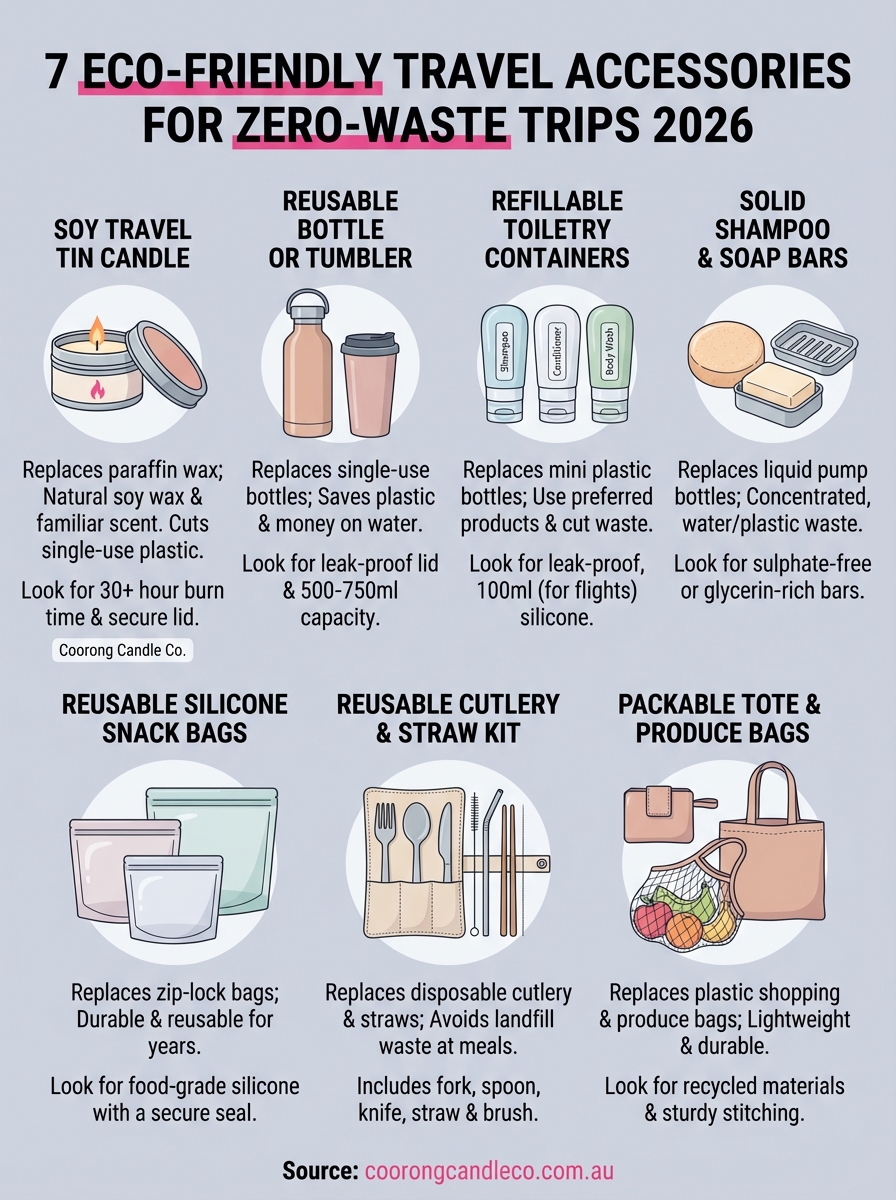
These seven eco friendly travel accessories cover most of the single-use waste that builds up across a typical trip. A reusable bottle, solid bars, silicone bags, and a packable tote handle the practical side, while a soy travel tin candle takes care of the sensory experience that makes unfamiliar accommodation feel like your own space.
None of these items require a complete overhaul of how you pack. Swap one or two in before your next trip, and the habits tend to stick. Start with the accessories that suit your travel style, and build from there rather than trying to replace everything at once.
If the travel candle caught your attention, the Coorong Candle Co. travel tin range includes multiple South Australian-inspired fragrances in the same compact 165g format, hand-poured from natural soy wax and ready to pack.