
When selecting scents for your home, whether through candles, diffusers, or bath products, you've likely come across both essential oils vs fragrance oils on ingredient lists. At Coorong Candle Co., we handcraft our products here in South Australia, and customers regularly ask us to explain the practical differences between these two scent categories.
The distinction genuinely matters. Essential oils and fragrance oils differ in their origin, therapeutic potential, scent throw, longevity, and cost. Each has legitimate strengths depending on your intended use, and neither is universally "better" than the other. What works brilliantly in a reed diffuser might not perform the same way in a hand-poured soy candle, and vice versa.
This guide covers everything you need to understand about both oil types. We'll examine how each is produced, compare their benefits and limitations, and help you determine which suits specific applications, from aromatherapy and skincare to candle-making and home fragrance. By the end, you'll have the knowledge to make informed choices about the scents you bring into your space.
Why the difference matters for candles, skin and home
You might assume that all scented oils perform similarly across different products, but that assumption leads to disappointing results and potential safety issues. The fundamental chemical structure of essential oils versus fragrance oils determines how they behave in candles, react with your skin, disperse through your home, and affect your wellbeing. Understanding these distinctions helps you avoid wasted money on products that don't deliver the experience you're after.
Impact on candle performance
Candle-making reveals the starkest differences between these two oil types. Fragrance oils are specifically formulated to withstand high temperatures without breaking down, which makes them ideal for soy wax that melts at around 50-60°C. They bind effectively with wax molecules and produce a consistent scent throw throughout the entire burn time. Essential oils, conversely, contain volatile compounds that often evaporate during the pouring process or flash off when you light the wick. You'll notice that a lavender essential oil candle might smell strong in the jar but barely scent your room when burning, whereas a fragrance oil version maintains its presence.
The concentration required also differs dramatically. You typically need 10-12% fragrance oil by weight to achieve optimal throw in a soy candle, but essential oils often require 15-20% to produce similar results. This higher usage rate drives up production costs and can affect how cleanly your candle burns, sometimes creating excess soot or uneven wax pools.
Essential oils may offer therapeutic benefits, but fragrance oils deliver superior performance in candle applications where heat stability matters most.
Skin safety and therapeutic properties
Direct skin contact separates these oils more clearly than any other application. Pure essential oils contain bioactive compounds that can provide genuine therapeutic effects, from tea tree oil's antimicrobial properties to eucalyptus oil's decongestant qualities. However, these same compounds make them potential irritants or allergens when applied undiluted. You must dilute essential oils in carrier oils before skin application, typically at concentrations between 1-5% for safe topical use.
Fragrance oils designed for bath and body products undergo safety testing for skin contact, but they don't offer therapeutic benefits. What they provide instead is predictable performance and hypoallergenic formulations specifically created for cosmetic use. You'll find fragrance oils labelled as "skin-safe" or "body-safe" on supplier websites, indicating they meet standards for cosmetic ingredients.
Home fragrance effectiveness
Reed diffusers and room sprays expose another key distinction in the essential oils vs fragrance oils comparison. Essential oils naturally evaporate at room temperature, which makes them effective in cold diffusion methods like reed diffusers or ceramic diffusers. Their molecular structure allows them to travel through the air and genuinely affect your mood or respiratory system when inhaled. Peppermint essential oil can actually help you feel more alert, not just smell pleasant.
Fragrance oils require different dispersion methods to work effectively in home fragrance applications. They perform brilliantly in alcohol-based room sprays where their synthetic structure bonds with the carrier liquid and disperses evenly when misted. In reed diffusers, they need specific base oils formulated to encourage wicking up the reeds, whereas essential oils naturally climb through capillary action. The longevity differs substantially, with fragrance oils typically lasting 8-12 weeks in a diffuser compared to 4-6 weeks for essential oils at similar concentrations.
What essential oils are and how they are made
Essential oils are concentrated plant extracts that capture the natural aromatic compounds from flowers, leaves, bark, roots, seeds, or peels. You're getting the actual chemical constituents that give a rose its scent, lavender its calming properties, or lemon its fresh aroma. These oils contain hundreds of distinct molecules that work together to create both fragrance and potential therapeutic effects. A single drop of peppermint essential oil requires approximately 75 peppermint leaves to produce, which explains both the potency and the cost of genuine essential oils.
Natural plant extraction methods
The production method directly affects the quality and characteristics of the final essential oil. Steam distillation remains the most common extraction technique, where producers pass steam through plant material in a sealed chamber. The steam breaks open the plant's aromatic sacs, releasing volatile oils that evaporate with the steam. When the steam cools and condenses back into water, the essential oil separates and floats on top, ready for collection. You'll find this method used for most herb and flower oils like lavender, eucalyptus, and rosemary.
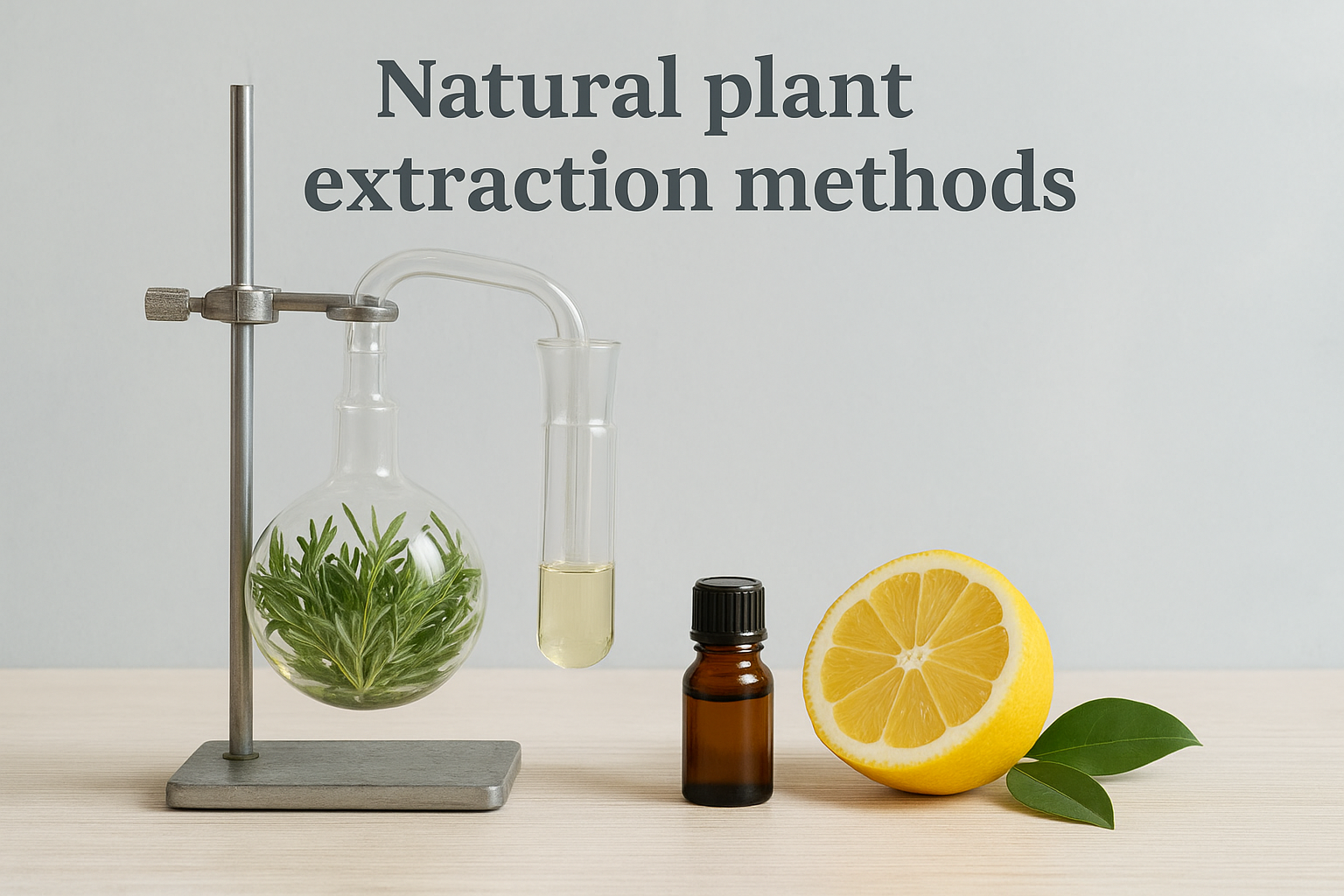
Cold pressing works specifically for citrus oils extracted from fruit peels. Producers mechanically puncture the rind and collect the oils that spray out, avoiding heat that might alter the delicate citrus compounds. This method produces the bright, fresh scents you recognise in lemon, orange, and bergamot oils.
Pure essential oils contain the complete aromatic profile of their source plant, including therapeutic compounds that synthetic alternatives cannot replicate.
Solvent extraction applies to delicate flowers like jasmine or rose that can't withstand steam heat. Producers dissolve the plant material in solvents, then evaporate the solvent to leave behind a thick, aromatic substance called an absolute. While technically not a pure essential oil, absolutes deliver the authentic scent of flowers too fragile for other methods.
Quality factors and purity standards
The distinction in the essential oils vs fragrance oils debate starts with purity verification. Genuine essential oils undergo gas chromatography testing that identifies every chemical component present in the oil. You should look for suppliers who provide these GC/MS reports, proving you're getting 100% pure plant extract without synthetic additives or carrier oil dilution. Price serves as a reliable quality indicator because producing pure essential oils requires substantial plant material and careful processing. When you see cheap "essential oils" at unrealistically low prices, they've likely been diluted or aren't pure extracts at all.
What fragrance oils are and how they are made
Fragrance oils are laboratory-created scent compounds designed to replicate natural aromas or produce entirely new scent profiles that don't exist in nature. Unlike essential oils extracted from plants, fragrance oils consist of synthetic aroma chemicals blended according to precise formulations. You'll encounter two main categories: synthetic fragrance oils made entirely from petroleum-based or lab-synthesised compounds, and nature-identical fragrance oils that chemically match natural scents but are produced artificially. Both types undergo rigorous testing for safety and performance in specific applications like candle-making, soap production, or home fragrance products.
Synthetic creation in laboratories
Perfumers and chemists create fragrance oils by combining individual aroma molecules in controlled laboratory environments. They isolate specific scent compounds that naturally occur in plants, then reproduce these molecules synthetically to achieve consistency and cost efficiency. The process allows manufacturers to standardise scent profiles so every batch smells identical, unlike natural plant extracts that vary based on growing conditions, harvest timing, and seasonal factors. You benefit from this precision when you purchase a favourite candle scent and want it to smell exactly the same with each replacement.
Fragrance oils deliver consistent performance across different applications because their molecular structure remains stable under varying temperature and pH conditions.
Laboratory production also enables perfumers to create complex scent combinations impossible to achieve with natural extracts alone. They might blend fifteen different aroma chemicals to produce a single "ocean breeze" fragrance that evokes seaside air without requiring any actual ocean-derived ingredients. This creative freedom explains why you find candle scents like "fresh linen" or "Christmas cookies" that don't correspond to any extractable plant material.
Types and formulation variations
The essential oils vs fragrance oils distinction becomes clearer when you examine formulation categories. Synthetic fragrance oils contain exclusively manufactured compounds, offering the widest scent variety and lowest cost. These work brilliantly in candles and home fragrance applications where you prioritise scent throw and longevity over natural origin. Nature-identical oils replicate the exact chemical structure of natural scents using lab synthesis, providing authentic aromas like vanilla or strawberry at a fraction of the cost of natural extracts.
Manufacturers also produce application-specific formulations that address particular product requirements. You'll find fragrance oils labelled for candle use (heat-stable), body-safe versions (dermatologically tested), and diffuser oils (formulated for cold dispersion). This specialisation ensures you get optimal performance for your intended purpose without compromising safety or effectiveness.
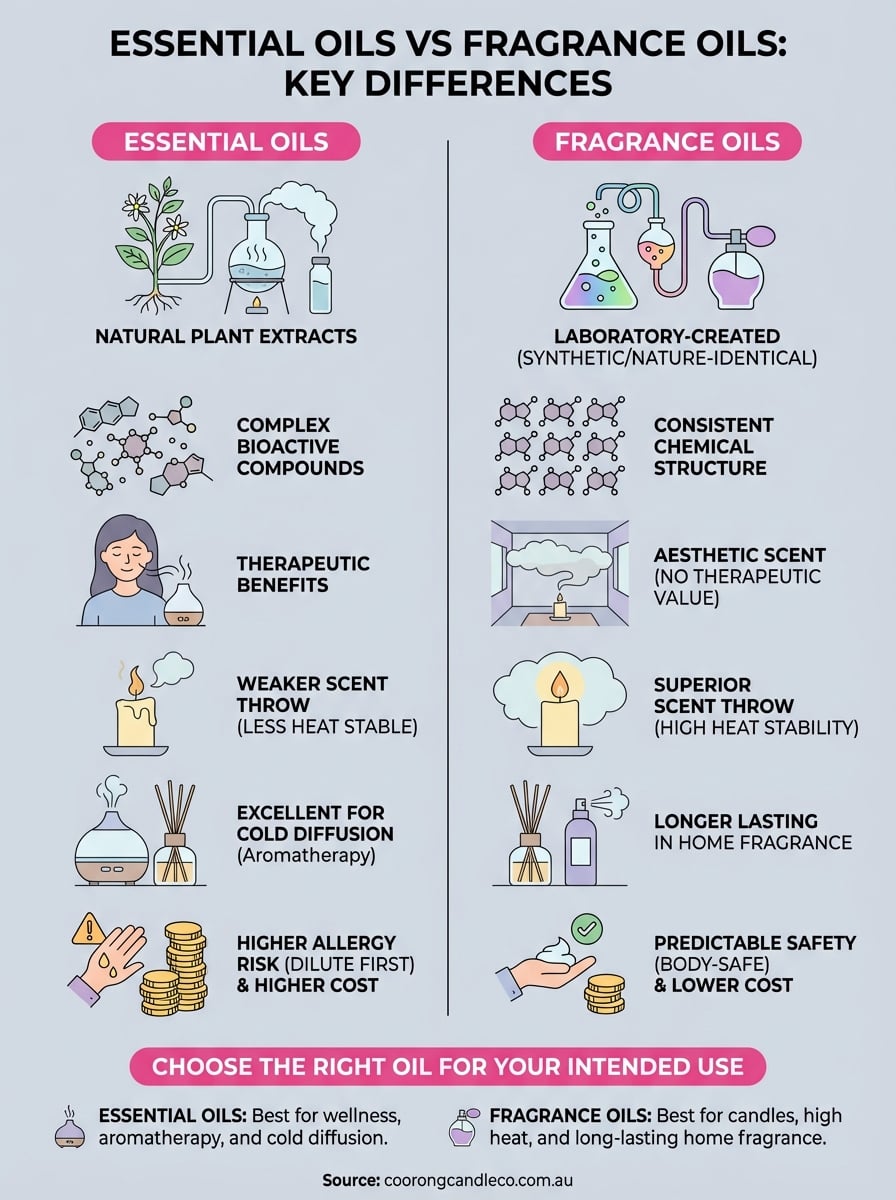
Essential oils vs fragrance oils: key differences
The essential oils vs fragrance oils debate boils down to five core distinctions that affect how you use each type in your home and personal care products. Understanding these differences helps you match the right oil to your specific needs rather than assuming one type universally outperforms the other. Each category excels in particular applications while presenting limitations in others, and your intended use determines which characteristics matter most.
Origin and chemical composition
Essential oils come from physical plant extraction, whether through steam distillation, cold pressing, or solvent methods. You get the actual aromatic molecules that exist in lavender flowers, eucalyptus leaves, or orange peels, complete with hundreds of naturally occurring chemical compounds. These complex profiles create the distinctive character of each essential oil but also mean batch-to-batch variations occur based on growing conditions and harvest timing.
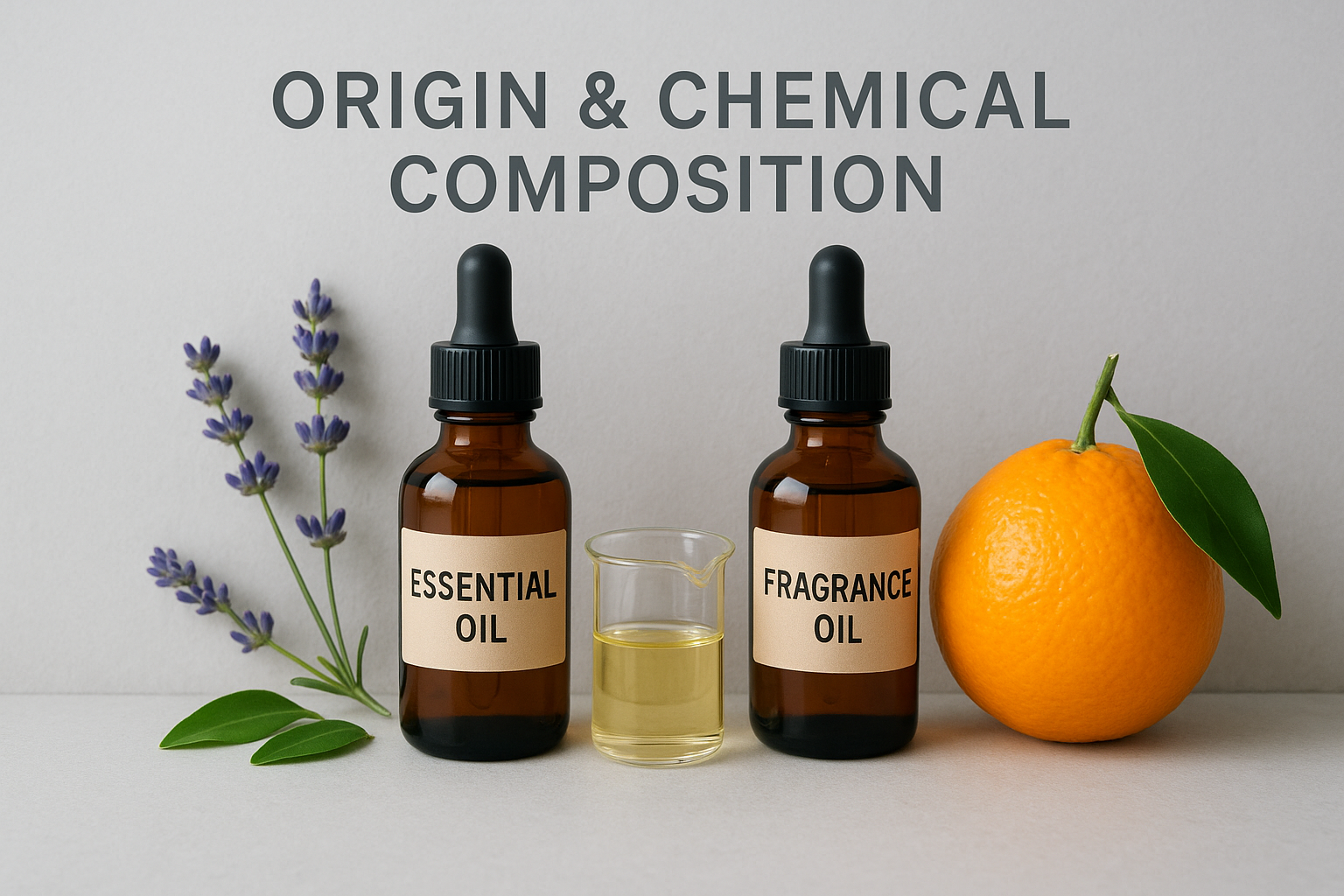
Fragrance oils originate in laboratory formulation where chemists blend synthetic aroma chemicals or nature-identical compounds. This controlled production delivers absolute consistency across every bottle you purchase. The synthetic origin allows manufacturers to create scents that don't exist in extractable form, from "rainforest mist" to "baked apple pie," expanding your fragrance options beyond what nature provides.
Therapeutic value and safety profiles
Essential oils contain bioactive compounds that may offer genuine therapeutic effects when you inhale or apply them topically at proper dilutions. Tea tree oil demonstrates measurable antimicrobial properties, while peppermint oil can alleviate headache symptoms in clinical studies. However, these potent natural compounds also present higher allergy risks and require careful dilution before skin contact.
Essential oils provide potential wellness benefits through their bioactive plant compounds, but fragrance oils deliver predictable safety profiles specifically tested for their intended applications.
Fragrance oils lack therapeutic properties but undergo rigorous safety testing for specific uses. You benefit from hypoallergenic formulations designed for candles, skin products, or home fragrance applications. Manufacturers test these oils for skin irritation, photosensitivity, and respiratory safety, giving you confidence in their intended application.
Performance and cost considerations
You'll pay substantially more for essential oils due to the extensive plant material required for production. A single kilogram of rose essential oil needs approximately 4,000 kilograms of rose petals, explaining premium prices. Fragrance oils cost a fraction of this amount while delivering superior heat stability and scent throw in candles.
Performance varies by application. Essential oils excel in aromatherapy and wellness products where their natural compounds provide benefits beyond fragrance. Fragrance oils dominate candle-making and home fragrance applications where their heat stability and consistent scent projection matter most.
How to choose the right oil for your use
Your intended application determines which oil type delivers the best results and value for your specific needs. The essential oils vs fragrance oils decision shouldn't rely on assumptions about one being universally superior. Instead, you match the oil's characteristics to your actual requirements for performance, safety, and desired outcomes. This practical approach saves you money while ensuring your final product works exactly as intended.
For candle making
Fragrance oils win decisively in candle applications where heat stability and scent throw matter most. You get consistent performance throughout the entire burn time because these oils are specifically formulated to withstand the temperatures required for wax melting and pouring. Choose fragrance oils when you want your candles to fill entire rooms with scent rather than just smell pleasant when you hold them close. The concentration efficiency also works in your favour, as you'll typically use 10-12% fragrance oil versus 15-20% essential oil to achieve comparable results.
Essential oils serve candle makers who prioritise natural ingredients above performance metrics and accept their limitations. You'll achieve better results with hardy essential oils like eucalyptus, peppermint, or lemongrass that withstand heat better than delicate florals. However, you must accept reduced scent throw and higher production costs as trade-offs for natural origin.
For skin and body products
Body-safe fragrance oils provide predictable safety profiles and hypoallergenic formulations tested specifically for cosmetic applications. You benefit from consistent scent performance in soaps, lotions, and bath bombs without the dilution requirements that essential oils demand. Purchase only fragrance oils explicitly labelled as "skin-safe" or "body-safe" from reputable suppliers, as standard candle fragrance oils may contain compounds unsuitable for direct skin contact.
Essential oils suit wellness-focused products where you want genuine therapeutic benefits alongside pleasant scents. You must properly dilute them in carrier oils at 1-5% concentrations for safe topical use. Tea tree oil works brilliantly in blemish treatments, while lavender suits calming bath products where its natural sedative properties enhance the experience beyond mere fragrance.
Match your oil choice to your primary goal: therapeutic benefits justify essential oils despite higher costs, while fragrance performance and consistency favour synthetic alternatives.
For aromatherapy and wellness
Essential oils deliver authentic aromatherapy benefits because their bioactive compounds genuinely affect your mood and physical state when inhaled. You experience measurable effects from peppermint's alertness boost or chamomile's calming influence. Reed diffusers and ultrasonic diffusers work exceptionally well with essential oils that naturally evaporate at room temperature.
Fragrance oils serve purely aesthetic purposes in home fragrance applications. You get superior longevity in reed diffusers and room sprays while enjoying complex scent combinations impossible to achieve with natural extracts alone.
Final takeaways
The essential oils vs fragrance oils debate has no universal winner because each type serves different purposes brilliantly. You choose essential oils when you want therapeutic benefits and natural plant compounds in aromatherapy, diffusers, or wellness-focused body products. These oils deliver genuine mood and physical effects through their bioactive compounds but cost substantially more and require careful dilution before skin contact. Fragrance oils win in applications where heat stability, scent throw, and consistency matter most, particularly in candle-making, room sprays, and long-lasting home fragrance products.
Your decision comes down to matching the oil's characteristics to your actual requirements rather than following assumptions about natural superiority. Natural origin doesn't automatically mean better performance, and synthetic creation doesn't indicate inferior quality. Both oil types have earned their place when you apply them to their strengths. At Coorong Candle Co., we craft our natural soy candles with premium fragrance oils tested for superior scent throw and clean burning that fills your South Australian home.