
You've just dropped a bath bomb into warm water and the fizz starts almost immediately, but how long do bath bombs last in water before the show's over? It's a fair question, especially if you're trying to time your soak or wondering whether that bath bomb sitting in your cupboard is still worth using. The answer depends on a few factors, from ingredients and size to water temperature and storage.
At Coorong Candle Co., we handcraft bath bombs in small batches right here in South Australia, so we know exactly what goes into them, and how they behave once they hit the tub. We've put together this guide to walk you through realistic fizz times, what affects dissolve rate, and how to store your bath bombs so they perform at their best when you're ready to unwind.
Why bath bomb fizz time varies
Bath bombs fizz because of a simple acid-base reaction between citric acid and bicarbonate of soda. The moment these two dry ingredients contact water, they release carbon dioxide gas, which creates the fizzing and bubbling you see. Understanding this reaction explains why some bath bombs dissolve in under a minute while others keep going for five minutes or more.
Size and density
Larger bath bombs naturally take longer to dissolve because they contain more of the citric acid and bicarb mixture. A compact 100g bath bomb will fizz out faster than a dense 200g one, even if the recipe is identical. If you've ever wondered how long do bath bombs last in water and noticed big differences between products, size is usually the first reason.
Density matters just as much as size. A tightly compressed bath bomb releases its reaction more slowly because water has to work harder to penetrate the surface. A looser, lighter bomb lets water in quickly and burns through the reaction fast.
A denser, heavier bath bomb will almost always outlast a lighter one in the tub, even at the same water temperature.
Water temperature and ingredients
Warm water speeds up chemical reactions, and bath bombs are no exception. Drop one into a hot bath and it fizzes faster and more intensely than in a lukewarm soak. If you want to extend the fizz, use slightly cooler water and the reaction will slow noticeably.
The formula inside the bomb also plays a role. Consider how these common ingredients affect fizz speed:
- High citric acid ratio: faster, more aggressive fizz
- Added butters or oils: slower fizz as fats coat the surface and reduce water absorption
- Salts or clays: can slow water penetration and extend the overall dissolve time
- Colourants and fragrances: minor effect, but high concentrations can slightly alter the surface reaction
Freshness of the bomb
A fresh bath bomb stored correctly will always outperform an old one. Over time, humidity in the air triggers a partial reaction between the citric acid and bicarb before the bomb ever touches water. This pre-reaction depletes the ingredients responsible for fizzing, so when you finally drop it in the tub, the response is weak or uneven.
Even a bath bomb that looks perfectly intact on the outside can have a compromised core if it has been exposed to moisture. Checking the manufacture date or best-before window before you use a bath bomb is always worth doing if it has been sitting in storage for a while.
How long bath bombs last in water
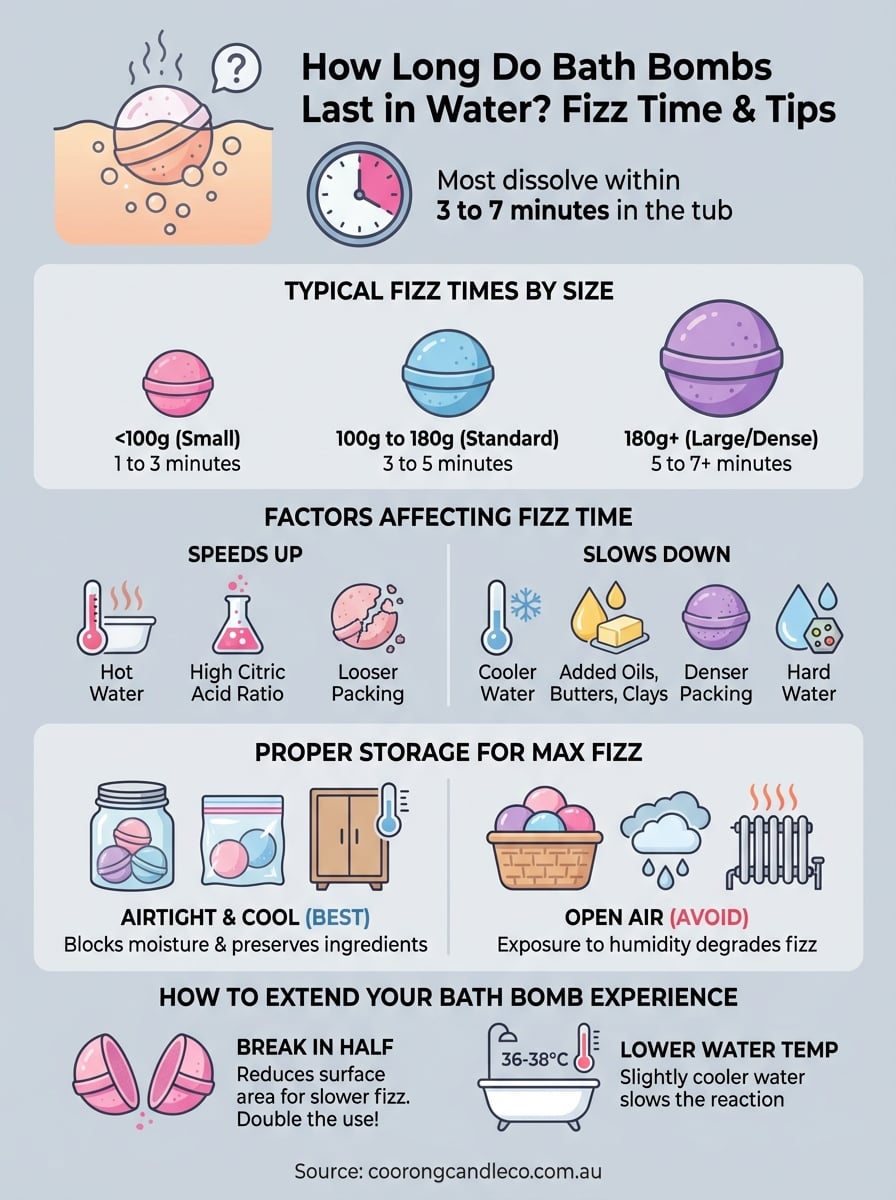
Most bath bombs dissolve fully within three to seven minutes in the tub. The fizzing reaction starts the second the bomb hits water and typically peaks within the first minute before tapering off. So if you're wondering how long do bath bombs last in water, the honest answer for most standard-sized products is somewhere in that three-to-seven-minute window, with larger or denser bombs sitting at the higher end.
Standard fizz times
The fizz time you experience will generally fall into one of three ranges depending on what you're using:
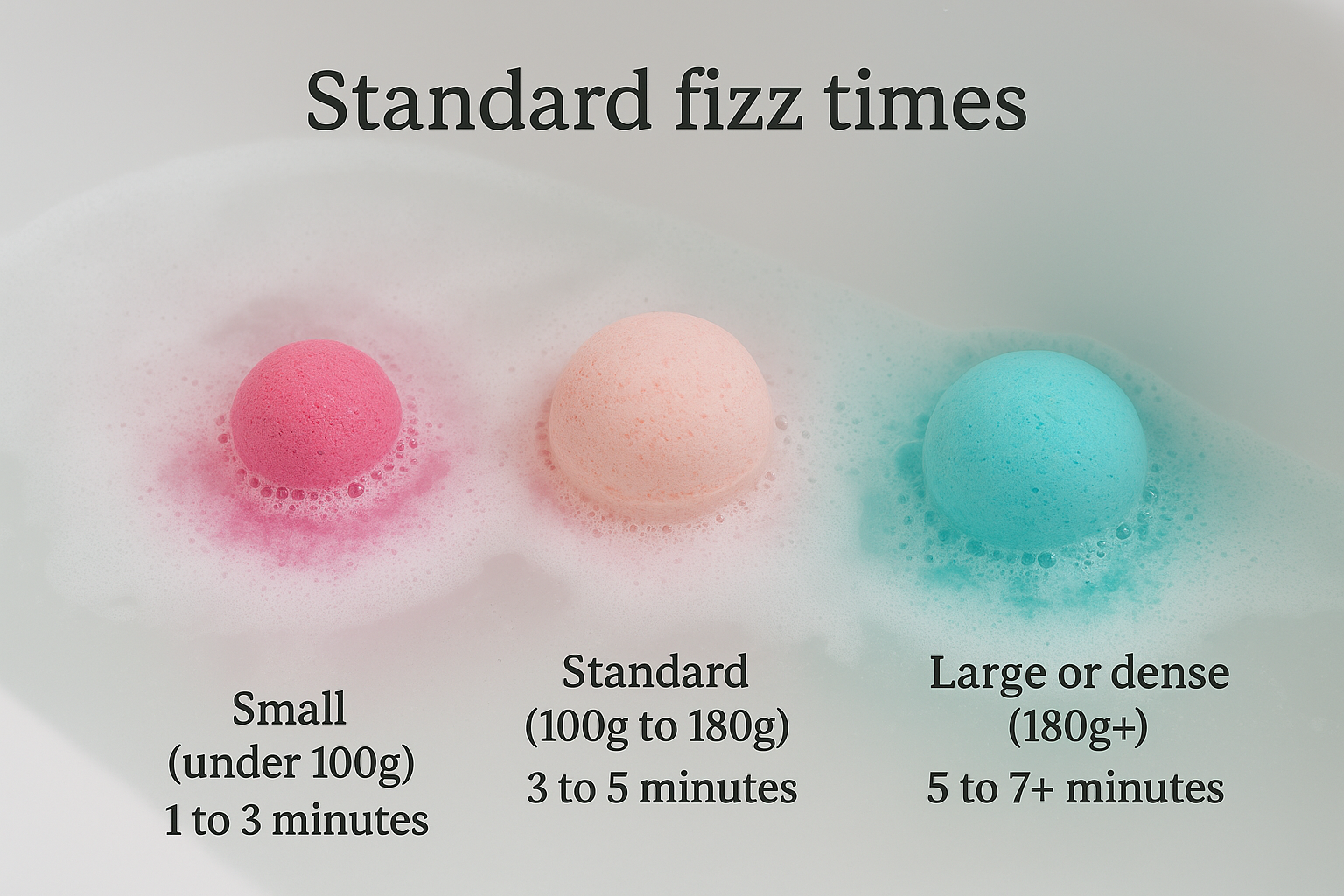
| Bath bomb type | Typical fizz time |
|---|---|
| Small (under 100g) | 1 to 3 minutes |
| Standard (100g to 180g) | 3 to 5 minutes |
| Large or dense (180g+) | 5 to 7+ minutes |
These are rough guides rather than hard rules, and the actual time you see in your tub will shift based on water temperature, water hardness, and how compressed the bomb is. A well-made, densely packed bath bomb from a quality artisan producer will almost always trend toward the longer end of its size category.
When the fizz slows down or stops
Sometimes a bath bomb stops fizzing before it fully dissolves, leaving a crumbly residue at the bottom of the tub. This usually means the bomb has partially reacted already from moisture exposure during storage. The citric acid and bicarb have consumed each other before reaching the water, so there is simply less reaction left to give.
If your bath bomb fizzles out in under a minute and leaves residue behind, age and improper storage are the most likely causes.
A fresh, well-stored bath bomb should dissolve cleanly and completely, with no lumps or powder remaining once the fizz finishes.
What affects how long a bath bomb lasts in the tub
Beyond size and temperature, a few other practical factors shape how long do bath bombs last in water during your soak. Understanding what those factors are helps you get the most from each bomb you use.
Water hardness
Hard water contains higher levels of dissolved minerals, particularly calcium and magnesium. These minerals can interfere with the citric acid reaction, slowing the fizz and sometimes causing the bomb to dissolve unevenly. If you live in an area with hard tap water, you may notice your bath bombs perform differently compared to what the product description suggests.
Soft water generally produces a more consistent, vigorous fizz because fewer minerals compete with the reaction.
Using a small amount of water softener in your bath can make a noticeable difference in how your bath bombs behave once they hit the water.
The oils and additives in the formula
Bath bombs loaded with butters, carrier oils, or clays tend to fizz more slowly than simple citric acid and bicarb bombs. The fats and clays coat the surface of the bomb and slow how quickly water can penetrate and trigger the reaction. This is not necessarily a bad thing, since a slower fizz often means more skin-nourishing ingredients are released gradually throughout your soak.
Here's how common additives affect fizz behaviour:
- Shea butter or coconut oil: slows fizz, leaves skin feeling soft
- Kaolin clay: extends dissolve time, adds a silky texture to water
- Epsom salts: can slightly reduce fizz intensity but add muscle-relaxing benefits
- Fragrance oils: minimal impact on fizz speed
Choosing a bath bomb with added oils or salts gives you a longer, more relaxed experience in the tub, even if the fizz itself is less dramatic than a stripped-back formula.
How to make a bath bomb last longer in water
If you want to extend your bath bomb experience, a few simple techniques can stretch the fizz time without needing to buy a different product. The good news is that small adjustments to how and when you use your bath bomb can make a real difference to how long do bath bombs last in water during your soak.
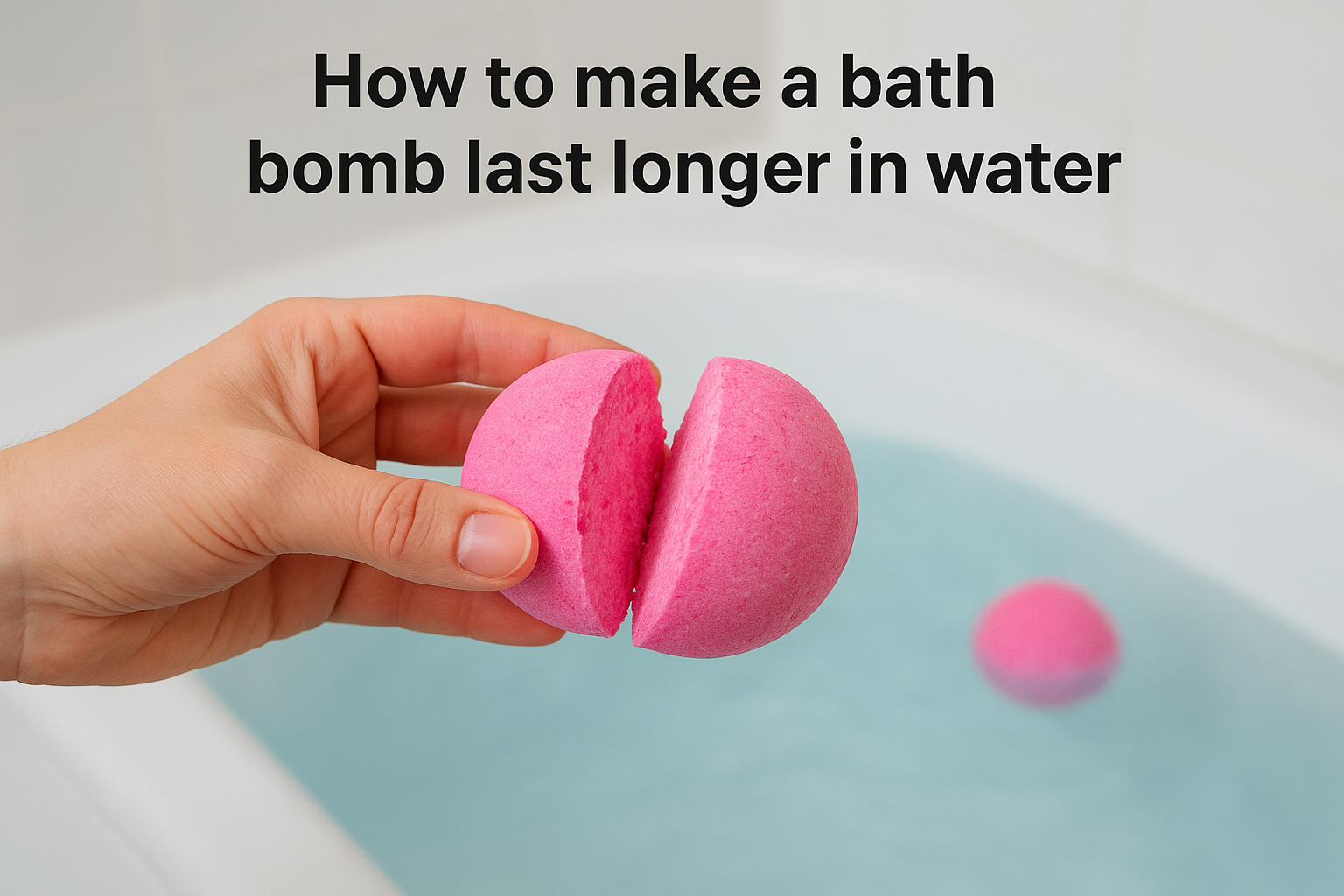
Break it in half
One of the most practical tricks is to cut or break your bath bomb in half before using it. Splitting it reduces the surface area exposed to water at any one time, which slows down how quickly the reaction runs through the whole bomb. You get a gentler, longer fizz rather than one intense burst, and you also stretch a single bath bomb across two separate baths.
Breaking a bath bomb in half is an easy way to double your fizz time and get more value from each one.
Lower the water temperature
Cooler water slows chemical reactions, and the citric acid-bicarb reaction in a bath bomb is no different. If you fill your tub with slightly less hot water than usual, you will notice the fizz extends noticeably compared to dropping the same bomb into a steaming bath.
Here are a few adjustments you can make to slow the fizz:
- Fill the tub at a lower temperature, around 36 to 38 degrees Celsius
- Drop the bath bomb in after the tub is full rather than while the water is still running
- Place the bomb at one end of the tub rather than directly under the tap
These small changes give you more time to enjoy the fizz and fragrance before it finishes, making your bath feel more indulgent from start to finish.
How to store bath bombs so they stay fizzy
Proper storage is the single biggest factor separating a bath bomb that performs brilliantly from one that barely fizzes when you drop it in the tub. Since the citric acid and bicarb inside begin reacting the moment they contact any moisture, even humid air is enough to degrade a bath bomb over time. If you want to understand how long do bath bombs last in water at their best, the answer starts with how you store them before use.
Keep moisture out
Airtight containers are your best defence against premature fizzing. Once you remove a bath bomb from its original packaging, store it in a sealed zip-lock bag, a glass jar with a tight lid, or a plastic container with a firm seal. Each of these options blocks ambient humidity from reaching the surface and triggering a partial reaction before the bomb ever hits your bath.
A bath bomb stored in open air will lose significant fizz within a few weeks, even if the temperature in your home stays consistent.
Here are the storage options ranked from best to least effective:
- Sealed glass jar with lid: best protection, keeps out moisture completely
- Zip-lock bag with air squeezed out: practical and widely available
- Original shrink wrap or packaging: works well if kept fully intact
- Open basket or dish: fine for display, but expect reduced fizz within two to three weeks
Avoid heat and light
Direct sunlight and warm spots like windowsills or shelves above radiators accelerate the breakdown of fragrance oils and can introduce enough ambient heat to encourage surface moisture. Store your bath bombs somewhere cool, dry, and dark, such as a cupboard or bathroom drawer away from the shower.
Consistent temperature matters too. Rooms that fluctuate between warm and cool generate condensation, which settles on surfaces and slowly degrades even well-packaged bath bombs over time.
Final tips for a better bath
Now you know how long do bath bombs last in water and what shapes that experience, you can make smarter choices every time you run a bath. Use a dense, quality bath bomb for the longest fizz, keep the water temperature around 36 to 38 degrees Celsius, and store unused bombs in a sealed container away from moisture and heat. Breaking a bomb in half gives you two shorter sessions instead of one fast burst, which works well when you want a quick soak rather than a long one.
Getting the most from your bath comes down to using a product made with quality ingredients from the start. Our handmade bath bombs are small-batch crafted with sunflower oil, Epsom salt, and kaolin clay to give you a genuine skin-nourishing soak, not just a visual fizz. Browse the full range and find your next favourite at Coorong Candle Co. bath bombs.