
When we started Coorong Candle Co., every decision, from soy wax to cotton wicks, came back to one question: what's the environmental cost? That same question shaped how we package our candles, diffusers, and bath products. But getting clear on sustainable packaging meaning wasn't straightforward. The term gets thrown around loosely, and not every "green" label holds up under scrutiny.
At its core, sustainable packaging refers to packaging that minimises environmental harm across its entire lifecycle, from raw material sourcing through to disposal or reuse. That sounds simple enough, but the detail matters. Material choice, production energy, transport weight, and end-of-life options all factor in. A cardboard box isn't automatically sustainable, and a plastic container isn't automatically the villain. Context determines the real impact.
This article breaks down the full definition, walks through the core principles that guide genuinely eco-friendly packaging decisions, and gives you concrete examples of materials and frameworks worth knowing about. Whether you're a conscious consumer or a small business owner trying to make better choices, you'll leave with a practical understanding of what sustainable packaging actually means, no greenwashing, no vague claims.
What sustainable packaging means in plain English
Sustainable packaging is packaging that minimises environmental damage across every stage of its life, not just at the point of disposal. That lifecycle starts when raw materials are extracted, runs through manufacturing and transport, continues when a customer uses the product, and ends when the packaging is discarded, composted, or recycled. Every stage carries an environmental cost, and truly sustainable packaging works to reduce that cost at each point rather than simply shifting the problem from one stage to another.
The lifecycle: where sustainable packaging meaning gets real
Most packaging decisions focus on the bin, but the bin is actually the final step. Before a cardboard box reaches your doorstep, someone had to harvest the timber, process the pulp, print the surface, and ship the flat-packed sheets to a manufacturer. Each of those steps burns energy and generates emissions. When you understand the full lifecycle, you see why a heavier recycled-board box is not automatically better than a lighter virgin-paper option. The lifecycle stages that matter most include:
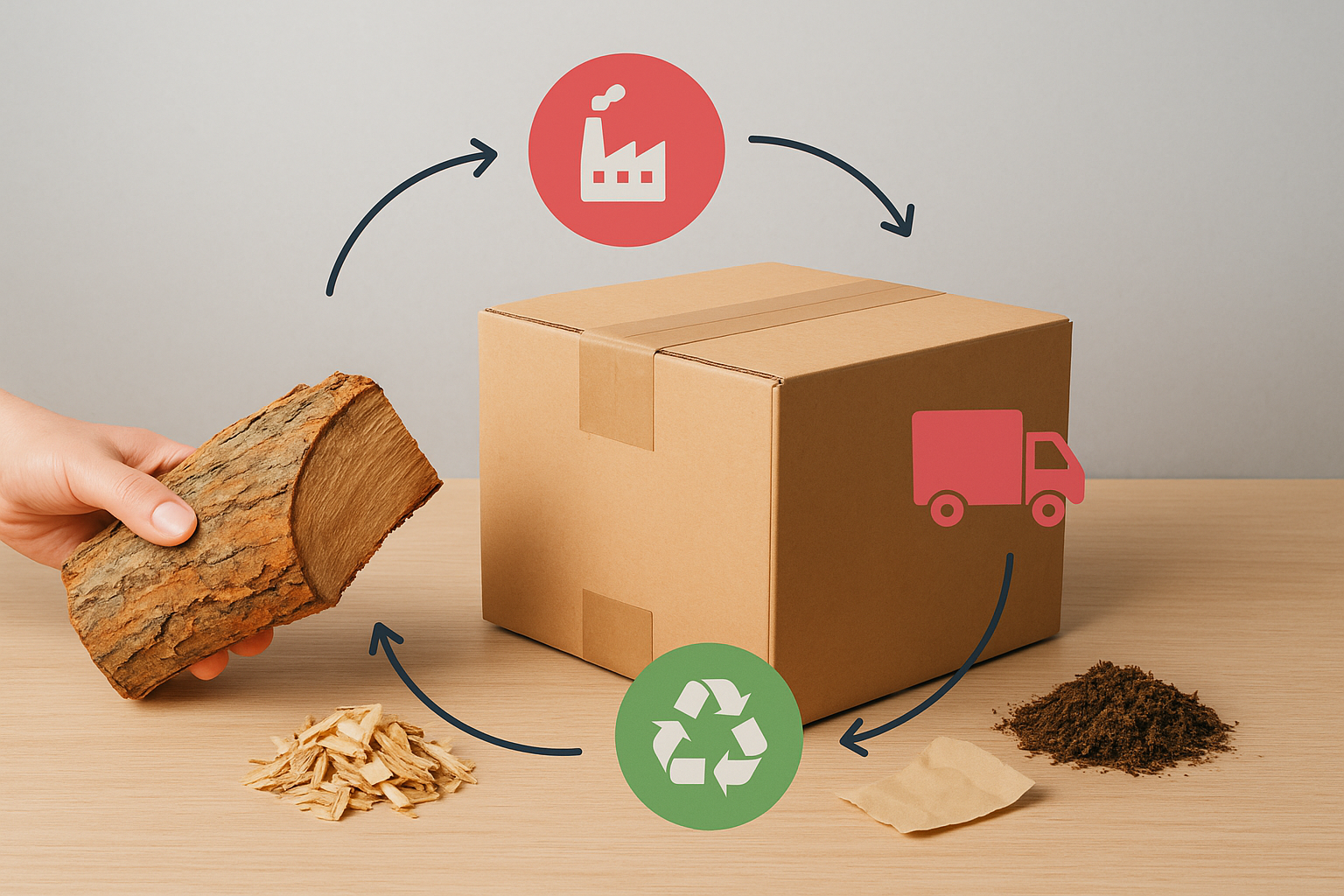
- Raw material extraction and whether renewable sources are used
- Manufacturing energy, including water use and chemical inputs
- Transport weight and distance, which directly affects carbon output
- End-of-life options, from kerbside recycling to home composting
Sustainable packaging is not about finding the perfect material. It is about making trade-offs with clear eyes about what each decision costs across the full chain.
What "sustainable" actually rules out
Not all packaging carrying an eco-label qualifies under a rigorous definition. Single-use plastics with no viable recycling infrastructure in your local area fail the end-of-life test regardless of how they are labelled. Packaging that is technically recyclable but requires specialist drop-off facilities unavailable to most households also falls short. Genuine sustainable packaging protects the product, limits transport impact through low weight and compact design, and gives most people a realistic low-impact disposal route without extra effort.
Your clearest test is this: can the material re-enter a useful cycle after you are done with it, through home composting, kerbside recycling, or a return scheme? If the production process also used renewable energy and non-toxic inputs, the packaging earns the label. If the answer involves a footnote and a specialist facility two suburbs away, it probably does not qualify.
Why sustainable packaging matters for businesses and shoppers
Understanding sustainable packaging meaning shapes real decisions, and those decisions carry weight for everyone in the supply chain. Consumers increasingly factor packaging into their buying choices, and businesses that overlook this shift risk losing credibility with an audience that pays close attention to what arrives at their door. The stakes are practical, not just ethical.
What it means for shoppers
When you buy a product, the packaging is part of what you are paying for. Eco-friendly packaging reduces the volume of material heading to landfill from your household, which matters if you are actively working to cut your environmental footprint.
Beyond the bin, you also gain lower exposure to harmful chemicals when packaging avoids the bleaches and coatings common in conventional materials. Choosing products with genuinely sustainable packaging lets your purchase reflect your values.
The packaging you accept as a shopper sends a direct signal to producers about the standards you expect.
What it means for businesses
For a business, packaging touches brand reputation, shipping costs, and regulatory risk in one decision. Lighter, compact sustainable materials cut freight costs directly, which improves margins without compromising the customer experience.
In Australia, the Australian Packaging Covenant Organisation (APCO) sets national targets for recyclable and compostable packaging, meaning sustainable choices are increasingly tied to compliance. Building eco-friendly packaging into your product design from the start is far less disruptive and expensive than retrofitting it later, and it reinforces the values that earn customer loyalty over time.
The core principles and the packaging lifecycle
Understanding sustainable packaging meaning requires more than knowing which materials to avoid. A clear set of principles guides every good packaging decision, and those principles connect directly to how packaging moves through its full lifecycle from production to disposal. Getting familiar with both gives you a reliable framework for evaluating any packaging claim you encounter.
The principles that define genuine sustainability
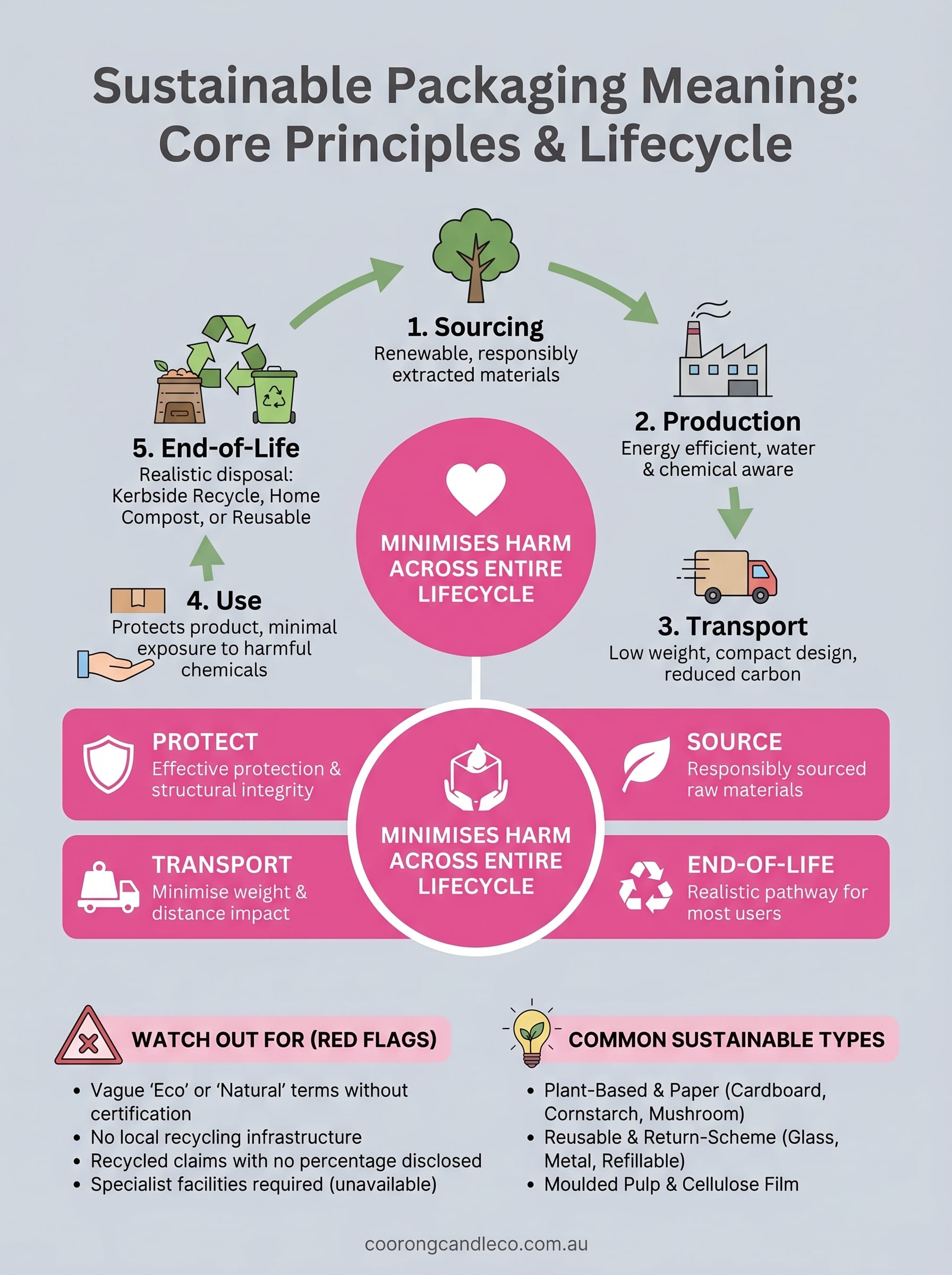
Most packaging experts organise sustainable packaging around four core requirements. The packaging must protect the product effectively, use responsibly sourced materials, minimise transport impact, and offer a realistic end-of-life pathway for the majority of users.
If a package fails on any one of these four points, it cannot genuinely claim to be sustainable regardless of the material it uses.
These requirements work together rather than in isolation. A compostable mailer that arrives damaged because it lacks structural integrity has already failed the first test before you consider anything else. Protection and sustainability are not competing goals.
Following the lifecycle from source to disposal
The lifecycle tracks packaging from the moment raw materials are extracted through to what happens after you discard it. Resource extraction covers where fibres, metals, or resins come from and whether they are renewable. Manufacturing covers energy inputs and chemical use. Distribution covers the carbon cost of moving packaging and finished products. End-of-life covers whether your kerbside bin, a return scheme, or home composting can handle the material without specialist intervention.
Each stage compounds the others, so a decision that saves energy in manufacturing might add weight that raises transport emissions in ways you did not anticipate.
Common sustainable packaging types and examples
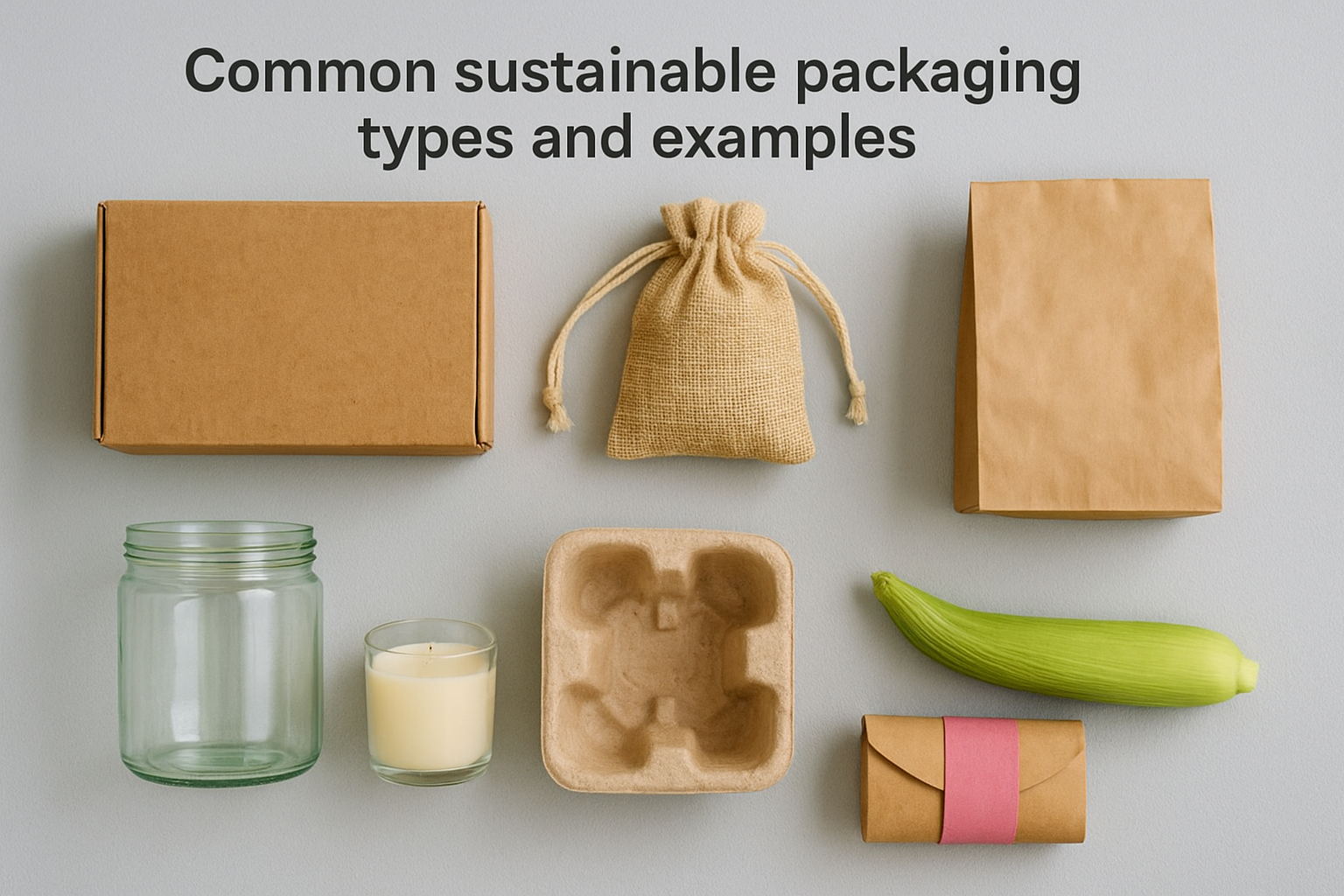
Knowing the full sustainable packaging meaning helps you move from principle to practice. The materials below represent the most widely used options across industries, each with distinct strengths depending on the product type, transport requirements, and end-of-life infrastructure available in your region.
Plant-based and paper materials
Recycled cardboard and unbleached kraft paper are among the most accessible sustainable packaging options because kerbside recycling handles both without specialist infrastructure. These materials come from renewable timber sources and break down readily in home compost when they carry no plastic coating. For small products like candles or bath items, moulded pulp inserts made from recycled paper provide protective cushioning without the foam alternatives that clog recycling streams.
Other plant-based options worth knowing include:
- Cornstarch-based void fill that composts at home within weeks
- Mushroom packaging grown from agricultural waste, used by large electronics brands as a foam replacement
- Cellulose film derived from wood pulp, which is compostable under the right conditions
The key question with any plant-based material is whether your local council's kerbside bin can actually process it, not just whether the label says compostable.
Reusable and return-scheme packaging
Reusable glass and metal containers sit at the top of the sustainability hierarchy because the material cycles repeatedly without losing quality. A glass candle jar, for example, becomes a drinking glass, a storage container, or a planter with no processing required. Return schemes, where brands take back packaging for refilling, close the loop further and remove disposal from the equation entirely.
How to spot and choose truly sustainable packaging
Applying the full sustainable packaging meaning to a real purchase or business decision requires a clear process for cutting through vague claims. Not every package labelled "eco" or "green" meets a rigorous standard, and without a reliable method for evaluation, you risk making choices that feel responsible but change little in practice.
Look past the label
Many packaging claims rely on single attributes, like "made with recycled content," that obscure the full picture of environmental impact. A box containing 30% recycled fibre still relies on 70% virgin material, and a "compostable" pouch may only break down in an industrial composting facility rather than your home bin. Before accepting a label at face value, check whether the claim covers the full lifecycle or only one convenient stage.
If a packaging claim cannot survive the question "what happens to this after I am done with it?", treat it with scepticism.
Red flags worth watching for include:
- Vague terms like "eco-friendly" or "natural" with no certification or material detail behind them
- Compostable claims with no mention of whether home or industrial composting is required
- Recycled-content claims with no percentage disclosed
Ask three practical questions before you buy or specify
You can filter most packaging options quickly by working through three direct questions. First, can your local kerbside bin or home compost handle the material? Second, does the packaging use the minimum amount of material needed to protect the product adequately? Third, is there a recognised certification, such as the Australasian Recycling Label, backing the end-of-life claim?
Running through these questions consistently steers your decisions toward packaging that holds up under scrutiny rather than packaging that simply looks responsible on the shelf.
Next steps for your packaging
Now that you have a clear grasp of sustainable packaging meaning, the practical work begins. Whether you are a shopper making smarter purchase decisions or a small business refining your materials, start with the end-of-life question: can your local kerbside bin or home compost handle the material? That single test eliminates most greenwashing claims before they waste your time or money.
If you run a product-based business, review your current packaging against the four core principles covered in this article: product protection, responsible sourcing, transport efficiency, and realistic end-of-life options. Tackle one lifecycle stage at a time rather than overhauling everything at once.
For shoppers who want to support brands already working through these questions, every purchase sends a direct signal about the standards you expect. Explore our handmade soy candles and home fragrance products crafted with eco-conscious materials inspired by South Australia's Coorong region.