
Your skin stings after a hot shower. It flares up when you switch laundry detergents. A new moisturiser leaves it red and itchy for no obvious reason. If this sounds familiar, you're dealing with sensitive skin, and you're not imagining it. Sensitive skin is a genuine physiological response, not a minor inconvenience, and understanding what's behind it changes how you shop, bathe and care for yourself day to day.
So what actually causes it? Sensitive skin usually comes down to a weakened skin barrier, one that lets irritants, fragrances and environmental triggers penetrate more easily than they should. Genetics, harsh skincare ingredients, hot water, stress and even weather changes all play a part. The good news is that once you know your triggers, you can manage reactions rather than just react to them.
In this article, we'll walk through the common causes and triggers of sensitive skin, the symptoms to watch for, and practical treatment options that actually help. We'll also look at how your bathing and home fragrance choices, from water temperature to what you're soaking in, can either soothe your skin or quietly aggravate it further.
Why your skin reacts more than others
Not everyone's skin behaves the same way in the shower, in the sun, or after a night out in the wind. Sensitive skin reacts more intensely to stimuli that other people barely notice, and the reason usually sits several layers deep, quite literally. Your skin's outermost layer, the stratum corneum, acts as a protective seal that keeps moisture in and irritants out. When that seal is compromised, whether from genetics, environment, or everyday habits, your nerve endings sit closer to the surface and react to things that shouldn't cause a fuss.
A weaker skin barrier is the root cause
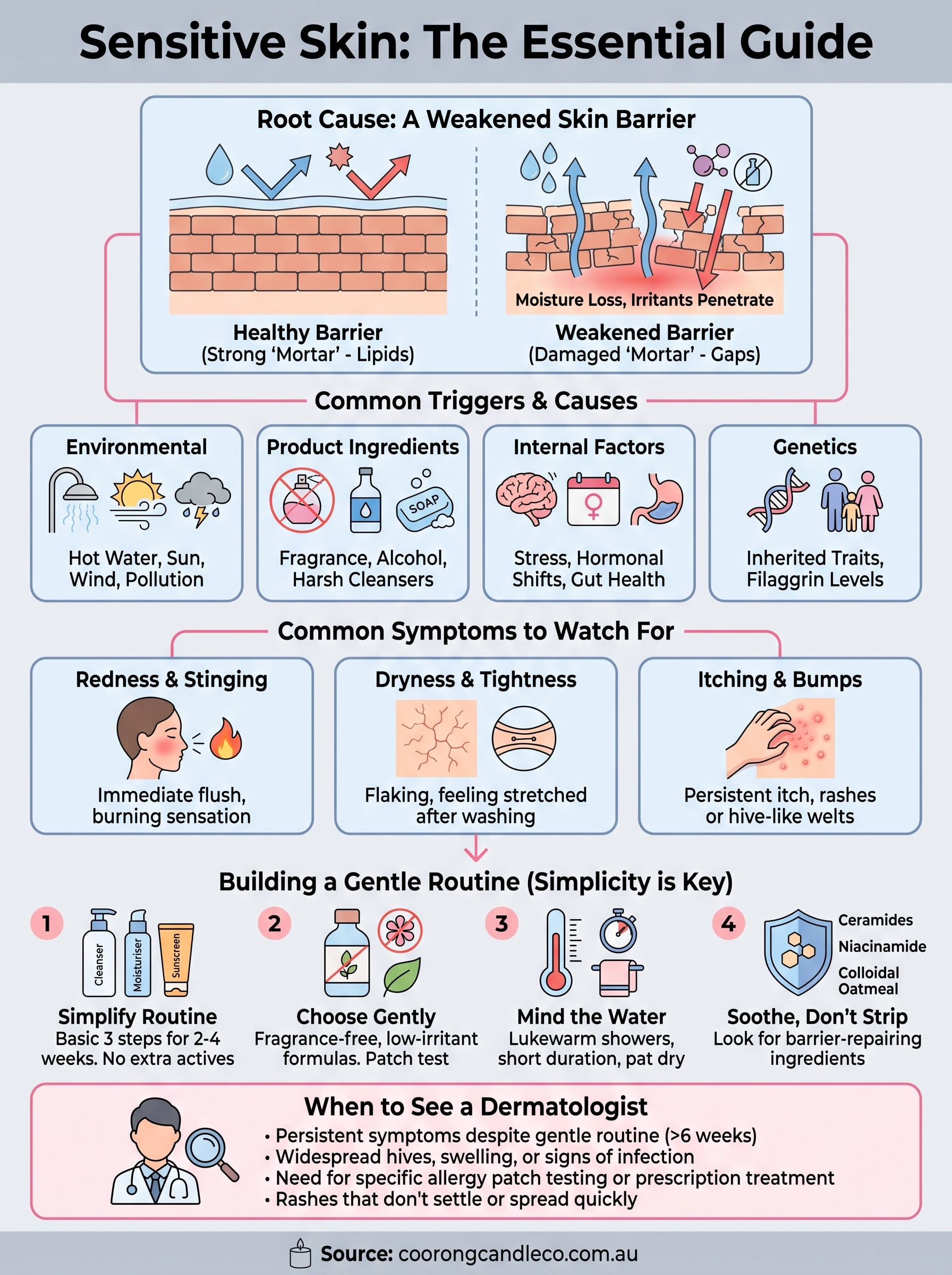
Underneath almost every case of sensitive skin is a compromised skin barrier. Think of your skin like a brick wall, with skin cells as the bricks and lipids (fats) as the mortar holding everything together. When that mortar breaks down, from over-washing, harsh soaps, or ageing, gaps open up. Water escapes faster than it should, and irritants like fragrance molecules, alcohol, or synthetic dyes slip in more easily. This is why dermatologists often describe sensitive skin less as a skin type and more as a barrier problem.
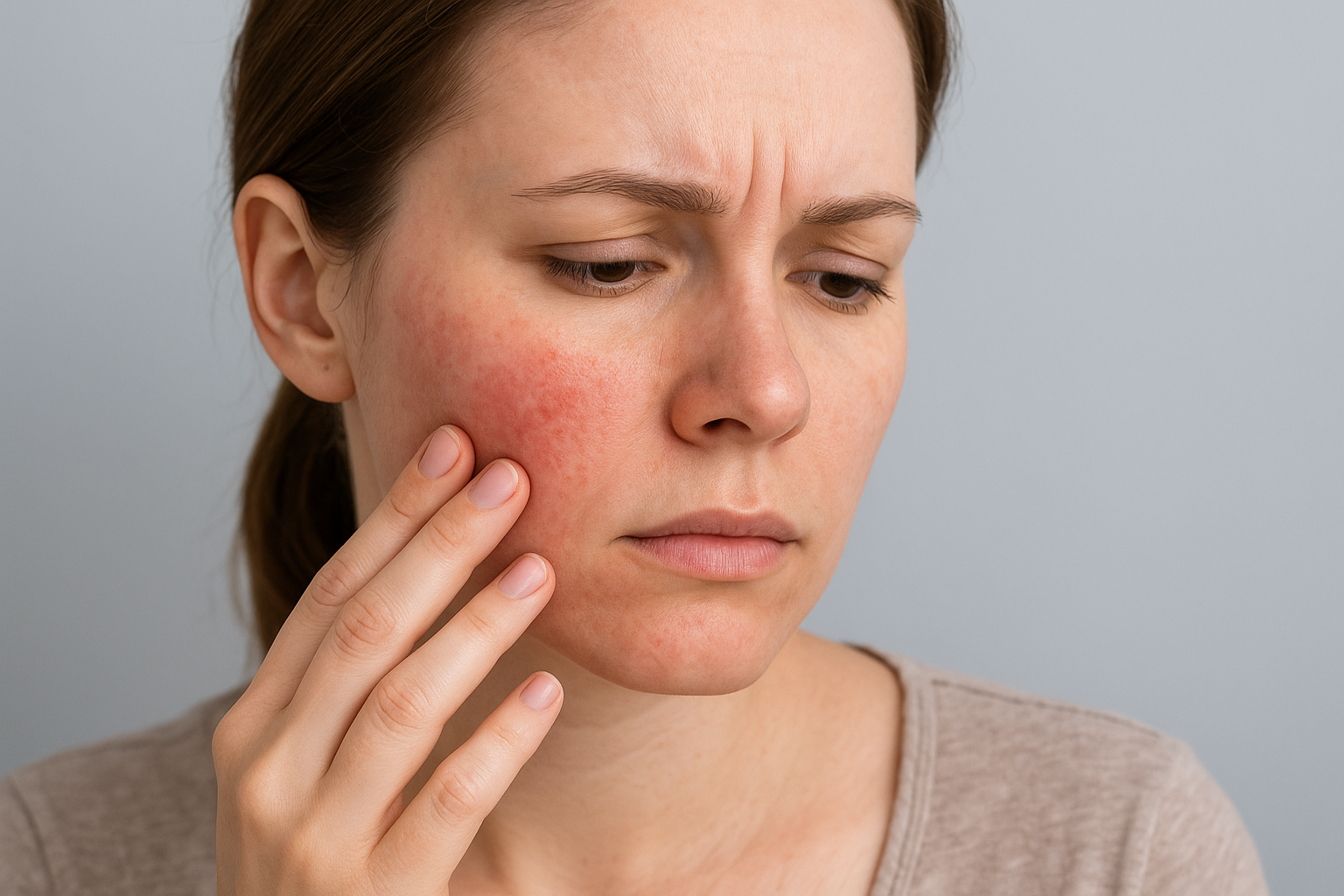
A weakened skin barrier, not a fragile personality trait, is what actually makes skin sensitive.
Genetics load the gun
Inherited traits play a real role here. If your parents had eczema, rosacea, or generally reactive skin, you're statistically more likely to as well. Certain gene variations affect how much filaggrin your skin produces, a protein essential for building a strong barrier. Lower filaggrin levels are linked to conditions like atopic dermatitis, where the skin simply can't hold moisture the way it should. Fair skin and thinner skin, common in people of Northern European descent, also tend to show sensitivity more visibly because blood vessels sit closer to the surface.
Hormones and internal health shift the threshold
Hormonal changes, particularly around menstruation, pregnancy and menopause, can lower your skin's tolerance almost overnight. Oestrogen affects collagen production and skin thickness, so when levels drop, skin often becomes thinner, drier and more reactive. Stress adds another layer, since cortisol interferes with lipid production in the barrier and can trigger flare-ups in conditions like rosacea or eczema. Gut health and chronic inflammation elsewhere in the body have also been linked to skin reactivity, which is part of why sensitive skin sometimes flares alongside digestive issues or poor sleep.
Environmental and lifestyle triggers do the rest
Outside factors chip away at an already fragile barrier. Hot showers strip natural oils faster than lukewarm water. Harsh climates, whether hot, dry, or windy, pull moisture out of skin at a faster rate than it can replace it. Pollution particles and UV exposure generate free radicals that damage skin cells over time. Even indoor heating and air conditioning dry out the air around you, quietly dehydrating your skin without you noticing until it starts to itch or flake.
Here's a quick look at how common everyday factors stack up against your skin barrier:
| Trigger | How it affects the barrier | Typical result |
|---|---|---|
| Hot water | Strips natural lipids | Tightness, redness |
| Fragranced products | Introduces allergens/irritants | Itching, stinging |
| Low humidity/wind | Increases water loss | Flaking, dryness |
| Stress | Raises cortisol, disrupts lipids | Flare-ups, breakouts |
| Hormonal shifts | Thins skin, alters oil production | Increased reactivity |
Why it varies so much from person to person
Judging by how differently two people respond to the exact same moisturiser, it's clear sensitivity isn't one-size-fits-all. Your combination of genetics, hormone levels, stress, climate and skincare habits creates a unique threshold for irritation. Someone with a strong barrier and low stress might tolerate a fragranced body wash just fine, while someone with a thinner, genetically predisposed barrier reacts within minutes. Understanding that your sensitivity is the sum of several overlapping factors, rather than one single cause, is the first real step towards managing it properly rather than guessing your way through product after product.
How to identify your sensitive skin triggers
Working out exactly what sets your skin off takes patience, not guesswork. Most people assume it's the last product they used, but reactions can be delayed by hours or even days, which means the real culprit often hides several steps back in your routine. Identifying your triggers is less about a single lightbulb moment and more about spotting patterns over weeks of paying attention.
Keep a simple reaction diary
Zero in on patterns by writing things down rather than trying to remember. A basic notebook or notes app entry works fine, you don't need anything fancy. Log what you used, what you ate, the weather, and how your skin felt that day and the next. Within a few weeks, a reaction diary usually reveals a clear pattern, whether it's a specific fragrance, a fabric, or even stress before a big work deadline.
The trigger you suspect is rarely the one your skin actually reacts to, which is exactly why tracking beats guessing.
Patch test before you commit
Quietly test any new product on a small area before applying it to your face or body. Dermatologists recommend applying a small amount to your inner forearm and waiting 48 hours before judging the result, since delayed hypersensitivity reactions don't always show up immediately. This single habit saves you from wasting money on products that end up in the bin after one bad reaction, and it protects your skin from unnecessary flare-ups in the meantime.
Rule out the usual suspects first
Rather than testing everything from scratch, start with the ingredients most commonly linked to sensitivity. Run through this checklist when a flare-up happens:
- Synthetic fragrance in soaps, candles, and body lotions
- Sodium lauryl sulfate (SLS) in shampoos and body washes
- Alcohol-based toners or sprays that dry out the barrier
- Preservatives like parabens or formaldehyde-releasers
- Physical exfoliants with rough, uneven particles
- New laundry detergent or fabric softener
Going through this list first narrows down the search considerably, since these ingredients account for a large share of reported skin reactions according to the American Academy of Dermatology.
Factor in context, not just products
Sometimes the trigger isn't a product at all. Temperature swings, seasonal humidity changes, chlorinated pools, and even the water quality in your area can all provoke a reaction on their own. Underlying stress or poor sleep often lowers your skin's tolerance so that something you'd normally handle fine suddenly causes redness or itching. Viewing your skin's response as the result of several factors working together, rather than one isolated cause, gives you a far more accurate picture of what's really going on and helps you avoid blaming the wrong product entirely.
Common symptoms to watch for
Sensitive skin doesn't always announce itself the same way twice. Some days it's a mild tightness after washing, other days it's a full-blown flush across your cheeks that lasts for hours. Recognising the pattern of symptoms matters just as much as spotting the trigger itself, because the type of reaction you get often points to what's actually happening underneath the surface.
Redness, stinging and burning
Visible redness is usually the first sign people notice, often across the cheeks, nose or wherever a product touched the skin. Blood vessels sit close to the surface in sensitive skin, so they dilate quickly in response to heat, friction or chemical irritants, giving that flushed, warm appearance. Stinging and burning sensations frequently accompany this, especially straight after applying something with alcohol, acids or fragrance, and they can appear within seconds rather than building up gradually. If a product makes your skin sting immediately on contact, that's your skin telling you plainly that it doesn't agree with what you've just put on it.
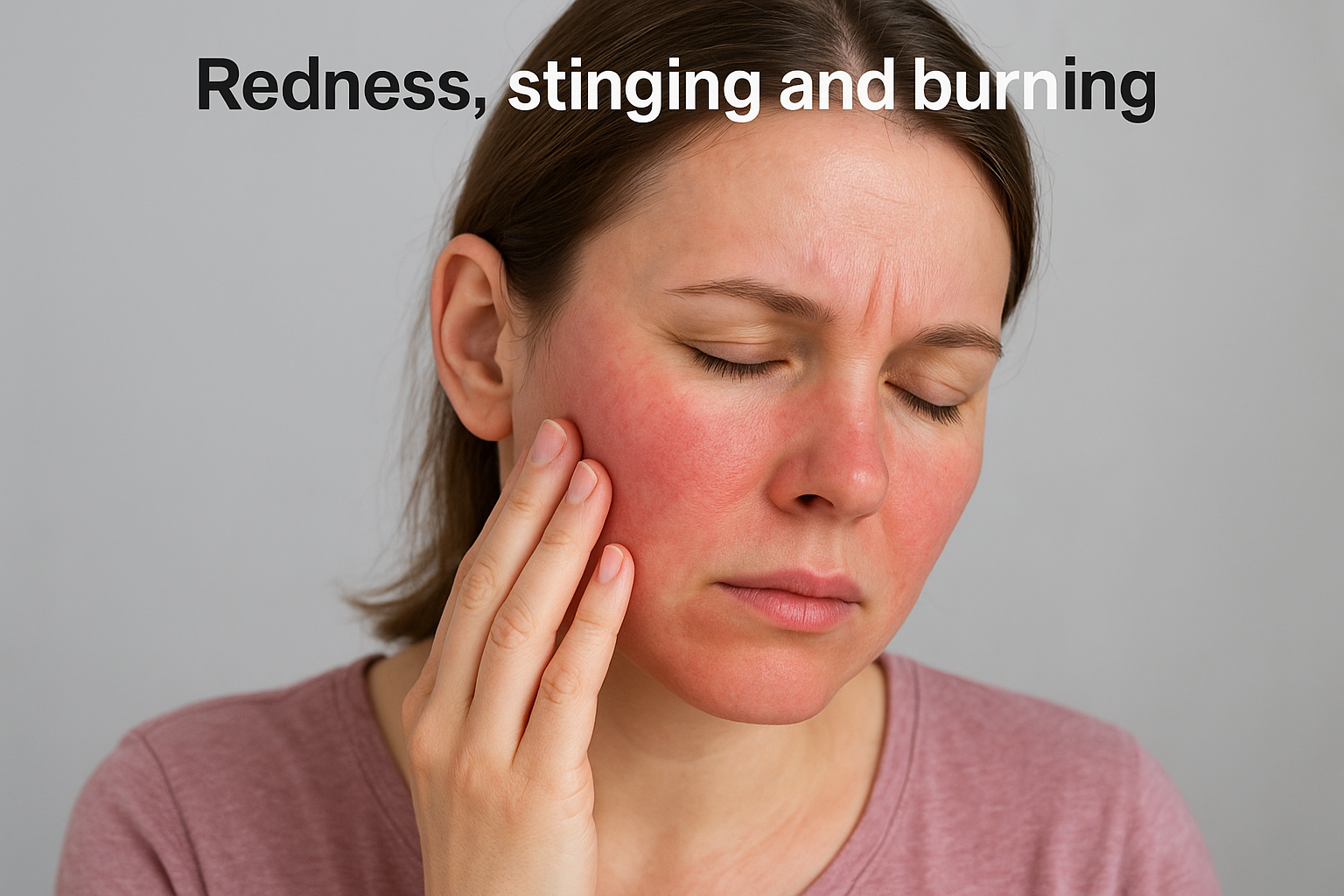
If a product stings the moment it touches your skin, trust that reaction over any marketing claim on the bottle.
Dryness, flaking and tightness
A compromised barrier struggles to hold onto moisture, so dryness and flaking often follow closely behind redness. Skin can feel tight after cleansing, almost like it's been stretched, and this tightness is a clear sign your natural oils have been stripped faster than they can replenish. Left unaddressed, dry patches can crack, particularly around the nose, mouth and hands, which then opens the door to further irritation from everyday products and even from the weather itself.
Itching, bumps and rashes
Itching ranges from a mild, occasional tickle to a persistent, maddening urge to scratch that disrupts sleep and concentration. Small red bumps or hive-like welts sometimes appear after contact with a specific fabric, detergent or skincare ingredient, and these can spread if you keep scratching at them. Rashes with defined edges tend to suggest contact dermatitis, while more diffuse, patchy redness often points towards a broader sensitivity rather than one specific culprit.
| Symptom | Common triggers | Usual timeframe |
|---|---|---|
| Redness/flushing | Heat, alcohol, fragrance | Minutes |
| Stinging/burning | Acids, alcohol toners, hot water | Immediate |
| Dryness/flaking | Over-washing, low humidity, harsh soap | Hours to days |
| Itching/rashes | Detergents, wool, preservatives | Hours to days |
| Tightness | Stripping cleansers, cold wind | Immediate |
When symptoms escalate quickly
Occasionally symptoms move fast enough to be concerning, such as swelling around the eyes, hives spreading across a large area, or breathing difficulty alongside a skin reaction. These signs point towards a genuine allergic response rather than simple sensitivity, and they warrant medical attention rather than a wait-and-see approach. Watching how quickly symptoms build, and how far they spread, helps you judge whether you're dealing with everyday sensitivity or something that needs a doctor's input sooner rather than later.
Skin conditions often linked to sensitivity
Sensitive skin sometimes exists on its own, but often it's a symptom of something bigger going on underneath. Diagnosed skin conditions frequently share the same root cause, a compromised barrier, which means the redness and stinging you're noticing might be one piece of a larger picture rather than an isolated quirk. Recognising these links helps you stop chasing random products and start addressing the actual condition driving your reactions.
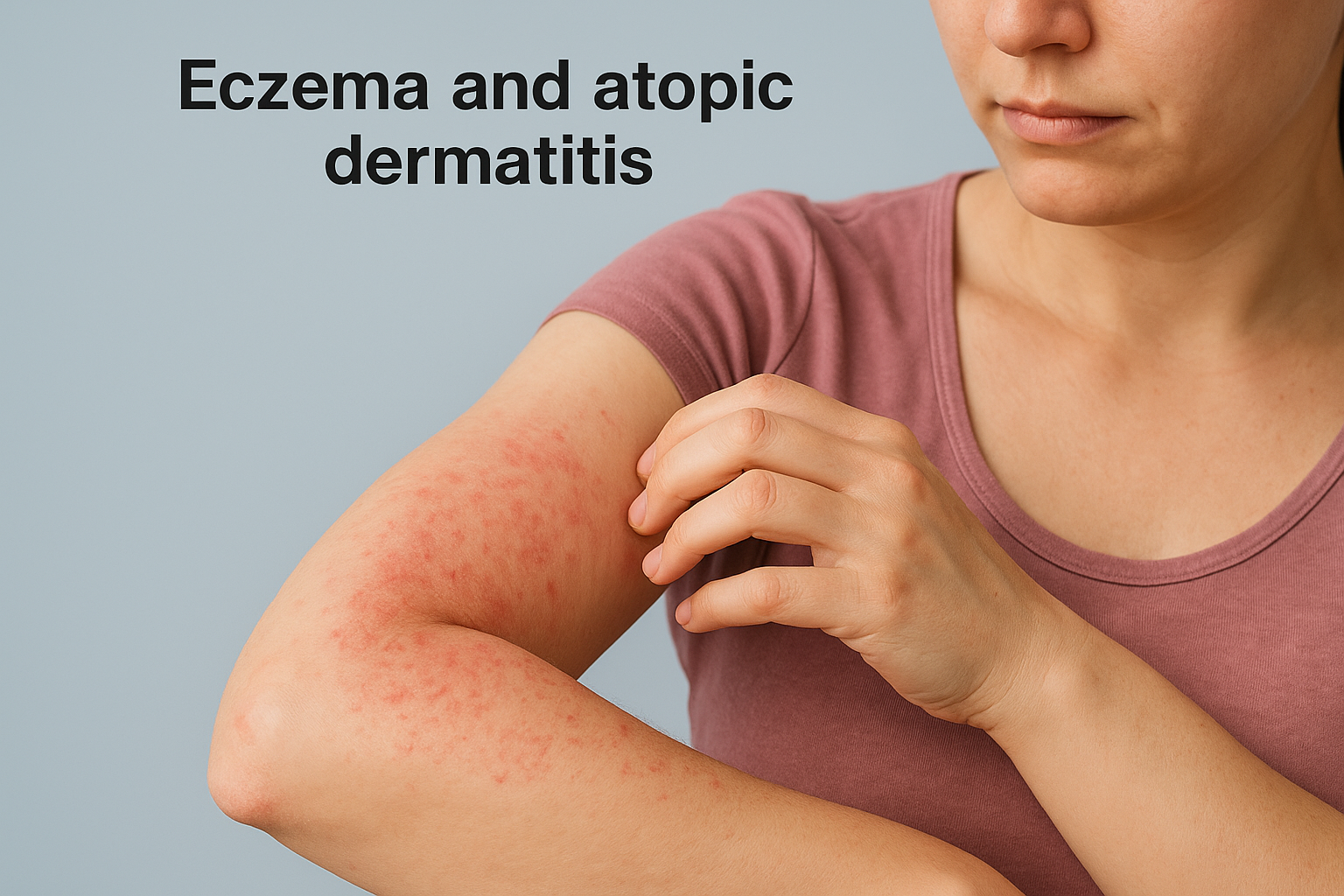
Eczema and atopic dermatitis
Eczema, medically known as atopic dermatitis, is one of the clearest examples of a barrier problem gone wrong. Low filaggrin production, the same protein we mentioned earlier, leaves skin unable to hold moisture properly, so it becomes dry, cracked and intensely itchy, often in the creases of elbows and knees. Flares tend to follow triggers like wool fabrics, fragranced products, sweat and stress, which overlaps heavily with general sensitive skin triggers. According to the Australasian College of Dermatologists, eczema affects a significant portion of Australian children and a smaller but still notable share of adults, many of whom carry it into adulthood in a milder form.
Rosacea
Rosacea shows up as persistent facial redness, visible blood vessels and sometimes small, acne-like bumps, usually across the cheeks, nose and forehead. Heat, alcohol, spicy food, sun exposure and stress all provoke flare-ups, and the skin often stings or burns with products that wouldn't bother anyone else. Rosacea-prone skin reacts so strongly to fragrance and harsh actives that many sufferers eventually strip their routine down to the bare essentials just to keep symptoms under control.
Rosacea and eczema aren't separate from sensitive skin, they're often the medical explanation behind it.
Contact dermatitis
Contact dermatitis splits into two types, irritant and allergic, and both produce a rash exactly where the trigger touched your skin. Irritant contact dermatitis develops from repeated exposure to something harsh, like detergents or cleaning products, while allergic contact dermatitis involves your immune system reacting to a specific allergen, often nickel, fragrance mixes or preservatives. The defined, localised shape of the rash is usually the giveaway that separates this from more general sensitivity.
Psoriasis and other barrier disorders
Psoriasis causes thick, scaly patches as skin cells build up faster than they shed, and while its cause differs from typical sensitivity, the affected skin becomes noticeably more reactive to friction, dryness and harsh products. Other barrier disorders, including certain forms of dermatitis linked to genetic mutations, follow a similar pattern where the skin's protective function simply doesn't work as it should.
| Condition | Key sign | Common trigger overlap |
|---|---|---|
| Eczema | Itchy, cracked patches | Fragrance, wool, sweat |
| Rosacea | Facial redness, bumps | Heat, alcohol, sun |
| Contact dermatitis | Localised rash | Detergents, nickel, preservatives |
| Psoriasis | Thick, scaly patches | Friction, dryness |
If you notice your symptoms following one of these patterns consistently, it's worth mentioning to a GP rather than assuming it's ordinary sensitivity you can manage alone.
How to build a gentle skincare routine
Rebuilding a damaged barrier takes weeks, not days, and the process works best when you strip your routine back before adding anything new. A gentle skincare routine isn't about buying more products, it's about removing the ones doing the damage and giving your skin room to repair itself. Most people over-complicate this step, layering on serums and actives while the actual problem, a compromised barrier, keeps getting reinjured underneath.
Simplify before you add anything new
Start by cutting your routine down to the basics for two to four weeks: a gentle cleanser, a barrier-repairing moisturiser, and sunscreen during the day. Nothing else. This gives your skin a genuine chance to recover without constant interference from actives, fragrance or exfoliants fighting each other for attention. Once your skin calms down, you can reintroduce one product at a time, waiting a week between each addition to see how your skin responds.
Simplifying your routine isn't a step backwards, it's how a damaged barrier actually gets the chance to heal.
Choose products built for sensitive skin
Look specifically for fragrance-free, low-irritant formulas rather than anything labelled "natural" without checking the ingredient list, since natural doesn't automatically mean gentle. Essential oils, citrus extracts and certain botanical ingredients can irritate a compromised barrier just as easily as synthetic ones. This applies to more than skincare too. If you love scented candles or a warm bath at the end of the day, choose blends made without harsh synthetic fragrance load, our Coorong Candle Co range is hand-poured with soy wax and considered fragrance levels, so you can enjoy a relaxing evening without the airborne irritants that trigger flare-ups in more sensitive skin types.
Mind the water and the wash
Swap hot showers for lukewarm water and keep them under ten minutes, since prolonged heat exposure strips lipids faster than your skin can replace them. Pat your skin dry with a soft towel rather than rubbing, and apply moisturiser within a few minutes while your skin is still slightly damp to lock in hydration. If you use bath products, choose ones without harsh sulfates or heavy synthetic fragrance, a mild, well-formulated bath bomb or soak is far kinder to reactive skin than standard supermarket bubble bath.
Layer in soothing, not stripping, ingredients
Once your barrier has settled, look for ingredients with genuine evidence behind them:
- Ceramides to rebuild the lipid barrier
- Niacinamide to calm redness and support barrier function
- Hyaluronic acid for lightweight hydration without irritation
- Colloidal oatmeal to soothe itching and inflammation
Introduce one at a time, patch test first, and stop immediately if stinging or redness appears.
When to see a dermatologist
Self-care and a stripped-back routine solve most cases of everyday sensitivity, but some situations genuinely need professional input. Seeing a dermatologist isn't an admission that you've failed at managing your own skin, it's simply the right move when symptoms outlast home remedies or point to something more specific than general reactivity. Knowing where that line sits saves you months of trial and error with products that were never going to fix the underlying issue.
Persistent symptoms despite a gentle routine
Give a simplified routine four to six weeks before judging whether it's working. If redness, dryness or stinging hasn't improved by then, or keeps returning as soon as you reintroduce anything beyond the basics, that's a sign the problem runs deeper than product choice alone. Ongoing flare-ups despite fragrance-free products, lukewarm showers and a minimal routine often point towards an underlying condition like eczema or rosacea that needs targeted treatment rather than more patience.
If a stripped-back routine hasn't helped after six weeks, the answer probably isn't another product, it's a diagnosis.
Signs that suggest more than simple sensitivity
Certain symptoms move well beyond ordinary reactivity and deserve a proper assessment rather than another patch test. Watch for these signs specifically:
- Rashes with defined, spreading edges that don't settle within a week
- Cracked, weeping or bleeding skin, which raises the risk of infection
- Swelling around the eyes, lips or throat, a possible sign of allergic reaction
- Widespread hives that appear suddenly and cover large areas
- Persistent facial redness with visible blood vessels, often an early sign of rosacea
- Pain, warmth or pus around a rash, which can indicate a secondary infection
Any of these warrants a same-week appointment rather than waiting to see if things settle on their own.
What a dermatologist can offer that home care can't
Beyond a visual check, a dermatologist can run patch testing for specific allergens, something far more precise than trial-and-error at home, and prescribe treatments like topical steroids, calcineurin inhibitors or targeted rosacea medication when needed. They can also confirm whether you're dealing with eczema, contact dermatitis, rosacea or something else entirely, since these conditions often look similar to the untrained eye but respond to quite different treatments. The Australasian College of Dermatologists recommends seeking specialist advice whenever over-the-counter approaches fail to improve symptoms within a reasonable timeframe, rather than continuing to self-treat indefinitely.
Bring evidence, not just symptoms
Walking in with your reaction diary, a list of products you've used and photos of flare-ups mid-reaction makes a real difference to how quickly you get answers. Photos matter particularly because redness and rashes often fade by the time you're sitting in the consultation room, leaving the dermatologist working from your description alone. Turning up prepared, rather than trying to explain everything from memory, tends to shorten the path to an accurate diagnosis and a treatment plan that actually addresses what's going on.
Living well with sensitive skin
Sensitive skin isn't a life sentence of caution and bland products. Understanding your triggers, whether that's hot water, fragrance load, stress or genetics, gives you real control instead of leaving you guessing after every flare-up. Most people find that once they simplify their routine and identify what actually sets their skin off, reactions become far less frequent and far less alarming when they do happen.
Give your barrier time, patch test properly, and don't ignore symptoms that don't fit the usual pattern. A gentle daily ritual, paired with the right professional support when needed, lets you enjoy the things that make life comfortable again, including a proper soak at the end of a long day. If you're looking to unwind without the harsh synthetic fragrances that irritate reactive skin, browse our handmade bath bombs made with gentle, skin-nourishing ingredients you can actually feel good about using.