
If you've ever attended an Italian wedding or a Greek christening, chances are you've taken home a small, beautifully wrapped gift at the end of the night. That gift is called a bonbonniere, a traditional party favour with centuries of history behind it. While the word might sound unfamiliar, the concept is something most of us have encountered at celebrations across Australia and beyond.
At Coorong Candle Co., we craft handmade candles, bath bombs, and home fragrance products that make thoughtful gifts for exactly these kinds of occasions. So we know a thing or two about choosing meaningful keepsakes for guests.
This article covers everything you need to know about bonbonnieres, from their origins in European aristocracy to their role in modern weddings and christenings. We'll also share practical gift ideas to help you pick the perfect favour for your next event.
What is a bonbonniere
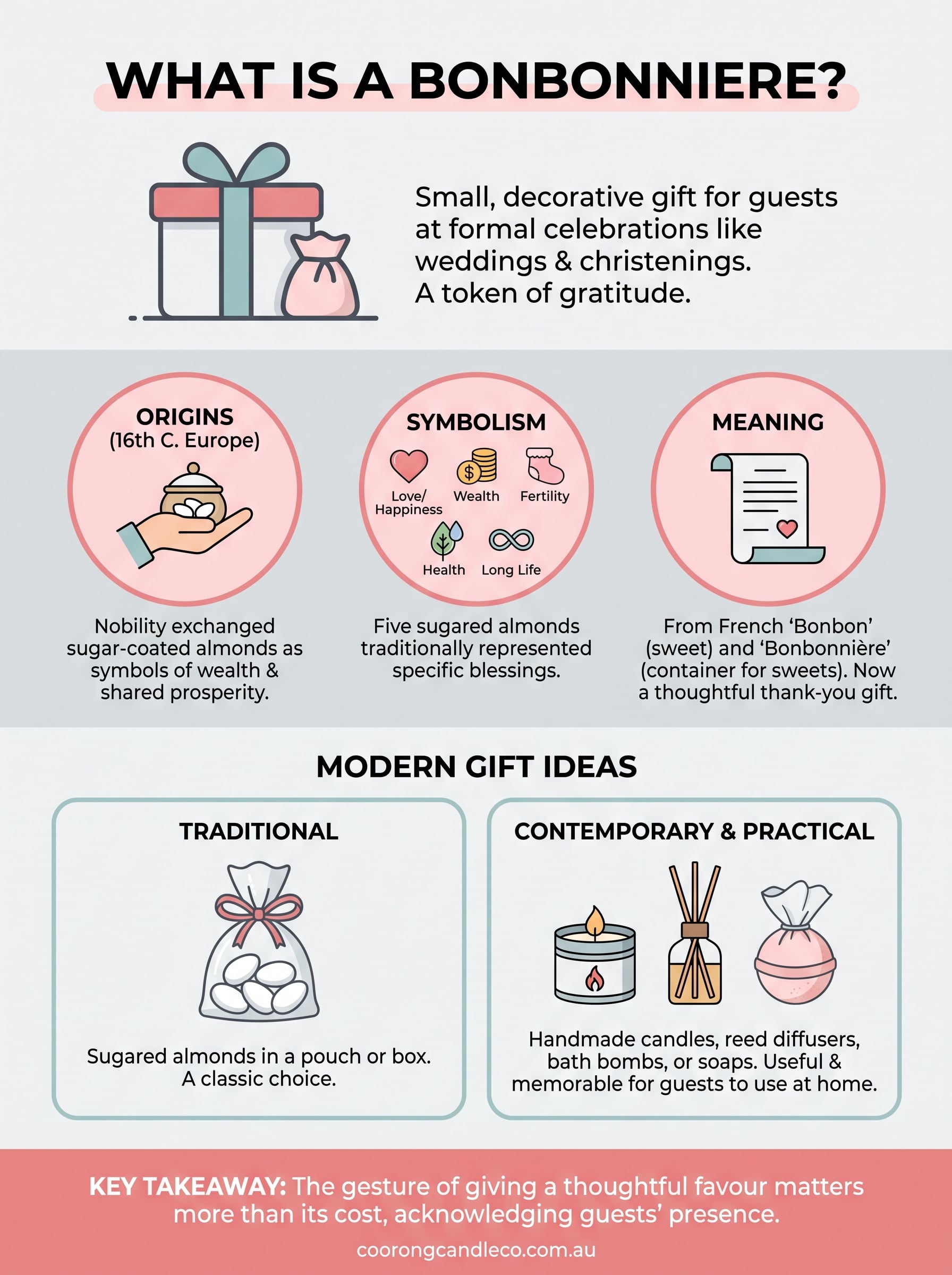
A bonbonniere (also spelled "bonbonnière") is a small decorative gift given to guests at formal celebrations like weddings, christenings, and engagement parties. The word comes from the French "bonbon," meaning sweet or candy, which gives you an immediate clue about what these little parcels traditionally held. In Australia, you'll most often encounter them at events with strong European heritage, though the practice has spread well beyond those communities.
A bonbonniere is essentially a host's way of saying thank you to each guest for sharing in a significant life moment.
The literal meaning of the word
When people ask what is a bonbonniere, they're often surprised to learn the answer is rooted in the French language. "Bonbonnière" literally translates to a box or container for bonbons, those small sugar-coated confections that European aristocrats once exchanged as tokens of goodwill and affection.
The spelling varies depending on where you are. In French and Italian contexts, you'll see the accented "bonbonnière," while in everyday Australian usage the accent is typically dropped. Either way, the word always points to the same idea: a small, gift-wrapped token presented to every guest at a celebration.
What a bonbonniere looks like
A traditional bonbonniere comes in a small pouch, box, or decorative container, often tied with ribbon or tulle netting. The packaging itself is considered part of the gift, so hosts generally put real care into matching the style to the event's theme or colour palette, which is why these favours often look as good as they are personal.
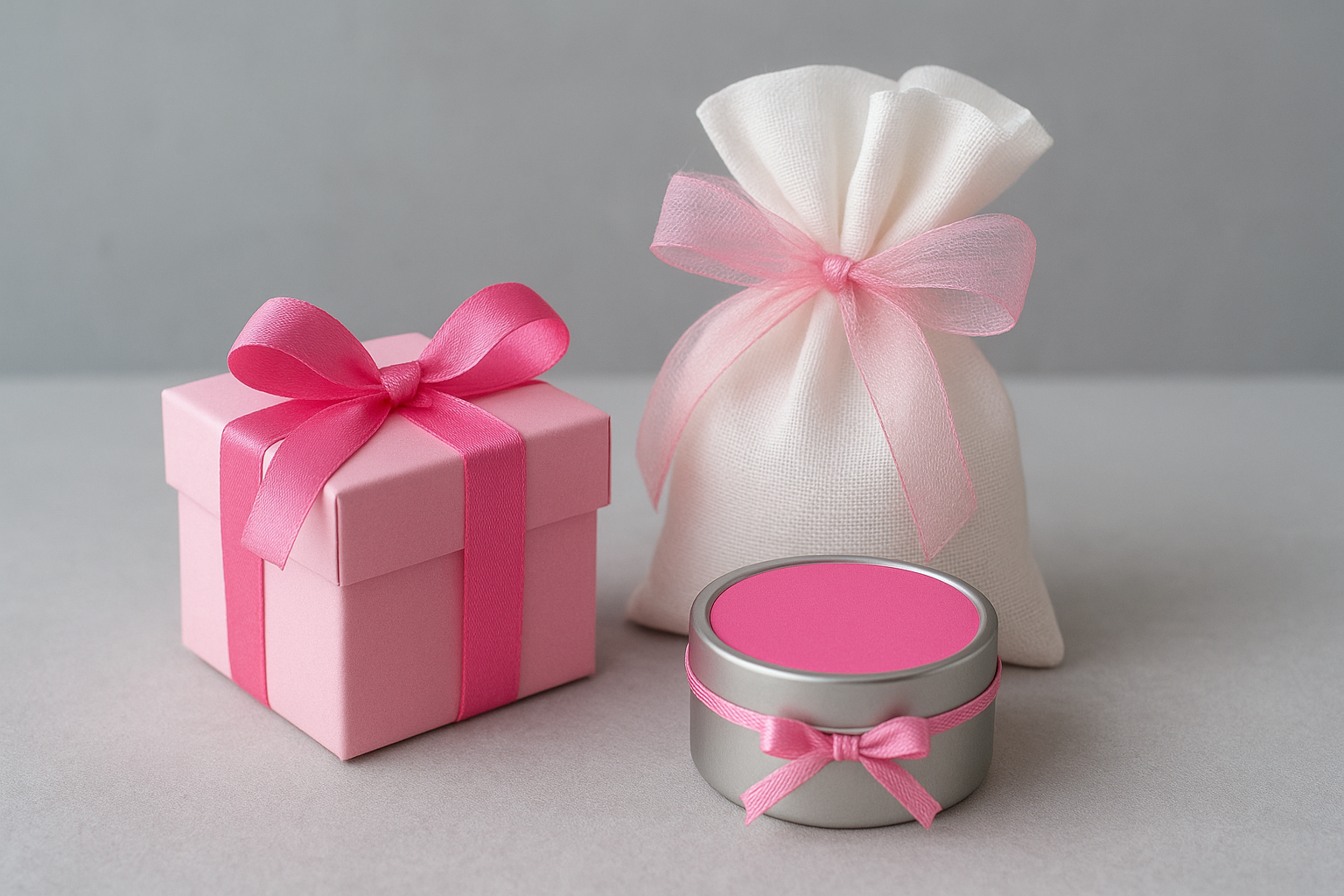
You don't need an elaborate setup to make your bonbonnieres feel thoughtful. Even a small candle in a travel tin or a bath bomb wrapped in tissue can leave a lasting impression when it reflects the occasion's mood.
Where the tradition comes from
The bonbonniere has roots stretching back to 16th-century European nobility, where wealthy families exchanged sugar-coated almonds as a symbol of celebration and shared prosperity. Sugar was a genuine luxury at the time, so presenting guests with sweetened confections carried real social weight. Understanding what is a bonbonniere today makes much more sense when you trace it back to these early rituals of generosity and hospitality.
From sugar boxes to symbolic gifts
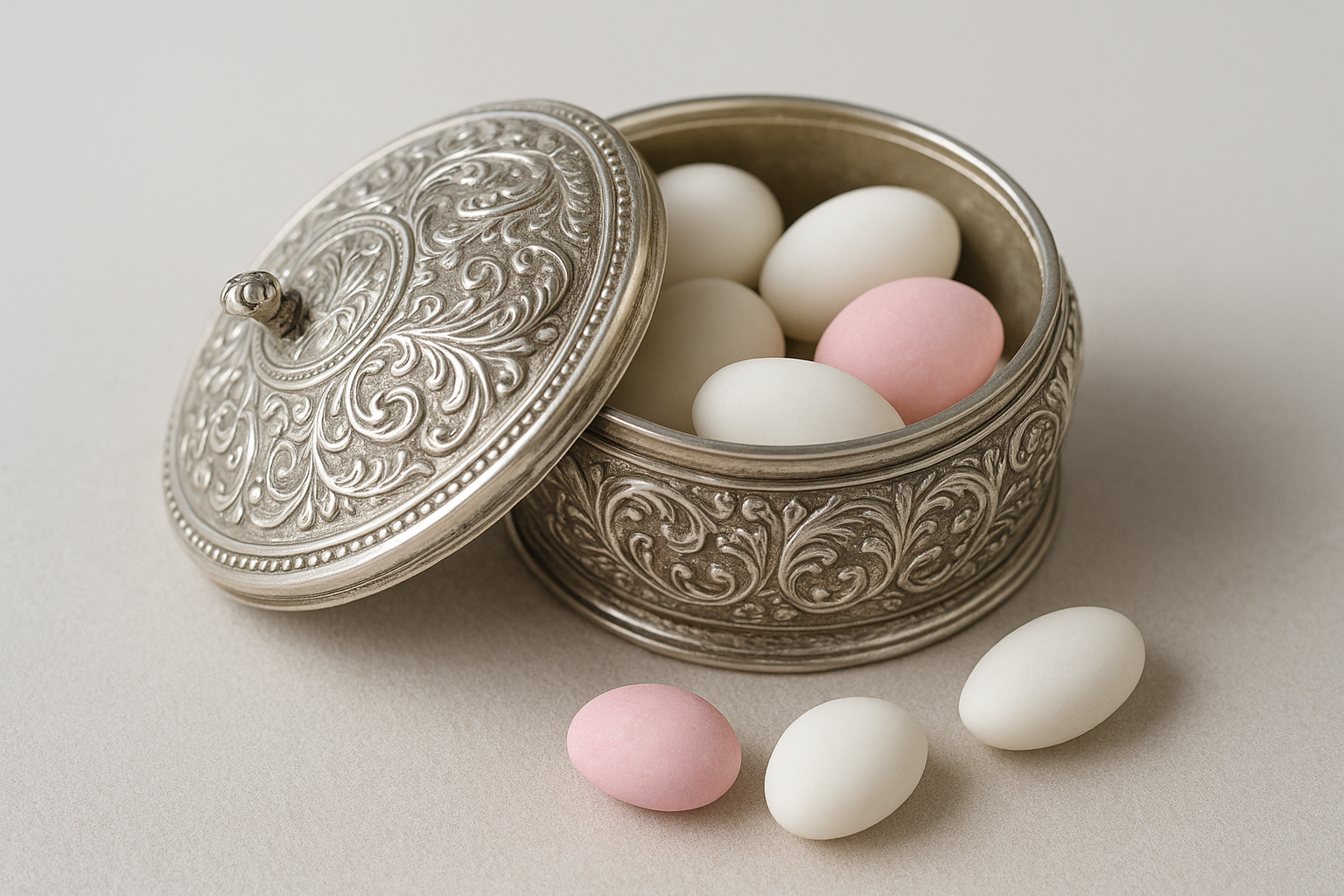
European aristocrats kept small, ornate containers called bonbonnières specifically to hold and present these sugared sweets. Over time, the containers themselves became objects of fine craftsmanship, made from silver, porcelain, and enamel. The five sugared almonds placed inside each bonbonniere became deeply symbolic in Catholic tradition, with each one said to represent a specific blessing for the couple:
- Health
- Wealth
- Happiness
- Fertility
- Long life
How the tradition reached Australia
Italian and Greek immigrant communities brought the bonbonniere custom to Australia throughout the 20th century, embedding it firmly in local wedding and christening culture. Over the following generations, the practice spread well beyond those communities into broader Australian celebrations.
The tradition survived because it gives guests something tangible to take home from a day that meant something to everyone in the room.
Why people give bonbonniere today
The bonbonniere has outlasted the aristocratic world it came from because it serves a purpose that still resonates: acknowledging your guests as individuals, not just as names on a seating chart. Even when encountering what is a bonbonniere for the first time, most people immediately understand why the tradition has staying power. A small, thoughtful gift tells each person that their presence at your celebration was genuinely noticed and valued.
The best bonbonnieres don't need to be expensive; they need to feel considered.
A token of gratitude, not obligation
Modern couples and families give bonbonnieres because the gesture communicates care. It signals that you thought about the guest experience, which shapes how people feel about your entire event. Your favour doesn't need to be lavish to feel meaningful. A well-chosen, nicely presented gift that reflects the occasion's mood will always land better than something generic or forgettable.
Keeping cultural connections alive
For many Australian families with Italian, Greek, or Lebanese heritage, giving bonbonnieres is also a way of honouring their roots. Sharing a tradition across generations keeps cultural identity present at moments that already carry deep family significance. Beyond heritage, the practice appeals to anyone who wants their celebration to feel personal rather than formulaic.
How to choose bonbonniere for your event
Choosing the right bonbonniere comes down to knowing your guests and matching the gift to the mood of your event. Once you understand what is a bonbonniere and the intention behind it, the decision becomes much more straightforward. You're not looking for the most expensive option; you're looking for the most fitting one.
A bonbonniere that reflects your event's personality will always feel more personal than one chosen purely for its price tag.
Match the gift to the occasion
Weddings, christenings, and engagement parties each carry a different tone, so your favour should reflect that. Think about what a guest might actually use at home, rather than something they'll set aside and forget. A few things worth considering:
- Formality: formal weddings suit polished gifts like small candles or reed diffusers
- Age range: mixed-age guest lists benefit from universally appealing options
- Theme: seasonal or regional themes tie the favour back to the event itself
Keep your budget practical
Set a clear per-head budget before you start shopping, then look for gifts that feel generous within that range. Handmade products often deliver strong perceived value without a high price point.
Your guests will remember how your favour made them feel far more than what it cost you to produce.
Bonbonniere ideas beyond sugared almonds
Once you know what is a bonbonniere and the sentiment behind it, you can get creative with what goes inside. Sugared almonds remain a classic choice, but modern hosts are increasingly choosing gifts that guests will actually use at home long after the celebration ends. The key is picking something that feels personal to your event rather than simply ticking a box.
The best bonbonniere is one your guests will use again, not just admire once.
Home fragrance and candles
Small candles and reed diffusers make excellent bonbonnieres because they're practical, long-lasting, and suit almost any guest. A travel tin candle or a miniature diffuser tied with ribbon instantly elevates the presentation while giving guests something genuinely useful to take home. Scented products work especially well because the fragrance becomes associated with the memory of your celebration.
Bath and self-care gifts
Bath bombs and handmade soaps are another popular choice, particularly for christenings or events with a softer, personal tone. They're simple to wrap, they feel indulgent, and they carry a sense of genuine care that fits perfectly with the spirit of giving. A single bath bomb wrapped in tissue and tulle takes minutes to prepare but looks polished and thoughtful.
Wrapping up
Now you understand what is a bonbonniere: a small, meaningful gift rooted in centuries of European tradition that has found a lasting place in Australian weddings and christenings. The core idea has never changed. You give something thoughtful to every guest as a genuine thank-you for sharing a significant moment in your life.
Choosing the right favour comes down to knowing your guests and picking something they'll actually use at home. Whether you lean toward classic sugared almonds or something more contemporary like a handmade candle or bath bomb, the intention behind the gift always matters far more than its price tag. Guests remember how a favour made them feel, not what it cost.
Ready to find something your guests will genuinely love? Browse our travel tin candles, handcrafted in small batches in South Australia and designed specifically for gifting occasions like weddings and christenings.