
You've walked into a friend's home and noticed a beautiful scent drifting through the room, no flame, no plug, just a simple glass bottle with wooden sticks. That's a reed diffuser at work. If you've ever wondered what is a reed diffuser and how it creates that effortless fragrance, you're in the right place. These elegant home fragrance solutions have become a favourite for anyone who wants continuous scent without the fuss of candles or electric devices.
At Coorong Candle Co., we handcraft luxury reed diffusers inspired by the natural landscapes of South Australia. Our diffusers bring the essence of places like the Barossa Valley and Kangaroo Island into your living space, using eco-friendly ingredients that align with a mindful approach to home fragrance. We've seen firsthand how the right diffuser can transform a room from ordinary to genuinely inviting.
This guide explains exactly how reed diffusers work, why they've earned their spot as a go-to choice for home scenting, and what to look for when choosing one. Whether you're new to home fragrance or considering an alternative to your usual candles, you'll leave with everything you need to know to make a confident decision. Let's start with the basics.
What a reed diffuser is
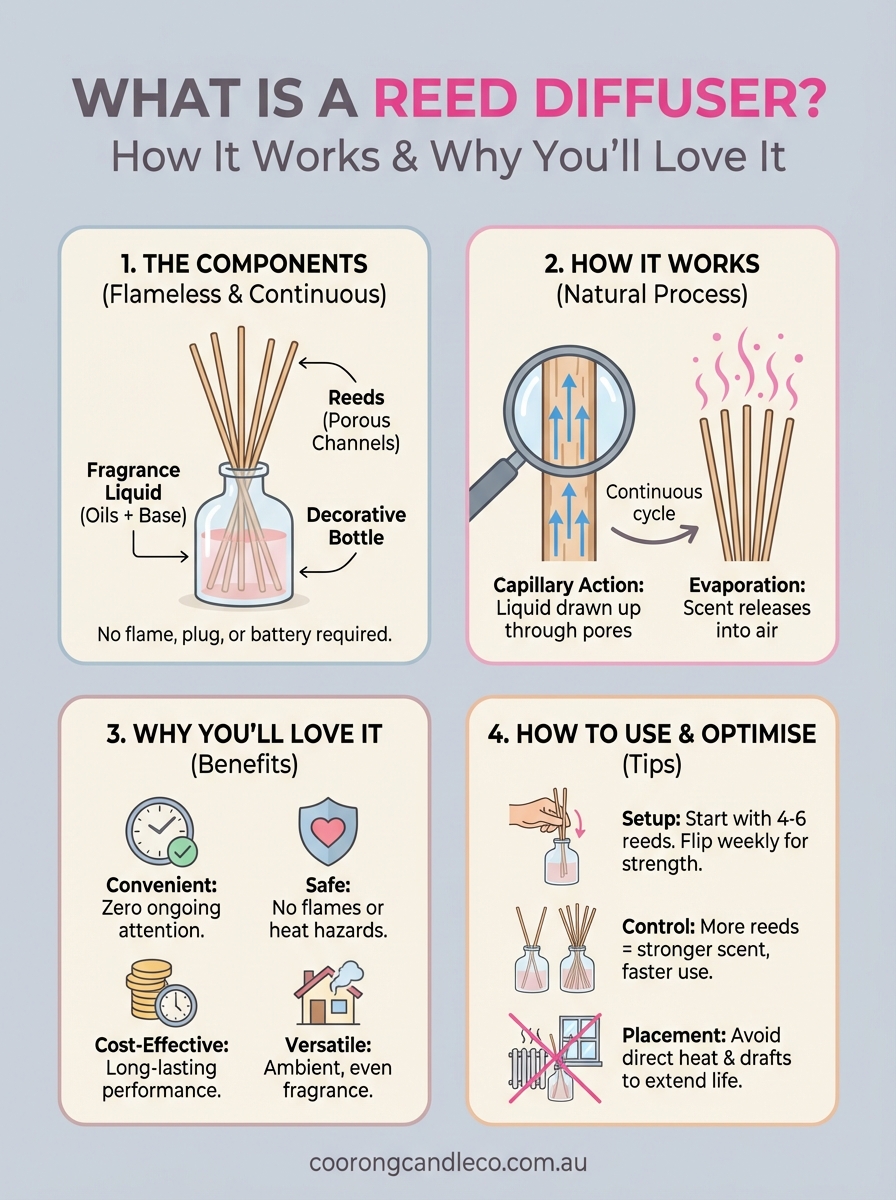
A reed diffuser is a flameless home fragrance system that releases scent continuously through natural absorption and evaporation. The setup consists of fragrant liquid in a decorative bottle and several wooden or rattan sticks (the reeds) that sit inside the liquid. These reeds act as channels, drawing the scented oil upward through tiny pores and releasing fragrance into your space without any electricity, heat, or intervention from you.
The concept relies on capillary action, the same principle that allows plants to draw water from their roots to their leaves. When you place the reeds into the bottle, they absorb the fragrance oil and transport it to the exposed ends. Once the liquid reaches the top, it evaporates into the air around the diffuser, creating a subtle and constant aroma throughout your room. You don't need to light anything, plug anything in, or remember to turn it on.
Unlike candles that require monitoring or plug-in devices that use electricity, a reed diffuser works entirely on its own. This makes them particularly suited to spaces where you want uninterrupted fragrance without active management, such as bathrooms, hallways, or bedrooms. You set it up once and it continues working for weeks or even months, depending on the size and quality of the diffuser.
The core components
Every reed diffuser contains three essential elements: the fragrance liquid, the container, and the reeds themselves. The liquid is typically a blend of fragrance oils and a carrier base, which could be alcohol, water, or a specialised diffuser base designed to optimise evaporation rates. This base determines how quickly the scent spreads and how long your diffuser will last.
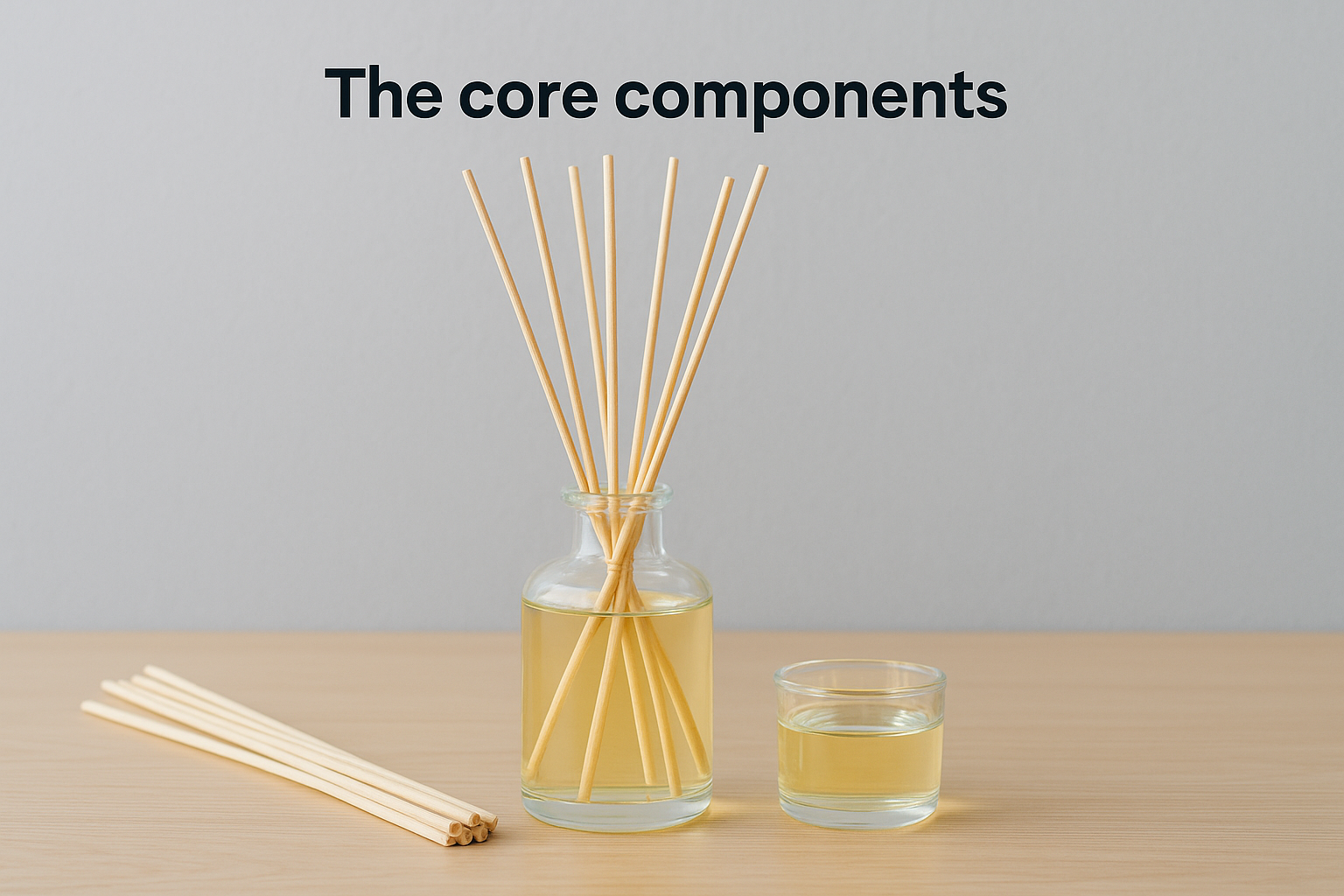
The container serves both functional and aesthetic purposes. It needs to hold the liquid securely while also looking attractive in your space, since a reed diffuser sits out on display rather than being tucked away. Glass bottles are the most common choice because they're non-reactive and transparent, allowing you to see when the liquid level drops and needs refilling.
A quality reed diffuser balances scent strength, longevity, and visual appeal in equal measure.
Reeds are cut from natural materials like rattan or bamboo, chosen for their porous internal structure. These channels run the length of each stick, creating pathways for the liquid to travel upward. Thicker reeds with more channels release stronger fragrance, while thinner reeds provide a more subtle scent throw. Most diffusers include between five and twelve reeds, giving you control over intensity.
What makes them different from other home fragrances
Reed diffusers occupy a unique space in home fragrance because they require zero ongoing attention. Candles need lighting and extinguishing, electric diffusers need power and sometimes water, and aerosol sprays deliver only temporary bursts of scent. A reed diffuser simply continues working from the moment you set it up until the liquid runs out, making it the most hands-off option available.
Safety is another distinguishing factor. Without flames or heating elements, reed diffusers carry no fire risk, making them suitable for homes with children, pets, or areas where open flames are prohibited. You can place them on shelves, desks, or windowsills without worrying about what happens if they're knocked over (though the liquid will spill, it won't ignite).
The scent delivery method also differs from other options. Rather than producing concentrated bursts like sprays or the directional scent of a candle, reed diffusers create an ambient fragrance that fills a space evenly and subtly. This makes them particularly effective in rooms where you want a consistent background scent rather than an obvious fragrance presence.
How reed diffusers work
The mechanics behind reed diffusers are surprisingly straightforward, yet they rely on precise natural processes to deliver fragrance effectively. When you first wondered what is a reed diffuser and how it functions, the answer lies in two core physical principles: capillary action and evaporation. These work together to move fragrance oil from the bottle to your surrounding air without requiring any external power source or manual intervention.
The capillary action process
Capillary action is the same force that allows plants to draw water upward through their stems against gravity. Your reed diffuser reeds contain microscopic channels running along their length, and these channels create surface tension with the fragrance liquid. The liquid molecules are attracted to the reed's internal surfaces more strongly than they're attracted to each other, causing the liquid to climb upward through the pores.
This process begins immediately when you place the reeds into the fragrance bottle. The liquid starts its journey up the reed, travelling from the submerged bottom to the exposed top portion. Depending on the reed's length and thickness, this journey can take several hours to complete initially. Once the liquid reaches the top, it continues to flow as more liquid evaporates from the exposed ends, creating a constant cycle that sustains the diffuser's operation.
The more reeds you use, the faster your diffuser releases fragrance into the room.
Evaporation and scent distribution
Once the fragrance liquid reaches the exposed ends of your reeds, evaporation takes over as the primary mechanism for scent distribution. The fragrance molecules escape from the liquid state into the air around the diffuser, carried by natural air currents throughout your space. This creates a continuous release of scent that doesn't fluctuate like a candle's strength can.
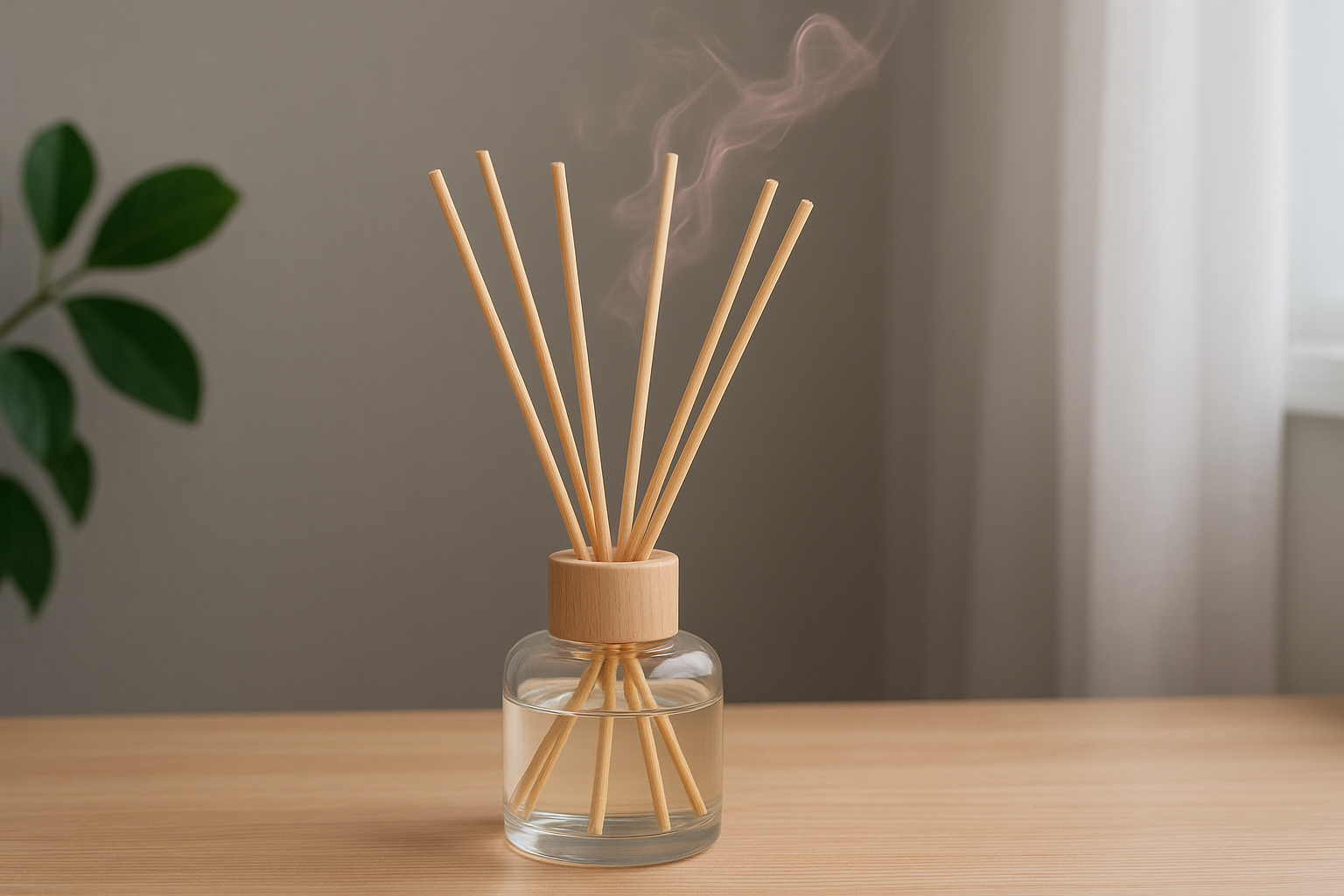
Room temperature and airflow significantly affect how quickly your diffuser releases its fragrance. Warmer environments cause faster evaporation, intensifying the scent but depleting the liquid more quickly. Placing your diffuser near windows, doors, or air vents increases air circulation around the reeds, which disperses the fragrance more widely but also accelerates the evaporation rate. You can control the intensity by adjusting the number of reeds in the bottle, using fewer for subtle scent or adding more for stronger fragrance presence.
Why reed diffusers are worth considering
Reed diffusers offer practical advantages that make them stand out among home fragrance options. Now that you understand what is a reed diffuser and how it operates, you'll appreciate why so many people choose them over alternatives like candles or electric diffusers. They combine convenience with consistent performance, delivering fragrance that enhances your space without demanding your attention or creating safety concerns.
Convenience and safety benefits
You never need to remember to light, extinguish, or refill a reed diffuser throughout your day. Unlike candles that require constant supervision and electric diffusers that need regular water top-ups, reed diffusers work independently from the moment you set them up. This makes them particularly valuable in frequently occupied spaces like home offices, bathrooms, or entryways where you want persistent fragrance without ongoing maintenance.
Safety represents another significant advantage. Reed diffusers produce no flames, heat, or electrical hazards, making them suitable for homes with children, pets, or strict safety regulations. You can place them on wooden furniture, fabric surfaces, or near curtains without the fire risks associated with candles. Rental properties and offices often restrict candle use but welcome reed diffusers as a safe alternative.
Reed diffusers provide 24-hour fragrance without requiring a single moment of your attention.
Cost effectiveness over time
The initial investment in a quality reed diffuser typically ranges higher than a single candle, but the extended lifespan changes the economics. A well-made diffuser lasts between two and six months depending on its size and your room conditions, while most candles burn out after 20 to 40 hours. This longer duration means fewer purchases and less frequent replacement.
You also avoid the ongoing costs of replacement bulbs or electricity that plug-in diffusers require. The only expense beyond your initial purchase is occasionally buying refill liquid and replacing reeds when they become saturated. Many Australian retailers, including artisan producers, offer refill options that cost less than purchasing entirely new units.
Aesthetic and practical versatility
Reed diffusers suit virtually any interior style, from minimalist modern to traditional heritage homes. The clean lines of a glass bottle with natural reeds complement existing decor without overwhelming your visual space. You can position them on narrow shelves, windowsills, or compact surfaces where candles would pose tipping hazards or electric diffusers wouldn't fit.
Different room sizes and purposes work well with reed diffusers. Smaller diffusers handle bathrooms and studies effectively, while larger bottles provide adequate fragrance for open-plan living areas. You control the intensity by adjusting the number of reeds, creating custom fragrance levels that match your preferences and your space's ventilation.
How to set up and use a reed diffuser
Setting up your reed diffuser takes less than five minutes, and the process requires no special tools or skills. Once you know what is a reed diffuser and how the components work together, the actual setup becomes straightforward. You'll achieve the best results by following a logical sequence that protects both your diffuser's longevity and your surrounding surfaces.
Unpacking and positioning your diffuser
Remove all packaging materials from your diffuser bottle and reeds before you begin. Check that the bottle sits on a stable, level surface away from direct sunlight, which can degrade the fragrance oils and accelerate evaporation. Avoid placing your diffuser directly on polished wood or painted surfaces without protection, as accidental spills can damage finishes.
Choose your location based on airflow patterns in the room. Positioning your diffuser near doorways or windows helps distribute fragrance throughout the space, but excessive drafts will cause the liquid to evaporate faster than necessary. Central locations like side tables, bathroom counters, or hallway consoles work well for balanced scent coverage without overwhelming any single area.
Inserting and adjusting the reeds
Carefully remove the bottle's cap or stopper and insert your reeds into the opening. Start with half the total reeds provided, which typically means four to six sticks for most standard diffusers. This conservative approach lets you gauge the initial fragrance strength before adding more reeds if needed.
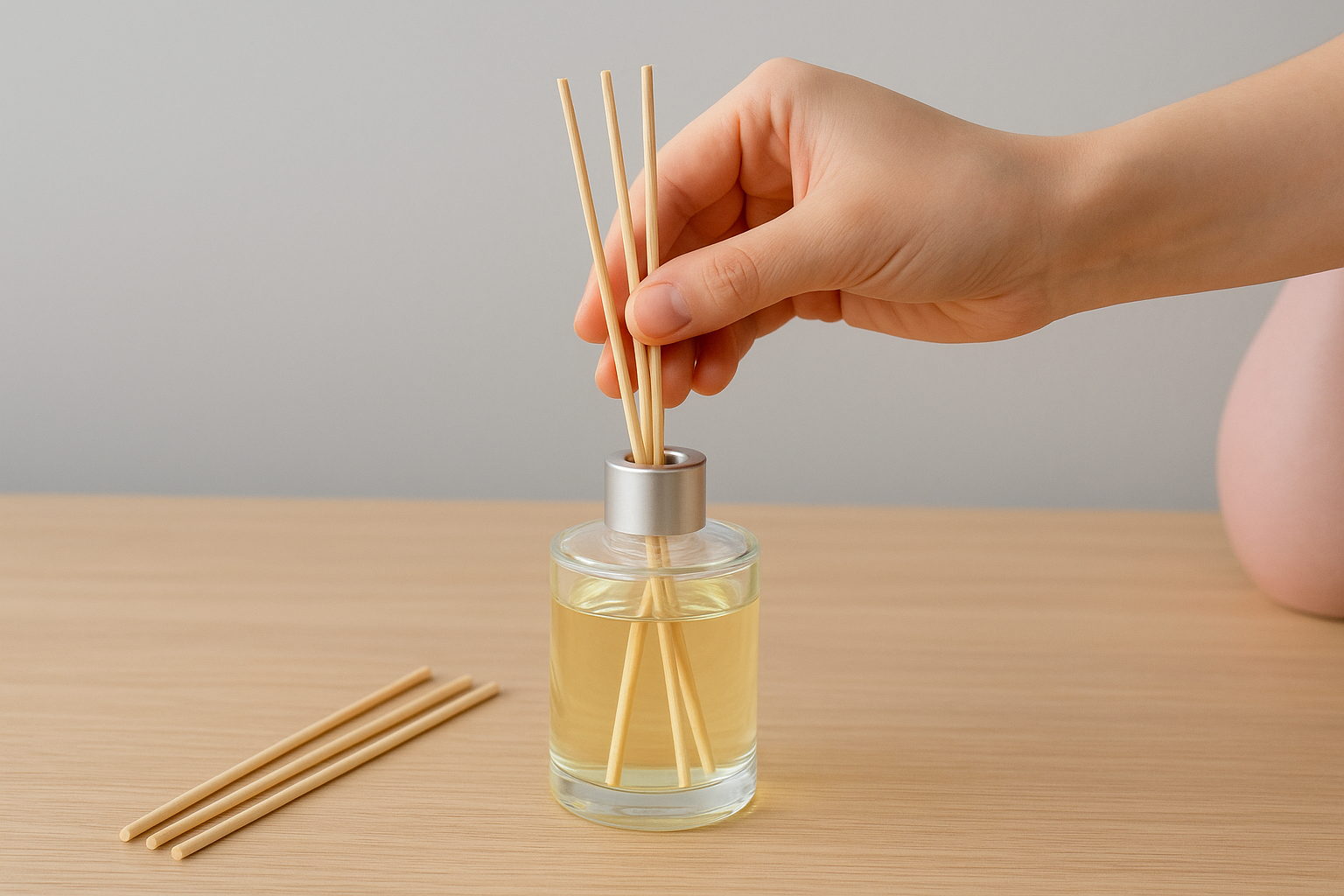
Starting with fewer reeds gives you better control over scent intensity and extends your diffuser's lifespan.
The reeds will begin absorbing liquid immediately, but you'll notice the strongest fragrance develops after the first few hours once the liquid reaches the exposed ends. If the scent feels too subtle after a day, add one or two additional reeds. Conversely, if the fragrance overwhelms your space, remove a reed to reduce the intensity.
Flipping for optimal performance
After the initial setup period of 24 hours, flip your reeds by removing them from the bottle and reinserting them upside down. This places the saturated ends at the top where they release fragrance most effectively. The previously dry ends now sit in the liquid, beginning their absorption cycle.
Repeat this flipping process every one to two weeks to maintain consistent scent throw. You'll notice the fragrance strengthens immediately after flipping as the saturated ends release concentrated oils into your room. Handle the reeds carefully during this process to avoid dripping liquid on furniture or floors.
How to make your reed diffuser last longer
Your diffuser's lifespan depends entirely on how quickly the fragrance liquid evaporates, and you control this rate through several adjustable factors. Most reed diffusers last between two and six months under normal conditions, but strategic choices can extend this period significantly. Understanding what is a reed diffuser and its evaporation mechanics lets you maximise value from each bottle while maintaining the fragrance strength you want.
Controlling evaporation rate
The number of reeds you use directly impacts how fast your diffuser depletes. Each additional reed creates more surface area for evaporation, which intensifies the scent but shortens the liquid's lifespan. Start with the minimum number of reeds that provides adequate fragrance for your space, typically four to six sticks for average-sized rooms. You can always add more reeds later if needed, but you cannot reverse accelerated evaporation once it begins.
Flip your reeds less frequently to conserve liquid. While weekly flipping maintains strong fragrance, extending this interval to every two or three weeks significantly reduces consumption without creating noticeable scent gaps. The fragrance continues releasing between flips, just at a slightly lower intensity that most people find perfectly adequate.
Reducing your reed count by just two sticks can extend your diffuser's life by several weeks.
Optimal placement strategies
Position your diffuser away from heat sources like radiators, sunny windowsills, or air conditioning vents. Heat accelerates evaporation dramatically, potentially halving your diffuser's lifespan while creating inconsistent scent distribution. Choose cooler locations with stable temperatures for the most predictable and economical performance.
Avoid high-traffic areas where air movement constantly flows past your diffuser. Hallways near exterior doors or rooms with ceiling fans create constant air circulation that pulls fragrance molecules away from the reeds faster. Calmer locations allow the scent to disperse naturally without the forced evaporation that drafts cause.
Maintenance and care practices
Replace your reeds every four to six weeks even if liquid remains in the bottle. Saturated reeds become clogged with residue that blocks their internal channels, reducing fragrance output and forcing you to use more reeds than necessary. Fresh reeds restore optimal absorption and let you maintain fragrance with fewer sticks.
Keep your bottle capped when you're away from home for extended periods. A simple cap or the original stopper prevents unnecessary evaporation during holidays or business trips. This pause extends your diffuser's active life without affecting the fragrance quality when you resume use.
How to choose the right scent and size
Selecting the right reed diffuser involves matching fragrance characteristics to your room's purpose and choosing a bottle size that provides adequate coverage without overwhelming your space. Now that you understand what is a reed diffuser and how it functions, you can make informed choices that align with both your sensory preferences and practical needs. The wrong combination creates either insufficient fragrance or an overpowering atmosphere that drives you from the room.
Matching scent to room purpose
Different rooms serve distinct functions, and your fragrance choices should complement these activities rather than compete with them. Bedrooms benefit from calming scents like lavender, chamomile, or vanilla that promote relaxation and sleep quality. These softer fragrances create a restful environment without the stimulating effects that citrus or mint deliver.
Living areas and entryways work well with welcoming, neutral scents that appeal to diverse preferences since guests experience these spaces most frequently. Fresh linen, subtle florals, or light woody notes provide pleasant background fragrance without dominating conversations or clashing with cooking aromas. Bathrooms suit clean, crisp scents like eucalyptus, sea salt, or citrus that convey freshness and cleanliness.
Choose scents that enhance your room's purpose rather than fighting against it.
Home offices require concentration-friendly fragrances such as peppermint, rosemary, or lemon that stimulate alertness without causing distraction. Avoid heavy florals or sweet gourmand scents in workspaces, as these can reduce focus and create afternoon drowsiness.
Size considerations for different spaces
Bottle capacity determines how long your diffuser lasts and how effectively it scents your space. Small diffusers (100-150ml) suit compact rooms like bathrooms, walk-in wardrobes, or powder rooms where limited air volume requires less fragrance output. These smaller bottles typically last two to three months under normal conditions.
Medium diffusers (200-300ml) handle standard bedrooms, studies, and dining rooms effectively, providing adequate scent throw for spaces up to 25 square metres. You'll achieve three to five months of continuous fragrance from these bottles, making them the most economical choice for everyday living areas.
Large diffusers (350ml and above) become necessary for open-plan areas, master bedrooms, or commercial spaces where air volume exceeds 30 square metres. These substantial bottles deliver consistent fragrance for four to six months, justifying their higher initial cost through extended performance and reduced replacement frequency.
Safety, pets and indoor air quality
Reed diffusers present fewer safety concerns than candles or plug-in devices, but you still need to consider how they affect your household members and environment. Understanding what is a reed diffuser includes recognising its chemical composition and how fragrance oils interact with living spaces. The liquid base typically contains alcohol or similar carriers that help disperse scent, and while these create no fire hazard, they require responsible handling around vulnerable household members.
Pet safety considerations
Dogs and cats experience fragrance differently than humans due to their heightened sensory systems. Essential oils and synthetic fragrances that smell pleasant to you can overwhelm pets or cause respiratory irritation when released continuously. Place your diffuser in areas pets cannot access, such as high shelves or rooms they don't frequent, to prevent accidental ingestion or contact with the liquid.
Certain fragrance components pose specific risks to pets. Oils containing phenols, ketones, or monoterpene hydrocarbons can affect your pet's liver function with prolonged exposure. Choose diffusers made with pet-safe formulations if animals share your living spaces, and watch for signs of distress like excessive sneezing, lethargy, or changed behaviour after introducing a new diffuser.
Always position your diffuser out of reach from curious pets who might knock it over or investigate the reeds.
Indoor air quality factors
Reed diffusers continuously release volatile organic compounds (VOCs) into your indoor environment. While natural soy-based diffusers produce fewer synthetic chemicals than petroleum-derived alternatives, they still contribute to your room's air composition. Maintain adequate ventilation by opening windows periodically or running air circulation systems to prevent fragrance molecule buildup.
You should monitor your own response to continuous fragrance exposure. Headaches, respiratory irritation, or increased allergy symptoms indicate that your diffuser releases too much fragrance for your space or sensitivity level. Reduce the number of reeds or move the diffuser to a larger, better-ventilated area if you experience these effects.
Safe handling practices
Treat the fragrance liquid as you would any household chemical. Keep diffusers away from children who might drink the liquid or play with the reeds, and store refill bottles in locked cabinets. If liquid spills, clean it immediately with soap and water to prevent surface damage and eliminate slip hazards.
Never place diffusers near food preparation areas where liquid could contaminate ingredients. The fragrance oils aren't intended for consumption and can cause stomach upset or nausea if accidentally ingested.
Final thoughts
You now understand what is a reed diffuser, how it operates through capillary action and evaporation, and why it offers distinct advantages over other home fragrance options. These flameless scent solutions provide continuous fragrance without demanding your attention, making them ideal for busy households that want consistent ambiance without ongoing maintenance.
Your choice of diffuser affects both your immediate experience and long-term satisfaction. Selecting the right size for your space, choosing scents that complement each room's purpose, and following proper setup practices ensure you'll enjoy months of reliable performance. The small adjustments you make, like controlling reed numbers or choosing optimal placement, directly impact how long your diffuser lasts and how effectively it scents your environment.
Ready to experience the difference yourself? Browse our handcrafted reed diffusers inspired by South Australia's natural landscapes, each blended with eco-friendly ingredients and designed to bring lasting fragrance to your home.