
When we started Coorong Candle Co., every decision, from soy wax to cotton wicks, was guided by one question: how do we reduce our footprint? Packaging was no exception. Figuring out how to make packaging more sustainable forced us to rethink materials, suppliers, and even how our products sit on a shelf. It's a process we're still refining, and one that matters more than ever for Australian businesses trying to do right by the environment.
The good news is that sustainable packaging doesn't require a massive budget or a complete overhaul overnight. Whether you sell candles, skincare, food, or furniture, there are practical steps you can take right now to cut waste and move toward circular packaging solutions that actually work.
Below, we've pulled together nine strategies based on what we've learned firsthand and what's proving effective across Australian businesses. From material swaps to design rethinks, these are actionable changes, not vague ideals, that can help you ship smarter and waste less starting today.
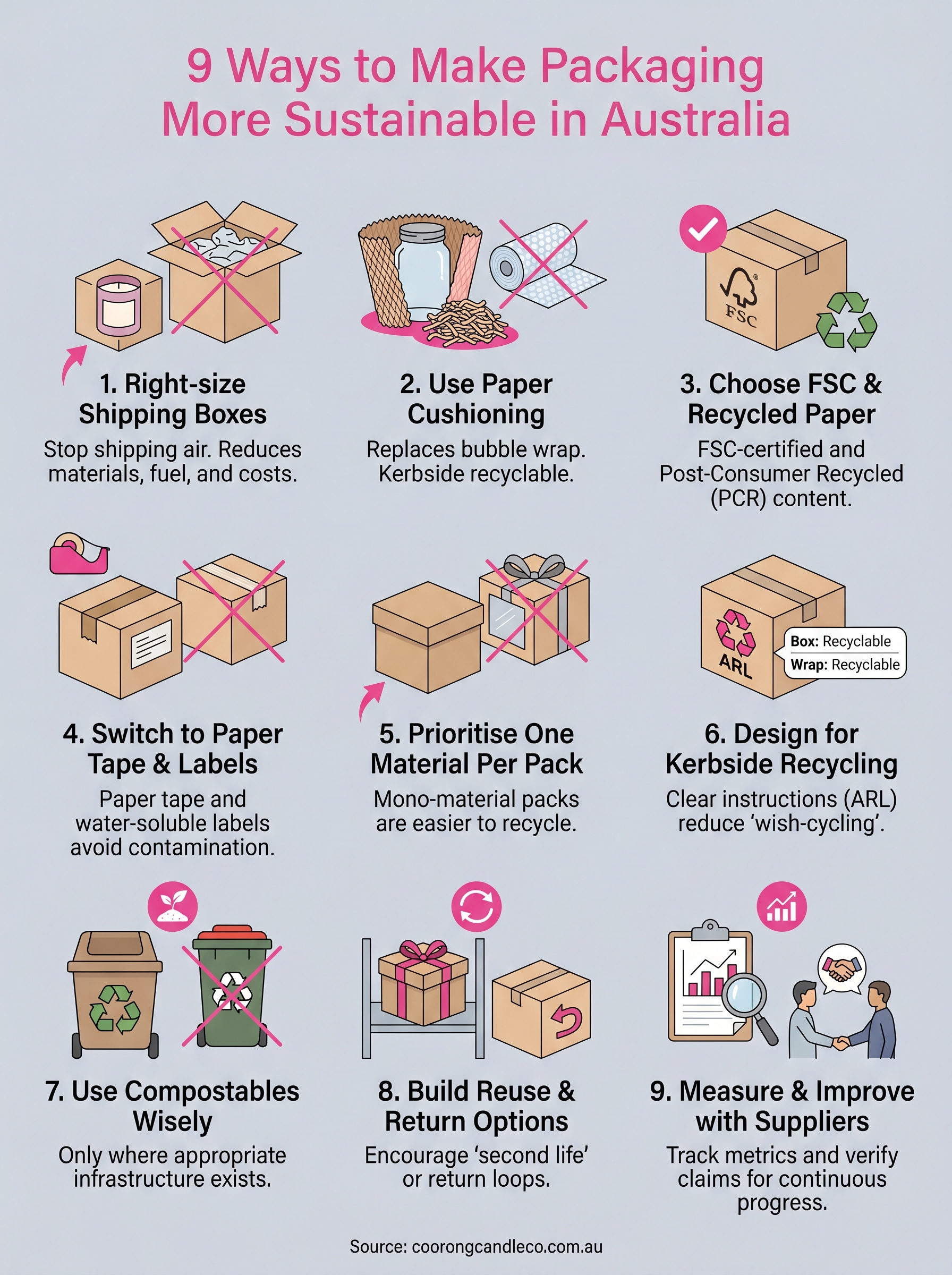
1. Right-size your shipping boxes and mailers
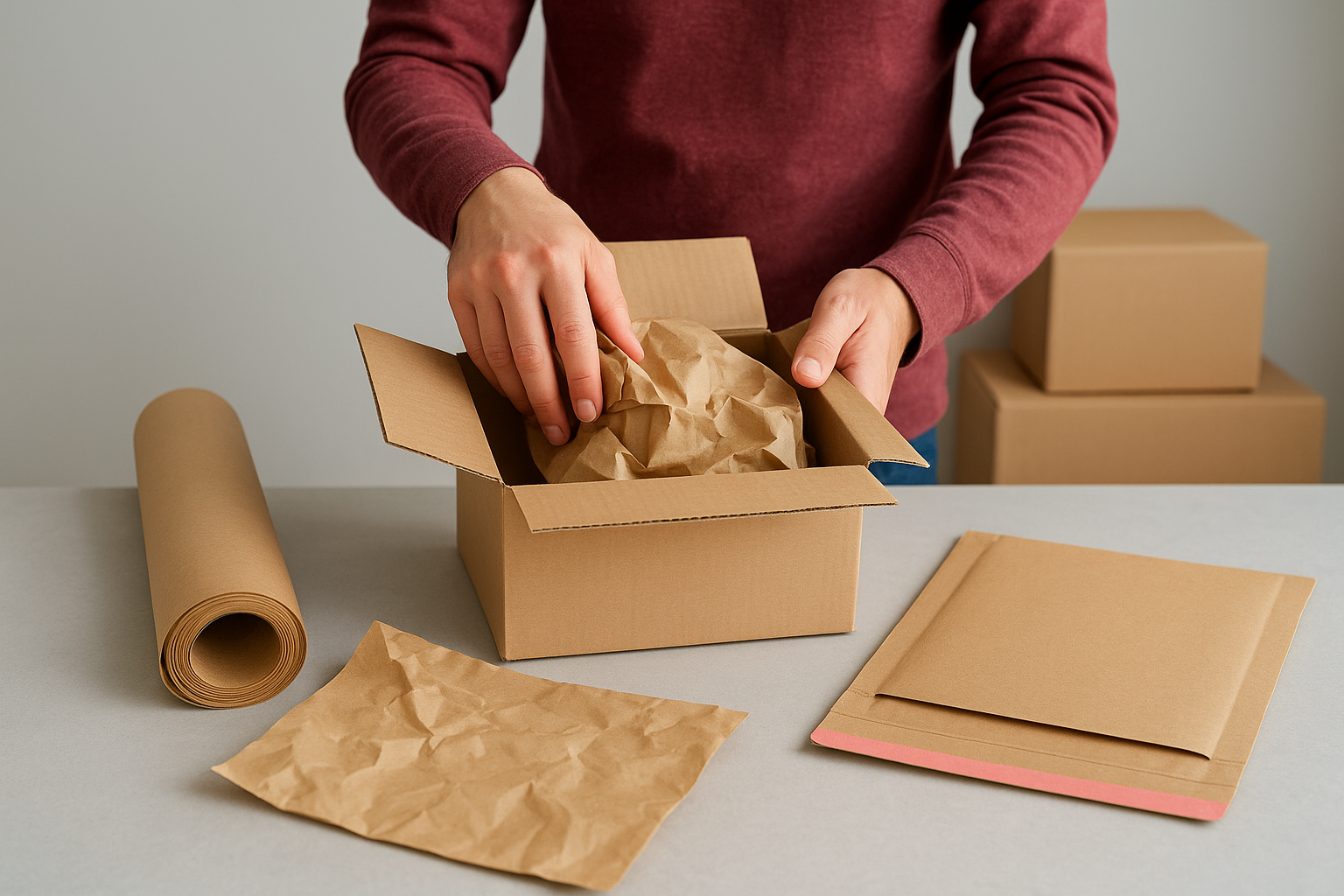
One of the fastest answers to how to make packaging more sustainable sits right in your dispatch area: stop shipping air. Many businesses reach for a standard box size out of habit, leaving empty space that adds weight, increases void-fill material use, and pushes up freight costs on every single order sent out.
Why right-sizing cuts waste and emissions
Oversized packaging forces carriers to move more cubic space per parcel, which means more truck runs, more fuel, and higher emissions across your entire supply chain. Australia Post and most Aussie couriers use dimensional weight pricing, so a large, lightly packed box can cost as much to ship as a genuinely heavy one. Right-sizing addresses both problems at once, reducing material waste and keeping your shipping invoices in check.
Switching to boxes matched to your most common order combinations can cut cardboard use by 20 to 30% before you change a single other material.
How to right-size packaging for Aussie carriers
Start by auditing your five most common order combinations and measuring their actual packed dimensions. Then source boxes that fit those combinations with minimal clearance. Many Australian packaging suppliers offer mixed-size starter runs, so you don't need to commit to large volumes before you've confirmed what works. Match your mailer sizes to your product dimensions rather than defaulting to one-size-fits-most, which rarely fits anything well.
What to use instead of void space
When some gap is unavoidable, paper-based void fill is your best option. Kraft paper, shredded recycled paper, and honeycomb wrap all protect products during transit, are kerbside recyclable in most Australian councils, and avoid the contamination issues that loose polystyrene peanuts create. For fragile or irregularly shaped products, honeycomb wrap provides reliable cushioning without the bulk or environmental cost of plastic foam.
Cost and trade-offs to expect
Right-sizing typically reduces your material spend once you standardise your box range, but there is an upfront cost in ordering new sizes and holding more stock-keeping units. The adjustment is usually worthwhile: lower dimensional weight charges from carriers often offset the cost of stocking a broader size range within a few months of consistent order volume.
2. Replace plastic bubble wrap with paper cushioning
Plastic bubble wrap is one of the most visible single-use plastics in e-commerce packaging, and it's largely unnecessary. Switching to paper-based cushioning is one of the most direct answers to how to make packaging more sustainable without sacrificing the protection your products need in transit.
Paper protection options that still prevent breakage
Honeycomb kraft paper and crinkle-cut shredded paper are the two most practical replacements for bubble wrap. Both absorb impact effectively and are kerbside recyclable across most Australian councils, making disposal straightforward for your customers.
- Honeycomb wrap: best for wrapping individual fragile items like glass jars or candles
- Crinkle-cut shredded paper: best for filling gaps around multiple items in a gift box
- Kraft paper sheets: best for lightweight wrapping where minimal cushioning is needed
How to test protection for fragile products
Before committing to a switch, drop-test your packed products from bench height onto a hard floor at least five times per packaging combination. Check for damage each time and only roll the change out once you're confident in the protection level across your full product range.
A basic drop test costs nothing and tells you more about real-world pack performance than any supplier data sheet.
What to avoid with paper cushioning
Avoid heavily dyed or coated paper, as many kerbside recycling streams won't accept it. Mixing paper cushioning with plastic tape or poly bags in the same pack also undermines recyclability.
Cost and trade-offs to expect
Paper cushioning typically costs more per metre than bubble wrap, but right-sized boxes reduce the total volume of fill you need, which keeps your overall packaging spend closer to where it was before.
3. Use FSC-certified and recycled paper materials
When figuring out how to make packaging more sustainable, the paper you source matters as much as the plastic you eliminate. FSC certification and recycled content are two of the most verifiable ways to confirm your boxes, tissue, and mailers come from responsible origins.
When FSC matters and what it actually means
FSC stands for the Forest Stewardship Council, an independent body that certifies paper sourced from forests managed to specific environmental and social standards. Choosing FSC-certified materials means the fibre in your packaging can be traced back through the supply chain to responsibly managed forests.
Ask your supplier for their FSC chain-of-custody number to confirm their certification is active before you place an order.
How to choose recycled content that performs
Post-consumer recycled (PCR) content is the most meaningful fibre type to prioritise, as it comes from materials already used by consumers rather than manufacturing offcuts. When comparing suppliers and products, look for:
- At least 70% PCR content in boxes and mailers for reliable structural performance
- Unbleached or process-chlorine-free paper where aesthetics allow, to reduce chemical input
Where this can go wrong in practice
Greenwashing claims are common in the paper packaging market, so request supplier documentation rather than relying on marketing language.
Some products labelled "recycled" contain only a small fraction of PCR content, so always confirm the exact percentage in writing before committing to a supplier.
Cost and trade-offs to expect
FSC-certified and high-PCR materials typically cost five to fifteen percent more than standard unverified options.
That uplift is usually offset by right-sizing your boxes, which reduces the total volume of material you purchase overall.
4. Switch to paper tape and removable labels
Many businesses focus on boxes and void fill when thinking about how to make packaging more sustainable, but tape and labels are often the piece that quietly ruins an otherwise recyclable pack. Both are small, but their material choices determine whether your entire outer box can actually be processed at a recycling facility.
Why tape and labels often block recycling
Plastic packing tape, including the standard brown polypropylene type, bonds to cardboard fibre during the recycling pulping process and contaminates the batch. Most Aussie recycling facilities cannot separate plastic tape from cardboard reliably, so a single roll of plastic tape applied across dozens of boxes each week adds up to a meaningful contamination problem at scale.
Switching your tape and labels is one of the lowest-effort changes you can make with an immediate, measurable impact on your pack's recyclability.
Better choices for sealing and shipping labels
Paper-based gummed tape (also called water-activated tape) bonds directly to cardboard and is fully accepted in kerbside recycling. For labels, choose paper labels with water-soluble adhesive where possible, as they separate cleanly during pulping rather than leaving adhesive residue in the recycled fibre.
How to keep packs tamper-evident without plastic
You can use printed gummed tape with your brand name or a security pattern as a tamper-evident seal. A clear "if broken, contact us" message printed directly onto the tape provides the same assurance as plastic security tape without the recycling penalty.
Cost and trade-offs to expect
Gummed tape requires a dispenser with a water well, which costs around $50 to $150 for a basic desktop unit. Per-roll costs are slightly higher than plastic tape, but the recycling benefit and the branding opportunity on printed tape often make it worthwhile quickly.
5. Choose one material per pack where possible
When you ask how to make packaging more sustainable, the answer often comes down to simplicity. A box that combines cardboard, plastic window film, and metallic foil ribbon looks appealing on a shelf but is nearly impossible to recycle as a single unit. Mono-material packaging, meaning packs built from one material type throughout, dramatically improves the chance that your customer's kerbside bin actually processes it correctly.
How mono-material packs improve recycling outcomes
Recycling facilities sort by material stream, so a pack made entirely from cardboard goes into one process without manual separation. When mixed materials bond together, such as a plastic window fused to a kraft sleeve, the whole unit often ends up in landfill because separating them by hand is not economically viable at scale.
Designing for disassembly at the end of a product's life is one of the most underrated steps in reducing packaging waste.
Simple swaps that reduce mixed materials fast
Audit your current packs and look for easy substitutions that remove the secondary material entirely:
- Replace plastic windows on gift boxes with die-cut openings that let customers see the product directly
- Swap metallic ribbon for uncoated paper ribbon in the same colour family
- Use embossed or debossed cardboard instead of foil stickers for premium branding
Where mixed materials still make sense
Some products genuinely require barrier properties that a single material cannot provide, such as moisture-sensitive items or products with strict food-safety requirements. In those cases, document the reason clearly so you can revisit the decision as material technology improves.
Cost and trade-offs to expect
Mono-material packs often cost less to produce because they remove one component from your bill of materials. The trade-off is a narrower range of finishes, which may require some redesign investment upfront to maintain brand presentation.
6. Design packaging for easy kerbside recycling
Understanding how to make packaging more sustainable means going beyond the materials you choose and thinking about what happens after your customer unpacks their order. Even a well-designed recyclable pack fails if your customer doesn't know what to do with it.
What Aussie customers can usually recycle at home
Most Australian households can recycle cardboard boxes, paper bags, paper tissue, and glass through their kerbside bin. Soft plastics, polystyrene, and foil-lined materials are not accepted in most council kerbside streams and typically end up in landfill regardless of your customer's intentions.
How to use clear disposal instructions and ARL
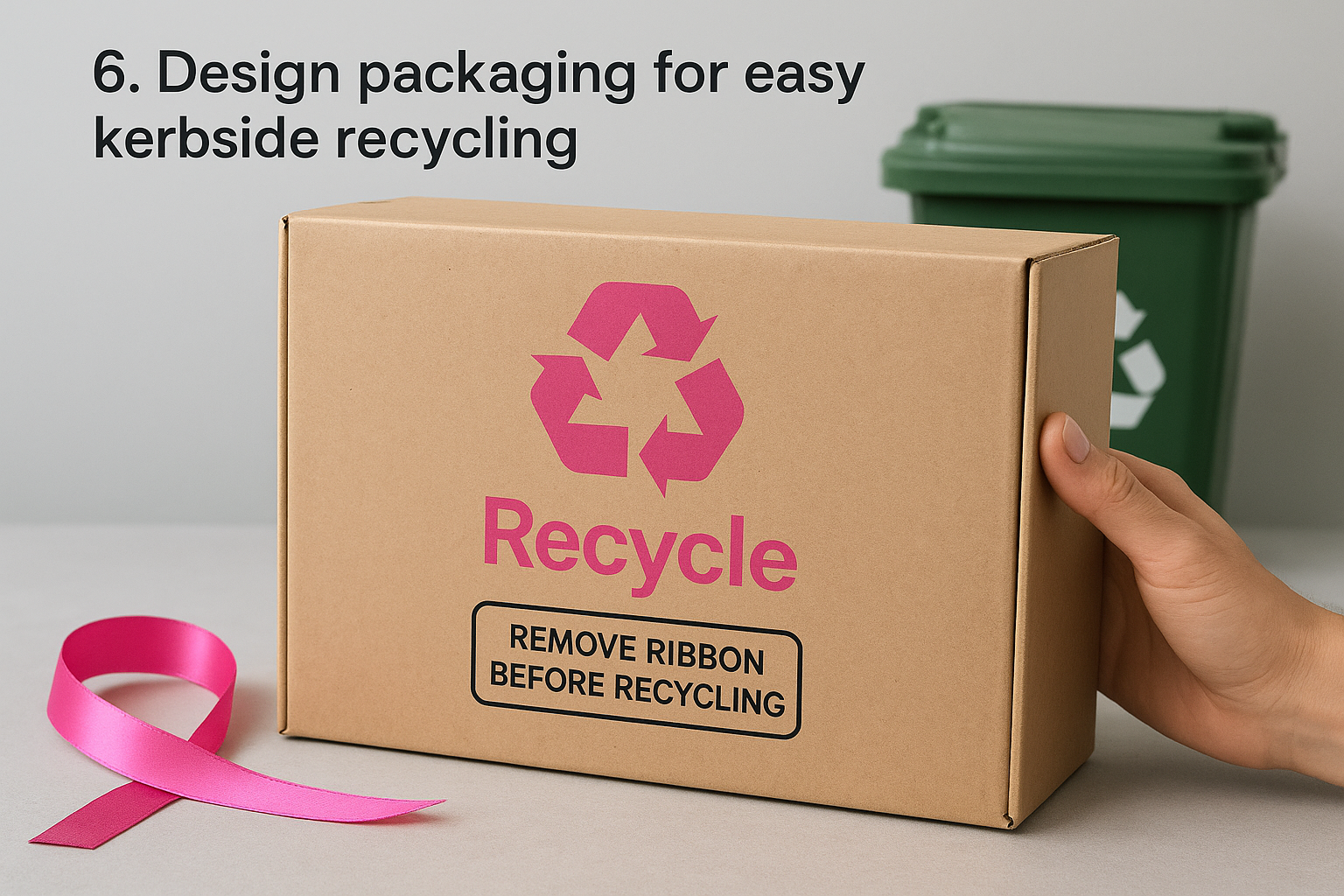
The Australasian Recycling Label (ARL) is the most recognised disposal guidance system for Australian consumers and tells them exactly how to handle each component of your pack. Including the ARL removes guesswork at the bin and reduces the chance your recyclable materials end up in general waste by mistake.
Adding the ARL to your pack is free through the ARL program and takes less effort than most other changes on this list.
How to reduce "wish-cycling" and contamination
Wish-cycling is when customers throw non-recyclable items into the recycling bin hoping they will be processed. You can reduce it by printing short, specific disposal notes directly on your pack, such as "remove ribbon before recycling box."
Cost and trade-offs to expect
Adding the ARL and disposal text costs almost nothing beyond a small label redesign. The main investment is the time spent auditing each pack component to assign the correct ARL category accurately.
7. Use compostables only where they make sense
Compostable packaging sounds like an obvious answer to how to make packaging more sustainable, but the reality in Australia is more complicated. Without the right end-of-life infrastructure in your customer's area, compostable materials often perform no better than conventional plastic in landfill.
Compostable vs biodegradable vs recyclable in Australia
These three terms are not interchangeable, and confusing them leads to poor material choices. Compostable materials break down under specific controlled conditions, typically in a commercial composting facility. Biodegradable is an unregulated claim in Australia and tells you almost nothing about how quickly or safely a material breaks down. Recyclable means the material can re-enter a production cycle, which is usually the most reliable outcome given current Australian infrastructure.
When compostables help and when they hurt
Compostables are genuinely useful when your customer has access to a commercial composting service or a home compost system, and your product category suits it. Food businesses and farmers markets are the clearest fit. For e-commerce businesses, where you cannot control how customers dispose of packaging, compostables frequently end up in kerbside bins and go straight to landfill.
If your customer cannot compost it correctly, a compostable pack offers no environmental advantage over a standard recyclable one.
How to check local collection and end-of-life
Check the Australian Bioplastics Association and your target council's waste service before specifying compostable materials.
Cost and trade-offs to expect
Compostable materials carry a significant price premium, often two to four times the cost of equivalent paper options, so the investment only makes sense when collection infrastructure genuinely supports it.
8. Build reuse and return options for gift packaging
When thinking about how to make packaging more sustainable, reuse is often more valuable than recycling because it keeps materials in circulation longer. Gift packaging is one of the clearest opportunities for this, since customers are already paying for a premium unboxing experience.
Reuse ideas that customers actually follow
Design your gift boxes to have a second life your customer can picture immediately. A sturdy kraft box with a well-fitted lid works well as a desk organiser, keepsake box, or bathroom storage, and customers are far more likely to keep something they can imagine using again. Print a short "second life" suggestion on the inside of the lid to prompt that decision.
How to run a simple return or refill loop
Offer customers a small discount or free product when they return a gift box in-store or via a prepaid mailer. This keeps your premium packaging circulating rather than going to landfill after a single use. Keep the returns process to two steps or fewer, or customers simply will not follow through.
A refill or return scheme only works if the barrier to participation is genuinely low.
Hygiene, safety, and product protection basics
Inspect returned packaging thoroughly before reuse and discard anything with structural damage, odour, or contamination. Candles and bath products require clean, odour-free packaging to protect product integrity and meet basic safety expectations.
Cost and trade-offs to expect
Running a return loop adds handling and inspection time, but the cost of reusing a box is almost always lower than purchasing a replacement.
9. Measure results and keep improving with suppliers
Knowing how to make packaging more sustainable is only part of the work. The other part is tracking whether your changes are actually delivering real outcomes, because good intentions without measurement drift quickly into guesswork that costs you time and money.
What to measure beyond "it feels greener"
Track specific metrics for each change you make: total cardboard volume purchased per month, weight of void fill ordered, and the ratio of plastic to paper materials across your pack range. These numbers give you a clear baseline to compare against after each change you roll out.
A simple spreadsheet updated quarterly tells you more about your actual progress than any supplier certificate.
How to talk to suppliers about sustainability claims
Ask your suppliers for documented evidence, not marketing language. Request third-party certifications, recycled content percentages in writing, and chain-of-custody numbers for any FSC or ARL claims. If a supplier cannot provide documentation, treat the claim as unverified and source elsewhere.
How to reduce transport impacts without greenwashing
Consolidating orders from fewer suppliers reduces the number of freight legs your packaging travels before it reaches your dispatch bench. Choosing local or domestic suppliers where quality and price allow cuts transport emissions without requiring any public claims you cannot back up with data.
Cost and trade-offs to expect
Measurement costs time rather than money, but the savings it reveals usually exceed that investment. Identifying one underperforming material or one redundant supplier can cut packaging spend by five to ten percent without any further redesign work.
Next steps
Working out how to make packaging more sustainable is not a one-time project. It's a series of deliberate decisions made over time, each one building on the last. Start with the changes that cost the least and deliver the most immediate impact, such as right-sizing your boxes and switching to paper tape, then use the savings those generate to fund the next round of improvements.
Every small business that ships products faces this challenge, and the businesses making real progress are the ones that measure what they change and stay honest about what's working. Apply the same care to your packaging that you put into your products themselves. If you're looking for an example of what eco-conscious, small-batch production looks like from the product side, explore the handmade soy candles and natural home fragrance range at Coorong Candle Co. for a sense of how sustainable values translate from sourcing all the way through to presentation.