
You've chosen a quality soy candle, maybe one inspired by the Coorong coastline or the Barossa Valley, and you want it to burn just as beautifully in three months as it does today. Knowing how to store candles properly makes that possible. Poor storage is the fastest way to lose scent throw, warp the wax, or fade those rich colours, and it's a problem we see customers run into more often than you'd think. A little care between burns goes a long way toward protecting your investment.
At Coorong Candle Co., we hand-pour every soy candle in small batches right here in South Australia. That means we know exactly how soy wax behaves in Australian heat, humidity, and everything in between. We've put together this guide based on what we've learned through years of making and storing candles ourselves, practical tips you can use at home to keep your candles in peak condition for as long as possible.
Below, you'll find straightforward advice on temperature control, light exposure, positioning, and organisation. Whether you're storing a single travel tin or an entire collection of favourites, these steps will help you preserve scent, shape, and burn quality, so every time you light the wick, it's exactly the experience you paid for.
What proper candle storage protects
When you understand what storage actually protects, you make smarter decisions about where and how you keep your candles. Soy wax is particularly sensitive to its environment, which means the stakes are higher for natural, handcrafted candles than they are for mass-produced paraffin alternatives. Learning how to store candles properly comes down to shielding three core things: fragrance, physical structure, and surface appearance.
Scent and fragrance throw
Fragrance oils in soy wax are volatile compounds, and they escape faster when exposed to heat, airflow, or direct sunlight. If your candle sits near a sunny window or in a warm room over summer, those scent molecules evaporate before you've even lit the wick. By the time you burn it, the fragrance throw (the strength and reach of the scent while burning) is noticeably weaker than it should be.
A candle that smells faint in the jar will burn faint in the room. Protecting scent before the first burn matters just as much as proper burn technique.
This matters especially for complex, layered fragrances like the regional blends we make at Coorong Candle Co. Subtle top notes evaporate first, so a candle stored poorly for a few months can smell flat and one-dimensional when it should be rich and multi-layered.
Wax structure and appearance
Soy wax softens at relatively low temperatures, which means Australian summers can warp a candle without it ever fully melting. A candle stored near an oven or on a west-facing windowsill can sink in the middle, develop cracks, or lose its level surface entirely. These physical changes affect more than looks; an uneven wax surface causes uneven burning, which leads to tunnelling and wasted wax.
Colour and finish are also at risk. UV light fades dyes, turning a vibrant, richly coloured candle dull and patchy over time. Soy wax also develops frosting (a white film on the surface) when exposed to repeated temperature fluctuations, which, while harmless to performance, affects presentation and perceived quality.
Pick the right spot at home
Location is the single biggest factor in how to store candles properly. The ideal spot is cool, dark, and away from direct airflow, which rules out most kitchen benchtops, windowsills, and laundry areas in the average Australian home.
Keep temperatures consistent
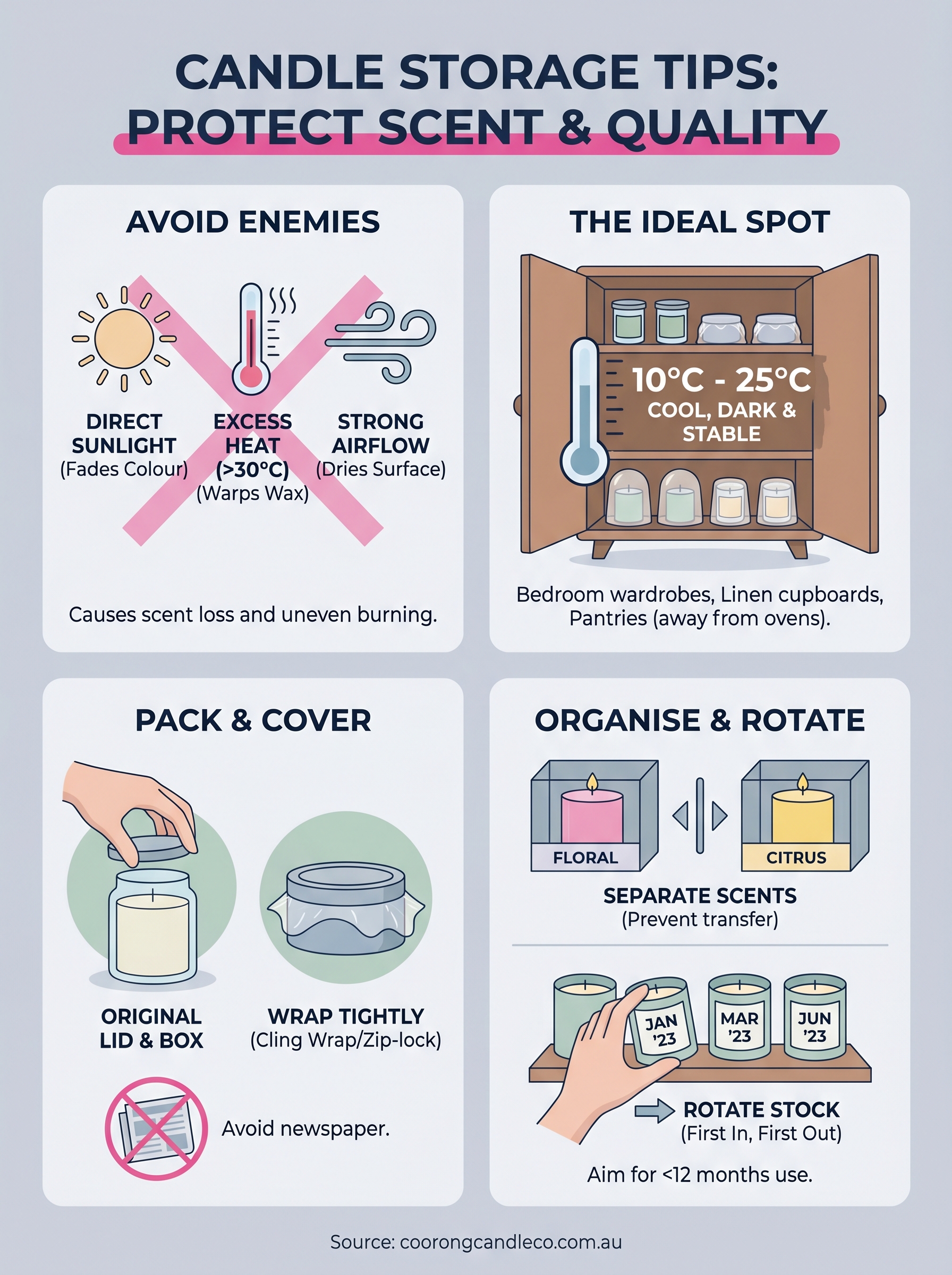
Soy wax starts to soften around 30°C, a threshold that's easy to hit during an Australian summer in a poorly ventilated room. Store your candles in a cupboard, wardrobe shelf, or pantry where temperatures stay relatively stable. Avoid spots near ovens, dishwashers, or external walls that absorb afternoon sun. Consistent temperature matters more than a perfectly cool room, as repeated cycling between warm and cold causes the wax to crack and develop surface frost.
The ideal storage temperature for soy candles is between 10°C and 25°C. A bedroom wardrobe or linen cupboard usually hits that range year-round.
Block out light and airflow
UV exposure fades dye and breaks down fragrance oil, so direct sunlight is your candle's biggest enemy. Keep candles away from skylights, glass doors, and uncovered shelving. Airflow is just as damaging; even a nearby air conditioning vent or draught dries out the wax surface and speeds up scent loss. These spots work well for most homes:
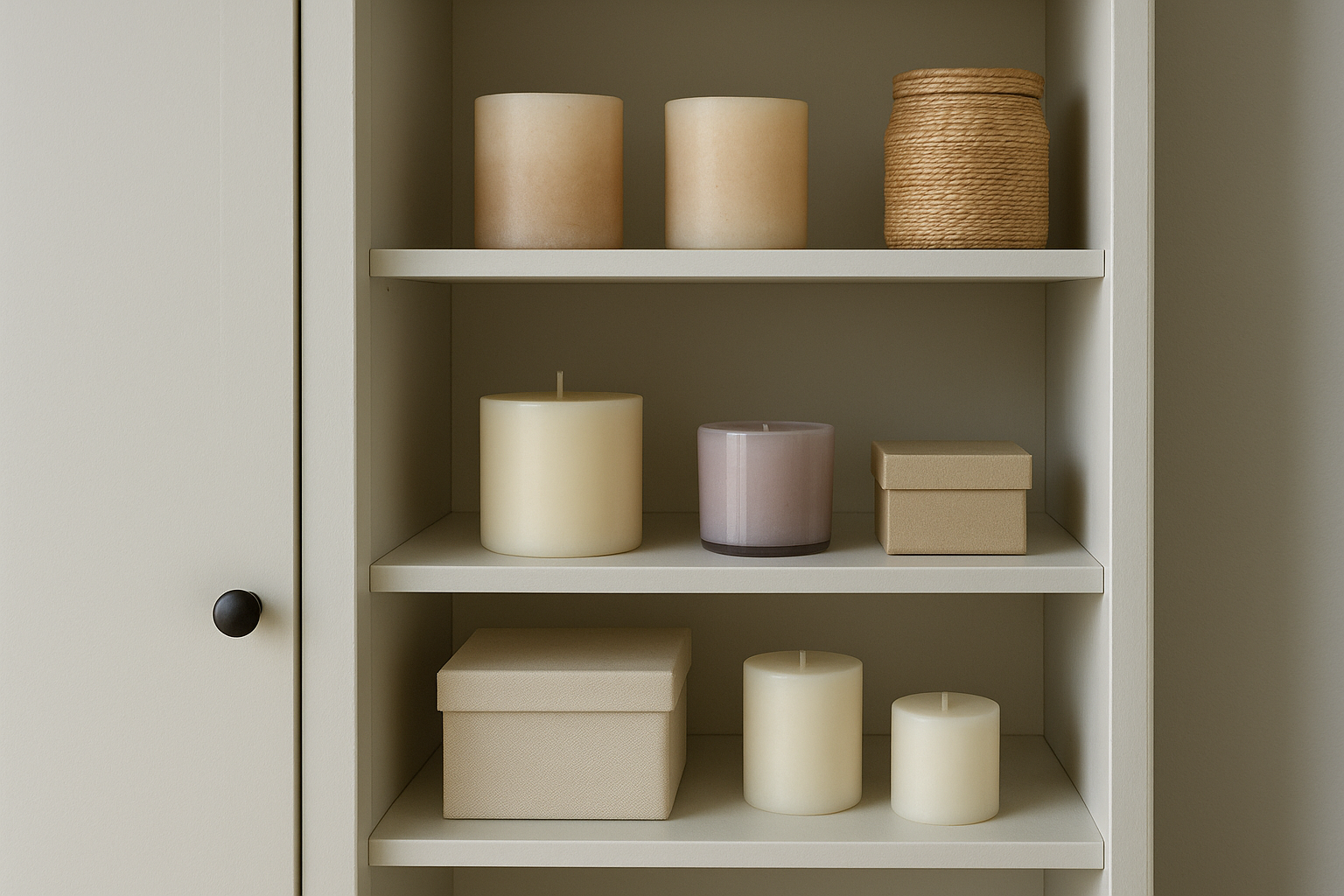
- Bedroom wardrobes
- Linen cupboards
- Pantries away from the stove
- Closed drawers or boxes
Pack and cover candles to protect scent
Even in the right location, an uncovered candle loses scent faster than you'd expect. Air exposure pulls fragrance oil out of the wax surface continuously, so keeping candles wrapped or lidded is a core part of knowing how to store candles properly.
Use lids and original packaging
The simplest protection is what came with your candle. Replace the lid after every use and before storing. If your candle didn't come with a lid, a piece of cling wrap secured firmly over the top creates a tight seal against air and dust. Original packaging (boxes or sleeves) blocks UV light and prevents surface scratches, so hold onto it whenever possible.
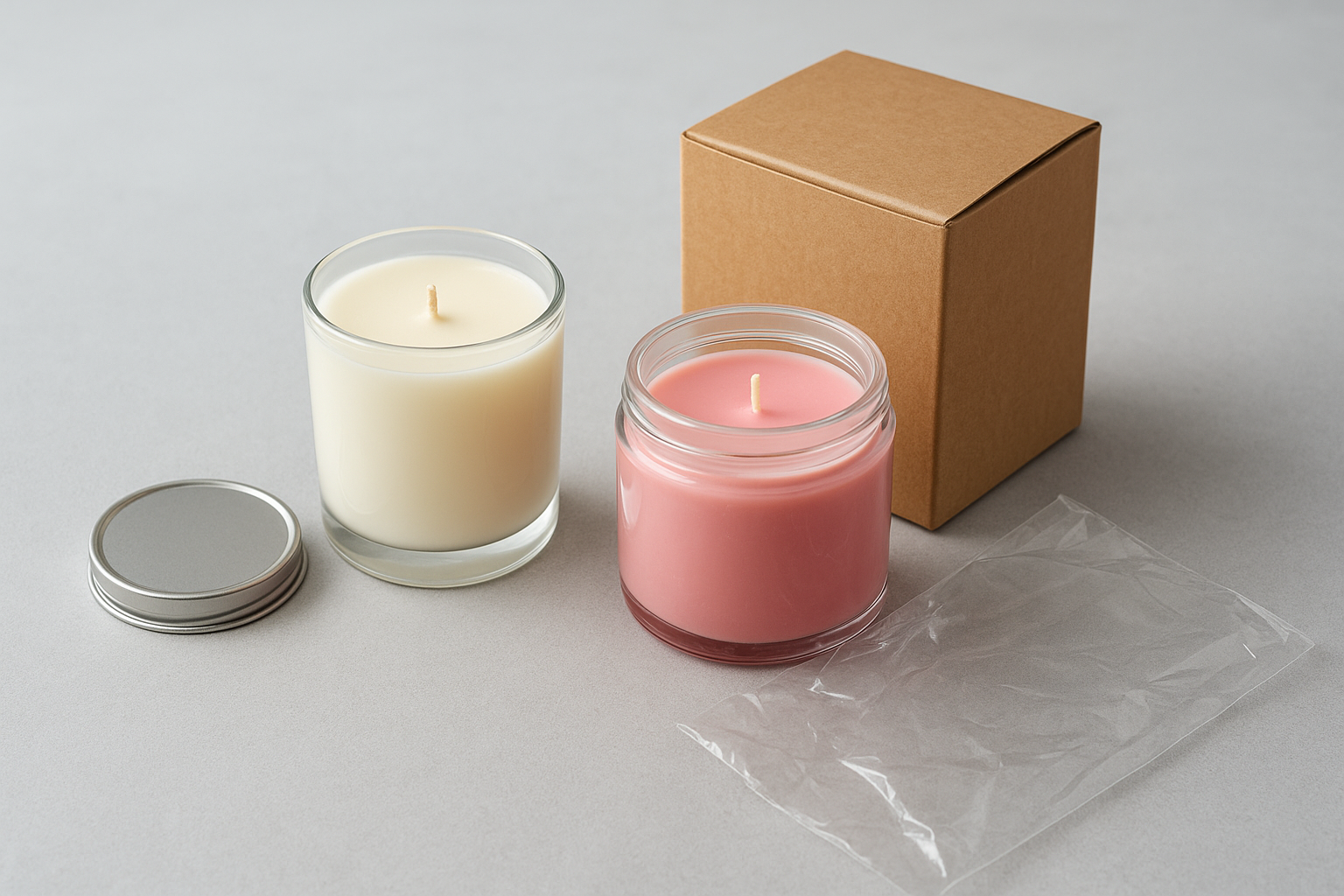
Store your candle in its original box inside a dark cupboard, and you've addressed light, air, and temperature in a single step.
Gifted candles often arrive without their box, so keep a small stock of zip-lock bags on hand as a ready replacement for lost or discarded packaging.
Wrap unboxed candles properly
Wrapping your candle in the right material still gives it solid protection from air and dust. Use these materials in order of effectiveness:
- Cling wrap or plastic wrap: moulds to the shape and seals out air
- Tissue paper: absorbs moisture and prevents colour transfer
- A sealed zip-lock bag: works well for smaller tins and travel candles
Avoid wrapping candles in newspaper or scented paper, as both transfer unwanted odours into the wax.
Store each candle type the right way
Not every candle behaves the same way in storage, and knowing your candle type helps you apply the right method. A 350g jar candle has different needs than a travel tin, so a one-size approach can leave some candles underprotected.
Standard jar candles
Jar candles are the most forgiving to store because the glass provides structural protection for the wax. Always replace the lid before storing, and keep the jar upright on a stable shelf. Avoid stacking anything on top, as pressure can crack the glass or chip the lid seal.
A jar candle stored upright with its lid on, inside a dark cupboard, needs very little else to stay in good condition for months.
Quick storage checklist for jar candles:
- Lid on and seated firmly
- Upright position only
- Away from direct sunlight and heat
Travel tins and small candles
Travel tins are compact and well-suited to drawer storage, but their smaller wax volume makes them more vulnerable to temperature swings. The tin conducts heat faster than glass, so keep them away from warm surfaces like a shelf above a dishwasher or near a stove.
A sealed zip-lock bag adds scent protection for tins you won't burn for a few weeks. For longer storage, placing them in a small cardboard box inside a cool drawer slows down scent loss noticeably.
Matching your storage method to your candle type is a core part of knowing how to store candles properly, and it keeps your whole collection performing at its best.
Organise your stash and store safely
Once you have the right location and packaging sorted, a little organisation keeps your collection accessible and prevents accidental damage. Knowing how to store candles properly includes managing how candles sit alongside each other, not just how they're covered or where they're kept.
Keep candles separated
Strong fragrances transfer between candles when they're stored in direct contact with each other. A eucalyptus blend sitting next to a vanilla candle for several weeks will start to smell like both, which muddies the individual scent profile when you eventually burn it. Use small cardboard dividers, individual boxes, or zip-lock bags to keep each candle isolated from its neighbours.
Separating candles by scent family also makes it easier to grab exactly what you want without disturbing the rest of your collection.
Rotate your stock
Candles carry a recommended shelf life of 12 to 18 months, even under good storage conditions. Label each candle with its purchase or storage date using a small sticker on the base so you always burn the oldest ones first.
A simple rotation system works well here:
- Place newer candles at the back of your storage space
- Move older candles to the front
- Check dates every three months and light any candles approaching 12 months old
This keeps your whole collection fresh and means nothing gets forgotten at the back of a cupboard.
Keep candles ready to light
Good storage is not complicated, but it does require consistency. Every tip in this guide comes back to the same three principles: shield your candles from heat and light, keep them covered between uses, and rotate your stock so nothing sits forgotten for too long. Follow those basics, and knowing how to store candles properly becomes second nature rather than an extra task.
Your candles are meant to be used and enjoyed, not preserved indefinitely. When you store them well, you get the full scent throw, a clean even burn, and a wax surface that looks as good as the day it arrived. That's the whole point of choosing a handcrafted soy candle in the first place.
Ready to add to your collection? Browse the full range of hand-poured soy candles and home fragrance products at Coorong Candle Co. and find your next favourite scent.