
Salt has been used in bathing rituals for thousands of years, from ancient Dead Sea soaks to modern spa treatments. Today, the salt scrub for body benefits conversation has grown well beyond exfoliation, people are turning to salt-based scrubs for improved circulation, smoother skin texture, and even stress relief. But with so many claims floating around, it helps to separate what actually works from what's overhyped.
At Coorong Candle Co., we craft handmade bath and body products using natural, eco-friendly ingredients, so skin care that respects both your body and the environment is something we care about deeply. Our approach to self-care is rooted in the South Australian landscape, and salt scrubs fit right into that philosophy of simple, effective rituals using what nature provides.
This article breaks down the real benefits of salt scrubs, covers who should (and shouldn't) use them, explains how they compare to sugar scrubs, and walks you through making your own at home. Whether you're new to body scrubs or looking to refine your routine, you'll leave with practical, honest information you can actually use.
What a salt body scrub is and how it works
A salt body scrub is a topical exfoliant made from salt crystals combined with a carrier oil and, often, additional ingredients like essential oils or botanical extracts. You apply it to damp skin, work it in using circular motions, and then rinse it off. The result is a combination of physical exfoliation from the salt granules and skin-softening from the oils, making it one of the more straightforward yet effective skin care tools you can use at home.
The physical makeup of a salt scrub
The base of any salt scrub is the type of salt used, and this matters more than most people realise. Common options include sea salt, Himalayan pink salt, Dead Sea salt, and Epsom salt. Each has a different grain size and mineral content. Coarser salts, like sea salt or Himalayan varieties, provide more aggressive exfoliation and suit thicker skin areas like heels and elbows. Finer salts are gentler and better suited to areas like the arms or thighs.
The carrier oil in a scrub does two things: it binds the salt together into a workable texture and delivers moisture directly to your skin after the exfoliation step. Common oils include coconut, jojoba, almond, and sunflower oil. Each has its own absorption rate and feel, so the oil choice affects how the scrub sits on your skin and how nourished your skin feels after rinsing.
How salt interacts with your skin
When you massage a salt scrub onto your body, the granules physically dislodge dead skin cells sitting on the surface of the epidermis. This is called mechanical exfoliation, meaning it works through physical friction rather than chemical reactions. The process clears away the buildup that can make skin look dull, feel rough, or block pores.
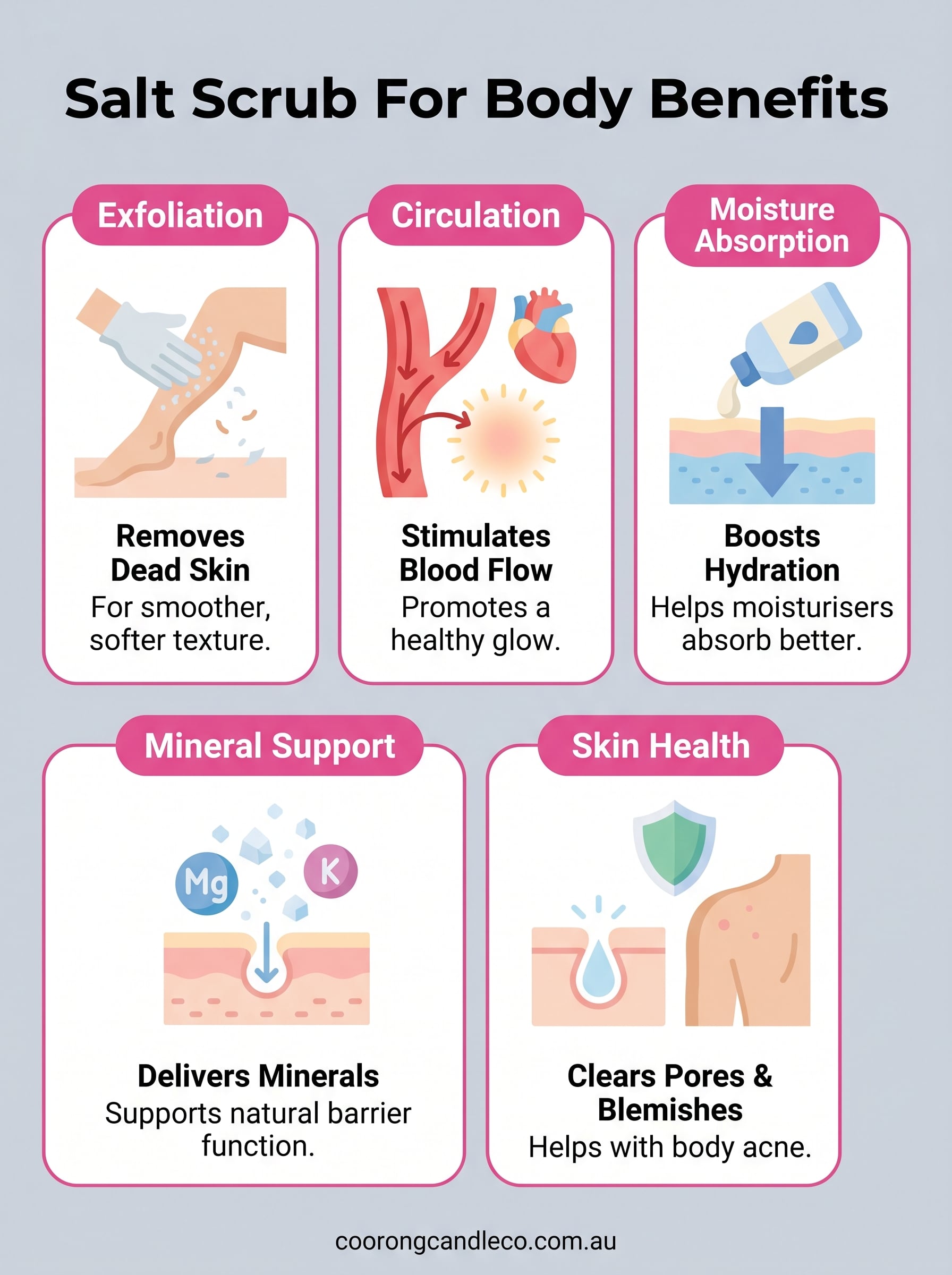
Regular mechanical exfoliation helps your skin absorb moisturisers more effectively because you're removing the barrier of dead cells that would otherwise sit between the product and fresh skin.
Beyond the surface-level scrubbing action, salt also has natural antibacterial and antimicrobial properties, which is part of why it has been used in wound care and preservation for centuries. When used in a body scrub, this quality contributes to a cleaner, clearer skin surface. Some salts, particularly Epsom salt, also contain magnesium, which absorbs transdermally in small amounts during your bath or shower and may support muscle relaxation, though research on this specific mechanism is still developing.
Salt scrub for body benefits that matter
Understanding the salt scrub for body benefits goes beyond smooth skin. Regular use targets several aspects of skin health at once, from circulation to moisture retention, making it a genuinely useful addition to your routine rather than a luxury indulgence.
Exfoliation, circulation, and glow
The most immediate benefit you notice is improved skin texture. Salt granules clear away dead cell buildup that dulls your complexion and makes skin feel rough to the touch. Once that layer is gone, your skin reflects light more evenly and feels noticeably softer.
The massage action involved in applying a scrub also stimulates blood flow to the skin's surface. Better circulation means more oxygen and nutrients reaching skin cells, which supports a healthier, more even tone over time. This is particularly useful on areas like the thighs, upper arms, and lower legs where circulation is naturally sluggish.
Improved circulation from regular scrubbing can also help reduce the appearance of uneven skin texture in areas prone to keratosis pilaris, where dead cells block hair follicles and create a rough, bumpy surface.
Moisture absorption and mineral support
Exfoliated skin absorbs moisturiser significantly better than skin covered in a layer of dead cells. Using a body lotion or oil immediately after rinsing your scrub off means the active ingredients reach fresh skin directly, improving how effective your moisturiser actually is.
Some salts also deliver trace minerals like magnesium, potassium, and calcium to your skin during use. Dead Sea salt is particularly high in these minerals. While your skin absorbs them in small amounts, regular exposure supports the skin's natural barrier function and can reduce dryness, especially in drier climates like much of Australia.
How to use a salt scrub safely
Using a salt scrub correctly makes the difference between glowing, refreshed skin and irritation. The key is to apply it to damp skin, never dry, because dry skin creates too much friction and increases the risk of micro-tears. Work in gentle, circular motions for 30 to 60 seconds per area, then rinse thoroughly with warm water and follow up with a moisturiser.
How often to scrub and which areas to focus on
For most skin types, once or twice a week is enough to get the salt scrub for body benefits without overdoing it. Over-exfoliating strips your skin's natural oils, which leads to dryness and sensitivity rather than softness. Focus on rougher areas like heels, knees, elbows, and the backs of your arms, where dead cell buildup tends to be heaviest and responds well to regular scrubbing.
Less is more with exfoliation. Two well-spaced sessions per week consistently outperform daily scrubbing for long-term skin health.
Skin conditions and areas to avoid
Broken, sunburned, or freshly shaved skin should never come into contact with a salt scrub. The abrasive granules will aggravate any compromised skin barrier and can cause stinging or prolonged redness. If you have active eczema, psoriasis, or open wounds, skip the scrub entirely until your skin has fully healed, and check with a dermatologist if you are unsure whether exfoliation is appropriate for your condition.
After rinsing, pat your skin dry with a towel rather than rubbing, then apply a body oil or lotion while your skin is still slightly damp. This step locks in hydration and gets the most out of the exfoliation you have just done. Skipping it is one of the most common mistakes people make after scrubbing, and your skin will feel noticeably different when you keep it in your routine.
Salt scrub vs sugar scrub for different skin types
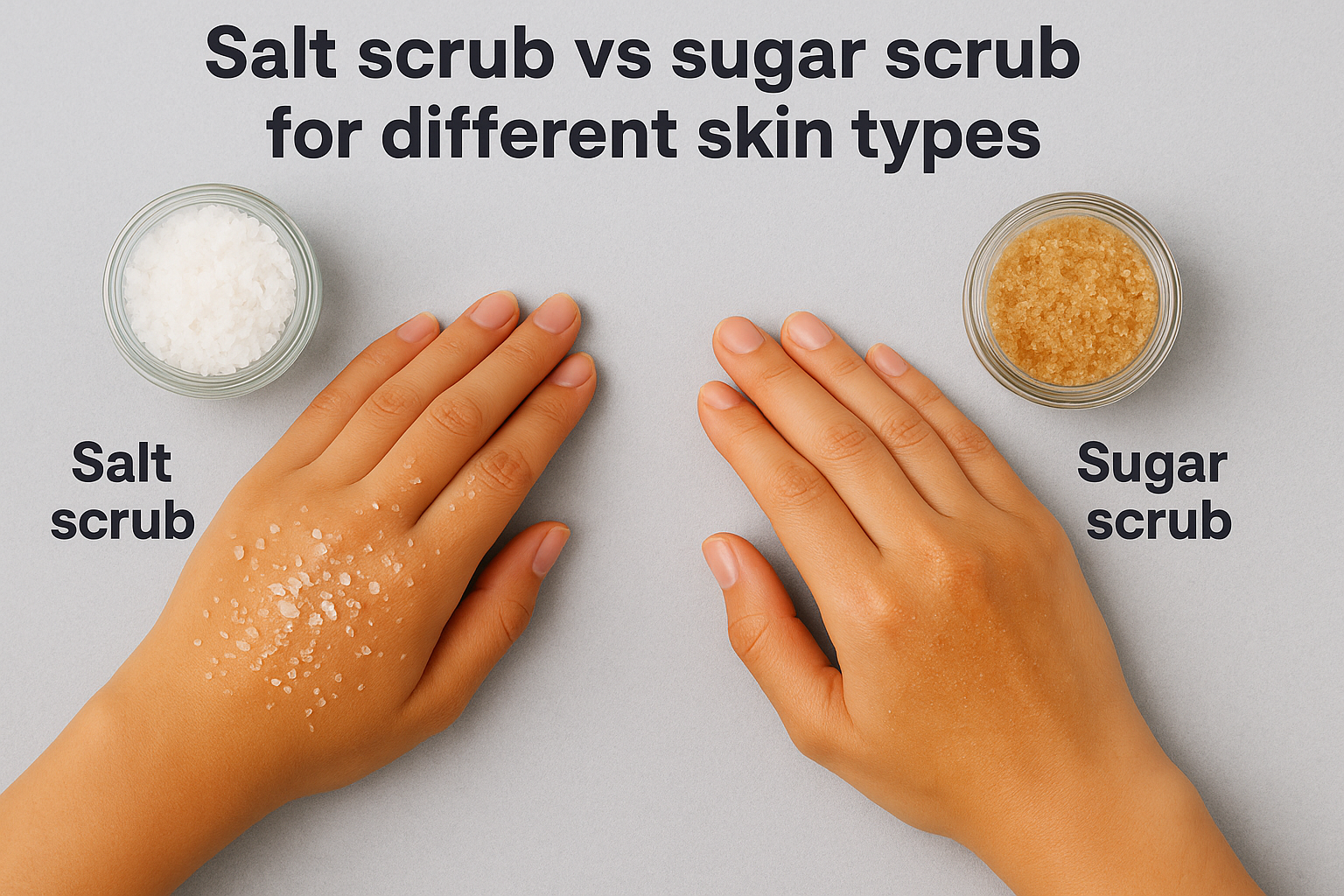
Both salt and sugar scrubs physically exfoliate, but they behave differently on skin, and choosing the wrong one for your skin type can leave you with irritation rather than improvement. The core difference comes down to hardness and dissolution rate: salt granules are harder and dissolve more slowly than sugar, making them more effective for tougher skin but harsher on sensitive areas.
When salt works better
Salt is the stronger exfoliant, which makes it the right choice for thick-skinned areas like heels, knees, and elbows where you need real abrasion to shift built-up dead skin. The salt scrub for body benefits is particularly noticeable in these zones because the firmer granules get through the surface layer more efficiently than sugar ever could. Salt also has natural antimicrobial properties, making it useful for skin prone to body acne or congestion on the back and shoulders.
If your main concern is rough patches or keratosis pilaris on the legs or upper arms, a salt scrub will deliver faster, more visible results than a sugar scrub.
When sugar is the smarter choice
Sugar granules are softer and dissolve faster under water, which means they create less friction and are far gentler on the skin. For sensitive, dry, or reactive skin types, sugar scrubs reduce the risk of micro-tears and post-scrub redness that salt can sometimes trigger. Sugar also contains naturally occurring glycolic acid, which provides a mild chemical exfoliation alongside the physical scrubbing, supporting cell turnover without the abrasive edge that salt brings.
For normal or combination skin, rotating between both scrubs depending on the area you are targeting is a practical approach. Use salt for rougher zones like the lower legs and feet, and switch to sugar for more delicate patches like the chest or inner arms.
DIY salt scrub at home with simple ingredients
Making your own salt scrub at home is straightforward and cost-effective, and it gives you full control over what goes onto your skin. You only need a handful of ingredients, most of which you likely already have in your kitchen or can pick up from any supermarket. A homemade scrub also lets you adjust the grain size and oil base to suit your specific skin type, so you get the salt scrub for body benefits without any fillers or synthetic additives.
Basic recipe and ratios
A reliable starting point uses one cup of sea salt or Himalayan pink salt combined with half a cup of carrier oil. Coconut oil, sweet almond oil, or jojoba oil all work well. Mix them together in a clean jar, and your base scrub is ready to use. For a slightly gentler texture, use fine-grain salt rather than coarse, particularly if you plan to use it on areas beyond your feet and heels.
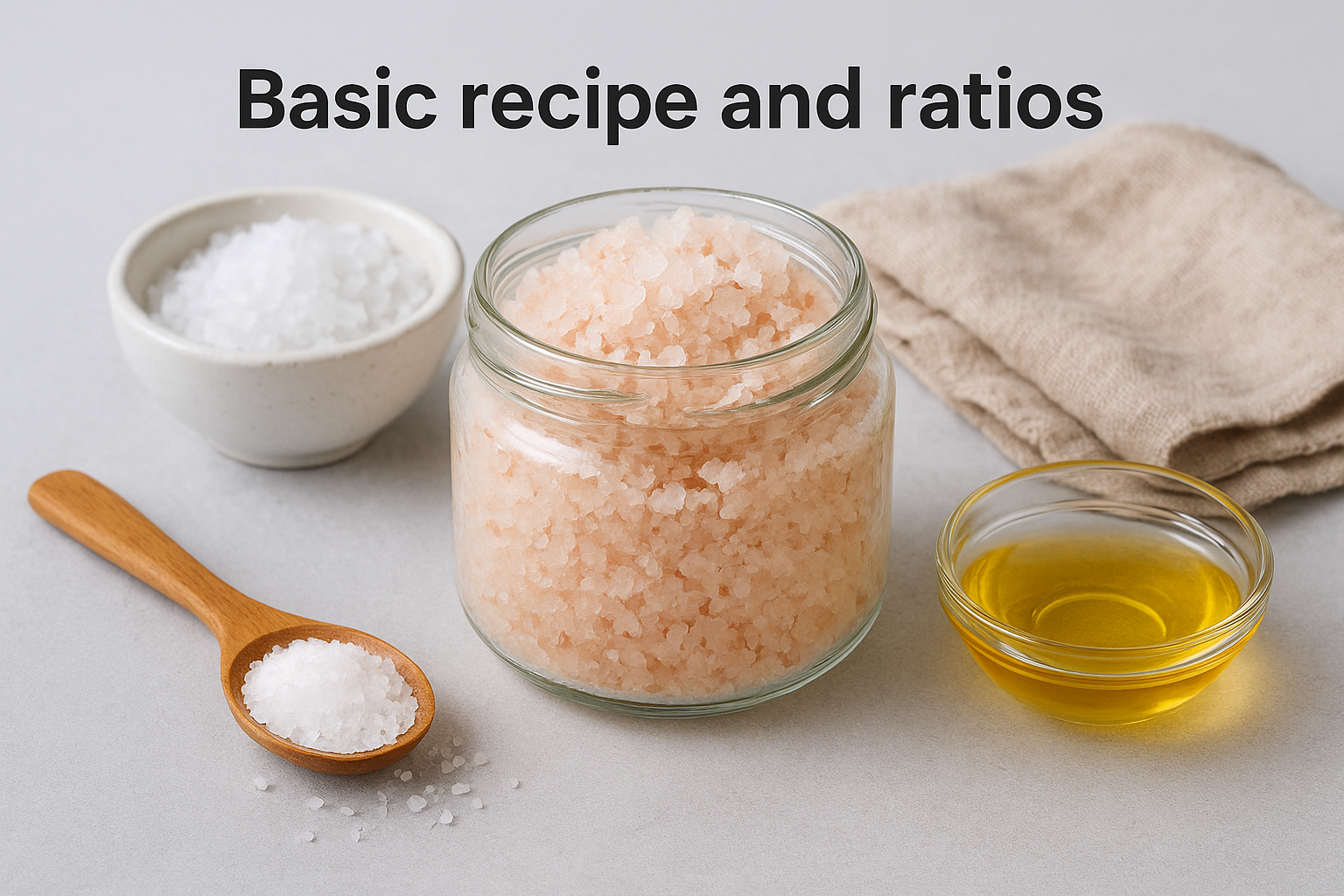
You can adjust the ratio to two parts salt to one part oil if you prefer a drier, more abrasive scrub for tough patches like heels.
How to customise your scrub
Adding 10 to 15 drops of essential oil to your base recipe transforms a plain scrub into something that works for both your skin and your senses. Lavender supports relaxation, tea tree adds antimicrobial properties, and sweet orange gives a fresh, uplifting scent. Store your finished scrub in an airtight glass jar and keep it away from direct water contact during your shower to extend its shelf life.
You can also stir in extras like a teaspoon of honey for added moisture or a small amount of finely ground oats for extra soothing properties, which is particularly useful if your skin leans dry or reactive.
Quick wrap-up
Salt scrubs deliver genuine, measurable results when you use them correctly. From clearing away dead skin cells and boosting circulation to improving how well your moisturiser actually absorbs, the salt scrub for body benefits is grounded in practical skin physiology rather than marketing claims. Coarser salts work best on tough areas like heels and elbows, while finer grains suit softer skin zones. If you have sensitive or reactive skin, a sugar scrub is the safer option. Your DIY version needs only a few ingredients, and you can tailor the texture, oil base, and fragrance to exactly what your skin responds to best.
Pairing a regular scrubbing routine with other natural bath and body rituals takes your self-care even further. If you want to round out your bathing routine with products crafted from naturally sourced ingredients, explore our handmade bath bombs made with Epsom salt, sunflower oil, and signature fragrances inspired by South Australia.