
If you've ever wondered what is a body scrub, you're not alone. It's one of those skincare basics that most people have heard of but few fully understand, what it actually does, which type suits your skin, and whether you even need one. At its core, a body scrub is a textured product designed to exfoliate dead skin cells from the surface of your body, leaving skin smoother, softer, and better able to absorb moisture.
At Coorong Candle Co., we're passionate about small-batch bath and body products that turn everyday routines into something worth slowing down for. Our handmade range is inspired by the natural beauty of South Australia's Coorong region, and we believe that understanding your products is just as important as enjoying the ritual of using them.
This guide breaks down the benefits of body scrubs, walks through the main types available, and covers how to use one safely, so you can make informed choices for your skin. Whether you're a complete beginner or looking to refine your routine, you'll find practical, straightforward answers below.
Why body scrubs matter for skin health
Your skin renews itself constantly. Every day, dead skin cells build up on the surface and create a dull, rough layer that stops moisturisers from absorbing properly. Knowing what is a body scrub matters here because the entire point of the product is to physically remove that layer, so your skin, and everything you apply to it, can actually perform.
How exfoliation works
Exfoliation removes dead cells from the outermost layer of skin, known as the stratum corneum. Your body sheds these cells naturally every 28 to 40 days through a biological process called desquamation, but that cycle slows down with age, hormonal changes, and environmental factors like dry air and sun exposure. A body scrub uses physical abrasion to speed the process up manually, rather than waiting for your body to shed those cells on its own schedule.
Regular exfoliation helps your skin respond better to every product you apply afterwards, because you're working with fresher, more receptive cells instead of a compacted layer of dead ones sitting on top.
Scrubbing also stimulates blood circulation near the skin's surface. When you massage a scrub in circular motions, increased blood flow gives skin a temporary healthy flush and contributes to a more even appearance over time. That physical action does more than just clean; it actively supports the skin's natural renewal process.
The skin benefits you can expect
Remove the dead cell build-up consistently and several noticeable changes follow. Skin texture becomes smoother within a few uses, and rough patches on areas like elbows, knees, and heels respond especially well to regular attention. Your skin tone can also look more uniform and brighter because you're lifting away the dull, grey-tinged cells that sit on the surface and scatter light unevenly.
Body scrubs are particularly useful for managing ingrown hairs. Exfoliating before or after hair removal clears the path for new growth, reduces the friction that causes hairs to curl back into the skin, and keeps follicles from becoming blocked over time.
Why moisture retention improves after scrubbing
One of the most practical reasons to exfoliate regularly is what happens when you apply a moisturiser or body oil straight after. Dead cells form a physical barrier that limits how deeply hydrating ingredients can penetrate the skin. Once you clear that barrier, your moisturiser makes direct contact with fresher skin cells that are far better at absorbing and holding moisture.
Your body lotion, oil, or butter will feel like it goes further and lasts noticeably longer after a scrub session. This benefit is especially relevant during dry or cooler months, like the South Australian winter, when skin loses moisture faster and needs consistent support to stay properly hydrated throughout the day.
Types of body scrubs and how to choose
Not all body scrubs are the same, and understanding what is a body scrub in each category helps you pick one that works with your skin rather than against it. The main difference between types comes down to the abrasive ingredient used and how coarse or fine that texture is. Your skin type, sensitivity level, and the areas you want to target will all influence which option makes the most sense for your routine.
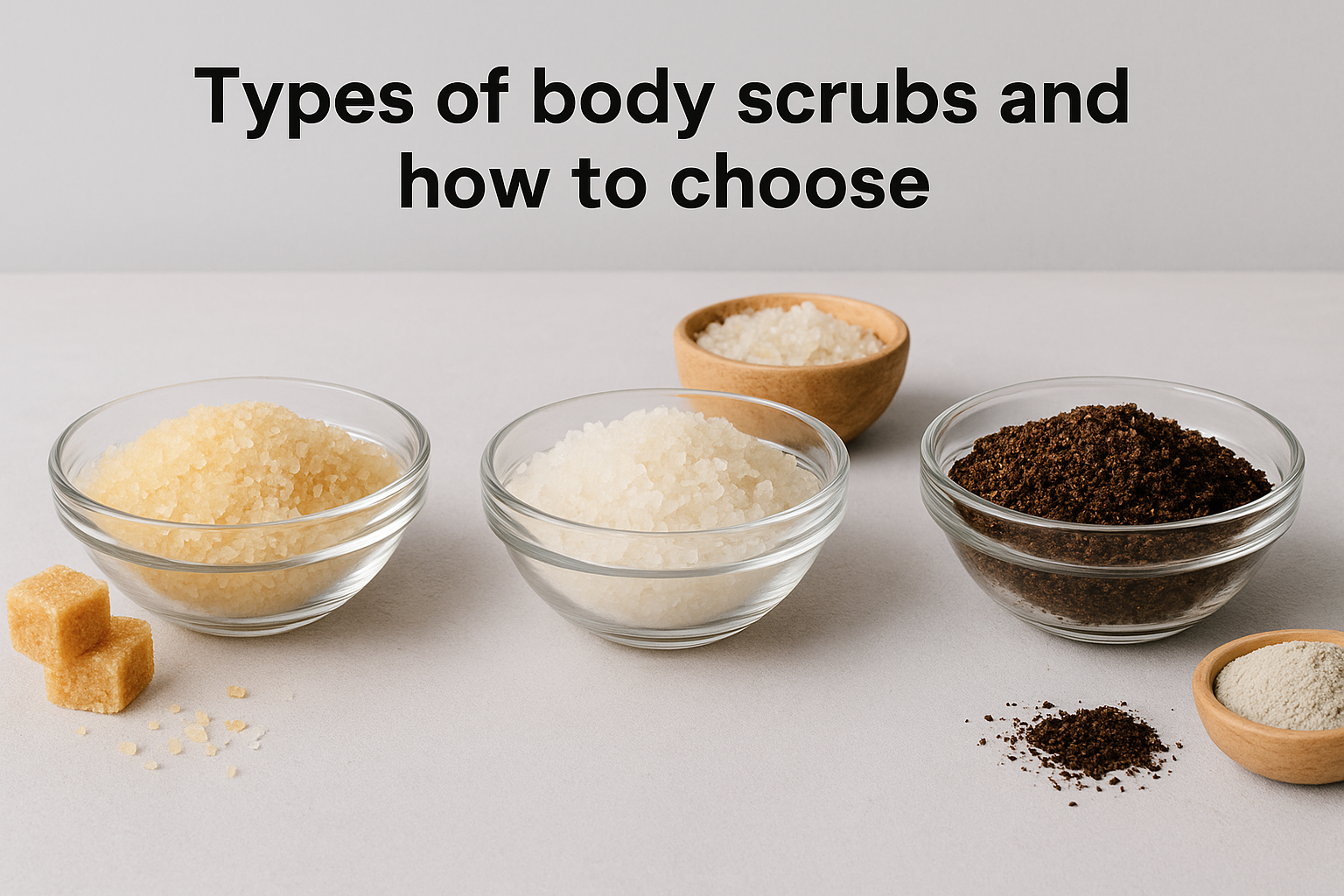
Sugar scrubs
Sugar scrubs use fine or coarse sugar crystals as the exfoliating agent. Because sugar dissolves in water, the abrasion softens as you rinse, making this type one of the gentlest options available. They suit sensitive, dry, or combination skin well and pair naturally with nourishing oils that help lock in moisture while you scrub. If you're new to exfoliation, sugar is a reliable starting point.
Salt scrubs
Salt scrubs typically use sea salt or Himalayan salt, which are harder and more angular than sugar crystals. That makes them more effective on stubborn rough patches like heels, elbows, and shins, but too abrasive for sensitive or recently shaved skin. If your feet crack during cooler months, a salt scrub applied carefully to those specific areas can deliver noticeably faster results than a gentler formula.
Avoid using salt scrubs on broken or irritated skin, as the mineral content will cause stinging and slow the healing process rather than support it.
Coffee and clay scrubs
Coffee scrubs combine coarsely ground coffee particles with carrier oils to buff skin while delivering antioxidants directly at the surface. Clay-based scrubs take a different approach, using fine mineral particles alongside absorbing clays to exfoliate and draw out impurities simultaneously, making them a solid option for oily or congested skin.
How to use a body scrub safely
Knowing what is a body scrub is one thing; using it correctly is another. The process takes less than five minutes, but the order you follow makes a real difference to how your skin responds. Done right, it leaves your skin smoother and better prepared to absorb whatever you apply next.
Prepare your skin with warm water
Start your shower and let warm water run over your body for two to three minutes before you reach for the scrub. This softens the outer skin layer and makes exfoliation far more efficient with less effort. Applying scrub to completely dry skin increases friction and can cause small surface tears that leave skin irritated rather than refreshed.
Keep the water temperature warm, not hot. Overly hot water strips the skin's natural oils before you even begin, which undoes some of the benefit you're working toward.
Apply with controlled circular motions
Scoop a small amount into your palm and work it into your skin using firm, circular motions. Focus on one section at a time rather than rushing over your whole body at once, and give extra attention to rough patches on your elbows, knees, and heels. Ease up on thinner or more sensitive areas like the back of your knees and inner arms.
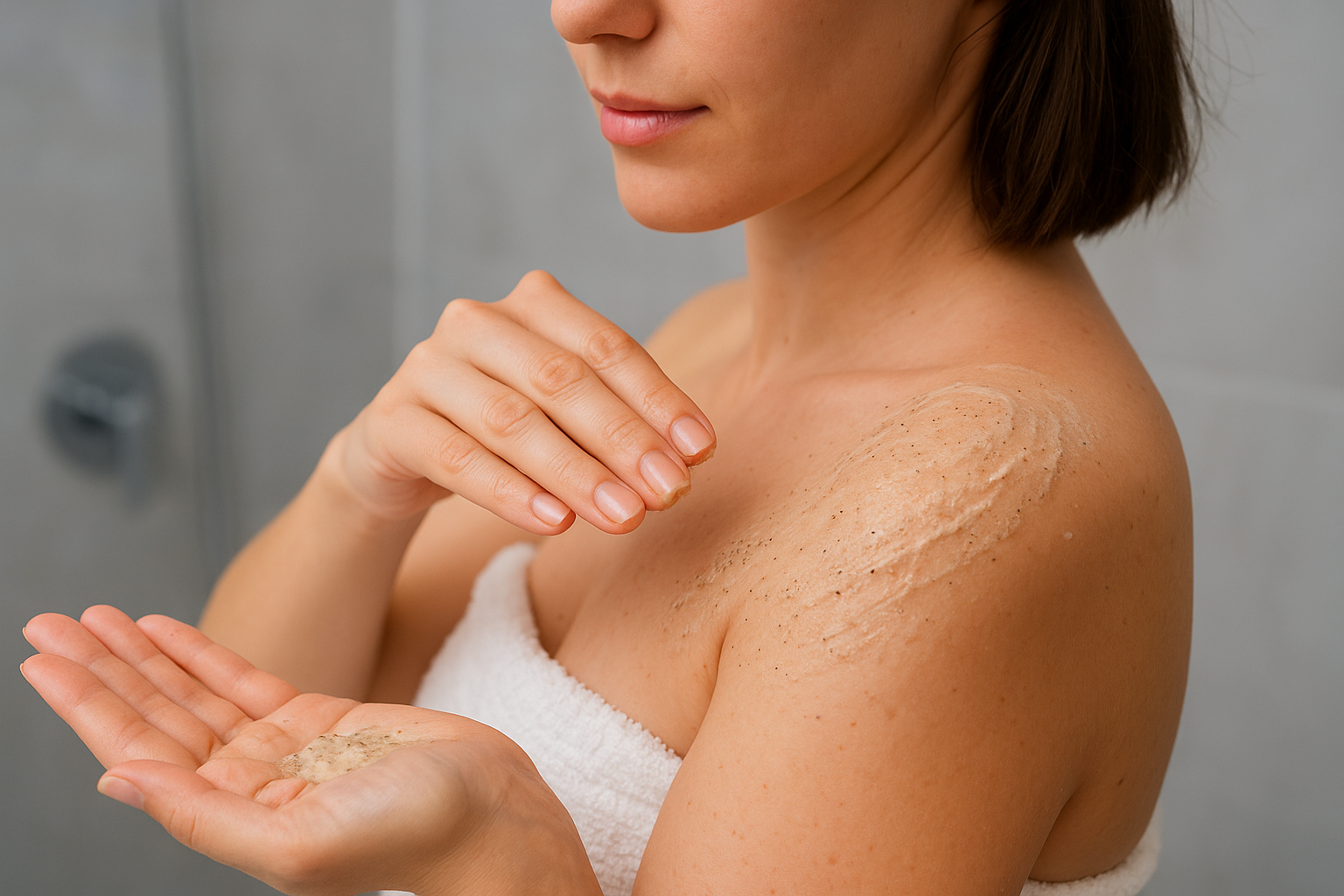
The pressure should come from your fingertips, not from the amount of product you use.
Rinse thoroughly, then moisturise immediately
Rinse off all residue with warm water, then finish with a brief cool rinse to help close your pores. Pat your skin dry with a towel rather than rubbing it down, and apply a body moisturiser or oil within two minutes while your skin is still slightly damp.
That timing matters because freshly exfoliated skin absorbs hydrating ingredients far more effectively than skin that has fully dried out. Skipping the moisturiser turns a great scrub session into a short-lived result rather than lasting softness.
How often to exfoliate and what to avoid
One of the most common mistakes people make once they understand what is a body scrub is using it too frequently. More isn't better when it comes to exfoliation. Your skin needs time to recover and rebuild its natural moisture barrier between sessions, and over-scrubbing strips that barrier faster than your body can restore it.
How often you should scrub
For most skin types, exfoliating two to three times per week strikes the right balance between clearing dead cell build-up and giving your skin adequate recovery time. If your skin is sensitive or prone to redness, once a week is a safer starting point, and you can gradually increase frequency if your skin tolerates it well. Oily or thicker skin can generally handle slightly more regular exfoliation without the same level of irritation.
Pay attention to how your skin feels 24 hours after scrubbing. If it feels tight, looks red, or feels raw, reduce your frequency before your next session.
What to avoid
Broken, sunburned, or inflamed skin should never be exfoliated. Applying any abrasive product to compromised skin causes further damage, delays healing, and risks infection. This includes skin affected by eczema flare-ups, rashes, or open cuts.
You should also avoid pressing too hard or scrubbing in fast, aggressive strokes. The exfoliating particles in a scrub are doing the work; your job is simply to guide them across the surface with steady, controlled pressure. Forcing the process leads to micro-tears and leaves your skin more vulnerable rather than healthier.
Skipping patch testing when you try a new product is another common oversight. Apply a small amount to a discreet area like your inner arm and wait 24 hours before using it all over your body, particularly if your skin reacts easily to new ingredients.
Body scrub FAQs
These are the questions that come up most often once people start looking into what is a body scrub and how to use one properly. The answers below cover the most practical concerns directly.
Can I use a body scrub on my face?
No. Body scrubs are too coarse for facial skin, which is significantly thinner and more sensitive than the skin on your body. Using a body scrub on your face will likely cause redness, irritation, or micro-tears that take several days to settle.
If you want to exfoliate your face, look for a product specifically formulated for facial use with finer particles and a gentler base. Keep your body scrub below your jawline.
Should I use a body scrub before or after shaving?
Exfoliate before shaving, not after. Scrubbing beforehand clears dead skin cells and lifts hair away from the surface, which helps your razor glide more cleanly and reduces the chance of ingrown hairs. Scrubbing freshly shaved skin causes irritation because the razor already removes a fine layer of surface cells.
Waiting at least 48 hours after shaving before you exfoliate again gives your skin adequate time to recover.
Can I make my own body scrub at home?
You can make a basic scrub at home using sugar or salt combined with a carrier oil like coconut or almond oil. A reliable starting ratio is two parts dry exfoliant to one part oil, with optional additions like vanilla or citrus zest for natural fragrance.
Home scrubs work reasonably well for general upkeep, but they lack the carefully balanced formulations that purpose-made products deliver. Always test a homemade version on a small area of skin first before applying it all over your body.
Quick recap
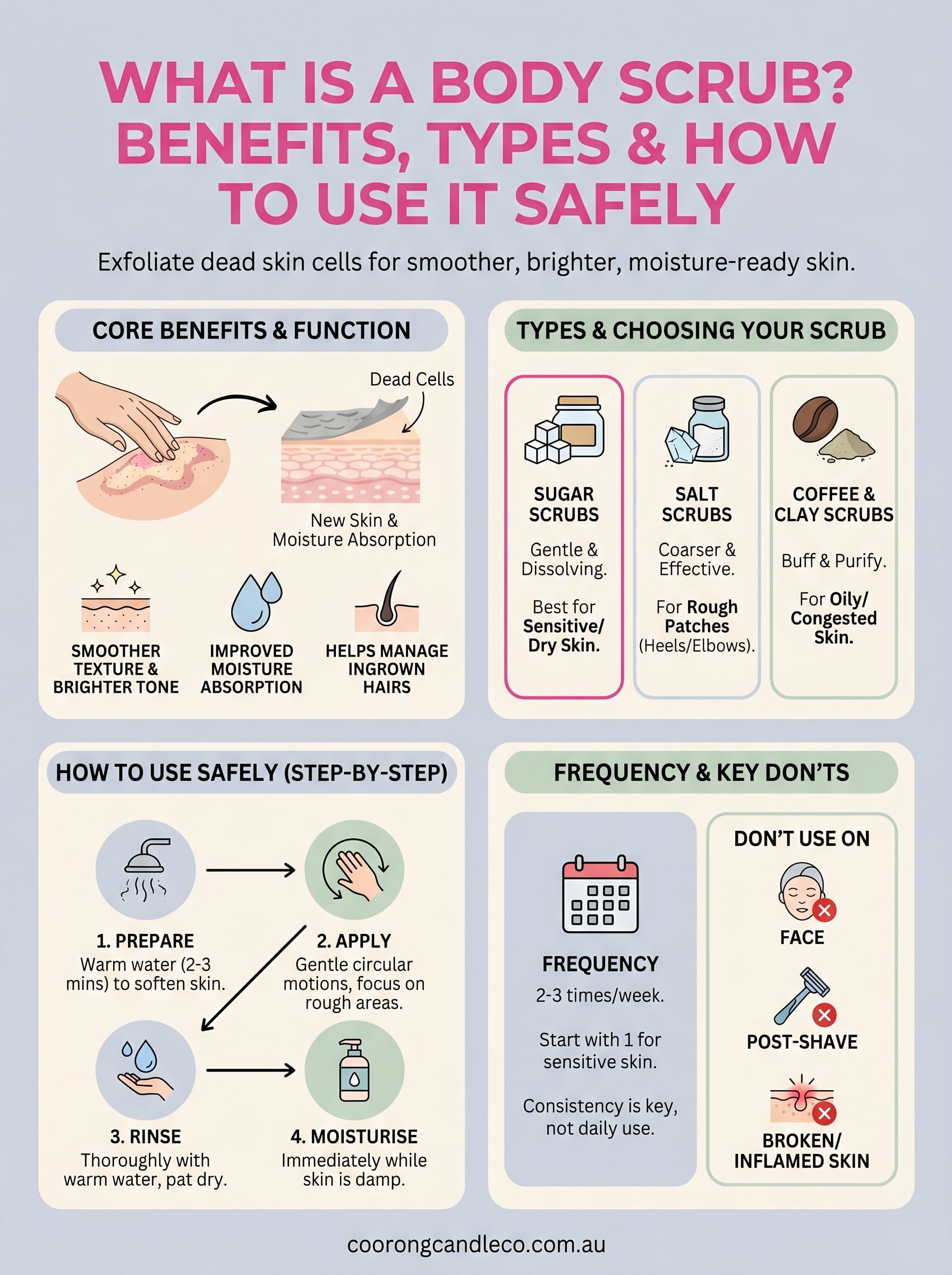
A body scrub is a textured exfoliating product that removes dead skin cells, improves circulation, and helps your moisturiser absorb more effectively. Now that you understand what is a body scrub and how it works, the key points are straightforward: choose a scrub that suits your skin type, use it two to three times per week on warm, softened skin, and always follow with a moisturiser while your skin is still slightly damp.
Avoid scrubbing broken or inflamed skin, never press too hard, and keep body scrubs well away from your face. Sugar scrubs suit sensitive skin best, while salt-based options handle tougher patches like heels and elbows more effectively. The results build with consistency, not frequency, so there is no real benefit in reaching for your scrub every single day.
If you enjoy handcrafted bath rituals, explore our handmade bath bombs made from naturally sourced ingredients to complement your exfoliation routine perfectly.