
You don't need a booking, a bathrobe, or a drive across town to unwind properly. Learning how to create a spa experience at home is simpler than most people think, and the results can genuinely rival what you'd find at a 5-star retreat.
The secret isn't expensive equipment. It's atmosphere. The right scent filling a warm room, soft lighting, a few thoughtful touches, and suddenly your bathroom feels like a sanctuary. That's exactly the kind of sensory experience we craft at Coorong Candle Co., handmade soy candles, reed diffusers, and bath products designed to turn ordinary moments into something restorative.
This guide walks you through everything step by step: setting the mood, choosing the right products, and layering simple self-care treatments that actually make a difference. Whether you're planning a solo wind-down after a long week or putting together a pamper session for someone you love, you'll finish this article with a clear plan to make it happen, no spa membership required.
What a 5-star at-home spa needs
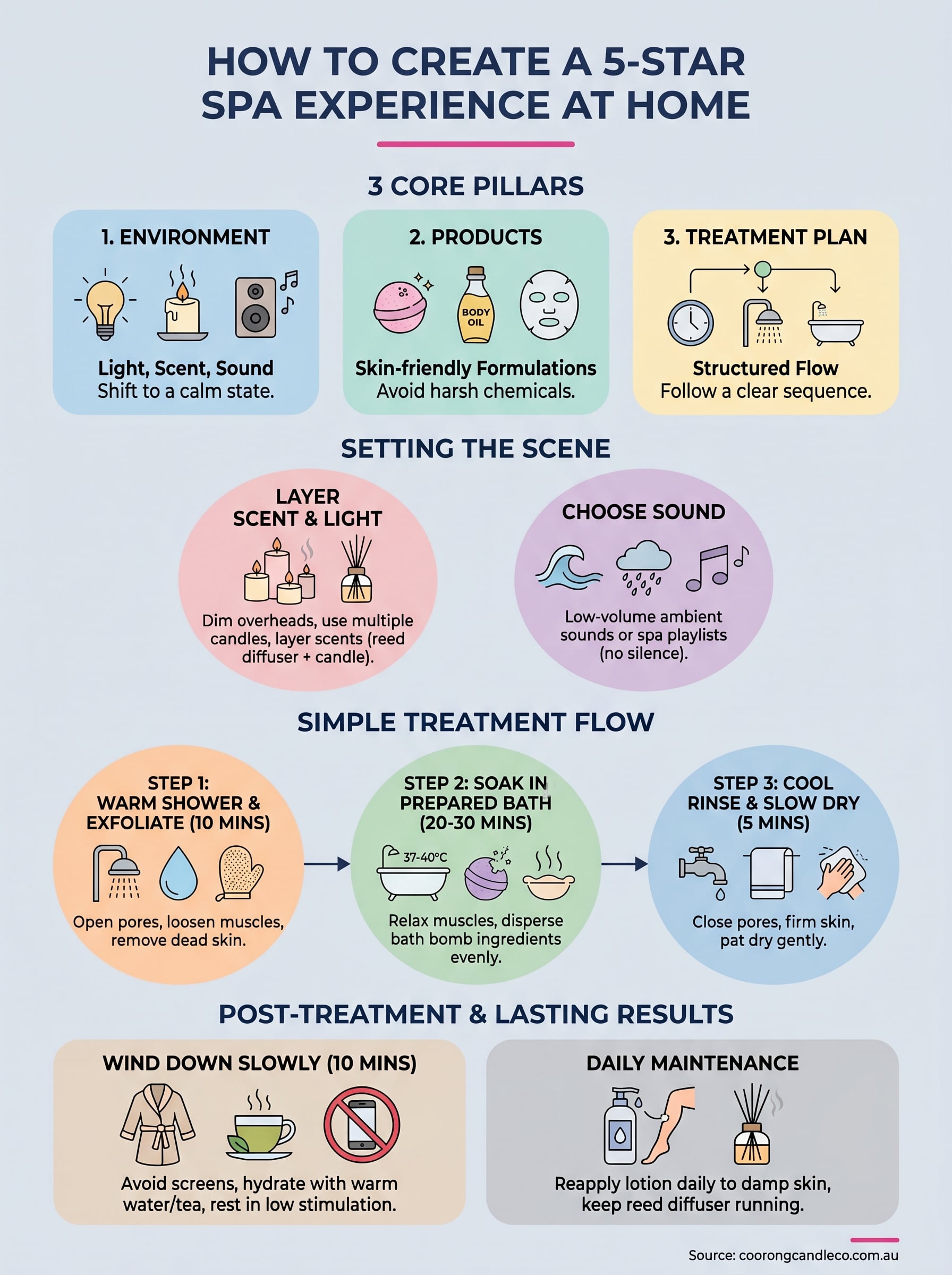
A professional spa works because every element is intentional. The lighting, the scent, the temperature, the sequence of treatments, none of it happens by accident. When you understand what a spa is actually doing, you can replicate the same effect at home without needing a team of therapists or a commercial-grade steam room. The difference between a forgettable bath and a genuinely restorative experience comes down to three core pillars: environment, products, and a clear treatment plan.
Getting all three right is what separates a proper spa day from just a hot soak.
The right environment
Your environment does the heavy lifting before any treatment even begins. Sensory cues, specifically light, sound, and scent, tell your nervous system it's time to shift down. A spa invests heavily in controlling all three because relaxation is largely a physiological response, not just a mindset. You can achieve the same result by making a few deliberate adjustments to the space you already have.
The good news is that you don't need a dedicated room. A standard bathroom becomes a genuinely calming space when you dim the lights, add a candle or two, and clear away anything that reminds you of tasks or obligations. Think of it as a temporary reset of your usual environment rather than a renovation.
The right products
Not every product on the shelf is worth your time or money. Spa-quality results come from formulations that work with your skin, not synthetic fillers and artificial fragrances that smell strong in the bottle but do very little once they hit water. When you're building your at-home kit, focus on a small selection of well-made products rather than a crowded bathroom shelf full of things you rarely use.
For a complete home spa session, you need products that address each stage of the experience: something for the bath or shower, something for your skin, and something that anchors the atmosphere throughout. Handmade soy candles and bath bombs are a practical starting point because they cover two of those three needs in a single step.
A simple plan before you start
Knowing how to create a spa experience at home becomes far easier when you walk in with a loose plan rather than figuring it out as you go. A 15-minute setup before your session makes a real difference. Use this checklist to get organised:
- Gather all your products and place them within easy reach
- Set your bathroom temperature by running warm water or turning on a heater beforehand
- Dim or switch off overhead lighting and position candles safely away from anything flammable
- Choose a playlist or ambient sound and start it before you step in
- Put your phone on silent and set a timer so you're not watching the clock
- Lay out a clean towel, robe, or warm clothing ready for afterwards
With your space prepared and your products selected, you have everything you need to move into the actual experience.
Set the scene with light, scent and sound
Atmosphere is the foundation of how to create a spa experience at home that actually feels different from your regular routine. Before you step into any treatment, the sensory environment around you needs to shift. Overhead fluorescent light and background noise from the TV keep your nervous system alert. A few targeted changes to light, scent, and sound flip that response entirely.
Dim the lights and use candles
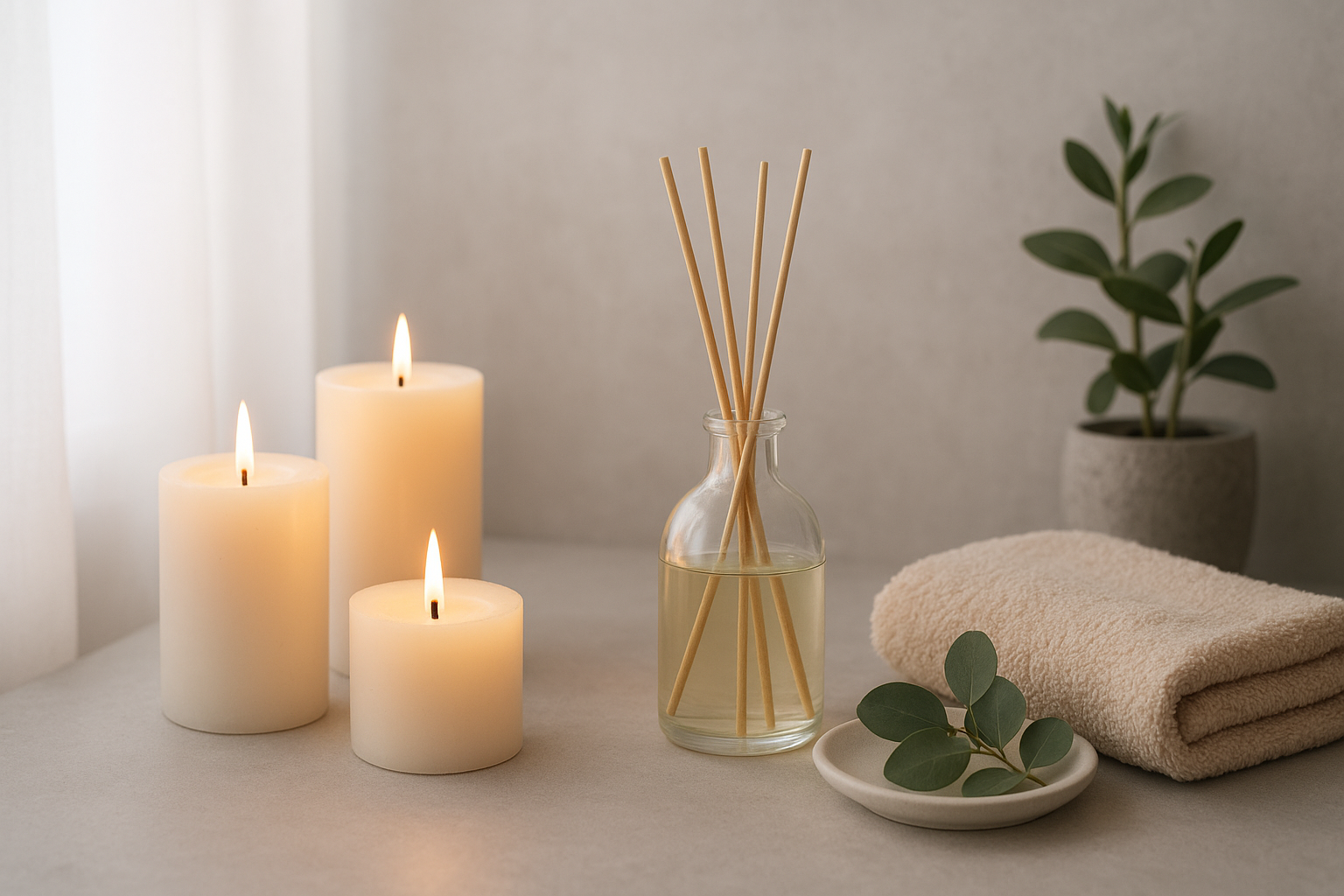
Standard overhead lighting works against you here. Bright white light signals alertness, which is the opposite of what you're trying to achieve. Switch it off entirely and replace it with warm, low-level light from candles placed safely on the bathroom vanity, window ledge, or bath edge. Two or three soy candles positioned at different heights create depth and warmth in a way that one central light source never can.
The candle you choose matters as much as the flame itself. A synthetic fragrance can be overpowering in a small, steamy bathroom, while a natural soy candle with a well-balanced scent adds atmosphere without becoming a headache.
Layer scent intentionally
Scent is the fastest route to a relaxed mental state, and the best spas use fragrance in layers rather than a single overwhelming hit. Start with a reed diffuser in the room to build a base note before you even run the water. Then light a candle to layer a warmer, fuller scent on top. Scents like eucalyptus, coastal botanicals, or light florals work well in a humid bathroom environment because they lift rather than thicken the air.
Choose sound that slows you down
Sound is the easiest element to overlook and one of the most powerful. Silence works well for some people, but for most, a low background track removes the mental gap that silence leaves. Keep the volume low enough that you'd have to focus to hear individual notes. These options work well across different preferences:
- Slow instrumental piano or acoustic guitar
- Ambient nature sounds like rain, running water, or a forest track
- Purpose-built spa playlists available on major music streaming platforms
Build your treatment flow from shower to soak
A professional spa always follows a sequence, and that structure is a big part of why the experience feels so complete. The order of your treatments matters as much as the treatments themselves. Moving through a clear flow from start to finish gives your body time to respond at each stage and makes the whole session feel intentional rather than random. When you think about how to create a spa experience at home, treat it as a progression rather than a checklist of isolated steps.
Here is a simple treatment sequence to follow:
- Warm shower and exfoliate (10 minutes)
- Soak in a prepared bath (20 to 30 minutes)
- Cool rinse and slow dry (5 minutes)
Start with a warm shower
Your shower is the first active step of your treatment, not just a rinse before the main event. Warm water, not hot, opens your pores and loosens muscle tension, preparing your skin for everything that follows. Spend at least ten minutes here and resist the urge to rush through it.
Use this time to exfoliate with a body scrub or an exfoliating mitt, working in circular motions from your feet upward. Removing dead skin cells at this stage means that any oils or moisturisers you apply later can absorb properly rather than sitting on the surface.
Exfoliating before your bath dramatically improves how well your skin responds to any products you add to the water.
Soak and close the treatment
Draw your bath at around 37 to 40 degrees Celsius, which is warm enough to relax your muscles without overheating your body. Drop in a handmade bath bomb as the water runs so the ingredients disperse evenly throughout the soak rather than settling at the bottom. Aim for at least 20 minutes before you get out.
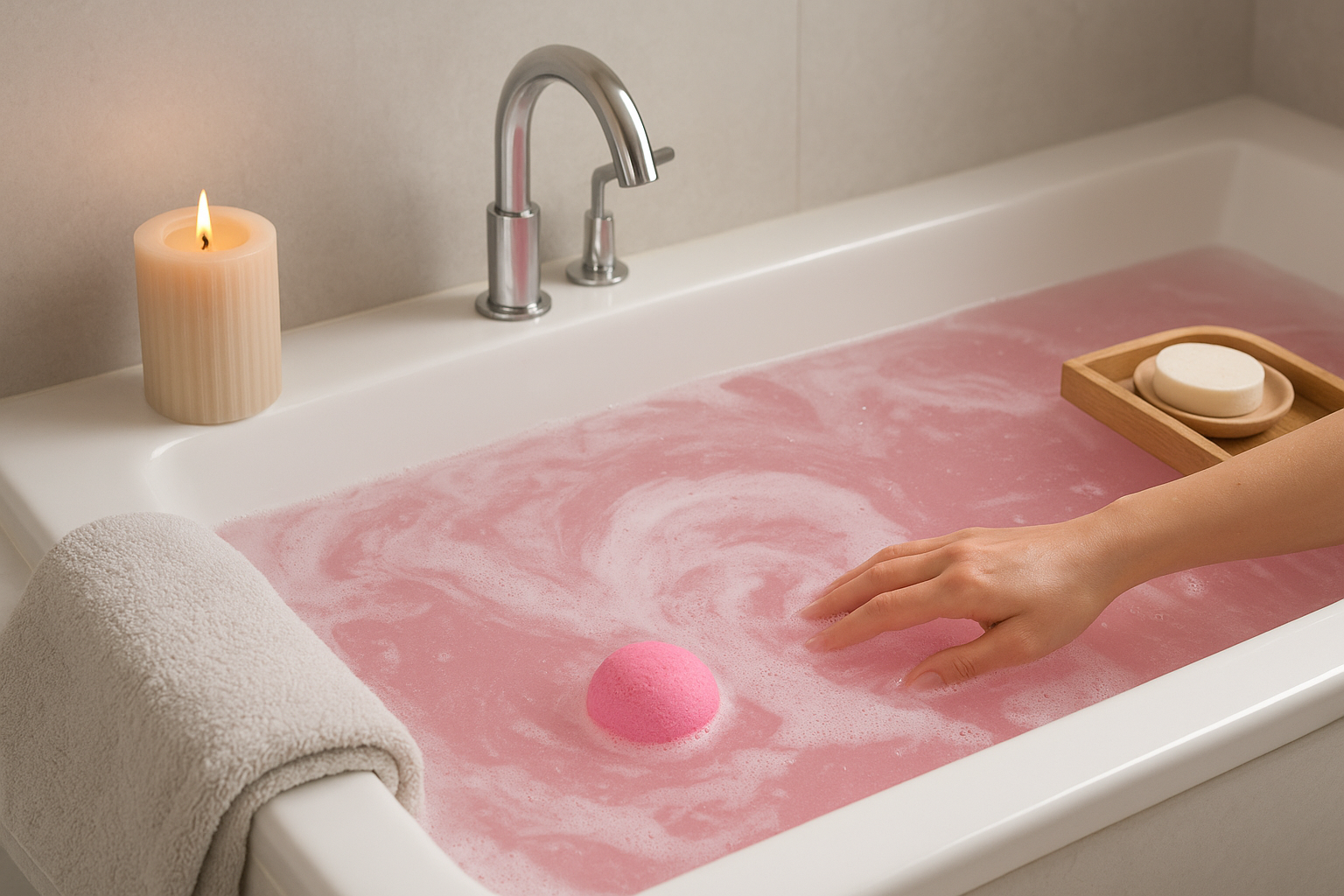
Finish with a brief cool rinse to close your pores and leave your skin with a refreshed, firm feeling. Pat yourself dry slowly with a warm towel rather than rubbing, which preserves the softness built up during the soak. Allow a few quiet minutes before you move back into your usual environment.
Do spa-grade skin and body treatments
Once your soak is done, this is where genuine skin benefits stack up fast. The steps you take while your pores are still open and your skin is warm determine how well your skin responds and how long the results last. Understanding how to create a spa experience at home means treating this phase with the same care a professional therapist would, rather than rushing to dry off and move on.
Give your face a proper treatment
Your face needs its own sequence separate from your body. Start with a gentle cleanser applied with clean fingertips in circular motions, rinsing with lukewarm water. Follow this with a clay or kaolin mask, which draws out impurities while you rest. Leave the mask on for 10 to 15 minutes, then remove it with a warm, damp cloth and follow immediately with a serum and moisturiser while your skin is still slightly damp.
Applying moisturiser to damp skin locks in hydration far more effectively than applying it to completely dry skin.
A simple face treatment sequence to follow:
- Cleanse with a gentle, fragrance-free cleanser
- Apply a clay or sheet mask and rest for 10 to 15 minutes
- Remove the mask with a warm, damp cloth
- Apply a hydrating serum to still-damp skin
- Seal with a moisturiser suited to your skin type
Treat your body like a spa would
Professional body treatments focus on hydration and circulation, both of which you can address with products you already have or can easily source. Warm body oil applied while your skin is still damp absorbs quickly and leaves your skin noticeably softer. Massage the oil into your legs, arms, and shoulders using long, upward strokes, which encourages blood flow at the same time.
For areas of rough skin like elbows, knees, and heels, apply a thick body butter and cover with socks or a warm towel for five minutes. The warmth drives the product deeper into the skin and the difference is immediately noticeable.
Finish like a spa and make it last
The way you close your session matters just as much as how you open it. Rushing back to your phone or jumping straight into household tasks undoes the physiological calm you've spent the last hour building. A proper finish is what separates a genuinely restorative home spa from just a warm bath. Understanding how to create a spa experience at home includes knowing how to exit it with the same care you brought to setting it up.
Wind down your exit slowly
Give yourself at least ten minutes of quiet time after your final treatment before re-entering your usual environment. Wrap yourself in a warm robe or pull on comfortable, loose clothing and stay somewhere with low stimulation. Avoid screens during this window because bright phone light and incoming notifications spike your cortisol almost immediately, reversing the relaxation response your body just worked to build.
This quiet window is often the most restorative part of the entire session, so protect it deliberately.
Drink a glass of warm water or herbal tea to rehydrate after the heat of your treatments. Your skin loses moisture during a warm soak, and replacing fluids internally supports the same softness you've worked to build on the surface.
Make the results last through the week
One session creates a strong baseline, but small daily habits keep the results going between your full spa days. Apply a light body lotion each morning after your shower to maintain the skin hydration you built during your soak. Keep your reed diffuser running in your bedroom or living space so the sensory association with calm carries through your week rather than fading with the candle.
A simple weekly reset list to extend the benefits:
- Reapply body oil or lotion every morning on damp skin
- Light your soy candle for 20 to 30 minutes each evening to maintain the atmosphere
- Exfoliate once mid-week to keep skin smooth between full sessions
- Top up your diffuser regularly to keep the base scent consistent
Your next spa day at home
Now you have a complete blueprint for how to create a spa experience at home that actually delivers. The key is treating each element as part of a whole: environment, products, and a clear sequence working together rather than any single step doing all the work. You don't need to overhaul your bathroom or spend a fortune to make it happen.
Start small if you need to. Pick one weekend this month, set aside two hours, and follow the sequence in this guide from start to finish. Most people are genuinely surprised by how different a prepared, intentional session feels compared to an ordinary bath. The products you choose anchor the entire experience, so make sure they're worth the investment. If you're ready to build your kit, explore our handmade bath bombs, soy candles, and reed diffusers and find the scents that suit your space.