
Essential oils have been used for centuries to calm the mind, ease tension, and support better sleep. But with so many options on the shelf, figuring out the best essential oils for relaxation can feel like a task in itself. Not every oil works the same way, and choosing the right one depends on what kind of relief you're after, whether that's unwinding after a long day or quieting a racing mind before bed.
At Coorong Candle Co., we work with natural fragrances every day. Our handmade soy candles, reed diffusers, and bath products are built around scents that promote calm and well-being, inspired by the quiet beauty of South Australia's Coorong region. That hands-on experience with aromatics has taught us plenty about which oils actually deliver on their promises, and which ones are more hype than help.
This guide covers nine essential oils backed by genuine calming properties, explains what makes each one effective, and offers practical ways to use them at home. Whether you're new to essential oils or looking to refine your relaxation routine, you'll walk away with clear recommendations you can put to use straight away.
1. Lavender
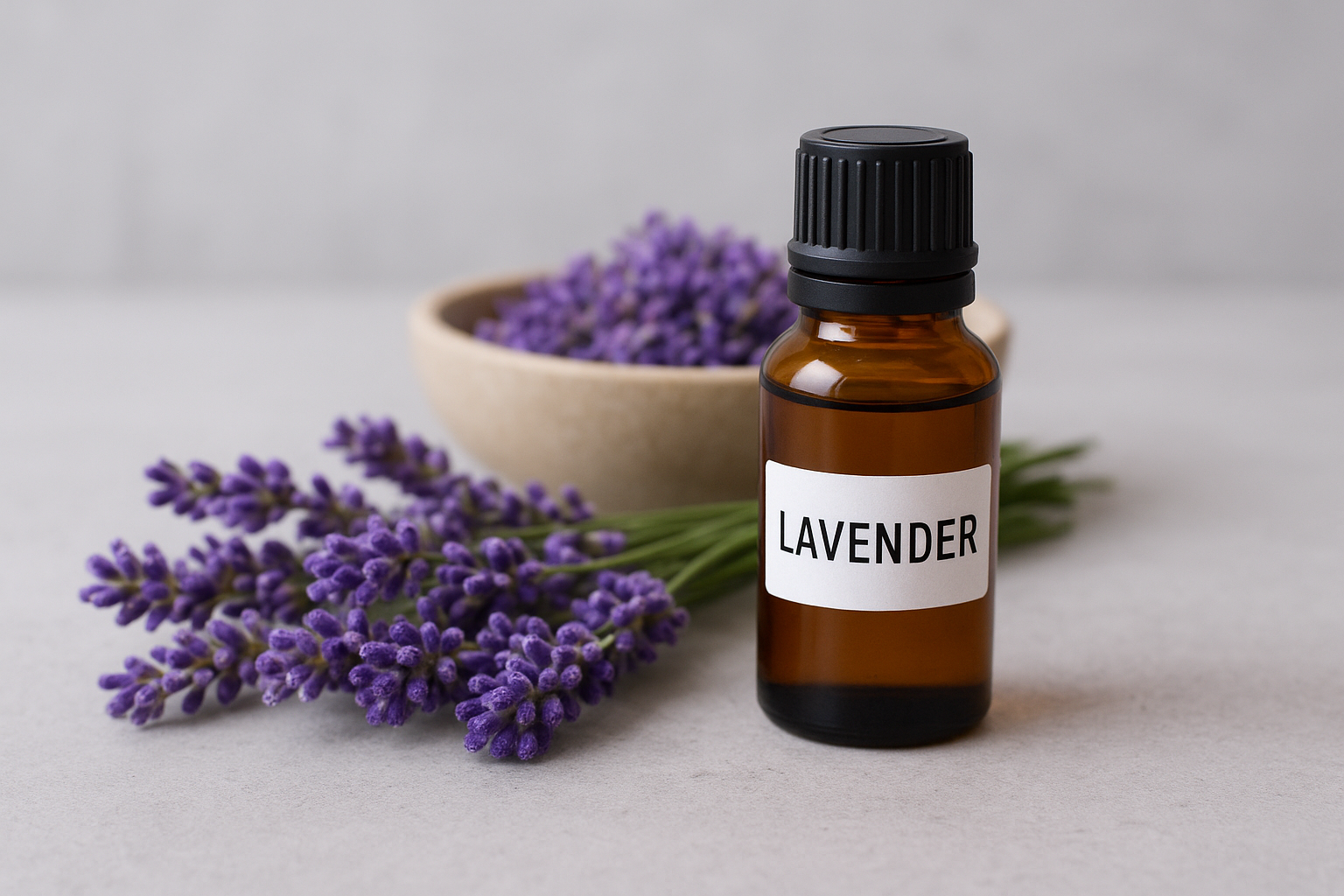
Lavender is the most studied and widely recognised essential oil for relaxation, and for good reason. If you're exploring the best essential oils for relaxation for the first time, this is the natural starting point. It works well in diffusers, topical blends, and bath products, and its calming effect is both fast-acting and well-documented.
What it smells like
Lavender has a soft, floral scent with herbal undertones and a faint sweetness. Most people find it immediately familiar. It's often described as clean and gently powdery, which makes it easy to blend with other calming oils like chamomile or cedarwood.
Why it helps you relax
Lavender oil reduces anxiety and lowers cortisol, the hormone your body produces under stress. Its key active compounds, linalool and linalyl acetate, interact with the nervous system to produce a sedative, calming effect without leaving you feeling groggy.
Studies have recorded measurable reductions in heart rate and blood pressure within minutes of inhaling lavender oil, making it one of the most reliable options for acute stress relief.
How to use it for stress and sleep
Add four to six drops to a diffuser in your bedroom about 30 minutes before you go to sleep. You can also dilute it in a carrier oil and apply it to your wrists or the soles of your feet. For a calming bath, mix eight to ten drops into a tablespoon of carrier oil or unscented bath salts before adding them to the water. A couple of drops on your pillowcase is another simple method that many people find effective.
Safety notes and who should avoid it
Lavender is gentle for most adults, but always dilute it before applying it to skin. If you are pregnant or breastfeeding, check with a healthcare provider before use. People with sensitive skin should do a patch test first, as mild irritation is possible.
What to look for when buying in Australia
Choose oils labelled 100% pure Lavandula angustifolia, which is true lavender, not lavandin, a related hybrid with a sharper, more camphor-like scent. Good suppliers will clearly list the country of origin and botanical name on the label. Australian-grown lavender from Tasmania is widely available and worth considering for freshness and traceability. Avoid any product that lists fragrance oil or synthetic additives, as these won't carry the therapeutic compounds you're looking for.
2. Bergamot
Bergamot is one of the best essential oils for relaxation that also works as a genuine mood lifter, rather than simply making you drowsy. Its dual-action calming and uplifting nature sets it apart from most other oils in this list, making it a strong choice for managing stress during the day.
What it smells like
Bergamot carries a fresh, citrusy scent with soft floral undertones and a faintly spicy edge. It smells lighter and brighter than lavender, which is part of what makes it so useful when you need stress relief without sedation.
Why it helps you relax
Research shows bergamot reduces anxiety and nervous tension by acting on the limbic system, the part of the brain that processes emotion. Its active compound linalool gives it genuine calming properties without leaving you sluggish or unfocused.
A 2015 clinical study found that inhaling bergamot in a waiting room setting measurably reduced patient anxiety before medical procedures.
How to use it for stress and mood
Add three to five drops to your diffuser during the day or blend it with lavender and frankincense for a more grounded, evening-appropriate combination. A personal inhaler is a practical option for managing stress at work or while commuting.
Safety notes and who should avoid it
Bergamot is photosensitive, so avoid applying it to skin before direct sun exposure. For topical use, always choose FCF (furanocoumarin-free) bergamot to minimise the risk of skin reactions. Pregnant women should check with a healthcare provider before use.
What to look for when buying in Australia
Look for oils clearly labelled Citrus bergamia with cold-pressing listed as the extraction method. Reputable suppliers will include country of origin on the label, typically Italy or Ivory Coast, along with the botanical name.
3. Roman chamomile
Roman chamomile is a quieter, more gentle option among the best essential oils for relaxation, but don't underestimate it. It works particularly well for people whose stress shows up as irritability, restlessness, or difficulty settling at the end of the day.
What it smells like
The scent of Roman chamomile is soft and apple-like, with warm herbal undertones. It's lighter and more delicate than German chamomile, which can smell earthy and medicinal. Most people find it immediately soothing, even on first encounter.
Why it helps you relax
Roman chamomile contains compounds like isobutyl angelate and isoamyl methacrylate that act on the central nervous system to ease anxiety and reduce muscle tension. It's one of the few oils shown to support a calmer mental state in both adults and children.
Research published in the Journal of Clinical Psychopharmacology found that chamomile extract significantly reduced generalised anxiety disorder symptoms compared to a placebo.
How to use it for winding down
Add three to four drops to a diffuser in the hour before bed. You can also blend it with lavender for a particularly effective sleep-support combination, or dilute it in a carrier oil and apply it to the back of the neck and shoulders.
Safety notes and who should avoid it
Roman chamomile is gentle on skin, but people with allergies to plants in the Asteraceae family, such as ragweed or daisies, should exercise caution. Always dilute before any topical use.
What to look for when buying in Australia
Choose oils clearly labelled Chamaemelum nobile, which is the correct botanical name for Roman chamomile. Verify that your supplier provides GC/MS testing results to confirm purity, as adulteration with cheaper German chamomile is common.
4. Ylang ylang
Ylang ylang sits at the more exotic end of the best essential oils for relaxation, but it earns its place. It works particularly well when stress shows up physically, as a racing heart or a body that feels wired and tense rather than simply mentally fatigued.
What it smells like
Ylang ylang has a rich, intensely floral scent with sweet, slightly fruity and custard-like undertones. It is one of the more distinctive oils in this list, and a little goes a long way. Used sparingly, it adds warmth and depth to a blend without overwhelming the senses.
Why it helps you relax
Ylang ylang has measurable effects on the autonomic nervous system, specifically reducing heart rate and blood pressure. Studies show it also lowers levels of adrenaline in the body, which makes it particularly effective when anxiety feels physical rather than just mental.
Research published in Phytotherapy Research found that inhaling ylang ylang oil significantly reduced both blood pressure and heart rate in healthy adults within minutes.
How to use it to calm a racing mind
Add two to three drops to your diffuser, blended with lavender or bergamot to balance its intensity. You can also dilute it in a carrier oil and apply it to your chest or pulse points as part of a calming evening routine.
Safety notes and who should avoid it
Use ylang ylang in low concentrations only, as high doses can trigger headaches or nausea. People with low blood pressure should avoid it, as it can lower it further. Always dilute before any topical application.
What to look for when buying in Australia
Choose oils labelled Cananga odorata genuina and look for suppliers who specify the grade and extraction fraction. Extra or first-grade ylang ylang is the highest quality option. Avoid synthetic versions, which are common and will not deliver the same calming effect.
5. Frankincense
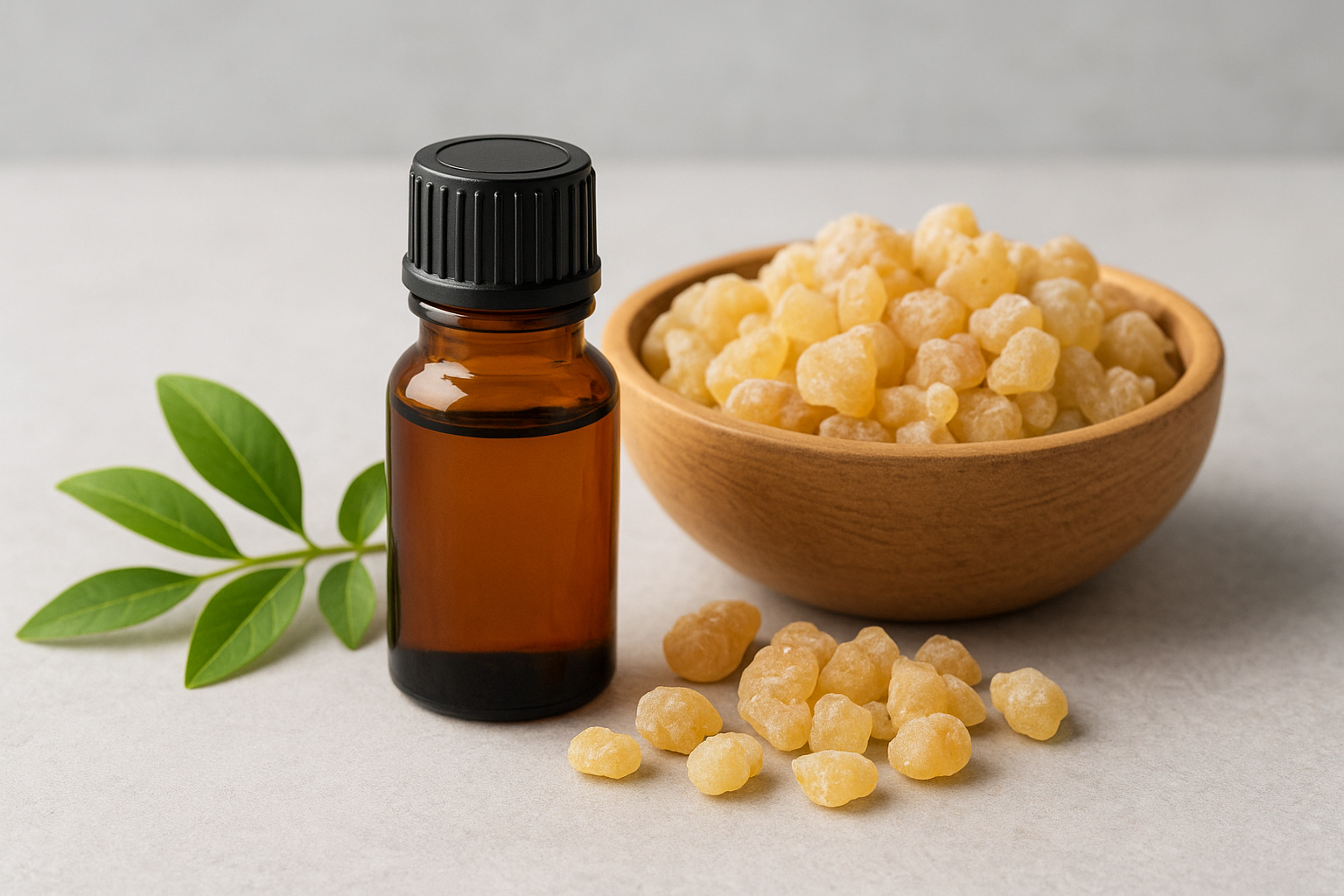
Frankincense is one of the oldest and most revered aromatic oils in the world, and it remains one of the best essential oils for relaxation for people who need to feel genuinely grounded rather than simply tired. Where lavender or ylang ylang lean toward sleep and sedation, frankincense works differently by slowing the mental noise that keeps your body wound up.
What it smells like
The scent of frankincense is warm, woody, and resinous, with subtle citrus and spice notes underneath. It smells meditative and unhurried, which makes it particularly suited to intentional winding-down routines rather than passive diffusing.
Why it helps you relax
Frankincense contains a compound called incensole acetate, which research shows activates ion channels in the brain to ease anxiety and produce a deeply calming effect on the central nervous system.
A study published in the FASEB Journal found that incensole acetate demonstrated significant anxiolytic and antidepressant effects, pointing to frankincense as a genuinely effective option for stress relief.
How to use it for grounding and stillness
Add three to four drops to a diffuser during meditation, breathwork, or any quiet evening practice. You can also dilute it in a carrier oil and apply it to your temples or the back of the neck before bed.
Safety notes and who should avoid it
Frankincense is well-tolerated by most adults, but pregnant women should avoid it. Always dilute before topical use to reduce the risk of skin sensitivity reactions.
What to look for when buying in Australia
Choose oils clearly labelled Boswellia sacra or Boswellia serrata and buy from suppliers who provide third-party GC/MS testing results to confirm purity and botanical accuracy.
6. Neroli
Neroli is one of the lesser-known but genuinely powerful entries among the best essential oils for relaxation, particularly when stress hits suddenly rather than building slowly across the day. Its specific reputation for easing acute anxiety makes it a smart option to keep on hand for those moments when tension spikes fast.
What it smells like
Neroli has a delicate, floral scent with sweet citrus and faint honey-like undertones. It's lighter than rose and less intense than ylang ylang, with a fresh brightness that keeps it from feeling heavy or cloying even in a smaller room.
Why it helps you relax
Neroli actively reduces cortisol levels and lowers blood pressure in situations of acute stress. Research points to its calming effect on the autonomic nervous system, which is why it responds quickly when anxiety spikes rather than settles.
A study published in Evidence-Based Complementary and Alternative Medicine found that inhaling neroli significantly reduced anxiety, blood pressure, and cortisol levels in post-menopausal women.
How to use it for acute stress
Keep a personal inhaler loaded with two to three drops of neroli for moments when stress arrives suddenly. You can also blend it with bergamot in a diffuser for a bright, fast-acting combination suited to high-pressure days.
Safety notes and who should avoid it
Neroli is gentle and generally well-tolerated, but always dilute before applying it to skin. Pregnant women should consult a healthcare provider before use.
What to look for when buying in Australia
Choose oils clearly labelled Citrus aurantium var. amara and buy from suppliers who list the extraction method as steam distillation from blossoms, and who provide third-party purity testing to confirm botanical accuracy.
7. Rose
Rose essential oil earns its place among the best essential oils for relaxation through its particular strength with emotional stress rather than physical tension. If your anxiety tends to feel heavy or grief-like, rose works at a deeper level than most other oils on this list.
What it smells like
Rose has a rich, deep floral scent that is both sweet and lightly honeyed. It's more complex and layered than many single-note florals, with a warmth that lingers long after the initial top notes settle.
Why it helps you relax
Rose oil actively reduces cortisol levels and calms the nervous system response to emotional stress. Its primary active compounds, including citronellol and geraniol, interact with the limbic system to ease tension that sits in the emotional rather than the mental sphere.
Research published in Natural Product Communications found that inhaling rose oil reduced adrenaline levels by nearly 30% in healthy adults.
How to use it for emotional calm
Add two to three drops to a diffuser when you need to process a difficult day rather than simply wind down. Diluting it in a carrier oil and applying it to your chest or wrists allows for slower, more personal absorption throughout the evening.
Safety notes and who should avoid it
Rose is generally safe for most adults, but always dilute it before applying to skin. Pregnant women should check with a healthcare provider before use.
What to look for when buying in Australia
Choose oils clearly labelled Rosa damascena from suppliers who specify steam distillation as the extraction method. Rose otto is the highest quality steam-distilled form, while rose absolute is solvent-extracted and better suited to perfumery than therapeutic use.
8. Clary sage
Clary sage is one of the best essential oils for relaxation when tension sits in your body rather than your head. It works particularly well for people who carry stress as physical tightness, whether that shows up as a clenched jaw, tight shoulders, or that heavy, overwhelmed feeling at the end of a demanding week.
What it smells like
The scent of clary sage is earthy and herbal, with warm, slightly sweet and nutty undertones. It smells grounding rather than floral, which makes it well suited to evening wind-down routines when you want to fully disengage from the day.
Why it helps you relax
Its active compound, sclareol, mimics oestrogen in the body and directly affects cortisol levels. Research shows clary sage reduces stress hormones and nervous tension measurably after inhalation.
A 2014 study published in Phytotherapy Research found that inhaling clary sage oil significantly reduced cortisol levels and improved thyroid hormone balance in women under chronic stress.
How to use it for tension and overwhelm
Add three to four drops to a warm bath blended with a carrier oil, or diffuse it in the hour before bed. It pairs well with lavender and frankincense for a deeply grounding evening combination.
Safety notes and who should avoid it
Clary sage is not safe during pregnancy and should be avoided entirely by women who are expecting. Avoid combining it with alcohol, as it can intensify sedative effects unpredictably.
What to look for when buying in Australia
Choose oils clearly labelled Salvia sclarea from suppliers who provide third-party purity testing. Avoid products listed simply as "sage oil," as common sage is a different plant with a distinctly different chemical profile.
9. Cedarwood
Cedarwood rounds out this list of the best essential oils for relaxation as a reliable option for people whose stress makes it genuinely hard to wind down at night. Its slow, grounding quality makes it especially suited to bedtime routines rather than daytime stress management.
What it smells like
Cedarwood has a warm, woody scent with earthy, slightly sweet undertones. It smells like a forest after rain, unhurried and deeply familiar to most people, which is part of why it works so well as a cue for your body to shift into rest mode.
Why it helps you relax
Cedarwood contains cedrol, a compound that reduces anxiety and promotes sedation through its effect on the central nervous system. Research indicates it works by calming the nervous system's baseline activity, making it easier to release physical and mental tension before sleep.
A study published in Physiology & Behavior found that inhaling cedrol significantly reduced heart rate and breathing rate in healthy adults, pointing to a genuine sedative effect.
How to use it for bedtime routines
Add three to four drops to your diffuser 30 minutes before bed. You can also blend it with lavender or frankincense and apply the diluted mixture to your feet or the back of your neck as part of a consistent nightly routine. Consistency matters here; using the same scent each night strengthens your body's association between the oil and sleep.
Safety notes and who should avoid it
Cedarwood is generally safe for most adults. Pregnant women should avoid it entirely, and you should always dilute it in a carrier oil before applying it to skin to prevent irritation.
What to look for when buying in Australia
Choose oils clearly labelled Cedrus atlantica or Juniperus virginiana from suppliers who provide third-party GC/MS testing results to confirm purity. Avoid any product sold simply as "cedar oil," as that label often covers several unrelated species with different chemical profiles.
Putting it into practice
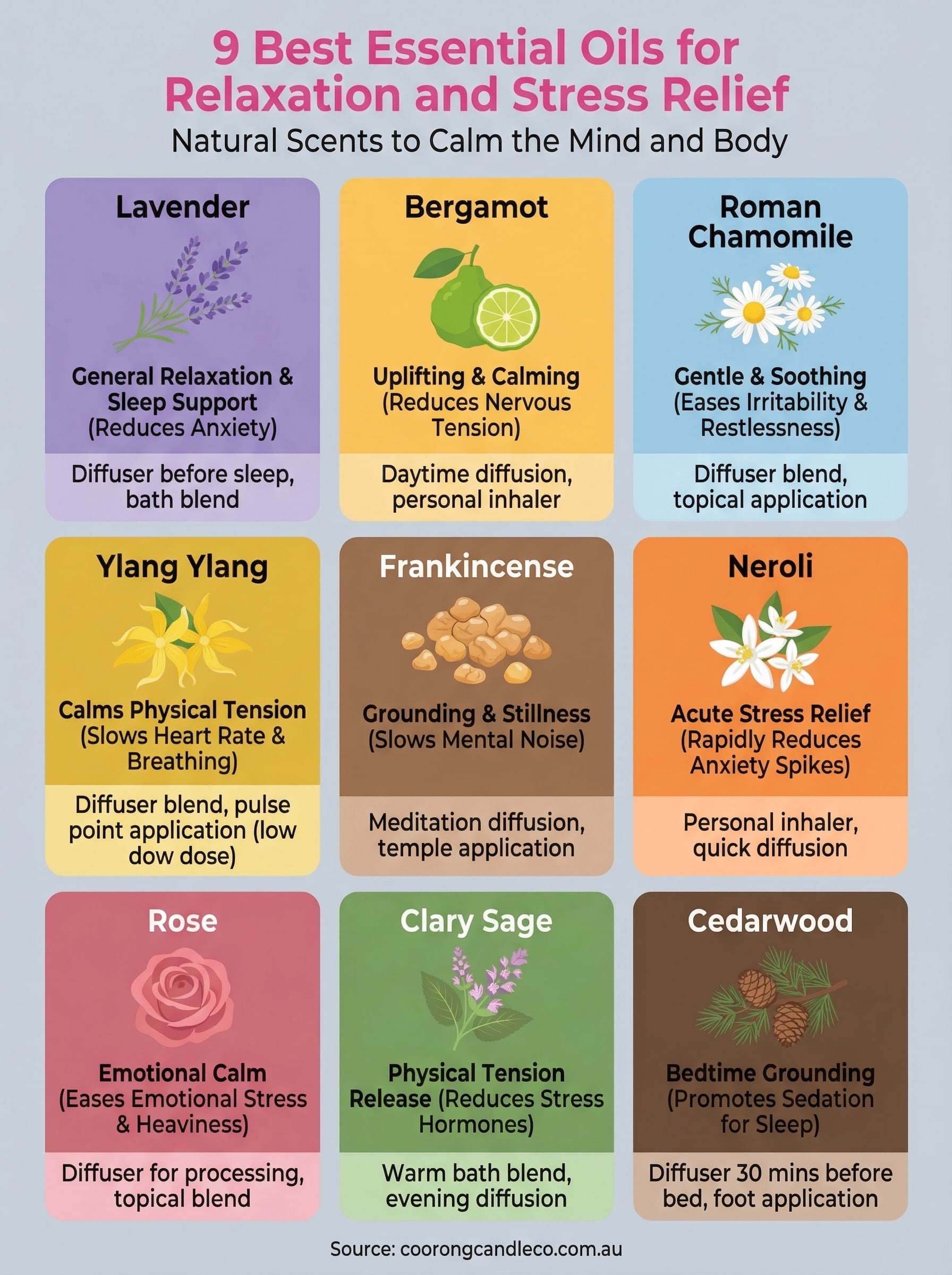
You don't need every oil on this list to build a meaningful relaxation routine. Start with one or two oils that match the kind of stress you experience most often, whether that's physical tension, a restless mind, or emotional heaviness. From there, you can layer in others as you get a feel for how each scent works with your body and your environment. The best essential oils for relaxation are the ones you'll actually use consistently, not the most expensive or exotic options on the shelf.
Scent is one of the fastest ways to shift your mood, and you don't need a diffuser to benefit from it. Soy candles, reed diffusers, and bath products built around calming natural fragrances can deliver the same sense of ease as part of a daily routine. If you're looking for a simple way to bring more calm into your home, explore the handmade home fragrance collection at Coorong Candle Co. for scents inspired by South Australia's most peaceful landscapes.