
Walk into any home fragrance shop and you'll spot bottles labelled "essential oil" next to others marked "fragrance oil." They look similar, smell appealing, and both promise to transform your space. But the difference between essential oils and fragrance oils goes far deeper than their labels suggest. As candle makers here at Coorong Candle Co., we work with both types daily, and understanding what sets them apart matters for anyone who cares about what they're breathing in.
Whether you're shopping for candles, exploring aromatherapy, or simply curious about what's actually in your reed diffuser, knowing these distinctions helps you make informed choices. Essential oils come from plants. Fragrance oils are crafted in laboratories. That's the short answer, but there's more to consider around therapeutic benefits, scent longevity, cost, and safety.
This guide breaks down everything you need to know about both oil types. You'll learn how each is made, where they excel, and which suits your specific needs, whether that's creating a calming bedroom sanctuary or choosing the right candle for your home.
Why this difference matters
You need to know what you're buying before you light that candle or add drops to your diffuser. The difference between essential oils and fragrance oils affects everything from the air quality in your home to the money in your wallet. When you understand the distinction, you avoid disappointment and potential health issues that come from assuming all scented products work the same way.
What you're actually paying for
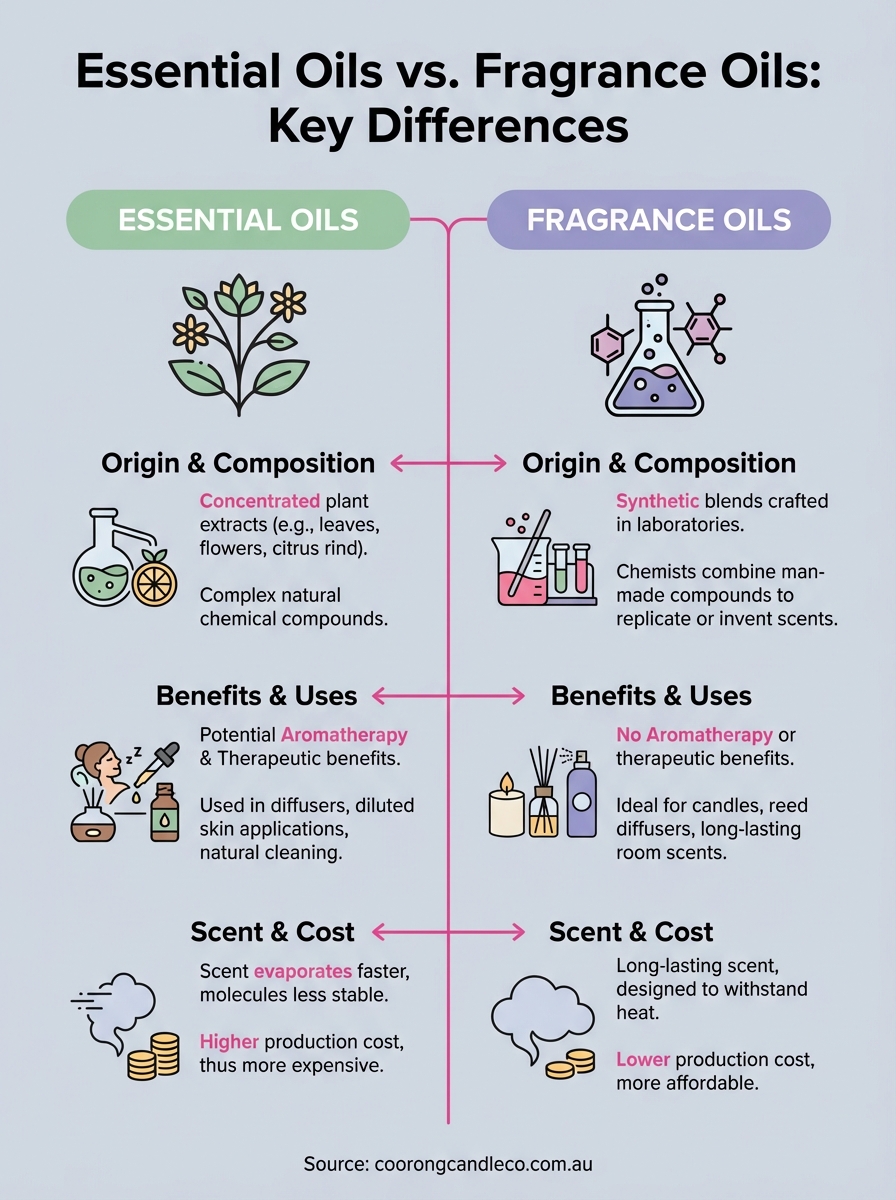
Essential oils carry a premium price tag because extraction takes substantial plant material. You need roughly 60,000 rose blossoms to produce 30 millilitres of rose essential oil. That's why a small bottle of pure rose oil costs more than a bottle of wine. Fragrance oils, meanwhile, get manufactured in laboratories where chemists blend synthetic compounds to recreate natural scents. You pay far less per millilitre because production scales easily.
But cheaper doesn't mean inferior for every purpose. If you're making candles for ambient scent, fragrance oils often perform better because they're designed to disperse evenly through wax and maintain their character when heated. Essential oils can fade or smell burnt when exposed to high temperatures. Understanding this helps you avoid overspending on expensive essential oils for applications where synthetic alternatives actually work better.
The price difference between these oils reflects production costs, not necessarily quality for your specific use.
Health and safety implications
Your body responds differently to plant extracts versus laboratory compounds. Essential oils contain hundreds of natural chemical compounds that interact with your nervous system and may offer therapeutic properties. Lavender essential oil, for instance, contains linalool and linalyl acetate, compounds studied for their calming effects. Fragrance oils lack these complex plant compounds and won't provide the same aromatherapy benefits.
Safety concerns also differ substantially between the two. Pure essential oils can irritate skin when applied undiluted and some pose risks for pregnant women, children, or pets. Tea tree oil, whilst natural, can be toxic to cats. Fragrance oils carry their own risks because you don't always know which synthetic chemicals they contain. Some artificial musks and phthalates found in cheaper fragrance oils have raised health concerns in research studies.
Anyone with allergies, asthma, or chemical sensitivities needs to pay extra attention to which type they're using. Essential oils trigger reactions in people sensitive to specific plants, whilst fragrance oils can cause problems for those reactive to synthetic compounds. Knowing the source helps you identify and avoid your personal triggers.
Performance and expectations
Scent longevity varies dramatically between these oils. Essential oils generally evaporate faster because their molecules are lighter and less stable. A eucalyptus reed diffuser made with pure essential oil might lose its punch within weeks. Fragrance oils contain synthetic fixatives that anchor the scent and extend its life for months.
Heat stability matters for candle making and warmers. Essential oils break down at lower temperatures, which means your expensive bergamot oil loses its top notes within hours of burning. Fragrance oils are engineered to withstand heat, maintaining their intended scent profile throughout the candle's life. This explains why commercial candles almost universally use fragrance oils rather than essential alternatives.
Scent accuracy presents another practical consideration. You can find fragrance oils that smell like chocolate, fresh linen, or ocean breeze. Essential oils only offer scents that exist in nature and can actually be extracted. No plant produces a genuine "Christmas cookie" essential oil, but fragrance chemists can create that exact scent. Your expectations for what's possible depend entirely on which type of oil you're working with.
Essential oils explained
Essential oils are concentrated plant extracts that capture the natural aroma and beneficial compounds of their source material. When you open a bottle of peppermint essential oil, you're smelling the essence of hundreds of actual peppermint plants distilled into liquid form. These oils contain the same chemical compounds found in the original plant, which explains why they smell authentic and may offer therapeutic properties beyond simple fragrance.
How they're extracted from plants
The extraction process determines quality and price. Steam distillation remains the most common method, where steam passes through plant material and carries volatile compounds into a condenser. The resulting liquid separates into essential oil and a water by-product called hydrosol. You'll see this method used for lavender, eucalyptus, and rosemary oils because it preserves their delicate compounds.
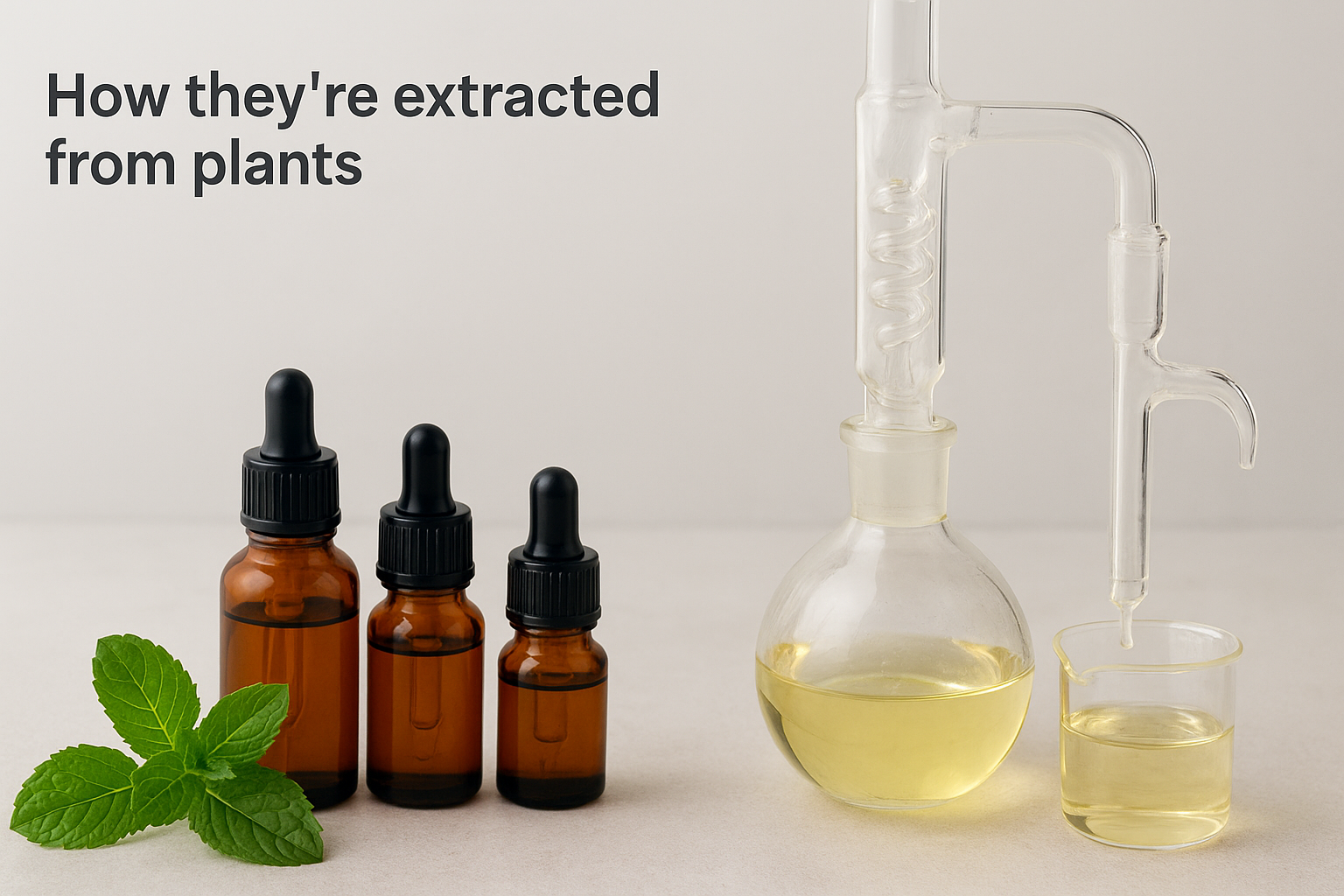
Cold pressing works specifically for citrus oils. Machines mechanically squeeze the rind of oranges, lemons, or grapefruits to release their aromatic oils. This method produces oils that smell incredibly fresh because no heat alters their chemical structure. However, cold-pressed citrus oils degrade faster than steam-distilled alternatives and can make your skin photosensitive when applied topically.
Plants yield different amounts of oil, which directly impacts the price you pay per bottle.
Solvent extraction handles delicate flowers like jasmine and tuberose that can't withstand steam. Hexane or other solvents dissolve the plant's aromatic compounds, which are then separated to create an "absolute" rather than a true essential oil. These absolutes smell stunning but may contain trace solvent residue, making them unsuitable for some therapeutic applications.
What makes them therapeutic
The complex chemical composition sets essential oils apart when discussing the difference between essential oils and fragrance oils. Each oil contains dozens or hundreds of naturally occurring compounds that work together. Tea tree oil, for instance, has over 100 components including terpinen-4-ol, which research suggests has antimicrobial properties. Your body responds to this complexity in ways that simple synthetic fragrances cannot replicate.
Different compounds target specific concerns. Esters like linalyl acetate in lavender may promote relaxation, whilst monoterpenes in citrus oils can feel energizing. Phenols found in oregano and thyme oils show strong antimicrobial activity but require careful dilution because they irritate skin. Understanding these properties helps you select oils that match your wellness goals rather than just your scent preferences.
Common types and their uses
Lavender oil serves as the most versatile essential oil for beginners. You can add it to homemade cleaning products, blend it into carrier oils for massage, or diffuse it before bedtime to create a calming atmosphere. Its popularity means you'll find it readily available and relatively affordable compared to rare essential oils.
Eucalyptus and peppermint oils excel at clearing congestion and supporting respiratory comfort. Both contain menthol-related compounds that create a cooling sensation and may help open airways. Tea tree oil handles household cleaning tasks and may support skin health, though you must dilute it properly before topical use. Citrus oils like sweet orange and lemon bring uplifting scents to diffusers but fade quickly when used in candles.
Fragrance oils explained
Fragrance oils are synthetic blends created in laboratories rather than extracted from plants. Chemists combine aromatic chemicals to replicate natural scents or invent entirely new fragrances that don't exist in nature. When you smell a "clean cotton" or "birthday cake" candle, you're experiencing fragrance oil at work because no plant naturally produces these scents. The difference between essential oils and fragrance oils becomes obvious once you understand that fragrance oils prioritize consistency and creativity over botanical authenticity.
How fragrance oils are created
Laboratory technicians build fragrance oils by selecting specific aroma chemicals from a palette of hundreds of synthetic and natural isolates. They might combine limonene (a citrus compound), vanillin (vanilla scent), and synthetic musks to create a "lemon cupcake" fragrance. Each component gets measured precisely and blended to achieve a target scent profile that remains identical batch after batch.
Manufacturing scales easily because chemists don't depend on harvest seasons or weather conditions. You can produce thousands of litres without worrying about crop failures or supply shortages. This reliability explains why fragrance oils cost significantly less than essential oils. A manufacturer can create "rose" fragrance oil that smells like roses year-round for a fraction of what genuine rose essential oil demands.
Why manufacturers prefer them
Candle makers and diffuser producers favour fragrance oils because they perform predictably under heat and stress. Your candle maintains its intended scent from first light to final burn because fragrance oils contain stabilizers that resist thermal breakdown. Essential oils lose their top notes quickly when heated, but fragrance oils stay true throughout the product's lifespan.
Fragrance oils deliver consistency that natural extracts simply cannot match in commercial applications.
Scent variety explodes with synthetic options. You'll find fragrance oils mimicking everything from fresh-cut grass to chocolate-chip cookies, scents impossible to extract from plants. Blenders can also adjust intensity easily, creating strong formulations for large spaces or subtle versions for intimate rooms. This flexibility makes product development faster and more responsive to customer preferences.
What you can and cannot expect
Fragrance oils excel at providing long-lasting, affordable scent but they won't offer therapeutic benefits. You might enjoy the smell of "lavender" fragrance oil, but it lacks the linalool and other compounds that give genuine lavender essential oil its calming properties. Your body responds to synthetic chemicals differently than it does to complex plant extracts.
Skin application requires caution because many fragrance oils contain ingredients that irritate sensitive skin or trigger allergic reactions. Always check whether a fragrance oil is labeled "skin-safe" before adding it to lotions or bath products. Most fragrance oils work best in candles, diffusers, and cleaning products rather than direct body contact.
How to choose for candles, diffusers, and skin
Your choice between these oils depends entirely on what you're making and your priorities. The difference between essential oils and fragrance oils matters most when you consider performance, budget, and intended benefits. Understanding which oil type suits each application helps you avoid wasted money and disappointing results.
Candle making decisions
Fragrance oils win for candle production because they're specifically engineered to withstand heat. Your candle maintains its intended scent from start to finish when you use fragrance oils designed for wax. Most commercially successful candles use synthetic fragrances because they bind properly with paraffin or soy wax and release scent consistently as the candle burns.
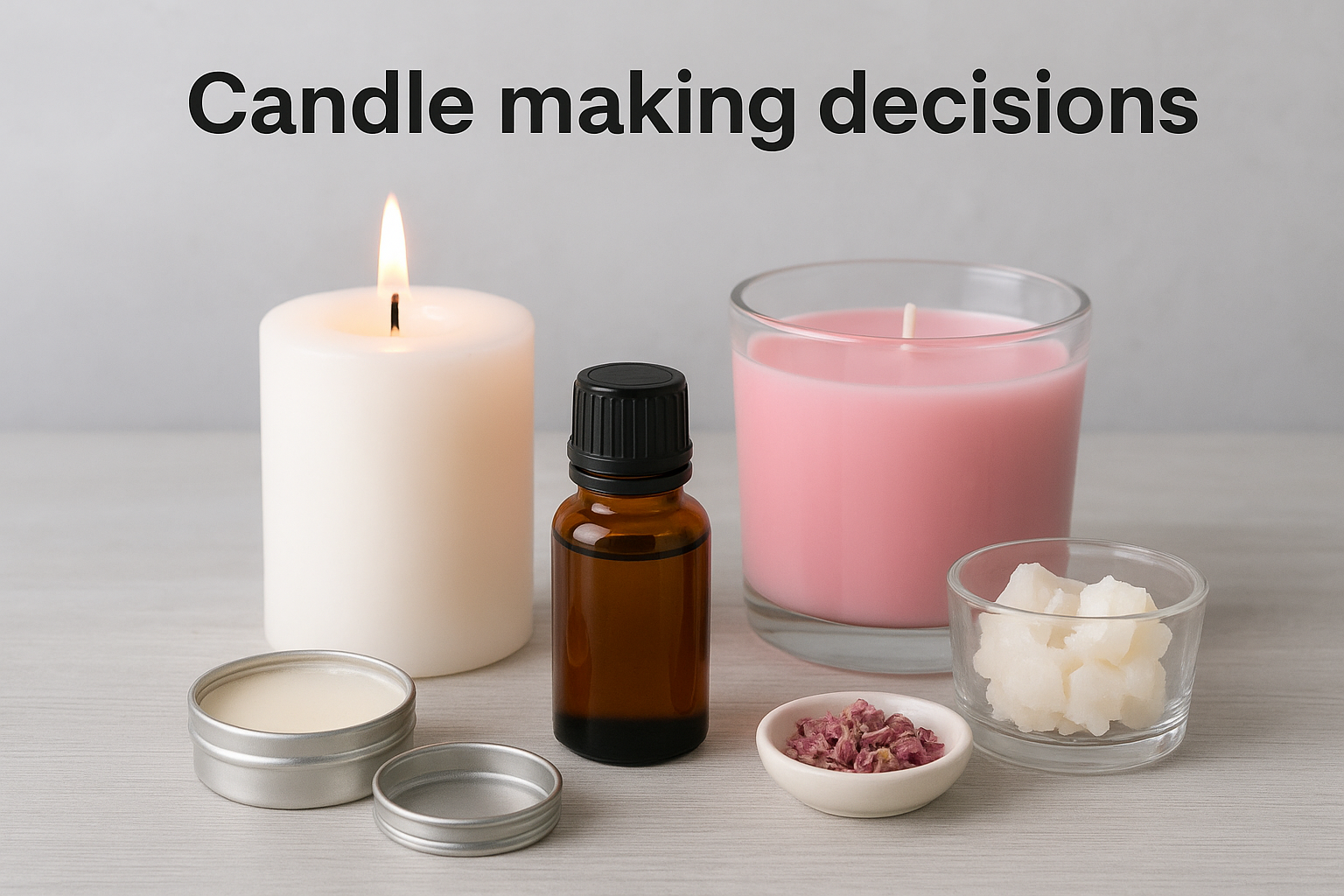
Essential oils work in candles but come with limitations. You need higher concentrations to achieve noticeable scent throw, which makes them expensive for anything larger than a small tin. Citrus essential oils fade particularly fast, whilst heavier oils like patchouli or cedarwood hold up better but still cost significantly more per candle. Choose essential oils only if you're willing to accept subtle scent and higher production costs in exchange for natural ingredients.
Most professional candle makers blend both types, using essential oils for base notes and fragrance oils for complexity and longevity.
Reed diffusers and room fresheners
Fragrance oils excel in reed diffusers because they contain synthetic fixatives that extend scent life. Your diffuser continues releasing fragrance for months rather than weeks. The alcohol or carrier oil base wicks up the reeds and disperses scent steadily, making fragrance oils the practical choice for continuous room freshening.
Essential oils work well in ultrasonic diffusers that disperse water vapor without applying heat. You get genuine aromatherapy benefits when you diffuse lavender, eucalyptus, or peppermint essential oils. These devices protect the delicate compounds from thermal damage, allowing you to experience both scent and potential wellness effects. Budget for more frequent refills because essential oils evaporate faster than synthetic alternatives.
Skin and body applications
Essential oils require proper dilution before touching your skin. Mix them with carrier oils like jojoba or sweet almond at concentrations between 1-3% for most adults. You gain potential therapeutic benefits from properly diluted essential oils in massage blends, facial serums, or bath soaks. Never apply undiluted essential oils directly to skin unless specifically directed by a qualified aromatherapist.
Fragrance oils rarely belong on your body. Most contain synthetic compounds that irritate sensitive skin or cause allergic reactions. Only use fragrance oils labeled specifically as "skin-safe" and perform a patch test first. Your safest option for scented body products remains either pure essential oils properly diluted or purchasing from manufacturers who formulate products according to safety standards.
Safety, storage, and label checks
Proper handling protects both your investment and your health. The difference between essential oils and fragrance oils extends to how you store them and interpret their labels. Small mistakes in storage or usage can degrade quality, waste money, or cause adverse reactions. Understanding safety protocols for each oil type helps you avoid common pitfalls that trip up beginners.
Storing oils properly
Keep both oil types in dark glass bottles away from direct sunlight and heat sources. Light and heat break down aromatic compounds rapidly, turning your expensive oils into disappointing, weak-smelling liquids. Store bottles in cool, dark cupboards or drawers where temperatures remain stable. Your bathroom cabinet near a hot shower creates the worst possible environment for oil storage.
Essential oils require tighter caps because they evaporate faster than synthetic alternatives. Check that lids seal completely after each use. Oxidation affects citrus essential oils particularly quickly, so refrigerate opened bottles of lemon, orange, or grapefruit oils to extend their shelf life beyond six months. Fragrance oils tolerate room temperature storage better but still benefit from consistent cool conditions.
Proper storage extends oil life from months to years and maintains scent quality throughout.
Reading labels correctly
Quality essential oil labels list the botanical name alongside the common name. You should see "Lavandula angustifolia" on true lavender oil, not just "lavender scent." The label must also specify the extraction method and country of origin. Vague labels that omit this information often indicate diluted or synthetic products marketed deceptively as pure essential oils.
Fragrance oil labels should clearly state "fragrance oil" or "synthetic" rather than hiding behind terms like "nature identical" or "aromatherapy oil." Check for skin-safe certification if you plan any topical use. Reputable suppliers disclose phthalate-free formulations when applicable, which matters for anyone concerned about synthetic chemical exposure.
Safety precautions to follow
Always perform patch tests before applying any oil to larger skin areas. Mix one drop with carrier oil, apply to your inner forearm, and wait 24 hours. Redness or irritation means you need to avoid that specific oil or reduce concentration further.
Keep all oils away from children and pets. Cats cannot metabolize certain compounds found in many essential oils, making tea tree, eucalyptus, and citrus oils potentially toxic to felines. Store bottles in high cupboards with childproof caps because even small amounts can cause serious reactions if ingested.
Never ingest oils without qualified professional guidance. Despite internet claims, swallowing essential oils carries significant health risks including throat burns and organ damage. Fragrance oils pose even greater ingestion dangers because they contain compounds never intended for human consumption.
Final thoughts
Understanding the difference between essential oils and fragrance oils empowers you to make better purchasing decisions for your home. Essential oils deliver authentic plant-based scents with potential therapeutic benefits but cost more and fade faster. Fragrance oils provide consistent, long-lasting aroma at accessible prices whilst sacrificing natural compounds. Neither option is inherently superior because each serves different purposes depending on your priorities.
Your choice ultimately depends on what matters most. Select essential oils when you value botanical authenticity and aromatherapy properties in diffusers or personal care products. Choose fragrance oils when you need reliable scent throw and longevity in candles or room fresheners. Many experienced users blend both types, reserving expensive essential oils for therapeutic applications whilst using synthetic fragrances where performance matters more than plant origin.
Ready to experience professionally crafted home fragrance? Explore our handmade reed diffusers featuring carefully selected fragrance blends inspired by South Australia's natural beauty.