
You have probably seen "essential oils" printed on candle labels and diffuser bottles without ever getting a straight answer about what they actually are. What are essential oils, in plain terms? They are concentrated plant extracts, pulled from flowers, leaves, bark or peel, that carry the natural scent and chemical compounds of the source plant. Nothing synthetic, nothing diluted at the source, just the plant in its most potent form.
Most oils are made through steam distillation, where steam passes through plant material and carries the aromatic compounds with it, or through cold pressing for citrus peels. The result is a small amount of highly fragrant oil that gets used in everything from skincare to home fragrance, often valued for its calming, uplifting or cleansing properties depending on the plant.
This article walks through how essential oils are produced, the differences between common types, and where they show up in everyday products, including the soy candles and reed diffusers we hand-pour here at Coorong Candle Co. If you want to understand what you're actually smelling when you light a candle inspired by the Coorong wetlands, this is where to start.
Why essential oils matter for wellbeing and home ambience
Scent reaches the brain faster than almost any other sense. When you breathe in an aroma, the molecules travel straight to the olfactory bulb, which sits next to the amygdala and hippocampus, the parts of your brain that handle mood and memory. That's why a whiff of lavender can calm you down before you've consciously registered the smell, and why a certain candle can transport you straight back to a summer at the coast. Essential oils tap into this wiring directly, which is why they've become central to home fragrance, not just skincare.
A single breath of the right essential oil can shift your mood faster than almost any other sensory trigger.
The link between scent and stress relief
Research into aromatherapy backs up what many people feel instinctively. Oils like lavender, chamomile and bergamot have been studied for their calming effects, while citrus oils such as lemon and sweet orange are more often linked to alertness and lifted mood. The effects are subtle rather than medicinal, but for everyday stress, a diffuser running in the background or a candle burning during a bath can genuinely help you unwind after a long day. This is especially relevant for anyone using home fragrance as part of a wind-down ritual before bed or a reset after work.
Setting the mood in your home
Beyond the wellbeing angle, essential oils shape how a room feels the moment you walk in. A living room scented with cedarwood and sandalwood reads as warm and grounded. A bathroom with eucalyptus and mint feels fresh and awake. Retailers and interior stylists lean on this constantly, using signature scents the same way they use lighting or soft furnishings, to create atmosphere rather than just cover up odours.
- Living areas: warm, woody notes like cedarwood or sandalwood for a grounded feel
- Bathrooms: sharp, clean notes like eucalyptus or peppermint for freshness
- Bedrooms: soft floral or herbal notes like lavender or chamomile for calm
- Entryways: citrus notes like lemon myrtle or orange for a welcoming first impression
Why this matters for regionally inspired candles
Here in South Australia, this is exactly the idea behind our regional collections. A candle inspired by the Coorong wetlands or Kangaroo Island isn't just about a pleasant smell, it's about capturing a sense of place through essential oils and fragrance blends that echo coastal air, native scrub or wild herbs. When you burn one of these candles, you're not just freshening a room, you're recreating a memory or a mood tied to a specific landscape. That's a very different experience to a generic supermarket candle, and it's why understanding what essential oils actually are helps you appreciate why regionally themed scents feel more authentic than mass-produced alternatives.
Understanding this connection between scent, mood and place also explains why so many Australians are shifting away from synthetic fragrance oils towards products built around genuine plant extracts. It's not just a trend, it's a practical response to wanting a home that feels calmer, more personal and more connected to the landscape outside your window.
How essential oils are made, from plant to bottle
Getting from a raw plant to a bottle of essential oil takes far more material than most people expect. Steam distillation remains the most common method: steam passes through plant matter in a still, the heat releases the aromatic compounds, and the vapour carries them upward into a cooling chamber where it condenses back into liquid. The oil separates naturally from the water because it's lighter and doesn't mix, so it floats to the top and gets skimmed off. What's left over, the fragrant water, is sold separately as a hydrosol, often used in linen sprays and facial mists.
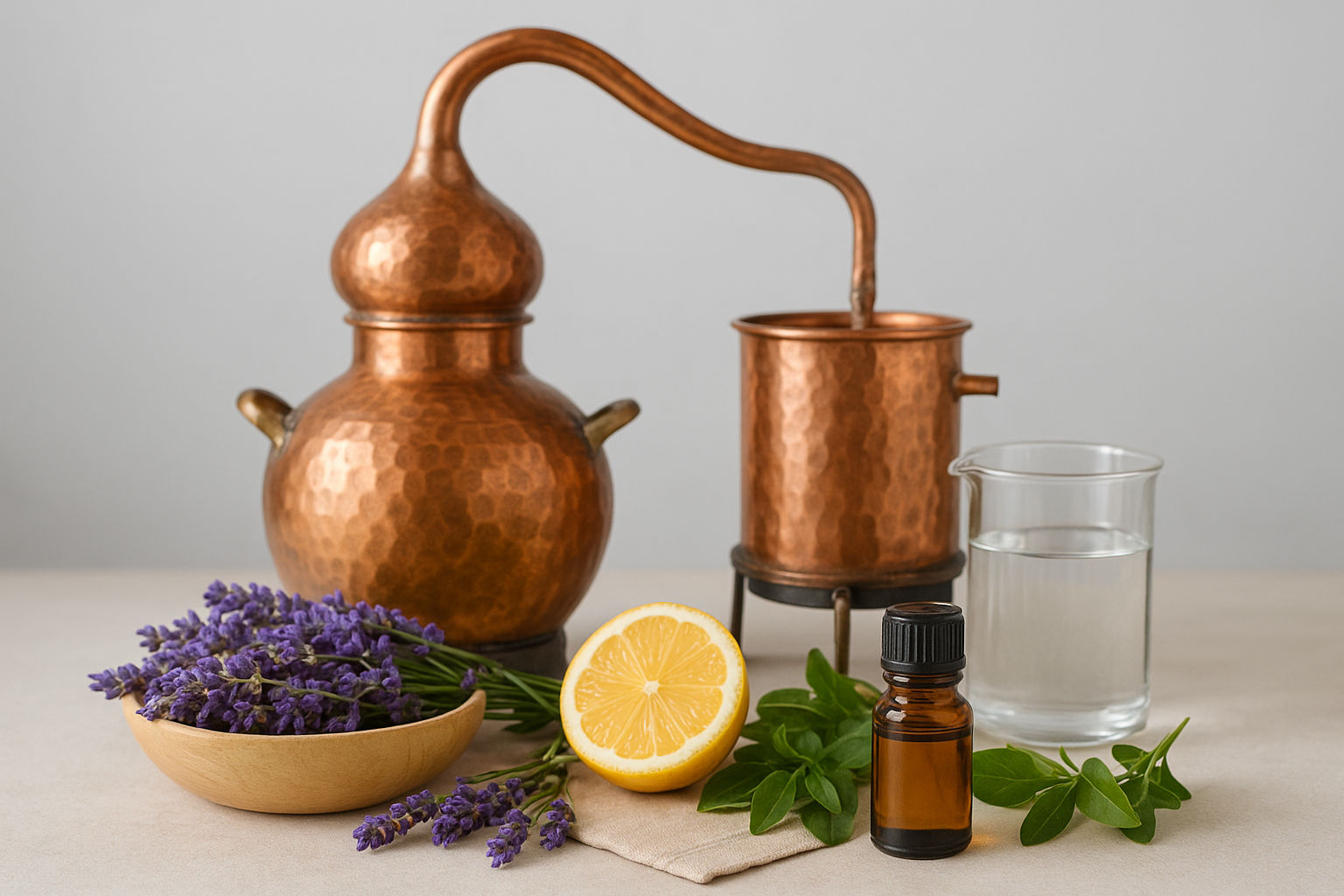
It can take a whole field of flowers to fill a single small bottle of essential oil.
Why yield varies so much between plants
Some plants give up their oil generously, others barely give up any at all. It takes roughly 60 rose blossoms to produce a single drop of rose oil, which explains why pure rose oil sits at the expensive end of the market. Lavender is far more generous, with around 3kg of flowers yielding just under 15ml of oil. This difference in yield ratios is the main reason prices swing so wildly between oils, and it's worth knowing before you assume a cheap "pure" oil is genuine.
| Extraction method | Best suited to | Typical result |
|---|---|---|
| Steam distillation | Lavender, eucalyptus, peppermint | High purity, most common method |
| Cold pressing | Lemon, orange, bergamot | Retains bright citrus top notes |
| Solvent extraction | Jasmine, rose (absolutes) | Used when heat damages delicate petals |
From raw oil to finished fragrance
Once the oil is extracted, it's tested for purity and blended if the final product calls for a specific scent profile. This is where a candle maker or perfumer decides how a coastal wetland or a native gum forest actually translates into something you can smell from a lit wick. At Coorong Candle Co., this is the stage where our regional blends take shape, combining pure extracts with skilled ratios so the finished soy candle reflects a real South Australian landscape rather than a generic "fresh" scent pulled off a shelf.
How to use essential oils safely at home
Using essential oils safely comes down to one rule: concentration matters. These oils are potent, and what feels luxurious in a diffuser can irritate skin or overwhelm a small room if you use too much. Getting the balance right is straightforward once you know the basic guidelines, and it means you get the benefits without the downsides that put people off trying them in the first place.
Dilution and topical use
Never apply essential oils directly to skin without diluting them first. Most guidance suggests 2-3 drops per teaspoon of a carrier oil like sweet almond or jojoba for adult skin, and even less for anyone with sensitive skin or existing conditions. Patch-testing on your inner arm before wider use is worth the extra minute, especially with stronger oils like tea tree or peppermint.
Diluting properly is the single habit that separates a pleasant experience from a skin reaction.
Diffusing and inhalation
Diffusers are the gentlest way to enjoy essential oils at home, since the oil is dispersed into the air rather than sitting on skin. A few drops in water is plenty for most rooms, and running a diffuser for 30 to 60 minutes is usually enough to fragrance a space without oversaturating it. Ventilate the room if you're sensitive to strong scents, and avoid diffusing continuously all day.
Keeping pets and children in mind
Some oils that are perfectly fine for adults can be harmful to pets, particularly cats, whose livers process compounds differently. Tea tree, eucalyptus and citrus oils are common culprits worth researching before diffusing around animals. With young children, stick to well-known gentle oils like lavender and always keep bottles out of reach.
Candles as a lower-risk alternative
If measuring drops and diluting oils feels like too much fuss, a well-made soy candle does the work for you. The fragrance is already blended and balanced at production stage, so you get the atmosphere and scent benefits without handling concentrated oils yourself, which is exactly why so many people prefer candles for everyday home fragrance.
Popular essential oils and their everyday benefits
Hundreds of essential oils exist, but only a handful show up again and again in candles, diffusers and skincare because they consistently earn their place. Each one carries a distinct chemical profile that gives it a recognisable scent and a slightly different effect on mood, whether that's calming you down after work or waking you up before a morning run. Knowing what a few common oils actually do makes it much easier to choose a candle or diffuser blend that suits how you want a room to feel, rather than picking one on scent name alone.
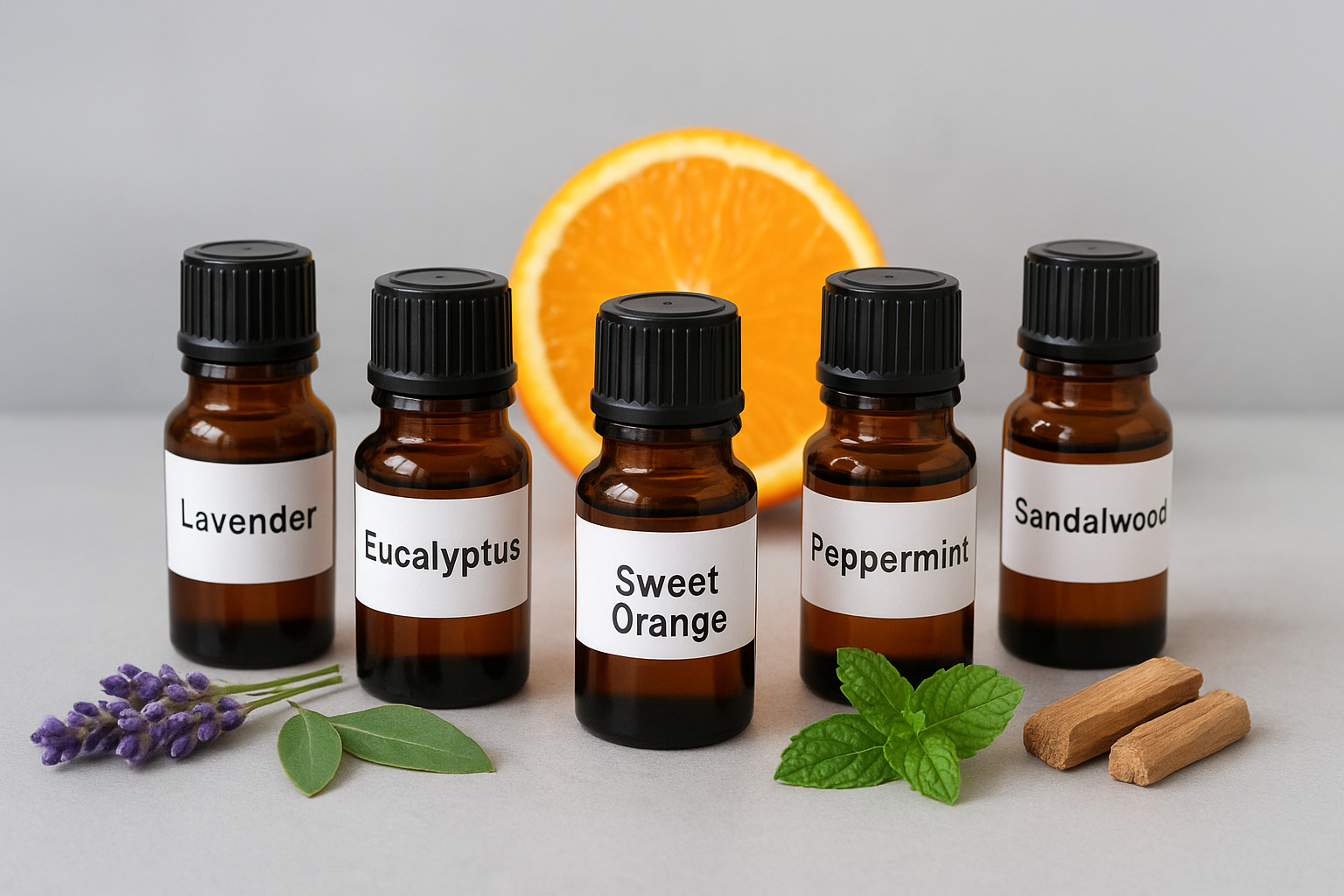
| Oil | Typical scent | Everyday benefit |
|---|---|---|
| Lavender | Floral, herbal | Calming, supports sleep |
| Eucalyptus | Sharp, medicinal | Clears the air, feels invigorating |
| Sweet orange | Bright, citrus | Lifts mood, energising |
| Peppermint | Cool, minty | Refreshing, mentally sharpening |
| Sandalwood | Woody, warm | Grounding, calming |
| Tea tree | Sharp, herbal | Cleansing, often used for skin |
A few drops of the right oil can turn a flat room into one that actually feels like something.
Calming and grounding oils
Lavender remains the most researched calming oil, and it's the go-to choice for bedrooms and bath products because it genuinely helps people wind down. Sandalwood and cedarwood work similarly but with a heavier, warmer character, which is why they turn up so often in candles meant for evening use rather than morning freshness.
Energising and citrus oils
Sweet orange, lemon and grapefruit sit at the opposite end of the spectrum. These citrus oils are linked to alertness and lifted mood, making them a natural fit for kitchens, home offices or entryways where you want a room to feel awake rather than sleepy.
Cleansing and purifying oils
Eucalyptus, tea tree and peppermint carry a sharper edge, often associated with cleanliness and fresh air. Bathrooms benefit most from this category, since the scent reinforces the sense of a clean, well-aired space without needing a heavy floral note.
Choosing quality essential oils and natural alternatives
Now that you know what are essential oils and how they're extracted, the next challenge is telling a genuine one from a synthetic imitation. The market is flooded with cheap "fragrance oils" that smell similar but contain none of the actual plant extract, and labels don't always make the difference obvious at a glance.
What to look for on a label
Quality oils list the botanical name of the plant, not just a generic scent name, and state the country of origin and extraction method. Words like "pure" or "100% natural" mean little without that detail backing them up. A genuine supplier isn't shy about sharing this information, because it proves the oil actually came from the plant it claims to.
- Botanical name (e.g. Lavandula angustifolia, not just "lavender")
- Country or region of origin
- Extraction method disclosed
- No mention of "fragrance oil" or "parfum" if it's marketed as pure
If a label can't tell you which plant, which country and which method, it probably isn't giving you the real thing.
Red flags worth avoiding
Price is often the giveaway. Rose and jasmine oils are genuinely expensive to produce, so a bargain bottle claiming purity is almost certainly cut with carrier oil or synthetic filler. Watch for vague marketing language and oils sold in clear glass, since genuine oils degrade in light and reputable brands use dark amber or cobalt bottles.
Why candles are a practical natural alternative
Sourcing pure oils yourself and blending them safely takes real skill, which is exactly why many people turn to candles instead. A well-made soy candle does that sourcing and blending work for you, using tested ratios of natural fragrance so you get the scent benefit without guessing at purity or dilution. At Coorong Candle Co., our hand-poured candles use renewable soy wax and carefully chosen natural fragrance blends inspired by South Australian landscapes, giving you the atmosphere of essential oils without the label-reading headache.
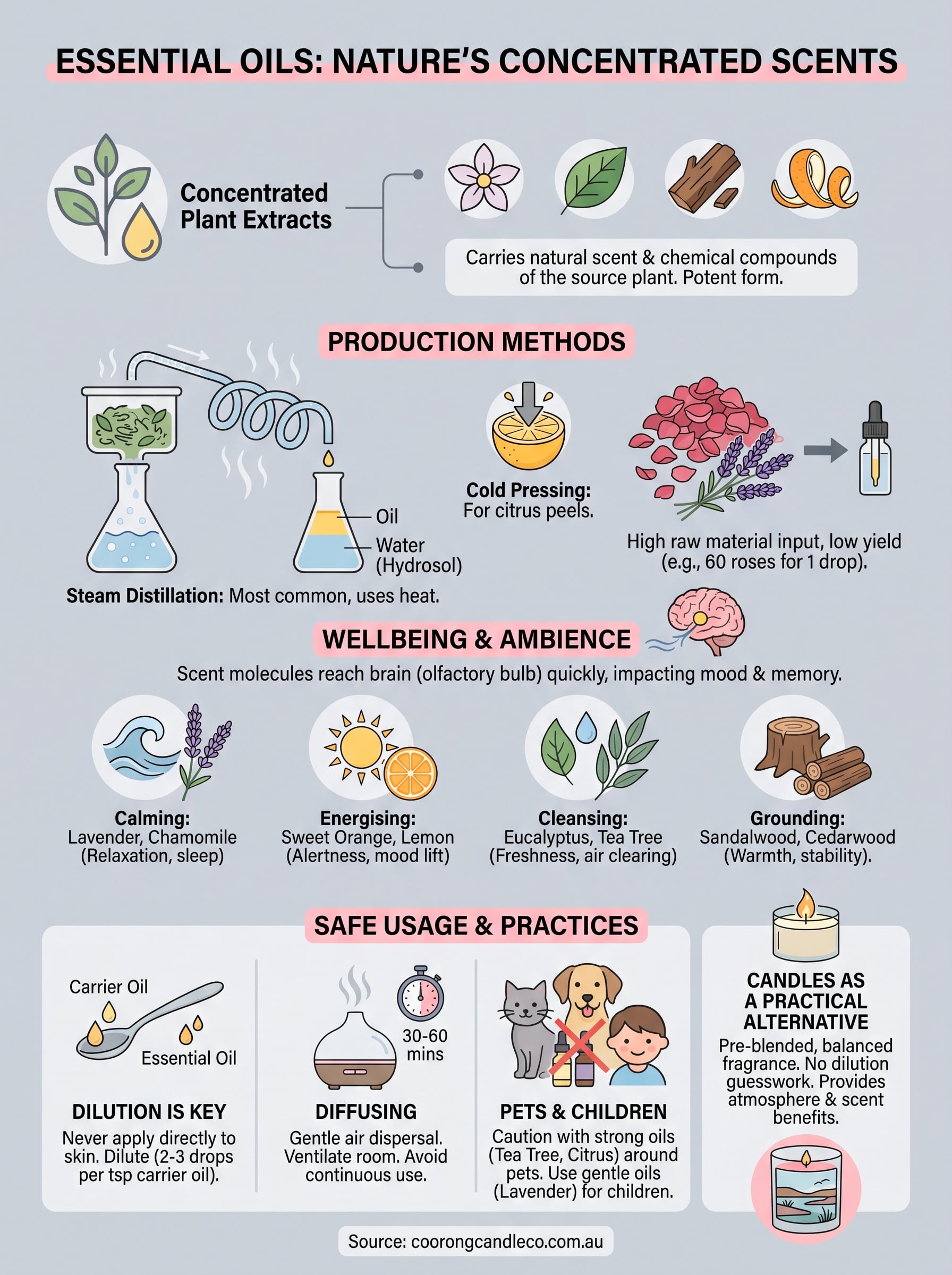
Making sense of essential oils
So, what are essential oils, in the end? They're concentrated plant extracts that carry real scent and real chemistry, not synthetic copies sprayed onto a label. Once you understand how they're steam distilled or cold pressed, how much raw plant material goes into a single bottle, and how to dilute them safely, the whole category stops feeling mysterious. You can smell lavender in a candle and know exactly why it settles you, or catch citrus in a diffuser and understand why it lifts your mood.
You don't need a cabinet full of tinctures to enjoy any of this. A well-made soy candle or reed diffuser gives you the same plant-based benefits, already blended and balanced, without the label-reading or dilution guesswork. If you want to experience it rather than just read about it, browse our XL soy candles and let a South Australian landscape fill your room tonight.