
If you've ever crushed a lemon myrtle leaf between your fingers, you already know, the scent hits immediately. Sharp, bright, and almost impossibly citrusy. But what does lemon myrtle smell like when you try to pin it down? It's more complex than a simple lemon, with layered notes that sit somewhere between lemongrass, lime zest, and sweet verbena, all driven by an extraordinarily high concentration of citral, the compound responsible for its intensity.
At Coorong Candle Co., we work with Australian botanicals like lemon myrtle because they carry a depth that synthetic fragrances can't replicate. It's one of those native scents that belongs in a handmade soy candle, clean, aromatic, and unmistakably Australian.
This article breaks down lemon myrtle's aroma in detail: its chemical makeup, how it compares to other citrus-based plants, how strong it actually is, and why it's become a staple in natural home fragrance.
What lemon myrtle smells like in plain English
Lemon myrtle smells bright and intensely citrusy, but with a softness that separates it from the sharpness of a freshly cut lemon. The opening note hits you fast: a bold, clean citrus burst that reads somewhere between lemon zest and lime. As it settles, you notice something rounder and almost herbal underneath, a warmth that keeps the scent from feeling harsh or acidic.
Lemon myrtle delivers more lemon than an actual lemon does, which sounds surprising until you understand the chemistry behind it.
The layers in the scent
If you're trying to picture what lemon myrtle smells like in practical terms, think of it as lemon at full volume with a slightly floral, almost tea-like quality sitting behind it. Unlike straight lemon essential oil, it doesn't veer into cleaning-product territory. The scent has a natural, botanical feel that reads as fresh rather than artificial, which is a big reason it works so well in premium home fragrance.
There's also a subtle sweetness to it, similar to what you'd find in lemon verbena or lemongrass, but less grassy. Some people pick up a eucalyptus-adjacent edge in the background, which makes sense given lemon myrtle is a native Australian plant from the rainforests of Queensland.
What it actually feels like in a room
When lemon myrtle is used in a candle or diffuser, the effect in a room is airy and uplifting rather than heavy or overpowering. It has a tendency to make a space feel clean and open, which is why it works well in kitchens, bathrooms, and living areas. The scent doesn't linger in an oppressive way; it fills the space and then steps back just enough to feel like part of the room rather than the only thing in it.
Why lemon myrtle smells so lemony
The answer comes down to one compound: citral. Lemon myrtle leaves contain between 90 and 98% citral by volume, which makes them the highest natural source of this compound on the planet. Citral is the same molecule that gives lemons and limes their characteristic scent, but in lemon myrtle it appears in a concentration that far exceeds any citrus fruit.
No citrus fruit comes close to matching the citral concentration found in lemon myrtle.
What citral actually does to your senses
Understanding what lemon myrtle smells like starts with understanding how citral works on your olfactory receptors, sending a clean, sharp signal that your brain immediately reads as lemon. Because lemon myrtle delivers this signal at such a high intensity, your perception of the scent is amplified far beyond what a fresh lemon can produce. It's not that the plant is artificially enhanced; it simply carries the compound in a far greater quantity.
When you encounter lemon myrtle in a candle or reed diffuser, the heat or evaporation releases citral into the air quickly and efficiently. This is why even a small amount of lemon myrtle fragrance can fill a room with a pronounced citrus presence without any synthetic boosters needed.
How it compares to lemon, lime and lemongrass
People often assume lemon myrtle is just a stronger version of the citrus fruits they already know. Each plant carries a distinct scent profile, and understanding those differences helps you choose the right fragrance for your home.
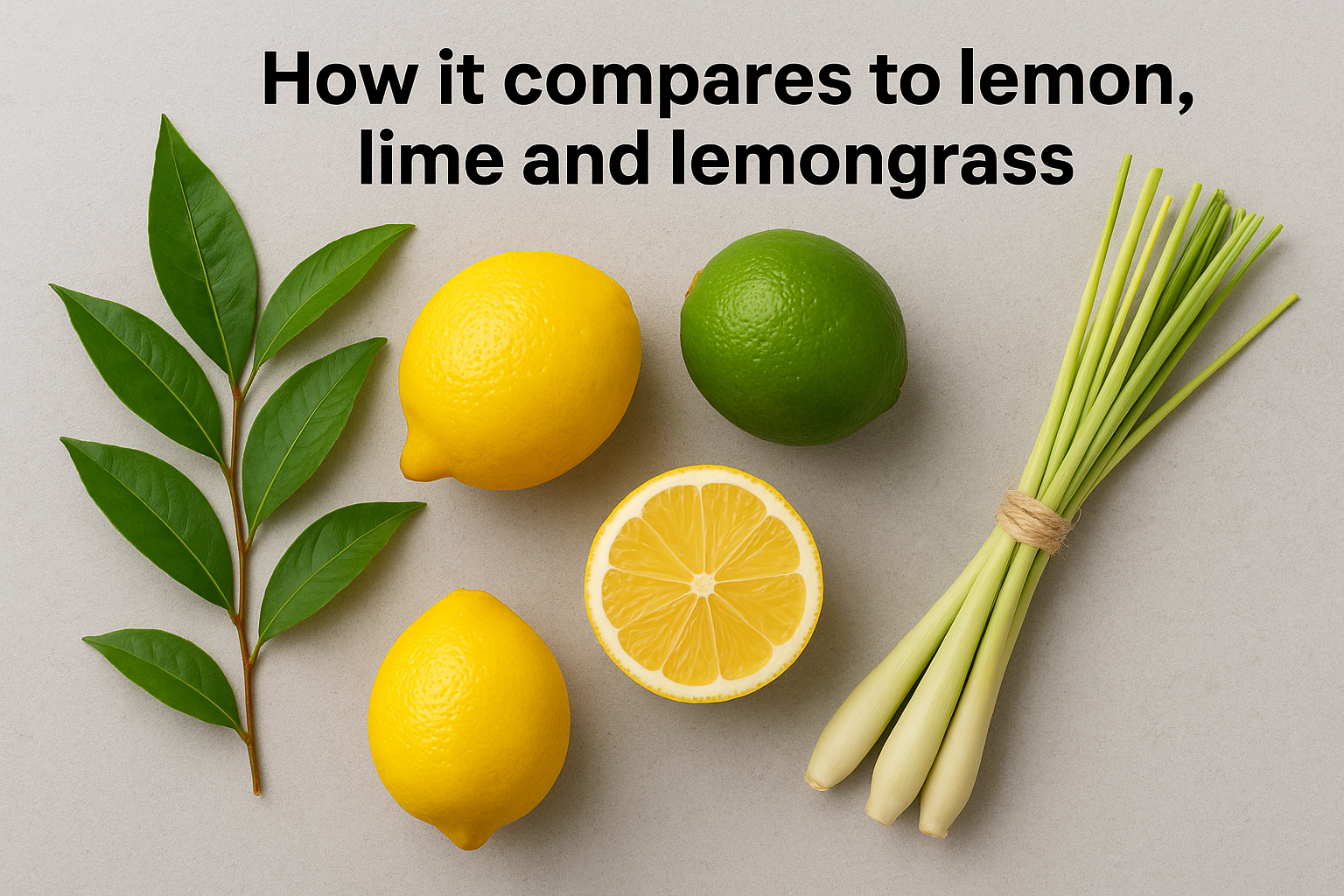
Lemon myrtle gives you the best of citrus without the sharp edges that come with the actual fruit.
Lemon myrtle versus lemon and lime
A fresh lemon or lime has brightness and acidity at its core, often tipping into a sour, sharp edge. Lemon myrtle doesn't carry that acidic quality. The scent is cleaner and rounder, sitting closer to the idea of lemon rather than the raw fruit itself.
Lime brings a green, slightly bitter character that lemon myrtle doesn't share at all. If you've been trying to understand what does lemon myrtle smell like, think of it as citrus distilled to its purest form, minus the sourness.
Lemon myrtle versus lemongrass
Lemongrass is grassy and earthy beneath its citrus top note, with a raw, herbal quality that reads as rustic. Lemon myrtle sits above all of that, delivering a purer citrus signal with a faintly sweet, floral layer underneath.
Where lemongrass can feel unpolished and wild, lemon myrtle feels refined and botanical. That's why it translates so well into premium candles and diffusers.
How strong it is and how it changes over time
Lemon myrtle sits at the stronger end of natural fragrances. Because of its high citral content, even a small amount delivers a bold and immediate scent presence. If you're sensitive to intense aromas, this is worth knowing before you choose a home fragrance product.
A little lemon myrtle goes a long way, which is why it works well even in more subtle blends.
How the scent opens and shifts over time
When you first light a lemon myrtle candle or activate a diffuser, the top note hits fast, sharp and citrusy. That opening impression is the strongest you'll experience. As the fragrance settles into the room, the citral softens slightly into a rounder, cleaner body note that feels less intense without disappearing.
What does lemon myrtle smell like after the initial burst fades? Steadier and more approachable, but still clearly present. Unlike some botanicals that drop off quickly, lemon myrtle holds well over time because citral is a stable compound that releases gradually rather than burning off in one wave. This makes it a reliable choice for spaces where you want a lasting but not overwhelming citrus fragrance.
How to choose lemon myrtle scents for your home
Knowing what lemon myrtle smells like gives you a solid starting point, but choosing the right format for your home depends on how you want the scent to behave in a space. A candle delivers a warm, ambient citrus presence, while a reed diffuser provides a steadier background release that works well in rooms you move through often.
The format you choose shapes the experience just as much as the fragrance itself.
Matching the scent to the room
Kitchens and bathrooms suit lemon myrtle particularly well because the citrus character feels fresh and clean without competing with cooking smells or moisture. In larger living areas, a soy candle with a strong scent throw works better than a diffuser since the heat helps the fragrance carry further. Strong rooms to use lemon myrtle include:
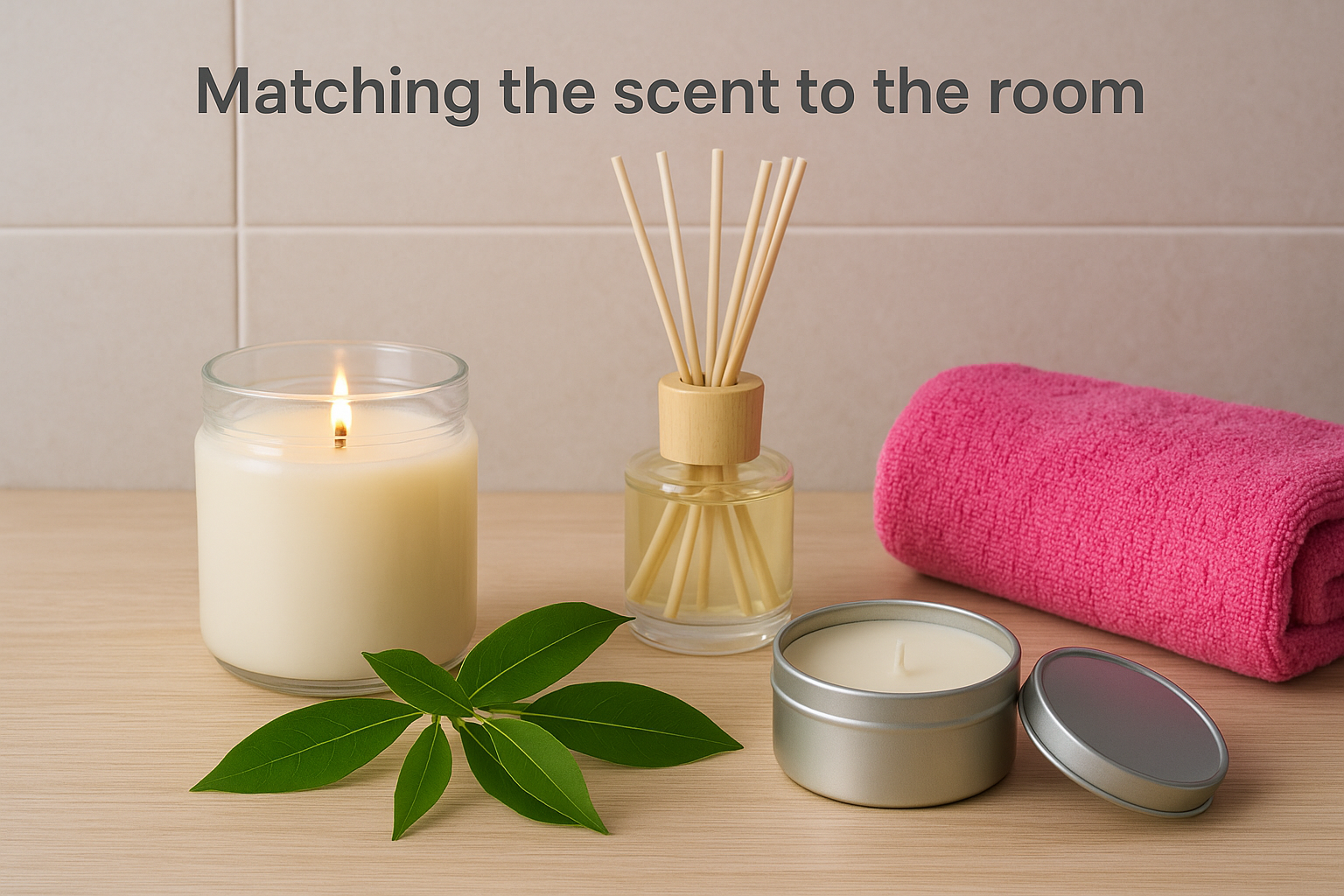
- Kitchen
- Bathroom
- Entryway
- Home office
If you're new to lemon myrtle
Start with a smaller format, like a travel tin candle, before committing to a larger product. This lets you experience what does lemon myrtle smell like in your own home environment, since room size and ventilation both affect how the fragrance lands and lingers over time.
Quick recap and next steps
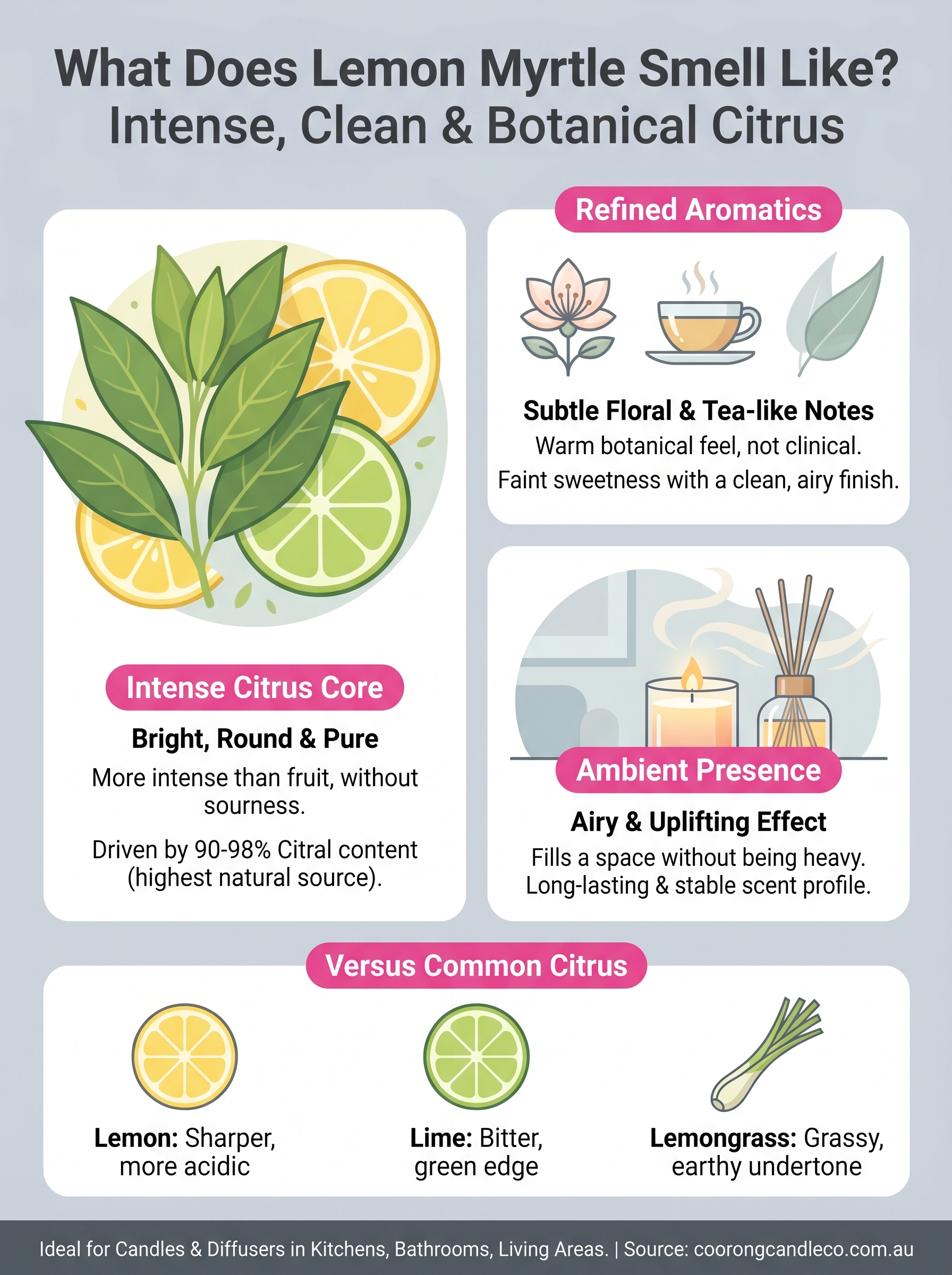
Lemon myrtle delivers one of the most intense natural citrus aromas available in any botanical. Its extraordinarily high citral content gives it a clean, bright, rounded scent that outperforms lemon, lime, and lemongrass in sheer citrus presence. When someone asks what does lemon myrtle smell like, the honest answer is pure citrus at its most refined, with a subtle floral warmth that keeps it from feeling sharp or clinical. It works well in nearly any room, holds its presence over time, and translates beautifully into both candles and diffusers without synthetic boosters.
If you're ready to bring that scent into your own home, the simplest starting point is a product that lets the fragrance speak for itself. Coorong Candle Co. uses Australian botanicals in small-batch, hand-poured products built for real home environments. Browse the natural soy candles and reed diffusers to find a scent that suits the atmosphere you're building.