
When we started Coorong Candle Co., one of the first decisions we made was to keep harmful chemicals out of our products. That meant choosing phthalate free fragrance oils Australia suppliers could actually stand behind, oils that smell incredible without compromising anyone's health. It's a decision we revisit with every new scent we develop, and it's shaped how we think about sourcing ingredients across our entire range of soy candles, reed diffusers, and bath products.
Phthalates are a group of synthetic chemicals commonly used to make fragrances last longer. The problem? They've been linked to hormone disruption, respiratory issues, and environmental harm. For anyone making candles, soaps, or body products at home, or running a small business like ours, understanding what goes into your fragrance oils matters. Your customers breathe these scents in. They sit on skin. They fill nurseries, bedrooms, and kitchens. Getting the ingredients right isn't optional; it's the baseline.
Finding reliable, phthalate-free fragrance oil suppliers in Australia can feel like a maze, though. Not every supplier is transparent about what's in their formulations, and "natural" on a label doesn't always mean what you'd hope. We've spent years working through this ourselves, testing oils for scent throw, compatibility with soy wax, and ingredient integrity. This guide pulls together what we've learned, covering what to look for in a supplier, how to read safety data sheets, and where to find quality phthalate-free options right here in Australia.
Why phthalate-free matters for home fragrance
When you burn a candle or run a reed diffuser, the fragrance oil releases compounds directly into the air of your living space. If that oil contains phthalates, you're dispersing those chemicals into the same air your family breathes every day. For most people, a single occasional exposure carries low risk, but regular, sustained inhalation inside an enclosed home is a different matter entirely. It compounds over time, and that cumulative exposure is exactly what researchers have been examining.
The health case for phthalate-free oils
Phthalates function as plasticisers and fixatives inside fragrance formulas, which is why they've been used so widely. Research has linked specific compounds, particularly diethyl phthalate (DEP) and dibutyl phthalate (DBP), to endocrine disruption, meaning they interfere with the body's hormone signalling. Children, pregnant women, and people with existing respiratory conditions carry a higher level of risk from repeated exposure. When you choose phthalate free fragrance oils Australia suppliers provide with full ingredient disclosure, you're making a direct health decision for everyone in the home, not just yourself.
Hormone-disrupting chemicals don't need to be present in large quantities to cause concern; repeated low-dose exposure in enclosed spaces is the issue worth taking seriously.
Why it matters for body and bath products
Skin absorption adds a separate layer of concern beyond inhalation. Bath bombs, soaps, and body scrubs sit directly against skin, sometimes for extended periods under warm water, which increases absorption. Unlike a candle that disperses fragrance into open air from a distance, a bath product places the fragrance oil in direct contact with your body's largest organ. For any maker producing rinse-off or leave-on products, choosing phthalate-free oils is not an optional upgrade; it's the minimum standard your customers should be able to expect from you.
How phthalates end up in fragrance and labelling works
Fragrance manufacturers blend dozens of individual aromatic compounds into a single formula, and phthalates slip in as carrier agents and fixatives that extend the scent's lifespan. Suppliers buy finished fragrance blends rather than individual molecules, so the phthalate content sits hidden inside a proprietary formula the end supplier may never fully examine.
Why fragrance labelling hides the detail
Australian labelling law does not require full ingredient disclosure for fragrance compounds used in candles or home fragrance products. A supplier can list "fragrance" or "parfum" as a single catch-all entry without naming every chemical inside that blend. When you're sourcing phthalate free fragrance oils Australia wide, this gap makes it genuinely difficult to verify any marketing claim based on the label alone.
A label that says "phthalate-free" carries no legal weight unless the supplier backs it up with a full safety data sheet (SDS) or a documented IFRA compliance certificate.
Your only reliable move is to request complete SDS documentation and the IFRA conformity certificate directly from the supplier before placing an order.
How to check IFRA, SDS and compliance claims
Before you order any phthalate free fragrance oils Australia supplier claims to offer, request two documents: the Safety Data Sheet (SDS) and the IFRA conformity certificate. These are the only way to confirm that a phthalate-free claim is backed by actual testing rather than marketing language.
Reading the SDS correctly
The SDS lists hazardous components and their concentration ranges. Check Section 3 (Composition/Information on Ingredients) for any listed phthalate compounds, particularly DEP or DBP. A well-documented SDS will name individual components rather than burying everything under a single "fragrance" entry. If Section 3 is vague or incomplete, ask the supplier for clarification before purchasing. Look for these specifics in any SDS you review:
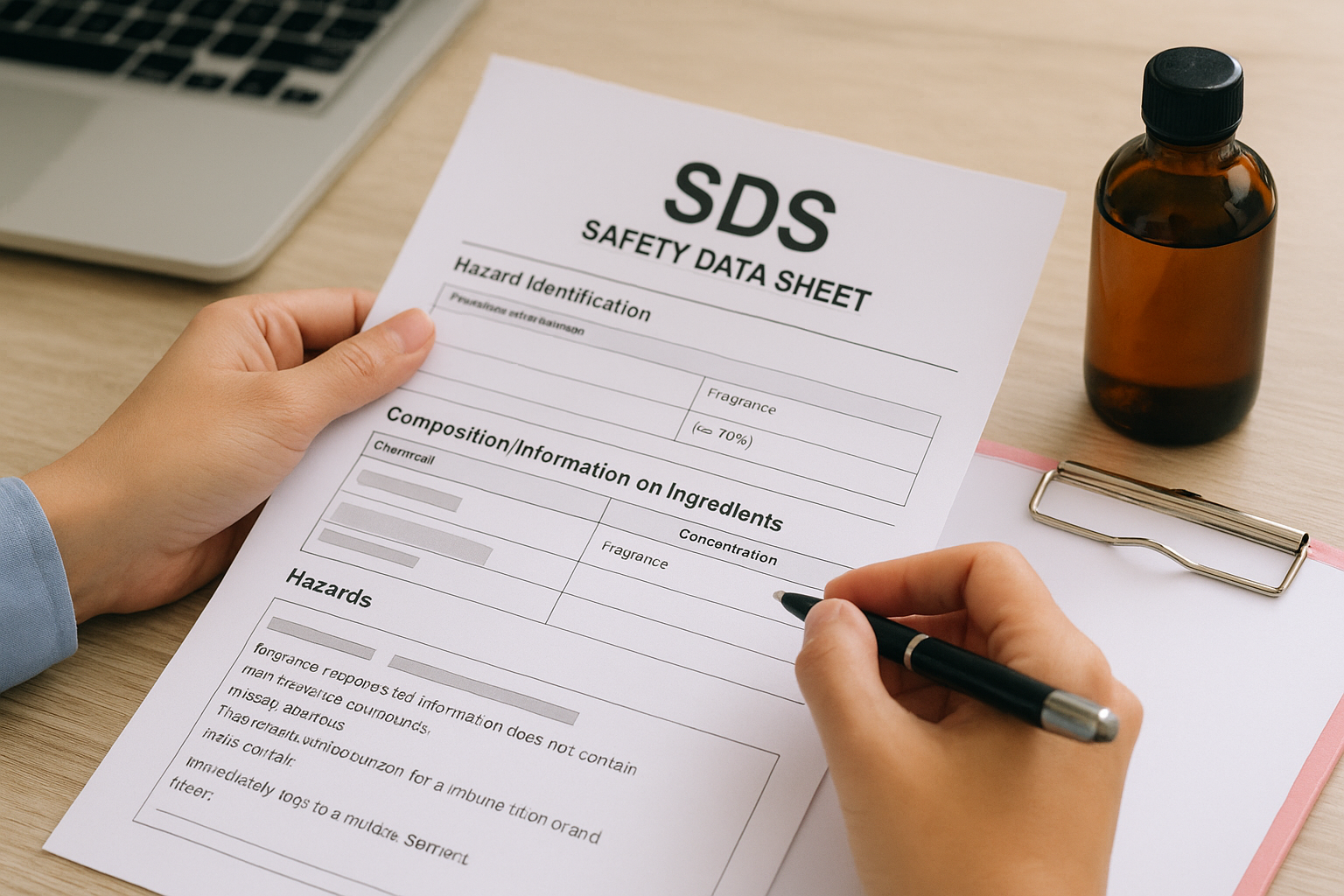
- Phthalate compounds listed by name and percentage range
- CAS numbers for individual aromatic ingredients
- A clear statement of what the formulation does not contain
Using the IFRA certificate
IFRA (International Fragrance Association) sets global standards for safe fragrance use across product categories, including candles, rinse-off products, and leave-on body applications. Your supplier should provide an IFRA conformity certificate confirming the oil meets current amendment standards for your specific application type, since usage limits differ considerably between candle-making and skin-contact products.
Always match the IFRA certificate's product category to your actual use case before you commit to a bulk order.
How to pick a reliable Australian supplier
When searching for phthalate free fragrance oils Australia wide, transparency separates reliable suppliers from those relying on marketing copy. A good supplier publishes their SDS and IFRA certificates on individual product pages or provides them on request without hesitation.
What good supplier transparency looks like
Look for suppliers who state phthalate-free status per individual fragrance SKU, not just as a blanket company policy. A policy-level claim tells you nothing about a specific oil's actual formulation.
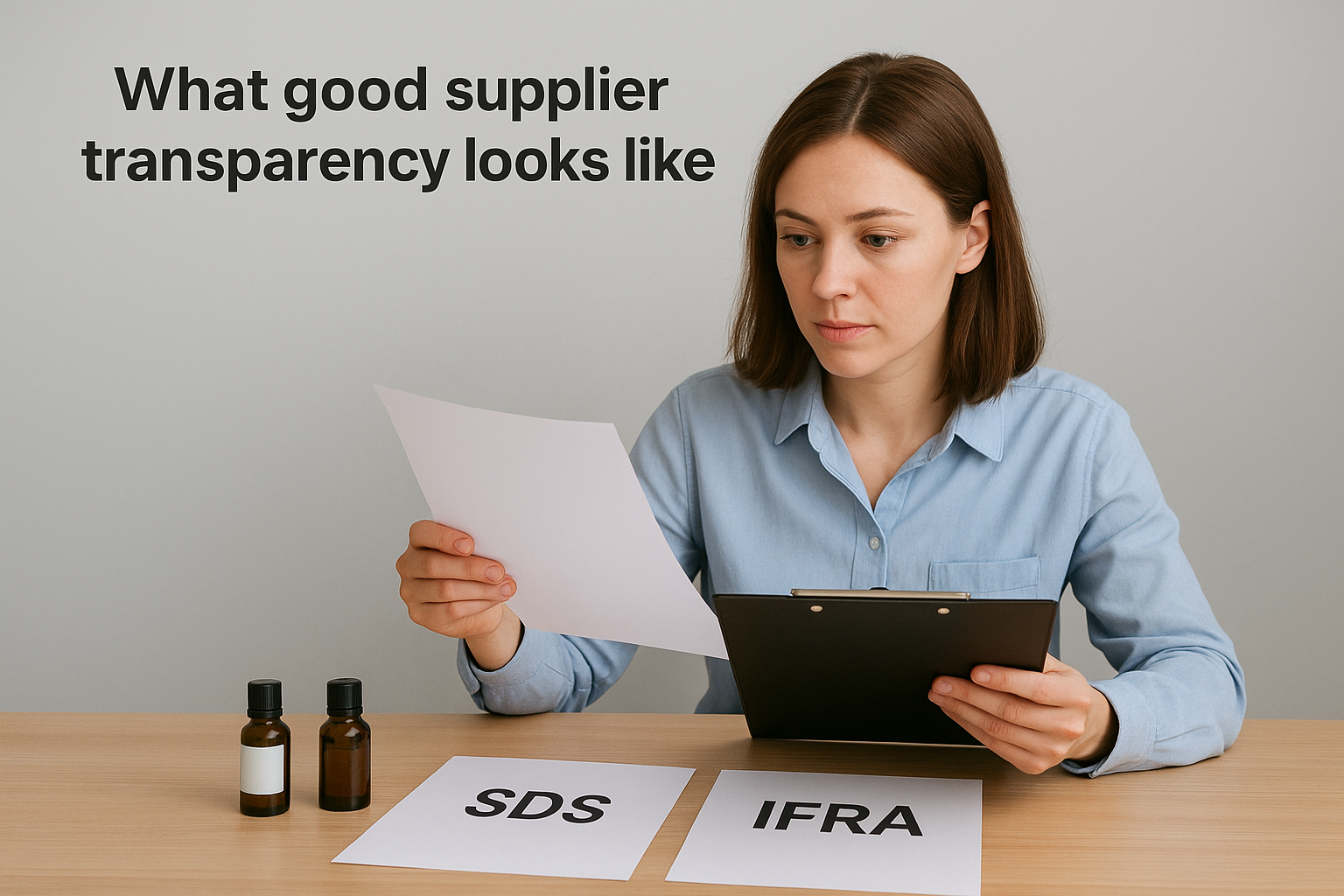
If a supplier cannot provide product-specific SDS documentation promptly, treat that as a clear reason to look elsewhere.
Check whether the supplier sources fragrance bases from reputable fragrance houses operating under IFRA membership. That adds a verifiable layer of accountability to the supply chain beyond their own stated claims.
Questions to ask before ordering
Before placing a bulk order, confirm that the supplier tests for phthalates independently rather than relying solely on manufacturer declarations. Independent testing carries far more weight than a self-reported claim.
- Which IFRA amendment does their compliance certificate reference?
- Can they confirm the oil suits your specific product category?
Your supplier's answers reveal quickly whether they understand formulation standards or simply follow a marketing trend.
How to use fragrance oils safely in your makes
Even after you've sourced phthalate free fragrance oils Australia suppliers have verified through proper documentation, how you handle and use those oils matters. Incorrect usage rates and poor ventilation are the two most common ways makers accidentally create unsafe products, regardless of how clean the ingredient list is.
Stay within recommended usage rates
Every fragrance oil carries a maximum usage rate specific to each product category. Candles, soaps, and bath bombs all carry different limits because the delivery mechanism changes how much fragrance reaches the skin or lungs. Exceeding those limits doesn't produce a better scent; it creates a potential safety problem and can affect your finished product's performance.
Always base your fragrance load on the IFRA certificate's recommended limits for your exact product type, not on general advice from online forums.
Ventilate your workspace and protect your skin
Working with fragrance oils in a well-ventilated space protects you during production, not just the end customer. Wear nitrile gloves when handling undiluted fragrance oils directly, as undiluted aromatic compounds can cause skin sensitisation even in formulations that are safe at final usage rates. Store your oils sealed and away from direct heat or sunlight to preserve both ingredient integrity and scent accuracy across batches.
Next steps
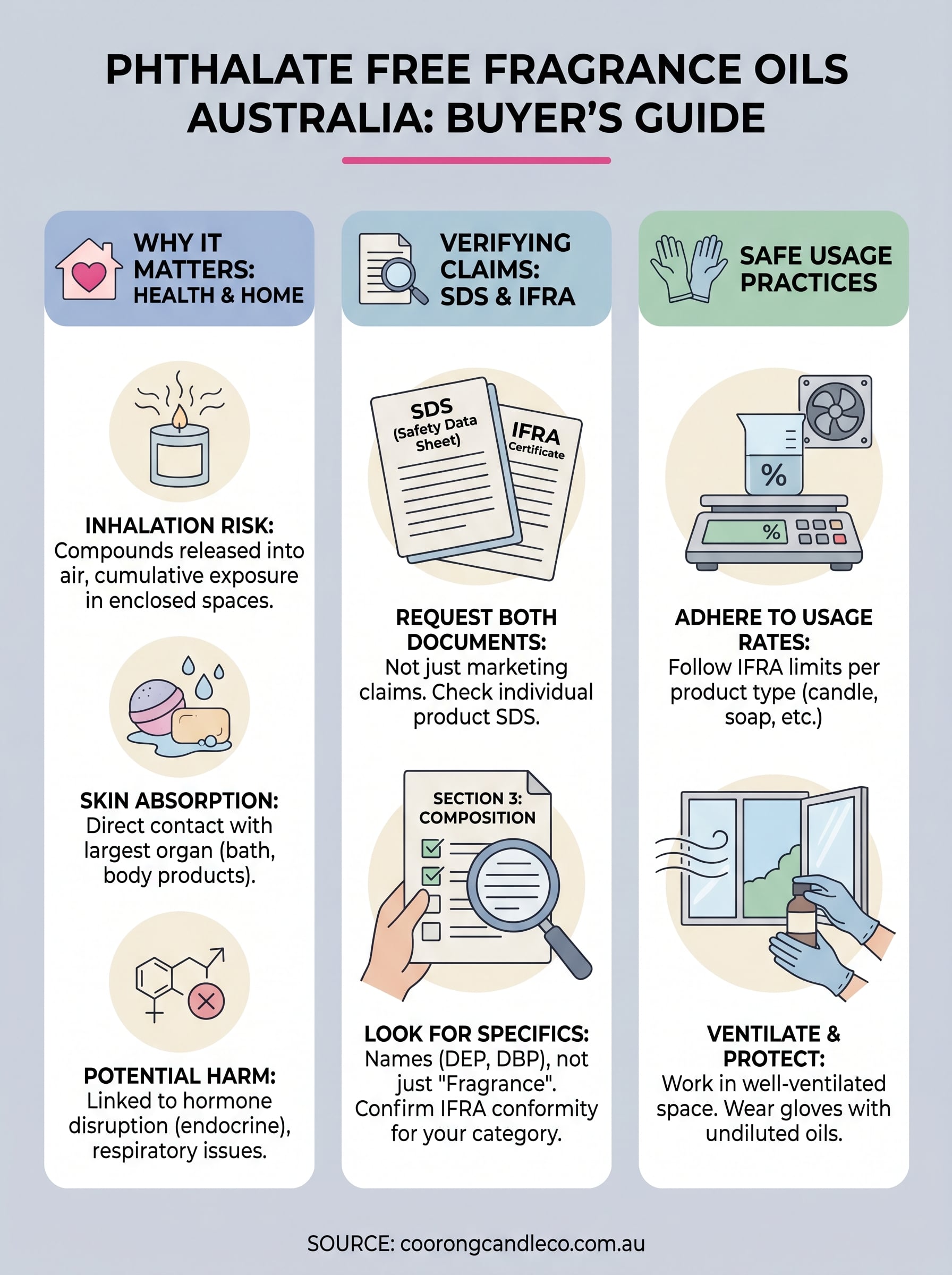
Now you have a clear framework for sourcing phthalate free fragrance oils Australia wide with confidence. The process comes down to three consistent habits: request SDS and IFRA documentation before every purchase, verify claims at the individual product level rather than relying on blanket supplier policies, and stay within recommended usage rates for your specific product category.
Building products people trust starts with ingredient choices they cannot see but absolutely feel the difference from. Whether you make candles, bath bombs, or body products, the standard you hold for raw materials sets the ceiling for everything your finished product can be.
To see what thoughtful ingredient selection looks like in practice, explore our full range of handmade soy candles, bath bombs, and reed diffusers. Every product we make at Coorong Candle Co. reflects the same clean formulation principles this guide covers, because your home and the people in it deserve nothing less.