
Every candle, reed diffuser, or bath product starts with a critical decision: which fragrance oils to use and why. If you've ever wondered how fragrance oils are made, the answer involves a mix of chemistry, raw materials, and careful formulation, not just a nice smell in a bottle. Understanding what goes into these oils matters, especially if you care about what you're bringing into your home.
At Coorong Candle Co., we select fragrance oils for our hand-poured soy candles and diffusers based on safety, performance, and how well they capture the natural character of South Australia. That process has given us a solid working knowledge of fragrance oil production, from extraction methods to synthetic aroma compounds.
This article breaks down the ingredients, manufacturing methods, and safety considerations behind fragrance oils. You'll learn how natural and synthetic components are sourced and combined, what the key extraction techniques are, and how to evaluate fragrance oil quality for products like candles, diffusers, and personal care items.
Why fragrance oils matter in scented products
Fragrance oils are the backbone of most scented home products. Without them, a soy candle is just wax, a reed diffuser is just sticks in liquid, and a bath bomb is just a fizzy ball. The fragrance oil you choose directly shapes how a product performs, how long the scent lasts, and whether the finished item delivers the sensory experience you're after. That connection between raw ingredient and finished product is why fragrance oil selection is never a minor decision.
The role fragrance oils play in candles and diffusers
In a soy candle, fragrance oil concentration (typically between 6% and 10% by weight) affects both scent throw and how cleanly the candle burns. Too little oil and the scent is weak; too much and the oil can pool on the wax surface or cause uneven burning. For reed diffusers, the viscosity and carrier base of the fragrance oil determine how efficiently it travels up the reeds and disperses through a room. Both applications demand oils that are formulated specifically for those uses, not generic blends pulled from a shelf.
Getting the fragrance oil ratio right is one of the most important technical decisions in candle and diffuser production.
Why quality matters more than price
Not all fragrance oils perform the same way. Cheap, low-grade oils often contain high levels of fillers or unstable aromatic compounds that fade quickly, discolour wax, or contribute to an uneven burn. When you start looking into how are fragrance oils made, what you're really trying to understand is whether the ingredients and process behind a particular oil are reliable enough to trust inside your home.
Selecting a fragrance oil backed by proper safety testing and consistent sourcing gives you a product that holds up batch after batch, which matters whether you're producing candles or simply buying them.
What fragrance oils contain
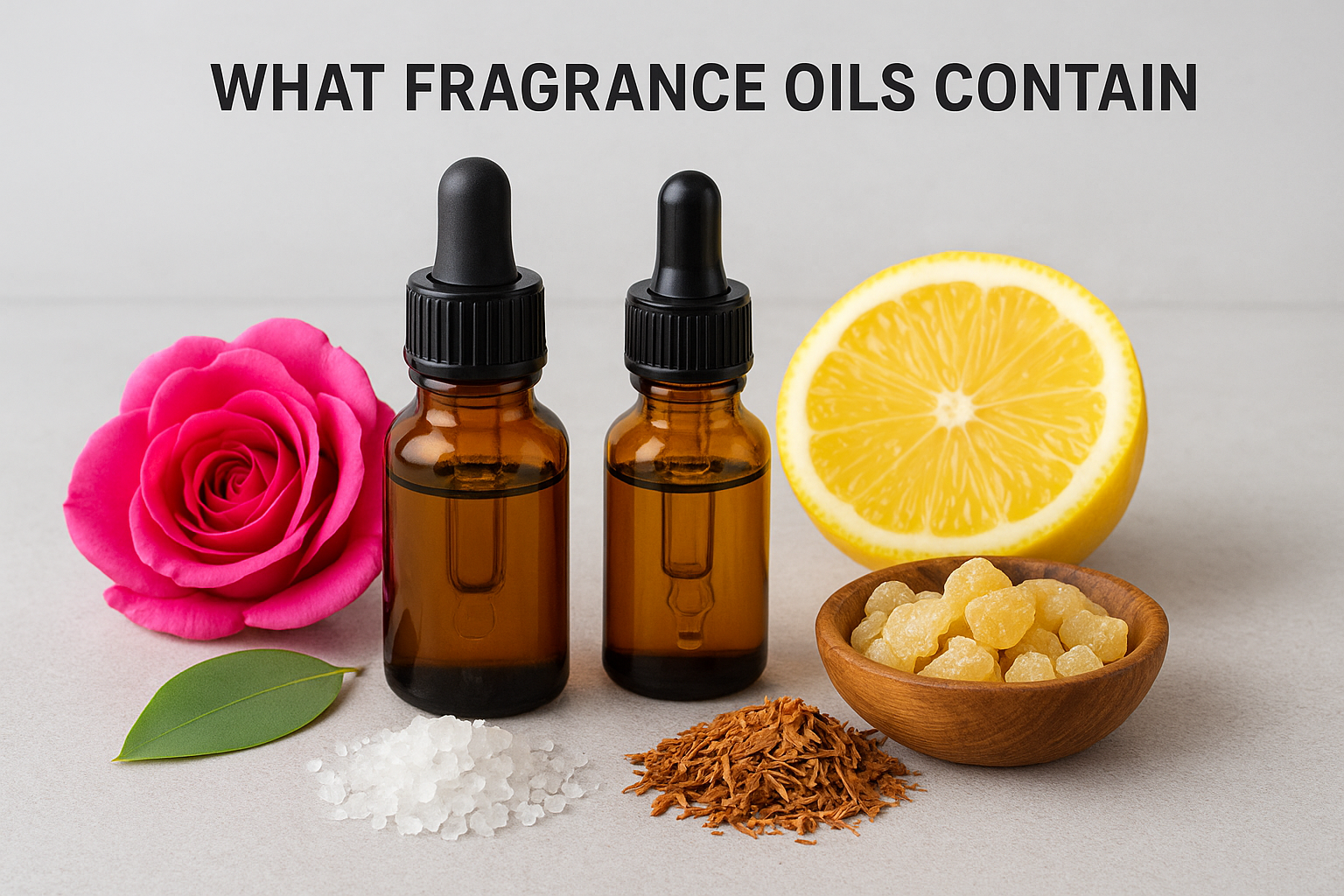
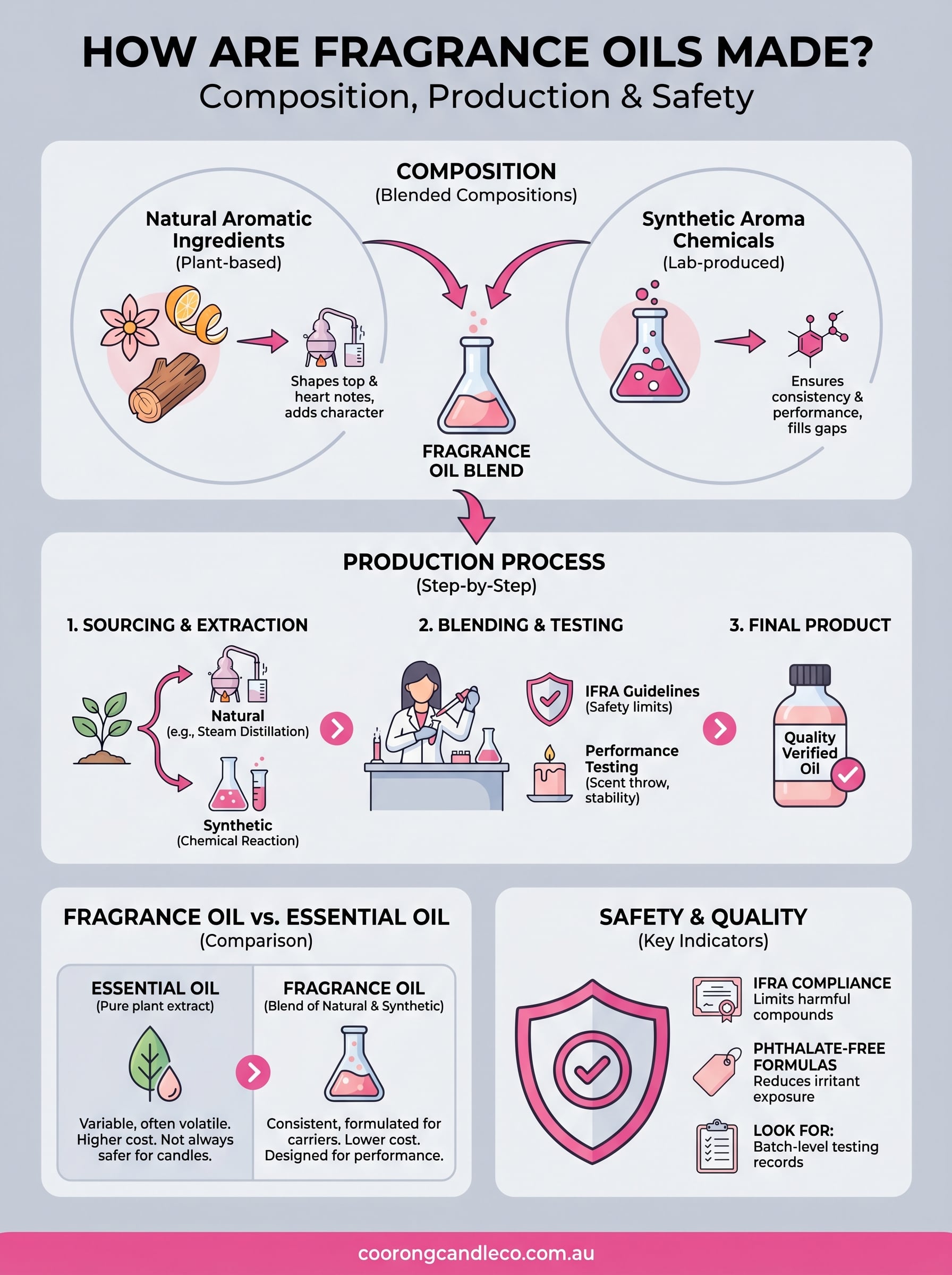
Fragrance oils are blended compositions, not single ingredients. Most combine natural aromatic compounds with synthetic aroma chemicals to achieve a scent profile that is consistent and cost-effective across production runs.
Natural aromatic ingredients
Natural components come from plant-based sources like flowers, woods, resins, and citrus peel. Producers isolate these through extraction methods like steam distillation or cold pressing. When you explore how are fragrance oils made, you'll find that natural ingredients typically shape the top or heart notes of a blend, giving scents like eucalyptus or sandalwood their authentic character.
The "natural" label on a fragrance oil does not mean the entire formula is natural; it usually refers to specific components within a broader blend.
Synthetic aroma chemicals
Synthetic compounds fill gaps that natural sources cannot reliably cover. Lab-produced aroma chemicals like linalool and limonene replicate or enhance natural scents with precision, delivering results that don't vary between batches. Perfumers use them for several practical reasons:
- Consistency: exact replication across every production run
- Accessibility: far cheaper than rare botanical extracts
- Performance: many synthetics bind more effectively in wax or liquid carriers
How fragrance oils are made step by step
Understanding how fragrance oils are made gives you a clearer picture of what you're bringing into your home. The process moves through several distinct stages, from sourcing raw materials to testing the final blend, and each step shapes how the finished oil performs in products like candles or diffusers.
Sourcing and extracting raw materials
Natural aromatic compounds are extracted from plant sources using methods like steam distillation, solvent extraction, or cold pressing, depending on the material. Steam distillation is the most common technique: steam passes through plant matter, releases the aromatic molecules, and the resulting vapour condenses into a liquid that separates into water and aromatic extract.
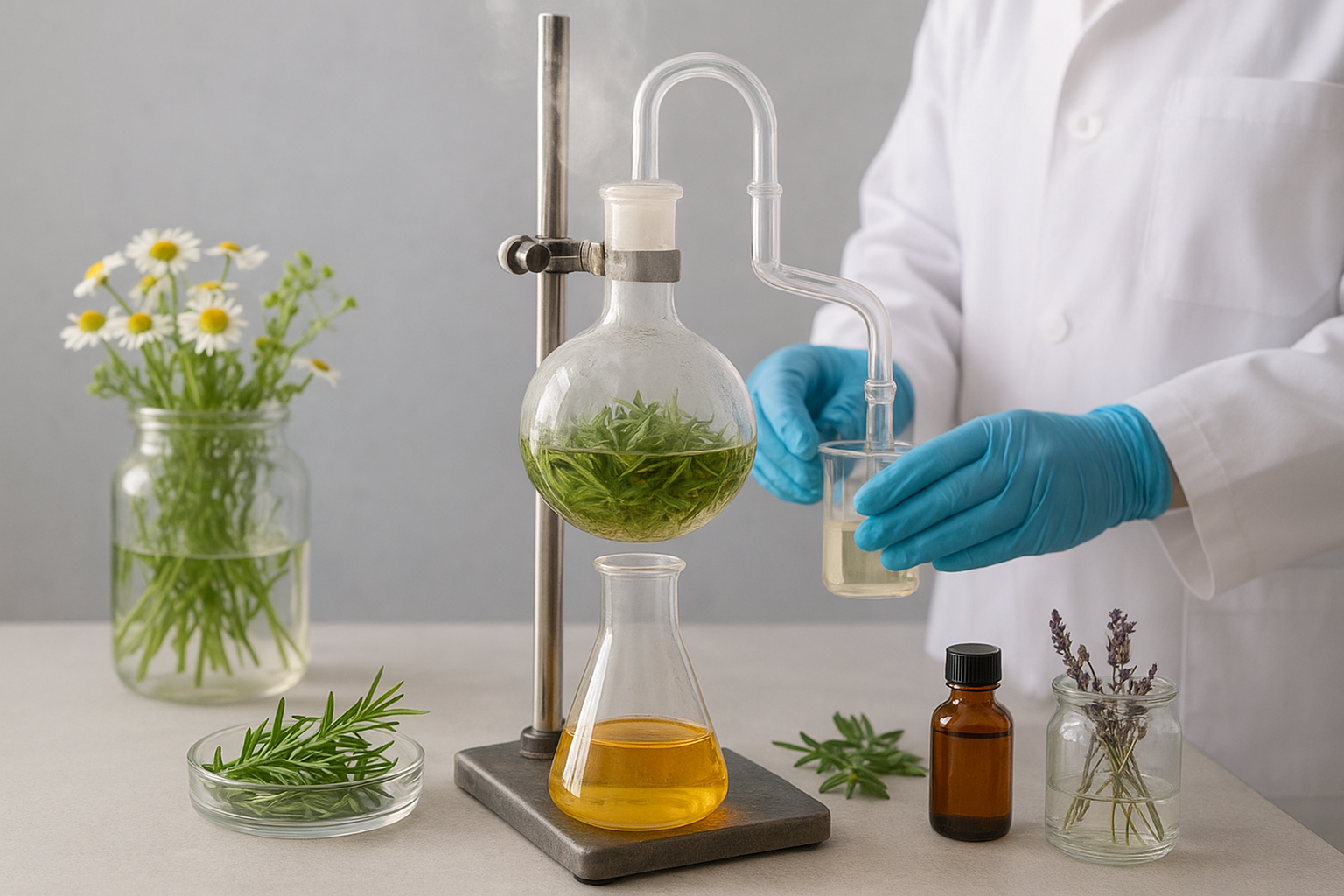
The extraction method chosen has a direct impact on the final character and stability of the scent.
Synthetic aroma chemicals are produced in laboratory settings through controlled chemical reactions, giving perfumers precise, repeatable results without relying on seasonal crops.
Blending and testing the formula
Once the raw ingredients are ready, a fragrance chemist or perfumer combines them in specific ratios to build a scent profile. This work follows IFRA safety guidelines, which set concentration limits for individual aroma chemicals. The blend then goes through performance testing before production.
Testing typically checks:
- scent throw in the target carrier
- colour stability in wax or liquid bases
- full safety compliance
How fragrance oils differ from essential oils
Many people use "fragrance oil" and "essential oil" interchangeably, but they are very different products with different compositions, uses, and price points. Knowing the distinction helps you make better choices when selecting products for your home.
Composition and production
Essential oils are pure, single-source extracts derived entirely from plant material through methods like steam distillation or cold pressing. They contain no synthetic compounds and capture only the aromatic profile of a specific plant. Fragrance oils, by contrast, blend natural isolates with synthetic aroma chemicals to create a broader, more stable scent palette. Here is a quick comparison:
| Essential oils | Fragrance oils | |
|---|---|---|
| Source | 100% plant-derived | Natural and synthetic blend |
| Consistency | Varies by harvest | Consistent batch to batch |
| Cost | Higher per ml | Generally lower |
Performance in scented products
When you consider how are fragrance oils made, part of the answer is that they are designed specifically to perform inside a carrier like wax or a liquid diffuser base. Essential oils often fade quickly under heat and can shift in character once combined with other materials. Fragrance oils are formulated to hold their scent profile throughout the burn of a candle or the life of a diffuser, making them a far more reliable choice for long-lasting home fragrance.
Essential oils are not always the safer or more natural option in candles; some are too volatile to perform reliably in hot wax.
Safety, regulations, and choosing quality oils
When you ask how are fragrance oils made, safety is part of that answer. Fragrance oil production operates under a recognised framework of guidelines that limits the use of harmful compounds and sets concentration thresholds for individual aroma chemicals. Understanding those standards helps you assess whether the products you buy or use at home are made responsibly.
IFRA standards and what they mean
The International Fragrance Association (IFRA) publishes standards that restrict or limit the use of specific aroma chemicals based on toxicology data. Reputable fragrance oil suppliers formulate to these standards, which means known sensitisers and irritants are either capped at safe levels or excluded from the blend entirely. Compliance is voluntary, but a supplier that follows IFRA standards signals that safety is not an afterthought.
A supplier that openly shares IFRA compliance certificates gives you measurable evidence of responsible formulation.
What to look for when choosing fragrance oils
Choosing a quality fragrance oil means looking beyond the scent itself. IFRA-compliant formulas and batch-level testing records are the clearest markers of a supplier worth trusting. When you buy products made with quality-verified oils, you reduce unnecessary exposure to irritants and get a more consistent result across every use.
Look for these indicators when evaluating a fragrance oil supplier:
- IFRA compliance certificates available on request
- Phthalate-free formulas clearly stated
- Transparent sourcing for key raw materials
Final takeaways
Understanding how are fragrance oils made shows you that every scent you bring into your home is the result of deliberate formulation decisions, not chance. Natural extracts, synthetic aroma chemicals, and careful blending combine to create oils that perform reliably in candles, diffusers, and bath products. IFRA compliance and phthalate-free formulas are your clearest signals that a manufacturer has prioritised your safety alongside performance.
At Coorong Candle Co., every product we make uses fragrance oils selected for quality, safety, and a genuine connection to the South Australian landscape. That care extends from the soy wax we pour to the scent profile we build around each regional collection. If you want to experience that approach firsthand, browse our hand-poured soy candles and reed diffusers and discover what thoughtful fragrance selection feels like inside your own home.