
If you share your home with a cat or dog, you've probably asked yourself: are reed diffusers safe for pets? It's a fair question. Reed diffusers sit at nose height for most animals, release fragrance continuously, and contain liquid that a curious pet could knock over and lick up. As a home fragrance business, we think it's our responsibility to give you straight answers about the risks, not dodge the topic to sell more product.
The short answer is that reed diffusers can be used safely around most pets, but certain essential oils and fragrance ingredients are genuinely harmful, especially to cats. The difference between a safe setup and a dangerous one often comes down to which oils are in the bottle and where you place the diffuser in your home. Getting those two things right matters more than most people realise.
In this guide, we'll break down the specific oils to avoid, explain why cats and dogs react differently to fragrance compounds, and share practical tips for scenting your space without putting your pets at risk.
What reed diffusers are and how they scent a room
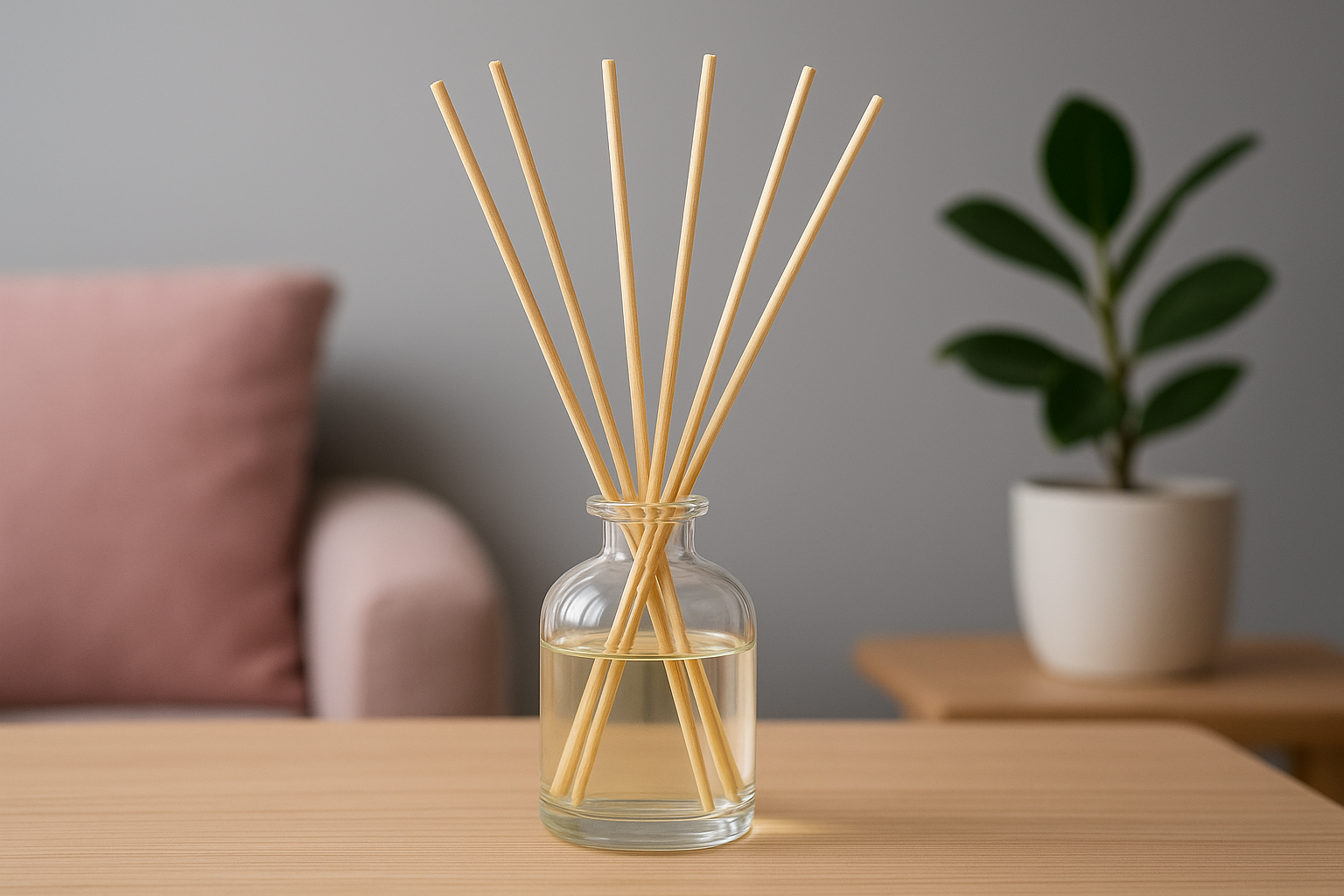
A reed diffuser is a fragrance delivery system that works without heat, flame, or electricity. It consists of a glass or ceramic vessel filled with scented liquid, into which you insert a bundle of porous reeds. The reeds draw the liquid upward through capillary action and release fragrance molecules into the surrounding air continuously and passively. Unlike candles, they run around the clock without any supervision, which is one reason they've become a popular choice for home fragrance.
How the fragrance actually releases
The reeds do all the work here. As the liquid travels up each reed, it evaporates from the exposed tips and disperses into the air at room temperature. The more reeds you use, the stronger and faster the scent releases. Flipping the reeds periodically saturates them again and gives the fragrance a short burst of intensity. Because the process is slow and continuous, the concentration of fragrance compounds in the air stays relatively low compared to burning a candle or using a heat diffuser.
The passive, low-heat release is what makes reed diffusers appealing from a safety standpoint, but it also means fragrance compounds are present in your home's air at all times.
What's actually in the liquid
This is where pet safety becomes relevant. The liquid inside a reed diffuser is typically a carrier base (often a thin, alcohol-derived solvent or dipropylene glycol) combined with fragrance oils, essential oils, or a blend of both. Essential oils are highly concentrated plant-derived compounds, and some of them are genuinely toxic to animals, particularly cats. The carrier base itself can also cause harm if a pet drinks it directly from an overturned vessel. Understanding what's in the bottle you're buying is the first practical step toward answering whether reed diffusers are safe for pets in your specific situation.
Why pets react differently to scented products
Your pet's biology processes fragrance compounds in a fundamentally different way to yours. Dogs carry up to 300 million olfactory receptors compared to a human's 6 million, and cats have a sense of smell roughly 14 times stronger than ours. When you're asking are reed diffusers safe for pets, this physiological gap is central to understanding the risk.
Why cats face the greatest risk
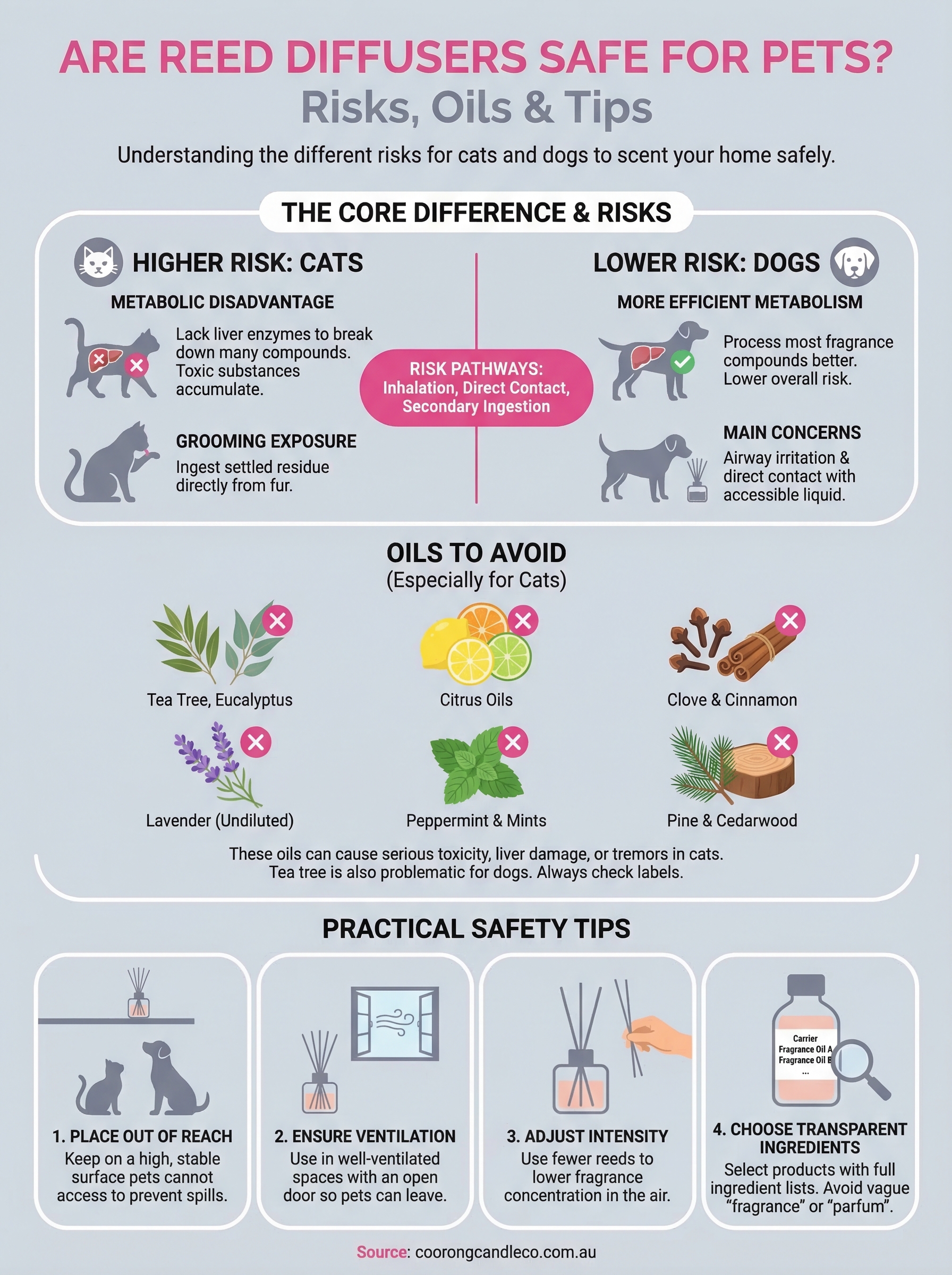
Cats carry a specific metabolic disadvantage that makes them far more vulnerable than other pets. Their livers lack a key enzyme used to break down and excrete certain chemical compounds, including many found in essential oils. This means those substances accumulate in a cat's system rather than being processed and eliminated normally.
Because cats groom themselves constantly, any fragrance residue that settles on their fur gets ingested directly. This creates an additional exposure route on top of simple inhalation.
Even low-level, continuous exposure from a reed diffuser can build up in a cat's system over time, which is why placement and oil choice both matter.
How dogs handle fragrance differently
Dogs metabolise many fragrance compounds more efficiently than cats do, so their overall risk is lower. That said, they are not fully immune. High concentrations of certain oils can still irritate a dog's airways and mucous membranes, particularly in smaller breeds or those with pre-existing respiratory conditions.
Direct contact with the diffuser liquid also remains a concern for dogs, especially if a curious nose or paw gets close to an accessible, low-placed vessel.
The main risks for pets in homes with reed diffusers
When people ask are reed diffusers safe for pets, the answer depends largely on which risk pathways you understand and manage. Three specific routes of exposure can cause harm: inhalation of airborne compounds, direct contact with the liquid, and secondary ingestion through grooming. Understanding each one helps you make smarter decisions about placement and product choice.
Inhalation of airborne fragrance compounds
When a reed diffuser runs continuously in an enclosed room, fragrance compounds accumulate in the air at a low but steady concentration. Most healthy adult pets tolerate this reasonably well, but animals with respiratory conditions, asthma, or existing allergies can develop irritation, coughing, or laboured breathing over time. Cats are again more vulnerable here because their airways are sensitive and their bodies struggle to process certain compounds before damage occurs.
If your pet starts sneezing, coughing, or showing watery eyes near a diffuser, move the unit immediately and ventilate the room.
Direct contact and ingestion
The liquid inside a reed diffuser is far more concentrated than what you detect as a gentle background scent. If your pet knocks the vessel over, the liquid can coat their paws, fur, or skin, and any grooming after that contact leads to direct ingestion. Both dogs and cats face this risk. Even a small amount of undiluted fragrance oil absorbed through the skin or swallowed can trigger serious toxicity symptoms, including vomiting, tremors, or lethargy.
Oils and ingredients to avoid around cats and dogs
Knowing which specific ingredients cause harm is the most practical step in determining whether are reed diffusers safe for pets in your home. Some essential oils carry genuine toxicity risks, and the list of problematic ones is longer than most people expect.

Oils that are toxic to cats
Cats are most at risk from phenol-containing oils and compounds their livers cannot break down. The following are particularly dangerous for cats:
- Tea tree (melaleuca)
- Eucalyptus
- Clove and cinnamon
- Citrus oils (lemon, orange, lime)
- Lavender (in undiluted, concentrated form)
- Peppermint and other mints
- Pine and cedarwood
Even diffuser-level concentrations of these oils can cause drooling, tremors, and liver damage in cats over repeated or prolonged exposure.
Compounds that affect dogs
Dogs handle many oils better than cats do, but tea tree oil and high concentrations of cinnamon oil remain problematic across both species. Xylitol, occasionally found in flavoured fragrance blends, is acutely toxic to dogs even in tiny amounts. Check ingredient labels carefully before purchasing any diffuser product for a home with dogs.
Fragrance blends labelled simply as "fragrance" or "parfum" give you no visibility over which compounds are actually present, which makes them far harder to assess for pet safety before buying.
How to use reed diffusers safely with pets at home
The practical answer to whether are reed diffusers safe for pets depends largely on how you set them up at home. Most problems come from easily preventable situations: diffusers within paw's reach, sealed rooms with no airflow, and blends with hidden ingredients. Adjusting a few habits gives you meaningful control over your pet's exposure.
Place diffusers out of reach and in ventilated spaces
Keep your diffuser on a high surface your pet cannot access, such as a mantelpiece or tall shelf, rather than a coffee table or floor. Always run it in a well-ventilated room with an open door so your pet can leave if the scent becomes too strong. Animals self-regulate naturally when given the freedom to move away.
Treat it as a warning if your pet consistently avoids the room where your diffuser runs.
A few placement habits worth building:
- Use fewer reeds to reduce the rate of fragrance release in the room
- Never leave a diffuser uncapped and unattended on a low surface
- Avoid bedrooms or areas where your pet sleeps, where overnight exposure accumulates quietly
Choose products with a transparent ingredient list
Select diffusers from makers who publish a full ingredient breakdown, including the carrier solvent and each individual fragrance component. Avoid anything labelled only as "fragrance" or "parfum" without further detail. Knowing exactly what is in the bottle is the only reliable way to check for compounds that harm cats or dogs before the product enters your home.
Key takeaways for pet-safe scenting
The question of whether are reed diffusers safe for pets doesn't have a single yes or no answer, but it does have a practical one. Your choice of oils and where you position the diffuser in your home determine most of the risk. Cats face the greatest danger because their livers cannot break down many common fragrance compounds, while dogs handle most oils better but still react badly to concentrated exposure or direct contact with the liquid.
Keep your diffuser on a high surface, run it in a ventilated room, and avoid oils like tea tree, eucalyptus, citrus, and clove around cats. Always choose products that list every ingredient clearly so you know exactly what's in the bottle before it enters your home.
For a transparent, artisan-made option with clearly labelled ingredients, browse our natural reed diffusers and find a scent that suits both your home and your pets.