
You've picked the perfect scent, lit the wick, and let your candle fill the room, but when it's time to call it a night, how you extinguish that flame matters more than you'd think. The best way to put out a candle isn't just blowing it out and walking away. Done wrong, you'll get a face full of smoke, wax splattered across your table, or a damaged wick that refuses to light properly next time. Done right, you'll extend the life of your candle and keep every future burn clean.
At Coorong Candle Co., we hand-pour every soy candle in small batches here in South Australia. We put real care into our cotton wicks and natural soy wax, so we want you to get the most out of each one. That means knowing how to look after your candle from first light to last, and extinguishing the flame properly is a big part of that.
This guide covers five straightforward methods to put out a candle safely, with zero smoke and no wax mess. Whether you're burning a travel tin on your bedside table or a full-sized jar in the living room, these tips will keep your candles performing at their best, burn after burn.
1. Start with a clean-burning soy candle
The best way to put out a candle starts before you even strike a match. A well-made candle with quality materials will burn cleaner, produce less smoke, and respond better to every extinguishing method covered in this guide.
Why the candle itself affects smoke and soot
Low-quality paraffin candles and oversized wicks are the two biggest culprits behind a smoky, sooty finish. When a candle burns with too much fuel relative to its wick size, you get incomplete combustion, which means black smoke and carbon buildup that stains the vessel and lingers in the air long after the flame is out.
A soy wax candle with a correctly sized cotton wick produces a much cleaner burn and leaves far less residue in the air and on the glass.
What to look for in wax, wick, and vessel
Look for candles made with natural soy wax rather than paraffin, as it burns at a lower temperature and produces significantly less soot. A correctly sized, lead-free cotton wick matched to the vessel diameter will give you an even melt pool without excess flame. Three things to check before you buy:
- Natural soy or beeswax rather than paraffin
- Lead-free cotton wick sized to the vessel diameter
- Straight-sided glass or tin vessel for an even melt pool
How to burn it before you extinguish it
Always burn your candle long enough for the melt pool to reach the edges of the vessel on the first burn. This prevents tunnelling and keeps the wick centred. A centred wick means a stable, controlled flame that is far easier to extinguish cleanly when the time comes.
Safety checks that prevent flare-ups at the end
Before you extinguish, confirm that no debris has fallen into the wax pool, such as spent matchstick ends or wick trimmings. These act as secondary fuel sources and can cause a small flare when you go to put the flame out. Keep your wick trimmed to around 5mm before each burn to reduce this risk from the start.
2. Wick dipper method
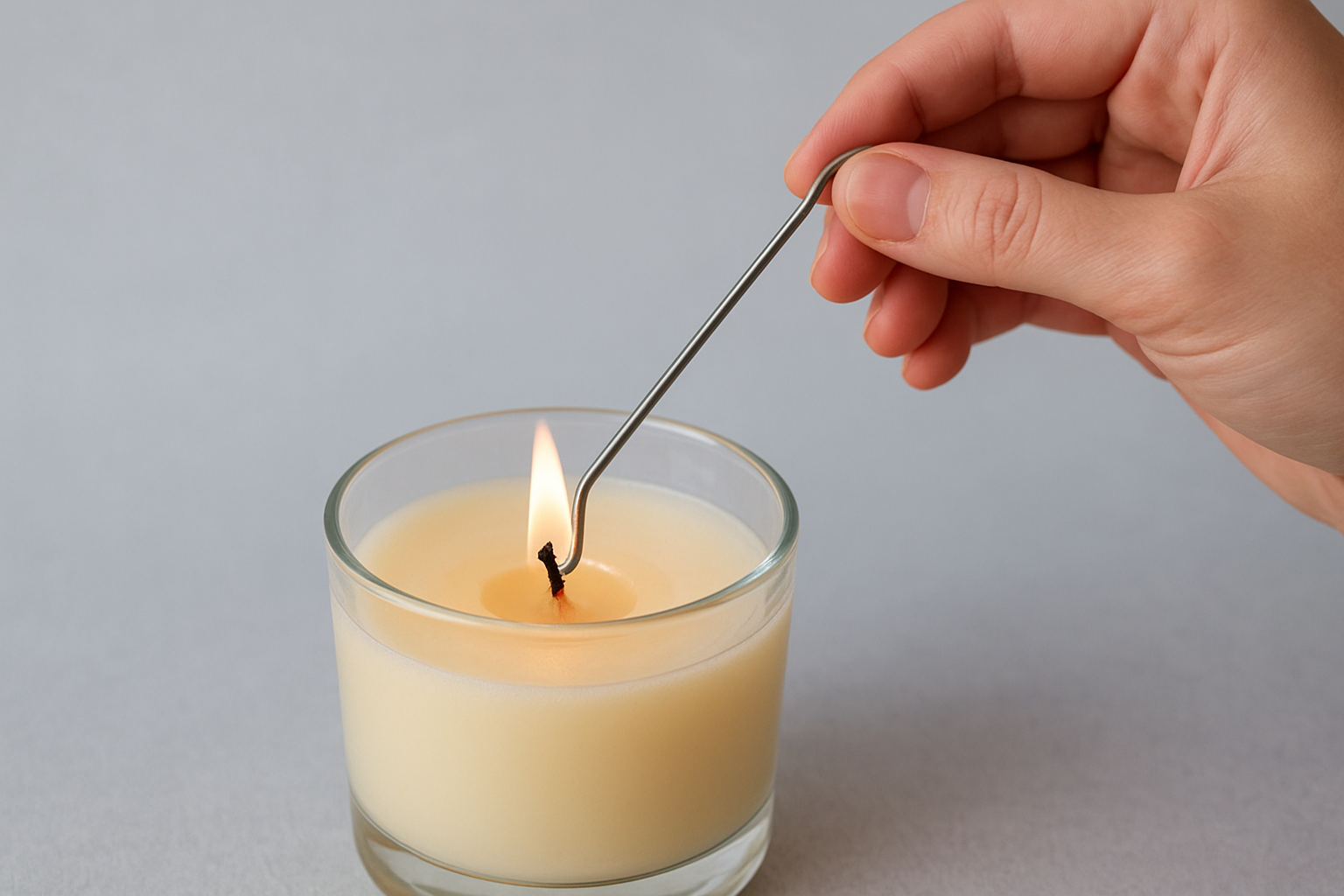
A wick dipper is a small hooked metal tool designed specifically for candle care. It gives you precise control over extinguishing the flame, making it one of the cleanest methods you can use.
Why it puts the flame out with minimal smoke
When you blow out a candle, you force air across a hot wick, which kicks up carbon particles and smoke. Dipping the wick into the liquid wax pool starves the flame of oxygen without any air movement at all.
This is the best way to put out a candle if minimising smoke is your top priority.
How to do it step by step
Using a wick dipper takes only a few seconds. Follow these steps in order:
- Hold the dipper at a low angle over the melt pool.
- Gently push the burning wick forward into the liquid wax until the flame is fully submerged.
- Use the hook to lift the wick back upright before the wax re-sets around it.
What to do right after you dip the wick
Straighten the wick immediately so it sets centred in the vessel. A wick left bent in the wax will be harder to relight next time and may produce an uneven flame.
Common mistakes that cause sputtering or smell
Pushing the wick in too fast causes the hot wax to sputter outward. Avoid submerging it so far that wax coats the tip heavily, as a wax-clogged wick makes relighting on the next burn much harder.
3. Candle snuffer method
A candle snuffer is a small bell-shaped tool on a long handle that caps the flame and cuts off oxygen without any force. It is one of the oldest and most reliable tools for extinguishing a candle cleanly.
Why snuffing reduces smoke and wax splatter
Blowing a candle out sends a burst of air across the hot wax pool, which can scatter droplets and push smoke into the room. A snuffer eliminates both problems by smothering the flame gently, so no air turbulence disturbs the wax surface.
This makes the snuffer method one of the best ways to put out a candle without leaving a smoky trail.
How to use a snuffer on jar and tin candles
Lower the bell end slowly over the wick until the flame goes out, then hold it in place for two seconds before lifting. This gives the oxygen supply time to fully deplete beneath the cap.
How to snuff multi-wick candles cleanly
Work through each wick one at a time rather than trying to cover two at once. Moving in a steady sequence keeps the wax surface undisturbed and prevents any wick from reigniting.
How to avoid soot marks on the vessel
Lift the snuffer straight up rather than tilting it sideways. Tilting drags residual smoke across the rim of the glass, which leaves dark marks that are difficult to remove later.
4. Smother it with a lid the right way
Many soy candles come with a lid, and using it correctly is one of the simplest extinguishing methods you have. The key is knowing when to apply it so you don't trap smoke in the wax or risk cracking the vessel.
When a lid works and when it backfires
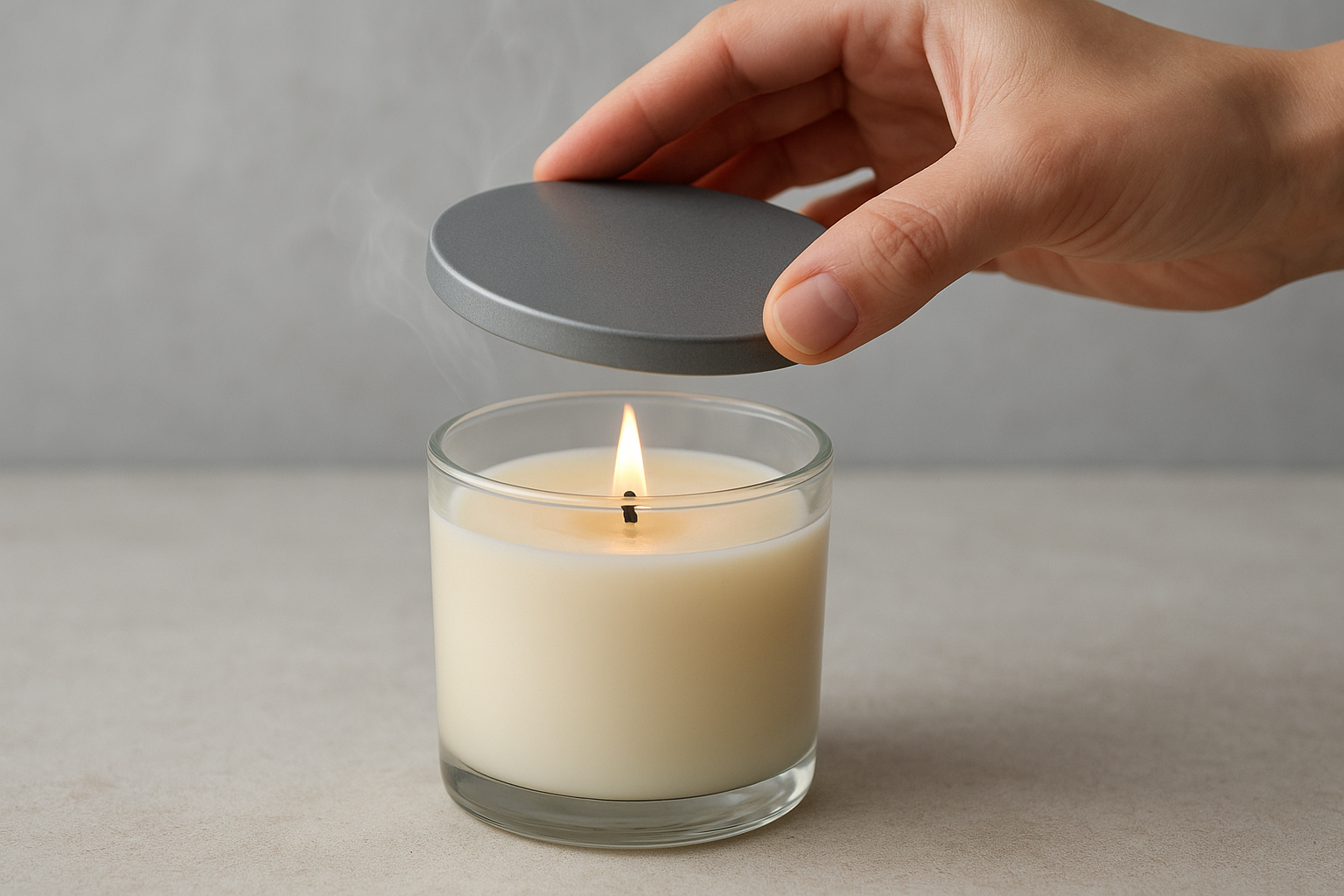
A lid works best on shallow, wide-opening vessels like travel tins, where oxygen depletes quickly once you cover the flame. It backfires on deep, narrow jars where trapped smoke absorbs back into the wax and dulls the fragrance over time.
How to smother without trapping smoke in the wax
Place the lid on at a slight angle first, letting residual smoke escape before you press it flush. Dropping it flat and fast seals smoke into the wax and affects your scent on the next burn.
This is the best way to put out a candle with a lid: slow and angled, not fast and flat.
How to avoid suction, hot-lid burns, and cracked glass
Never drop a cold lid onto a hot glass vessel while the wax is still liquid, as the rapid temperature change can crack the glass. Use a cloth if the lid has absorbed heat from sitting near the flame.
Best lid alternatives if your candle has no lid
A small ceramic plate placed gently over the opening cuts off oxygen just as effectively. Check it is flat and heatproof so it sits flush without rocking.
5. Use a metal spoon or heatproof tool
A metal spoon or any flat heatproof surface can act as a makeshift cap over the flame when you don't have a snuffer or wick dipper nearby. This method cuts off oxygen just like a snuffer does, making it a practical option for everyday use.
When a DIY cap makes sense at home
You'll reach for this method most often when you're burning a candle away from your usual tools, such as in a guest room or outdoor area. A standard metal dessert spoon from your kitchen drawer is all you need.
How to cap the flame safely without touching wax
Hold the back of the spoon an inch above the flame and lower it slowly until the flame dies. Keep your hand steady and level so the seal is consistent and the flame goes out without producing smoke.
This is the best way to put out a candle when you have no dedicated candle tools on hand.
What tools to avoid for fire safety
Never hold plastic, paper, or thin foil over a live flame. These materials can ignite or melt instantly and turn a simple task into a genuine hazard.
How to reset the wick so the next burn lights cleanly
Once the wax cools, trim the wick to 5mm and clear any debris from the melt pool. A clean, upright wick gives you a steady flame from the very first match on the next burn.
A quick takeaway
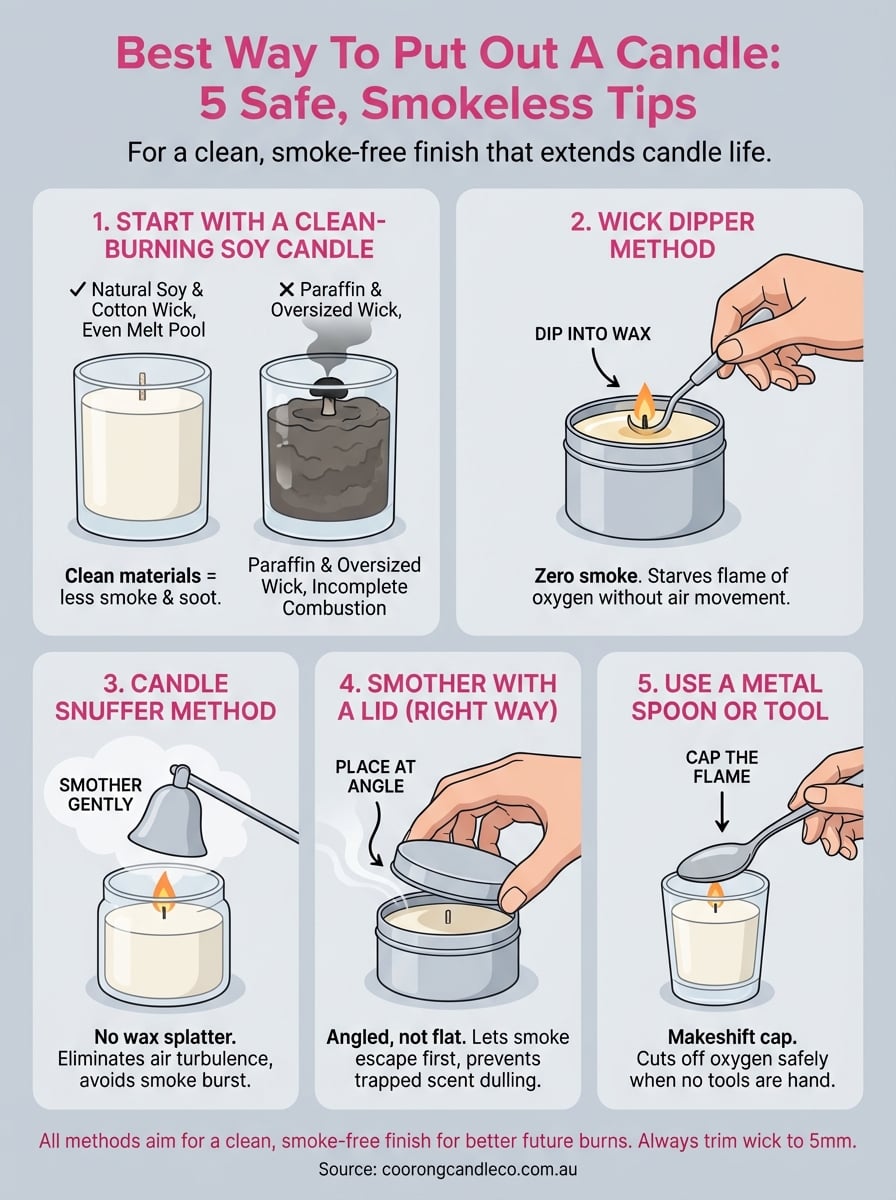
The best way to put out a candle depends on what tools you have on hand, but all five methods in this guide share one goal: a clean, smoke-free finish that preserves your wick and wax for the next burn. Use a wick dipper when you want the absolute least smoke, reach for a snuffer when you want a quick and reliable result, and fall back on a lid or metal spoon when that's all you have nearby. Whatever method you choose, always trim your wick to 5mm and clear any debris from the melt pool before you light it again.
Starting with a well-made candle makes every one of these techniques work better. If you want candles that burn cleanly from the first strike to the last drop, browse our full range of handmade soy candles crafted right here in South Australia.