
Your home should feel like a place you actually want to be, not just somewhere you sleep and store your things. Creating a sanctuary in your home doesn't require a renovation budget or a degree in interior design. It's about small, intentional choices that shift how a space feels the moment you walk through the door.
At Coorong Candle Co., we've built our entire business around one piece of that puzzle: how scent shapes a room's atmosphere. Hand-pouring soy candles and crafting home fragrance products from South Australia has taught us that a calming environment starts with the senses. But fragrance is only one layer. A true home sanctuary brings together light, texture, sound, and ritual in a way that works for your life, not someone else's Pinterest board.
This article covers six practical ways to turn your living space into a genuine retreat from the noise. No fluff, no expensive overhauls, just straightforward changes you can make today.
1. Build a scent ritual with candles and diffusers
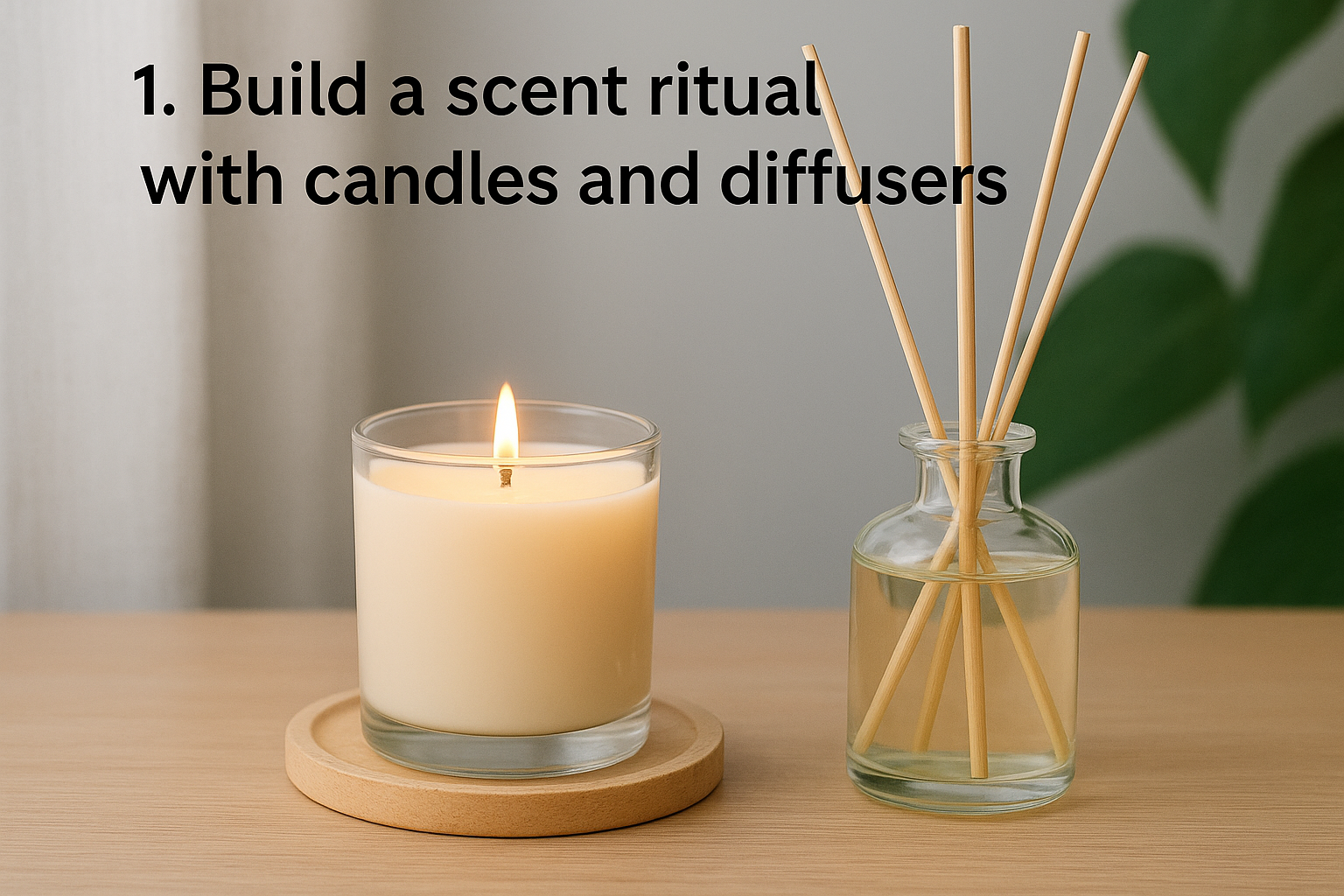
Scent is the fastest route to changing how a room feels. Your brain connects smell directly to memory and emotion, which means a specific fragrance can shift your mood within seconds of walking into a room. Building a simple scent ritual is one of the most effective steps in creating a sanctuary in your home, and it requires almost no effort to start.
What to do today
Pick one room where you most want to feel at ease, whether that's your bedroom, bathroom, or lounge. Light a soy candle in that space for 30 minutes before you normally wind down for the evening. If you want a constant background scent without managing a flame, place a reed diffuser near a doorway or window so the fragrance circulates naturally through the room.
Avoid mixing too many fragrances in one space. Stick to one scent per room to keep the sensory experience clean and deliberate rather than overwhelming.
Your brain starts associating that scent with rest the moment you repeat the ritual, so consistency matters more than which product you choose.
Why it works
Scent bypasses the conscious part of your brain and directly activates the limbic system, which is the region responsible for emotion and long-term memory. This is why a familiar smell can make a space feel instantly calming without any other changes in the room. Natural soy candles are particularly effective here because they burn cleaner than paraffin alternatives, producing less soot and no synthetic by-products that affect indoor air quality.
Reed diffusers work differently by releasing fragrance continuously at a low level, which trains your nervous system to associate that scent with a particular space over time. The effect builds gradually, making it more powerful the longer you use it.
Costs and time
Starting a scent ritual costs very little time and a modest upfront amount. A quality 350g soy candle typically provides between 50 and 70 hours of burn time, which stretches across weeks of evening use. Reed diffusers last two to three months on average with no daily effort beyond an occasional flip of the reeds.
- Setup time: under 5 minutes
- Daily commitment: 30 to 60 minutes of candle burn per evening
- Estimated starting cost: $20 to $50 for a candle and diffuser combined
2. Reset your space with a simple clean and declutter
Physical clutter creates mental noise. When your environment is crowded with objects you don't use or need, your brain treats them as unfinished tasks, and that constant low-level processing makes it nearly impossible to feel at ease. Before you invest in any product or décor change, clearing the space you have gives every other sanctuary-building step room to breathe.
What to do today
Choose one surface or one corner of the room where you spend the most time. Clear it completely, then only return the things that genuinely belong there. You don't need to tackle the whole house today. A single tidy surface signals to your brain that the rest of the room is under control, and that small shift changes how the entire space feels.
Why it works
Creating a sanctuary in your home depends on your nervous system feeling safe, not stimulated. Research consistently shows that visual clutter raises cortisol levels, the hormone linked to stress. When you remove excess objects from your line of sight, your brain moves from a scanning, alert state into a more relaxed one.
A tidy environment doesn't just look better - it actively lowers your stress response.
Costs and time
This step costs nothing but your time. A focused 20-minute declutter of one area is enough to notice a real difference. You don't need storage boxes or organising systems to begin - a cleared surface is the goal, not a perfectly organised room.
3. Fix the lighting to calm your nervous system
Lighting is one of the most overlooked elements when people think about creating a sanctuary in your home. Most rooms rely on a single overhead light that floods the space with harsh, flat brightness, which keeps your brain in an alert, active state rather than a relaxed one. The fix is simpler than you think.
What to do today
Switch your main overhead light off in the evening and use floor lamps or table lamps positioned at eye level or below instead. Warm-toned bulbs with a colour temperature of 2700K or lower produce a soft amber glow that layers well with natural candlelight. Try placing lamps in two or three spots around the room rather than relying on one central source.
Lowering your light level at least an hour before bed signals your body to wind down, which supports better sleep over time.
Why it works
Bright overhead lighting suppresses melatonin production, the hormone that prepares your body for rest. Warm, low light does the opposite, shifting your nervous system from a high-alert state into a calmer, slower gear.
Your brain also responds to contrast and depth in a room. Multiple light sources at different heights create visual warmth that a single ceiling fixture simply cannot. That layered effect alone makes a space feel noticeably more settled.
Costs and time
Warm bulbs are one of the cheapest improvements you can make to a room, and switching them out takes less than 15 minutes.
- Setup time: 10 to 15 minutes
- Estimated cost: $5 to $20 per bulb
4. Add nature and texture for instant comfort
Hard, bare surfaces and synthetic materials make a room feel functional at best and clinical at worst. Adding natural elements and varied textures shifts that immediately. Plants, linen, wood, stone, and wool engage your senses in a way that flat, uniform spaces simply don't, and most of these additions cost very little.
What to do today
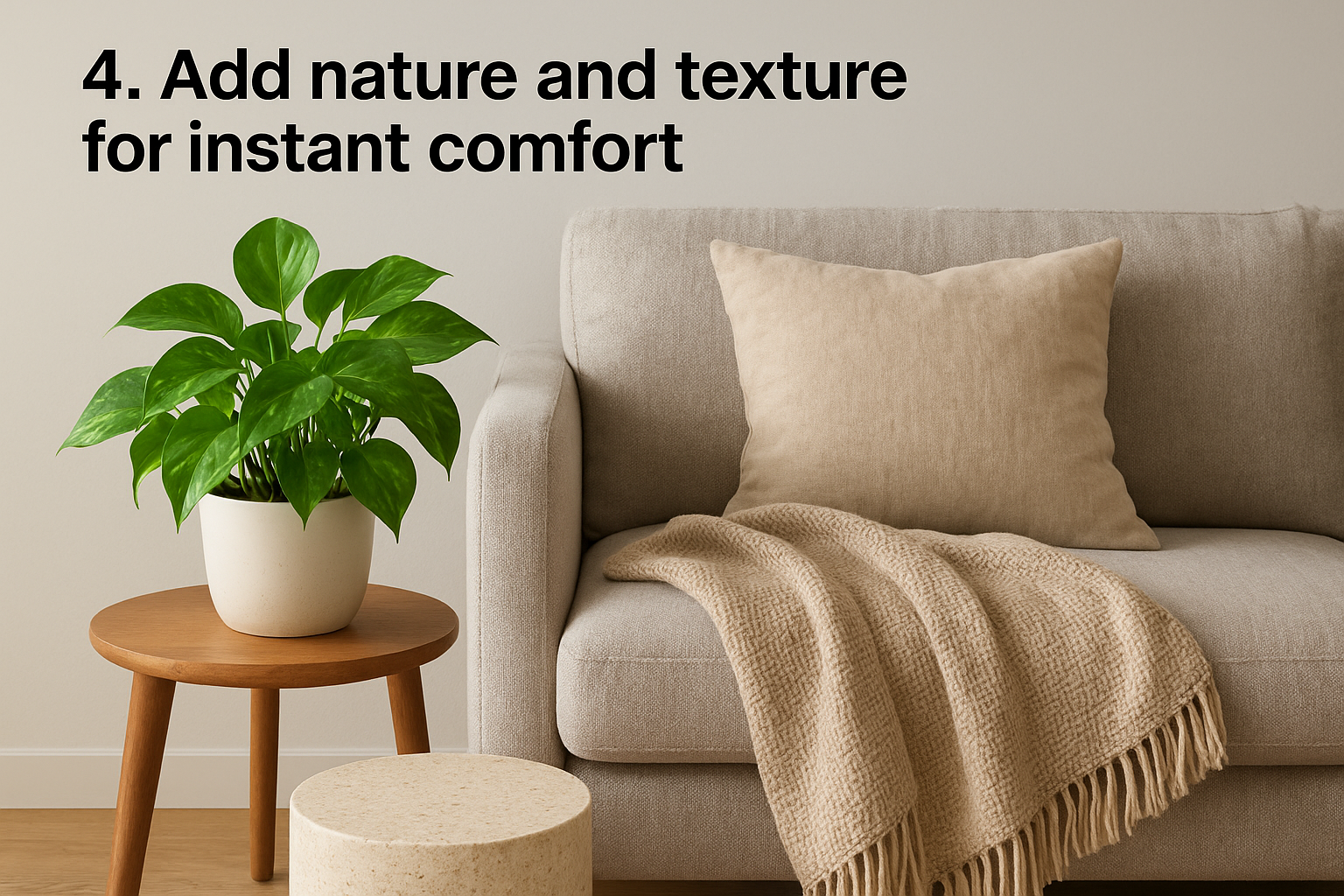
Bring one plant into the room where you spend the most time. A pothos, snake plant, or peace lily all tolerate low light and need minimal care. Layer a textured throw or cushion in a natural fabric like linen, cotton, or wool across your sofa or bed. These two changes alone add enough visual and tactile warmth to notice straight away.
The goal isn't a perfectly styled room - it's one that feels lived in and genuinely comfortable to be in.
Why it works
Natural materials ground a space because your brain recognises them as familiar and safe. Texture adds visual depth that smooth surfaces can't provide, and that depth is a key part of creating a sanctuary in your home. Plants also improve air quality by absorbing carbon dioxide, which supports the calm, clear atmosphere you're building.
Costs and time
This step stays well within a small budget and takes very little time to act on.
- Setup time: 20 to 30 minutes
- Estimated cost: $10 to $40 for a plant and one textured throw
5. Create one tech-free corner you actually use
Screens keep your brain in a reactive, stimulated state that's almost the opposite of what you need when creating a sanctuary in your home. You don't need to go screen-free across the whole house, just one dedicated corner where your phone and laptop stay out.
What to do today
Pick a chair, floor cushion, or small section of your sofa that you can claim as your tech-free spot. Remove any chargers or devices from that area and replace them with things you actually enjoy: a book, a journal, or a candle. The physical act of clearing devices from that space makes the boundary feel real and easier to maintain.
Consider adding one or two comfort items such as a textured throw, a low lamp, or a soy candle to make that corner more inviting than the spot where you'd normally scroll.
The corner only works if you actually use it, so make it noticeably more comfortable than anywhere else you'd normally sit with your phone.
Why it works
Your nervous system needs clear environmental cues to shift between modes. When you sit in a spot you only use for rest, your brain learns to associate that location with switching off.
Over time, the space itself becomes the trigger for relaxation. That means the calm you're after requires less willpower and starts happening more automatically.
Costs and time
Setting up a tech-free corner requires no spending at all if you use furniture you already own. A comfortable cushion or small side table is the only addition worth considering.
- Setup time: 10 minutes
- Estimated cost: $0 to $30
6. Turn everyday routines into mini spa moments
Your daily routines are already built into your schedule - you just haven't designed them yet. Showering, bathing, and winding down happen every day regardless, which makes them the easiest opportunity for creating a sanctuary in your home without adding anything extra to your day.
Small rituals don't need to take longer - they just need to feel intentional.
What to do today
Take the routine you already do at the end of the day and add one sensory element to it. Drop a bath bomb into your evening bath, light a candle in the bathroom before you shower, or play soft background music while you wash your face. The goal is to give your routine a clear beginning and end that signals to your body: this is the shift from busy to rest.
Why it works
Repetition is what makes a ritual effective. When you pair a specific action with a sensory experience, your brain starts to anticipate the calm before you've even finished the routine. That anticipatory response is what makes these small moments genuinely restorative rather than just pleasant.
Consistency matters more than duration. A five-minute routine done every evening builds a stronger signal for your nervous system than an occasional long bath with no regular pattern behind it.
Costs and time
Building a spa routine into your existing habits costs very little and adds almost no extra time to your evening.
- Setup time: 5 minutes
- Daily commitment: adds 5 to 10 minutes to existing routines
- Estimated cost: $5 to $20 for bath bombs or a bathroom candle
A calmer home starts today
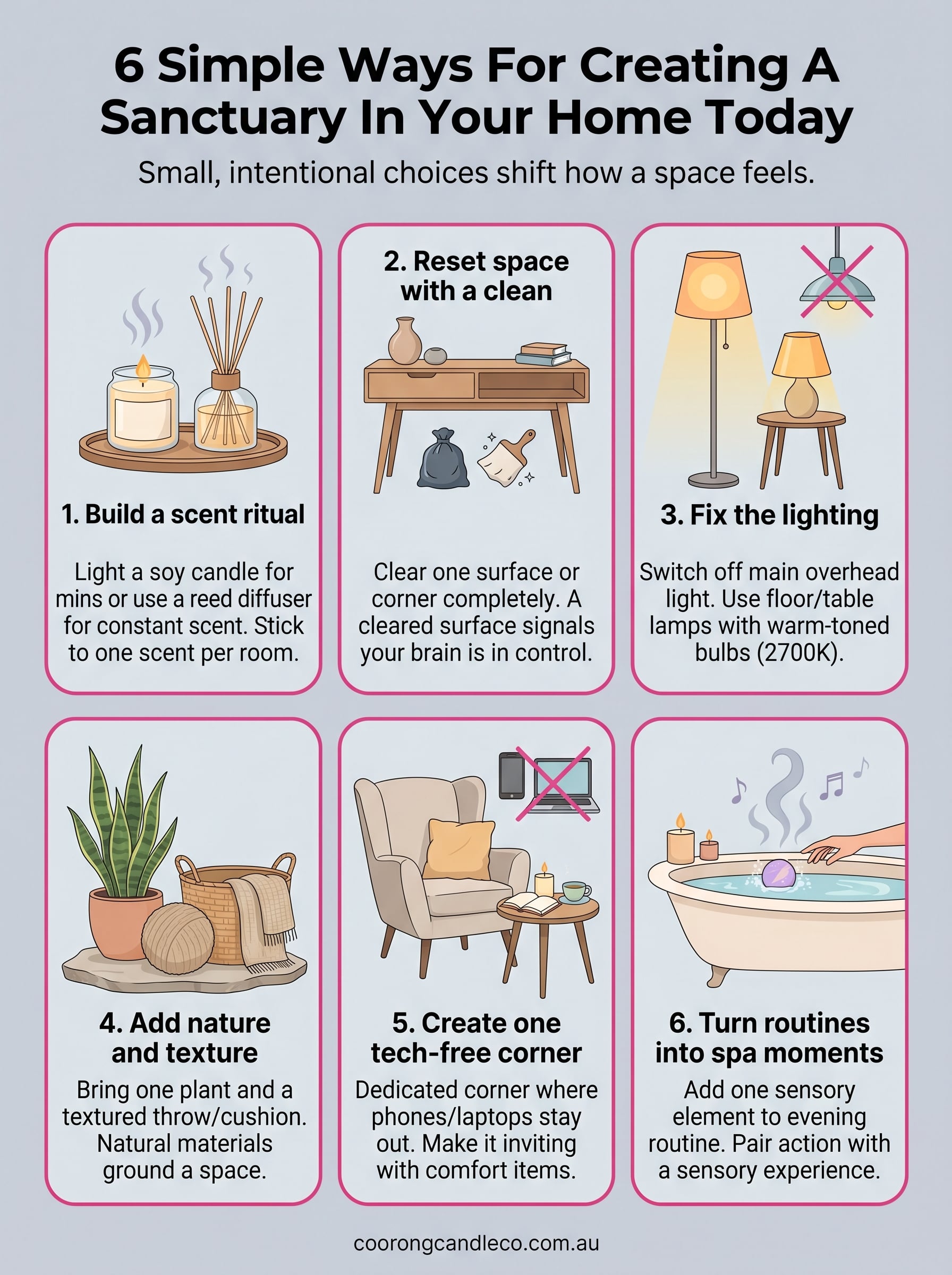
Creating a sanctuary in your home doesn't require a complete overhaul. Six practical changes covered in this article, from building a scent ritual to turning your nightly routine into something restorative, all work together to shift how your space feels day to day. None of them need a big budget or a free weekend to get started.
Pick one step and act on it today. That might mean lighting a candle while you cook dinner, clearing one cluttered surface, or swapping a harsh overhead bulb for a warm lamp. Small, consistent changes build up faster than you expect, and each one makes the next step easier to take.
If scent is where you want to begin, our handcrafted soy candles, reed diffusers, and bath bombs are designed to help you build exactly that kind of daily ritual. Browse the full range at Coorong Candle Co. and find a fragrance that fits the atmosphere you're building.