
Creating a home that reflects your values doesn't mean sacrificing style. Sustainable interior design products offer a way to reduce your environmental footprint while building a space that feels both beautiful and intentional. From the materials you choose to the finishing touches you add, every decision can bring you closer to a greener living environment.
Whether you're renovating a room or simply looking to swap out a few items, finding eco-friendly alternatives has become far more accessible. Natural home fragrance options, like soy candles and reed diffusers, sit alongside recycled textiles and reclaimed furniture as practical choices for the environmentally conscious homemaker.
At Coorong Candle Co., we craft our candles and diffusers using renewable soy wax and lead-free cotton wicks, designed to enhance your home without harming the planet. In this guide, we'll walk you through six sustainable products that can transform your space into a greener sanctuary, covering everything from natural fibres to artisan-made home fragrance.
1. Soy candles and reed diffusers
You can transform your indoor atmosphere using natural home fragrance options that won't pollute your living space. Soy candles and reed diffusers made from renewable plant sources offer a sustainable alternative to petroleum-based paraffin products, allowing you to enjoy ambient scent without the environmental guilt. These sustainable interior design products have become increasingly popular as people recognise the health and ecological benefits of choosing plant-derived ingredients over synthetic alternatives.
Why this is a sustainable interior choice
Soy wax comes from soybean oil, a renewable resource that burns cleanly without releasing harmful toxins into your home. Unlike paraffin candles, which release carbon soot and volatile compounds, soy-based options produce minimal particulate matter and no carcinogens. Reed diffusers using plant-based carrier oils work continuously without any energy consumption, making them one of the most eco-efficient ways to scent your space.
Natural soy wax candles burn up to 50% longer than paraffin equivalents, reducing both waste and the frequency of replacement purchases.
Where it works best in the home
Place soy candles in areas where you want to create warmth and ambiance, such as living rooms, bedrooms, or bathrooms. Reed diffusers work exceptionally well in smaller enclosed spaces like powder rooms, entryways, or walk-in wardrobes where continuous fragrance makes the most impact. You can position diffusers on shelving units or side tables where air circulation naturally disperses the scent without requiring heat or electricity.
What to look for before you buy
Check that the product uses 100% soy wax rather than blends that contain paraffin or synthetic additives. Look for candles with lead-free cotton wicks and reed diffusers made with natural rattan reeds rather than synthetic alternatives. Verify that fragrances come from essential oils or phthalate-free compounds, and choose brands that provide transparent ingredient listings on their packaging or websites.
Typical cost and how long it lasts
You'll pay between $25 and $45 for a quality 350g soy candle that burns for 60 to 80 hours with proper care. Reed diffusers in the same price range typically last three to four months before requiring refills. Smaller travel-sized candles around 165g cost roughly half that amount and provide 30 to 40 hours of burn time, making them ideal for testing new scents before committing to larger sizes.
2. Reclaimed wood furniture
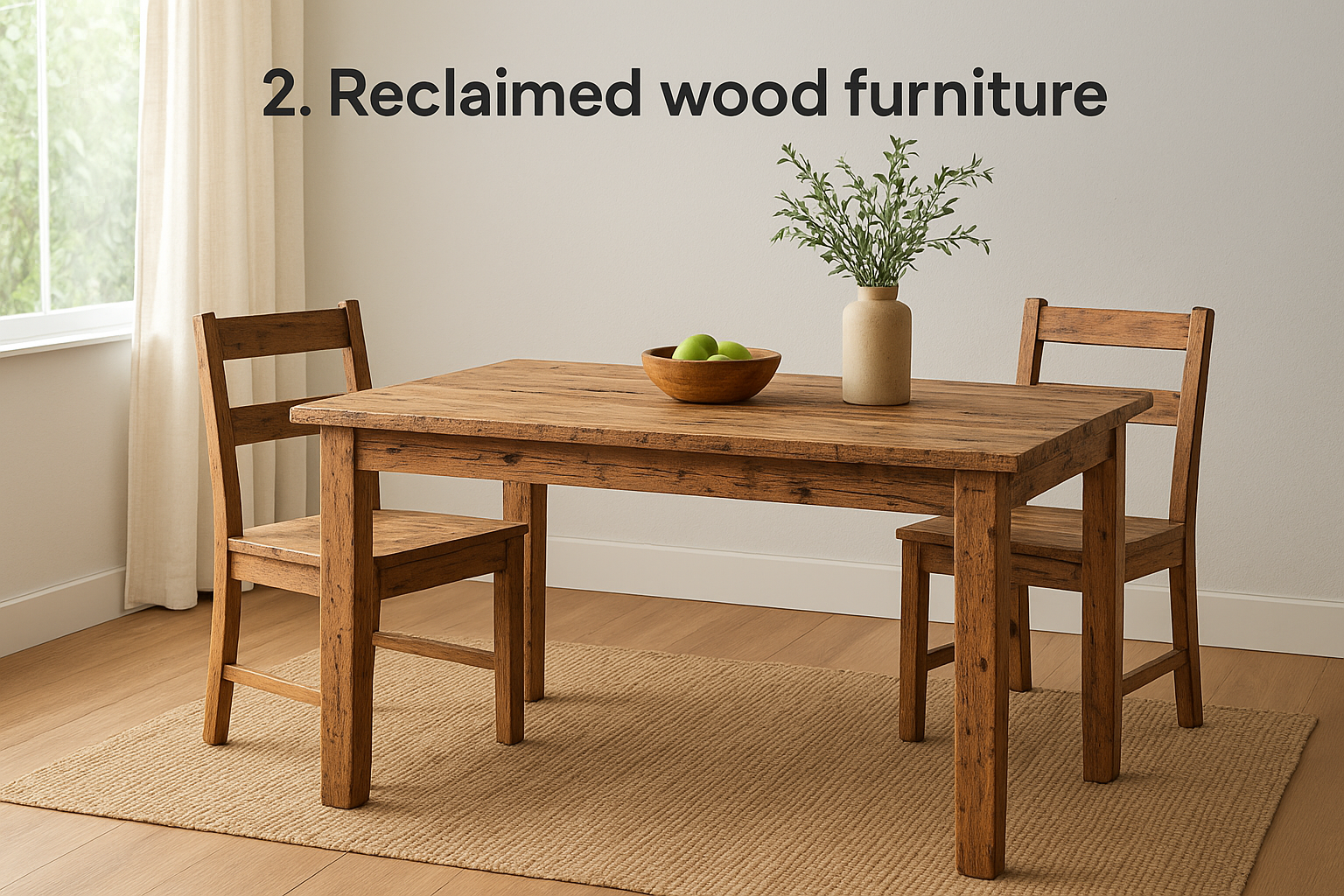
You can bring character and sustainability into your home through furniture crafted from salvaged timber. Reclaimed wood furniture transforms materials from old barns, demolished buildings, and deconstructed shipping pallets into functional pieces that reduce the demand for newly harvested timber. Each item carries its own history through weathered textures, natural imperfections, and distinctive grain patterns that mass-produced furniture simply cannot replicate.
Why this is a sustainable interior choice
Choosing reclaimed wood prevents usable timber from entering landfills while eliminating the carbon emissions associated with logging, processing, and transporting virgin materials. Older wood often comes from slow-growth forests that produced denser, more durable timber than modern fast-growth alternatives. This means your furniture will last longer and require fewer replacements over its lifetime, further reducing your environmental impact.
Reclaimed timber diverts approximately 10 million tonnes of wood waste from landfills globally each year.
Where it works best in the home
Reclaimed wood furniture works beautifully in living rooms and dining areas where its natural patina creates focal points. You can incorporate dining tables, coffee tables, or shelving units that complement both modern and rustic design schemes. Bedroom furniture like bed frames and bedside tables benefit from the warmth and organic feel that reclaimed timber provides.
What to look for before you buy
Verify that sellers provide documentation about the wood's origin and any treatments applied to ensure safety and authenticity. Check for structural integrity by examining joints, stability, and finish quality. Look for pieces treated with low-VOC sealants that protect the wood without releasing harmful chemicals into your indoor environment.
Typical cost and care considerations
You'll spend between $800 and $3,000 for quality reclaimed wood tables, depending on size and craftsmanship. Maintain your furniture by dusting regularly and applying natural wax or oil finishes annually to preserve the wood's appearance and prevent drying or cracking.
3. Cork flooring
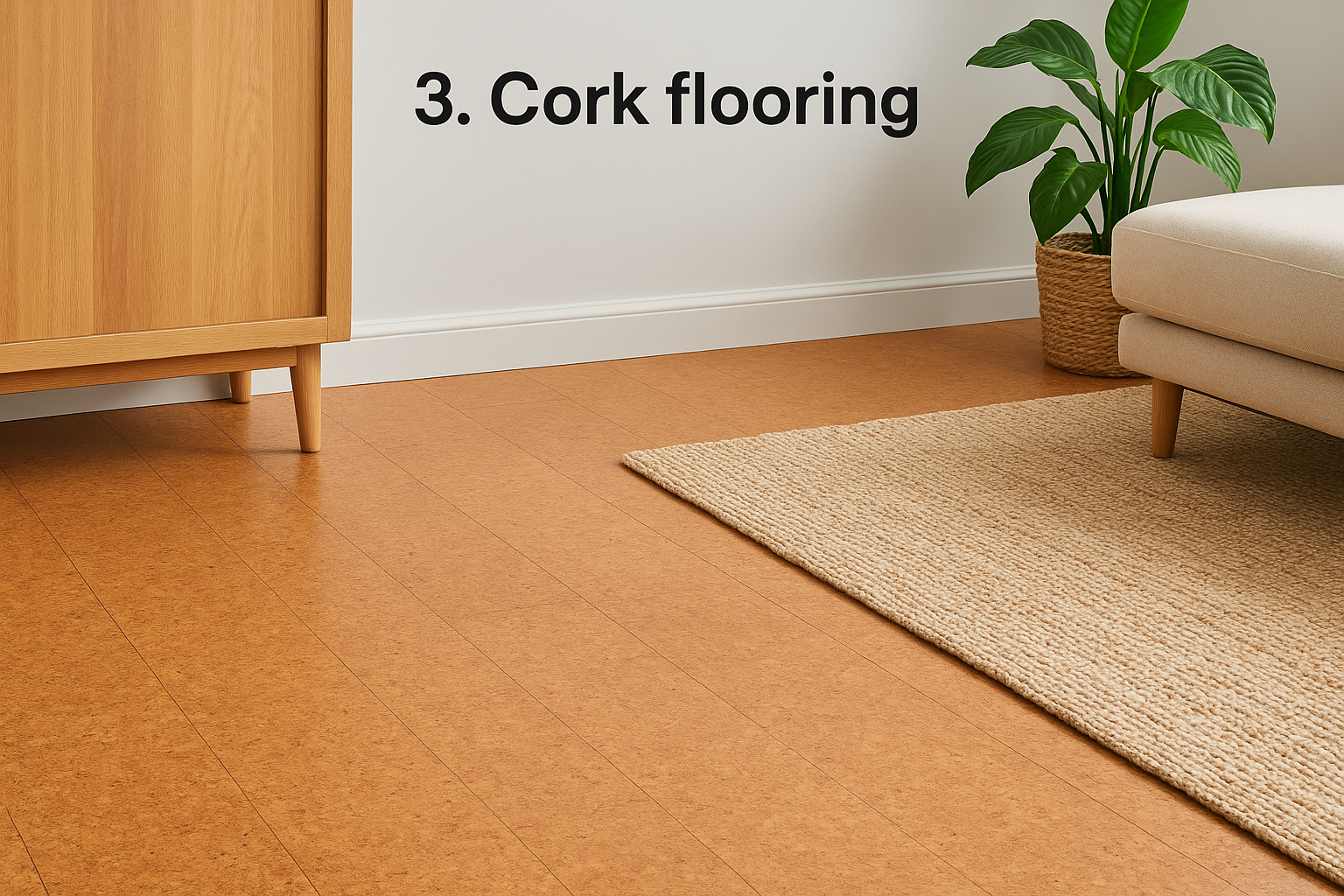
You can add warmth and resilience to your floors using cork, a natural material harvested from the bark of cork oak trees without harming the plant itself. Cork flooring stands out among sustainable interior design products because the trees regenerate their bark every nine years, creating a renewable resource that can be harvested repeatedly throughout the tree's 200-year lifespan. The material's natural honeycomb structure provides insulation, sound dampening, and a comfortable surface that remains gentle on your feet and joints during daily use.
Why this is a sustainable interior choice
Cork harvesting supports forest conservation efforts because landowners maintain cork oak forests for ongoing bark production rather than clearing them for development. The manufacturing process generates minimal waste since production scraps get ground into granules and pressed into flooring tiles or planks. Cork naturally resists mould, mildew, and pests without requiring chemical treatments, keeping your indoor air quality high while reducing maintenance demands.
Cork oak forests absorb five times more carbon dioxide during bark regeneration than trees that remain unharvested.
Where it works best in the home
Install cork flooring in kitchens, bathrooms, and laundry areas where its water-resistant properties and cushioned surface provide practical benefits. The material works equally well in bedrooms and living spaces where you want noise reduction and thermal insulation. Avoid using cork in high-moisture environments like saunas or outdoor areas where constant water exposure can compromise the sealant.
What to look for before you buy
Select cork flooring with low-VOC finishes that protect the surface without releasing harmful chemicals. Check the product's density rating to ensure it can withstand your household's foot traffic levels. Look for certification from the Forest Stewardship Council or similar bodies that verify responsible harvesting practices.
Typical cost and lifespan
You'll pay between $90 and $180 per square metre for quality cork flooring, including installation. Properly maintained cork floors last 25 to 30 years when you reseal them every five to seven years to maintain their protective coating and appearance.
4. Natural fibre textiles
You can soften your living spaces while reducing environmental impact through natural fibre textiles like organic cotton, linen, hemp, and bamboo. These sustainable interior design products replace synthetic fabrics derived from petroleum with biodegradable alternatives that decompose naturally without releasing microplastics into waterways. Curtains, cushion covers, throws, and bedding made from plant-based fibres bring tactile warmth to your home whilst supporting agricultural practices that use fewer pesticides and chemical treatments.
Why this is a sustainable interior choice
Natural fibres require significantly less energy to produce than polyester or nylon fabrics manufactured from fossil fuels. Hemp and linen grow rapidly with minimal water requirements, whilst organic cotton avoids the intensive pesticide use associated with conventional cotton farming. These materials break down completely at the end of their lifecycle, returning nutrients to soil rather than persisting as non-degradable waste.
Organic cotton uses 91% less water than conventional cotton production methods.
Where it works best in the home
Layer natural fibre textiles in bedrooms and living areas where you want breathable, temperature-regulating fabrics. Hemp and linen curtains work particularly well in sunny rooms because their durability withstands UV exposure without degrading quickly. Organic cotton works beautifully for bedding where skin contact makes chemical-free materials especially important.
What to look for before you buy
Seek out certifications like GOTS (Global Organic Textile Standard) that verify the entire production chain meets environmental and social criteria. Check fibre content labels to ensure you're purchasing 100% natural materials rather than blends containing synthetic components. Verify that dyes used are non-toxic and water-based.
Typical cost and maintenance
You'll pay between $80 and $200 for quality natural fibre curtains depending on size and weave density. Wash most natural textiles in cold water using gentle, plant-based detergents to preserve their integrity and colour whilst minimising environmental impact.
5. Low-VOC paints and sealants
You can improve your indoor air quality dramatically by choosing low-VOC (volatile organic compound) paints and sealants that release minimal harmful chemicals during and after application. Traditional paints contain solvents that evaporate into your home's air for months after application, causing headaches, respiratory irritation, and contributing to long-term health concerns. Low-VOC alternatives achieve the same coverage and durability using water-based formulations that keep your living environment safer whilst delivering professional finishing results.
Why this is a sustainable interior choice
Low-VOC paints reduce airborne chemical emissions by up to 90% compared to conventional alternatives, protecting both your household and the exterior environment from toxic pollutants. These sustainable interior design products use natural binders and pigments instead of petroleum-based solvents, decreasing the carbon footprint of your renovation projects. The water-based formulations break down more easily during manufacturing waste treatment, preventing chemical contamination of waterways.
Low-VOC paints emit less than 50 grams of VOCs per litre, compared to 200-300 grams in conventional paints.
Where it works best in the home
Apply low-VOC paints throughout your home, particularly in bedrooms and nurseries where you spend extended periods breathing indoor air. Use them on interior walls, ceilings, and trim where off-gassing would otherwise concentrate in enclosed spaces. Kitchens and bathrooms benefit from low-VOC sealants that prevent moisture damage without introducing harmful fumes.
What to look for before you buy
Verify that products carry third-party certifications like Green Seal or Environmental Choice Australia that confirm VOC levels meet strict standards. Check that both the base paint and tint contain low VOCs, as some manufacturers use compliant bases but add high-VOC colourants. Read labels for specific VOC measurements rather than relying on vague marketing claims.
Typical cost and safety notes
You'll pay between $45 and $85 per four-litre tin of quality low-VOC paint, roughly 10-20% more than conventional options. Ventilate rooms during application and allow 24-48 hours of drying time before occupying newly painted spaces, even though low-VOC products produce minimal odour.
Next steps
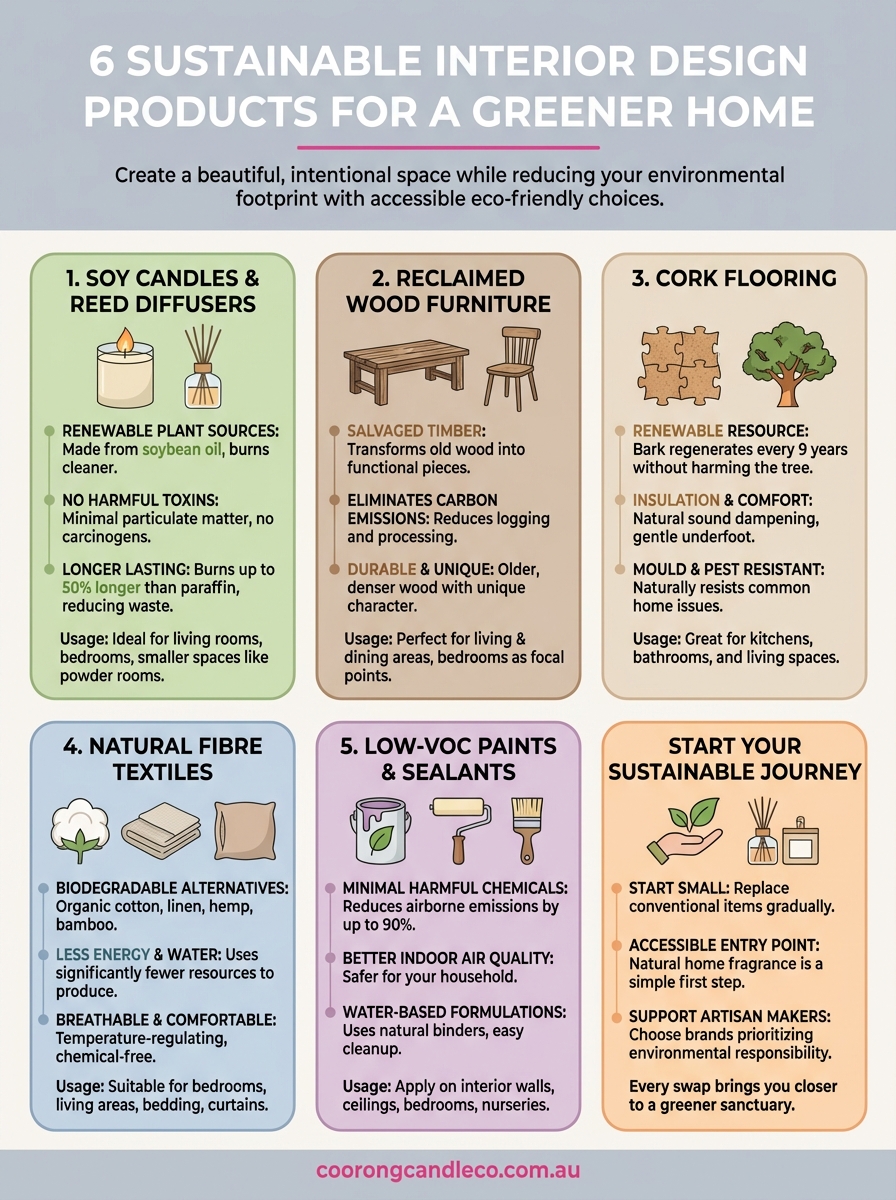
You've now explored six practical ways to incorporate sustainable interior design products into your living spaces without compromising on style or functionality. From natural soy candles that scent your home cleanly to reclaimed wood furniture that tells its own story, each choice contributes to a healthier indoor environment and reduces your ecological footprint. These products work together to create a cohesive, environmentally conscious home that reflects your values.
Start small by replacing one or two conventional items with sustainable alternatives and build from there as your budget allows. Natural home fragrance offers an accessible entry point for anyone beginning their sustainability journey. You can transform your space using reed diffusers crafted from renewable materials that provide continuous, flame-free fragrance whilst supporting artisan makers who prioritise environmental responsibility. Every sustainable swap you make brings you closer to creating the greener sanctuary you envision.