
Your coffee table sits at the heart of your living room, yet it's often the hardest piece to get right. Too cluttered and it feels chaotic; too sparse and it looks unfinished. Learning how to style a coffee table can transform this central surface from an afterthought into a genuine design statement that reflects your personality and ties your room together.
Whether you're working with a round, rectangular, or oval table, the principles of good styling remain consistent, it's about balance, layers, and choosing objects that serve both form and function. From stacking books to arranging candles (a personal favourite of ours at Coorong Candle Co.), each element plays a role in creating visual interest.
This guide walks you through seven practical approaches to coffee table styling, covering everything from the rule of threes to working with different table shapes. You'll find actionable tips you can apply today, no design degree required.
Choose a vibe and colour story for the room
Before you place a single object on your coffee table, you need to understand the visual language of your space. Your coffee table doesn't exist in isolation, it needs to harmonise with the walls, furniture, and textiles that surround it. Starting with a clear colour story and overall vibe prevents the common mistake of buying beautiful pieces that simply don't belong together.
Start with your existing room palette
Walk around your living room and note the three most dominant colours already present. These might come from your sofa fabric, cushions, curtains, or artwork. Photograph your space from multiple angles using your phone, this helps you see patterns and colour relationships you might miss when you're in the room daily.
Pull swatches, paint chips, or fabric samples that match your key room colours. Place these on your coffee table surface as a reference guide while you shop or gather styling items. This physical colour reference keeps you accountable and stops impulse purchases that clash with your existing scheme.
Define your styling personality
Your coffee table styling should reflect a consistent aesthetic approach that matches your room's character. Coastal spaces call for natural textures, blues, and weathered finishes. Modern minimalist rooms demand clean lines, monochromatic palettes, and negative space. Traditional interiors work best with layered arrangements, rich woods, and classic decorative objects.
Choose adjectives that describe how you want the space to feel: serene, energetic, sophisticated, or relaxed. These words guide your object selection. A serene coastal vibe might include pale neutrals, driftwood accents, and soy candles in soft fragrances, while an energetic bohemian space could feature terracotta tones, patterned textiles, and statement pieces with personality.
The most successful coffee table styling happens when your colour choices and objects tell a cohesive story rather than competing for attention.
Select a dominant colour and two accents
Apply the 60-30-10 rule directly to your coffee table arrangement. Your dominant colour (60%) should match your room's main palette, typically appearing in your largest styling piece like a tray or stack of books. The secondary colour (30%) adds visual interest through medium-sized objects such as a decorative bowl or candle vessel. Your accent colour (10%) provides the pop that catches the eye, perhaps through a small succulent pot, matches, or a distinctive object.
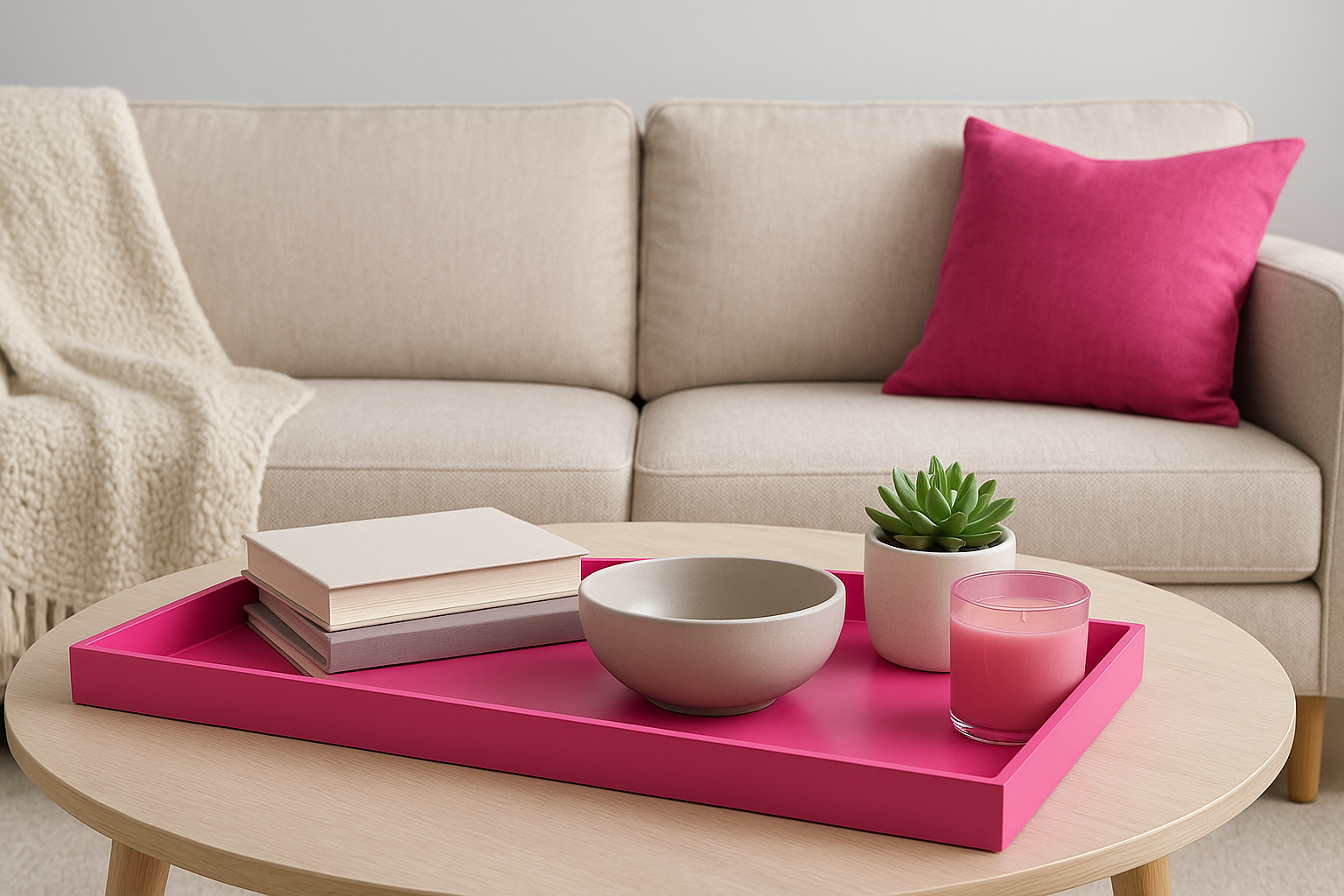
Test this formula by gathering potential styling items and arranging them on your table before committing. Take a photo and convert it to black and white, this reveals whether your colour balance works or if one element overpowers the composition. When learning how to style a coffee table, this simple test saves hours of rearranging and buyer's regret.
Measure, clear, and pick your anchor pieces
Successful coffee table styling begins with practical groundwork, not throwing objects onto the surface and hoping they work. You need to understand your available space and select the right foundation pieces that anchor your entire arrangement. This methodical approach prevents the frustration of buying items that overwhelm your table or get lost in the scale of your furniture.
Clear and measure your table dimensions
Remove everything currently on your coffee table and wipe down the surface completely. This blank canvas lets you see the true proportions and shape you're working with. Measure the length and width (or diameter for round tables) using a tape measure, then note these dimensions on your phone or notebook.
Calculate how much surface area you should actually style by applying this rule: leave 40% to 50% of your table clear. On a 120cm x 60cm rectangular table, that means your styling elements should occupy roughly 36,000 to 43,200 square centimetres, leaving the rest as functional space for drinks, remotes, or feet. This prevents the cluttered look that happens when every centimetre gets decorated.
Select one or two statement anchor pieces
Your anchor piece forms the visual foundation that grounds everything else on your table. This should be your largest or most substantial object, typically a decorative tray, oversized coffee table book, or ceramic bowl. Choose items with weight and presence that match your table's scale, a delicate trinket dish won't anchor a chunky timber table.
For rectangular tables longer than 100cm, you can use two anchor pieces positioned at opposite ends to create balance. A stack of books at one end paired with a large candle at the other establishes symmetry while allowing functional space between them. Round or square tables under 80cm across work best with a single centred anchor that you'll build around.
When learning how to style a coffee table, your anchor piece should be substantial enough to look intentional on its own, even before you add supporting elements.
Test your anchor placement by photographing it from your sofa's viewpoint. This reveals whether the piece suits the scale and proportion of both the table and surrounding furniture before you commit to the arrangement.
Build height, shape, texture, and scent without clutter
Creating visual interest on your coffee table requires dimension and variety, but adding layers doesn't mean piling on objects until the surface disappears. The goal is to engage multiple senses through carefully chosen pieces that work together. When you understand how to style a coffee table using height variations, contrasting textures, and subtle fragrance, you create a curated composition rather than a cluttered mess.
Layer objects by height in odd numbers
Your eye naturally seeks variation in vertical space, which means flat arrangements feel static and boring. Create dimension by grouping items at three distinct heights: low (books, trays), medium (candles, small bowls), and tall (vases, sculptures). This stepped approach guides the viewer's gaze across your arrangement rather than stopping at a single focal point.
Group your items in odd numbers (three, five, or seven pieces total) because even numbers subconsciously create symmetry that feels too formal for most living spaces. Place your tallest object slightly off-centre, with medium-height items flanking it, and low elements filling the base layer. This triangle formation creates visual stability without appearing rigid or contrived.
Mix materials and textures thoughtfully
Combine at least three different materials in your coffee table styling: timber, ceramic, metal, glass, or natural fibres. A wooden tray paired with a marble candle and a woven coaster creates tactile interest that invites touch. Avoid using all glossy or all matte surfaces, the contrast between finishes adds sophistication to your arrangement.
Natural elements like dried florals, seed pods, or textured candle vessels bring organic warmth to manufactured surfaces. These pieces soften hard edges and connect your interior styling to the outside world.
Layering textures transforms a flat surface into a three-dimensional experience that feels deliberately designed rather than accidentally assembled.
Introduce scent strategically
Fragrance adds the final sensory layer that elevates your coffee table from purely decorative to functionally luxurious. A quality soy candle positioned at medium height provides both visual presence and ambient scent without overwhelming your space. Choose fragrances that complement your room's purpose: calming lavender for relaxation zones or energising citrus for active living areas.
Place scented elements where air circulation naturally carries the fragrance, typically near seating areas or walkways. Avoid positioning candles directly under air vents, which disperse scent too quickly and create uneven burning.
Use seven styling formulas that always work
Proven styling formulas remove the guesswork from coffee table design by providing repeatable arrangements that look polished every time. These formulas work across different design styles and table shapes because they follow fundamental principles of visual balance and proportion. You don't need to reinvent your coffee table styling each season when you understand these tried-and-tested approaches that designers rely on.
Traditional arrangements that create balance
The Rule of Three places three objects of varying heights in a triangular formation, typically a tall candle, medium stack of books, and low decorative bowl. This creates natural eye movement across your table without feeling overcrowded.
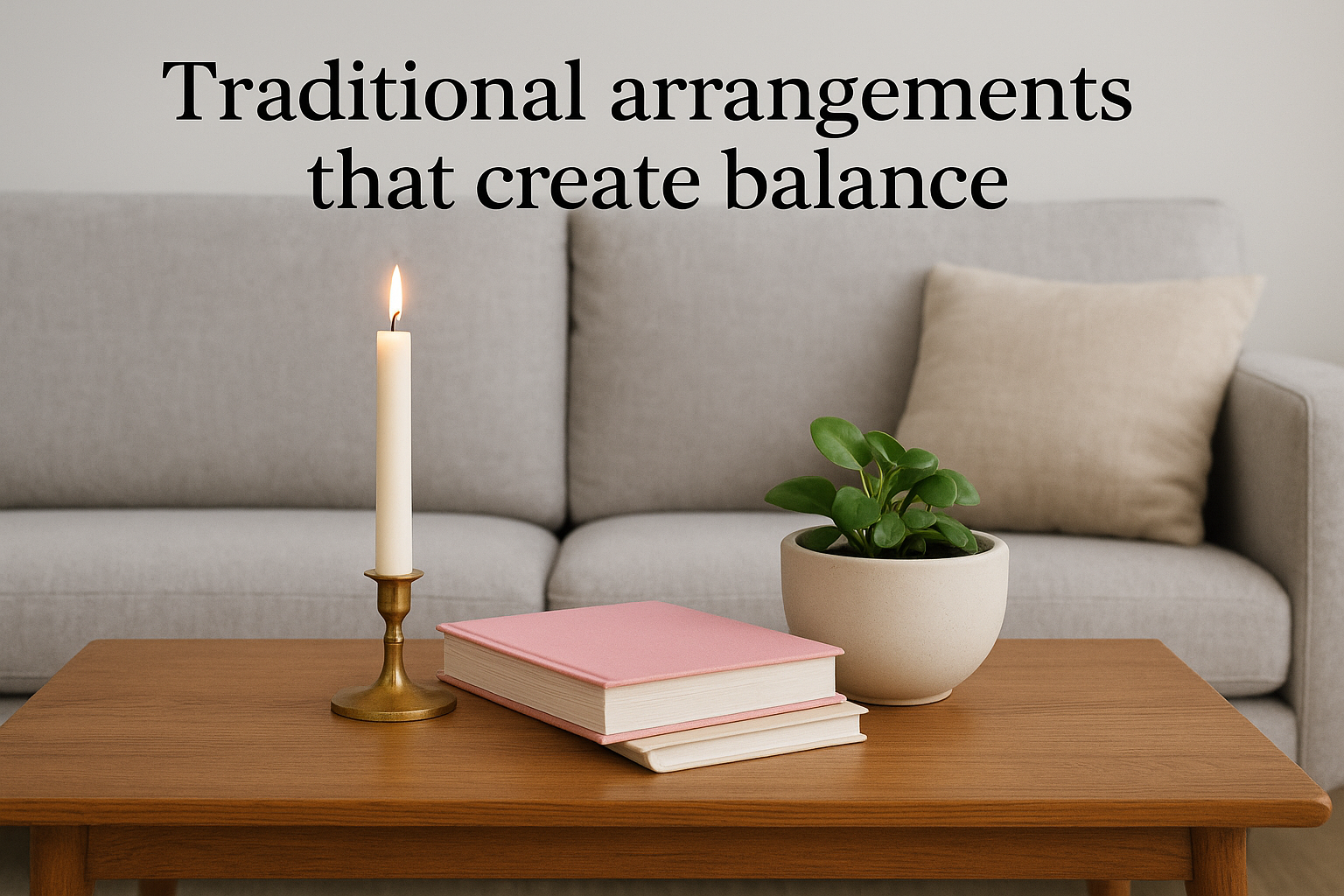
The Symmetrical Bookend positions identical or similar objects at opposite ends of your table with a central focal point between them. Two matching candle vessels flanking a coffee table book delivers instant visual harmony for rectangular tables.
The Layered Tray contains all your styling elements within a decorative tray, which defines boundaries and prevents sprawl. Stack two books inside, add a small plant and candle on top, then place the entire tray slightly off-centre on your table.
When learning how to style a coffee table, formulas provide the structure you need while leaving room for personal expression through your object choices.
Modern formulas for contemporary spaces
The Diagonal Line arranges objects from one corner to the opposite corner, creating dynamic movement that suits angular furniture. Position a large bowl at one corner, books in the middle, and a candle at the far corner.
The Clustered Corners approach leaves the table centre completely empty while styling two opposite corners with grouped objects. This maximises functional surface area while maintaining visual interest.
The Single Statement places one oversized, sculptural object as your sole styling element. This works brilliantly with round tables under 80cm where a large ceramic bowl or substantial candle becomes the hero piece.
The Collections Display groups similar objects together, such as three candles of different sizes, five small succulents, or a series of small sculptural pieces. Unity through repetition creates cohesive impact without requiring varied elements.
Adapt the layout for round, square, and rectangle tables
Your coffee table's shape dictates how objects should be arranged to achieve visual balance and maintain function. A styling approach that works beautifully on a rectangular table often fails on a round one because the viewing angles and proportions differ completely. Understanding how to style a coffee table based on its specific geometry prevents awkward gaps, overcrowding, or arrangements that only look good from one seat in the room.
Round tables: centre and radiate outward
Round tables demand a central focal point because viewers approach them from all angles. Position your primary anchor piece (a large candle, decorative bowl, or stack of books) dead centre, then build outward in a circular pattern if adding secondary items. This creates equal visual weight from every seat around your table.
Limit your styling to three to five total pieces on round tables under 90cm diameter to prevent overcrowding. Place smaller objects like coasters or a small succulent at the table's edge, leaving the perimeter clear for drinks and remotes. Round shapes naturally invite symmetrical arrangements, so matching candles positioned opposite each other work particularly well.
Rectangle tables: create zones or symmetry
Rectangular tables offer the most flexible styling options because their length accommodates multiple groupings. Divide tables longer than 100cm into two or three zones: style the ends while leaving the middle functional, or create one styled zone at one end with the rest clear for everyday use.
Apply asymmetrical balance by positioning a large stack of books at one end with a tall candle and small plant at the other, avoiding identical mirroring. This approach feels more relaxed and contemporary than rigid symmetry.
Rectangle tables benefit from styling arrangements that acknowledge their length without filling every centimetre of available space.
Square tables: balance all four sides
Square tables require quadrant thinking where you mentally divide the surface into four equal sections. Style diagonally opposite corners while leaving the other two corners clear, or place a single substantial piece in the centre with small accents at each corner. This maintains visual equilibrium from all seating positions without creating dead zones or overcrowded areas.
Bring it all together
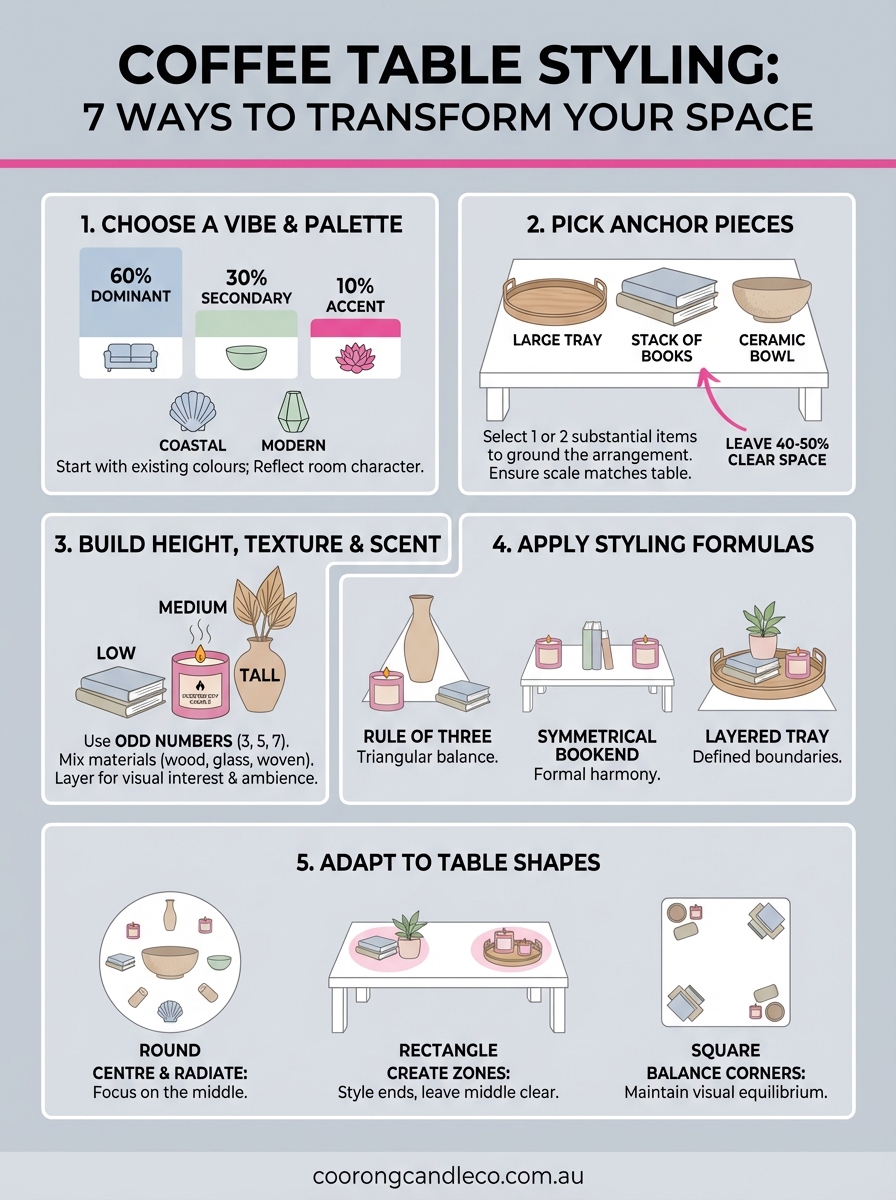
You now have seven practical formulas for creating coffee table arrangements that look deliberately designed rather than accidentally assembled. Start by choosing your colour story and clearing your surface completely. Select anchor pieces that match your table's scale, then build height and texture through carefully chosen objects that engage multiple senses.
Remember that successful styling balances form and function, leaving 40% to 50% of your surface clear for everyday use. Your coffee table needs to work as hard as it looks good, holding drinks, remotes, and books while maintaining its visual appeal from every seat in the room.
The finishing touch comes from adding elements that bring warmth and fragrance to your arrangement. A quality soy candle positioned at medium height serves double duty as both a styling piece and ambient scent source. Browse our natural soy candle collection to find fragrances inspired by South Australia's Coorong region that complement your newly styled coffee table.