
If you've ever stood in a shop wondering about the difference between soy and paraffin candles, you're not alone. It's one of the most common questions we hear at Coorong Candle Co., and the answer matters more than most people realise, especially when you're burning something inside your home for hours at a time.
As hand-pourers of natural soy candles here in South Australia, we obviously have a preference. But rather than just telling you soy is better and leaving it at that, we want to lay out the full picture. Paraffin has its own strengths, and soy has its limitations too. You deserve an honest comparison so you can decide what's right for your space, your health, and your values.
This article breaks down the key differences across health and toxicity, environmental impact, burn time, and scent throw, backed by what we know from years of making candles by hand. Whether you're shopping for yourself or choosing a gift, this guide will help you make a confident, informed choice.
Why candle wax type matters at home
A candle isn't just decoration. When you light one, it releases compounds into your indoor air for as long as it burns. Most Australian households burn candles in enclosed spaces like bedrooms, bathrooms, and living rooms, where ventilation is limited. That makes the type of wax you choose far more than a stylistic detail.
Your air quality and health
The biggest reason the difference between soy and paraffin candles matters comes down to what each wax releases when it burns. Paraffin is a petroleum-derived product, and burning it can release volatile organic compounds (VOCs) and soot particles into your indoor air. If you or someone in your household has asthma, allergies, or sensitivities, this is worth taking seriously.
The air inside your home can be significantly more polluted than outdoor air, particularly when you regularly burn petroleum-based products in enclosed rooms.
Soy wax is plant-based and burns with significantly less soot and fewer airborne irritants. This doesn't mean soy candles produce zero emissions, but the difference in indoor air quality over time is something many candle users notice directly, especially in smaller rooms used for sleep or relaxation.
Scent, burn time, and value
Wax type also determines how well a candle throws its fragrance and how long it actually lasts. These two factors directly shape how much value you get from each candle you buy. A candle that burns fast or barely fills the room with scent is a poor investment, regardless of how appealing it looks on the shelf.
Paraffin candles often produce a stronger initial scent throw, which is why mass-market brands have favoured them for decades. Soy candles burn at a lower temperature and tend to release fragrance more gradually, which many people find more pleasant and less overpowering in smaller spaces. Soy's slower burn rate also means you typically get more hours from the same volume of wax, which offsets its usually higher upfront price.
What soy candles are and how they perform
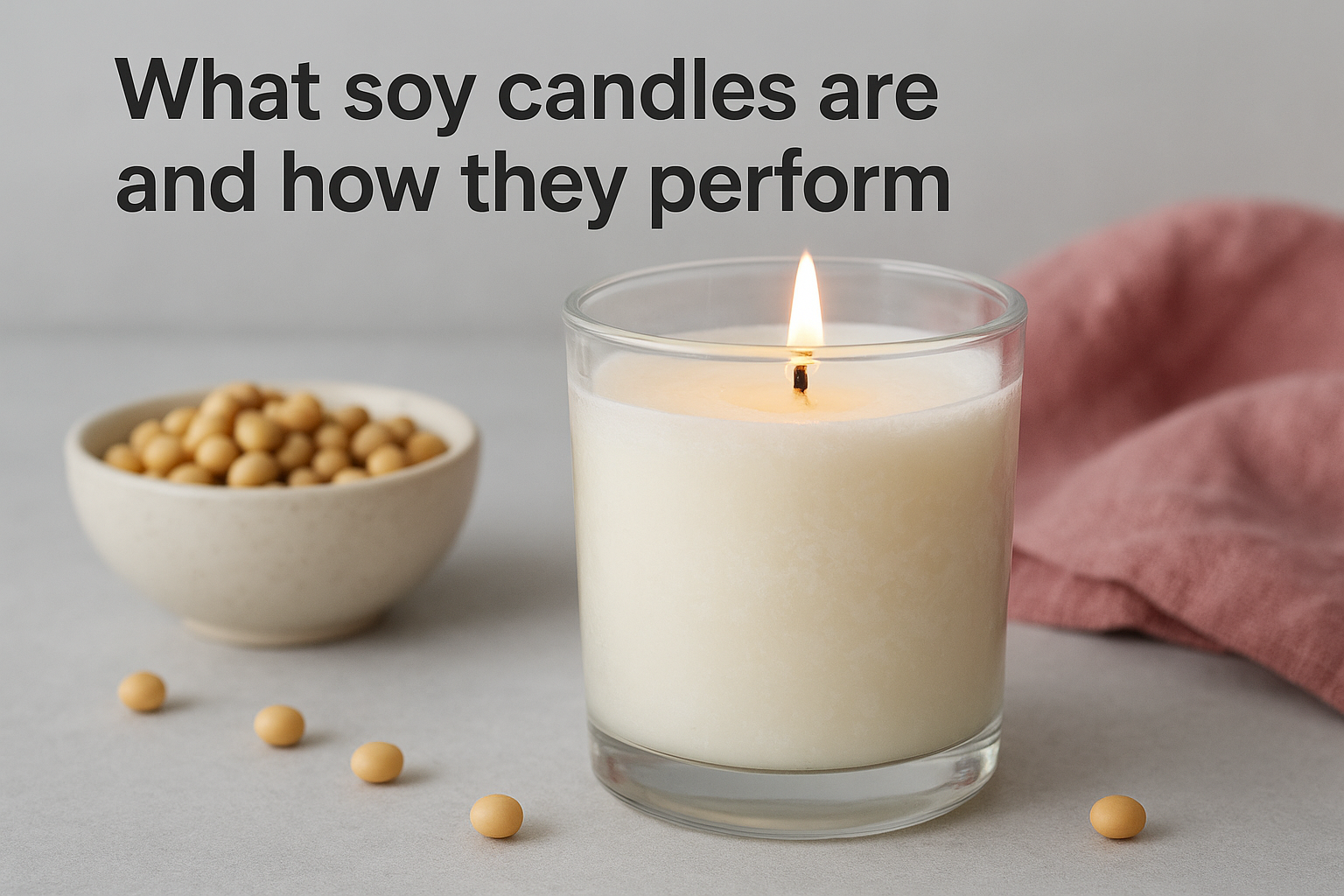
Soy wax comes from hydrogenated soybean oil, making it a renewable, plant-based alternative to petroleum waxes. It has been used in candle making since the early 1990s and has grown steadily in popularity as consumers have looked for cleaner options for their homes.
Where soy wax comes from
The process starts with soybean oil, which gets hydrogenated to raise its melting point and produce the solid, creamy texture you see in most hand-poured candles. Because soybeans are a farmed, renewable crop, soy wax carries a significantly lower carbon footprint than paraffin. This is one of the clearest points of difference between soy and paraffin candles for buyers who care about sustainability.
How soy candles perform
Soy candles burn at a lower temperature than paraffin, which gives them a longer burn time and a gentler fragrance release. A 350g soy candle can typically burn for 50 to 80 hours, depending on wick size and fragrance load. The slower melt also means the wax pools evenly across the surface, which reduces tunnelling and waste.
Soy's lower burn temperature is why it pairs so well with natural fragrance oils, releasing scent gradually rather than flooding a room all at once.
You may also notice soy candles develop a natural frosting on the surface over time. This is a cosmetic characteristic of pure soy wax, not a defect, and it has no effect on how the candle burns.
What paraffin candles are and how they perform
Paraffin wax is a petroleum by-product, derived from the crude oil refining process. It has been the dominant candle wax for well over a century, and most candles you find in supermarkets, department stores, and discount retailers are made from it. Its low cost and ease of manufacturing at scale made it the industry default long before consumers started asking harder questions about what they were burning indoors.
Where paraffin wax comes from
Paraffin is extracted as a residual material during petroleum refining, which makes it a non-renewable resource by definition. It is cheap to produce and stable at room temperature, which explains why mass-market manufacturers have relied on it for so long. When you weigh up the difference between soy and paraffin candles on environmental grounds, this origin is the central point of distinction, as no amount of processing changes the fact that it starts as a fossil fuel by-product.
How paraffin candles perform
Paraffin burns at a higher temperature than soy, which produces a strong, immediate scent throw. This makes it effective in large rooms where you need fragrance to travel quickly. The trade-off is a shorter burn time relative to soy, along with the release of more soot and volatile organic compounds into your indoor air.
Paraffin's stronger hot throw is appealing, but the soot it deposits on walls, ceilings, and jar interiors is a visible sign of what is also entering your air.
These candles are also less forgiving in warm climates like much of Australia, where they can soften or sweat more readily than plant-based alternatives.
Soy vs paraffin candles: key differences
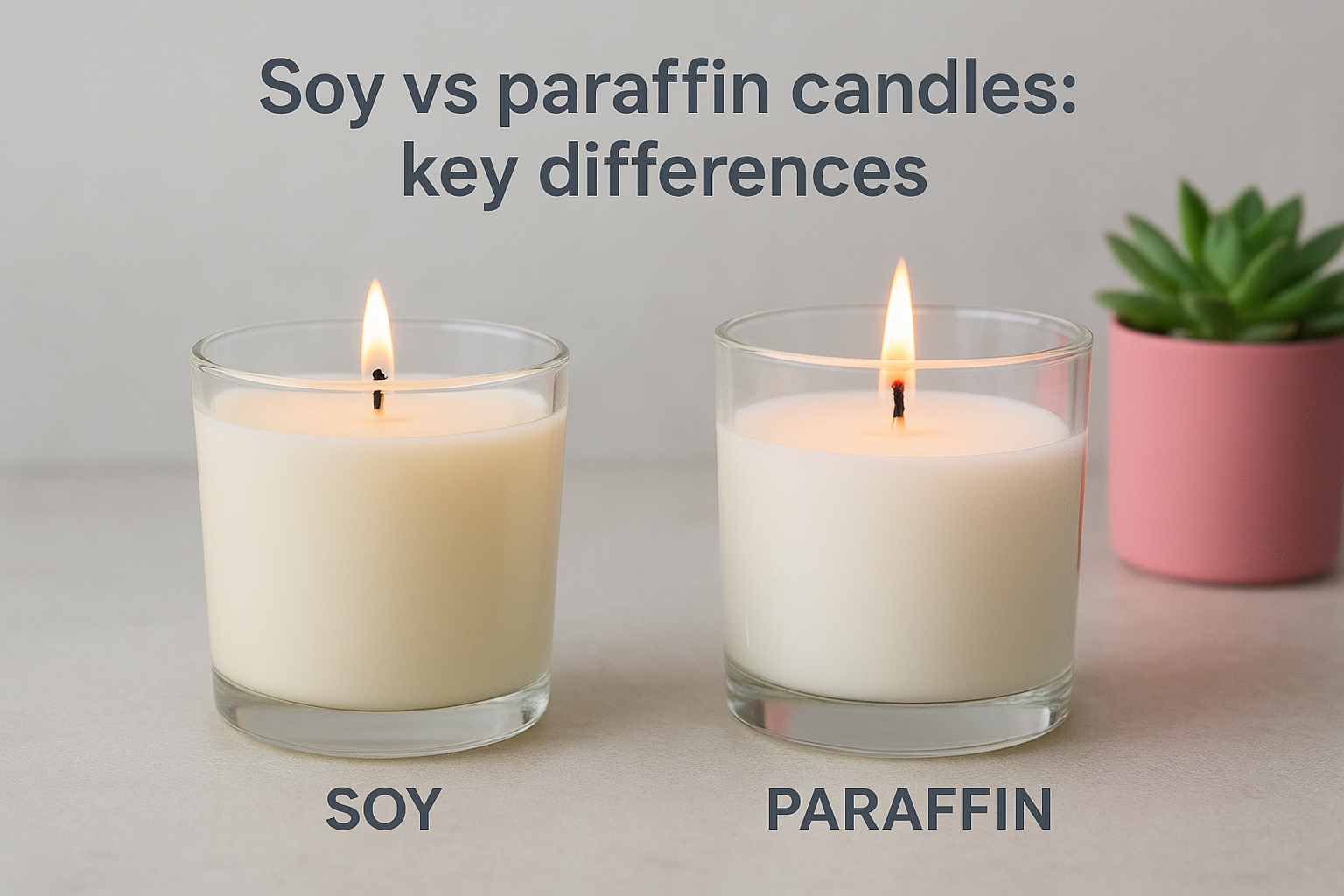
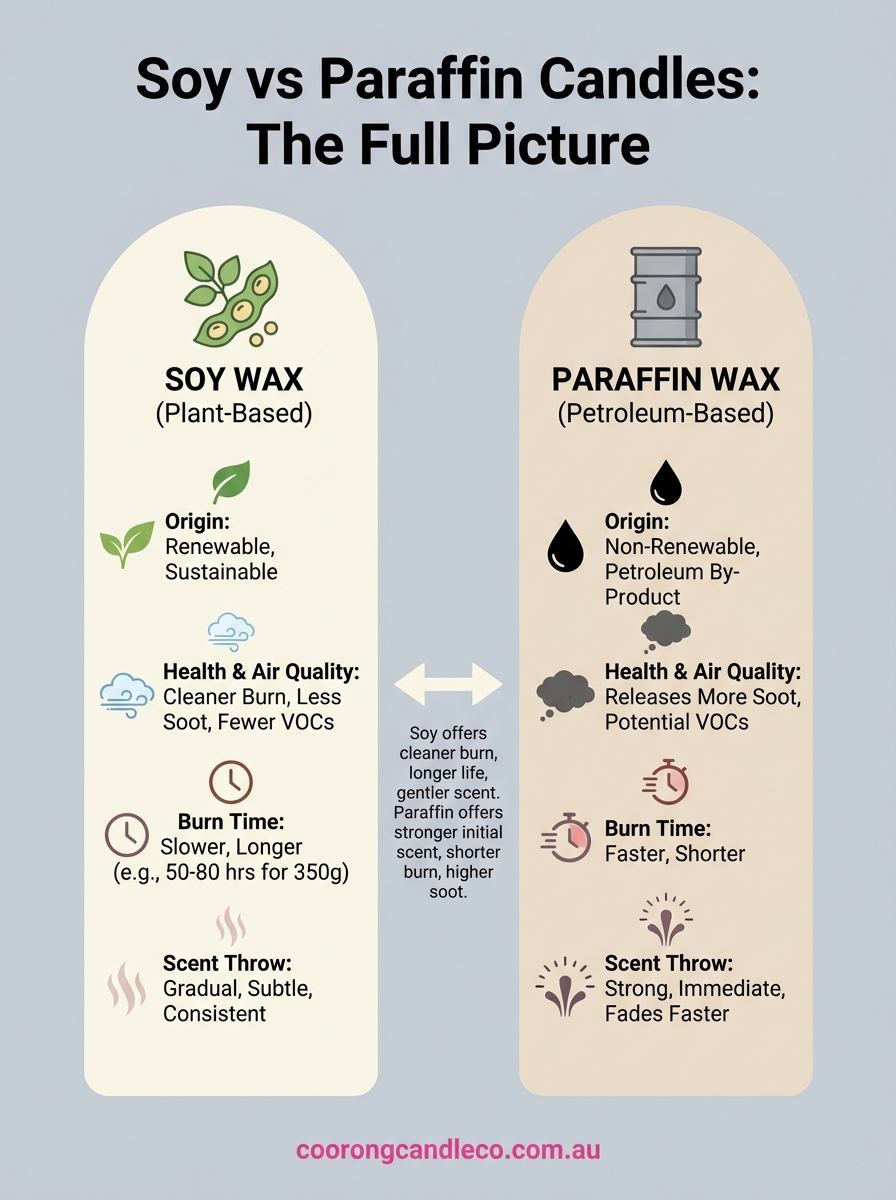
When you look at the difference between soy and paraffin candles side by side, four areas stand out: health impact, environmental footprint, burn time, and scent throw. The table below gives you a quick reference before we break down what each point means in practice.
| Factor | Soy | Paraffin |
|---|---|---|
| Origin | Plant-based, renewable | Petroleum by-product |
| Burn time | Longer (50-80 hrs per 350g) | Shorter |
| Soot output | Low | Higher |
| Scent throw | Gradual, subtle | Strong, immediate |
| Warm climate suitability | Better | Can soften or sweat |
Health and environment
Soy wax produces less soot and fewer VOCs when it burns, which makes a real difference in enclosed rooms you use daily. Paraffin, as a petroleum-derived product, introduces more airborne particulates into your home, a concern if you burn candles regularly in bedrooms or living areas.
Choosing soy over paraffin is one of the simplest steps you can take to reduce your household's exposure to petroleum-based combustion by-products.
Performance in your home
Your home gets a slower, more consistent fragrance release with soy wax, which suits smaller rooms and open-plan spaces where you want scent without it becoming overpowering. Paraffin gives you a stronger initial hit of fragrance that works in large rooms but tends to fade faster as the candle burns down. Over the full lifespan of each candle, soy generally delivers better value and a more satisfying experience across repeated burns.
How to choose the right candle for you
The difference between soy and paraffin candles matters most when you match it to your actual home and habits. Rather than picking a candle based on price or packaging alone, think about how you use candles day to day and what you want from the experience.
Your health and air quality priorities
If you burn candles frequently in enclosed rooms like a bedroom, nursery, or bathroom, choosing soy over paraffin is a straightforward call. Less soot and fewer airborne irritants add up over time, especially if anyone in your household has asthma, allergies, or respiratory sensitivities.
Switching to soy is one of the simplest changes you can make to improve the air quality in rooms where you spend most of your time.
Your space and lifestyle
The size of your room shapes which candle performs best for you. In a large, open-plan living area, paraffin's stronger initial scent throw can fill the space faster. In a smaller bedroom or bathroom, soy's gradual release is usually more comfortable and less overpowering.
Your budget and how long you want each candle to last also factor in. Soy candles carry a higher upfront cost but burn longer, which means you replace them less often. If you want a candle that delivers genuine value across dozens of burns, soy is the more practical investment over time.
Final takeaway
The difference between soy and paraffin candles comes down to what you actually want from the experience. Soy wax gives you a cleaner burn, longer hours, and a gentler fragrance release, making it the better choice for anyone who burns candles regularly in bedrooms, living areas, or any room where air quality matters. Paraffin delivers a stronger immediate scent throw at a lower price point, but that comes with more soot and a shorter lifespan per candle.
If you want a candle that is kinder to your indoor air, produced from renewable ingredients, and crafted to last, soy is the clear answer. At Coorong Candle Co., every candle we pour uses pure soy wax and 100% lead-free cotton wicks, so you get the full benefit of what makes soy worth choosing. Browse our natural soy wax candles and find a fragrance that suits your home.