
Buying a candle without knowing how long it will actually last is a bit like buying a bottle of wine without checking the size. You want to know if you're getting a quick top-up for a weekend or weeks of evening ambience. If you've ever wondered how long do soy candles burn, the answer depends almost entirely on wax volume, wick size, and how you burn it, and once you know those factors, working out the hours is simple maths.
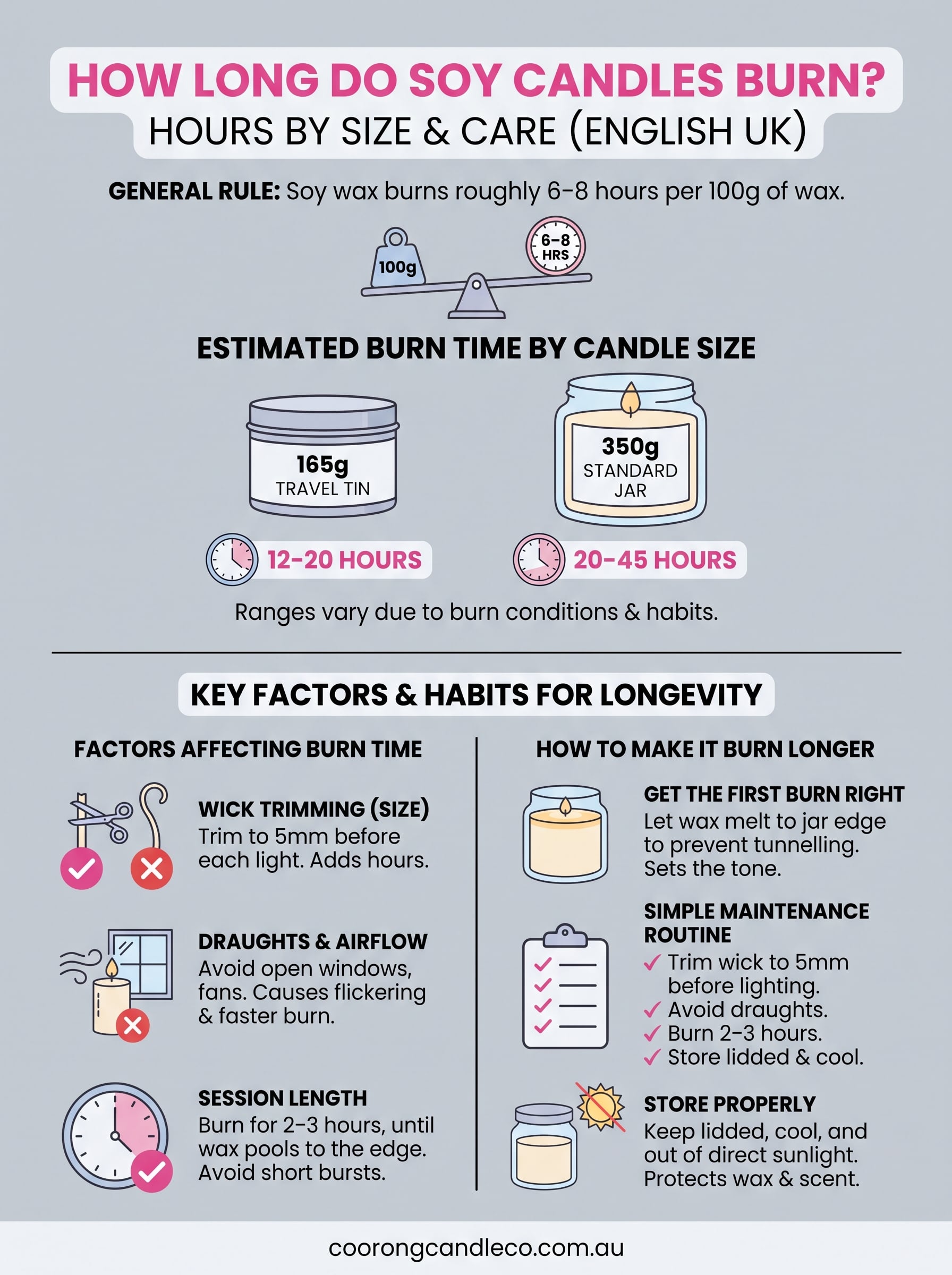
As a general rule, soy wax burns at roughly 6 to 8 hours per 100g of wax, which means a standard 350g candle can give you somewhere between 20 and 45 hours, while a 165g travel tin sits closer to 12 to 20 hours. Those ranges shift depending on wick trimming, draughts, and burn session length.
In this guide, we'll break down burn times by candle size, explain why soy performs differently to paraffin, and share the habits that stretch every hour out of your candle, drawn from our own experience hand-pouring soy candles here in South Australia.
Why soy candle burn time matters
Knowing your burn time estimate before you buy stops you from feeling short-changed a week after your candle arrives. A candle that looks generous in its jar but only lasts eight hours doesn't feel like good value, no matter how nice the scent is. When you understand roughly how many hours you're paying for, you can compare candles properly, the same way you'd check unit pricing on groceries instead of just looking at the sticker price.
A candle's true value isn't its price tag, it's the price per hour of scent you actually get to enjoy.
Comparing value across brands
Burn time is also the fairest way to compare soy wax candles against cheaper paraffin options on the shelf. Paraffin candles often burn faster and hotter, throwing scent quickly but disappearing sooner, while soy wax burns cooler and slower, which stretches the experience over more evenings. Two candles can look identical in size and price, yet one might give you 15 hours and the other 35, so checking the estimated burn time tells you which is genuinely the better buy.
Planning for gifts and occasions
Gifting is where burn time really matters. If you're buying a candle for a housewarming, a Mother's Day gift, or a Kangaroo Island themed set for a friend who loves the coast, you want it to last long enough to make an impression, not fizzle out after two uses. Knowing the expected hours helps you match the candle to the occasion, whether that's a quick travel tin for a weekend getaway or a full-size jar meant to last through an entire season.
Setting realistic expectations at home
Understanding burn time also helps with everyday planning around the house. If you know your candle gives roughly 30 hours, you can budget it across dinner parties, quiet evenings, or a full month of light background scent, rather than guessing and running out mid-week. That kind of practical knowledge turns a nice-smelling purchase into a considered part of your home routine.
Soy candle burn times by size explained
Once you know the rough burn rate for soy wax, working out candle burn hours for any size becomes straightforward maths. Soy wax typically burns at 6 to 8 hours per 100g, so you multiply the wax weight by that range to get a realistic estimate. Wick size and jar diameter shift the number slightly, but this formula gets you close enough to plan around.
If you remember one number, remember this: soy wax gives roughly 7 hours of burn time for every 100g of wax.
Burn time by candle size
Here's how that maths plays out across the sizes we hand-pour at Coorong Candle Co.
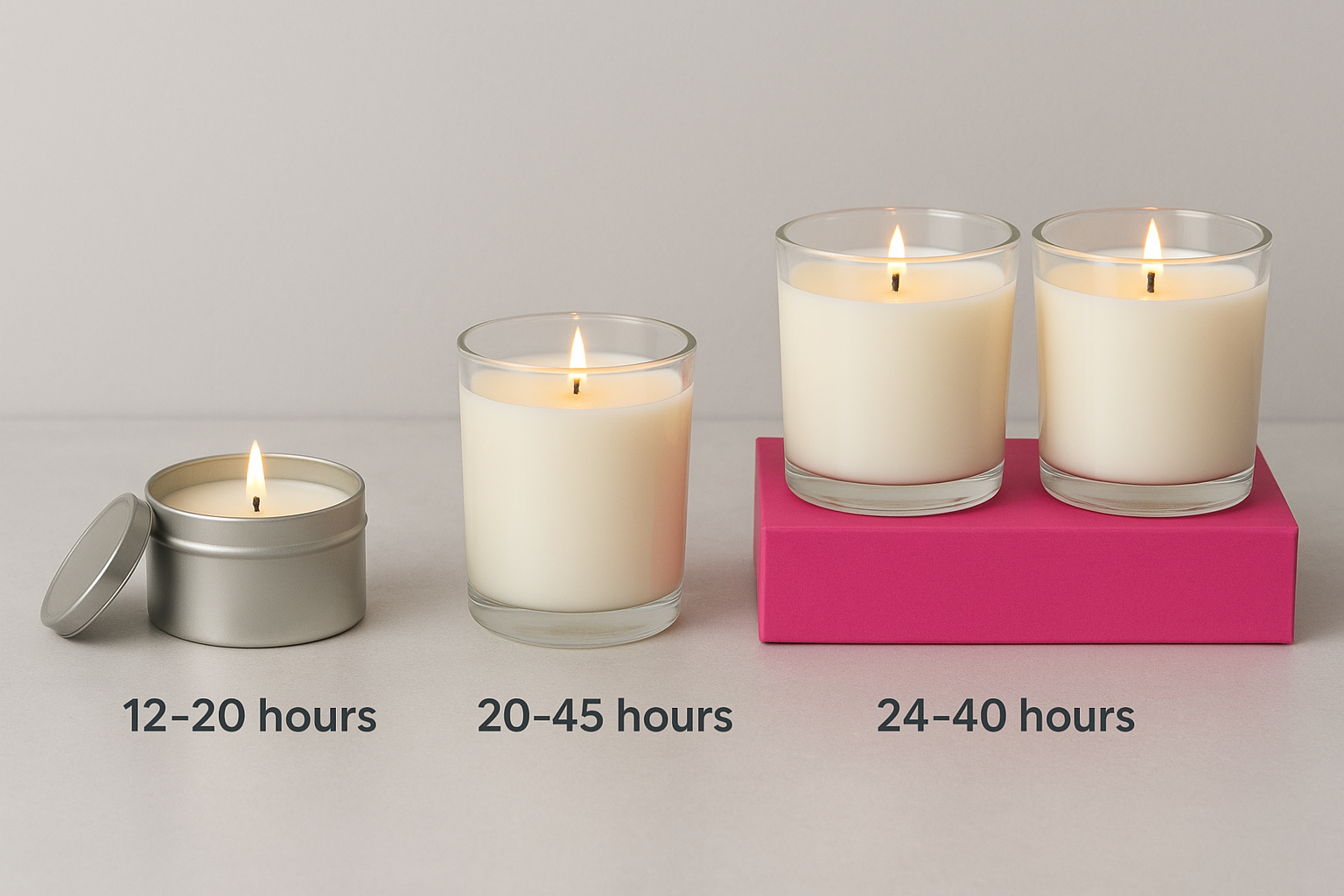
| Candle size | Typical wick | Estimated burn time |
|---|---|---|
| 165g travel tin | Single cotton wick | 12–20 hours |
| 350g standard jar | Single cotton wick | 20–45 hours |
| Gift set (2 x 165g) | Single cotton wick each | 24–40 hours combined |
Why the ranges are wide
Those numbers aren't exact because burn conditions vary from home to home. A candle burned in short 30-minute bursts near a doorway will finish faster than one burned in long, steady two-hour sessions away from draughts. Treat the ranges as a guide for budgeting your candle across weeks or months, not a stopwatch countdown. If you're choosing between a travel tin for a weekend away and a full jar for the lounge room, this size-to-hours comparison makes the decision easy before you even open the lid.
What affects how long your soy candle burns
Several small habits and conditions decide whether your candle sits at the top or bottom of its estimated range. Understanding these factors gives you real control over candle longevity, rather than leaving it to chance every time you strike a match.
Wick trimming and size
Before each burn, check the wick length. A wick left too long grows a large flame that burns through wax faster and often causes soot or flickering. Trim it back to around 5mm each time, and you slow the burn rate without dulling the scent throw.
A five-second trim before lighting can add hours to your candle's total life.
Draughts and room airflow
Candles burned near open windows, fans, or doorways flicker constantly, which pulls wax through the wick quicker than a still room would. Placing your candle somewhere sheltered keeps the flame steady and stretches out burn efficiency across every session.
Session length
How long you burn each time matters just as much as how often. Short 20-minute bursts waste wax on repeated lighting and cause tunnelling, while longer two to three hour sessions let the wax pool evenly and burn cleanly to the edge of the jar.
Wax quality and additives
Soy wax blended with cheap fillers or synthetic hardeners can burn unevenly and faster than pure soy. Choosing candles made from quality soy wax, without shortcuts, is one of the biggest factors in getting the hours you actually paid for.
How to make your soy candle burn longer
Extending your candle's life doesn't require anything fancy, just a few consistent habits that protect the wax pool and the wick from working harder than they need to. Small changes at the start of each burn add up to real hours over the life of a jar.
Get the first burn right
The first burn sets the tone for every session after it. Let the wax melt right to the edges of the jar before blowing it out, usually one to two hours for a 350g candle. This prevents tunnelling, where wax burns down the middle and leaves solid wax stuck to the sides, wasting fragrance and hours.
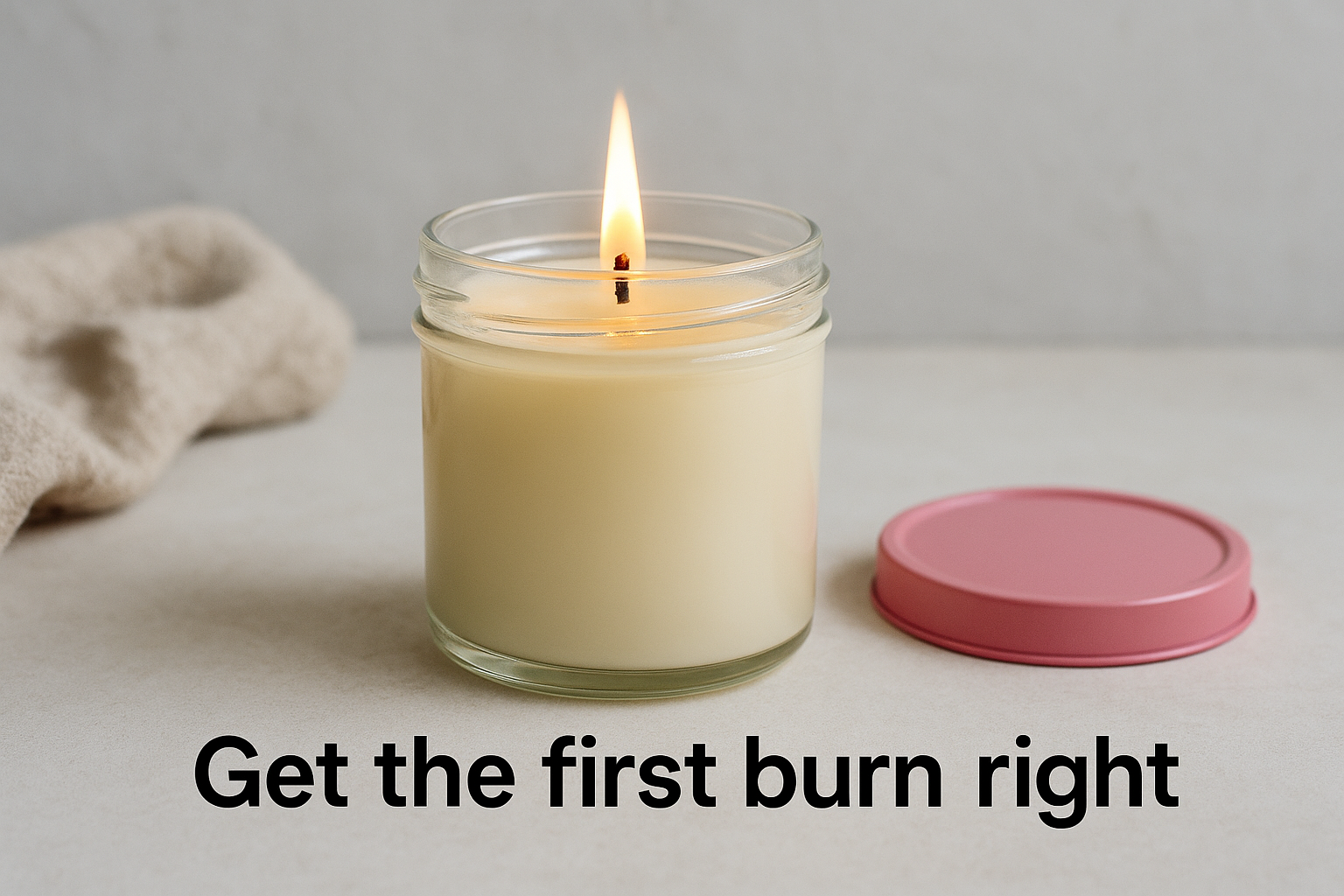
Get the first burn right, and every burn after it burns cleaner and longer.
Build a simple maintenance routine
A short checklist before each light keeps your candle performing at its best:
- Trim the wick to 5mm before lighting
- Keep the candle away from draughts, vents, and open windows
- Burn for at least one hour, ideally two to three
- Let the wax pool reach the jar's edge before extinguishing
- Store the candle with its lid on, away from direct sunlight
Store it properly between burns
Heat and light degrade soy wax faster than most people expect, softening its structure and shortening burn time later. Keeping your candle lidded, cool, and out of direct sun protects both the scent throw and the candle burn hours you've got left inside the jar.
Getting the most from every candle
So, how long do soy candles burn? A 165g travel tin gives you roughly 12 to 20 hours, a standard 350g jar stretches to 20 to 45 hours, and every hour beyond that depends on how you treat the wick and the wax pool. Trimming the wick, avoiding draughts, and letting that first burn reach the edges of the jar are the small habits that decide whether you're at the low end or the high end of that range.
Once you've nailed the routine, a well-made soy candle rewards you with weeks of clean, steady scent rather than a few rushed evenings. That's the whole point of choosing quality soy wax over cheaper alternatives in the first place.
Ready to put that maths to good use? Browse our natural soy wax XL candles and pick a size that suits how you actually want to burn it.