
If you've ever stepped out of the shower with skin that feels tight, red, or weirdly sensitive, you might be overdoing it with your scrub. And if your skin still feels rough and dull despite exfoliating, you might not be doing it enough. So, how often should you use a body scrub to actually get results without wrecking your skin barrier? The answer depends on a few things, mostly your skin type, the area you're scrubbing, and the kind of exfoliant you're using.
At Coorong Candle Co., we craft handmade bath and body products, including our bath bombs, with natural ingredients designed to support your skin rather than strip it. That focus on gentle, eco-friendly self-care is exactly why getting your exfoliation routine right matters. A body scrub works best when it's part of a balanced bathing ritual, not a daily habit you never question.
This guide breaks down how often you should exfoliate based on your skin type, which body areas need more (or less) attention, and the signs that tell you it's time to dial it back or step it up. Whether you have oily, dry, sensitive, or combination skin, you'll walk away with a clear routine that actually works for you.
What a body scrub does and when to avoid it
A body scrub works by using abrasive particles (such as sugar, salt, or finely ground walnut shell) to physically remove dead skin cells from the surface of your skin. This process is called mechanical exfoliation, and at the right frequency, it leaves skin smoother, improves circulation, and helps other products like body oils and moisturisers absorb more effectively. The key phrase there is "right frequency", scrubbing more often does not automatically mean better results.
How physical exfoliation affects your skin barrier
Your skin naturally sheds dead cells roughly every 28 to 30 days as part of its renewal cycle. A scrub speeds this process up, which is helpful when dead cell build-up is making your skin look dull or feel rough. But your skin barrier, the outermost layer that locks in moisture and keeps irritants out, is more delicate than it looks. Over-exfoliating disrupts this barrier, which leads to redness, tightness, increased sensitivity, and sometimes even breakouts on your body. Understanding this balance is the foundation for answering how often should you use a body scrub for your specific needs.
Your skin barrier is your first line of defence against environmental stressors, so protecting it matters just as much as exfoliating it.
When you should skip the scrub entirely
Some situations call for leaving the scrub on the shelf altogether. If your skin is sunburned, windburned, or actively inflamed, the abrasion will worsen irritation and slow your skin's natural healing. You should also avoid scrubbing over open cuts, active rashes, eczema flare-ups, or any broken skin for the same reason. After waxing or laser hair removal, wait at least 48 hours before you exfoliate, since the skin is already sensitised from the treatment. If you use prescription retinoid treatments on your body, speak with your dermatologist before adding a physical scrub to your routine, as combining the two significantly increases the risk of irritation and barrier damage.
How often to scrub by skin type
Your skin type is the most reliable starting point when figuring out how often should you use a body scrub. General advice like "twice a week" works well for some people and causes problems for others, which is exactly why tailoring your frequency to your skin matters more than following a blanket rule.
Starting conservatively and adjusting upward is always safer than starting too aggressively.
Oily or normal skin
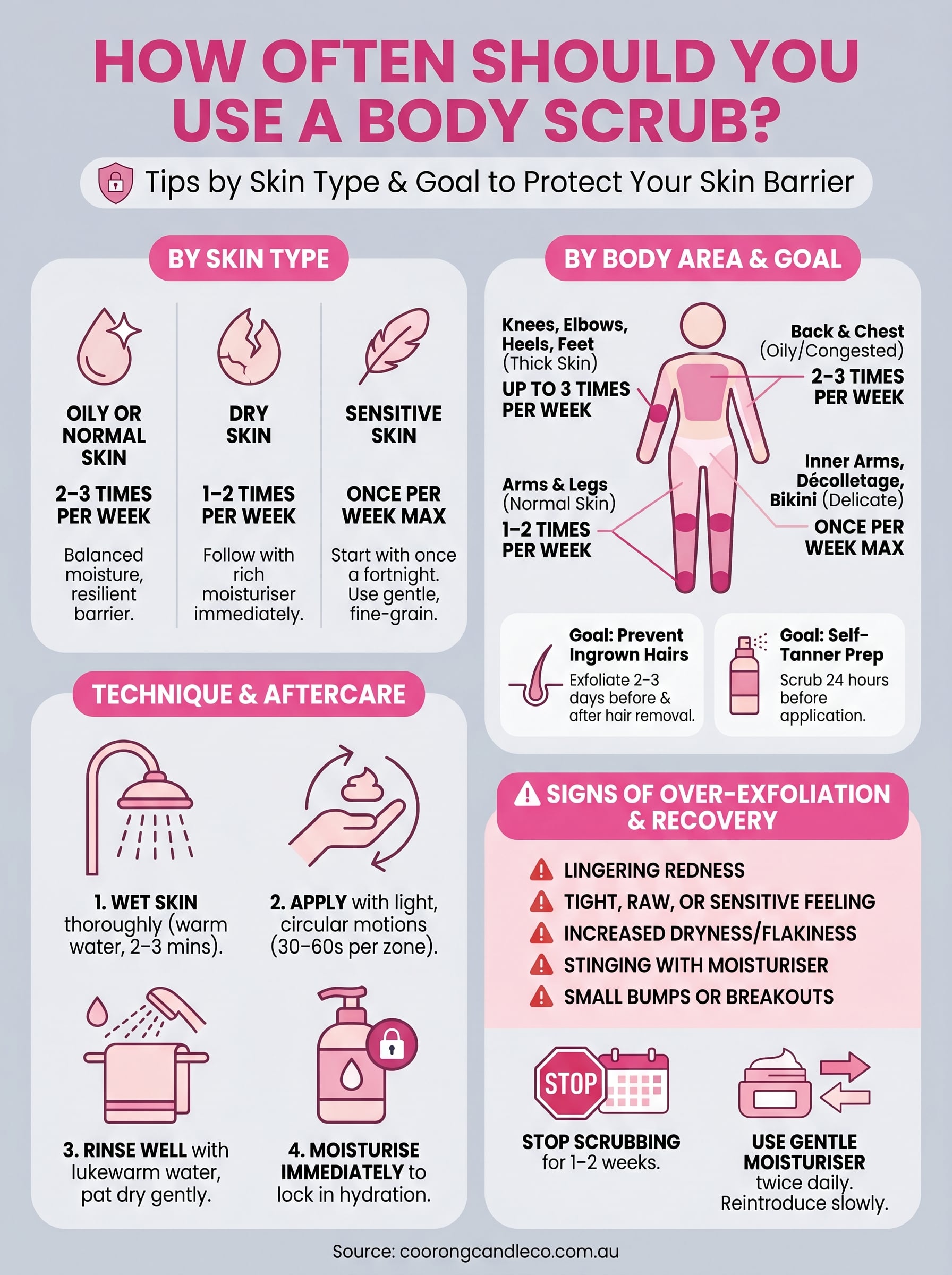
If your skin tends to look shiny or congested on areas like your back and chest, you can typically exfoliate two to three times per week without issue. Normal skin handles the same frequency well, since it has a balanced moisture level and a more resilient barrier that recovers quickly.
Dry skin
Dry skin does need exfoliation to lift the flaky surface and help moisturisers absorb properly, but too much scrubbing removes the oils your skin is already struggling to retain. Limit sessions to once or twice a week and always follow immediately with a rich body moisturiser applied while your skin is still slightly damp.
Sensitive skin
For sensitive skin, once a week is the safe maximum, and starting with once a fortnight gives your skin time to adjust without triggering a reaction. Choose a fine-grain, gentle formula and stop the session immediately if you notice any redness, stinging, or unusual tightness during or after scrubbing.
Adjust frequency by body area and goals
Not every part of your body needs the same treatment. Your skin thickness, oil production, and friction exposure vary from one zone to the next, which means applying the same frequency everywhere will over-treat some areas and under-treat others. Knowing your body area and your specific goal gives you a far more targeted answer to how often should you use a body scrub.
Match your scrub zone to your skin
Your knees, elbows, heels, and feet build up dead skin the fastest due to constant pressure and friction, so they handle more frequent scrubbing without complaint. More reactive areas like your inner arms and décolletage need a lighter touch. Use this as your guide:
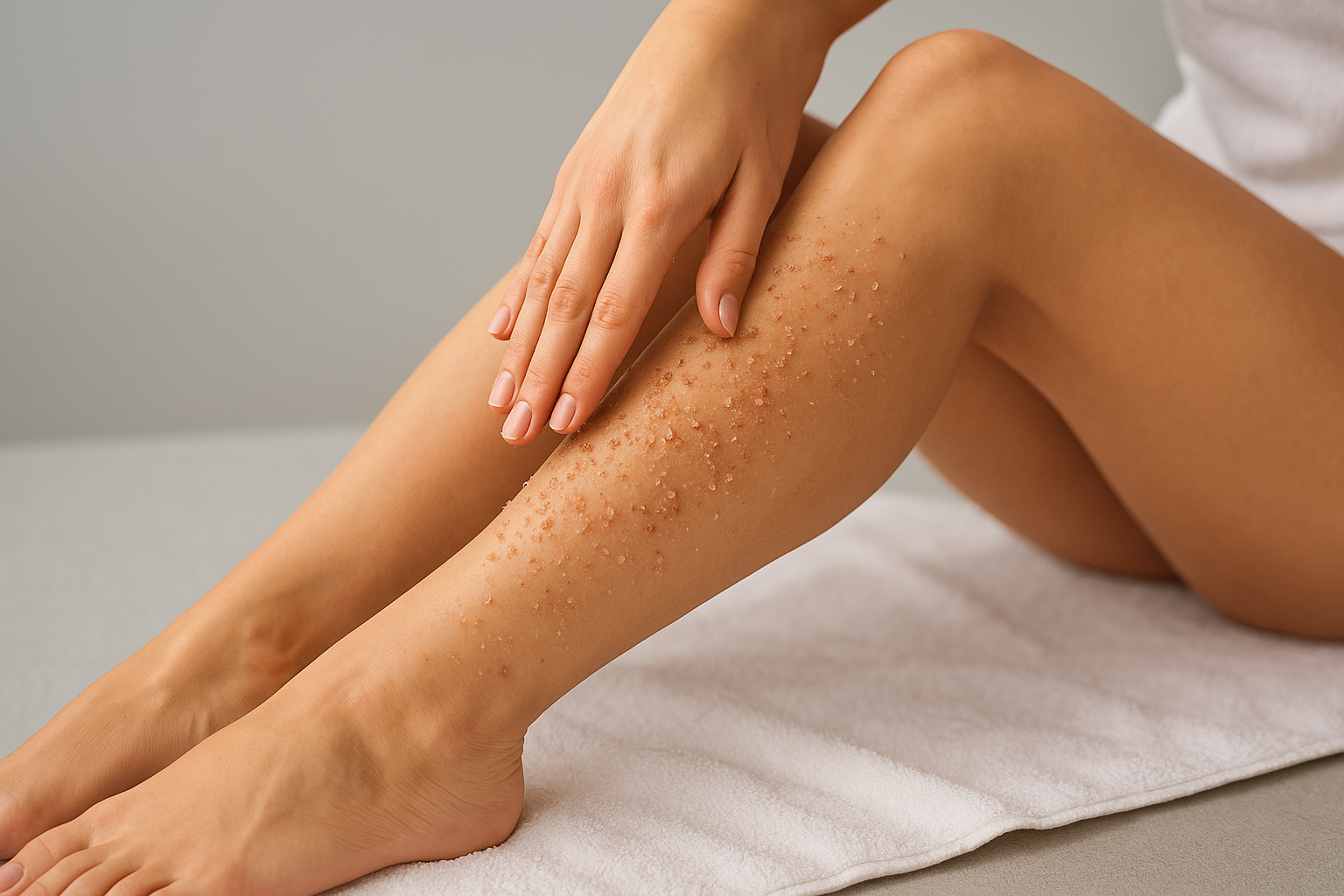
- Knees, elbows, heels, and feet: up to 3 times per week
- Back and chest (oily or congested): 2 to 3 times per week
- Arms and legs (normal skin): 1 to 2 times per week
- Inner arms, décolletage, and bikini line: once per week maximum
Always let the most sensitive area in your session set the limit for pressure and overall frequency.
Scrubbing for a specific goal
If your goal is preventing ingrown hairs, exfoliate two to three days before and after hair removal. For self-tanner prep, scrub 24 hours before application with extra focus on your ankles, knees, and elbows where product tends to build up and look uneven.
Your goal also tells you when to skip a session. If your skin is already reacting from a recent scrub, resting and moisturising instead is the smarter call.
How to use a body scrub without irritation
Knowing how often should you use a body scrub is only half the equation. How you actually apply it makes just as much difference to whether your skin comes out smooth or red and irritated. Getting your technique right protects your skin barrier while still delivering the results you want.
Prep and technique
Wet your skin thoroughly before you start, ideally after two to three minutes under a warm (not hot) shower, so your skin is soft and receptive. Apply the scrub using light, circular motions rather than hard back-and-forth strokes, which cause micro-tears in the skin surface. Use your fingertips or a soft cloth, and let the product do the work rather than adding force.
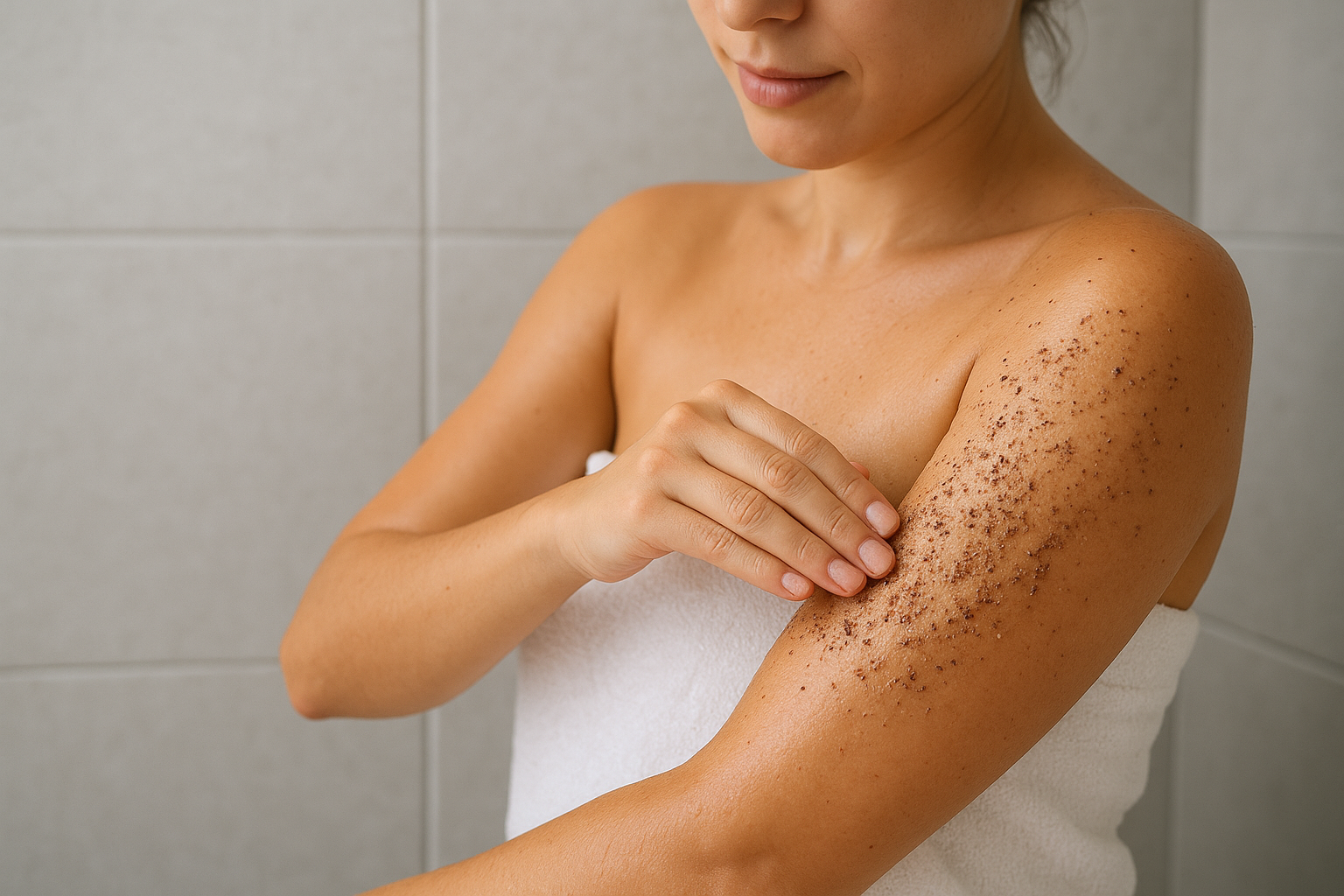
Pressure is not your friend here. A gentle hand consistently outperforms an aggressive one.
Follow these steps for a low-irritation scrub session:
- Warm your skin under the shower for 2 to 3 minutes
- Apply a small amount of scrub to damp skin
- Massage in slow, circular motions for 30 to 60 seconds per zone
- Rinse thoroughly with lukewarm water
- Pat dry gently with a soft towel
After the scrub
Moisturising immediately after is non-negotiable. Freshly exfoliated skin absorbs product faster, so applying a rich body lotion or oil within a minute of stepping out of the shower locks in hydration and keeps your skin barrier intact.
Signs you're over-exfoliating and what to do
Understanding how often should you use a body scrub is easier when you know what over-exfoliation actually looks like. Your skin will tell you clearly when you've crossed the line, and catching those signals early prevents longer-term damage to your skin barrier.
Signs to watch for
Your skin sends reliable warning signals when it needs a break from exfoliation. Redness that lingers after your session is one of the clearest signs you are going too hard or too often. Others include:
- Skin that feels tight, raw, or unusually sensitive to touch
- Increased dryness or flakiness appearing between sessions
- A stinging sensation when you apply moisturiser after scrubbing
- Small bumps or breakouts appearing on areas you have recently scrubbed
- Skin that looks shiny or feels uncomfortably thin
Persistent redness or stinging after exfoliation is a direct signal that your skin barrier is compromised and needs rest.
How to recover
If you recognise those signs, stop exfoliating completely for at least one to two weeks and let your skin barrier repair itself. During that time, swap your scrub sessions for gentle, fragrance-free moisturiser applied twice daily to replenish lost hydration. Once your skin has settled, reintroduce exfoliation at a lower frequency than before, starting with once a fortnight, and build back up only if your skin responds well.
Keep it simple
Figuring out how often should you use a body scrub comes down to three things: your skin type, the body area you are treating, and how your skin responds after each session. For most people, one to three times per week covers the full range, with sensitive skin sitting at the lower end and oily or thicker skin at the higher end. Start conservatively, watch for signs of irritation, and adjust from there.
Your routine does not need to be complicated to work. Warm skin, gentle pressure, a good rinse, and moisturiser straight after will get you results without the redness or tightness that comes from overdoing it. Listen to what your skin tells you between sessions, and give it rest when it needs it.
If you want to take your bathing ritual a step further, explore our handmade bath bombs, crafted with naturally sourced ingredients to nourish and soften your skin with every soak.