
Knowing how to use a bath soak might seem straightforward, pour it in, hop in the tub, relax. But getting the most out of your soak comes down to a few details that are easy to overlook: water temperature, how much product you use, and even what you do afterwards. These small choices shape how your skin feels and how effective the experience actually is.
At Coorong Candle Co., we handcraft bath products here in South Australia using natural ingredients, so we've spent a fair bit of time thinking about what makes a good soak work. Whether you're using bath salts, mineral soaks, or bath bombs, the basics stay the same, and they're worth getting right.
This guide walks you through the steps for a proper bath soak, covers how much to use, and offers practical alternatives if you don't have a bathtub. We've also included tips for foot soaks, shower use, and body scrubs so you can enjoy the benefits regardless of your setup.
What a bath soak does and when to use it
A bath soak is more than warm water with something dissolved in it. When you add minerals, botanicals, or salts to your bath, they interact with your skin through a combination of osmosis and absorption, helping to soften the skin barrier and allow active ingredients to actually penetrate. The result is skin that feels noticeably softer, muscles that feel less tense, and a nervous system that's had a genuine prompt to slow down.
How a bath soak affects your body
The specific benefits depend on what's in your soak. Magnesium-rich Epsom salts are widely associated with muscle recovery and stress relief. Dead Sea mineral salts help balance skin hydration and can ease surface irritation. Natural botanicals like lavender or eucalyptus add aromatherapy benefits that work through inhalation while you soak. Bath bombs typically combine citric acid and baking soda, which fizz on contact and help soften water while delivering fragrance and moisturising oils directly to the skin.
The warm water itself does a lot of the heavy lifting: it opens your pores, increases circulation, and relaxes muscle tension before the soak ingredients even get to work.
Understanding how to use a bath soak effectively starts with knowing that every ingredient serves a purpose. Mixing salts with a carrier oil, for instance, adds an emollient layer that locks in moisture after you step out. A plain salt soak without oil works well for drawing out impurities but can feel drying on sensitive skin if you skip moisturising at the end.
When a bath soak is most useful
You can use a bath soak at any time, but some moments make it particularly worthwhile. After intense physical activity, a mineral soak helps ease muscle soreness and supports recovery. Before bed, a warm soak lowers your core body temperature as you step out, which signals to your body that it's time to sleep. During periods of high stress or skin irritation, a well-chosen soak gives both your mind and your skin a genuine reset.
Here are the situations where a bath soak delivers the most value:
- After exercise or physical labour, to ease muscle tension
- On evenings when you struggle to wind down or sleep
- During dry, cold months when your skin needs extra hydration
- When your skin feels irritated, tight, or congested
- As a weekly self-care ritual to maintain soft, healthy skin
Step 1. Choose a soak and measure the right amount
The type of soak you choose determines the benefits you get and how your skin responds. Bath salts, mineral soaks, and bath bombs each work differently, so picking the right one matters before you even turn on the tap. If your goal is muscle relief, lean toward Epsom or Dead Sea salts. If you want moisturising alongside a sensory experience, a bath bomb delivers both. Sensitive skin does best with unscented mineral soaks or botanically simple formulas.
Match the soak to your goal
Not every product suits every purpose, and part of knowing how to use a bath soak well is choosing one that fits what you actually need. A detoxifying salt soak works hard on skin congestion and muscle tension. Moisturising soaks with carrier oils suit dry or reactive skin. Bath bombs with essential oils layer aromatherapy benefits on top of skin conditioning.
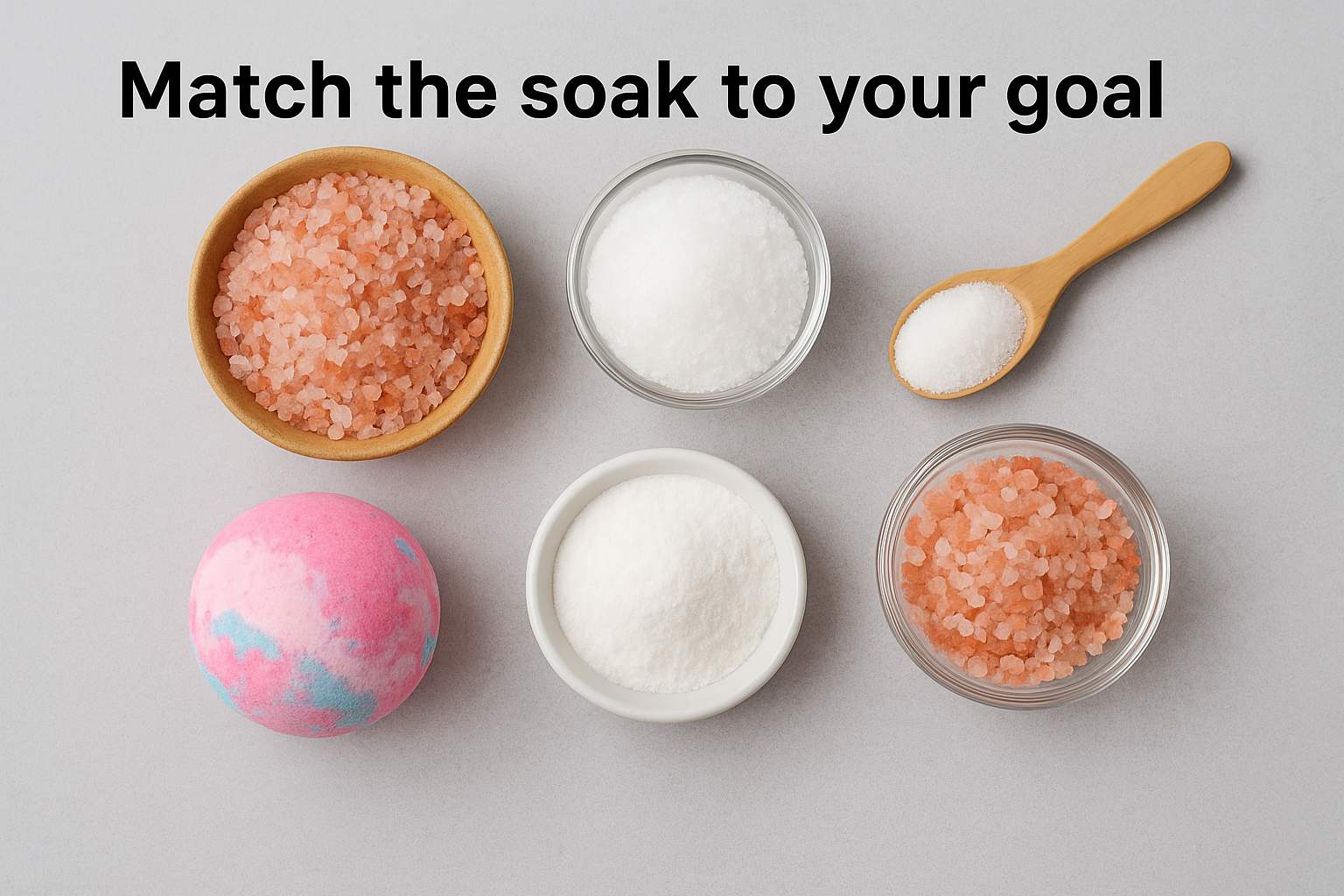
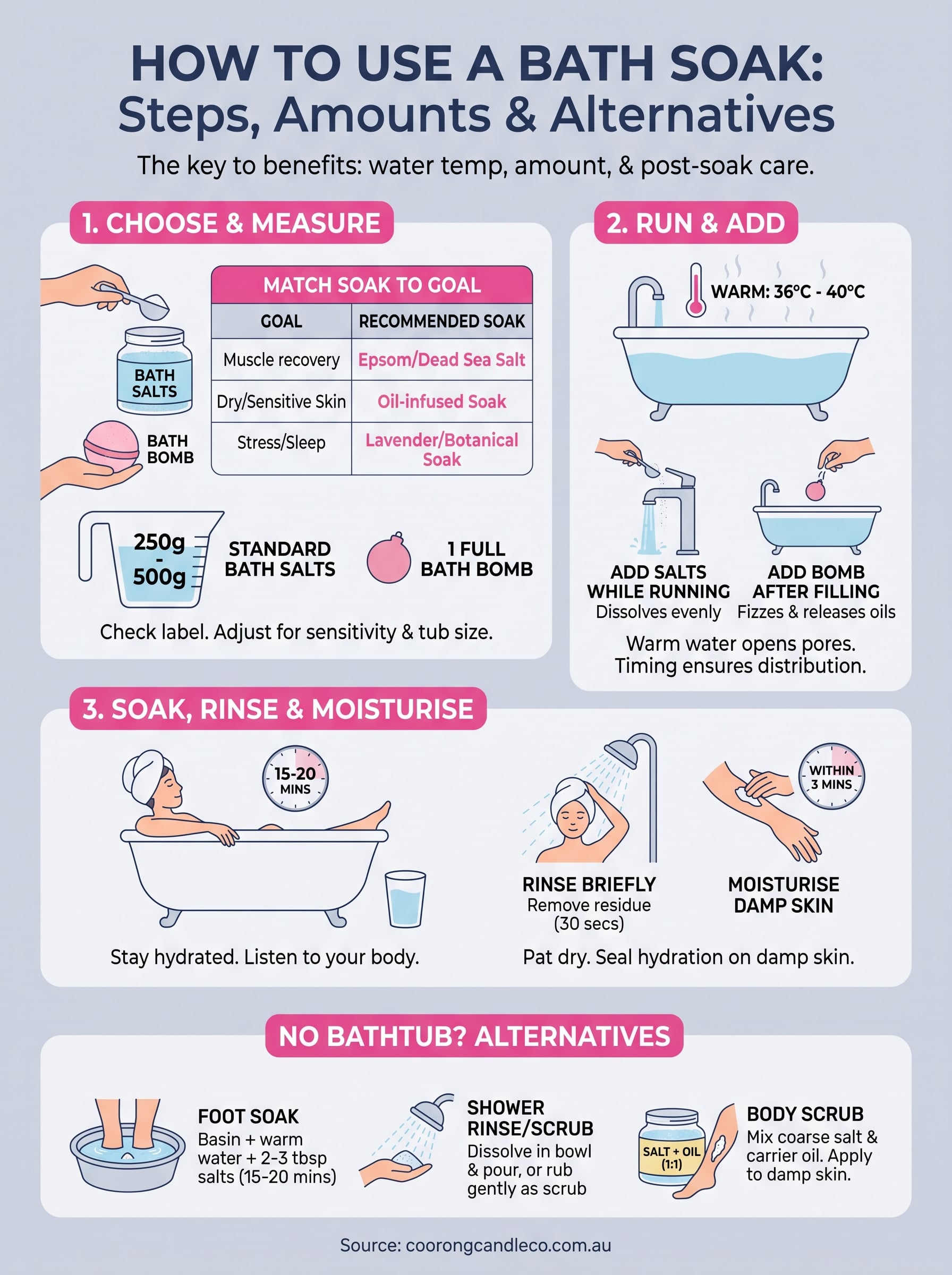
Here is a quick reference to help you match product to purpose:
| Goal | Recommended soak type |
|---|---|
| Muscle recovery | Epsom salt or Dead Sea mineral soak |
| Dry or sensitive skin | Oil-infused mineral soak |
| Stress relief and sleep | Lavender botanical soak or bath bomb |
| Skin softening | Bath bomb with shea butter or coconut oil |
| Detox and deep cleansing | Pure Dead Sea or Himalayan salt soak |
How much product to use
Getting the amount right makes a real difference to the result. Too little product leaves your bath water barely different from plain water, while too much can irritate skin or make the tub slippery.
A standard bath needs roughly 250g to 500g of bath salts, or one full bath bomb, to deliver effective results.
Follow the product label first, then adjust based on your skin sensitivity and bath size.
Step 2. Run the bath and add the soak properly
How you fill the tub and when you add your soak affects how well the ingredients dissolve and activate. Running the water correctly ensures even distribution of product and the right conditions for your skin before you even step in.
Get the water temperature right
Warm water, not hot, is the sweet spot for a bath soak. Water that is too hot strips your skin's natural oils, leaving it drier after you step out. Aim for a temperature between 36°C and 40°C, which is warm enough to open pores and relax muscles without causing irritation or dehydrating your skin.
If the water feels uncomfortably hot when you dip your wrist in, let it cool slightly before you add your soak or get in.
Add the soak at the right moment
Timing matters when it comes to knowing how to use a bath soak properly. Add your bath salts or mineral soak while the water is still running so the movement of the tap water helps dissolve and distribute the product evenly throughout the tub. For bath bombs, drop them in once the tub is nearly full and the tap is off, so they can fizz and release their oils without the current pushing everything to one end.
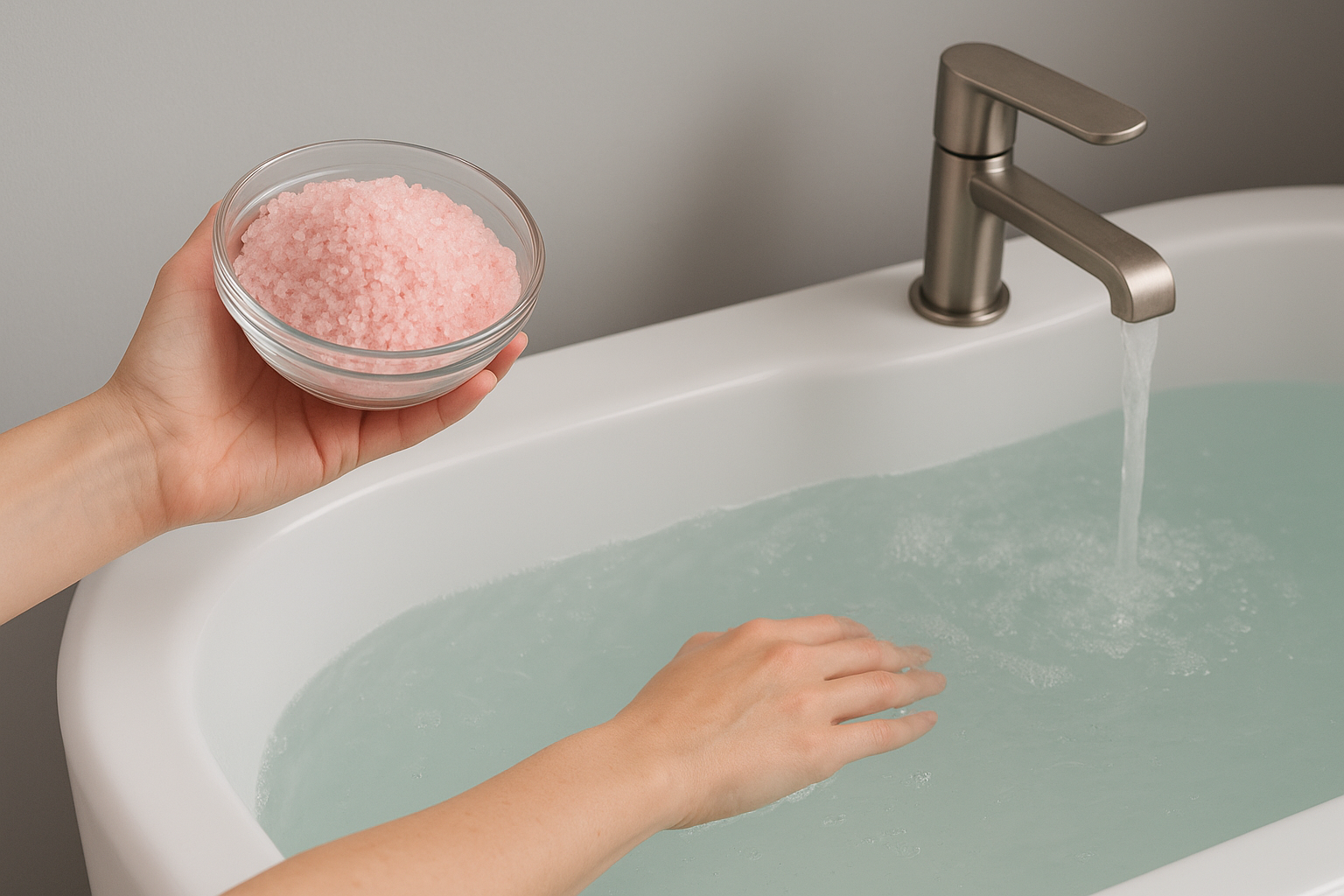
Stir the water gently with your hand after adding salts or powders to help any settled product lift off the bottom. If your soak contains carrier oils, give it an extra swirl just before you get in, since oils tend to pool on the surface rather than mixing through the water on their own.
Step 3. Soak safely, then rinse and moisturise
Getting into the tub is the easy part. Knowing how to use a bath soak safely means paying attention to how long you stay in, how your body responds during the soak, and what you do in the minutes immediately after you step out. These finishing steps determine whether your skin feels nourished or stripped by the experience.
How long to stay in the bath
Fifteen to twenty minutes is the ideal soak time for most people. Beyond that, warm water draws moisture out of your skin rather than locking it in, which leaves you feeling drier than when you started. Set a timer if you tend to lose track once you're relaxed.
Keeping a glass of water beside the tub is a simple habit that prevents dehydration during longer soaks, especially in warmer water.
Pay attention to how your body feels throughout the soak. If you feel dizzy, overheated, or short of breath, step out, drink water, and sit somewhere cool. Pregnant women and people with low blood pressure or heart conditions should speak with their doctor before taking regular hot soaks.
Rinse and moisturise after your soak
Once your time is up, drain the tub and rinse your skin with lukewarm water to wash away any dissolved salt residue or oil. Skipping this step can leave a film on your skin that clogs pores over time. A quick 30-second rinse is all you need.
Pat your skin dry with a soft towel rather than rubbing, then apply a moisturiser or body oil within three minutes of stepping out. Your skin absorbs product far more effectively when it is still slightly damp, so this window matters. Shea butter, jojoba oil, or a fragrance-free lotion all work well to seal in the hydration your soak delivered.
No bathtub? Use a bath soak in other ways
Not having a bathtub does not mean you miss out on the benefits. Bath salts and mineral soaks work just as well in smaller formats, and knowing how to use a bath soak without a tub opens up three practical alternatives you can use at home right now.
Use it as a foot soak
A foot soak is the easiest alternative and requires nothing more than a large basin or bucket filled with warm water. Add two to three tablespoons of bath salts and soak your feet for 15 to 20 minutes. This works particularly well for tired, achy feet after a long day on your feet, and the mineral content still absorbs through the skin effectively at this smaller scale.
A plastic washing tub from a hardware store makes a reliable foot soak vessel that is wide enough to fit both feet comfortably.
Add it to your shower routine
You can dissolve a small amount of bath salts in a bowl of warm water and use it as a rinse during your shower, pouring it slowly over your shoulders and legs. Alternatively, keep a damp handful of salts in your palm and rub it gently over your skin before rinsing, which gives you a light exfoliating effect alongside the mineral benefits.
Use it as a body scrub
Coarse bath salts mixed with a small amount of carrier oil such as coconut or almond oil create a straightforward body scrub. Apply it to damp skin in the shower, work it in with circular motions, then rinse thoroughly. Start with a 1:1 ratio of salt to oil and adjust from there based on how your skin responds.
Your next soak
Now you know how to use a bath soak properly, from choosing the right product and measuring the correct amount, to timing your soak and moisturising straight after. Small details like water temperature and what you do in the three minutes after stepping out make a real difference to how your skin feels and how relaxed you actually walk away.
Pick one adjustment from this guide and try it in your next bath. If you have been skipping the post-soak moisturiser, start there. If you have been guessing on amounts, measure out 250g to 500g and notice the difference. The process is straightforward once you have it down, and the results show up quickly.
Ready to put it into practice? Browse our handmade bath bombs, crafted in small batches right here in South Australia using natural ingredients like sunflower oil, Epsom salt, and kaolin clay, designed to hydrate your skin and melt away tension from the first fizz.