
A body scrub can transform your skin from rough and dull to genuinely soft, but only if you use it correctly. Knowing how to use a body scrub matters more than most people realise. Apply it wrong, scrub too hard, or use it too often, and you're more likely to end up with irritation than the smooth, glowing skin you're after.
At Coorong Candle Co., we craft handmade bath and body products, including bath bombs and self-care sets, designed to turn your bathroom into a proper sanctuary. We know that a great bathing ritual starts with understanding the basics, and exfoliation is one of those essentials that's easy to get right once someone walks you through it. It fits naturally into the kind of intentional, slow self-care we build our products around.
This guide covers everything you need: the best time to scrub, the right technique, how often to exfoliate, and what to do afterwards to lock in the results. Whether you're brand new to body scrubs or just want to make sure you're not skipping a step, you'll walk away with a clear, practical routine you can use straight away.
What a body scrub does and who should use it
A body scrub is a physical exfoliant that uses abrasive particles to slough away the dead skin cells that build up on the surface of your skin. When those cells accumulate, they leave your skin looking dull, feeling rough, and less able to absorb the moisturisers you apply after a shower. Regular exfoliation clears that layer away and gives healthier, newer skin a chance to show through.
How exfoliation works
Your skin naturally sheds dead cells through a process called desquamation, but this slows down as you age or when your skin is persistently dry. A scrub speeds things up mechanically. The gritty particles in the formula, whether salt, sugar, or finely ground botanicals, physically buff away that buildup when you massage them across your skin in circular motions.
Regular exfoliation can significantly improve how well your body lotion or oil absorbs, since products penetrate better into fresh, clean skin.
This is why scrubbing before you moisturise makes such a noticeable difference. Your skin becomes far more receptive to hydration once the barrier of dead cells and surface debris is removed.
Who should use a body scrub
Most people can benefit from adding a scrub to their routine. Knowing how to use a body scrub correctly matters even more if you recognise any of the following on your skin:
- Rough or bumpy texture on elbows, knees, or heels
- Dull, uneven skin tone that doesn't respond to moisturiser alone
- Dry patches that feel flaky or tight after showering
- Ingrown hairs on legs or underarms
- Skin that feels congested or hasn't been exfoliated in some time
If you have sensitive or broken skin, choose a fine-grain scrub and keep the pressure light to avoid irritation.
Step 1. Choose the right scrub for your skin
Not every scrub suits every skin type, and picking the wrong one makes the whole process harder. Grain size and base ingredients are the two factors that matter most here. A coarse salt scrub that works well on tough, calloused skin can leave sensitive skin red and irritated.
Matching your scrub to your skin type prevents irritation and gets you far better results than using a one-size-fits-all product.
Scrub types by skin type
Knowing how to use a body scrub properly starts with selecting the right formula for your skin. Here's a quick breakdown:
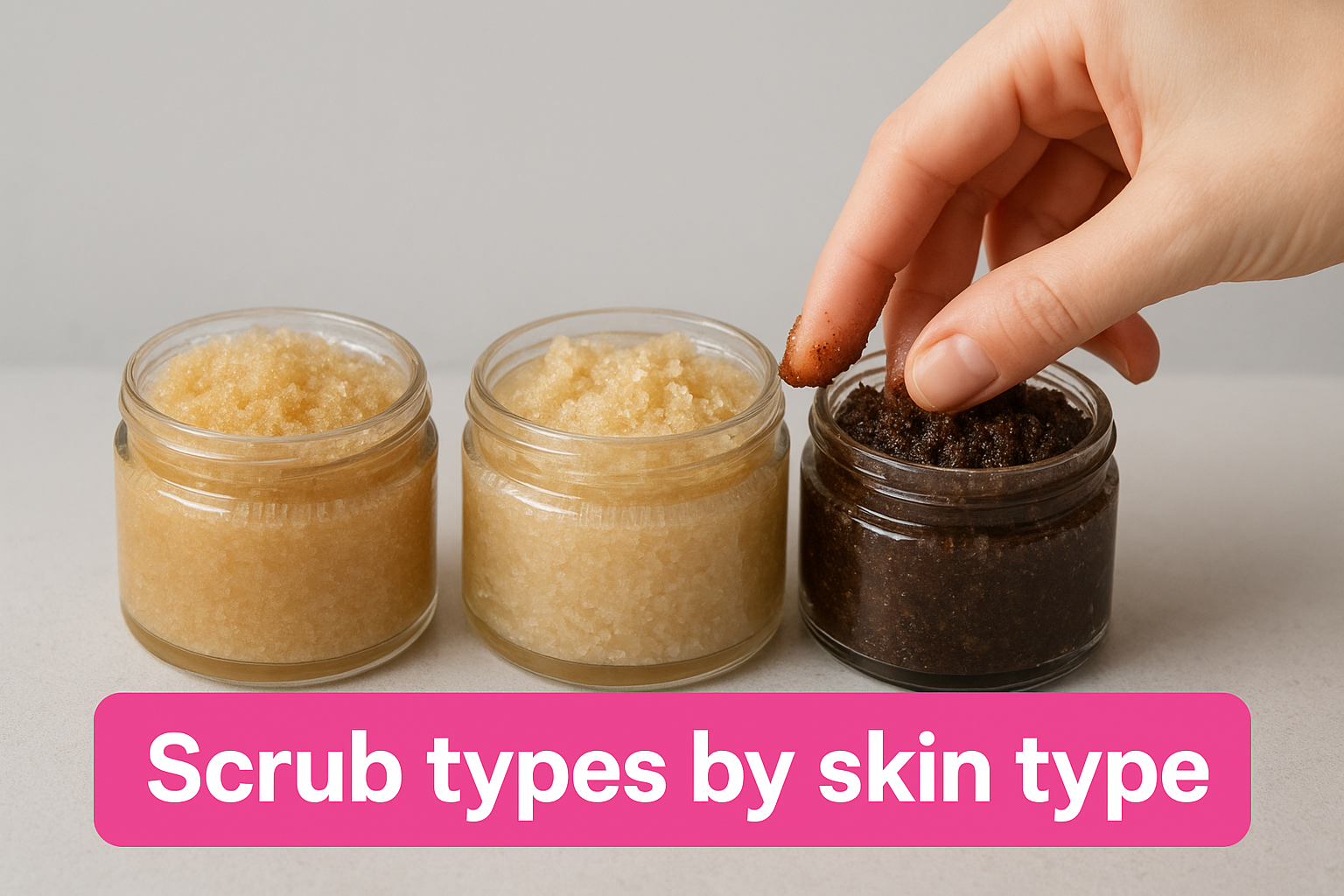
| Skin Type | Best Scrub Type | Why It Works |
|---|---|---|
| Sensitive | Fine sugar or oat-based | Gentle enough to exfoliate without causing redness |
| Dry | Sugar or cream-based | Sugar dissolves as you scrub, reducing abrasion |
| Normal/Combination | Salt or medium-grain sugar | Effective exfoliation without being too harsh |
| Rough/Thick skin | Coarse salt or coffee | Handles built-up texture on knees, elbows, and heels |
Apply this to your own skin type before you buy or start scrubbing. If your skin feels tight or reactive after showers, go fine-grain. If your main concern is rough patches on heels or elbows, a coarser formula cuts through that build-up faster.
Step 2. Prep in the shower or bath
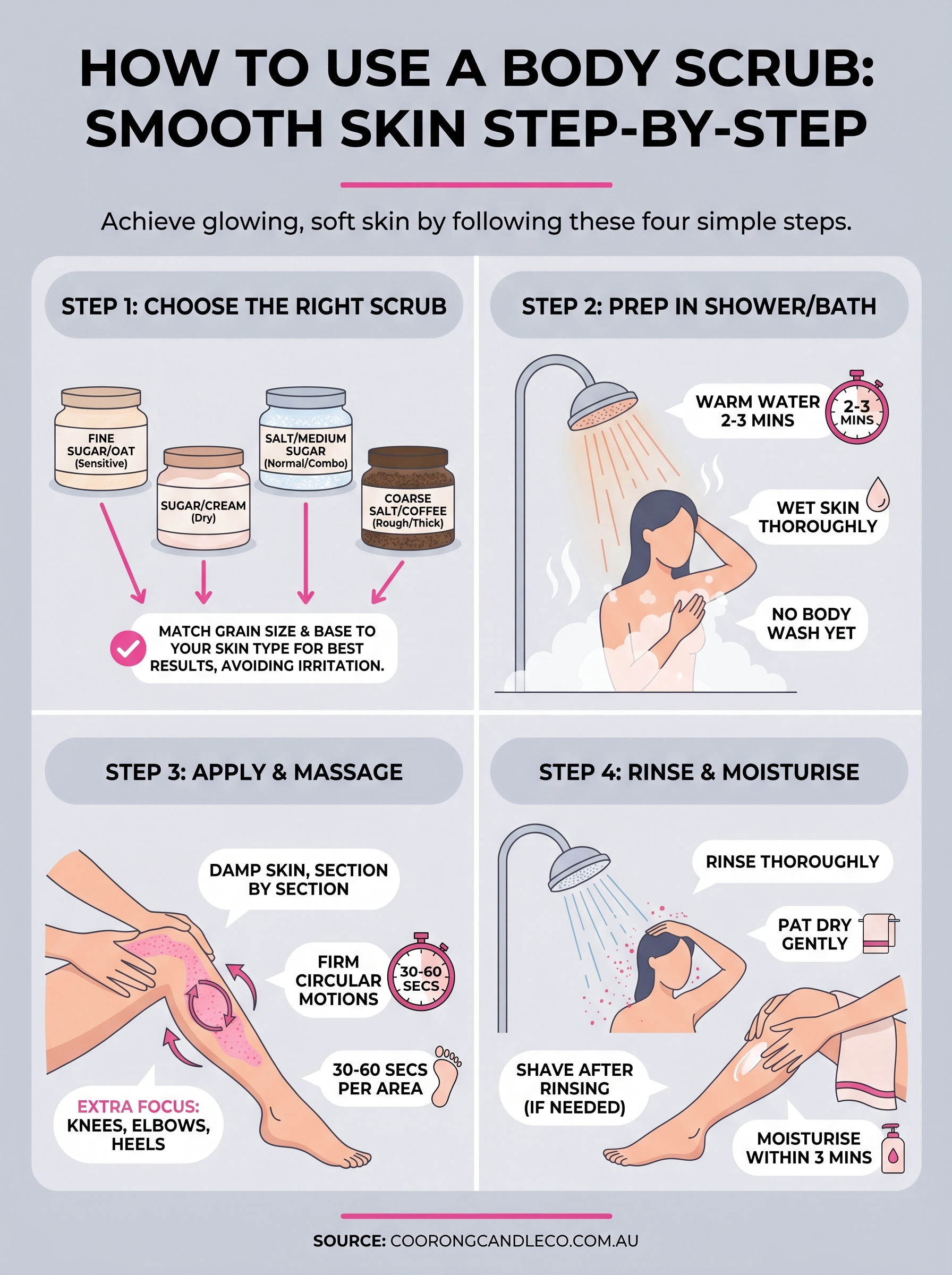
Before you reach for the scrub, your skin needs a few minutes under warm water. Warm water softens the outer skin layer and opens up the surface just enough to make exfoliation more effective and far more comfortable. Give it two to three minutes before you start - this small step alone makes a visible difference to how smoothly the scrub moves across your skin.
Warm water is ideal, but avoid making it too hot, as hot water strips the skin's natural oils and leaves it more vulnerable to irritation during exfoliation.
How to prepare your skin correctly
Knowing how to use a body scrub effectively starts before you even open the jar. Wet your skin thoroughly, but don't apply any body wash first. Soap and cleanser leave a slippery film that stops the scrub gripping the skin properly, which reduces how well the abrasive particles do their job.
Work from the lower body upward - feet, legs, then torso and arms. Keep your skin damp rather than dripping wet, so the scrub paste stays in place when you apply it and doesn't slide off before the abrasive particles have a chance to work through the skin's surface.
Step 3. Apply and massage the scrub
Take a generous scoop of scrub and apply it directly to your damp skin using your hands or a body mitt. Start at your feet and work upward in sections, so you cover each area thoroughly without missing patches. Keep the product concentrated on one zone at a time rather than spreading it thinly across your whole body at once, as this ensures the abrasive particles stay dense enough to actually work.
How to massage for best results
Knowing how to use a body scrub well comes down to technique at this stage. Use firm, circular motions and apply enough pressure to feel the particles working against your skin, but not so much that your skin turns red or stings. Spend around 30 to 60 seconds on each area, with extra attention on rough spots like knees, elbows, and heels where skin tends to thicken fastest.
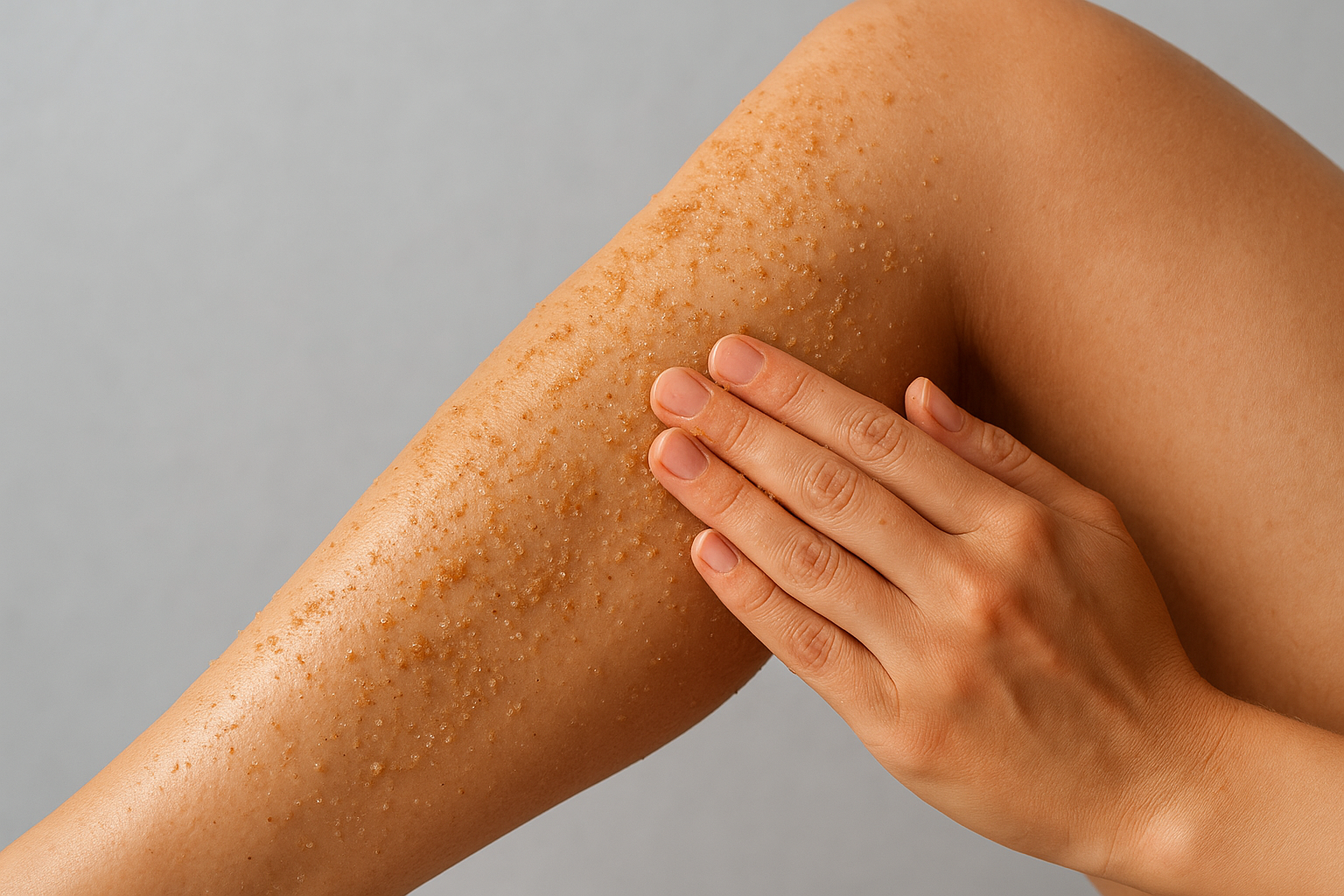
Focus your pressure on thicker-skinned areas and lighten up on softer skin like your inner arms or stomach to avoid over-exfoliating.
Circular strokes lift dead skin cells more evenly than back-and-forth motions, so stick with that pattern throughout. On very rough patches, you can apply a second pass and work it in for an extra 20 seconds before rinsing. This targeted approach makes a clear difference to stubborn texture without needing to scrub harder overall.
Step 4. Rinse, shave if needed, then moisturise
Once you've worked through each section, rinse thoroughly under warm water until all scrub particles are gone. This is a key step in knowing how to use a body scrub correctly. Leaving residue on your skin can block pores rather than clear them. Pat your skin dry with a clean towel, using gentle pressure rather than rubbing.
Shave after you scrub, not before
If shaving is part of your routine, do it after rinsing off the scrub and while your skin is still damp in the shower. Exfoliating first lifts hair follicles slightly, which gives you a closer, cleaner shave and reduces the chance of ingrown hairs forming afterwards. Follow this order:
- Rinse off all scrub residue completely
- Apply shaving gel or cream to damp skin
- Shave in the direction of hair growth
Lock in moisture straight away
Apply your body lotion or oil within two to three minutes of stepping out of the shower. Your skin absorbs hydration far more effectively while it's still slightly damp.
Moisturising immediately after exfoliation is what turns a good scrub session into genuinely lasting softness.
Work the moisturiser in using long, upward strokes, covering the same areas you scrubbed. Pay extra attention to knees, elbows, and heels, as these spots lose moisture faster than the rest of your body.
Final thoughts
Knowing how to use a body scrub correctly comes down to a few consistent habits: prep your skin with warm water, work in circular motions, rinse completely, and moisturise straight away. Get those steps right and the results are immediate - smoother texture, better hydration absorption, and skin that actually responds to the products you apply afterwards.
The key is making it a regular part of your routine rather than a one-off treat. Once or twice a week is enough for most people, and your skin will tell you quickly if you're overdoing it. Pair your scrub session with a proper wind-down and you've got a self-care ritual that genuinely delivers.
If you want to take your bath routine further, explore our handmade bath bombs - each one is crafted with skin-nourishing ingredients like Epsom salt and sunflower oil to complement your exfoliation routine perfectly.