
If you've ever wondered what does body scrub do, you're asking the right question before adding one to your routine. A body scrub is one of those straightforward skincare steps that delivers noticeable results almost immediately, smoother texture, clearer pores, and skin that actually absorbs your moisturiser properly.
Body scrubs work by buffing away dead skin cells that build up on the surface over time. That buildup is what causes dull, rough, or flaky skin, and no amount of lotion fixes it without exfoliation first. Understanding how scrubs function, and how to use them correctly, means you get the benefits without irritation or wasted effort. It's simple once you know what you're doing, but there are a few things worth getting right from the start.
At Coorong Candle Co., we handcraft bath and body products from natural ingredients here in South Australia, so helping people build better self-care rituals sits at the heart of what we do. In this guide, we'll break down exactly how body scrubs work, what benefits they offer your skin, and the proper way to apply them for the best results.
What a body scrub does and who needs one
A body scrub physically removes dead skin cells from the surface of your skin using a combination of abrasive particles and a base, usually oil or liquid. When you massage the scrub onto damp skin, the grit lifts and loosens dead cells that have built up over time, clearing the way for fresher skin underneath to show through. That's the core answer to what does body scrub do: it mechanically exfoliates the outer layer, improving texture, tone, and how well your skin absorbs products afterwards.
How the exfoliation process works
Your skin sheds dead cells naturally through a process called desquamation, but this slows down with age or when environmental factors like cold weather, sun exposure, or dehydration interfere. Dead cell buildup is the reason your skin can look dull, feel rough, or seem to refuse moisturiser no matter how much you apply. A body scrub speeds up that natural cycle, revealing the newer, softer cells sitting just underneath the surface.
Regular exfoliation also stimulates circulation in the skin, which contributes to a healthier, more even complexion over time.
The abrasive particles in a scrub, which range from sugar and salt to ground botanicals, do the heavy lifting. Oil or water in the base keeps the scrub from stripping your skin and leaves a protective layer once you rinse. The massage action itself is also useful: it gets blood moving, warms the skin, and helps the particles work evenly across the surface.
Signs your skin needs a scrub
Not everyone needs to scrub on the same schedule, but there are clear indicators your skin is ready for exfoliation. Rough or bumpy patches on your upper arms, thighs, or shins are a common sign. So is skin that feels dry even after moisturising, or patches that look flat and lack any real radiance.
Here are the main signs it's time to add a body scrub to your routine:
- Skin feels rough or sandpaper-like to the touch
- Moisturiser sits on top of the skin rather than absorbing
- You notice flaky or peeling patches, especially on elbows and knees
- Your skin tone looks uneven or grey
- You're dealing with ingrown hairs or trapped body hair
- Keratosis pilaris (small bumps on the upper arms) is getting worse
Step 1. Choose the right scrub for your skin
The scrub you pick has a direct impact on your results. Using something too harsh for sensitive skin will cause redness and irritation, while a mild formula on thick or rough skin won't deliver enough exfoliation to make a real difference. Before you buy, take a moment to consider your skin type and what the scrub is actually made from.
Match the scrub to your skin type
Different skin types need different levels of abrasion. Salt-based scrubs have a coarser texture and suit oilier, thicker skin on the body, particularly the legs and feet. Sugar-based scrubs are finer and dissolve more easily, making them a better fit for sensitive or dry skin that still needs exfoliation without the risk of irritation.
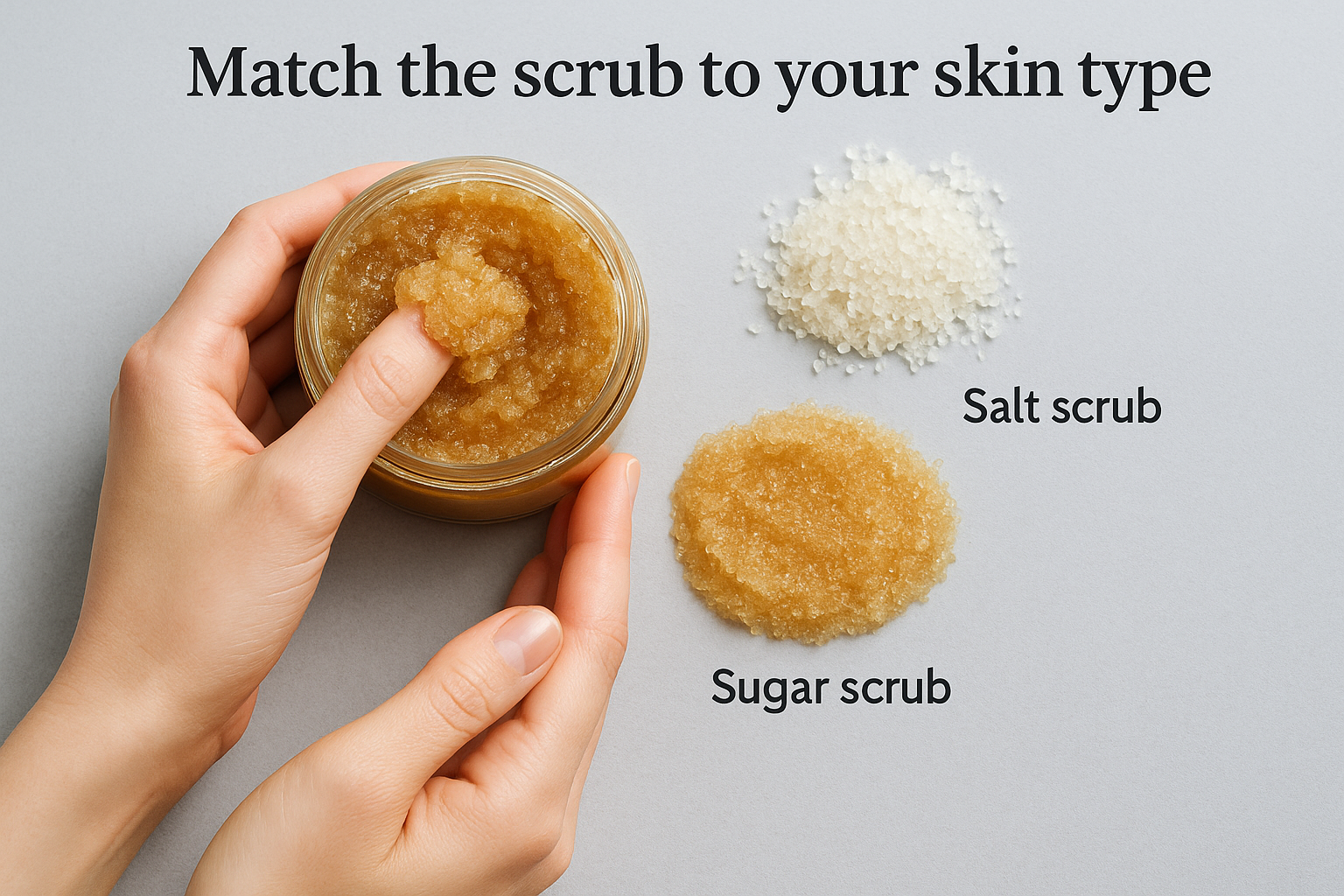
If you're new to body scrubs and unsure what does body scrub do for your specific skin type, start with a sugar-based formula since it's the gentler entry point.
| Skin Type | Best Scrub Type | Avoid |
|---|---|---|
| Sensitive | Fine sugar scrub with calming oils | Coarse salt, synthetic fragrance |
| Dry | Sugar scrub with moisturising oils | Alcohol-heavy bases |
| Oily or normal | Salt or sugar scrub | Overly rich oil bases |
| Rough patches | Coarser salt scrub | Very fine particles |
Check the ingredient list
Natural ingredients like plant-based oils, sugar, and salt will exfoliate and nourish your skin without synthetic additives that cause reactions. Look for scrubs that include a carrier oil such as sweet almond, coconut, or jojoba, as these hydrate during the scrubbing process rather than leaving your skin stripped once you rinse off.
Avoid products that list artificial colourants or synthetic preservatives high on the label. These add nothing to your skin's health and can trigger reactions, particularly if your skin already leans sensitive.
Step 2. Prep your skin in the shower or bath
Proper preparation makes a real difference to how well your body scrub performs. Dry skin resists exfoliation, while skin that's been softened by warm water and steam allows the scrub particles to work more effectively and with far less effort on your part.
Warm water is your starting point
Before you reach for the scrub, spend at least three to five minutes under warm water to let your skin hydrate and your pores open up. Warm water softens the outermost layer of skin, which means the abrasive particles in your scrub can move through dead cell buildup more smoothly and evenly. Avoid using very hot water before scrubbing, since it can make skin more reactive and prone to irritation once the exfoliation begins.
Starting with warm rather than hot water is one of the simplest things you can do to improve your results.
How long to prep before scrubbing
Three to five minutes of warm water exposure is typically enough for most skin types. If your skin is particularly rough or thick in spots, like heels, knees, or elbows, give those areas an extra sixty seconds of direct warm water contact before you apply the scrub.
Here's a simple prep checklist to follow before every scrub session:
- Run warm water over your whole body for at least three minutes
- Focus warm water on rough patches for an additional sixty seconds
- Do not apply soap before scrubbing - soap creates a barrier that reduces how well the scrub grips the skin surface
- Keep skin damp, not soaking wet, before you start
Understanding what does body scrub do at this stage comes down to surface accessibility: the better you prepare your skin, the more effective each scrub stroke becomes.
Step 3. Apply and massage the scrub safely
Application technique matters just as much as the product itself. Scooping out too much scrub wastes product and increases the risk of over-exfoliating, while using too little means the particles can't cover the skin surface evenly. Understanding what does body scrub do during this step helps you stay in control: the scrub is doing the work, so your job is to guide it steadily across the skin without forcing it.
How much scrub to use
Start with a generous tablespoon-sized amount for each body section you plan to cover. That's roughly the size of a golf ball for your legs, and a teaspoon for smaller areas like your forearms or upper arms. You can always add more if needed, but beginning with less keeps the application clean and controlled.
Here's a simple per-zone guide:
| Body Zone | Suggested Amount |
|---|---|
| Each leg | One heaped tablespoon |
| Arms and shoulders | One teaspoon per arm |
| Chest and back | Two tablespoons |
| Elbows, knees, heels | A small extra pinch directly on the patch |
The right massage technique
Apply the scrub to damp skin using your palm or fingertips and move in small, firm circular motions. Work each section for about thirty seconds before moving on, which gives the particles enough contact time to lift dead cells without you needing to press hard. Gentle, consistent pressure is more effective than scrubbing aggressively, which can cause redness or micro-tears in the skin.
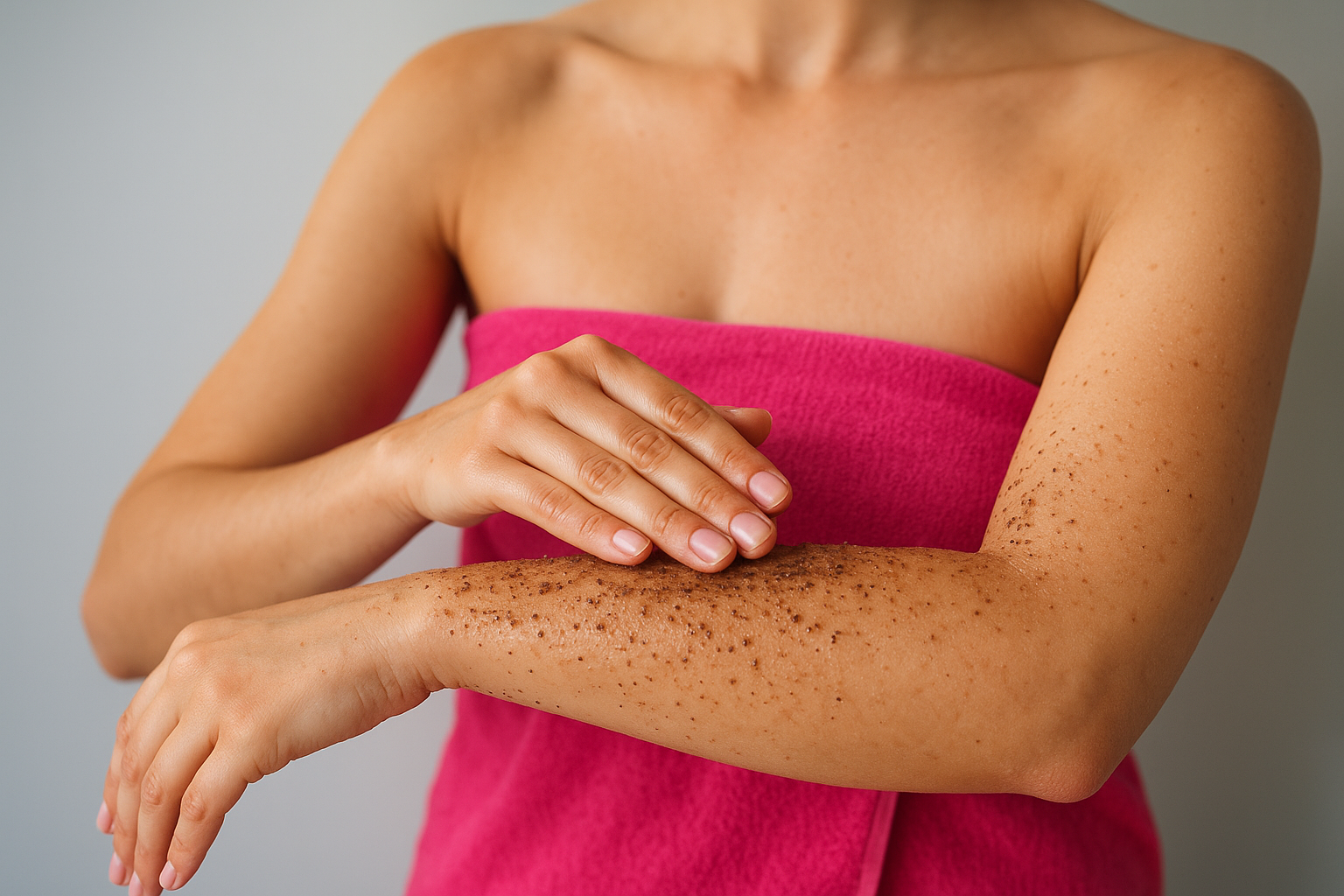
Let the particles do the work rather than your muscle, the scrub is designed to exfoliate so you don't have to.
Always move in the direction towards your heart on the limbs, particularly the legs, as this supports healthy circulation while you work through each section systematically.
Step 4. Rinse, moisturise and time it right
Once you finish massaging the scrub across each zone, rinsing properly is the step most people rush. Leftover scrub particles sitting on your skin can clog pores and undo the work you've just done, so take your time and use warm, not hot, water to rinse from top to bottom until the skin feels completely clean and free of any gritty residue.
Rinse thoroughly and pat dry
Run warm water over every area you scrubbed and check with your fingertips that nothing grainy remains in skin folds like behind the knees or at the elbows. Once you step out of the shower or bath, pat your skin dry with a clean towel rather than rubbing it. Rubbing a freshly exfoliated surface creates friction on newly exposed skin cells and can cause unnecessary redness, particularly on sensitive areas.
Lock in moisture while your skin is still warm
This is where understanding what does body scrub do pays off most practically: exfoliation opens up the skin's surface, so anything you apply directly after absorbs far more effectively than it would on unexfoliated skin. Apply your body moisturiser or oil within two to three minutes of drying off, while your skin is still slightly warm and the pores remain receptive.
Applying moisturiser immediately after exfoliating is when your skin absorbs the most hydration, so don't skip this step or delay it.
How often to use a body scrub
Scrubbing too frequently strips the skin's natural barrier, while doing it too rarely means dead cell buildup returns quickly. The right frequency depends on your skin type:
| Skin Type | Recommended Frequency |
|---|---|
| Sensitive or dry | Once per week |
| Normal | Once or twice per week |
| Oily or rough | Two to three times per week |
Stick to your skin type's schedule and adjust based on how your skin responds after each session.
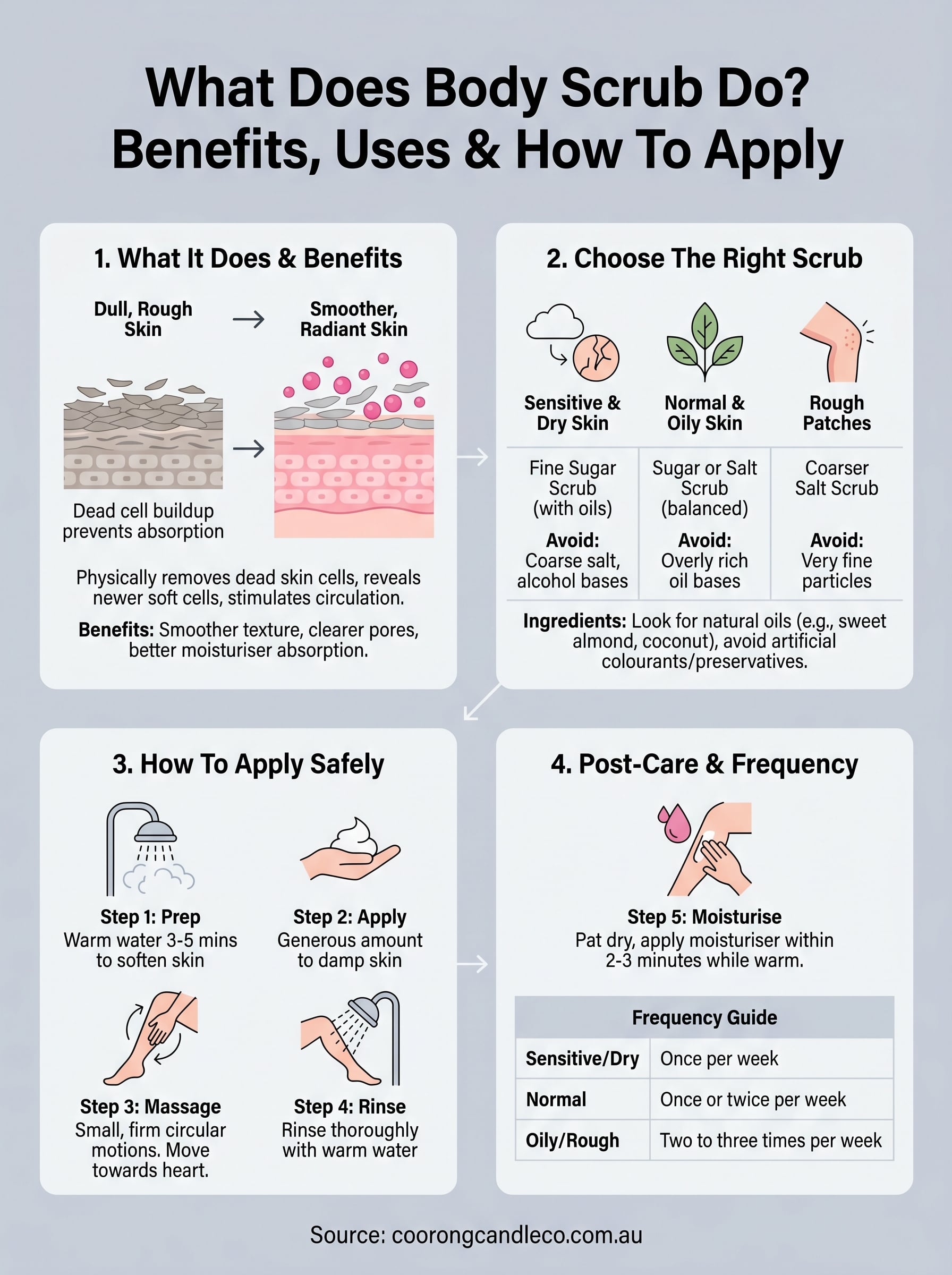
Quick recap and next steps
Body scrubs work by physically lifting dead skin cells to reveal softer, fresher skin underneath, and now you have a clear process to follow from start to finish. Choosing the right scrub for your skin type, prepping with warm water, applying with gentle circular motions, rinsing thoroughly, and moisturising immediately afterwards covers everything you need for a routine that actually delivers results.
Understanding what does body scrub do means you can stop guessing and start seeing real improvement. Stick to your skin type's recommended frequency and adjust based on how your skin responds after each session.
Pairing a body scrub with a nourishing bath soak is a natural next step if you want to take your self-care routine further. Our handmade bath bombs are crafted from naturally sourced ingredients including Epsom salt, sunflower oil, and kaolin clay, making them an ideal complement to your exfoliation session for skin that feels genuinely restored.