
Essential oils smell incredible and can transform any room in your home, but they deserve respect. Knowing how to use essential oils safely is the difference between a relaxing evening and an irritated patch of skin, a headache, or worse. Whether you're adding a few drops to a diffuser, blending them into a bath soak, or applying them topically, getting the basics right matters more than most people realise.
At Coorong Candle Co., we work with fragrance every day. Our handmade soy candles, reed diffusers, and bath bombs are crafted with careful attention to ingredient safety and proper formulation, because we know firsthand that beautiful scents and responsible use go hand in hand. It's a topic we care about, and one our customers regularly ask us about.
This guide covers the essential safety practices you need to know: proper dilution ratios for skin application, how long you should actually run a diffuser, which oils need extra caution, and why ingesting essential oils is almost never a good idea. By the end, you'll have a clear, practical framework for enjoying essential oils without the guesswork.
Essential oil safety basics before you start
Before you open a bottle and start dropping oil everywhere, it helps to understand a few fundamentals. Essential oils are highly concentrated plant extracts, and that concentration is what makes them both powerful and potentially problematic when misused. Learning how to use essential oils safely starts with treating them as the potent substances they are, not as simple perfumes you can splash on freely.
Check the label and know what you're buying
Not all essential oils are equal in quality or purity. A genuine, pure essential oil should list the botanical (Latin) name of the plant, the country of origin, and the extraction method on its label. If a product says "fragrance oil" or "perfume oil," it is not a pure essential oil and carries different safety considerations. Look for oils that have been GC/MS tested (gas chromatography/mass spectrometry), which confirms purity and chemical composition.
Pure essential oils are far more concentrated than the scented products most people encounter daily, so even a single drop deserves careful handling.
Patch test before applying anything to skin
A patch test is non-negotiable before you put any undiluted or newly diluted oil on your skin. Apply a small amount of your diluted blend to the inner forearm, cover it loosely, and wait 24 to 48 hours. If you notice redness, itching, or swelling, wash the area immediately with soap and water and avoid that oil going forward.
Some oils also cause photosensitivity, meaning sun exposure after application can lead to burns or discolouration. The most common offenders are cold-pressed citrus oils:
- Bergamot
- Lemon
- Lime
- Grapefruit
- Sweet orange
If you apply any of these to your skin, avoid direct sunlight or UV exposure for at least 12 hours afterwards.
Dilute for skin and bath use without irritation
Applying essential oils directly to your skin without diluting them first is one of the most common mistakes people make. Neat application (meaning undiluted) can cause chemical burns, sensitisation, and long-term allergic reactions. Knowing how to use essential oils safely on your skin means understanding carrier oils and dilution ratios before the oil goes anywhere near your body.
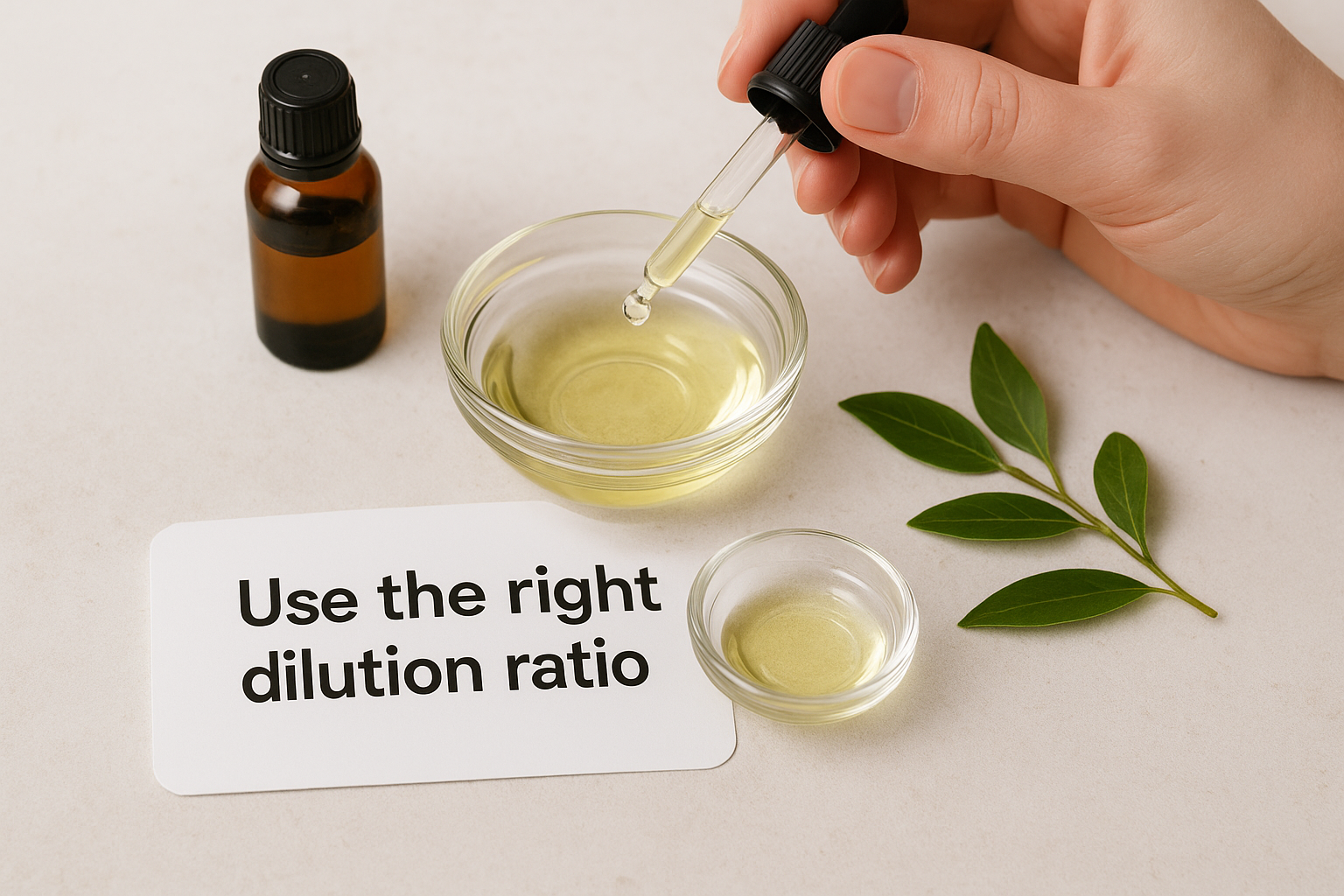
Use the right dilution ratio
The correct dilution depends on who is using the oil and for what purpose. A 2% dilution is the standard safe rate for most healthy adults for everyday skin use. Here is a quick reference:
| Use case | Dilution rate | Drops per 10ml carrier oil |
|---|---|---|
| General adult use | 2% | 4 drops |
| Sensitive skin or face | 1% | 2 drops |
| Children aged 6 to 12 | 0.5% | 1 drop |
| Short-term therapeutic | 3 to 5% | 6 to 10 drops |
Never apply essential oils to broken, sunburned, or inflamed skin, as absorption increases significantly and the risk of irritation multiplies.
Choose your carrier oil wisely
Your carrier oil does more than dilute the essential oil. It controls how quickly the blend absorbs, how the product feels on your skin, and how well the scent carries. Jojoba, sweet almond, and fractionated coconut oil suit most skin types and are widely available from reputable health retailers.
Diffuse essential oils safely at home
A diffuser is one of the most popular ways to enjoy essential oils at home, but running it without any limits is a common mistake. Knowing how to use essential oils safely in a diffuser means understanding that more is not better when it comes to concentration and session length.
Limit your diffusion sessions
Most people run their diffusers far too long. 30 to 60 minutes per session is the recommended maximum for most healthy adults, with a break of equal length before you run it again. Continuous diffusion builds up airborne compound concentrations that can trigger headaches, nausea, and respiratory irritation, even from oils that smell pleasant and harmless. If you notice any of those symptoms, switch off the diffuser and open a window straight away.
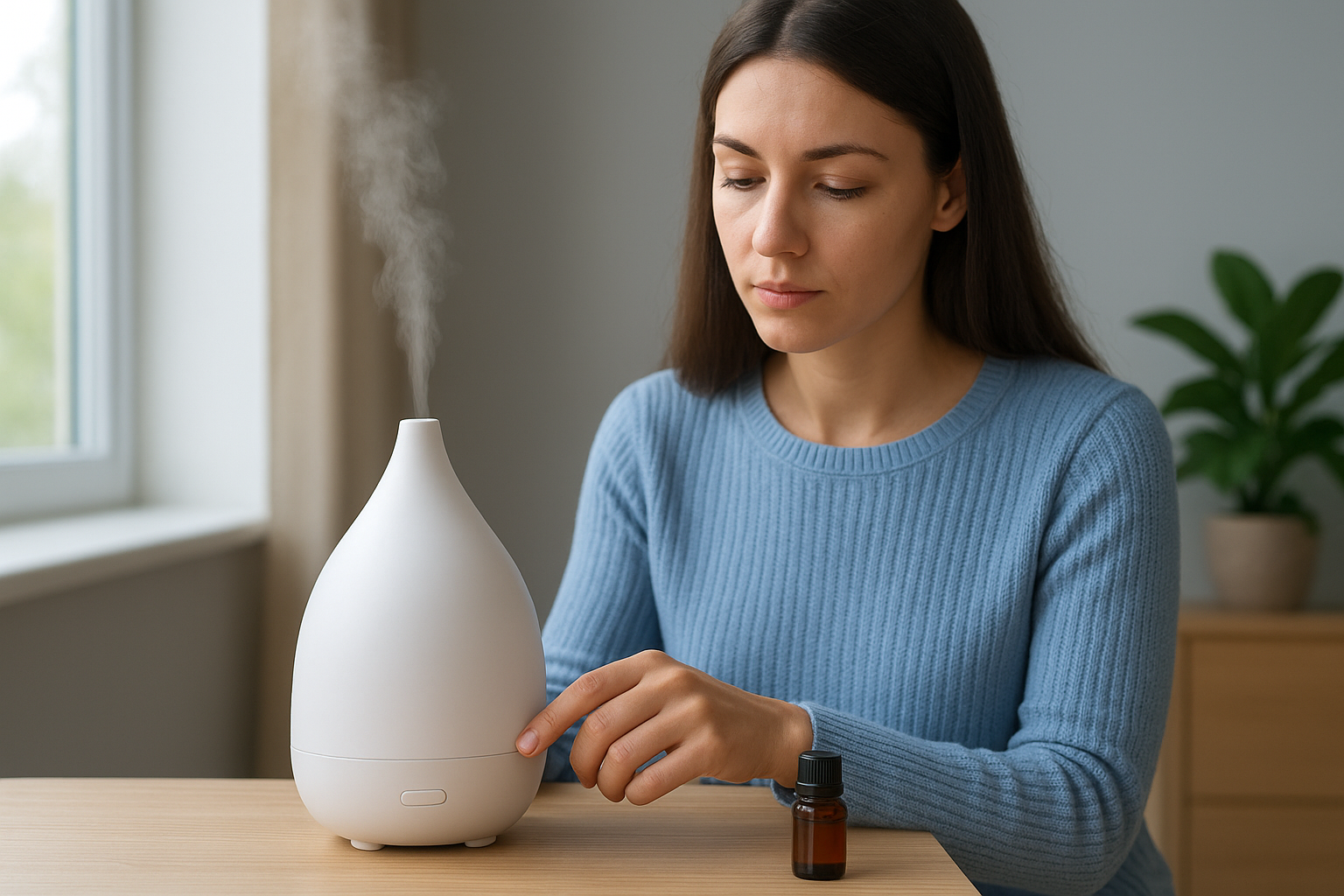
A well-ventilated room makes a real difference - crack a window slightly while diffusing to prevent compound levels from building too high.
Use the right amount of oil
Your home ultrasonic diffuser typically holds 100 to 200ml of water. A safe and effective starting point is 3 to 5 drops of essential oil per 100ml of water. Resist the urge to add more if the scent seems faint at first; your nose adjusts quickly to ambient smells, and the oil is still active at lower concentrations.
Store and handle oils safely around kids and pets
Storing your essential oils correctly protects everyone in your household, including curious children and sensitive pets. The same properties that make these oils therapeutic make them genuinely hazardous when accessed without supervision or applied inappropriately.
Keep oils locked away from children
Children are far more vulnerable to essential oils than adults. Their smaller body mass means even a small amount of undiluted oil can cause serious harm. Store all oils in a locked cabinet or on a high shelf well out of reach, and never leave open bottles unattended on a bench or table. If a child ingests any amount of essential oil, contact the Poisons Information Centre immediately on 13 11 26.
Treat essential oils with the same caution you apply to household medications: out of sight, out of reach, and always capped tightly.
Be extra careful around pets
Learning how to use essential oils safely extends to your animals. Cats, in particular, cannot metabolise many compounds found in essential oils, making diffusion around them potentially toxic. Dogs are also sensitive. Keep pets out of the room while diffusing, and always ensure they have a clear exit from any scented space. Oils to avoid entirely around pets include:
- Tea tree
- Eucalyptus
- Peppermint
- Clove
- Citrus oils
Know what to do if you get a reaction or ingest oil
Knowing how to use essential oils safely includes being prepared for when things go wrong. Skin reactions and accidental ingestion are more common than most people expect, and your response in the first few minutes makes a significant difference to how serious the outcome becomes.
Handle skin reactions quickly
If you notice redness, burning, or itching after applying a diluted oil, act fast. Follow these steps in order:
- Apply an unscented carrier oil to the area to help dilute the essential oil
- Wash the skin thoroughly with soap and water
- Rinse well and pat dry with a clean cloth
- Avoid applying anything to the area for at least 24 hours
If irritation spreads or blistering develops, seek medical attention promptly rather than waiting to see if it settles on its own.
Treat ingestion as a medical emergency
If you or someone else swallows any amount of undiluted essential oil, treat it as a medical emergency. Call the Poisons Information Centre on 13 11 26 immediately and follow their instructions exactly. Do not induce vomiting unless specifically directed to do so.
Certain oils cause serious toxicity symptoms even in very small quantities, including eucalyptus, tea tree, and wintergreen. Seizures, breathing difficulties, and loss of consciousness are all possible outcomes, so acting without delay is critical.
Keep it simple and stay safe
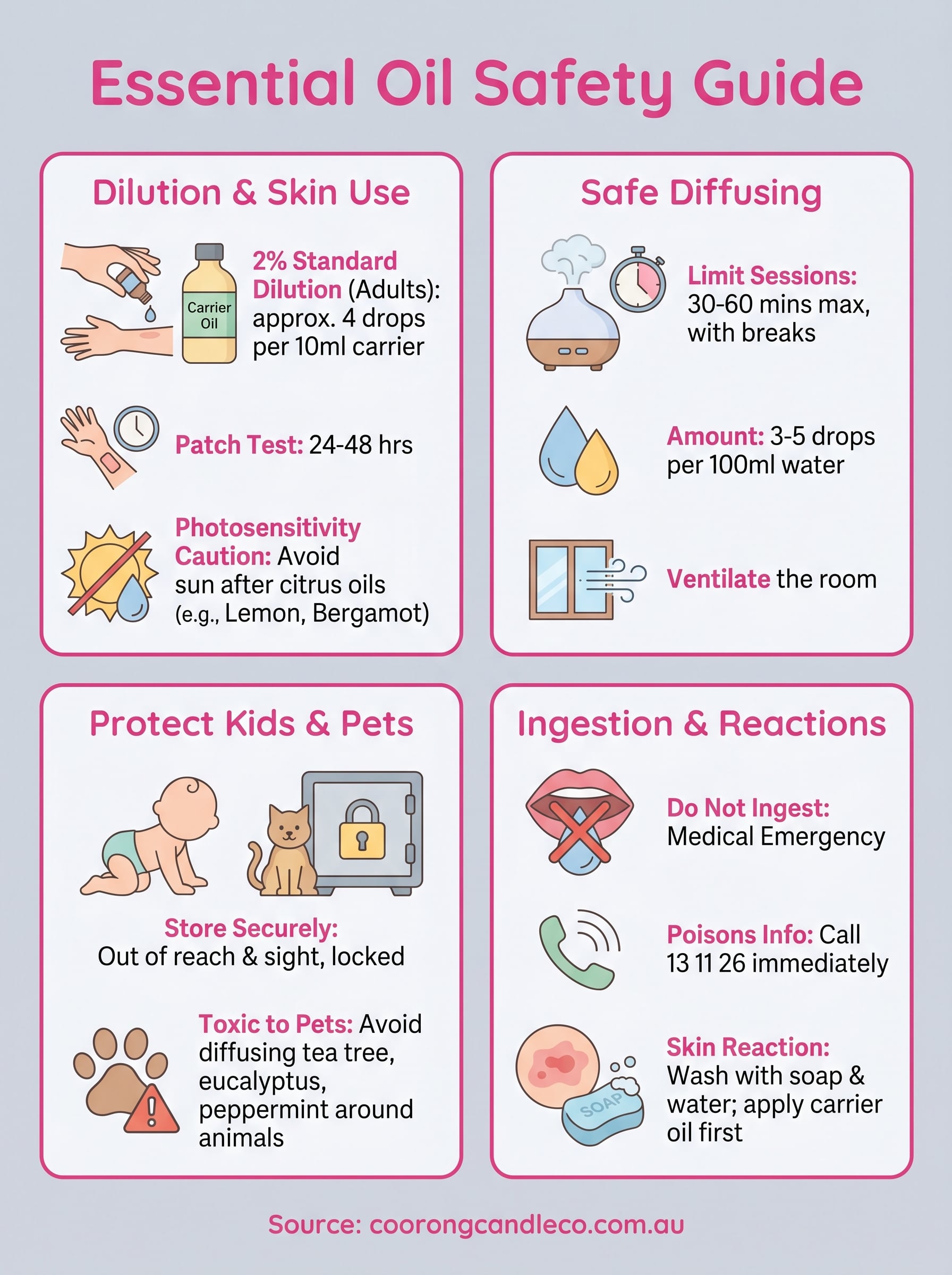
Essential oils reward careful, informed use. The most important thing you can take away from this guide is that dilution and moderation are your two most reliable tools for staying safe. Whether you're applying oils to your skin, running a diffuser, or storing bottles away from pets and children, developing consistent habits will protect you far more than occasional caution.
Knowing how to use essential oils safely does not require a chemistry degree or a cabinet full of specialist equipment. Start with a 2% dilution for skin use, cap your diffuser sessions at 30 to 60 minutes, and always keep the Poisons Information Centre number (13 11 26) somewhere easy to find. If you'd rather enjoy beautiful, lasting fragrance without the preparation work, our handmade reed diffusers and soy candles are already formulated with quality and safety in mind, so you can simply sit back and enjoy the scent.