
If you've ever watched a bath bomb fizz and dissolve into a swirl of colour, you've probably wondered: are bath bombs eco friendly, or are they just another single-use indulgence? It's a fair question. Many conventional bath bombs contain synthetic dyes, microplastics, and chemical fragrances that wash straight down the drain and into our waterways.
The good news is that not all bath bombs are created equal. The ingredients list matters, a lot. Some formulations are genuinely kinder to the environment, while others just look the part. At Coorong Candle Co., we handcraft our bath bombs in South Australia using natural, non-toxic ingredients, so this is a topic we think about daily. We believe you shouldn't have to choose between a relaxing soak and caring for the planet.
This article breaks down what makes a bath bomb harmful or sustainable, which ingredients to watch out for, and how to find (or make) options that are better for both your skin and the environment.
What makes a bath bomb eco friendly
When you ask "are bath bombs eco friendly," the answer comes down to three core factors: what's in them, how they're made, and how they're packaged. A genuinely eco-friendly bath bomb scores well across all three. Most conventional products fail on at least one front, often all three.
Natural ingredients as the foundation
The ingredients list is your first and most reliable signal. Plant-based ingredients like sodium bicarbonate (baking soda), citric acid, and natural essential oils make up the core of a low-impact bath bomb. These ingredients break down in water without releasing harmful compounds into the drainage system. Look for formulations that use cold-pressed carrier oils such as coconut or jojoba, which moisturise your skin without synthetic additives.
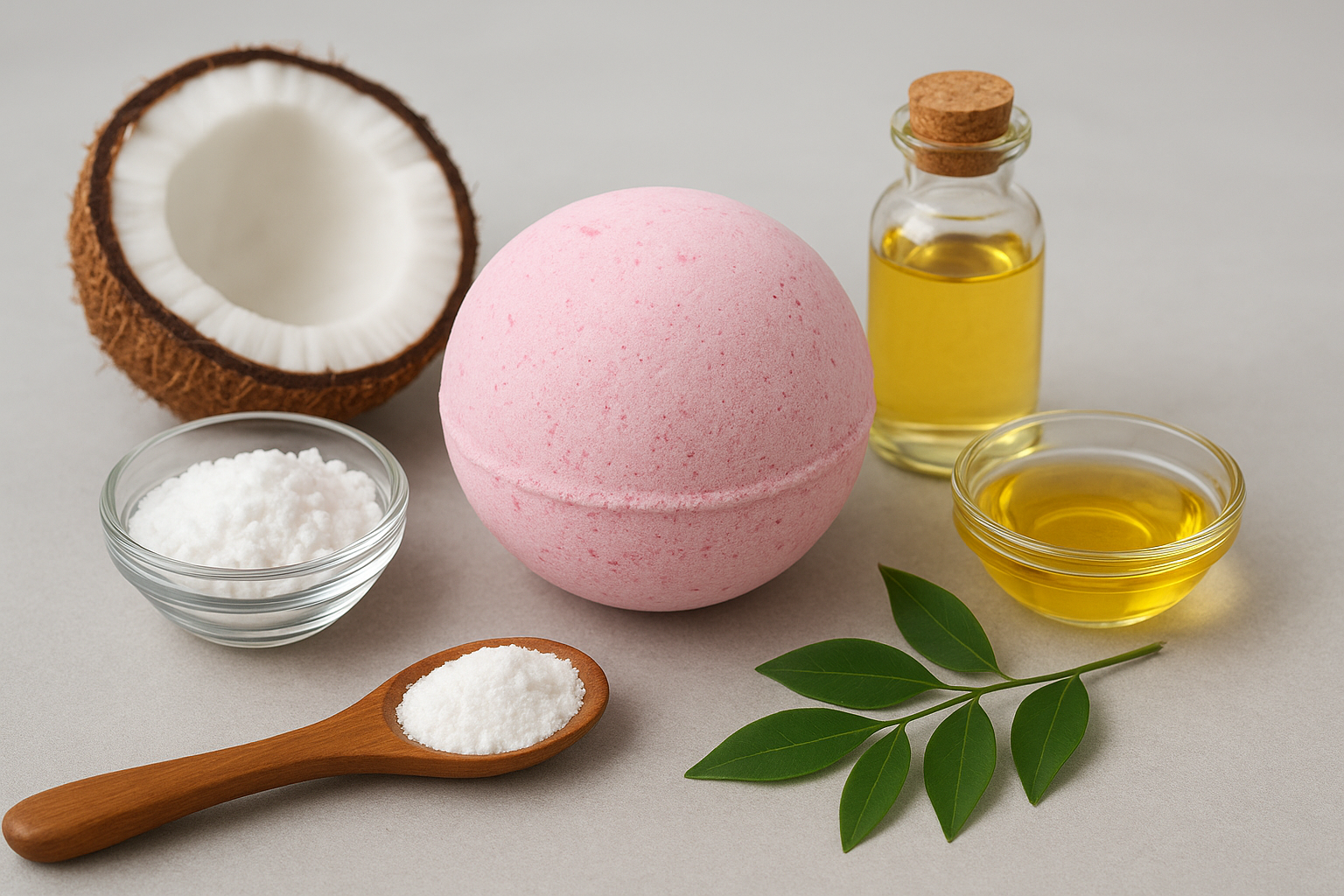
The fewer synthetic compounds in your bath bomb, the less chemical load ends up in local waterways after your soak.
Colourants are another key consideration. Natural colourings derived from plants or responsibly sourced minerals are far better than petroleum-based synthetic dyes, which are harder to break down and can affect aquatic ecosystems.
Ethical production and sourcing
How a bath bomb is made matters as much as what goes into it. Small-batch, handcrafted production typically means less industrial waste and tighter quality control over ingredients. You also want to check whether the maker sources ingredients responsibly, prioritising sustainably harvested or certified organic raw materials where possible.
Manufacturing footprint counts too. Local production reduces transport emissions significantly, and buying from a maker based in your own country or region cuts the carbon cost of shipping before the product even reaches your door.
Why some bath bombs harm waterways
Most bath bombs dissolve completely in your tub, but that doesn't mean they disappear. Everything you soak in eventually drains away, flowing through your household plumbing and into the broader water system. When you ask are bath bombs eco friendly, the drain is exactly where the problem starts for many conventional products.
Synthetic fragrances and chemical dyes
Artificial fragrance compounds used in mass-produced bath bombs are often complex chemical mixtures that wastewater treatment plants aren't fully equipped to filter out. These compounds can reach rivers, streams, and coastal waters where they disrupt the hormonal systems of fish and other aquatic life. Synthetic dyes carry similar risks, with certain petroleum-derived colourants proving persistent in the water supply long after your bath has ended.
Even small concentrations of synthetic chemicals, repeated across millions of baths, accumulate to levels that affect aquatic ecosystems over time.
Surfactants and their downstream effects
Many bath bombs include synthetic surfactants to help disperse oils across the water surface. While they feel luxurious in the tub, these compounds can reduce the surface tension that aquatic insects and small organisms rely on to survive. Choosing products made with naturally derived surfactants or none at all is a straightforward way to lower your impact.
Ingredients to avoid and better swaps
Reading an ingredients list is one of the most practical steps you can take when deciding are bath bombs eco friendly. Synthetic compounds often hide behind vague labelling like "parfum" or "fragrance," making it easy to miss what you're actually buying.
What to leave on the shelf
Several common ingredients in conventional bath bombs cause real environmental harm. Polyethylene-based microbeads and plastic-derived glitters persist in waterways indefinitely. Parabens and phthalates, used as preservatives and fragrance stabilisers, are known endocrine disruptors that affect aquatic organisms even at low concentrations.
If an ingredient sounds like a chemistry formula and you can't trace it to a natural source, that's a strong signal to put the product back.
Swaps that actually work
Natural alternatives perform just as well without the environmental cost. Pure essential oils replace synthetic fragrances and deliver genuine aromatherapy benefits straight from plant sources. For colour, plant-based pigments like beetroot powder, spirulina, or responsibly sourced mica provide vibrant results without petroleum derivatives.
- Essential oils in place of "parfum" or "fragrance"
- Beetroot, spirulina, or mica for colour
- Cold-pressed coconut or sweet almond oil for moisture
- Shea butter as a skin-softening, biodegradable base
Packaging and glitter: the hidden waste
When you ask are bath bombs eco friendly, most people focus entirely on ingredients and overlook what the product arrives in and sits on top of. Packaging and glitter are two significant hidden waste sources in the bath bomb category, and both are worth examining before you buy.
Plastic packaging and shrink wrap
Many commercial bath bombs come sealed in single-use plastic wrap or rigid plastic containers that serve a brief purpose before heading to landfill. This waste builds up fast when you factor in the volume sold across supermarkets and online retailers every year.
Packaging often creates more long-term environmental damage than the product inside, so it genuinely pays to check before buying.
Better packaging options to look for include:
- Compostable or paper-based wrapping that breaks down naturally
- Recycled cardboard with no plastic lining
- Unwrapped products packed in tissue paper or nothing at all
Cosmetic glitter and why it lingers
Conventional cosmetic glitter is made from plastic film, which means every shimmer-filled bath you take washes microplastics directly into the water system. These particles are too small for most wastewater treatment facilities to capture, so they reach rivers and coastal waters.
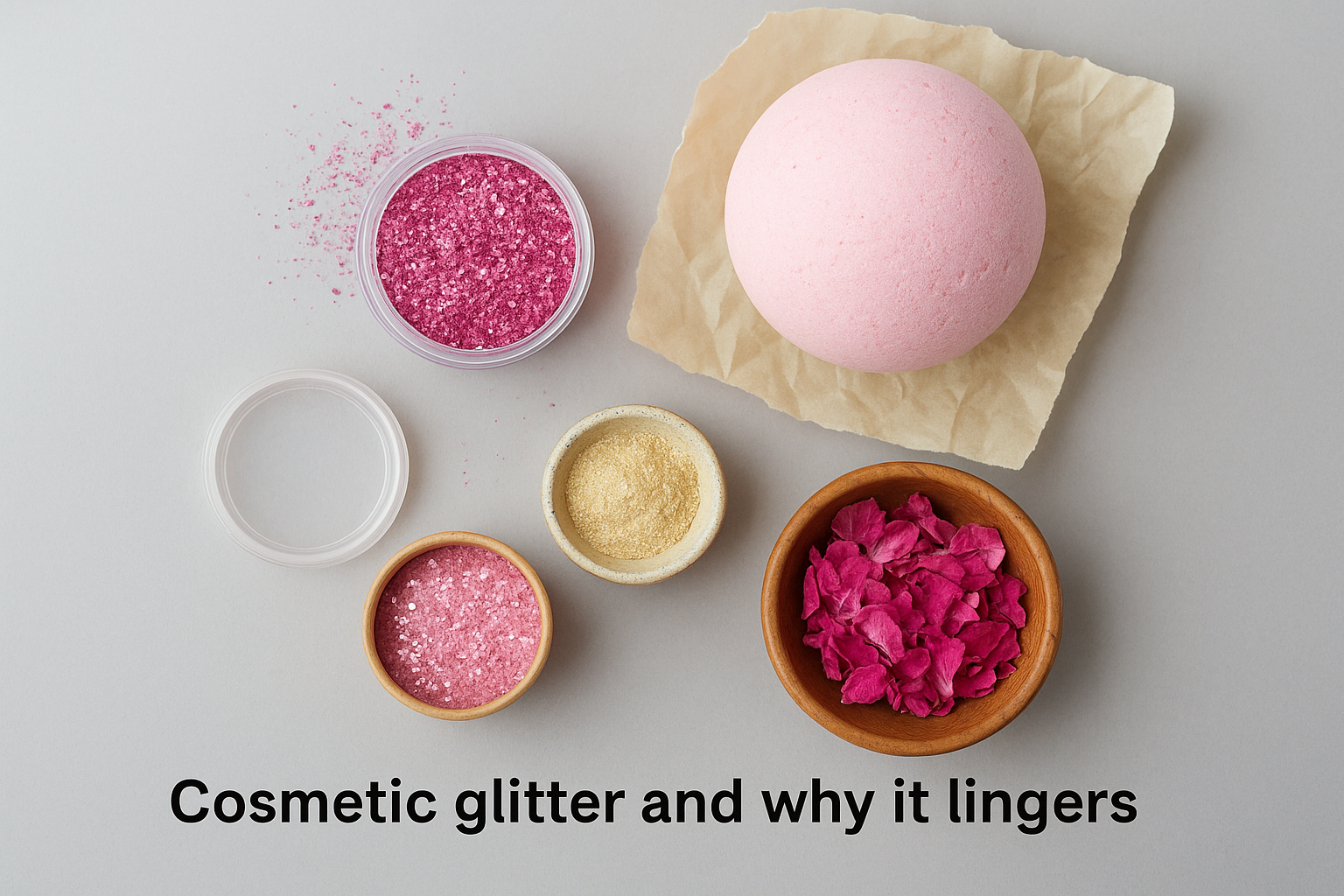
Swap conventional glitter for:
- Biodegradable glitter made from plant-based cellulose film
- Natural mica from responsibly sourced mineral deposits
- Dried flower petals for colour and texture with zero plastic content
How to choose or make a lower impact bath bomb
Whether you're shopping or crafting from scratch, the same principles apply: prioritise natural ingredients, minimal packaging, and transparent sourcing. Asking are bath bombs eco friendly is the right starting point, but acting on the answer is where the real difference gets made.
Buying with intention
When you shop for bath bombs, read the full ingredients list rather than relying on front-of-pack claims like "natural" or "gentle." These terms carry no regulated definition in Australia. Look for products made by small-batch, local producers who list every ingredient clearly and use plant-derived materials throughout.
A short, recognisable ingredients list is usually the most reliable sign that a product has been made with genuine care.
Making your own at home
Making bath bombs at home gives you complete control over every ingredient. A basic recipe needs only baking soda, citric acid, a carrier oil, and an essential oil of your choice. You can add natural colourants like beetroot powder or spirulina to customise without synthetic dyes. Store them unwrapped in a dry place and you eliminate packaging waste entirely.
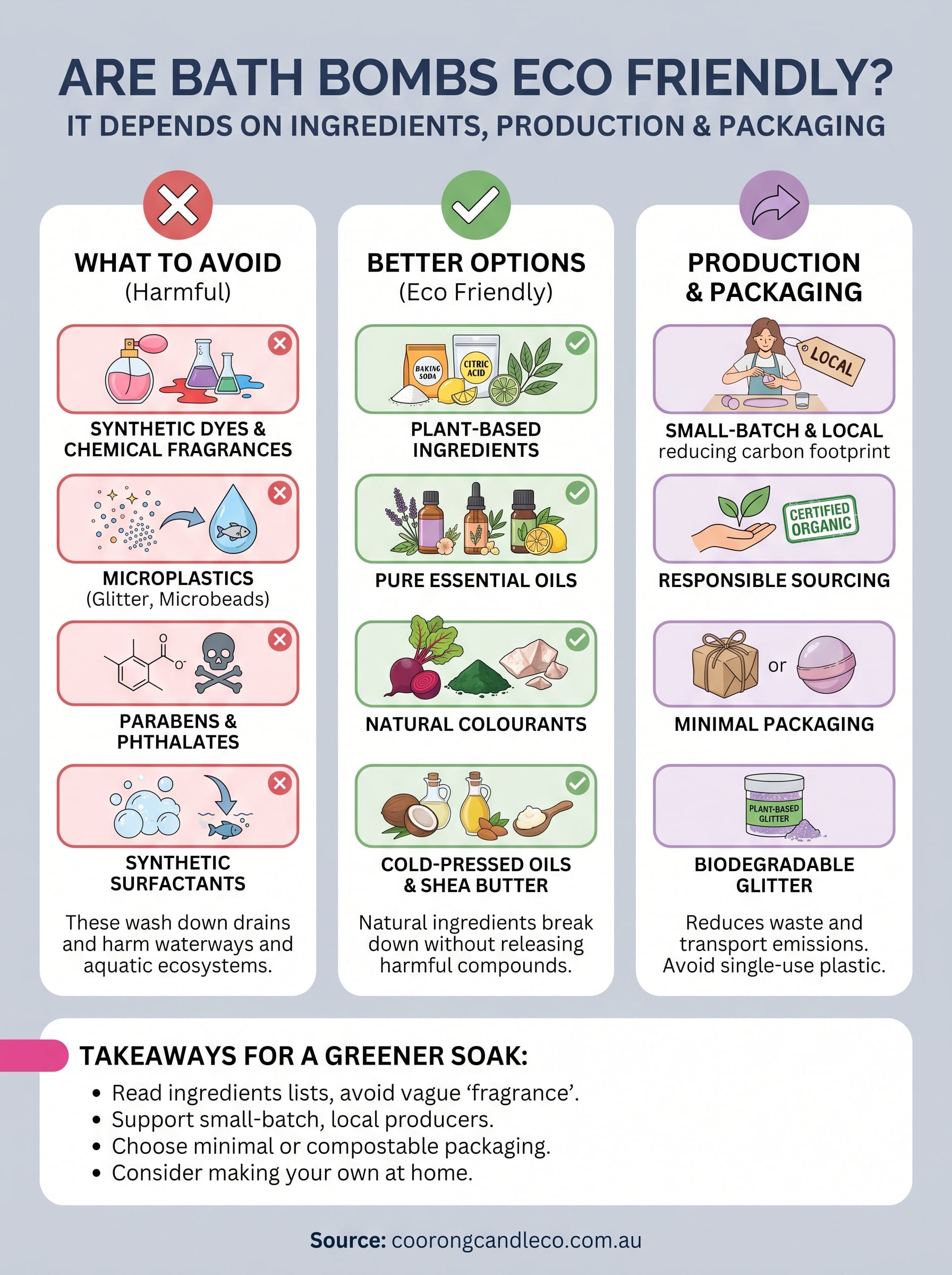
Key takeaways for a greener soak
So, are bath bombs eco friendly? The short answer is: it depends entirely on what goes into them and how they're made. Conventional bath bombs loaded with synthetic fragrances, plastic glitter, and petroleum dyes send a stream of harmful compounds down your drain with every use. Choosing products made from plant-based ingredients, minimal packaging, and natural colourants cuts that impact significantly without sacrificing the experience.
Your buying decisions add up over time. Reading ingredient labels, supporting small-batch local producers, and skipping products wrapped in single-use plastic are practical steps you can take right now. Making your own at home is also a genuine option if you want full control over every component.
At Coorong Candle Co., our bath bombs are handcrafted in South Australia using naturally sourced ingredients designed to nourish your skin and your conscience. Browse our handmade bath bombs and find your next guilt-free soak.