
Not all bath bombs are created equal, and if you've ever bought a cheap one that stained the tub or left barely a scent behind, you already know that. Scroll through any supermarket aisle and you'll find fizzers packed with synthetic dyes, mineral oils and glitter that clogs your drain, which isn't exactly what you want when you're trying to unwind after a long week.
If you're searching for natural bath bombs that actually deliver a proper soak, the answer comes down to reading ingredient lists, understanding what makes a bomb fizz well without irritating skin, and knowing where to find genuine handmade bath bombs rather than mass-produced imports. Choosing well means checking for plant-based oils, essential oil fragrance instead of synthetic fragrance oils, and a maker who actually crafts small batches rather than shipping container loads.
This guide walks you through exactly what to look for, from ingredients to scent strength to skin compatibility, so you can shop with confidence. We'll also cover where to buy bath bombs in Australia, including small-batch Australian producers like ours here at Coorong Candle Co., so your next bath feels like a proper escape rather than a chemical soak.
What to look for before buying a bath bomb
Before you add anything to your cart, think about what your skin and your bathroom actually need. A good bath bomb should dissolve cleanly, release its scent gradually, and leave the tub as clean as it was before you climbed in. Cheaper options often use mineral oil as a moisturising agent, which can leave a greasy ring around the tub and does nothing for sensitive skin. Look instead for plant-based oils like shea butter, cocoa butter or coconut oil, which condition skin without the residue.
Skin sensitivity comes first
If you've got eczema, psoriasis or generally reactive skin, ingredient sourcing matters more than scent strength, and it pays to start with bath bombs made for sensitive skin in Australia. Synthetic dyes and fragrance oils are the most common triggers for post-bath itchiness, so it's worth knowing whether bath bombs are safe for sensitive skin and which ingredients to avoid before you buy rather than after a reaction.
A bath bomb that irritates your skin isn't relaxation, it's a chore in disguise.
- Fragrance type: essential oils over synthetic fragrance oils
- Colourants: mica or natural clay over artificial dye
- Additives: dried botanicals or oatmeal instead of glitter or plastic confetti
- Base oils: shea, cocoa or coconut rather than mineral oil
Size, packaging and where you're shopping
Whether you're browsing a bath bombs store online or searching "bath bombs near me" on your phone, pay attention to whether the seller lists full ingredients upfront. Reputable Australian bath bombs makers, including small studios like ours, publish their ingredients on every product page because they've got nothing to hide. If a site only lists "fragrance" or "colour" without specifics, that's usually a sign the product was made overseas in bulk rather than by hand in small batches.
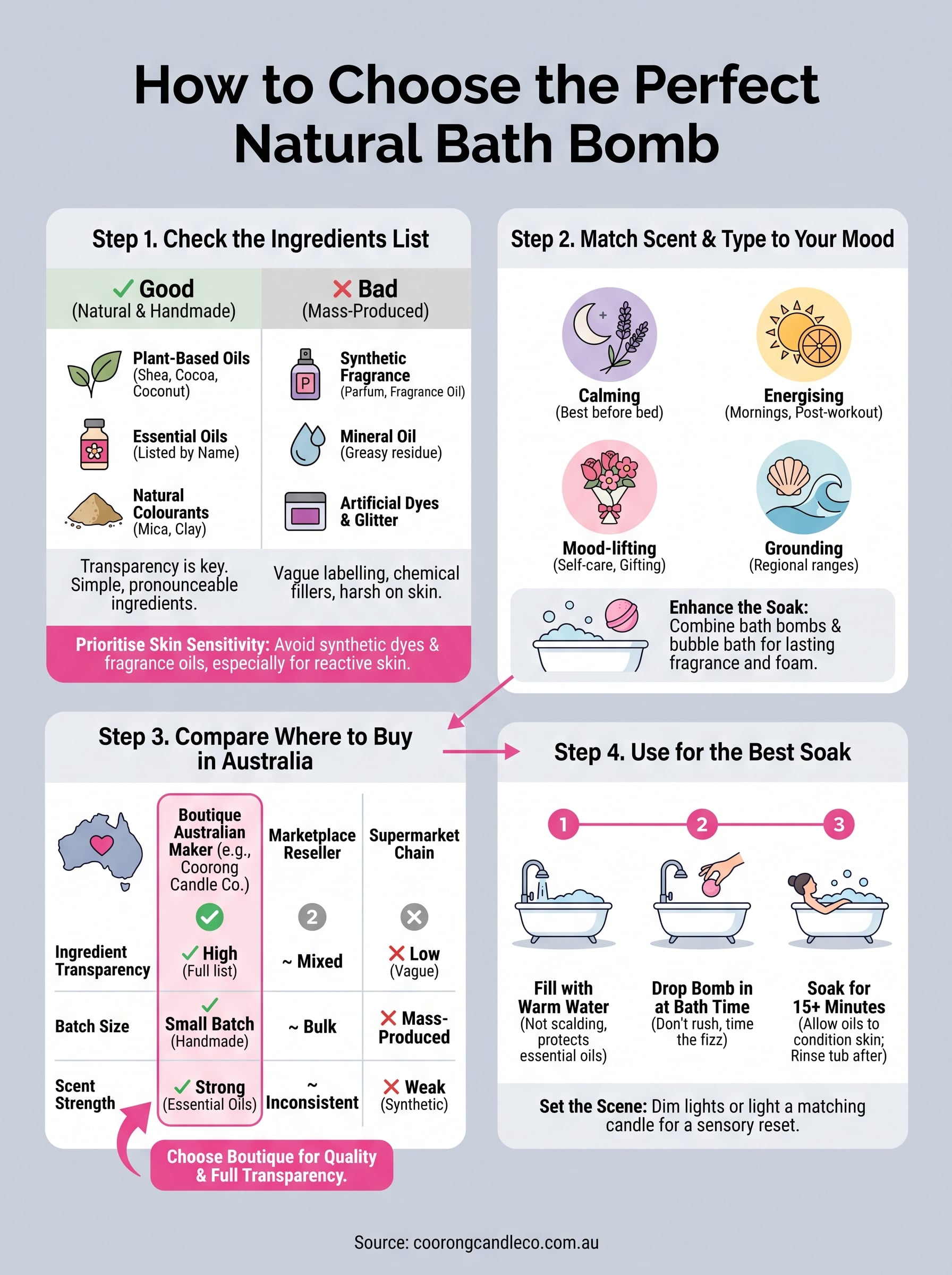
Step 1. Check the ingredients list
Grab a bath bomb and flip it over before you commit to buying. A genuine natural bath bomb should list recognisable ingredients: sodium bicarbonate, citric acid, a plant oil like shea or cocoa butter, essential oils and maybe a natural colourant such as mica. If you see "parfum", "fragrance oil" or a string of unpronounceable preservatives, you're looking at a mass-produced product dressed up as artisan, which is why vegan bath bombs made in Australia are worth a closer look.
If you can't pronounce it, you probably shouldn't be soaking in it.
Here's a quick checklist to run through on any product page:
- Base: sodium bicarbonate and citric acid (standard, harmless fizzing agents)
- Moisturiser: shea butter, cocoa butter or coconut oil, not mineral oil
- Scent: essential oils listed by name, not vague "fragrance"
- Colour: mica or clay, not artificial dye numbers
- Preservatives: minimal or none, since handmade batches sell fast
Australian-made bombs from smaller producers tend to be more transparent here, simply because they're not hiding behind a supply chain of ten different suppliers. Transparency on the label is usually a decent proxy for quality in the bath, too.
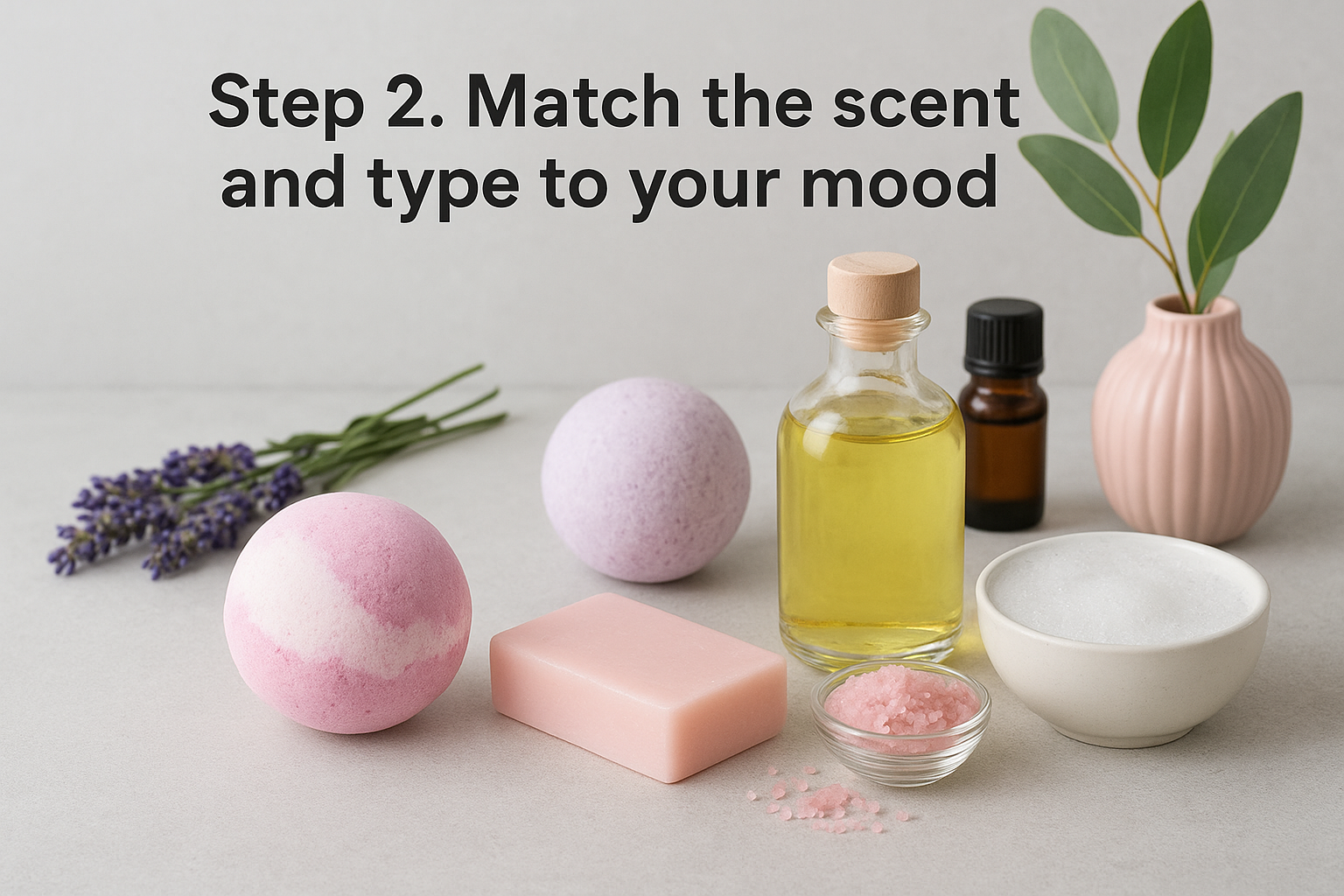
Step 2. Match the scent and type to your mood
Once you've sorted the ingredients, think about why you're actually running the bath. A relaxing bath bomb with lavender or chamomile suits a wind-down after work, while something citrus-based like grapefruit or lemon myrtle works better for a morning reset before a big day. Matching scent to mood sounds obvious, but most people grab whatever's on the shelf and wonder why it doesn't hit the mark.
Scent families and what they're good for
- Lavender, chamomile, sandalwood: calming, best before bed
- Citrus, peppermint, eucalyptus: energising, good for mornings or post-workout
- Rose, geranium, ylang ylang: mood-lifting, suited to self-care rituals or gifting
- Sea salt, coastal botanicals: grounding, popular in regional Australian ranges
The right scent turns a bath from a wash into a ritual.
Bath bombs, bubble bath, or both
Don't assume it's one or the other. Combining bath bombs and bubble bath gives you fizz plus lasting foam, which holds fragrance in the air longer than a bomb alone. If you're after a fuller sensory soak, pair a bomb bath bomb with a matching bubble bath or one of the best smelling reed diffusers in Australia from the same scent family rather than mixing unrelated fragrances, which tend to clash rather than blend.
Step 3. Compare where to buy in Australia
Once you know what to look for, the next question is where to actually spend your money. Options range from supermarket chains to boutique studios, and the gap in quality between them is bigger than the price tag suggests. When you want to buy bath bombs Australia-wide with confidence, weigh up sourcing, batch size and shipping before you check out.
Cheap and cheerful rarely survives contact with your bathtub.
Supermarket vs boutique vs direct from the maker
| Where you buy | Ingredient transparency | Batch size | Typical scent strength |
|---|---|---|---|
| Supermarket chain | Low, vague labelling | Mass-produced | Weak, synthetic |
| Marketplace reseller | Mixed, often imported | Bulk | Inconsistent |
| Boutique Australian maker | High, full ingredient list | Small batch | Strong, essential-oil based |
Boutique studios that sell direct, rather than through a crowded marketplace, tend to control quality from mixing bowl to postage box, one of several benefits of buying Australian made products.
Shopping local vs overseas imports
Searching "bath bombs near me" often surfaces the same overseas stock repackaged under a local name, so check the "about" page for where products are actually made. Our own bath bombs range is hand-poured in South Australia, with full ingredient lists on every listing, which is worth comparing against anything shipped in bulk from an unnamed factory.
Step 4. Use your bath bomb for the best soak
Even a well-made bath bomb underperforms if you rush the soak. Fill the tub with warm, not scalding, water first, since heat that's too high breaks down essential oils before you get the full scent payoff. Drop the bomb in once you're ready to get in, not twenty minutes earlier, since how long a bath bomb lasts in water decides whether the fizz and fragrance peak while you're actually soaking or fade into empty water.
The best soak isn't rushed, it's timed to match the fizz.
Getting the timing and setup right
Getting bath bombs in bath water right comes down to a few simple habits:
- Soak for at least fifteen minutes so plant oils have time to condition skin
- Keep the water level high enough to fully submerge the bomb
- Dim the lights or light a matching soy candle for a proper sensory reset
- Rinse the tub straight after, since mica and botanicals can settle on enamel
Pairing for a fuller ritual
A bath bomb on its own is good, but pairing it with a reed diffuser in the same scent family in the room next door extends the experience well past bath time, so the fragrance lingers long after you've climbed out.
Time for a relaxing soak
Choosing a proper bath bomb isn't complicated once you know what to check. Read the ingredients, match the scent to your mood, buy from a maker who's transparent about where and how they're made, and give yourself enough time in the tub to actually feel the benefit. Handmade bath bombs made with plant oils and essential oils will always outperform a supermarket fizzer, both on your skin and in your nose.
You don't need to guess which australian bath bombs are worth your money. Every batch we make at Coorong Candle Co. is hand-poured in South Australia with ingredients listed plainly on the product page, no vague "fragrance" hiding synthetic fillers. If you're ready to swap the chemical soak for the real thing, browse our handmade bath bombs collection and pick a scent that actually matches the soak you're after tonight.