
Reed diffusers are one of the simplest ways to keep your home smelling incredible without ever striking a match. But the oil you choose makes all the difference, the wrong one can clog your reeds, fade within days, or smell nothing like what you expected. Finding the best essential oils for reed diffusers starts with understanding which oils diffuse well through rattan reeds and which ones need a bit of help from a carrier oil to perform properly.
At Coorong Candle Co., we spend a lot of time working with fragrance. Our luxury reed diffusers are crafted right here in South Australia, and that hands-on experience has taught us exactly what makes a scent last and fill a room. We've put together this guide to share what we've learned, not just which essential oils work best, but how to blend them and pair them with the right base for a diffuser that actually delivers.
Below, you'll find six essential oils worth trying, along with practical blend ideas you can mix at home. Whether you're building your first DIY reed diffuser or looking to improve the scent throw of one you've already got, this list will point you in the right direction.
1. Coorong Candle Co. luxury reed diffusers
Before you start sourcing the best essential oils for reed diffusers and mixing your own formula, it's worth considering a professionally blended option first. Coorong Candle Co. hand-crafts each diffuser using fragrance profiles inspired directly by South Australian landscapes, giving you a finished product that performs reliably straight from the box without any measuring, mixing, or guesswork involved.
Why a ready-made reed diffuser beats DIY for many homes
DIY diffusers require you to balance the carrier-to-essential-oil ratio precisely, and choosing the wrong reed material can mean barely any scent ever reaches the room. A quality ready-made diffuser removes that uncertainty entirely, delivering a pre-formulated blend built for steady, consistent diffusion from the moment you unwrap it.
Best Coorong-style scent families to start with
Our range covers three main scent directions: fresh and coastal, warm and woody, and soft florals. Fresh and citrus-forward profiles work well in kitchens and open-plan living spaces where you want something clean and uplifting. Richer, grounded profiles like sandalwood or cedarwood suit bedrooms and studies better, where a calmer, more settled atmosphere is the goal.
How to get a stronger scent and make it last longer
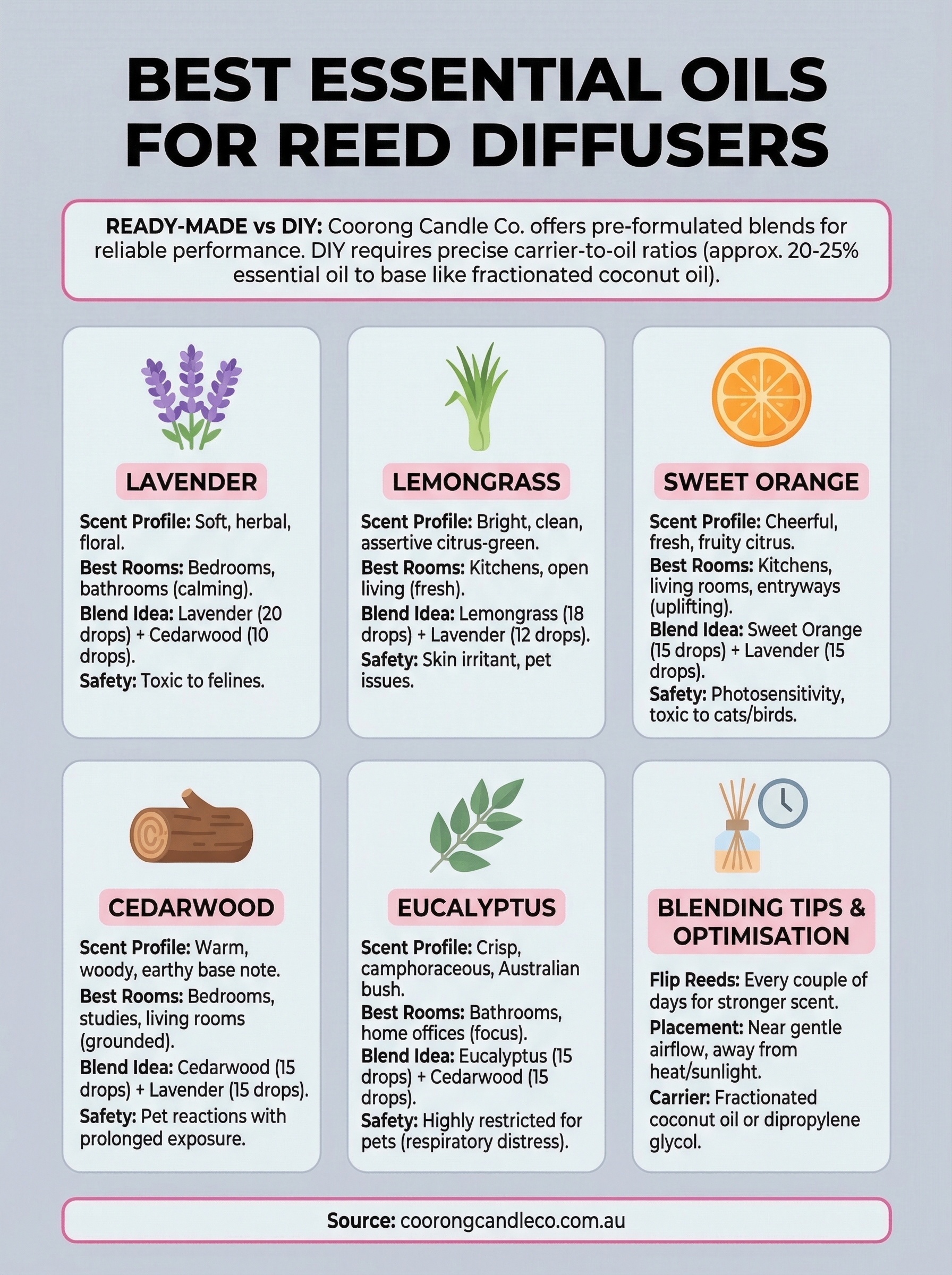
The most effective way to improve performance is to flip your reeds every couple of days, which draws fresh oil up to the dry top end. Positioning the diffuser near a gentle source of airflow, such as close to a doorway, helps carry the scent further through the room without the liquid evaporating too quickly from direct heat exposure.
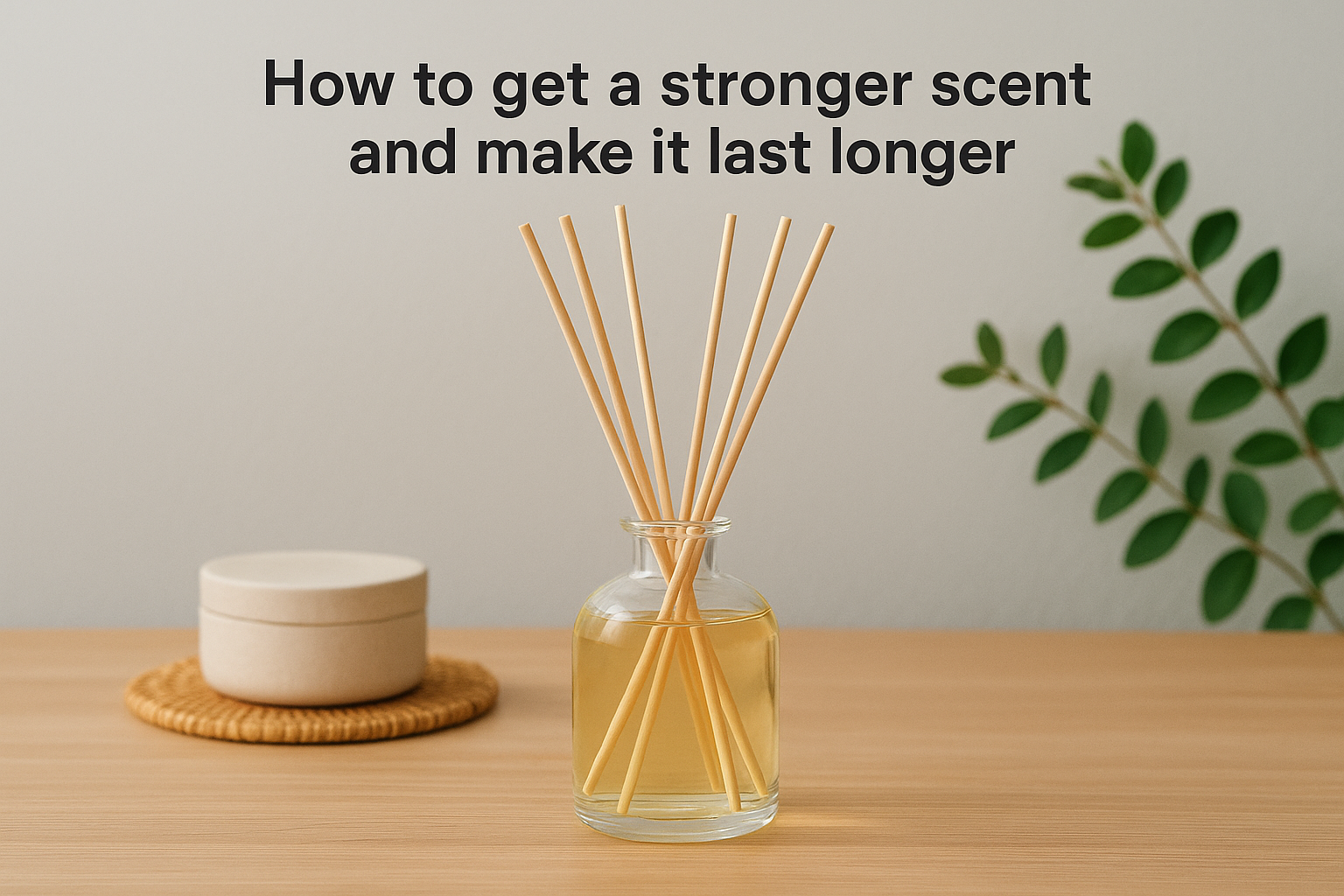
Keep your diffuser well away from direct sunlight and heating vents, as both will significantly shorten its lifespan and noticeably weaken the fragrance output over time.
Price guide and what to look for in a quality diffuser
Quality reed diffusers typically sit between $30 and $60 AUD for a 100-200ml bottle, which lasts roughly two to three months with regular reed flipping. When comparing products, look for those that clearly state their fragrance load percentage and carrier oil type, since vague ingredient information usually signals a lower-quality formula that will underperform through the reeds regardless of how often you flip them.
2. Lavender essential oil
Lavender is one of the most reliable picks when you are looking for the best essential oils for reed diffusers. Its middle-note character means it holds its scent at a steady pace rather than fading quickly, which makes it practical and consistent for a home diffuser setup.
Scent profile and why it works in reed diffusers
The fragrance itself is soft, herbal, and slightly floral, and it diffuses cleanly through rattan reeds without leaving residue that blocks the pores. Its molecular weight sits in a mid-range, meaning it travels through the reed at a balanced rate rather than evaporating too fast or moving too slowly.
Best rooms and the vibe it creates
Bedrooms and bathrooms are the natural home for lavender, where its calming character supports relaxation and wind-down routines. It works well in smaller rooms where its subtle presence fills the space without becoming overpowering during long periods indoors.
Placing a lavender diffuser in your bedroom about an hour before sleep can help create a consistent sensory cue that your body begins to associate with rest.
Blend ideas with drop ratios for a reed diffuser base
Mix lavender with a carrier oil such as fractionated coconut oil or dipropylene glycol at roughly a 20-30% essential oil ratio to your base. Try these in a 100ml bottle:
- Lavender and cedarwood: 20 drops lavender, 10 drops cedarwood
- Lavender and sweet orange: 15 drops lavender, 15 drops sweet orange
- Lavender and eucalyptus: 20 drops lavender, 8 drops eucalyptus
Safety notes, including pets and sensitivities
Lavender is generally well-tolerated by most adults but can cause skin sensitisation in high concentrations. Keep your diffuser away from cats, as lavender essential oil carries compounds that are toxic to felines with repeated or prolonged exposure.
3. Lemongrass essential oil
Lemongrass is a strong contender when you are searching for the best essential oils for reed diffusers, particularly if you want something bright, clean, and assertive that fills a room without needing a high oil concentration to make an impact.
Scent profile and why it throws well through reeds
Lemongrass carries a sharp, citrus-green scent with a slightly earthy undertone that gives it more staying power than pure citrus oils. Its relatively light molecular weight allows it to move through rattan reeds efficiently, meaning you get noticeable scent throw even at lower concentrations in your diffuser blend.
Best rooms, seasons, and when to avoid it
This oil works best in kitchens, bathrooms, and open living areas, where its fresh character cuts through cooking smells or humidity with ease. Spring and summer are the ideal seasons for lemongrass, though its intensity can feel overwhelming in small, enclosed rooms during the cooler months.
Avoid placing a lemongrass diffuser in a home office where you spend long unbroken hours, as its sharpness can become fatiguing with extended exposure.
Blend ideas with drop ratios for a reed diffuser base
Use a 20-25% essential oil ratio in a 100ml bottle with fractionated coconut oil or dipropylene glycol as your carrier:
- Lemongrass and lavender: 18 drops lemongrass, 12 drops lavender
- Lemongrass and cedarwood: 15 drops lemongrass, 15 drops cedarwood
- Lemongrass and sweet orange: 20 drops lemongrass, 10 drops sweet orange
Safety notes, including pets and sensitivities
Direct contact with neat lemongrass oil can irritate sensitive skin, so wash your hands thoroughly after handling it. Keep your diffuser away from cats and dogs, as lemongrass contains compounds that cause digestive upset and adverse skin reactions in pets with repeated exposure.
4. Sweet orange essential oil
Sweet orange is a bright, cheerful pick among the best essential oils for reed diffusers, bringing an instant lift to any room without needing a high concentration to make an impact.
Scent profile and what it adds to blends
Sweet orange carries a fresh, fruity citrus scent with a soft sweetness underneath that makes it one of the easiest oils to blend with. Unlike heavier oils, it acts as a top-note brightener, lifting whatever it's paired with and preventing richer base notes like cedarwood from feeling too heavy or closed-in.
Best rooms and the vibe it creates
Kitchens, living rooms, and entryways are where sweet orange performs best. Its uplifting, energising character suits spaces where you spend active daytime hours rather than rooms designed for winding down.
A sweet orange diffuser placed near your front door creates a welcoming first impression that feels fresh and clean rather than overpowering for anyone walking in.
Blend ideas with drop ratios for a reed diffuser base
Use a 20-25% essential oil ratio in a 100ml bottle with fractionated coconut oil or dipropylene glycol as your base:
- Sweet orange and lavender: 15 drops sweet orange, 15 drops lavender
- Sweet orange and cedarwood: 20 drops sweet orange, 10 drops cedarwood
- Sweet orange and lemongrass: 18 drops sweet orange, 10 drops lemongrass
Safety notes, including pets and sensitivities
Sweet orange is one of the gentler citrus oils, but it can still cause photosensitivity if it contacts skin before sun exposure. Keep your diffuser away from cats and small birds, as citrus compounds are toxic to both with regular inhalation exposure over time.
5. Cedarwood essential oil
Cedarwood is one of those oils that quietly holds an entire blend together, which is exactly why it earns a place among the best essential oils for reed diffusers. Its warm, woody depth gives blends a grounded quality that prevents lighter top notes from smelling sharp or one-dimensional.
Scent profile and how it anchors a blend
The scent is dry, slightly smoky, and earthy, with a soft resinous quality that lingers well beyond what most top-note oils can manage on their own. Cedarwood works as a base note, meaning its larger molecules move slowly through the reeds and release gradually over time, which creates a more consistent scent throw across the life of your diffuser.
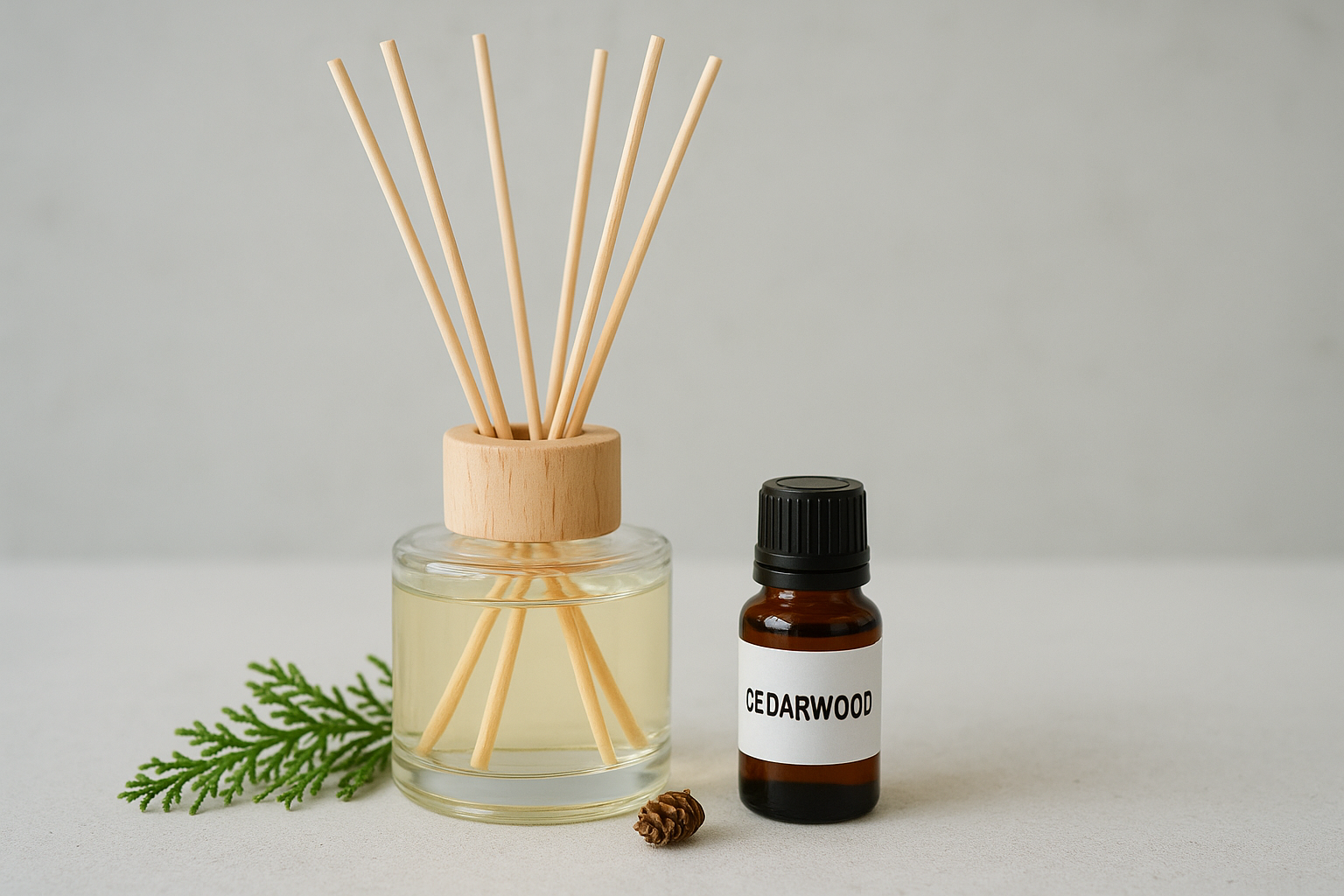
Pairing cedarwood with a citrus top note is one of the most reliable ways to build a balanced blend that stays interesting rather than fading into a flat, single-note background.
Best rooms and the vibe it creates
Bedrooms, studies, and living rooms suit cedarwood well. Its calm, settled character creates an atmosphere that feels lived-in and comfortable rather than clinical or overly perfumed.
Blend ideas with drop ratios for a reed diffuser base
Use a 20-25% essential oil ratio in a 100ml bottle with fractionated coconut oil or dipropylene glycol as your base:
- Cedarwood and lavender: 15 drops cedarwood, 15 drops lavender
- Cedarwood and sweet orange: 12 drops cedarwood, 18 drops sweet orange
- Cedarwood and lemongrass: 10 drops cedarwood, 20 drops lemongrass
Safety notes, including pets and sensitivities
Cedarwood is generally well-tolerated by adults, but keep it away from cats and dogs, as wood-derived essential oils can cause adverse reactions in pets with prolonged inhalation exposure.
6. Eucalyptus essential oil
Eucalyptus earns its spot among the best essential oils for reed diffusers, particularly in Australian homes where the scent carries genuine regional meaning. Its crisp, camphoraceous character makes it one of the most distinctive options on this entire list.
Scent profile and why people love it in Australian homes
This oil delivers a sharp, clean, and cooling fragrance with a minty undertone that instantly reads as fresh rather than synthetic. Australians connect with it on a deeper level because it mirrors the surrounding natural landscape, making it feel less like a commercial product and more like a genuine sensory link to the Australian bush.
Best rooms and how to stop it smelling medicinal
Bathrooms and home offices are the ideal spots for a eucalyptus diffuser, where its clean edge supports focus or mimics a spa-like setting. To stop it smelling clinical, pair it with a warm base note like cedarwood or a soft floral like lavender, which rounds off the sharpness without burying it entirely.
Never run eucalyptus as a solo note in a small room, since undiluted it can quickly tip from refreshing into overwhelming.
Blend ideas with drop ratios for a reed diffuser base
Use a 20-25% essential oil ratio in a 100ml bottle with fractionated coconut oil or dipropylene glycol as your carrier:
- Eucalyptus and cedarwood: 15 drops eucalyptus, 15 drops cedarwood
- Eucalyptus and lavender: 12 drops eucalyptus, 18 drops lavender
- Eucalyptus and lemongrass: 15 drops eucalyptus, 15 drops lemongrass
Safety notes, including pets and sensitivities
Eucalyptus is one of the most restricted essential oils around pets, particularly cats, dogs, and birds, as low-level inhalation exposure can cause respiratory distress. Always position your diffuser in a well-ventilated space that animals cannot access, and dilute properly before use.
Quick pick and next steps
Choosing the best essential oils for reed diffusers comes down to what you want the room to feel like. Lavender and cedarwood are the most versatile starting points, working well across bedrooms, living rooms, and studies without requiring much adjustment. Lemongrass and sweet orange suit brighter, more active spaces, while eucalyptus belongs in bathrooms or home offices where its clean, crisp character actually earns its place rather than just adding noise.
Blending your own formula is rewarding, but it does take some trial and error before you land on the right carrier-to-oil ratio for consistent scent throw. If you would rather start with something professionally formulated, our Coorong reed diffusers are hand-poured in South Australia using signature fragrances inspired by the region's natural landscape. Each one arrives ready to use, with 10 natural rattan reeds and a 200ml glass bottle that delivers months of fragrance without any mixing on your part.