
Walk into any well-styled coastal home and you'll notice it straight away, that calm, grounded feeling that makes you want to stay a while. It's no accident. Coastal interior design characteristics follow a distinct set of principles: specific colour palettes, natural materials, and textured layers that mirror the shoreline. Whether you live five minutes from the beach or hours inland, understanding these elements lets you recreate that sense of ease in your own space.
At Coorong Candle Co., we draw daily inspiration from South Australia's coastline, the muted salt-bush greens, bleached driftwood, and wide-open skies of the Coorong region. Our handmade soy candles and reed diffusers are designed to complement exactly this kind of living: relaxed, natural, and rooted in place. So a guide to coastal design felt like a natural extension of what we do, helping you build a home that engages every sense.
This article breaks down the core colours, materials, textures, and finishing touches that define coastal interiors. You'll walk away with a clear understanding of each element and practical direction on how they work together to create that signature light, airy, beach-inspired aesthetic.
Why coastal design stays popular
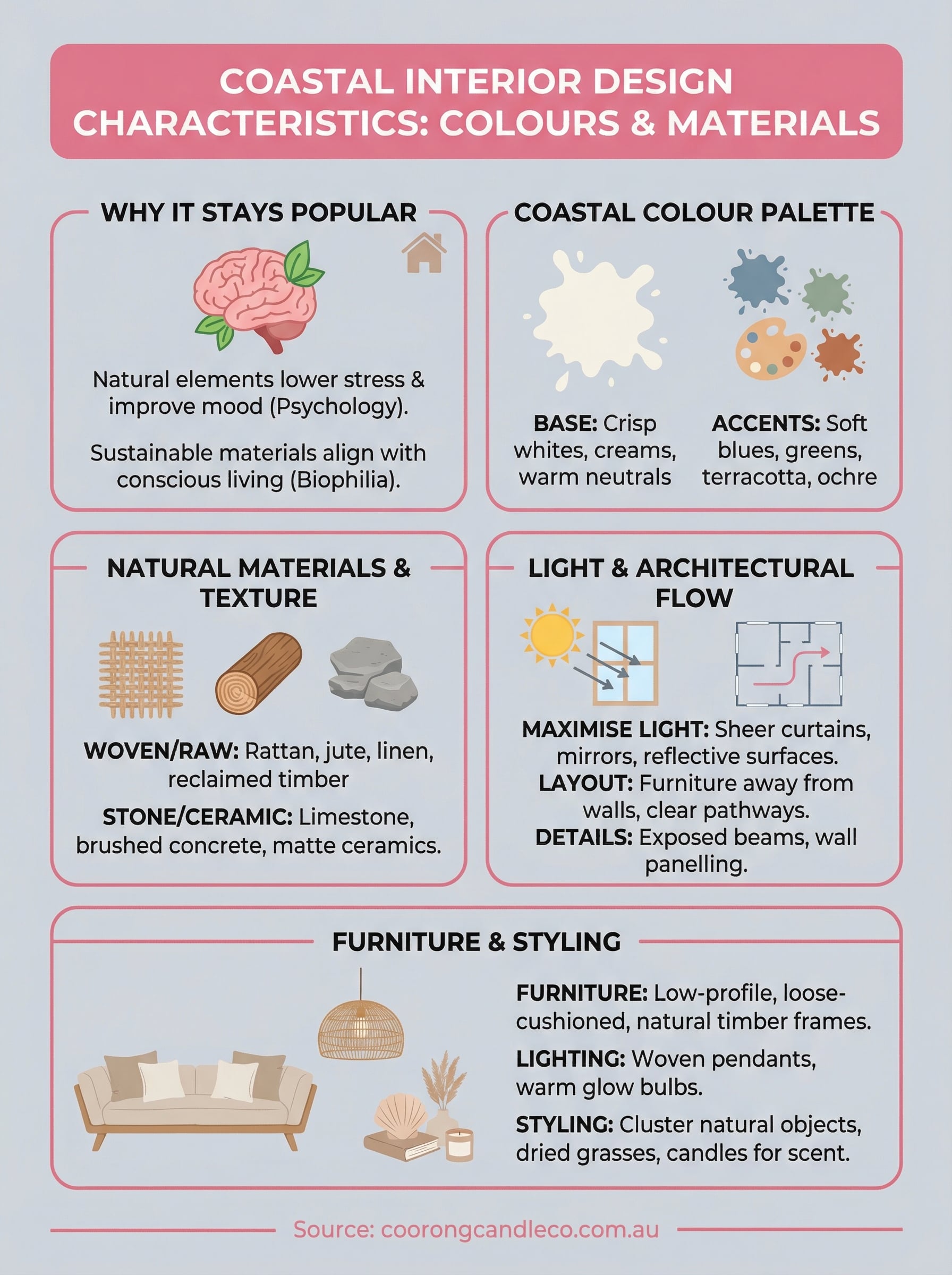
Coastal interiors have never really gone out of fashion, and there's a clear reason for that. Natural environments have a measurable effect on how people feel at home, and the coastal aesthetic taps directly into that. Research in environmental psychology consistently shows that exposure to natural elements, even simulated ones through materials, light, and colour, lowers stress and improves mood. When a design style has that kind of foundation, it outlasts short-lived trends.
The psychology behind natural spaces
Humans are drawn to open water, soft textures, and diffused natural light because these signals connect to how we experience safety and calm. In a coastal home, the combination of pale tones and organic materials mimics the visual quiet of a shoreline. You're not just decorating; you're actively shaping how your nervous system responds to your surroundings. That's a significant driver behind why so many people return to this aesthetic even after experimenting with bolder styles.
The coastal look persists because it addresses something deeper than taste: it answers a genuine need for rest and restoration in the home.
Studies around biophilic design, which is the practice of incorporating natural elements into built spaces, support this directly. Biophilic principles align closely with coastal interior design characteristics: natural materials, access to daylight, muted earth and water-based colours, and layered textures that reference the outdoors.
How coastal style fits the way people live today
Modern homes tend to lean toward open-plan layouts with fewer walls and more flow between rooms. The coastal palette of whites, warm neutrals, and soft blues suits these spaces because it stops large areas from feeling heavy or compartmentalised. You don't need a beach house footprint to benefit; even a compact apartment gains a sense of breathing room when you apply the right colours and materials.
Sustainability has also pushed the coastal style forward. Rattan, linen, jute, and reclaimed timber, all staples of coastal interiors, align with growing consumer interest in low-impact, natural materials. Choosing these for your home means you're making decisions that reflect both your aesthetic preferences and your values around conscious living. That overlap between style and substance is part of why coastal design has built such a durable following across Australia and beyond.
Coastal colour palette and how to use it
Colour is the fastest way to shift the atmosphere of a room, and within coastal interior design characteristics, it follows a clear logic: start pale, layer softly, and let natural light do the work. The goal isn't stark minimalism; it's a layered warmth that reflects how light behaves near the ocean, shifting between crisp whites, cool blues, and the muted tones of sand and dried coastal grass.
The base: whites, creams, and warm neutrals
Your walls, floors, and larger furniture pieces form the foundation. Crisp white and warm off-white work well here because they bounce light around the room and create the open, airy feel that coastal interiors depend on. Warm creams and soft linen tones sit comfortably alongside natural timber and woven textures without the room feeling clinical or cold.
Choosing a white with a slight warm undertone, rather than a pure cool white, prevents the space from feeling harsh under strong midday sun.
Accent colours: blues, greens, and coastal naturals
This is where you build character into the palette. Soft sage greens and dusty blues reference the tones of shallow water, sea grass, and eucalyptus, all familiar to the Australian coastal landscape. These colours work best in cushions, throws, ceramics, and artwork rather than large painted walls, so you can shift them as your taste evolves.
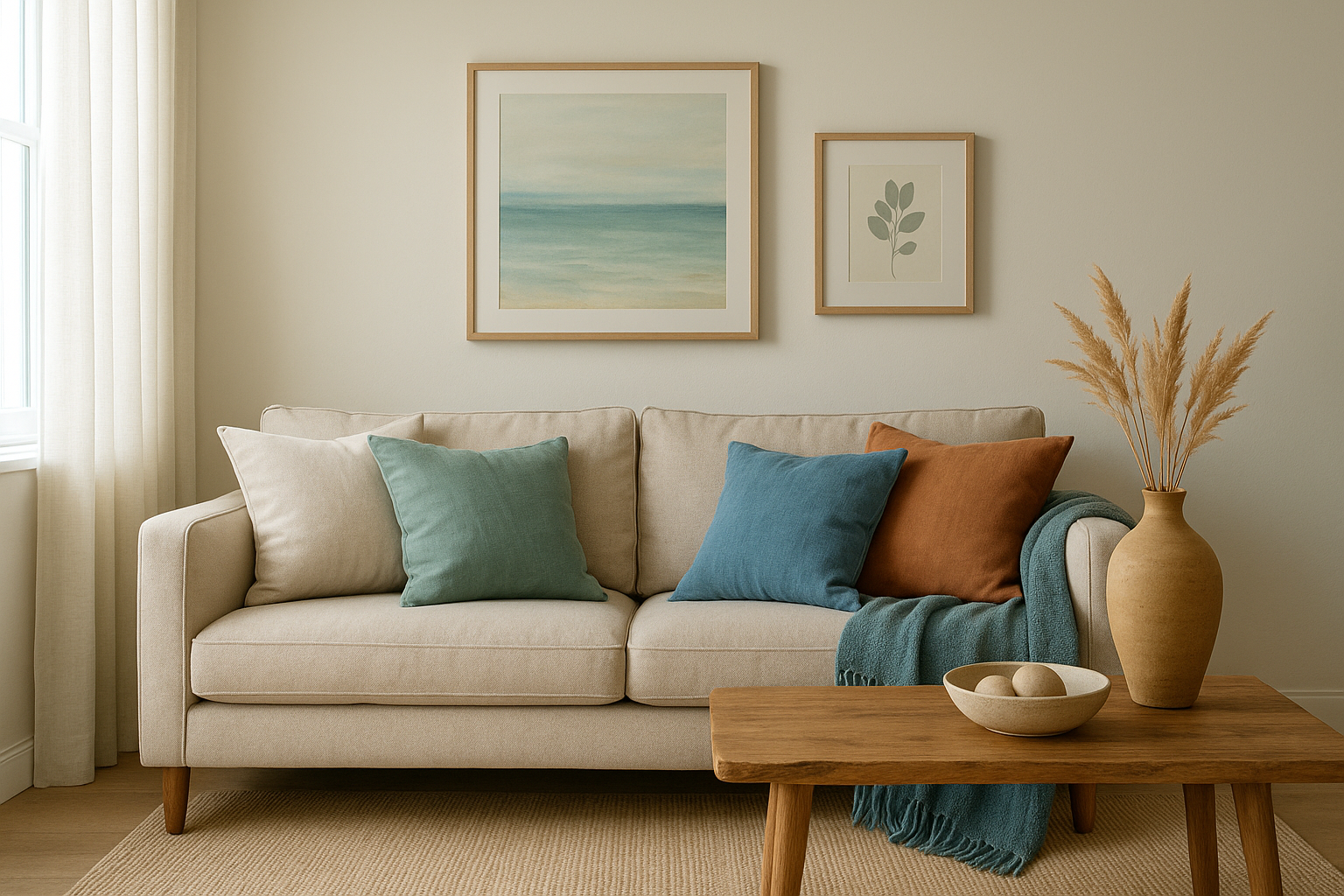
Sandy terracotta and bleached ochre are underused accent options that add warmth without breaking the palette's calm quality. Use them sparingly through small objects or a single statement textile to keep the overall look grounded and cohesive.
Natural materials and texture cues
Colour sets the tone, but materials and texture give a coastal interior its depth. Within coastal interior design characteristics, natural materials aren't decorative add-ons; they carry the visual and tactile weight of the space. The goal is to layer different textures so the room feels collected rather than curated, as though each piece has a story tied to the landscape.
Woven, raw, and reclaimed finishes
Rattan, jute, and seagrass are the workhorses of coastal styling. Woven furniture and baskets introduce organic pattern and warmth without adding visual clutter. Use rattan in chairs, pendant light shades, or side tables, and pair them with raw linen cushions or a chunky knit throw to build contrast between tight and loose weaves.
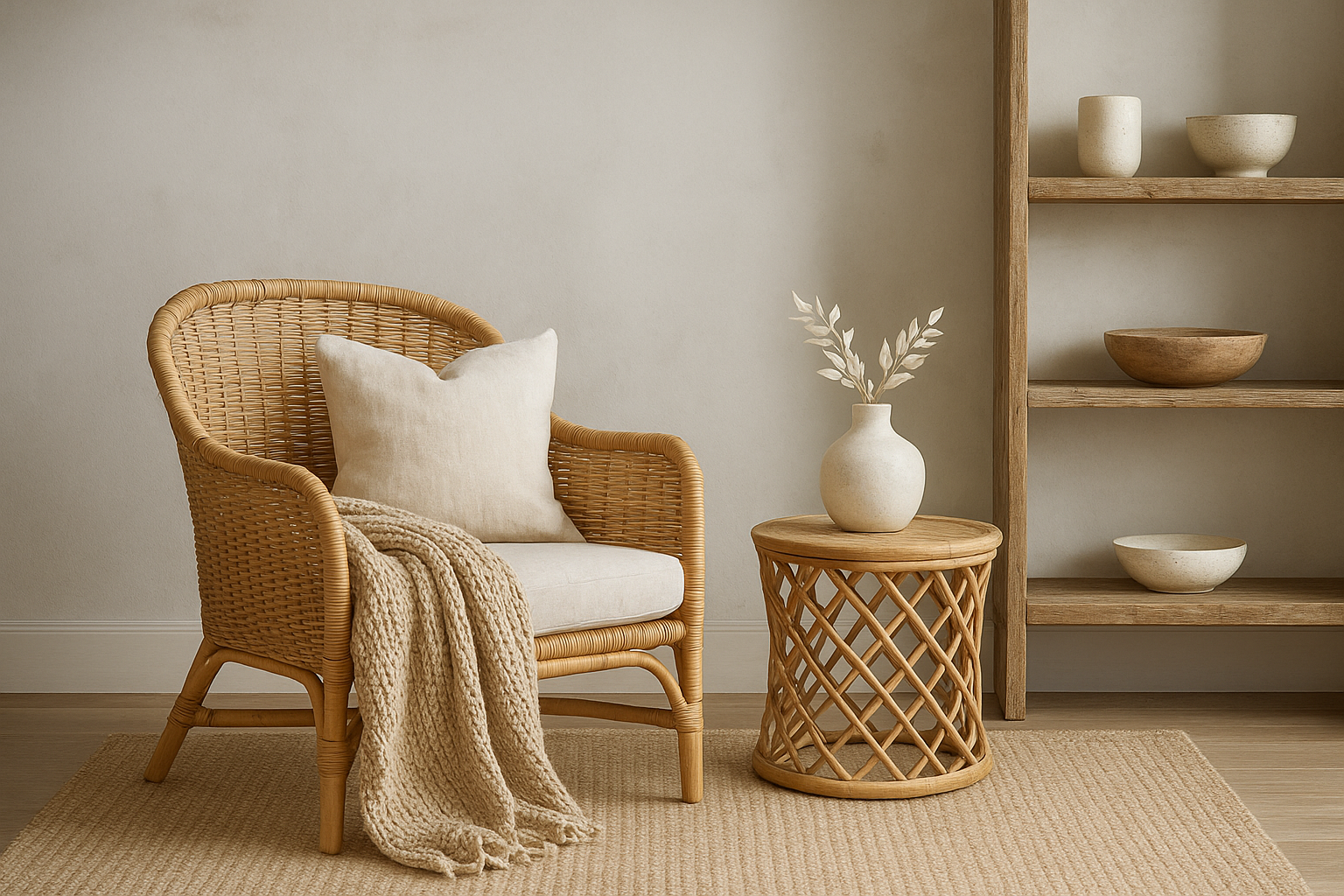
The more varied your textures, the more settled and considered the space feels, even when the palette stays deliberately restrained.
Reclaimed timber adds a grounding quality that no painted surface can replicate. Weathered timber shelving, driftwood-style coffee tables, and raw-edge boards bring that bleached, salt-worn quality indoors. Look for pieces with visible grain and natural imperfections rather than overly polished finishes.
Stone, ceramic, and natural fibre
Limestone, travertine, and brushed concrete work well as floor and surface materials because their matte, porous quality absorbs light rather than reflecting it, which keeps the room feeling soft. On bench tops and shelving, simple ceramic pieces in sandy or muted glazes add tactile interest without competing with the textile layers elsewhere in the room. Natural fibre rugs in jute or sisal tie floor space together and reinforce the organic quality that defines this style.
Light, layout and coastal architecture details
Light is the defining feature of any well-executed coastal interior. Natural light and spatial flow work together to create that open, unhurried quality that coastal interior design characteristics are known for. Without the right approach to both, even the best colour palette and material choices will fall short of that genuine beach-inspired ease.
Maximising natural light
Your window treatments are the first thing to reconsider. Sheer linen curtains or simple Roman blinds in a pale neutral let sunlight filter through rather than block it out, keeping the room warm and connected to the outdoors. Avoid heavy drapes in dark colours because they absorb light and work directly against the airy quality this style depends on.
Positioning mirrors opposite windows amplifies the light you already have, effectively doubling the sense of space in a coastal room.
Reflective surfaces like sea glass, pale ceramic, and brushed brass can also direct and soften light across the room without overwhelming the natural material palette you've built elsewhere. These additions work quietly in the background, contributing to the overall glow without demanding attention.
Layout choices that open the space
Coastal rooms breathe best when furniture sits away from walls rather than pushed tight against them. Pulling pieces slightly inward creates a sense of flow and makes even modestly sized rooms feel more generous. Keep pathways clear and sightlines open between living areas and windows wherever your floor plan allows.
Architectural details like exposed timber beams and board-and-batten wall panelling reinforce the coastal quality without requiring a full renovation. These features add visual texture and structural character that ties the space firmly to its natural surroundings.
Furniture, lighting and styling that feels coastal
Furniture selection and styling complete the picture that coastal interior design characteristics build through colour and material. The pieces you choose need to work with the palette and textures already in place, adding comfort and proportion without crowding the space or breaking the relaxed rhythm of the room.
Furniture that suits the scale and mood
Choose low-profile sofas and loose-cushioned seating over structured, formal pieces. Coastal furniture tends to sit closer to the ground, which reinforces the unhurried, relaxed quality this style depends on. Natural timber frames, rattan inserts, and linen or cotton upholstery are the most reliable choices because they read as effortless rather than over-considered.
Avoid ornate or heavily carved furniture; clean lines and visible natural grain keep the coastal mood intact without the room feeling bare.
Lighting choices that reinforce the style
Woven pendant shades in rattan or seagrass are the most direct lighting choice for a coastal room. They soften overhead light and add organic texture at eye level. Pair them with warm-toned globe bulbs to replicate the quality of late afternoon coastal light rather than the cool brightness of standard LED.
Table lamps with ceramic bases in sandy or muted glazes work well on side tables and sideboards, building warmth at multiple heights across the room.
Styling layers that bring it together
Your styling layer is where the room starts to feel lived-in. Grouping natural objects like shells, smooth river stones, or dried grasses in clusters of three creates visual interest without clutter. Add a few well-chosen books and a quality candle in a complementary scent to ground the space and engage multiple senses at once.
A calm coastal finish
Coastal interior design characteristics come down to one consistent principle: every decision, from colour to material to lighting, works toward a feeling of ease rather than effort. Pale palettes, natural textures, and considered layers don't just look good together; they create the kind of environment where you genuinely unwind. That's the outcome worth designing toward.
Your home doesn't need to sit beside the ocean to carry this quality. Each element you add, whether it's a woven pendant shade, a reclaimed timber shelf, or a sheer linen curtain, contributes to a larger sensory experience. Scent plays a significant role in that experience too. A fragrance that references the natural landscape anchors the mood in a way that visual styling alone can't achieve. Browse our reed diffusers and soy candles to find a scent that completes your coastal space.