
Stress has a way of building up without you noticing, until your shoulders are up near your ears and sleep feels like a distant memory. One of the simplest, most accessible tools for managing that tension sits inside a small bottle. Essential oils for stress relief have been used for centuries across cultures, and modern research is catching up, confirming what many have long known: certain plant extracts genuinely calm the nervous system and help the body shift out of fight-or-flight mode.
But with dozens of oils on the market, knowing which ones actually work, and how to use them properly, makes all the difference. Not every lavender is created equal, and some lesser-known oils outperform the popular picks in clinical studies. Whether you're new to aromatherapy or looking to refine your routine, having a clear, evidence-based shortlist saves time and money. At Coorong Candle Co., we work with natural fragrances daily, hand-pouring soy candles and crafting home fragrance products inspired by the South Australian landscape. That hands-on experience with scent, botanicals, and their effects on mood is exactly what shaped this guide.
Below, you'll find 10 of the most effective essential oils for easing stress, along with practical ways to use each one at home. We've included what the research says, which blends complement each other, and tips for getting the most out of every drop, so you can build a calming ritual that genuinely works for you.
1. Lavender
Lavender is the most widely researched essential oil for stress relief, and the evidence backs up its reputation. Multiple clinical trials have shown it reduces anxiety, lowers heart rate, and supports better sleep. If you only add one oil to your routine, this is the one to start with.
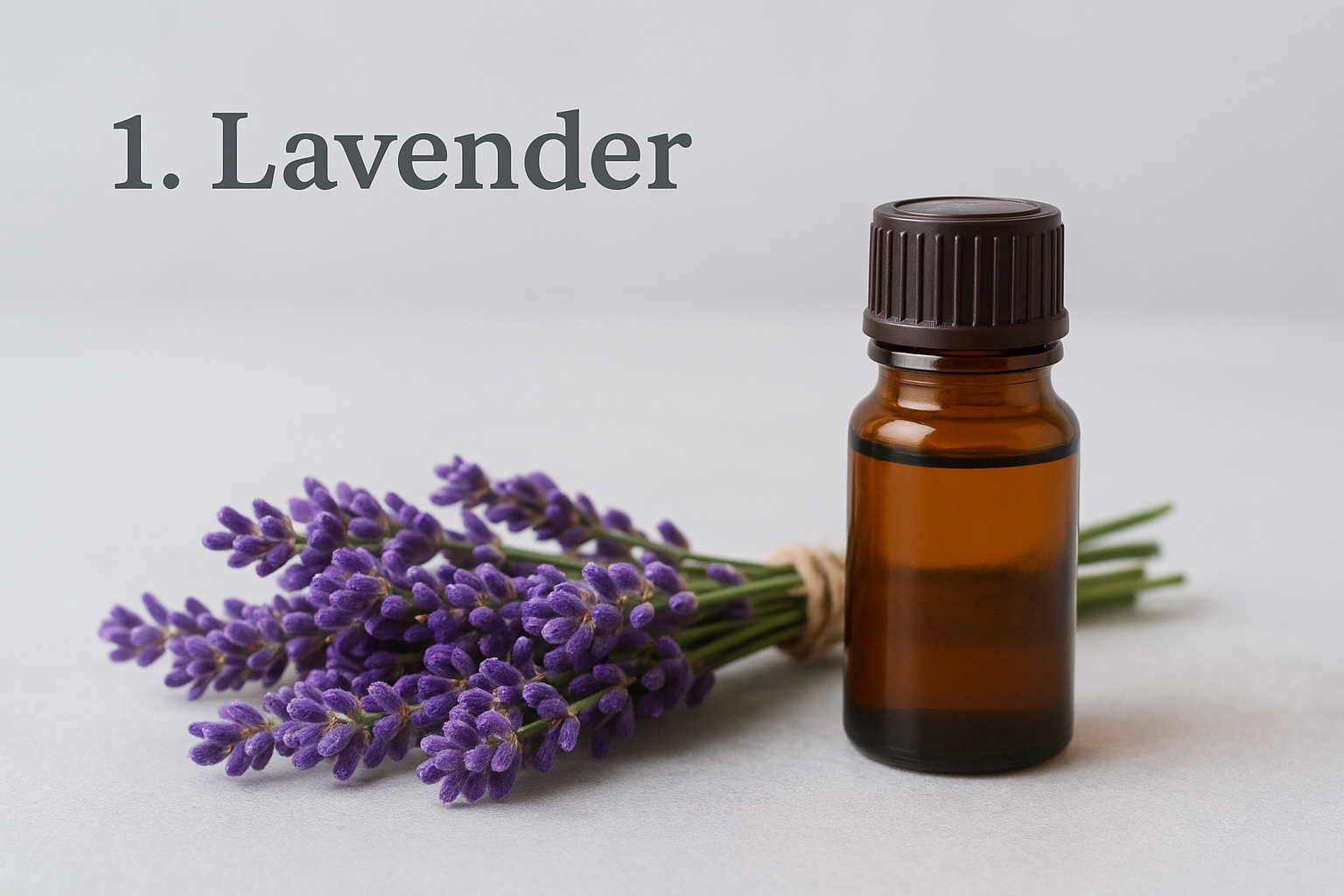
What lavender smells like
Lavender has a soft, floral scent with light herbal undertones and a faint sweetness. It is not sharp or overpowering. Most people find it immediately familiar and calming, which is part of why it became the default choice in aromatherapy. Steam-distilled lavender from France or Bulgaria tends to have the cleanest, most balanced scent.
Why people use lavender for stress relief
The compound linalool, which occurs naturally in lavender, acts on GABA receptors in the brain, the same receptors that anti-anxiety medications target, though at a much milder level. Studies published in peer-reviewed journals have found that inhaling lavender oil reduces cortisol levels and self-reported anxiety in people preparing for stressful medical procedures.
Lavender is one of the few essential oils for stress relief with enough human trial data to support specific therapeutic claims, not just anecdotal reports.
How to use lavender for stress relief
Add 4 to 6 drops to a diffuser and run it for 30 to 60 minutes in the evening. You can also place 2 drops on your pillow before bed, or mix 5 drops with 10ml of a carrier oil like jojoba for a simple massage blend applied to the wrists, neck, or shoulders.
- Diffuser: 4 to 6 drops, 30 to 60 minutes
- Topical blend: 5 drops per 10ml carrier oil
- Bath: 6 to 8 drops mixed with a tablespoon of liquid soap before adding to warm water
Safety notes and interactions
Lavender is generally considered safe for most adults when used as directed. Avoid applying undiluted oil directly to skin, as it can cause irritation in some people. Those taking sedative medications should use lavender with caution, as it may enhance drowsiness. Keep it away from young children's faces, as the menthol-adjacent compounds can affect breathing.
Typical price in Australia
A 10ml bottle of pure lavender essential oil from a reputable Australian supplier typically costs between $10 and $25. Certified organic options run closer to $20 to $35. Larger 30ml bottles offer better value if you plan to diffuse regularly.
2. Roman chamomile
Roman chamomile is quieter and more subtle than lavender, but it earns its place among the top essential oils for stress relief. It works particularly well for people whose stress shows up as irritability, restlessness, or an inability to switch off in the evening.
What Roman chamomile smells like
Roman chamomile has a soft, apple-like sweetness with a light, slightly herbaceous base. It is warmer and rounder than German chamomile, and most people find it less medicinal and more gentle on the senses. The scent stays close to the skin rather than filling a room aggressively.
Why people use Roman chamomile for stress
The oil contains esters, particularly isobutyl angelate, which researchers believe contribute to its calming effect on the central nervous system. Studies suggest it reduces anxiety and promotes a sense of ease, making it a solid choice when racing thoughts are the main barrier to unwinding.
Roman chamomile is especially effective for stress-related sleeplessness, where the mind stays active well after the body has settled down.
How to use Roman chamomile for stress relief
- Diffuser: 3 to 5 drops, blended with lavender for a deeper calming effect
- Topical: 3 drops per 10ml of carrier oil, applied to the temples or inner wrists
- Bath: 5 drops mixed into a tablespoon of unscented bath gel before adding to warm water
Safety notes and interactions
Roman chamomile is generally well-tolerated by most adults, but avoid it during pregnancy without first speaking to a medical professional. People with ragweed or daisy-family allergies may react to chamomile, so always patch-test before applying it to skin.
Typical price in Australia
A 5ml bottle of pure Roman chamomile typically costs between $15 and $30 in Australia. It is more expensive than lavender due to lower yields during distillation, but a small number of drops per session means a single bottle lasts considerably longer than you might expect.
3. Bergamot
Bergamot stands apart from most essential oils for stress relief because it works on both ends of the emotional spectrum. It lifts low mood while calming an overactive nervous system, making it a strong choice when stress is dragging your energy down rather than simply keeping you wired.
What bergamot smells like
This oil delivers a bright, citrusy scent with floral undertones and a slight spice at the base. It is lighter than sweet orange, with a freshness that feels uplifting the moment you inhale it. Most people recognise it as the distinctive note in Earl Grey tea.
Why people use bergamot for stress
Research points to linalool and linalyl acetate as the key active compounds in bergamot. Studies show that inhaling it reduces feelings of anxiety and fatigue in both clinical and everyday settings, and it appears to lower salivary cortisol, giving it measurable physiological backing.
Bergamot is particularly useful for stress that presents as low mood or mental exhaustion rather than pure anxiety.
How to use bergamot for stress relief
Diffusing bergamot in the late afternoon or early evening helps your body transition out of the workday. Blending it with lavender or frankincense creates a layered effect that addresses both mood and tension simultaneously.
- Diffuser: 4 to 6 drops, alone or blended with lavender or frankincense
- Topical: 4 drops per 10ml of carrier oil, applied to the chest or wrists
Safety notes and interactions
Bergamot contains furanocoumarins, which make skin photosensitive. Always use a bergapten-free version for topical use, and avoid sun exposure on treated skin for at least 12 hours.
Typical price in Australia
A 10ml bottle of pure bergamot typically costs between $12 and $28 in Australia, depending on whether you choose a standard or bergapten-free version.
4. Frankincense
Frankincense has been used in spiritual and healing practices for thousands of years, and modern research confirms it earns its place among the best essential oils for stress relief. It works particularly well when mental chatter and a sense of overwhelm are what you need to quiet down.
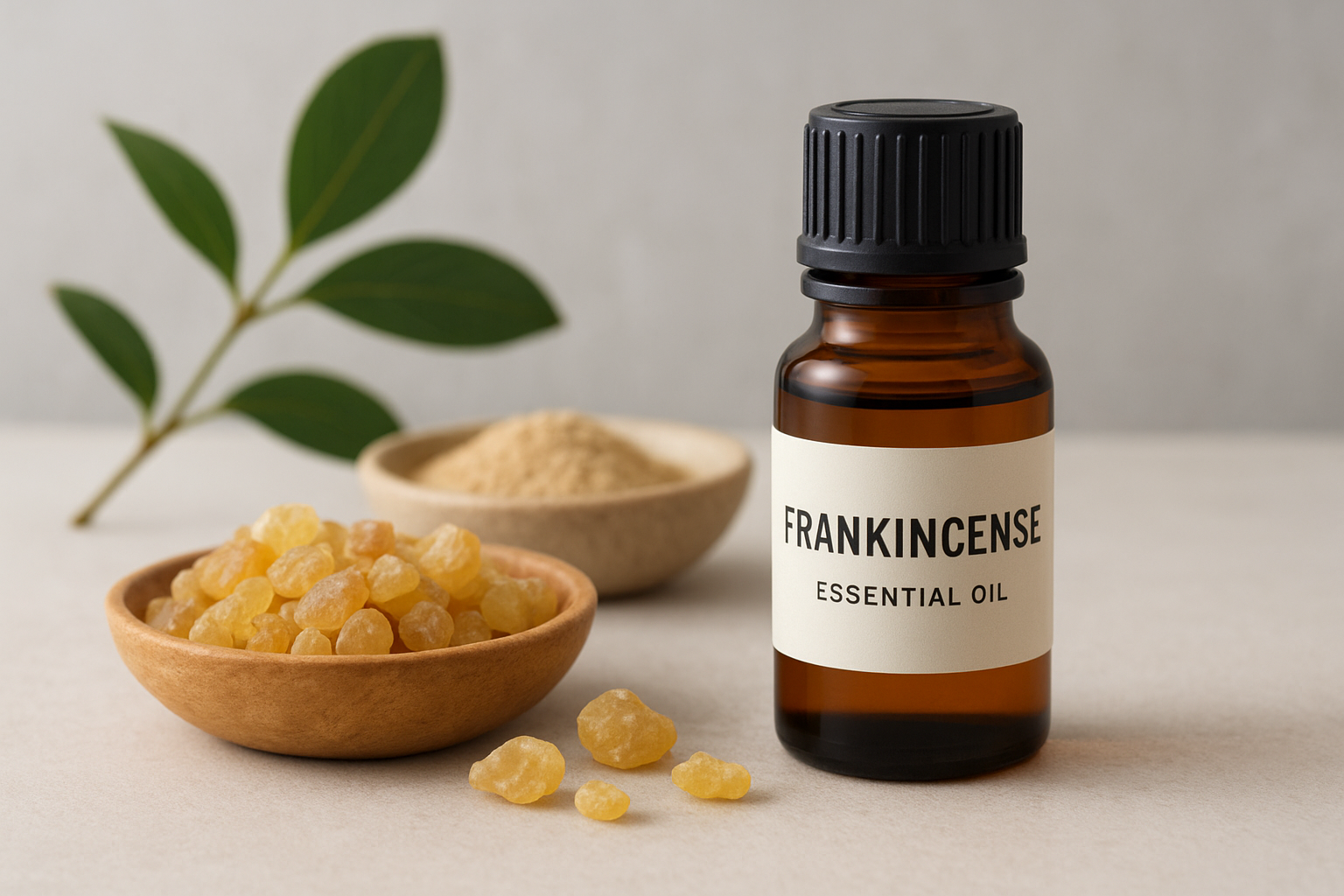
What frankincense smells like
This oil delivers a rich, resinous, woody scent with a faint citrusy top note and a warm, balsamic base. It is earthy without being heavy, and grounding without dragging your mood downward. Most people find the scent instinctively slows their breathing within the first few minutes of exposure.
Why people use frankincense for stress
The active compound incensole acetate has been shown to activate ion channels in the brain that regulate emotions and anxiety responses. Research on Boswellia resin, the tree source of frankincense, found it produced measurable anxiolytic and antidepressant effects, and consistent inhalation appears to support a calmer, more focused mental state in daily use.
Frankincense suits stress that feels deep-seated rather than situational, particularly when you need to slow down mentally rather than just relax physically.
How to use frankincense for stress relief
Diffusing frankincense during meditation or slow breathwork amplifies its grounding quality. It pairs well with bergamot and lavender, creating a layered effect that addresses both anxiety and low mood at the same time.
- Diffuser: 4 to 5 drops, alone or blended with bergamot or lavender
- Topical: 4 drops per 10ml of carrier oil, applied to the chest or base of the neck
Safety notes and interactions
Frankincense is well-tolerated by most healthy adults when used as directed. Avoid ingesting it, and check with your doctor if you are pregnant or taking blood-thinning medications, as some Boswellia compounds may interact with anticoagulants.
Typical price in Australia
A 10ml bottle of pure frankincense typically costs between $15 and $35 in Australia. The price varies based on species and source, with Boswellia sacra generally sitting at the higher end of that range compared to other commonly available varieties.
5. Sweet orange
Sweet orange is one of the most approachable essential oils for stress relief, making it an ideal starting point if you find heavier florals or resins too intense. It works quickly, lifting mood within minutes of diffusion, and pairs well with almost every other oil on this list.
What sweet orange smells like
Sweet orange has a bright, clean, citrusy scent that is warm and familiar rather than sharp or synthetic. It smells like freshly peeled fruit, cheerful and uncomplicated. Unlike bergamot, there are no floral or bitter undertones, which makes it particularly easy to blend or use on its own when you just want something that feels light and immediately uplifting.
Why people use sweet orange for stress
Research into sweet orange has produced some compelling findings. One study found that inhaling sweet orange oil significantly reduced anxiety in participants waiting for dental procedures. The effect is thought to come from limonene, the dominant compound in the oil, which appears to modulate stress responses in the nervous system at a neurochemical level.
Sweet orange is one of the few oils with strong evidence of fast-acting anxiety reduction in acute stress situations.
How to use sweet orange for stress relief
- Diffuser: 5 to 6 drops, alone or blended with frankincense or lavender
- Topical: 4 drops per 10ml of carrier oil, applied to the wrists or chest
Diffuse it during the mid-afternoon when your focus starts to dip and stress begins creeping in.
Safety notes and interactions
Sweet orange is generally safe for most adults when used at recommended dilutions. Like bergamot, it carries a mild phototoxicity risk when applied topically, so avoid direct sun exposure on treated skin for several hours after application.
Typical price in Australia
A 10ml bottle of pure sweet orange essential oil typically costs between $8 and $18 in Australia, making it one of the most affordable options on this list. The lower price reflects the higher yield during cold-press extraction compared to more labour-intensive oils.
6. Clary sage
Clary sage is one of the more underrated essential oils for stress relief, yet it has a strong track record for managing tension tied to hormonal shifts, emotional fatigue, and anxiety that feels physically heavy. If lavender and chamomile feel too gentle for what you are carrying, this oil is worth trying next.
What clary sage smells like
Clary sage has a warm, herby, slightly nutty scent with light floral undertones. It is earthy and full-bodied, sitting somewhere between lavender and fresh herbs. Most people find it distinctly different from common lavender but equally natural and grounding on the senses.
Why people use clary sage for stress
The key active compound is linalyl acetate, which has demonstrated anxiolytic properties in several clinical studies. Research published in peer-reviewed literature found that inhaling clary sage significantly reduced cortisol levels and improved thyroid hormone concentrations in study participants, pointing to a genuine physiological response rather than a purely subjective one.
Clary sage suits stress tied to hormonal fluctuations particularly well, making it a common recommendation during PMS and perimenopause.
How to use clary sage for stress relief
Diffusing clary sage in the early evening helps your body transition out of a high-stress day. It blends well with bergamot or lavender when you want a more layered calming effect.
- Diffuser: 4 to 5 drops, blended with bergamot or lavender
- Topical: 3 drops per 10ml of carrier oil, applied to the lower abdomen or wrists
Safety notes and interactions
Clary sage is not recommended during pregnancy, as it may stimulate uterine contractions. Avoid combining it with alcohol, as some evidence suggests it amplifies sedative effects beyond what you might anticipate.
Typical price in Australia
A 10ml bottle of pure clary sage typically costs between $12 and $25 in Australia. It is widely stocked by health food stores and online natural product retailers across the country.
7. Ylang ylang
Ylang ylang is one of the more intensely aromatic essential oils for stress relief, so a little goes a long way. It works best when you want something that slows a racing heart and drops your physical tension quickly, rather than something that gently winds you down over time.
What ylang ylang smells like
Ylang ylang has a rich, deeply floral scent with sweet, almost custard-like undertones and a faint spice beneath. It is exotic and full rather than delicate. Some people find it overpowering at full strength, which is why blending it with lighter oils like bergamot or sweet orange makes practical sense.
Why people use ylang ylang for stress
Research shows ylang ylang reduces blood pressure and heart rate when inhaled, two markers of acute stress response. Studies attribute this to benzyl acetate and linalool, which appear to calm the sympathetic nervous system. The result is a rapid drop in physical tension that makes it particularly useful after a high-pressure day.
Ylang ylang is one of the few oils with documented cardiovascular effects, making it more than just a pleasant scent.
How to use ylang ylang for stress relief
- Diffuser: 2 to 3 drops, blended with bergamot or lavender to balance the intensity
- Topical: 2 drops per 10ml of carrier oil, applied to the wrists or chest
Safety notes and interactions
Use ylang ylang in low dilutions only, as high concentrations can cause headaches or nausea in sensitive individuals. Avoid it if you have low blood pressure, as it can intensify the drop.
Typical price in Australia
A 10ml bottle of pure ylang ylang typically costs between $10 and $22 in Australia, making it an affordable option given how sparingly each session requires you to use it.
8. Rose
Rose sits among the most studied essential oils for stress relief, and its reputation for emotional comfort goes well beyond romantic association. It acts on the nervous system in a way that reduces anxiety and supports emotional regulation, particularly during periods of grief, transition, or heightened emotional sensitivity.
What rose smells like
Rose essential oil carries a rich, deep floral scent that is warm, slightly honeyed, and unmistakably full. Unlike synthetic rose fragrances, the pure oil has subtle green and spicy undertones beneath the floral top note, giving it a complexity that most people find both grounding and comforting.
Why people use rose for stress
Rose oil is particularly effective for stress that shows up as emotional pain rather than mental overload. Research has shown that inhaling rose oil reduces both anxiety and blood pressure, and the key compounds, including citronellol and geraniol, appear to influence the autonomic nervous system directly.
Rose is especially worth considering when stress has an emotional or grief-related component, not just the everyday kind driven by workload or overstimulation.
How to use rose for stress relief
- Diffuser: 2 to 3 drops, blended with sandalwood or frankincense
- Topical: 2 drops per 10ml of carrier oil, applied to the chest or inner wrists
Safety notes and interactions
Rose oil is generally safe for most adults at recommended dilutions. Avoid use during the first trimester of pregnancy without professional guidance, and always dilute before applying to skin to prevent irritation.
Typical price in Australia
Rose essential oil is among the most expensive on this list, with a 5ml bottle of pure rose otto typically ranging from $60 to $120 in Australia. A more affordable alternative is rose absolute, which delivers a similar scent profile at roughly half the price.
9. Sandalwood
Sandalwood is one of the most grounding essential oils for stress relief, with a long history of use in meditation and contemplative practices across South and East Asia. It works best when mental restlessness and scattered thinking are the core of what you need to address.
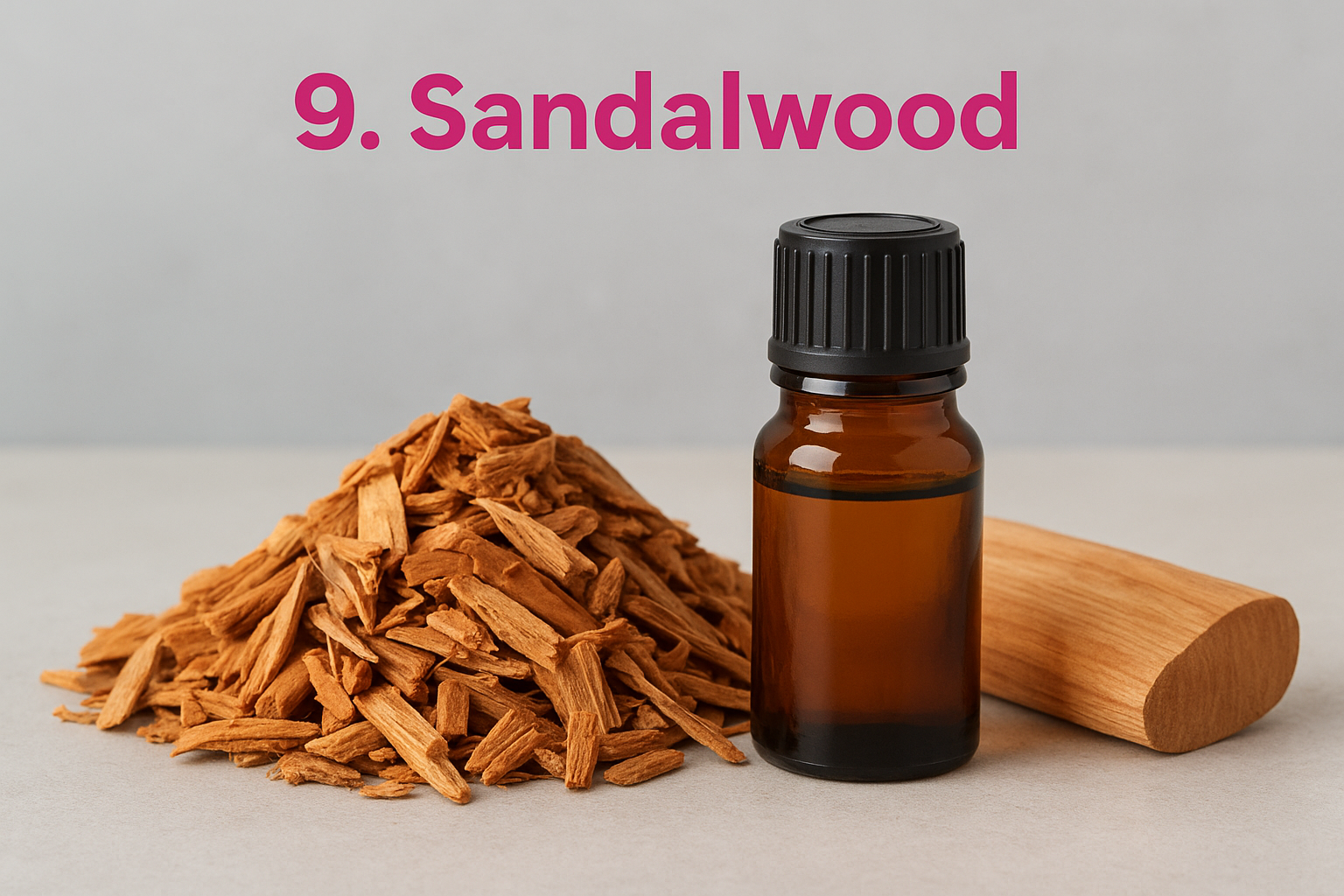
What sandalwood smells like
This oil carries a warm, creamy, woody scent with a smooth, slightly sweet base that lingers well after diffusion ends. It is rich without being heavy, and most people find it deeply familiar even on first contact, because sandalwood appears across perfumery, skincare, and incense globally.
Why people use sandalwood for stress
The primary active compound is alpha-santalol, which research links to anxiolytic activity and sedative-like effects. Studies suggest it reduces sympathetic nervous system activity, helping your body shift out of high-alert mode. It works particularly well when you need to focus or meditate rather than switch off entirely.
Sandalwood suits stress that presents as mental fragmentation, when you need to bring scattered thoughts back to a single focal point.
How to use sandalwood for stress relief
- Diffuser: 4 to 5 drops, blended with frankincense or bergamot
- Topical: 4 drops per 10ml of carrier oil, applied to the wrists or temples
Safety notes and interactions
Sandalwood is generally safe for most healthy adults at standard dilutions. Avoid it if you have known kidney disorders, as some compounds may place mild strain on renal function with prolonged high-dose use.
Typical price in Australia
A 5ml bottle of pure Australian sandalwood typically costs between $25 and $55 in Australia. Indian sandalwood runs higher, often $40 to $80 for 5ml, reflecting its scarcity and longer cultivation time.
10. Neroli
Neroli rounds out this list of essential oils for stress relief as one of the most elegant and emotionally nuanced options available. It comes from the blossoms of the bitter orange tree, and its effect on the nervous system is both immediate and surprisingly sustained compared to many other calming oils.
What neroli smells like
Neroli carries a fresh, floral scent with soft citrus top notes and a faint honeyed warmth underneath. It is lighter than rose but more complex than sweet orange, with a delicate, powdery finish that most people find instantly soothing. The overall impression is clean and refined rather than heavy or overwhelming.
Why people use neroli for stress
Research shows that inhaling neroli reduces anxiety and lowers systolic blood pressure in clinical settings. The active compounds, including linalool and geraniol, act on the autonomic nervous system and appear to shift the body away from a stress response with consistent use.
Neroli works particularly well for stress that sits in the chest, the kind that presents as tightness or shallow breathing rather than mental agitation.
How to use neroli for stress relief
- Diffuser: 3 to 4 drops, blended with sandalwood or rose for a grounding floral combination
- Topical: 3 drops per 10ml of carrier oil, applied to the chest or inner wrists
Safety notes and interactions
Neroli is generally safe for most adults at standard dilutions. Always dilute before applying to skin, and consult a healthcare professional if you are pregnant or breastfeeding before use.
Typical price in Australia
A 5ml bottle of pure neroli typically costs between $30 and $60 in Australia. Its higher price reflects the large volume of orange blossoms required to produce even a small amount of oil through steam distillation.
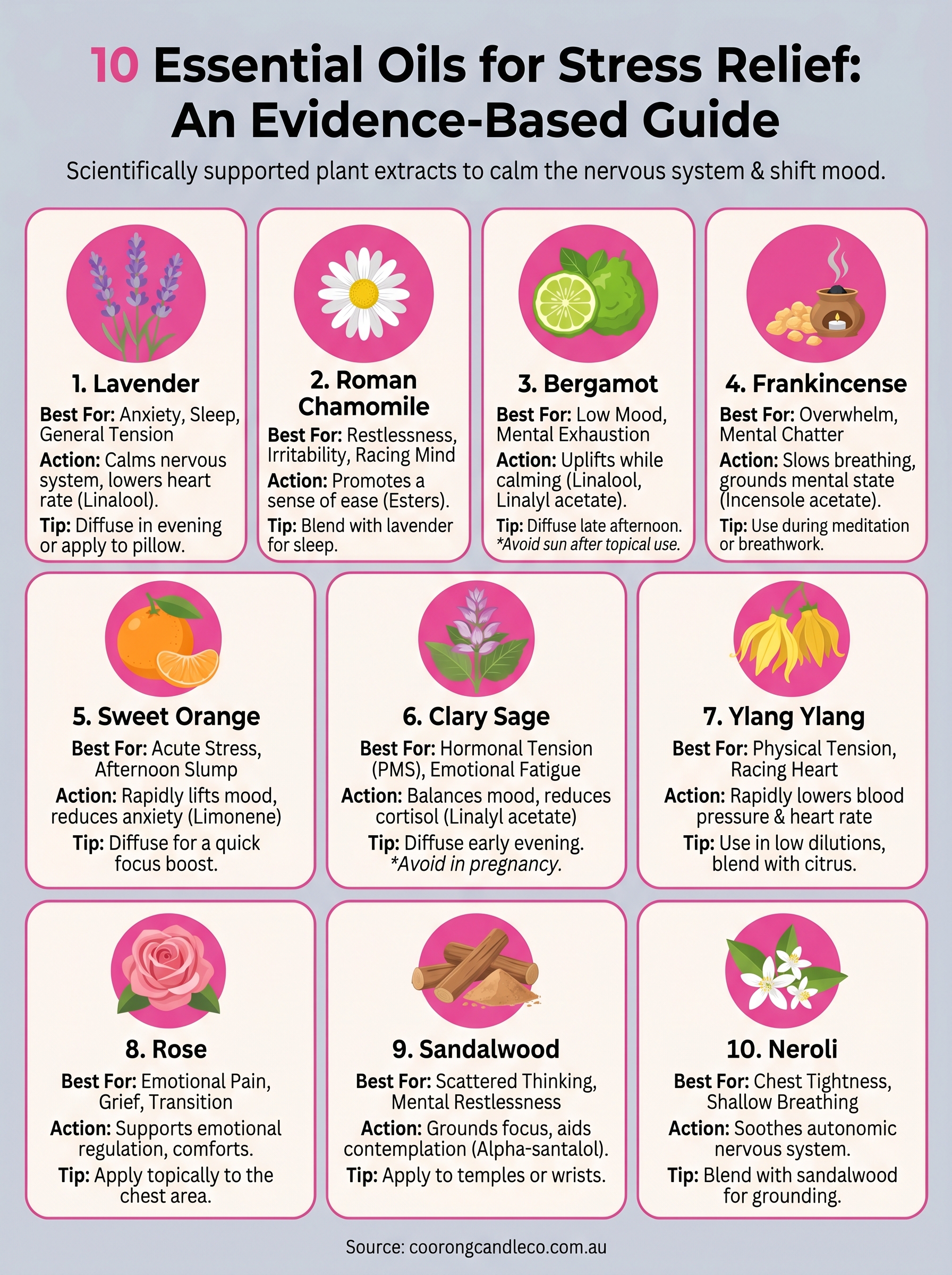
Your next step
You now have a solid, evidence-backed shortlist of essential oils for stress relief to work with. The most effective approach is to start with one or two oils that match what your stress actually feels like, whether that is mental overload, emotional fatigue, physical tension, or broken sleep, and build from there. Lavender, bergamot, and frankincense make a reliable foundation for most people, and they blend well together if you want to experiment early.
Aromatherapy works best when it becomes part of a consistent routine rather than something you reach for only in a crisis. Layering scent into your home environment throughout the day, not just at bedtime, gives your nervous system repeated cues to settle. If you want a low-effort way to keep calming fragrance running in the background, explore the natural reed diffusers from Coorong Candle Co., hand-blended in South Australia and designed to fill your space with steady, lasting scent without any effort on your part.