
Whether you're a candle maker, a DIY enthusiast, or someone who stocks up on favourite scents, knowing how long do fragrance oils last matters more than you might think. Fragrance oils don't stay fresh forever, and using ones that have degraded can result in weak scent throw, off-putting notes, or products that simply don't perform.
At Coorong Candle Co., we work with fragrance oils daily to hand-pour our soy candles and craft our reed diffusers here in South Australia. Proper storage and stock rotation are part of how we maintain consistent quality across every batch. It's something we've learned through years of hands-on experience, and a few hard lessons with oils that sat on the shelf too long.
In this guide, we'll cover the typical shelf life of fragrance oils, the signs that yours have expired, and practical storage tips to keep them at their best for as long as possible. If you've got a collection gathering dust, this will help you figure out what's still usable and what needs to go.
Why fragrance oils change over time
Fragrance oils are complex chemical blends made up of synthetic aroma compounds, natural isolates, and carrier bases such as dipropylene glycol (DPG). Over time, these components interact with their environment and with each other, causing the oil to shift at a molecular level. Understanding why this happens is key to knowing how long fragrance oils last under different conditions and what you can do to slow the process down.
The role of oxidation
Oxidation is the biggest driver of fragrance oil degradation. When oxygen from the air comes into contact with the compounds in the oil, it triggers chemical reactions that break down the aromatic molecules. This is why a bottle with a large air gap at the top degrades faster than one that is nearly full. The process is gradual, but it is constantly happening once a bottle is opened, which is why proper sealing matters so much.
Keeping bottles tightly sealed and minimising the air gap inside is one of the most effective things you can do to slow oxidation.
Citrus-heavy and floral fragrance oils tend to oxidise faster than woody or musky blends, because lighter top-note compounds are more chemically reactive and significantly more volatile by nature.
Heat, light, and evaporation
Heat and UV light accelerate the breakdown of aromatic compounds, which is why fragrance oils stored near a sunny window or above a heat source lose their integrity quickly. Heat also drives evaporation of volatile molecules, which are responsible for the bright, fresh top notes you smell first. Once those evaporate, what remains can smell flat, sour, or simply off.
Fluctuating temperatures are particularly damaging. Each cycle of warming and cooling stresses the chemical structure of the oil and speeds up the overall ageing process considerably.
How long fragrance oils last in storage
When people ask how long do fragrance oils last, the answer depends on two key factors: whether the bottle has been opened and what type of fragrance it is. Most fragrance oils carry a shelf life of one to two years, though that assumes correct storage throughout the entire period.
Shelf life by fragrance type
Not all fragrance oils age at the same rate. Citrus and fresh blends degrade fastest due to their highly volatile top-note compounds, while heavy bases like musk, amber, and sandalwood tend to hold their integrity for considerably longer.
| Fragrance type | Unopened | Opened |
|---|---|---|
| Citrus and fresh | Up to 12 months | 6 months |
| Floral | 12 to 18 months | 6 to 12 months |
| Woody, amber, and musk | Up to 2 years | 12 months |
After opening
Once you break the seal, oxidation accelerates and the clock moves faster. Most opened fragrance oils perform best within 6 to 12 months, though heavier blends can often stretch a little further with good storage habits.
Beyond that point, the oil may still smell acceptable on its own but will often underperform in candles and diffusers, producing a weak or distorted scent throw.
Label each bottle with the opening date so you always know exactly where you stand.
How to store fragrance oils so they last longer
Good storage habits are the single most effective thing you can do to extend how long fragrance oils last in your collection. The goal is to limit exposure to the three main enemies: oxygen, heat, and light.
Choose the right container and location
Glass bottles with tight-fitting lids are ideal for long-term storage. If you decant oils into separate containers, fill each one as close to the top as possible to reduce the air gap and slow down oxidation. Keep your bottles in a cool, dark space such as a cupboard or drawer away from windows and heat sources.
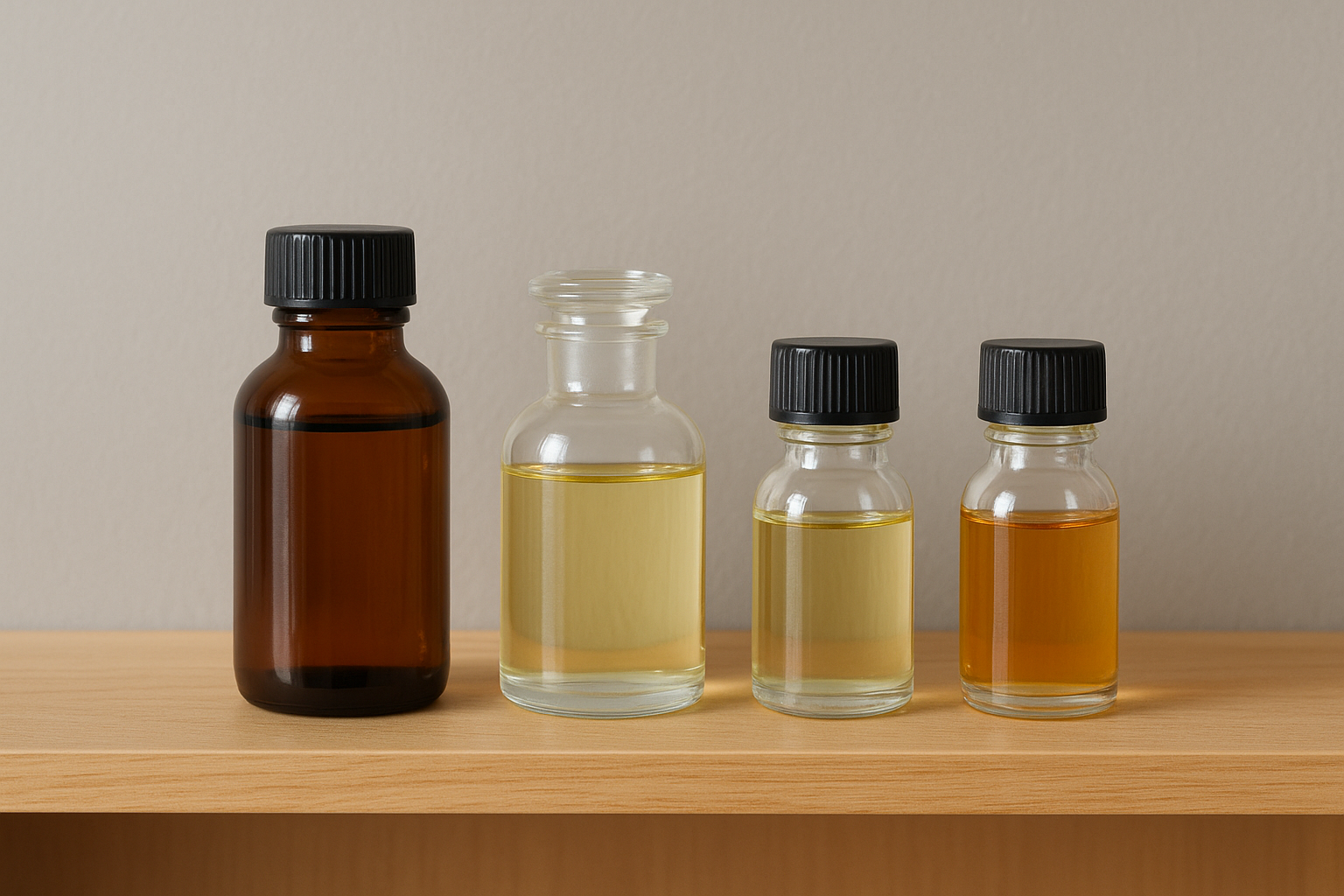
A consistent temperature between 15°C and 20°C gives most fragrance oils the best chance of staying stable over time.
Simple habits that make a difference
Small routines add up over time. Follow these practices to protect your oils:
- Wipe bottle necks clean after every use to prevent residue build-up and sealing issues
- Close lids immediately after pouring rather than leaving bottles open on the bench
- Store oils upright to minimise contact between the cap and the oil itself
- Label each bottle with the purchase date and opening date so you can track age at a glance
How to spot expired oils and confirm with a test
Knowing how long do fragrance oils last is useful, but you also need to recognise the signs of degradation in the oil itself. Your nose is your first tool, but there are visual cues and simple tests that give you a clearer picture before you commit an oil to a batch of candles or a diffuser.
Visual and smell checks
Start by looking at the oil in the bottle. Cloudiness, significant discolouration, or visible sediment can all signal that breakdown has occurred. Then smell it directly from the bottle. If the scent smells sharp, sour, or noticeably flat compared to when you first opened it, trust that reaction.
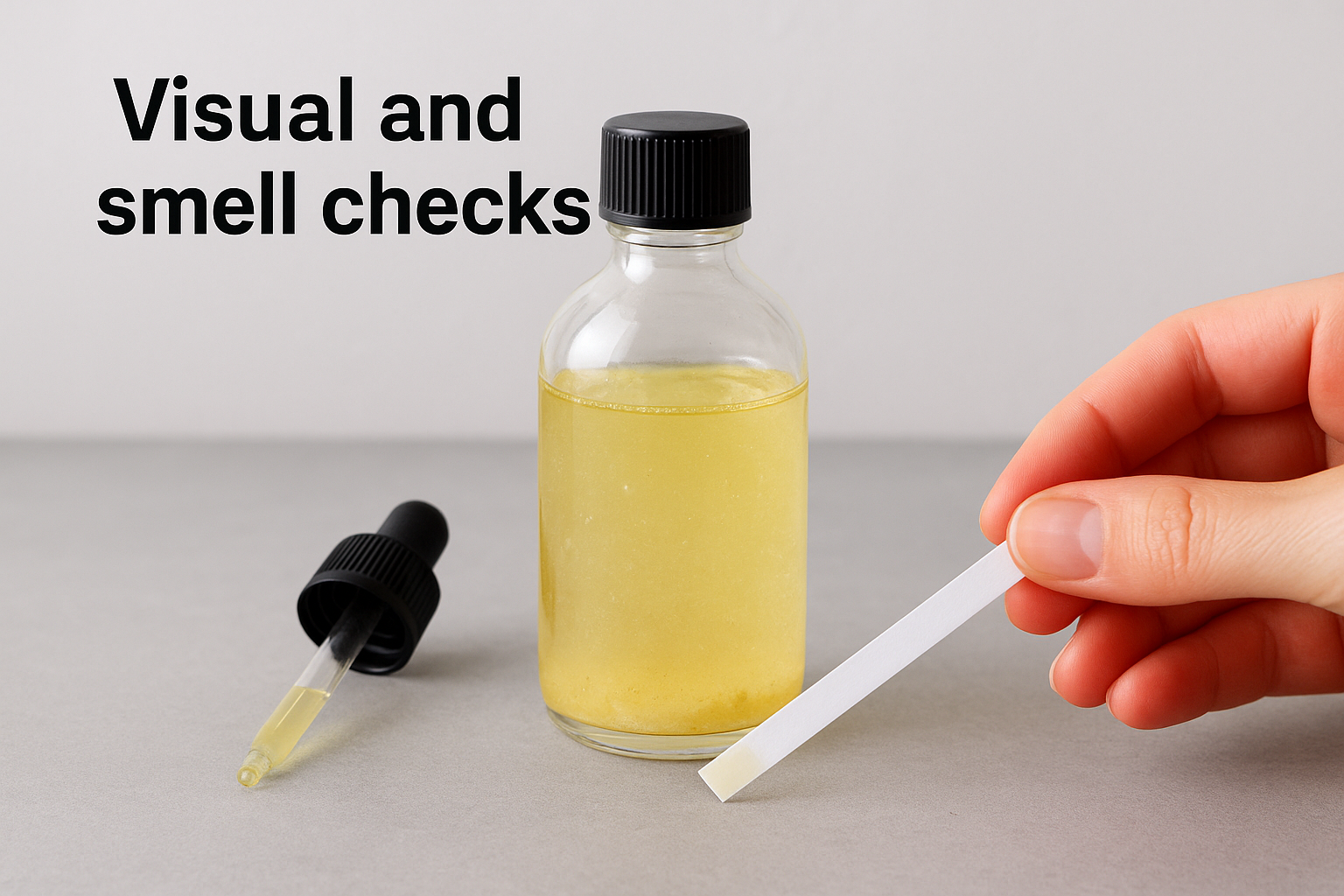
Watch out for these specific warning signs:
- Colour has darkened significantly from the original
- Oily residue or waxy deposits are visible in the bottle
- The scent carries a rancid or vinegar-like quality
The blotter test
Pour a small amount onto a fragrance test strip or plain paper and let it dry for 30 seconds. A fresh oil retains its character as it dries. An expired oil will smell noticeably off, thin, or unpleasant once the top notes fade away.
If the dried strip smells nothing like the original scent, discard the oil rather than using it in a product.
How to dispose of old oils and avoid waste
When you've confirmed an oil has expired, disposal needs to be done carefully. Fragrance oils are synthetic chemicals and should never go down the sink or drain, as they can harm waterways and aquatic life. Even small quantities add up, so handling them responsibly matters.
Safe disposal methods
Your best option is to contact your local council or waste facility to ask about chemical drop-off programmes. Many Australian councils run household chemical collection days where you can drop off small quantities of synthetic oils at no cost. If no programme is available, seal the bottle tightly and place it in your general waste bin as a last resort rather than pouring it into drains or on soil.
Check the Planet Ark Recycling Near You directory to find your nearest chemical drop-off point in Australia.
Reducing waste before disposal
Understanding how long do fragrance oils last in your specific storage conditions helps you buy smarter going forward. Purchase smaller quantities of oils you use less frequently so you can work through them before they degrade. For oils that are still borderline usable, consider using them in low-stakes applications like scenting a wardrobe or refreshing potpourri rather than a finished product you're gifting or selling.
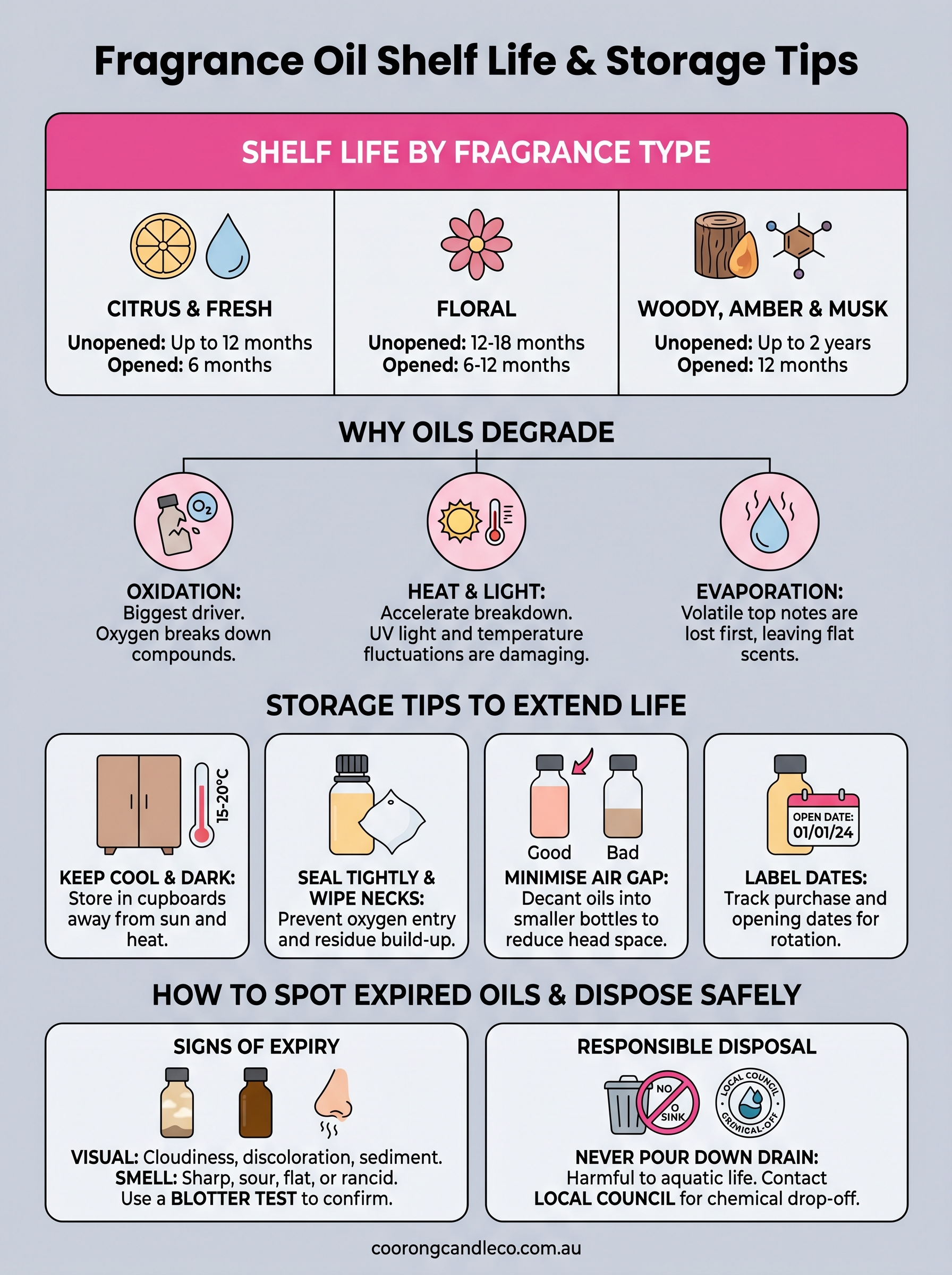
Key takeaways
Understanding how long do fragrance oils last comes down to type, storage, and how carefully you handle them once the bottle is open. Most oils stay at their best for one to two years, with citrus blends degrading faster than heavier woody or musk bases. Heat, light, and oxygen are the main culprits behind early deterioration, so keeping bottles sealed, cool, and away from direct sunlight gives you the best return on your investment.
Check your oils regularly using the smell and blotter tests, label every bottle with an opening date, and buy smaller quantities of scents you use less often. Dispose of expired oils responsibly through your local council chemical collection service rather than pouring them down the drain.
If you want to experience what well-crafted fragrance can do in your home without the guesswork, browse the natural soy candles and reed diffusers we hand-pour right here in South Australia.