
Walk into any home that smells amazing and you'll notice something straight away, it just feels better. Figuring out how to make your home smell nice naturally isn't complicated, but it does take a shift away from the synthetic sprays and plug-ins most people reach for out of habit. Those products might deliver a quick hit of fragrance, but they often come loaded with chemicals you probably don't want lingering in your living spaces.
The good news? Natural alternatives work just as well, often better, and they're kinder to both your health and the environment. From simple DIY recipes using ingredients already in your pantry to eco-friendly products like soy candles and reed diffusers, there are plenty of options that smell incredible without the toxic trade-off. It's something we care about deeply at Coorong Candle Co., where every product we hand-pour uses natural soy wax and lead-free cotton wicks for exactly this reason.
Below, you'll find five practical methods to keep your home smelling fresh through every season of the year. Each one is easy to start, uses accessible ingredients or products, and skips the artificial stuff entirely. Consider this your go-to guide for a naturally fragrant home.
1. Light a clean-burning soy candle
Soy candles are one of the simplest answers to how to make your home smell nice naturally. Unlike paraffin alternatives, soy wax burns cleaner and releases fragrance more steadily, making it a practical choice for everyday use in any room.
Why soy candles smell better without the chemical hit
Paraffin wax comes from petroleum byproducts and releases soot along with synthetic compounds when it burns. Soy wax, by contrast, is plant-derived and renewable, which means it burns with significantly less toxic output and throws fragrance more evenly throughout a room.
Switching to soy is not just an aesthetic choice; it is a health decision for anyone spending extended time in enclosed spaces.
How to use candles for steady scent, not smoke
Always trim your wick to 5mm before each burn. A long wick creates a larger flame, which produces more soot and burns through the wax unevenly. Keep your candle away from drafts and air vents, which disrupt the melt pool and reduce how far the scent carries.
Scent profiles that work year-round in Aussie homes
Australian homes move through warm, dry summers and mild winters, so lighter citrus and coastal scents tend to work well in warmer months, while earthy or woodsy blends suit the cooler months of June and July. Regionally inspired fragrances tied to the bush and coastline carry naturally through open-plan spaces.
Safety tips for kids, pets, and sensitive lungs
Never leave a burning candle unattended, and keep it out of reach of children and pets. Place your candle on a heat-resistant surface away from soft furnishings. If anyone in your home has asthma or respiratory sensitivities, burn candles in well-ventilated rooms for shorter intervals.
Expected cost per burn and how to make it last
A standard 350g soy candle typically offers around 50 hours of burn time. At average retail pricing, that works out to under $1 per hour of fragrance, which is competitive with most reed diffusers and significantly cheaper than disposable spray products over time.
2. Set up a reed diffuser for consistent background scent
Reed diffusers give you steady, low-maintenance fragrance without any flame or power source. They're a practical hands-off option if you want background scent that runs throughout the day without any attention.
How reed diffusers work and why they feel more subtle
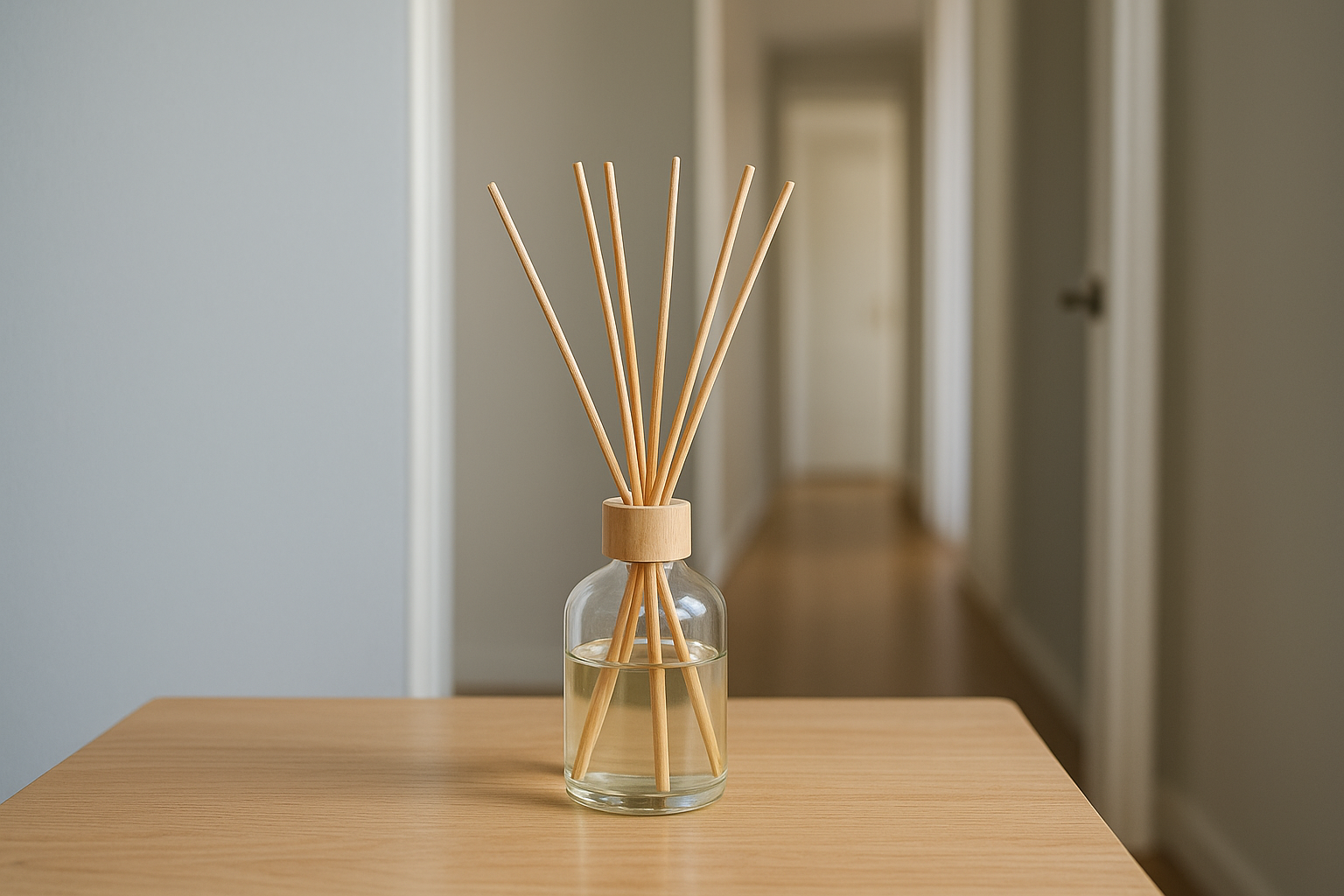
Rattan reeds draw fragrance oil upward through capillary action and release it slowly into the air. This passive diffusion means the scent is consistent but gentle, which suits living rooms and bedrooms better than anything that delivers a sudden burst.
Where to place a diffuser so the scent actually travels
Position your diffuser in high-traffic areas where moving air helps distribute the fragrance. Near a doorway or hallway works well since air movement carries the scent through adjoining rooms naturally.
How often to flip reeds and when to replace them
Flip your reeds every one to two weeks to refresh the output. Once reeds look dark and clogged, replace the whole set rather than just flipping them again.
Common diffuser mistakes that make rooms smell worse
Placing a diffuser in direct sunlight degrades the oil quickly. Overcrowding the bottle with too many reeds overwhelms the room rather than improving it.
Start with half the reeds provided and add more only if the scent feels too faint after a few days.
Cost, longevity, and strength control
A quality 100ml reed diffuser typically lasts two to three months, making it one of the more budget-friendly ways to learn how to make your home smell nice naturally without constant restocking.
3. Remove odours at the source with natural cleaning
No fragrance product covers a bad smell permanently. If you want to understand how to make your home smell nice naturally, you need to tackle the source before layering any scent on top.
The five-minute sniff test to find the real culprit
Walk through each room with fresh air in your lungs and identify where the smell intensifies. Common hidden sources include bins, soft furnishings, and damp corners that rarely get airflow.
Kitchen odours: bins, drains, fridge, and cooking smells
Pour boiling water mixed with bi-carb soda down drains weekly to clear grease build-up. A small bowl of white vinegar left open in your fridge overnight neutralises lingering food smells without any chemical product.
Bathroom and laundry odours: damp towels, grout, and drains
Spread towels out fully after use so they dry completely between uses. Scrub grout with a paste of bi-carb soda and water to remove mould that causes that persistent musty smell.
Fabric odours: curtains, couches, rugs, and pet bedding
Spray fabrics lightly with a mix of water and white vinegar, then let them air-dry fully. Vacuum soft furnishings weekly to remove embedded odour-causing particles before they settle in.
Cleaning removes the problem. Fragrance only delays it.
A simple weekly routine that keeps smells from coming back
Run through bins, drains, and fabrics on the same day each week so nothing has time to build up. Consistency matters far more than any single deep-clean session.
4. Make a simmer pot for an instant natural boost
A simmer pot is one of the fastest ways to learn how to make your home smell nice naturally, especially when guests are arriving soon or cooking smells need covering quickly.
The basic method and how to avoid burning it dry
Fill a small saucepan with water plus your chosen ingredients, then set it on low heat on the stove. Check the water level every 30 minutes and top it up regularly to prevent scorching the base.
Best simmer pot ingredient combos by season
Summer works well with lemon slices, fresh mint, and vanilla extract. Winter suits cinnamon sticks, cloves, and orange peel for a warm, spiced effect that travels through the whole house.

You can reuse the same batch for up to two days by letting it cool, refrigerating it overnight, and reheating it the next morning.
How to make it work in small spaces and open-plan homes
In smaller rooms, use less water and keep the heat very low. Open-plan homes benefit from placing the pot centrally near natural airflow so the fragrance spreads across zones without concentrating in one spot.
Safer options if you avoid the stove
A slow cooker on the warm setting achieves the same result with less risk of burning dry. You can also use a plug-in wax warmer with water instead of wax for a completely flameless version.
What to avoid if you have pets or allergies
Eucalyptus, tea tree, and citrus oils are toxic to cats and dogs, so skip these entirely. Anyone with pollen sensitivities should avoid fresh flowers in the pot and stick to dried spices instead.
5. Keep the air fresh with ventilation and filtration
Fresh air is the foundation of how to make your home smell nice naturally. No candle or diffuser works well when the underlying air is already stale.
Cross-ventilation tactics that work in different weather
Open windows on opposite sides of your home to push stale air out fast. In cooler months, even 10 minutes each morning makes a clear, noticeable difference to air quality indoors.
How to reduce musty smells by controlling humidity
High humidity lets mould and mildew grow, which causes that persistent musty odour. Run a dehumidifier in bathrooms and laundries to keep indoor moisture levels consistently below 50%.
Aim for indoor humidity between 40% and 50% year-round for the freshest baseline air quality.
When a HEPA air purifier helps and what to look for
A HEPA air purifier removes airborne particles that carry odour, including pet dander and cooking residue. Choose one with an activated carbon filter to also capture volatile organic compounds that standard filters miss.
Laundry and linen habits that prevent stale-house smell
Wash bedding weekly and dry it fully before remaking the bed. Damp laundry left sitting in the machine creates a musty smell that transfers through fabric and lingers for days.
Fragrant plants and herbs that add scent without sprays
Position jasmine, lavender, or fresh herbs like rosemary near high-traffic areas inside your home. These plants release gentle natural fragrance while quietly improving your indoor air quality at the same time.
Keep it going
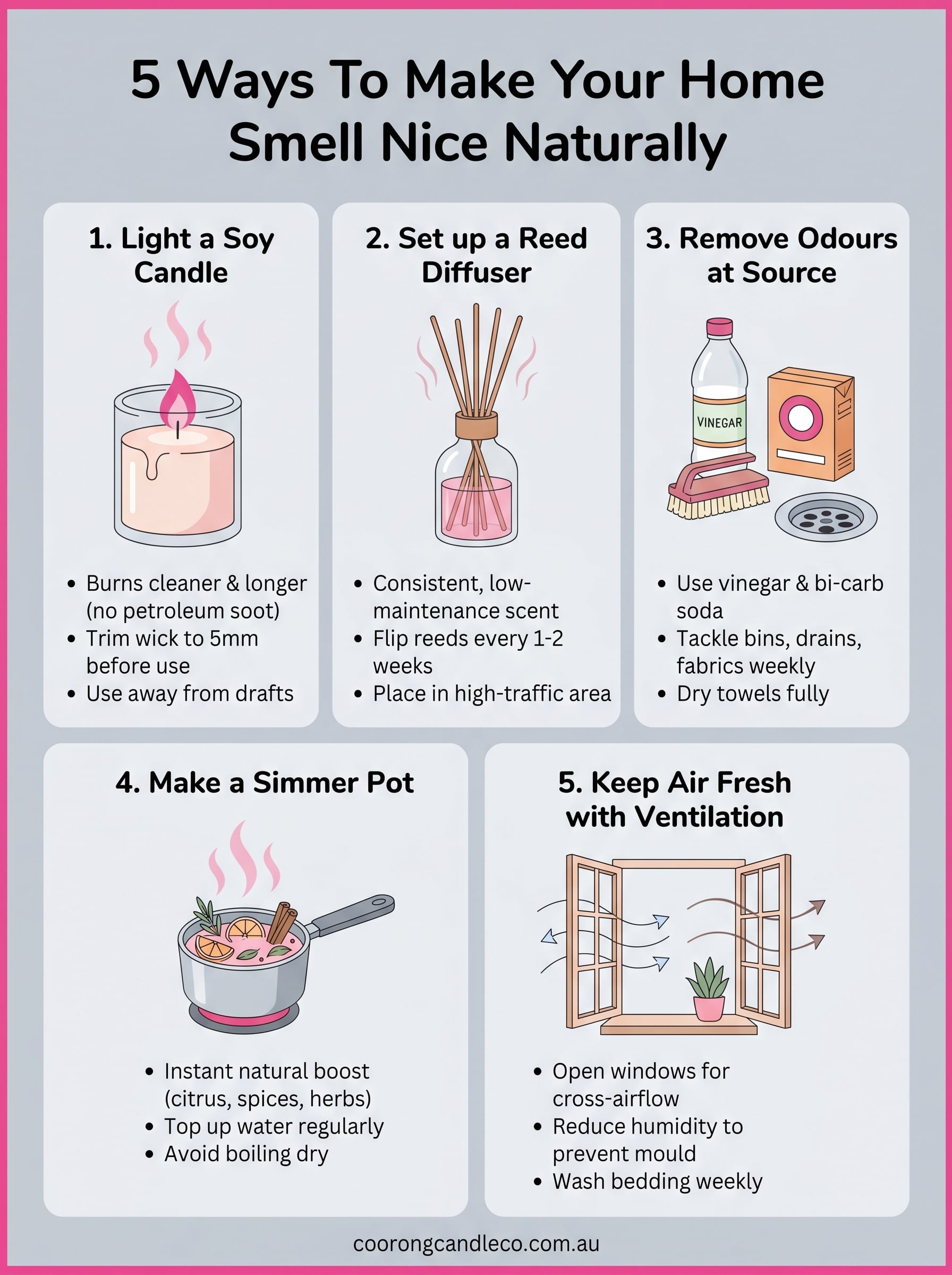
Each of these five methods works on its own, but the real difference comes when you combine them consistently. Natural cleaning removes the source, ventilation refreshes the base, and then candles, diffusers, or a simmer pot layer in the scent you actually want. That sequence is the practical core of how to make your home smell nice naturally, and it holds up across every season without reaching for a single synthetic spray.
Start with one or two methods this week and build from there. Small, regular habits outperform occasional overhauls every time. If you want a ready-made foundation, our range at Coorong Candle Co. gives you clean-burning, naturally scented options that fit straight into any routine. Browse our natural soy candles, reed diffusers, and home fragrance sets to find the scents that suit your home and the Australian seasons you move through all year.