
Your diffuser oil smells strong for the first fortnight, then fades to nothing while half the bottle sits untouched. Nine times out of ten, the problem isn't the fragrance oil, it's the reed sticks for diffuser you're using. Cheap or worn-out reeds stop drawing scent up through the fibres, and once that happens, no amount of topping up will bring the throw back.
This article explains exactly what diffuser reed sticks are made from, why rattan and synthetic fibre reeds behave so differently, and how to pick the right thickness and quantity for your room size. Whether you need replacement reed diffuser stick refills for an existing bottle or you're sourcing sticks for reed diffuser kits to build your own from scratch, you'll know what to look for before you buy.
We'll also cover how often to flip your reeds, when to replace them altogether, and how the right sticks pair with a quality oil base like the ones we hand-blend here at Coorong Candle Co. using natural, carbon-free ingredients inspired by South Australia's own landscapes.
Why the right reed sticks matter for scent throw
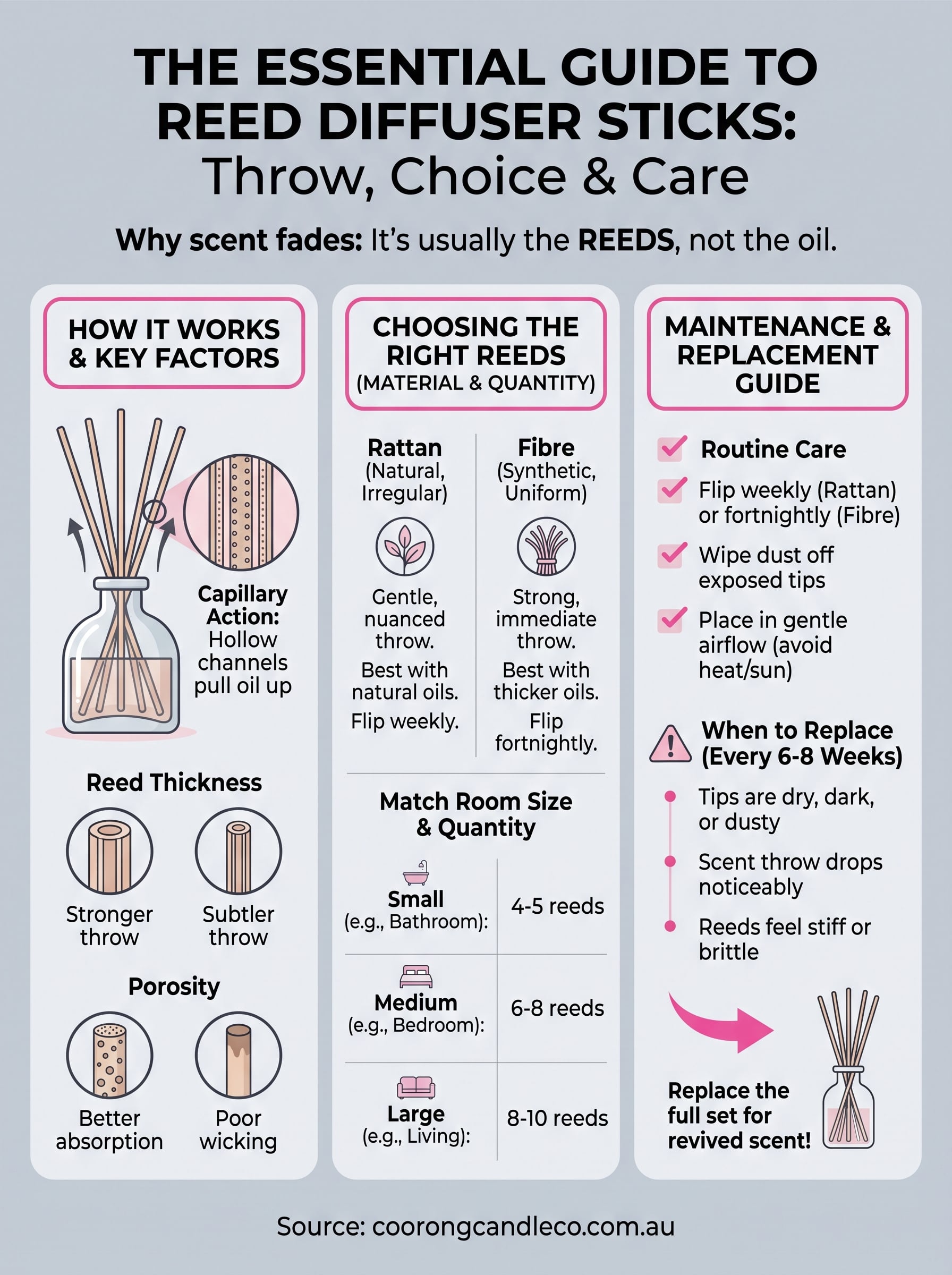
A reed diffuser works on a simple principle called capillary action. The reed sticks for diffuser bottles pull oil up through tiny internal channels, then release the fragrance as it evaporates off the exposed surface. Get the reeds wrong and you break that chain at the very first step, no matter how good the oil sitting in the bottle actually is. This is why two people can use the exact same fragrance and get completely different results in their lounge room.
How reeds actually pull fragrance into the air
Genuine rattan reeds are full of hollow capillary tubes running lengthways through the stem, which is exactly what draws oil upward and pushes throw into the room. Cheap alternatives sometimes use solid wooden dowels dressed up to look like reeds, and these have almost no capillary structure at all. You'll notice the difference within days: the tips stay dry, the scent barely reaches past the bottle, and the oil level in the bottle doesn't drop much either. If your diffuser reed sticks aren't visibly damp along at least the bottom third after a day or two, capillary action isn't happening properly.
If the reeds aren't drawing oil upward, no amount of fragrance in the bottle will scent the room.
Reed thickness and porosity change the throw
Thicker reeds have wider capillary channels, so they carry more oil and produce a stronger, longer-lasting throw, which suits larger rooms or open-plan living areas. Thinner reeds throw less scent but need replacing less often, making them a better fit for bedrooms or small bathrooms where a subtle fragrance is all you want. Porosity matters just as much as diameter. A porous, well-made reed diffuser stick absorbs oil evenly along its whole length, while a dense or poorly cured reed only wets the very tip, leaving most of the stick doing nothing.
Signs your reeds are past their best
Reeds don't last forever, even good ones. Watch for these signs that it's time to flip or replace them:
- The tips look dry, dusty or slightly darkened compared to the wet section lower down
- Scent throw has dropped noticeably even though the bottle is still half full
- The reeds feel stiff or brittle rather than pliable
- Oil has stopped travelling more than a few centimetres up the stick
- You've been using the same sticks for reed diffuser setup for more than six to eight weeks
Once fibres clog with dust or resin build-up, they stop wicking properly and become part of the problem rather than the solution, which is why swapping in fresh reeds is often the fastest fix for a diffuser that's gone quiet.
How to choose reed sticks for your diffuser
Picking the right reed sticks for diffuser bottles comes down to three things: length, quantity, and how they'll sit in your bottle's neck. Get the sizing wrong and you'll either have reeds toppling out of a narrow-necked bottle or stubby ones that barely reach the oil. Measure your existing bottle before ordering, or check the neck width and height listed against the product if you're buying sticks for reed diffuser kits from scratch.
Match length and quantity to your bottle and room
Standard bottles usually take reeds between 20cm and 30cm, with 6 to 10 sticks giving a balanced throw for most living spaces. Larger, open-plan rooms benefit from the full ten, while a compact bathroom or ensuite only needs four or five before the scent becomes overpowering.
| Room size | Reed length | Reed quantity |
|---|---|---|
| Small (bathroom, hallway) | 20-22cm | 4-5 sticks |
| Medium (bedroom, study) | 22-25cm | 6-8 sticks |
| Large (living, open-plan) | 25-30cm | 8-10 sticks |
Bigger rooms need more reeds, not stronger oil.
Consider thickness against your oil's viscosity
Denser, oil-based fragrances need thicker reeds with wider capillary channels to draw the liquid up properly, while lighter, alcohol-based scents move easily through thinner sticks. Using thin reeds with a heavy carrier oil is one of the most common reasons a reed diffuser stick setup underperforms, because the oil simply can't travel fast enough through narrow channels to keep the tip wet.
Check the reed material suits your fragrance base
Untreated rattan works beautifully with natural, plant-based oils like the blends we use at Coorong Candle Co., since the raw fibre doesn't fight against the carrier. Synthetic fibre sticks, on the other hand, are built for thicker commercial oils and can actually throw scent faster, though often at the cost of subtlety. Before buying diffuser reed sticks, check what carrier oil your fragrance uses and choose a material designed to work with it, not against it.
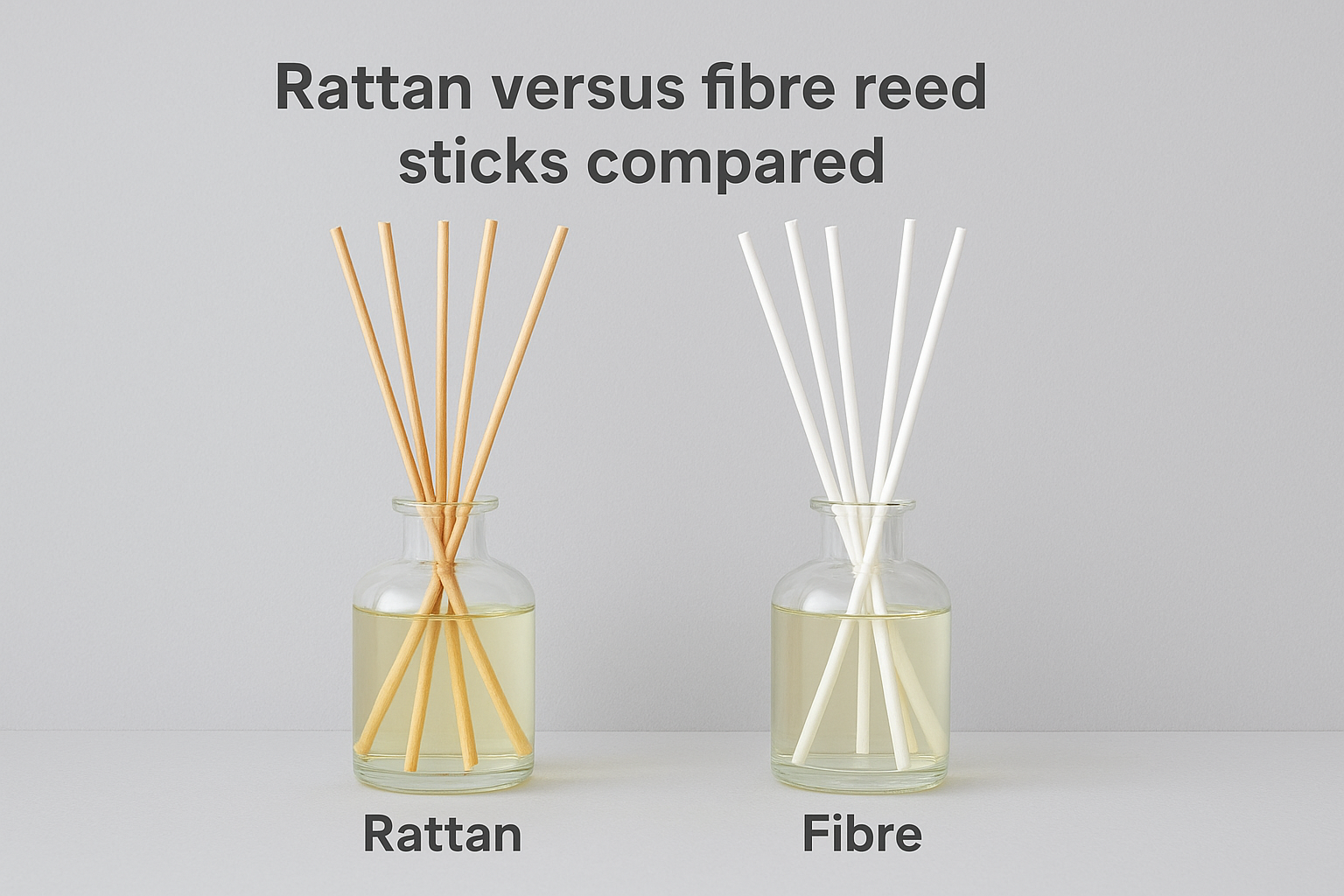
Rattan versus fibre reed sticks compared
Choosing between rattan reed sticks and synthetic fibre isn't about which one is objectively better, it's about matching the material to your fragrance oil and how much maintenance you're willing to do. Both pull oil upward through capillary action, but the structure of each material changes the speed, subtlety, and longevity of the throw you get.
Natural rattan reeds
Genuine rattan is a plant-based reed with irregular, natural capillary tubes running through the stem, which gives a softer, slower release that suits lighter, plant-derived oils. Because the fibres vary slightly from stick to stick, throw can be gentler and more nuanced, which is exactly why rattan pairs so well with the natural blends we use at Coorong Candle Co. Untreated rattan does need flipping more often, since the exposed tip dries out and clogs with dust faster than manufactured fibre.
Synthetic fibre reeds
Fibre reeds are manufactured with uniform, denser channels, so they draw oil faster and throw scent more strongly from the moment you unwrap them. Manufacturers design most fibre sticks for thicker, commercial-grade oils, which is why they often outperform rattan when paired with heavier fragrance bases. They're also more consistent bottle to bottle, so if you're after predictable, strong scenting rather than subtlety, fibre is the safer pick.
Rattan gives you nuance, fibre gives you strength, and the right choice depends entirely on your oil.
| Feature | Rattan | Fibre |
|---|---|---|
| Throw strength | Gentle, gradual | Strong, immediate |
| Best oil match | Natural, plant-based | Thicker, synthetic |
| Lifespan | 4-6 weeks | 6-8 weeks |
| Maintenance | Flip weekly | Flip fortnightly |
Ultimately, the material you choose for your reed diffuser stick setup should reflect the oil sitting in the bottle, not just personal preference or price.
How to use and maintain your diffuser reeds
Getting your reed sticks for diffuser bottles working well isn't a set-and-forget job. A little routine maintenance keeps the throw consistent for weeks instead of fading out after a fortnight, and it takes less than a minute each week.
Flip your reeds on a regular schedule
Turning your reeds upside down once a week refreshes the exposed surface and pushes fresh oil to the tip, which is the single easiest way to keep scent throw strong. Skip this step and the same section of stick keeps evaporating while the rest stays saturated and useless. Rattan needs flipping roughly weekly, while denser fibre sticks can often stretch to a fortnight between turns.
A weekly flip does more for scent throw than adding extra oil ever will.
Position the bottle where air can actually move
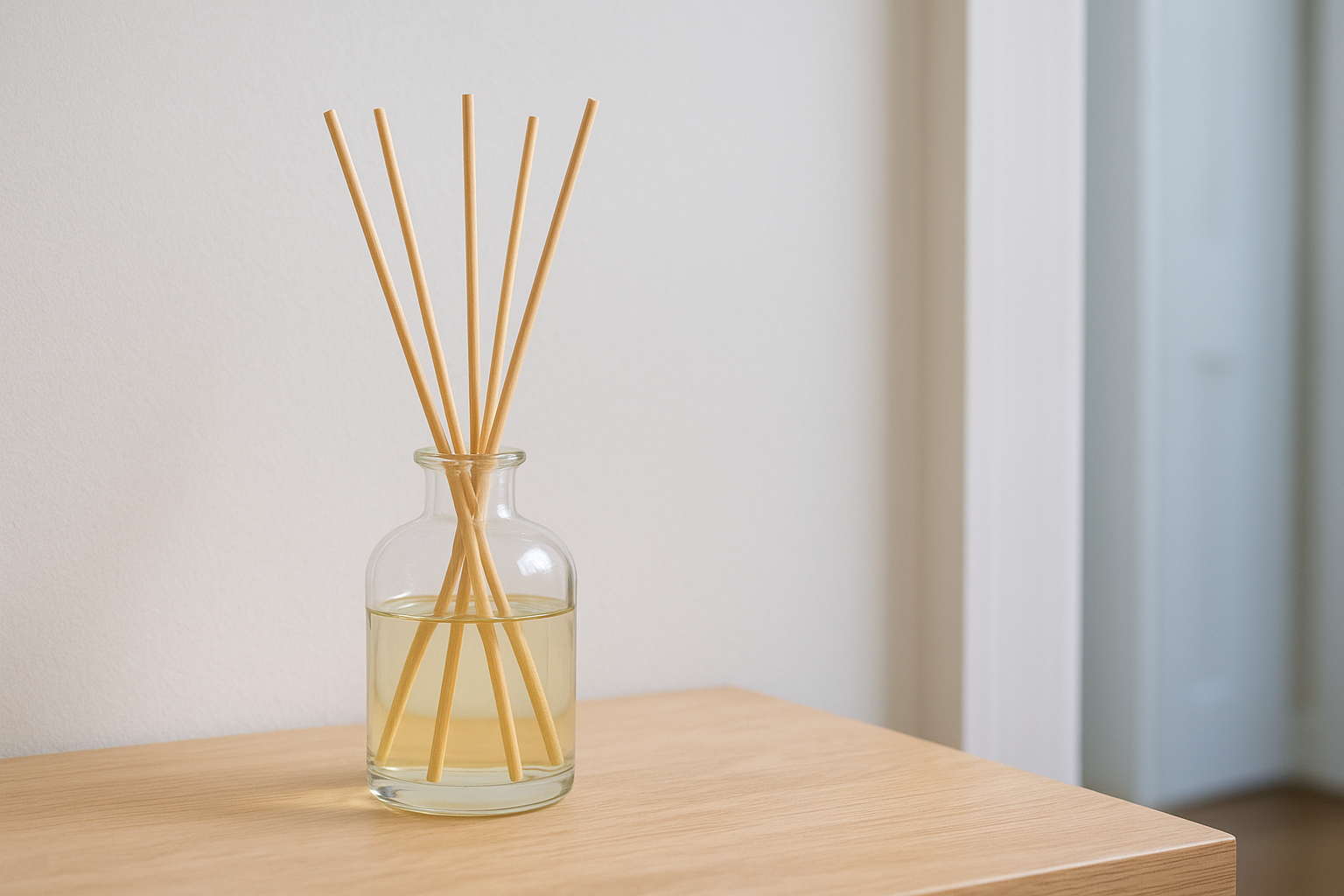
Airflow matters just as much as the reeds themselves. Place your diffuser away from direct sunlight and heating vents, since heat speeds up evaporation unevenly and can warp thinner rattan sticks over time. Somewhere with gentle air movement, like a hallway or near a doorway, spreads the fragrance further than a still, closed-off corner ever will.
Know when to replace rather than refill
Eventually, even well-maintained diffuser reed sticks stop performing no matter how often you flip them. Here's a quick maintenance checklist worth running through monthly:
- Flip reeds weekly (rattan) or fortnightly (fibre)
- Wipe dust off exposed tips with a dry cloth
- Rotate reeds to a fresh angle if the bottle neck allows it
- Replace the full set every 6-8 weeks, sooner if throw drops noticeably
- Top up oil only after checking reeds are still drawing properly
Replacing the sticks, not just the oil, is often what actually revives a diffuser that's gone quiet. Sticking to this routine means your reed diffuser stick setup keeps performing right up until the bottle runs dry, rather than trailing off halfway through.
Where to buy quality reed sticks in Australia
Australia's climate is harder on reed sticks than most overseas suppliers realise, so buying reed sticks for diffuser bottles from a source that understands local humidity and heat matters more than it seems. Reeds shipped in bulk from generic overseas warehouses often sit in storage for months before reaching you, and by the time they arrive, the fibres have already dried out or gone brittle. Buying from an Australian supplier who turns over stock regularly means the diffuser reed sticks you receive are still fresh and properly porous.
Signs of quality before you buy
Before you add reeds to your cart, check a few basics that separate a good batch from a dud one:
- The listing specifies rattan or fibre, not just "reed sticks"
- Length and quantity are stated clearly against bottle neck size
- The reeds are described as untreated or natural, not lacquered or coloured
- Reviews mention scent throw, not just packaging
- The supplier sells fragrance oil alongside the reeds, showing they understand how the two work together
A supplier who sells oil and reeds together usually understands how the two actually perform as a pair.
Why local sourcing matters
Coorong Candle Co. sells reed diffuser stick refills and full diffuser kits made to work with our own carbon-free fragrance blends, so you're not guessing whether a generic reed will suit a South Australian-made oil. Every batch is checked for porosity before it ships, which means the sticks for reed diffuser kits you receive are ready to draw oil from day one rather than needing weeks to "break in". Ordering direct also means fresher stock than reeds that have sat on a big-box shelf for months, and Australia-wide shipping gets them to you before the fibres have any chance to dry out in transit.
Bringing the Coorong home with every scent
Good reed sticks for diffuser bottles aren't an afterthought, they're the mechanism that decides whether your fragrance actually fills a room or just sits quietly in a bottle for months. Rattan or fibre, thick or thin, the right choice comes down to matching the reed to your oil, your room, and how often you're willing to flip and replace them. Get that pairing right and a diffuser genuinely rivals a candle for everyday ambience, without the flame.
If your current setup has gone quiet, don't reach for more oil first. Swap the reeds, check the porosity, and give the fibres a fair chance to draw properly before writing off the fragrance itself. When you're ready for a set that's built to work as a pair from the start, browse our natural reed diffusers, hand-blended in South Australia to bring a little of the Coorong into your own home.