
A single candle can transform a room. But if you've ever wondered how to layer candle scents to build something richer and more personal, you're not alone. Combining fragrances is one of the simplest ways to create an atmosphere that feels genuinely yours, not just pleasant, but specific to your mood, your space, and your style.
The trick is knowing which scent families work together, how to balance strong and subtle notes, and when burning two candles at once actually makes sense versus when it doesn't. Get it right, and your home smells like something you'd find in a boutique hotel. Get it wrong, and you end up with a confusing clash that gives everyone a headache. The good news? The basics aren't complicated, and a little guidance goes a long way toward building combinations you'll want to come back to.
At Coorong Candle Co., we hand-pour natural soy candles inspired by the South Australian landscape, from coastal salt air to native botanicals. Our customers often ask us which of our regional fragrances pair well together, and that curiosity is exactly what sparked this guide. Below, we'll walk you through the principles of scent layering, share practical techniques for combining candles in any room, and help you build a custom fragrance blend that suits your home perfectly.
What scent layering is and why it works
Scent layering means burning two or more candles simultaneously to build a fragrance that is more complex than any single candle could deliver on its own. Think of it like combining ingredients in a recipe: each element brings something different, and when you choose wisely, the result is greater than the sum of its parts. When you understand how to layer candle scents, you move from passive buying to active curation of your home atmosphere, with full control over what a room smells like at any given moment.
The basics of scent structure
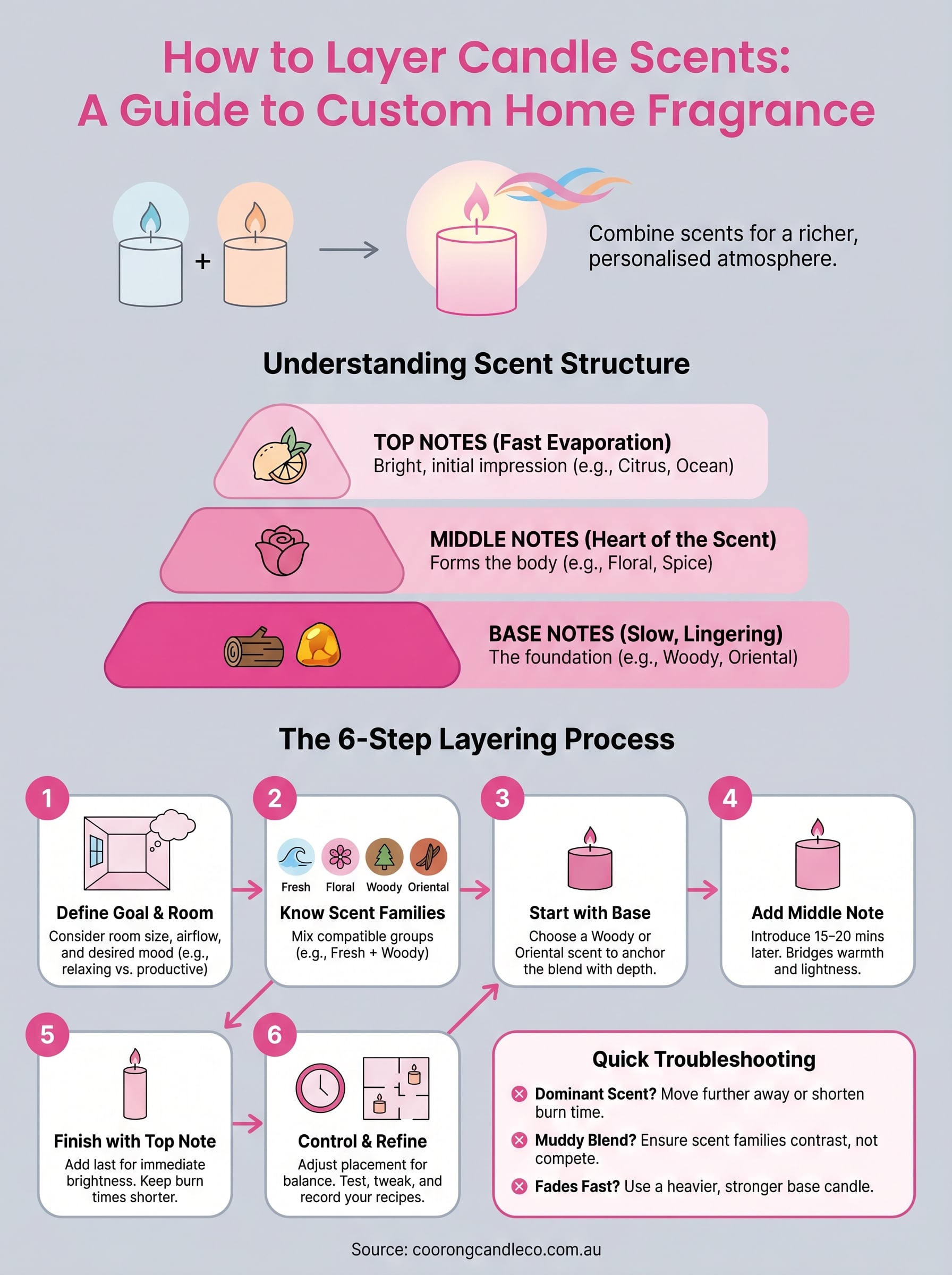
Every fragrance, whether it comes from a candle, a perfume, or a reed diffuser, follows a three-note structure: top notes, middle notes, and base notes. Top notes are the first thing you smell when a candle ignites; they tend to be bright, light, and fresh, but they also evaporate the quickest. Middle notes, sometimes called heart notes, form the body of the fragrance and last considerably longer. Base notes are the slow-burning foundation, typically rich and heavy, that linger in the room well after the candle is extinguished.
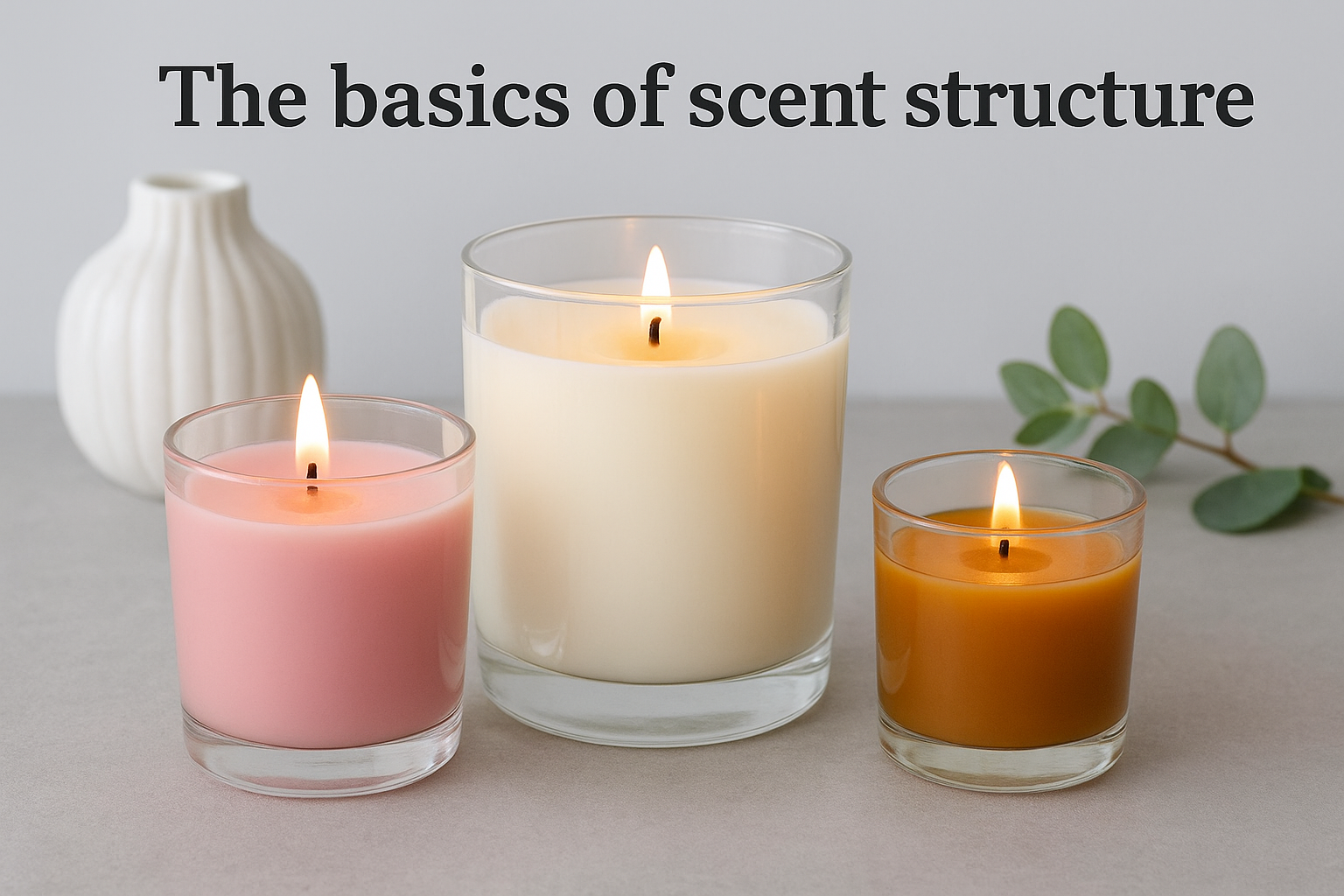
Burning a single candle gives you all three notes from one source, which works perfectly well for most situations. But when you layer candles deliberately, you can assign each role to a different candle, which gives you far more control over the final result. You might burn a bright citrus candle for its lively top notes while a warm amber or sandalwood candle anchors the room with depth and warmth. The result is a blend with texture and dimension that feels designed rather than accidental.
Layering works because your nose registers multiple fragrance inputs as a single, unified experience rather than separate competing smells, provided the individual scents are compatible.
Why your brain reads layered scents as one
Your olfactory system does not separate smells the way your eyes separate colours on a screen. When two compatible fragrances reach your nose simultaneously, your brain combines them into a single perceived scent. This is the same reason a coastal landscape smells like salt, eucalyptus, and wet sand all at once rather than three distinct things processed separately. The blending happens entirely in your perception, which means you do not need to mix wax, reformulate anything, or purchase specialist products to create a genuinely new fragrance experience.
This neurological blending is also why incompatible scents create fatigue or discomfort. When two fragrances compete rather than complement each other, your brain works harder to process the conflicting signals, and the result can feel overwhelming or sharp. Choosing candles with shared ingredient families or complementary fragrance profiles reduces that friction significantly and helps any combination settle into something that feels cohesive and intentional.
What layering gives you that a single candle cannot
A single candle delivers a fixed, pre-determined scent profile. The maker decides the balance of notes, the intensity, and the character of the fragrance. Layering hands that decision back to you. You can shift the mood of a room simply by adding or removing one candle, move from a light daytime freshness toward a deeper evening warmth, or build a completely unique blend that no single product on any shelf replicates.
For those exploring the Coorong Candle Co. regional range, this opens up real creative possibilities. Combining a coastal salt fragrance with a native botanical blend can evoke the specific atmosphere of a South Australian landscape, or build an entirely new sensory environment that feels personal and considered rather than generic. That is ultimately what layering is for: making your home smell like your home.
Step 1. Start with your room and your goal
Before you light a single candle, take a moment to think about the room you're working with and the specific atmosphere you want to create. Jumping straight into scent combinations without this foundation is the most common mistake people make when learning how to layer candle scents. The room size, airflow, and purpose of the space all directly influence how a fragrance blend behaves, and a combination that works beautifully in a large living room will likely feel overwhelming in a compact study or guest bathroom.
Consider the size and airflow of the space
Room size determines how many candles you need and how intense each one should be. A large open-plan living area can handle two medium-strength candles burning simultaneously without the scent becoming overpowering. A compact bedroom or bathroom, on the other hand, often works best with one lead candle and a second smaller candle placed further away to add a subtle supporting note rather than a competing one.
Airflow matters just as much as square footage. A room with good natural ventilation disperses fragrance faster, which means you may need candles burning for longer before the blend fully settles into the space. A sealed room with no open windows concentrates scent quickly, so start with shorter burn sessions of around 30 to 45 minutes and assess the intensity before deciding whether to continue or extinguish one candle.
Always test your room's ventilation before committing to burning two candles at once. What smells balanced after 20 minutes can become overwhelming after an hour in a closed space.
Define the mood you want to create
Your goal for the room shapes every decision that follows, from which scent families you choose to how strongly each candle anchors the overall blend. A relaxing evening wind-down calls for something grounding and warm, such as amber, sandalwood, or vanilla. A productive home workspace benefits from crisp, stimulating notes like citrus, eucalyptus, or clean linen. A dining space hosting guests often suits something with warmth and gentle spice.
Before selecting any candles, write down one or two words that describe the mood you want. This stops you from choosing combinations that each smell pleasant individually yet pull the room's atmosphere in opposite directions. Pairing a fresh coastal salt candle with a heavy oud, for example, creates a jarring contrast that reads as confused rather than layered. Starting with a clear intention keeps your choices aligned and makes the rest of the process far more straightforward.
Step 2. Learn the main scent families
Understanding scent families is the single most practical skill you can build when learning how to layer candle scents. A scent family is a broad category that groups fragrances by their dominant character, and knowing which family each of your candles belongs to tells you immediately how they'll interact with one another. Skip this step, and you're essentially picking combinations at random and hoping for a result that works.
The four core scent families
Most candle fragrances fall into one of four core families, each with distinct characteristics and natural pairing tendencies. Use this table as a quick reference when assessing any candle in your collection.
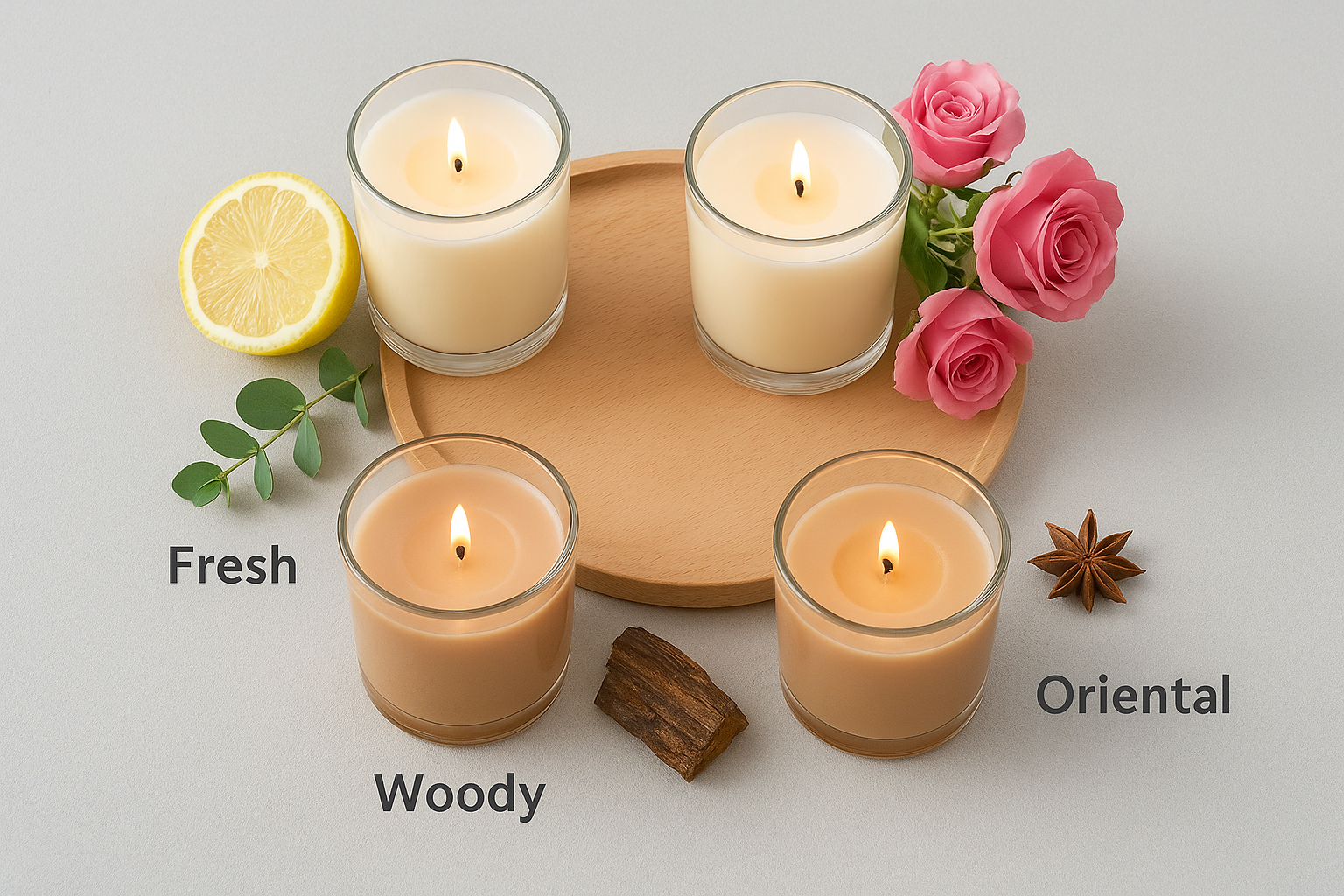
| Scent Family | Key Characteristics | Common Notes |
|---|---|---|
| Fresh | Bright, clean, energising | Citrus, ocean, green tea, eucalyptus |
| Floral | Soft, romantic, sometimes powdery | Rose, jasmine, lavender, peony |
| Woody | Warm, grounding, earthy | Sandalwood, cedar, vetiver, patchouli |
| Oriental | Rich, heavy, deeply warm | Amber, vanilla, musk, oud, spice |
Familiarising yourself with these four categories makes candle selection far more deliberate. When you pick up a new candle, check the fragrance notes listed on the label and assign it to one of these families before deciding where it fits in your blend. A fresh candle almost always functions as a top note, a woody candle as a base, and florals or orientals in the middle or base position depending on their overall weight and intensity.
How scent families pair together
Not every combination works, and knowing the natural affinities between families saves you from wasting burn time on clashing pairs. Fresh and floral fragrances blend easily because both sit on the lighter end of the scent spectrum. Woody and oriental fragrances share warmth and depth, so they layer without competing for dominance.
Fresh paired with woody is one of the most reliable combinations you can build: the brightness of citrus or eucalyptus lifts a warm sandalwood or cedarwood base into something that feels grounded and alive at the same time.
The cross-family combinations that work best tend to involve one lighter family and one heavier one, creating contrast without conflict. Some pairings to approach carefully: two oriental candles burning together in a small room push intensity into overwhelming territory fast. Pairing two distinct florals often muddies both fragrances rather than adding clarity. Start with one candle from the fresh or floral family and one from the woody or oriental group, and building a balanced blend becomes far more straightforward from the outset.
Step 3. Choose a base scent candle
The base candle is the anchor of your blend. Every decision you make about middle and top note candles flows from this choice, so getting your base right before adding anything else is essential when learning how to layer candle scents. A strong, well-chosen base gives your overall blend depth, longevity, and a consistent mood that holds the combination together as the lighter notes shift and evolve throughout a burn session.
What makes a good base candle
A base candle sits in the woody or oriental scent family, and its defining trait is longevity. Base fragrances are built from heavier aromatic compounds that evaporate slowly and linger in a room long after lighter notes have faded. This means your base candle sets the lasting impression of your entire blend, the scent that remains when guests leave or when you return to the room hours later.
Choose a base candle with a clean, uncomplicated fragrance profile rather than one that already tries to do too much on its own. Sandalwood, cedarwood, amber, and vanilla are reliable base choices because they support other fragrances without competing with them.
Look for base candles with minimal listed fragrance notes, ideally two or three at most. A base candle with eight listed ingredients already contains its own internal layering, which makes it harder to predict how it will interact with the candles you add on top. Simpler base candles give you more control over the final blend and behave more consistently across different combinations and room types.
How to pick the right base for your goal
Your mood intention from Step 1 directly informs which base candle you reach for. If you defined your goal as relaxing or restorative, a warm vanilla or amber base provides the heaviness and comfort that supports that atmosphere. For a grounding, natural feel, a cedarwood or sandalwood base connects the blend to something earthy and calm without tipping into oppressive heaviness.
Match the weight of your base to your room size as well. Large rooms handle rich, dense bases like oud or dark amber without those fragrances feeling suffocating. In smaller spaces, choose a lighter base such as a clean sandalwood or a subtle cedarwood, which provides structure without filling every corner with intensity. If you are working with Coorong Candle Co.'s native botanical or coastal ranges, their wood and earth-forward profiles make them natural base candle candidates across a wide range of room types and layering goals.
Step 4. Add a middle candle for character
Once your base candle is burning and the room starts to carry that foundational warmth or depth, you bring in the middle candle. This is where the real character of your blend takes shape. The middle note candle is the heart of your combination, the fragrance that connects the heavier base to whatever lighter notes you add later, and the one your nose spends the most time with during a typical burn session.
What the middle candle does in a blend
The middle candle's job is to bridge the gap between heaviness and lightness without pulling the blend off balance in either direction. Think of it as the connective tissue between your base and top note candles. A well-chosen middle note adds personality and warmth without overshadowing the base or drowning out the fresher notes you plan to introduce.
In practical terms, the floral and light oriental families work best in this position. Lavender, rose, warm spice, light jasmine, and soft fig are all examples of middle note fragrances that sit comfortably between a woody base and a fresh top note. They add interest and complexity without the weight of a base or the volatility of a top note.
The middle candle is the one guests are most likely to notice and comment on, so choose a fragrance here that reflects the mood you defined back in Step 1.
How to choose the right middle candle
When you are working out how to layer candle scents effectively, the middle candle is where personal taste comes into play most strongly. Your base provides structure and your top note adds lift, but the middle is where the blend starts to feel like yours. Look at the fragrance notes listed on each candle you are considering and ask whether they share at least one ingredient or aromatic quality with your base candle. A shared note creates a natural chemical bridge that helps the two fragrances merge rather than compete.
Use the pairing guide below as a starting point for common middle candle choices based on your base selection:
| Base Candle | Reliable Middle Candle Pairings |
|---|---|
| Sandalwood | Lavender, warm spice, light rose |
| Cedarwood | Fig, soft jasmine, green botanical |
| Amber | Vanilla blossom, light cardamom, peach |
| Vanilla | Warm floral, light caramel, coconut |
Start the middle candle 15 to 20 minutes after your base so the foundational fragrance has time to establish itself before the heart note enters the room. This staggered approach gives you a clearer sense of how the two interact and lets you extinguish one quickly if the combination needs adjusting.
Step 5. Finish with a top note candle
With your base and middle candles burning, the heaviest and most complex layers of your blend are already in place. The top note candle is your final addition, and it does something the other two cannot: it lifts the entire combination, adds brightness, and gives the room an immediate freshness that draws attention the moment someone walks through the door. This is the most volatile layer in the blend, the one that arrives quickly and fades first, so timing your introduction of this candle makes a real difference to the overall result.
What a top note candle brings to the blend
Top note candles sit firmly in the fresh scent family: think citrus, eucalyptus, sea salt, green tea, and clean linen profiles. Their fragrance compounds are lightweight and evaporate fast, which is exactly what makes them useful in the final layer of any blend. When you are working out how to layer candle scents across all three note positions, the top note candle is the element that stops a heavy base-and-middle combination from feeling dense or close. It creates the impression of air and space in the overall fragrance, even when the other two candles are quite warm and rich.
A top note candle works best when it shares at least one aromatic quality with your middle candle, such as a shared botanical ingredient or a similar freshness level, so the transition between layers feels seamless rather than abrupt.
Use the table below to match your middle candle type to a reliable top note pairing:
| Middle Candle | Reliable Top Note Candles |
|---|---|
| Lavender | Lemon, eucalyptus, clean linen |
| Warm spice | Orange peel, grapefruit |
| Fig or green botanical | Green tea, fresh herbs |
| Soft floral | Light citrus, white tea |
How to time your top note candle correctly
Introduce the top note candle last, and do so in a deliberate sequence rather than lighting everything at once. Wait until both your base and middle candles have been burning for at least 20 to 30 minutes and the room carries a noticeable warmth from those two layers before you add the top note. Lighting all three candles at the same time makes it difficult to assess how each one contributes, and you lose the ability to troubleshoot quickly if the blend needs adjusting.
Keep burn sessions for your top note candle shorter than the others, around 45 to 60 minutes at a time. Because top notes evaporate quickly, the candle works hard during that window and you do not need extended burns to capture its effect. Extinguishing it while the base and middle candles continue creates a natural fade from freshness into warmth that mirrors how a well-constructed fragrance is meant to evolve.
Step 6. Control intensity with placement and timing
Your three candles are selected and ready. Now, where you place them and when you light each one will determine whether your blend feels balanced or overwhelming. Knowing how to layer candle scents is only half the work; controlling the output of each candle through deliberate placement and burn timing is what turns a promising combination into one that works consistently every time.
Place candles to work with the room, not against it
Candle placement shapes how strongly each layer of your blend registers across the space. Placing all three candles close together concentrates their output in one corner of the room, which creates an intense pocket of scent near the candles but leaves the rest of the room underserved. Spread your candles out so that each one contributes to the overall atmosphere rather than competing at close range.
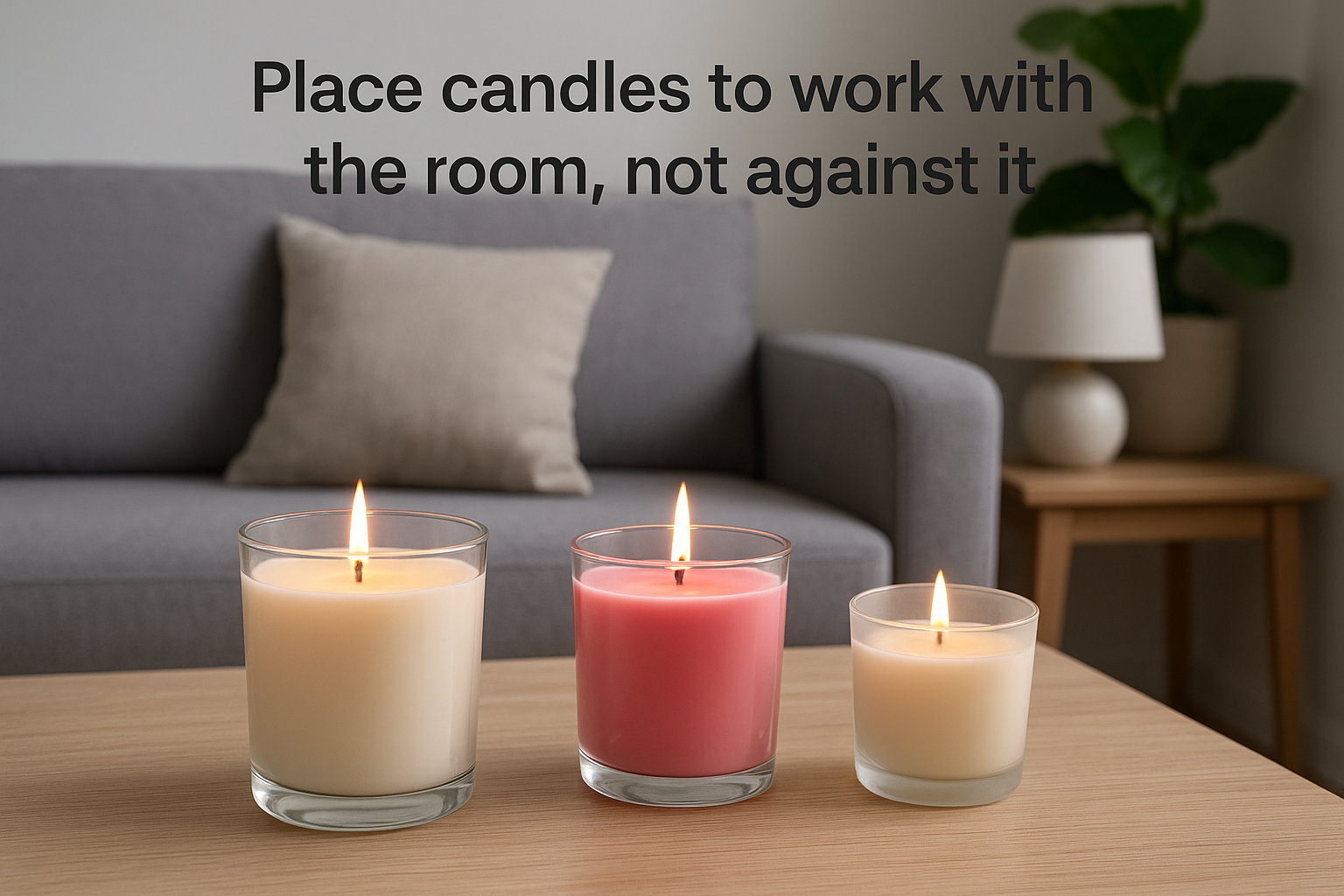
Treat each candle as a zone: your base candle near the centre or main seating area, your middle candle a metre or two away, and your top note candle near the entry point of the room so it greets anyone walking in with that immediate freshness.
Use the table below as a practical placement guide based on room type:
| Room Type | Base Candle Position | Middle Candle Position | Top Note Position |
|---|---|---|---|
| Living room | Coffee table or shelf | Side table or console | Near doorway |
| Bedroom | Bedside surface | Dresser or far shelf | Windowsill or entry |
| Bathroom | Vanity surface | Shelf above bath | Near door |
| Home office | Desk corner | Bookshelf | Window ledge |
Use timing to manage how strong the blend feels
Burn duration controls intensity just as effectively as candle placement does. If your blend starts to feel heavy or one note begins to dominate, extinguishing the strongest candle for 20 minutes and allowing the others to continue is usually enough to rebalance the overall scent without starting the session from scratch. You do not need to extinguish everything and begin again just to reset the room.
For a standard 90-minute layering session in a medium-sized room, use this sequence as your starting template:
- Light your base candle first and let it burn alone for 20 minutes.
- Add your middle candle and continue for another 15 minutes.
- Introduce your top note candle for the final 45 to 60 minutes.
- Extinguish the top note candle while the base and middle continue burning to close the session naturally.
Adjusting this sequence based on your specific room and candle strength is completely normal. Most people find a reliable timing rhythm after two or three sessions.
Step 7. Test, tweak, and write down your blend
Running through the first five steps gives you a working combination, but that initial session is a starting point, not a finished product. The most reliable way to build blends you can repeat consistently is to approach each session as a structured test, observe what works and what does not, and record everything before you forget the details. Memory is unreliable when it comes to fragrance; what felt perfect last Saturday becomes surprisingly difficult to reconstruct three weeks later without notes.
How to run a proper test burn
Your first test burn should be deliberately short and observational. Set a timer for 90 minutes, follow the staggered lighting sequence from Step 6, and pay active attention to how the blend evolves across three specific checkpoints: after the base candle has been burning alone for 20 minutes, again when the middle candle joins it, and finally once all three are running together.
Treat each checkpoint as a separate assessment rather than waiting until the session ends to form an overall judgement, because your sense of the blend shifts considerably as the layers build.
At each checkpoint, ask yourself three questions: Is any single candle dominating the blend? Does the overall scent match the mood you defined in Step 1? Does the combination feel comfortable to sit with for an extended period? Write the answers down on paper or in a notes app immediately, while your nose is still calibrated to the room. If one candle is clearly overpowering the others, move it further from the main seating area or reduce its burn time in your next session rather than changing your candle selection entirely.
Record your blend with a simple template
Once you find a combination that feels right, writing it down is what transforms a lucky result into a repeatable formula. Use the blend record template below after each test session. Fill in every field while the candles are still burning so the details are accurate.
| Field | Your Notes |
|---|---|
| Date and room | e.g. 18 May 2026, living room |
| Base candle name and size | e.g. Sandalwood, 350g |
| Middle candle name and size | e.g. Lavender, 165g travel tin |
| Top note candle name and size | e.g. Lemon eucalyptus, 165g travel tin |
| Lighting sequence and timing | e.g. Base at 0 min, middle at 20 min, top at 35 min |
| Placement notes | e.g. Base on coffee table, middle on side shelf, top near door |
| What worked | e.g. Good balance, middle bridged the two well |
| What to adjust | e.g. Top note too strong, try moving it back 50cm |
Building a small library of these records is the practical outcome of learning how to layer candle scents properly. Each completed template moves you further from guesswork and closer to a personal collection of reliable blends you can pull out for any occasion, room, or mood without starting the process from scratch.
Fix common layering problems fast
Even a well-planned combination sometimes produces a result that feels off. Knowing how to layer candle scents correctly does not guarantee a perfect outcome on the first attempt, and that is completely normal. Most problems with layered blends trace back to one of three predictable issues: imbalance between candles, incompatible scent families, or burn timing that does not suit the room. Each one has a direct fix you can apply without starting the session over from scratch.
One candle is taking over the blend
When a single candle dominates and the others seem invisible, the problem is almost always placement or candle size rather than the fragrance itself. A 350g candle burning in the same corner as a 165g travel tin will win the intensity contest every time. Move the stronger candle to a less central position in the room, or extinguish it for 20 minutes while the smaller candles build their presence.
The quickest fix for an unbalanced blend is distance, not extinguishing: moving a dominant candle just half a metre away from your main seating area reduces its perceived intensity without disrupting the rest of the session.
If repositioning does not resolve the issue, shorten the dominant candle's total burn time during that session by relighting it later in the sequence rather than at the start.
The combination smells muddy or confused
A muddy blend usually means two candles from the same scent family are competing rather than complementing each other. Two heavy orientals or two distinct florals create internal conflict because neither has enough contrast to define itself. Refer back to the scent family table in Step 2 and check whether your chosen candles are too similar in overall character to support each other.
The direct fix is to replace one candle with something from a contrasting family. If both candles lean heavy and warm, swap one for a fresh citrus or eucalyptus option to introduce the contrast the blend needs. Muddy combinations rarely improve with patience; they need a structural change at the selection stage.
The scent disappears too fast
If your blend fades within 30 minutes, your base candle is not carrying enough weight in the combination. Fresh and floral candles evaporate quickly by nature, so a blend built primarily from those families loses its presence fast. Bring in a stronger woody or oriental base candle and position it centrally in the room so its slower-evaporating compounds sustain the overall fragrance across a full 90-minute session.
A custom scent that feels like home
Learning how to layer candle scents is genuinely one of the most rewarding things you can do to make your home feel considered and personal. The steps in this guide give you a repeatable process: start with a clear room and goal, build through base, middle, and top note candles, control intensity through placement and timing, and record every combination that works. None of this requires a background in perfumery, just a willingness to experiment and pay attention to what your nose tells you.
Your best blends will come from candles with clean, well-defined fragrance profiles that leave you room to build something layered and intentional. If you are ready to start experimenting, explore the full range of hand-poured natural soy candles at Coorong Candle Co. and find the base, middle, and top note candles that suit your space and your style.