
There's nothing quite like lighting a candle to unwind after a long day, until a ribbon of black smoke starts curling up toward your ceiling. If you've ever wondered how to stop a candle from smoking, you're not alone. That dark wisp isn't just annoying; it leaves soot on your walls, jars, and furniture, and it means your candle isn't burning as cleanly as it should.
At Coorong Candle Co., we hand-pour every soy candle in small batches right here in South Australia, so we spend a lot of time thinking about clean, even burns. Through years of crafting and testing our candles, we've picked up a solid understanding of what causes smoking, and, more importantly, how to fix it.
Below, we'll walk you through five practical steps to stop your candle from smoking and sooting. These tips work whether you're burning one of our soy candles or any other candle in your collection, and most of them take less than a few seconds. Let's get into it.
1. Start with a quality candle and correct wick
Before you adjust anything else, check what you're actually burning. Many smoking candle problems start at the point of purchase, not after. Understanding the basics of wax type, wick size, and fragrance load is the foundation of how to stop a candle from smoking for good.
What "clean burning" looks like and why smoke happens
A clean burn produces a small, steady flame with no visible smoke trail and a melt pool that reaches the jar edges within two to three hours. Smoke happens when the wick draws up more fuel than the flame can fully combust. The result is unburned carbon particles releasing as soot and smoke into the air above the candle.
What to look for when buying a candle
Choose candles that clearly state their wax type and wick material on the label or product page. Avoid candles with synthetic fragrances listed as the primary scent component, as these can significantly increase soot output. A reputable maker will also tell you how to care for the candle, including recommended burn times and wick trimming instructions.
If a candle comes with no care instructions at all, that's a sign the maker hasn't properly tested it.
How soy wax and cotton wicks affect soot and smoke
Soy wax burns cooler and cleaner than paraffin because it's a natural, renewable material with a lower carbon content. Paired with a lead-free cotton wick, it produces significantly less soot over the life of the candle. This is one of the core reasons Coorong Candle Co. uses both in every hand-poured candle we make.
When the candle itself is the problem and you should stop using it
Some candles cannot be fixed with better technique alone. If your candle smokes consistently despite trimming the wick and avoiding drafts, the wick is likely the wrong size for the vessel. Discard any candle that produces heavy black smoke on every burn, as this points to poor formulation rather than user error.
2. Trim the wick before every burn
Wick trimming is the single most effective habit you can build if you want to know how to stop a candle from smoking. It takes under a minute, and it directly reduces soot output and smoke across every burn.
The target wick length for a steady flame
Keep your wick trimmed to 5mm before each burn. At this length, the flame stays controlled and steady, combusting the wax fuel properly rather than releasing unburned carbon into the air.
A wick longer than 5mm is one of the most common reasons a candle produces black smoke and soot on the jar rim.
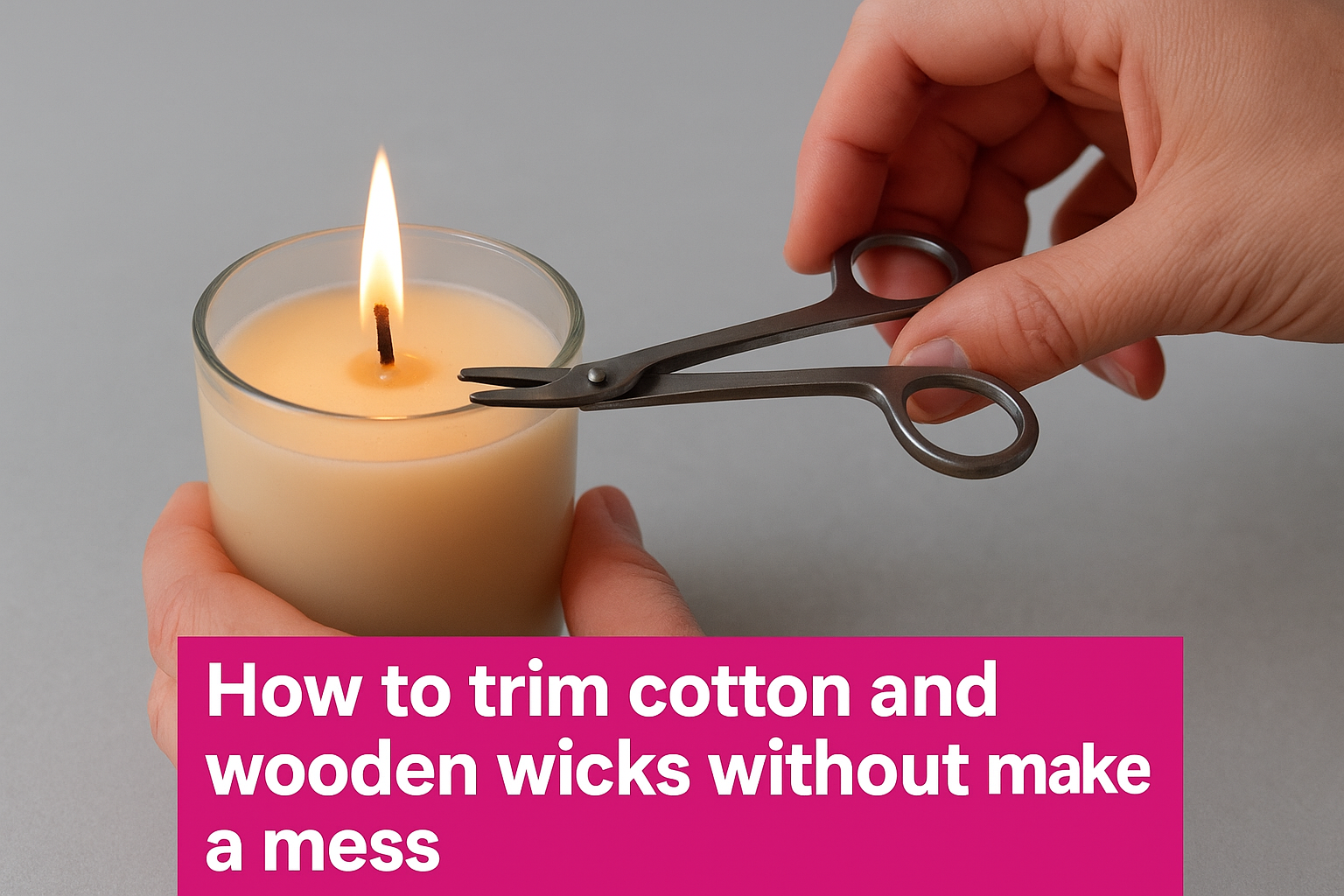
How to trim cotton and wooden wicks without making a mess
Use wick trimmers with an angled head rather than scissors, as they catch clippings before they drop into the wax. Trim only when the wax is fully cooled and solid, then remove any debris before lighting.
How to deal with mushrooming and wick debris in the melt pool
A mushroom-shaped carbon ball often forms at the wick tip after a long burn. Remove it before relighting. Leaving carbon debris in the melt pool gives the flame extra fuel and increases smoke noticeably.
Signs you trimmed too much or not enough
Check your flame's behaviour in the first few minutes after lighting; it will tell you whether the wick length is right. Use these quick indicators to assess the problem:
- Too short: The flame struggles or self-extinguishes within a few minutes of lighting.
- Too long: The flame smokes, flickers, and leaves black soot on the glass.
3. Keep the flame away from drafts and turbulence
Even a well-trimmed wick in a quality soy candle will smoke if the flame is constantly disturbed. Airflow is one of the most overlooked causes when people are working out how to stop a candle from smoking, yet fixing it costs nothing.
The draft checklist: fans, vents, open windows, foot traffic
Check your room for ceiling fans, air conditioning vents, open windows, and doorways before you light a candle. Even regular foot traffic moving past a burning candle creates enough turbulence to disrupt the flame and kick off soot production.
How to position jar candles, pillars, and tealights for stable airflow
Place jar candles and pillars on a flat, stable surface away from direct airflow. Tealights are particularly sensitive to movement, so keep them well clear of busy walkways in your home.
The ideal spot is a corner or shelf where air moves slowly and predictably.
Why flickering flames create soot on walls and jar rims
A flickering flame cannot fully combust its fuel, so it releases unburned carbon particles that settle as black soot on your jar rim and nearby walls.
How to use a hurricane or holder without starving oxygen
Choose a glass hurricane or lantern holder to shield your flame from drafts effectively. Make sure it has a wide enough opening at the top so your candle still gets adequate airflow to burn cleanly.
4. Burn it long enough to prevent tunnelling, then limit burn time
How long you burn your candle directly affects smoke output. Getting burn duration right is a core part of how to stop a candle from smoking over the candle's life.
How tunnelling turns your candle into its own "container"
Tunnelling happens when you extinguish a candle before the melt pool reaches the jar edges. The solid wax builds into a wall around the flame, which sinks lower with each burn. A flame trapped deep in a tunnel gets restricted airflow, which causes visible smoke.
How long to burn on the first light to reach a full melt pool
Your first burn sets the wax memory. Burn the candle long enough for the melt pool to reach the full width of the jar before you extinguish it, which usually takes one to two hours depending on size.
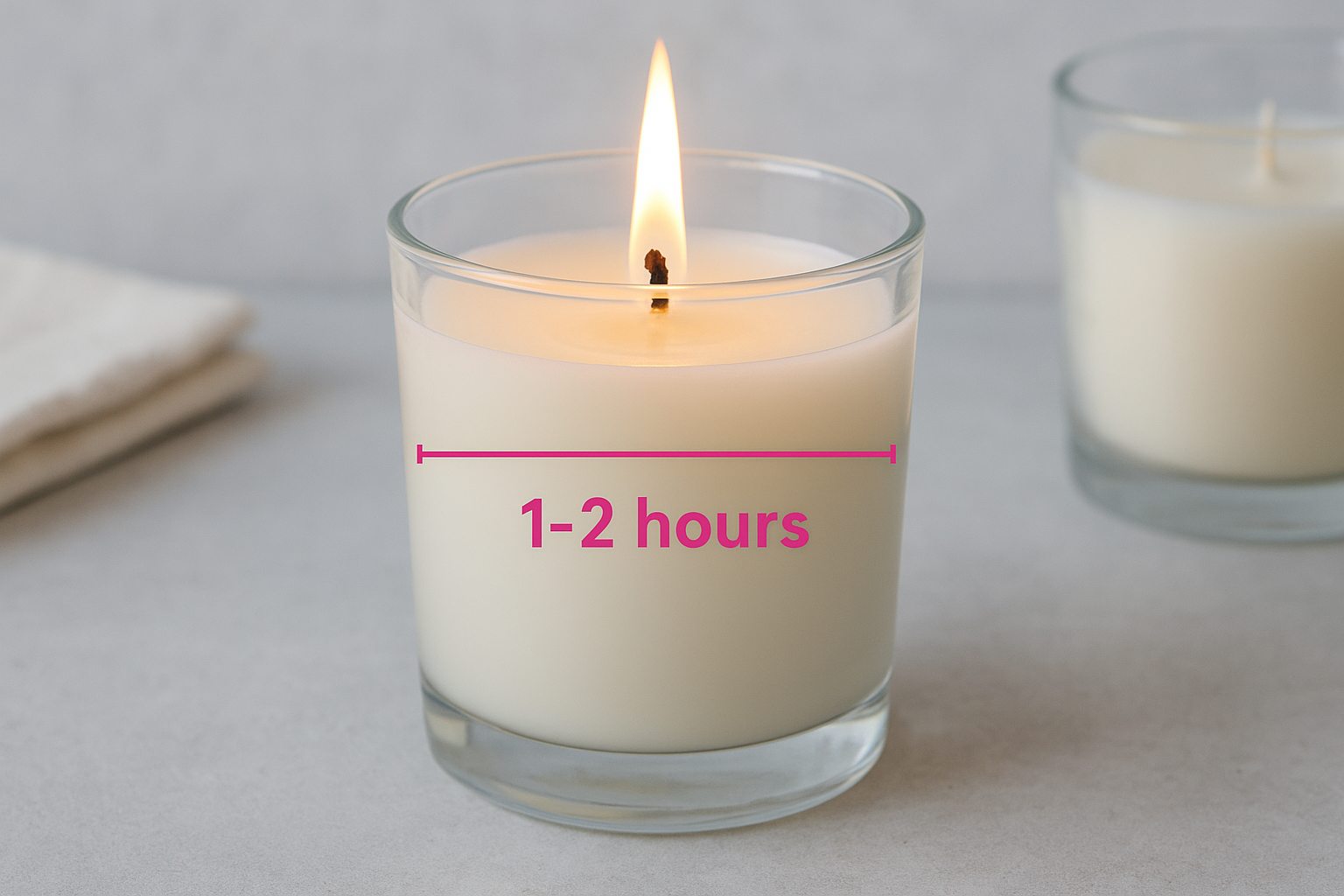
Skipping this step on the first burn is the leading cause of tunnelling.
The 3-hour rule and how overheating increases smoke
Cap each session at three to four hours maximum. Beyond that point, the wax overheats, the wick draws fuel faster than the flame can combust it, and smoke output climbs.
What to do if the flame smokes deep in a jar candle
If your candle has already tunnelled, trim the wick to 5mm and run a full burn session to try to level the melt pool. Retire the candle when less than 1cm of wax remains at the base.
5. Extinguish the right way and clean up soot safely
How you put out a candle matters as much as how you light it. Extinguishing cleanly is the final step in how to stop a candle from smoking, and it keeps soot off your walls and jar rims between burns.
Why blowing out creates the most smoke
Blowing out a candle forces the hot wick to smoulder, releasing a thick trail of black smoke that deposits soot on nearby surfaces and fills the room with an acrid smell.
How to snuff, dip the wick, or use a lid without extra soot
Use a wick snuffer or candle dipper to extinguish your candle cleanly. Dipping the wick into the melt pool and lifting it back upright coats it in wax and eliminates smoke entirely.
A snuffer is the single best tool you can buy for smoke-free extinguishing.
How to remove soot from glass and nearby surfaces
Wipe soot from glass jars with a cotton pad dampened in rubbing alcohol. For walls, a damp microfibre cloth with a small amount of dish soap lifts most soot marks without damaging paint.
When smoke becomes a health issue, including asthma triggers
Persistent candle smoke exposure can irritate airways, particularly for people with asthma or respiratory sensitivities. Switch to a cleaner-burning soy candle and always ensure adequate room ventilation during burns.
Next steps
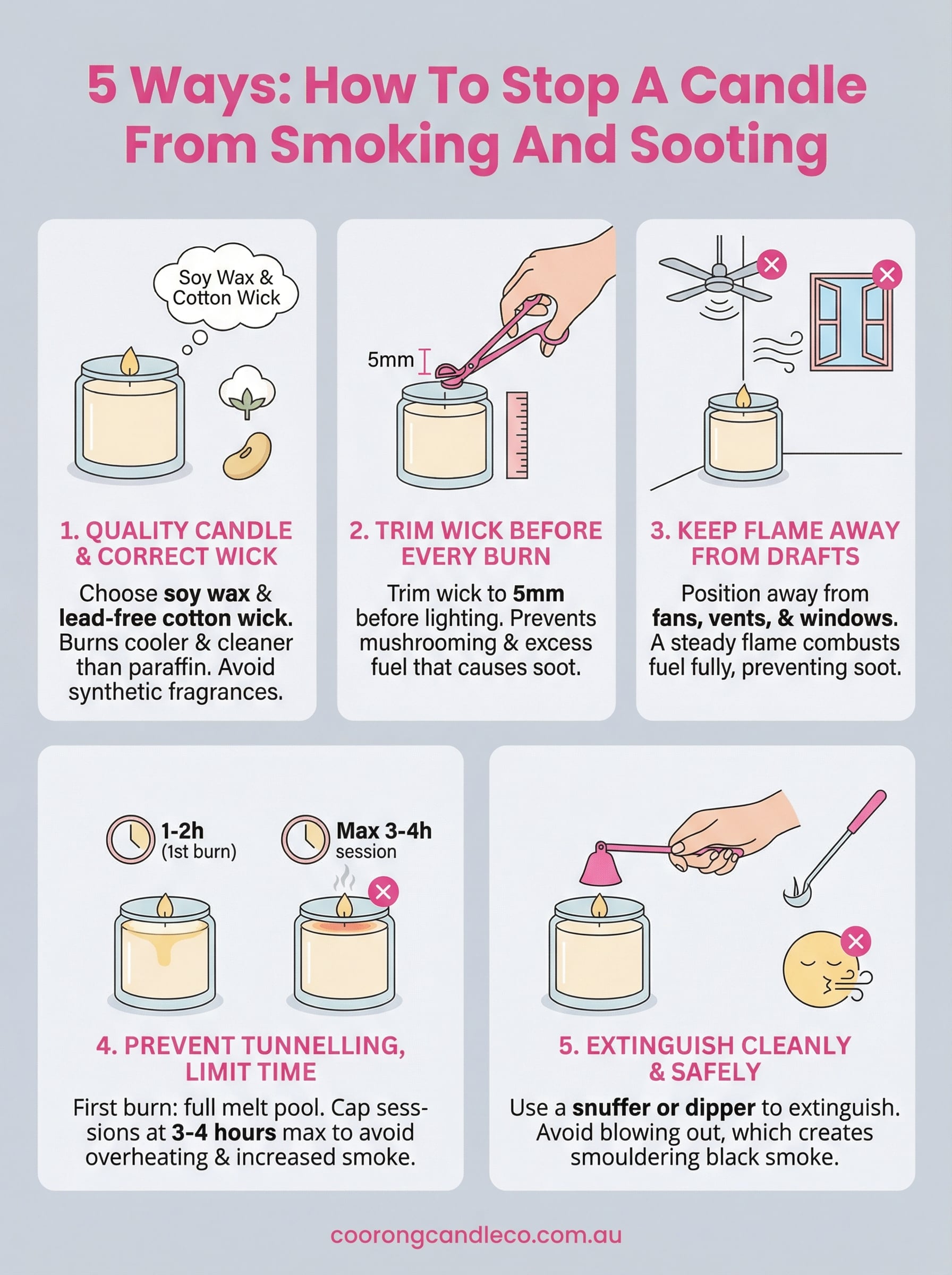
Now you have everything you need to know about how to stop a candle from smoking in any situation. The fixes are straightforward: start with a quality soy candle, trim the wick to 5mm before every burn, keep your flame out of drafts, respect burn time limits, and extinguish cleanly every time.
Most smoking problems come down to one or two habits that are easy to fix once you know what to look for. Consistent wick trimming and draft-free placement alone will eliminate the majority of soot and smoke issues you're likely to encounter at home.
If you'd prefer to start with a candle already designed to burn cleanly from the very first light, browse our hand-poured natural soy candles crafted in small batches in South Australia. Every candle uses pure soy wax and a lead-free cotton wick, so you're set up for a smoke-free burn right from the start.