
You've lit your favourite soy candle, settled into the couch, and then, the flame starts dancing around like it's got somewhere else to be. If you've ever wondered how to stop candle flickering, you're not alone. It's one of the most common frustrations candle lovers deal with, and it's more than just an annoyance, a flickering flame can mean uneven wax melt, excess soot, and a shorter burn life.
At Coorong Candle Co., we hand-pour every soy candle in small batches right here in South Australia. That process gives us a front-row seat to how wicks, wax, and environment all interact. We've tested, trimmed, and troubleshot our way through thousands of burns, so we know exactly what causes that unstable flame, and how to fix it.
This guide walks you through the main reasons your candle flickers and gives you straightforward, practical steps to achieve a steady, clean burn every time. Whether you're burning a travel tin at your desk or a full-sized candle in the living room, these tips will help you get the most out of every light.
Why candles flicker indoors
A flickering candle is nearly always a sign that something in the environment or the candle itself is disrupting the flame. Understanding the cause is the first step to knowing how to stop candle flickering before it shortens your candle's life or fills the room with soot. Most issues come down to three main areas: air movement, wick condition, and wax quality.
Drafts and air movement
The most common reason a candle flickers is moving air. Even a gentle current you can barely feel is enough to push the flame sideways and destabilise the burn. Open windows, ceiling fans, air conditioning vents, and even foot traffic past the candle all create enough air movement to cause a visible flicker.
A flame that consistently leans in one direction is a reliable sign you have a draft source nearby, even if you cannot feel it on your skin.
In rooms with hard floors, air moves low and fast, so candles placed near doorways or on floor-level surfaces are particularly vulnerable. Moving your candle to a sheltered spot on a solid surface away from vents and open windows often resolves the issue immediately.
Wick problems
A wick that is too long, mushroomed at the tip, or sitting off-centre will struggle to maintain a steady flame. Long wicks create a larger flame that pulls in more oxygen and burns less predictably. Mushrooming, that small carbon ball that forms at the tip, makes the flame spit and flare as it consumes the built-up carbon.
A wick that has shifted away from the centre of the candle melts the wax unevenly, and that asymmetrical melt pool feeds the instability further with every burn.
Wax and melt pool issues
Tunnelling happens when the candle only melts the wax directly around the wick, leaving a thick ring of solid wax around the edges. Over time, this creates a deep well that traps the flame and causes it to flicker as it runs low on oxygen. Poor-quality wax, wax that has cooled unevenly between burns, or wax with debris and wick trimmings floating in it can all produce the same result and compound each other if left unchecked.
Before you start, check these candle safety basics
Before you dive into fixing a flickering flame, run through a quick safety check. These basics take less than a minute, but they protect both your candle and your home. Skipping them is the most common reason people overlook the obvious fix and end up with a wax pool full of debris or a wick that burns dangerously high.
Check the wick length
A wick longer than 6mm will almost always cause flickering before a draft or wax issue even comes into play. The standard rule is to trim your wick to 5-6mm before every single burn, not just the first one. Use a wick trimmer or a pair of small scissors to get a clean, straight cut rather than pinching it off, which leaves an uneven tip that burns inconsistently.
Trimming before every burn is the single most effective habit you can build to stop candle flickering before it starts.
Here is a quick pre-burn checklist to run through each time:
- Trim the wick to 5-6mm above the wax surface
- Remove any wick trimmings or debris from the wax pool
- Check that the wick sits centred and upright
- Confirm the candle is on a flat, stable surface
Clear the wax pool
Any debris sitting in the wax pool, including old wick trimmings, dust, or match heads, acts as a secondary fuel source that disrupts the flame. Use a clean piece of tissue to lift out any particles once the wax has fully solidified between burns.
Your effort here takes ten seconds and makes a real difference to how cleanly your candle burns on the next light. A clear, smooth wax surface gives the wick a consistent fuel source, which is exactly what produces a steady, calm flame.
Step 1. Stop drafts and steady the setup
Controlling the air around your candle is the fastest and most effective way to know how to stop candle flickering in practice. Before you adjust anything on the candle itself, fix the environment it sits in. A steady flame starts with still air and a stable surface.
Find and remove the draft source
Walk around the room and hold your hand near the areas closest to your candle. Air conditioning vents, ceiling fans, open windows, and doorways are the main culprits. Even a fan running two rooms away can push enough air through a hallway to cause a visible flicker.

If your flame leans consistently in one direction rather than flickering randomly, a draft is almost certainly the cause.
Common draft sources to check and close off include:
- Air conditioning or heating vents directly above or beside the candle
- Open windows or doors in the same room
- Ceiling fans running at any speed
- High foot traffic areas where people regularly walk past
Set the candle on a solid, flat surface
Once you have reduced the air movement, check what your candle is sitting on. A surface that is uneven, soft, or elevated in a draughty spot contributes to instability. Place your candle on a firm, flat, heat-safe surface at bench or table height, away from the edges of shelves where air circulates more freely.
Keeping your candle away from busy areas of the room also protects the wax pool from collecting dust and debris, which sets you up well for the next steps in this guide.
Step 2. Trim, clean, and re-centre the wick
Once the room is calm and the candle is positioned well, your next focus is the wick itself. A neglected or overgrown wick is one of the leading causes of an unsteady flame, and knowing how to stop candle flickering often comes down to this one habit. Trim, clean, and re-centre your wick regularly, and you will see an immediate improvement in burn quality.
How to trim the wick correctly
Hold the candle up to the light and look at the wick tip. If you can see a mushroom-shaped carbon build-up, or the wick stands taller than 6mm, it needs trimming before the next light. Use a wick trimmer or small scissors and cut straight across, leaving 5-6mm above the wax surface. A clean, flat cut burns more evenly than a pinched or torn tip.
Never trim a wick while the wax pool is still liquid, as the trimmings will sink in and create debris that fuels future flickering.
After trimming, wipe the wax surface with a clean tissue to remove carbon flakes or loose fragments. This gives the flame a consistent, uninterrupted fuel source from the very first light.
Re-centring a shifted wick
Heat and repeated burns can cause the wick to lean or drift away from the centre of the candle over time. A lopsided wick melts the wax unevenly and creates a tilted flame that flickers through every burn cycle.
To correct this, give the candle a brief burn of two to three minutes to soften the top layer of wax, then use the flat edge of a wooden skewer to guide the wick back to the centre while the wax is pliable. Hold it steady for thirty seconds and let everything re-set fully before the next burn.
Step 3. Fix the melt pool and wax issues
A disrupted melt pool is often the hidden reason how to stop candle flickering stays a persistent problem even after you've sorted the wick and the room. When the wax doesn't melt evenly across the full diameter of the candle, the flame sits in an increasingly narrow well with limited oxygen and inconsistent fuel flow, which drives that unstable burn.
Fix a tunnelled candle
Tunnelling creates a deep pit of melted wax around the wick while solid wax clings to the sides, leaving the flame starved of an even fuel surface. To correct it, wrap the top of the candle loosely in aluminium foil with a small hole in the centre, then burn it for one to two hours. The foil traps heat around the edges and encourages the hard wax to melt outward and level off.
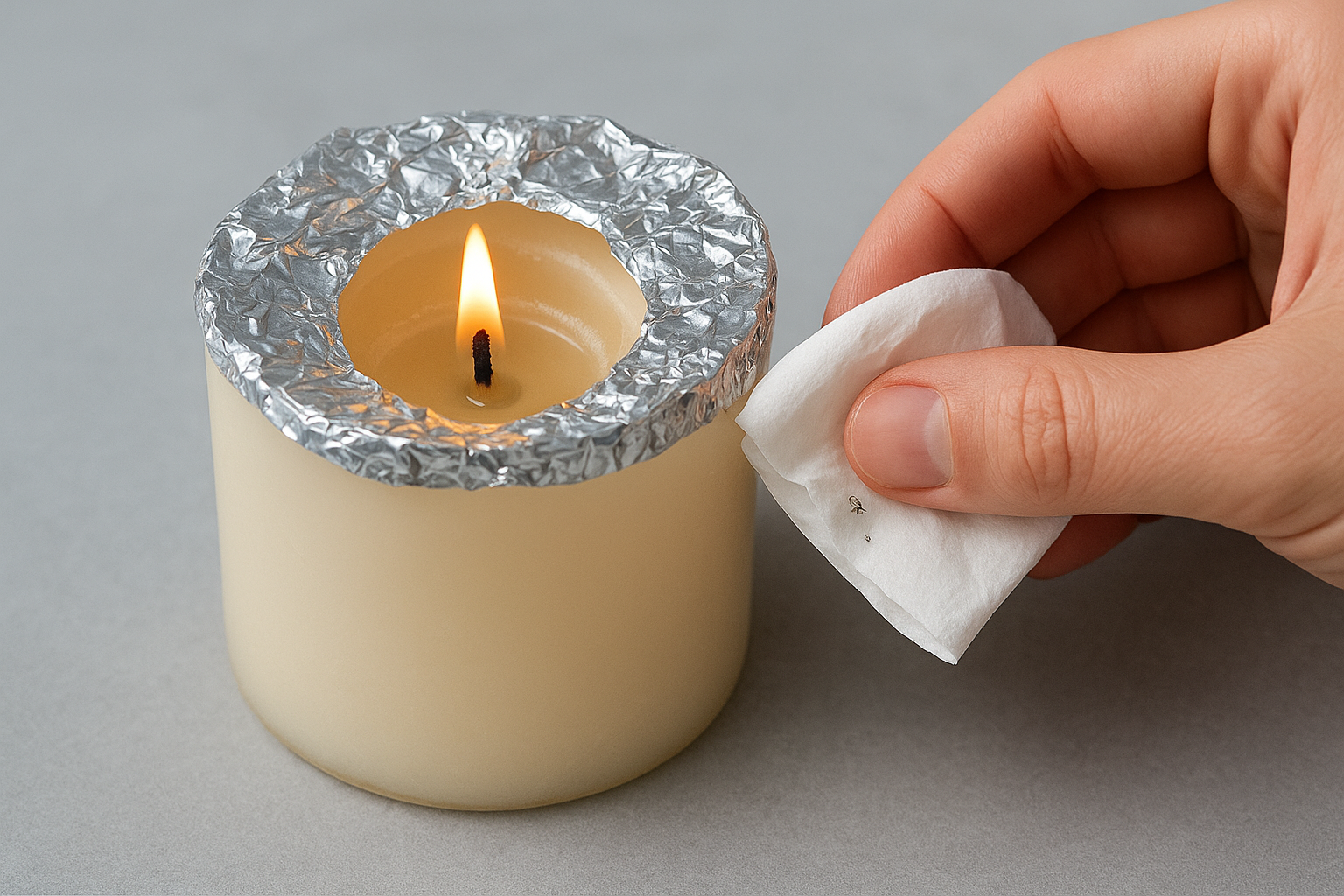
Always burn your candle long enough on the first light to achieve a full melt pool that reaches the edge of the vessel, as this single burn sets the wax memory and prevents tunnelling from forming in the first place.
Keep the wax pool clear between burns
Between every burn, check the solidified wax surface for anything that shouldn't be there: wick trimmings, dust, match debris, or wax chips. These act as extra fuel and cause the flame to flare and flicker unpredictably on the next light. Use a clean, dry tissue to lift out any particles before the wax hardens completely.
Fresh, clean wax gives the wick a steady, uninterrupted supply of fuel on every burn. Combined with the trimming and environment steps above, a clear wax pool is the final piece that produces a consistently calm, even flame from start to finish.
A calmer flame from here
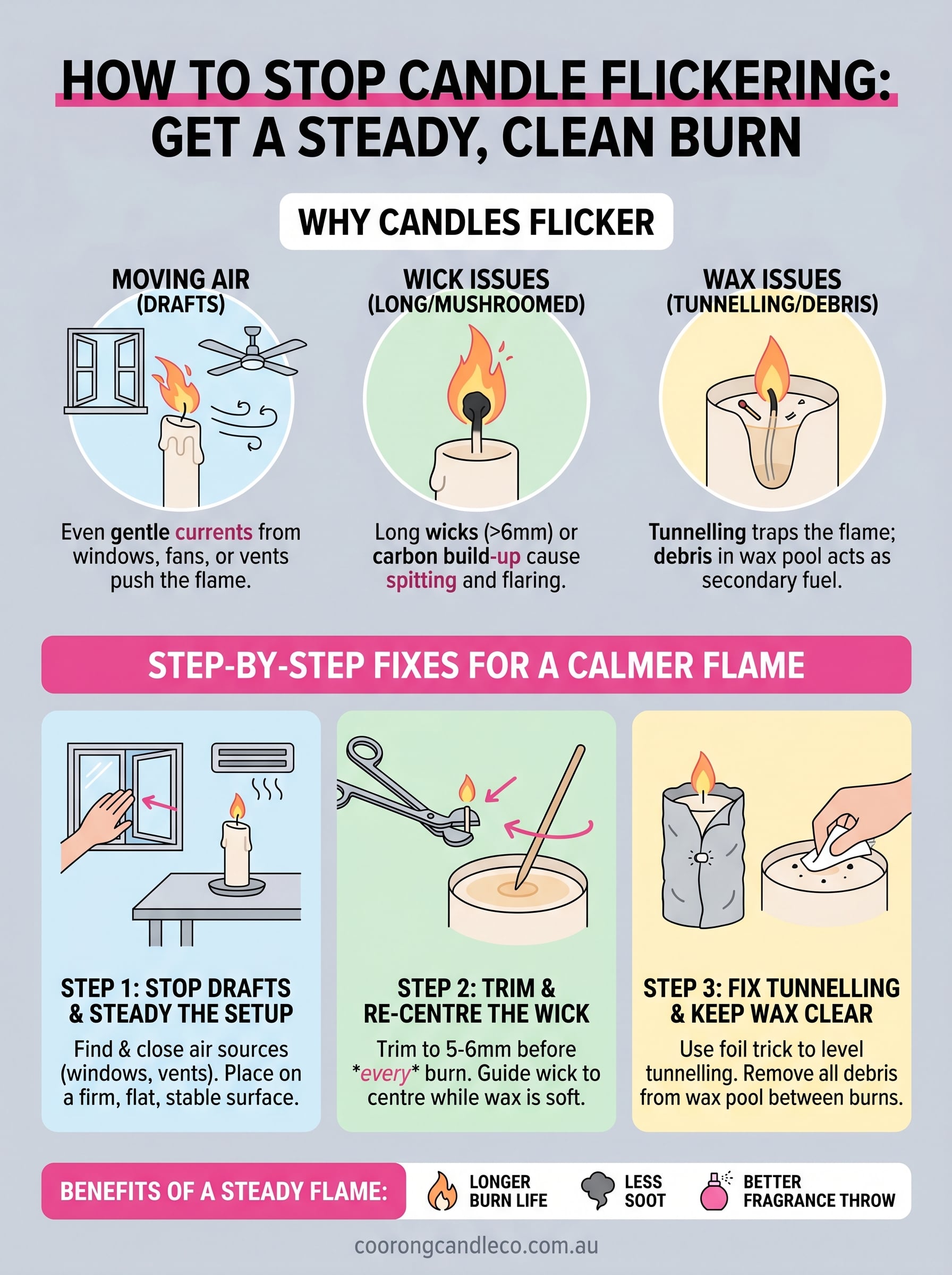
A flickering candle is almost always fixable once you know where to look. Drafts, long wicks, and a disrupted melt pool are the three causes behind most unstable burns, and each one has a clear, practical solution. Work through the steps in this guide, starting with the room environment, then the wick, then the wax, and you will land on a steady, clean flame every time.
Knowing how to stop candle flickering also means getting more from every candle you own. Better burn habits extend your candle's life, reduce soot, and protect the fragrance from being lost to an overworked flame. Small adjustments done consistently make a real difference over time.
If you want a candle that is already crafted for a clean, even burn, browse the handmade soy candles at Coorong Candle Co. and find a fragrance that suits your space.