
You have picked out a beautiful bottle, cut your reeds to length, and yet the scent throw is weak or the oil clogs the reeds within days. The missing piece is usually the reed diffuser base, the carrier liquid that carries fragrance oil up through the reeds and into the room. Get this part wrong and even the best fragrance oil will underperform.
A good reed diffuser carrier oil is not just filler. It determines how far the scent travels, how long the diffuser lasts, and whether the reeds stay clear or gum up over time. Most bases are a blend of odourless carrier oils, such as fractionated coconut oil or a light mineral-based alternative, mixed at a specific ratio with your chosen fragrance. Get the balance right and you get a steady, even scent throw for weeks.
In this guide, we will explain exactly what reed diffuser bases are made from, how they differ from fragrance oil alone, the ratios to use for a strong throw, and where in Australia to buy quality reed diffuser bases for your own home fragrance projects.
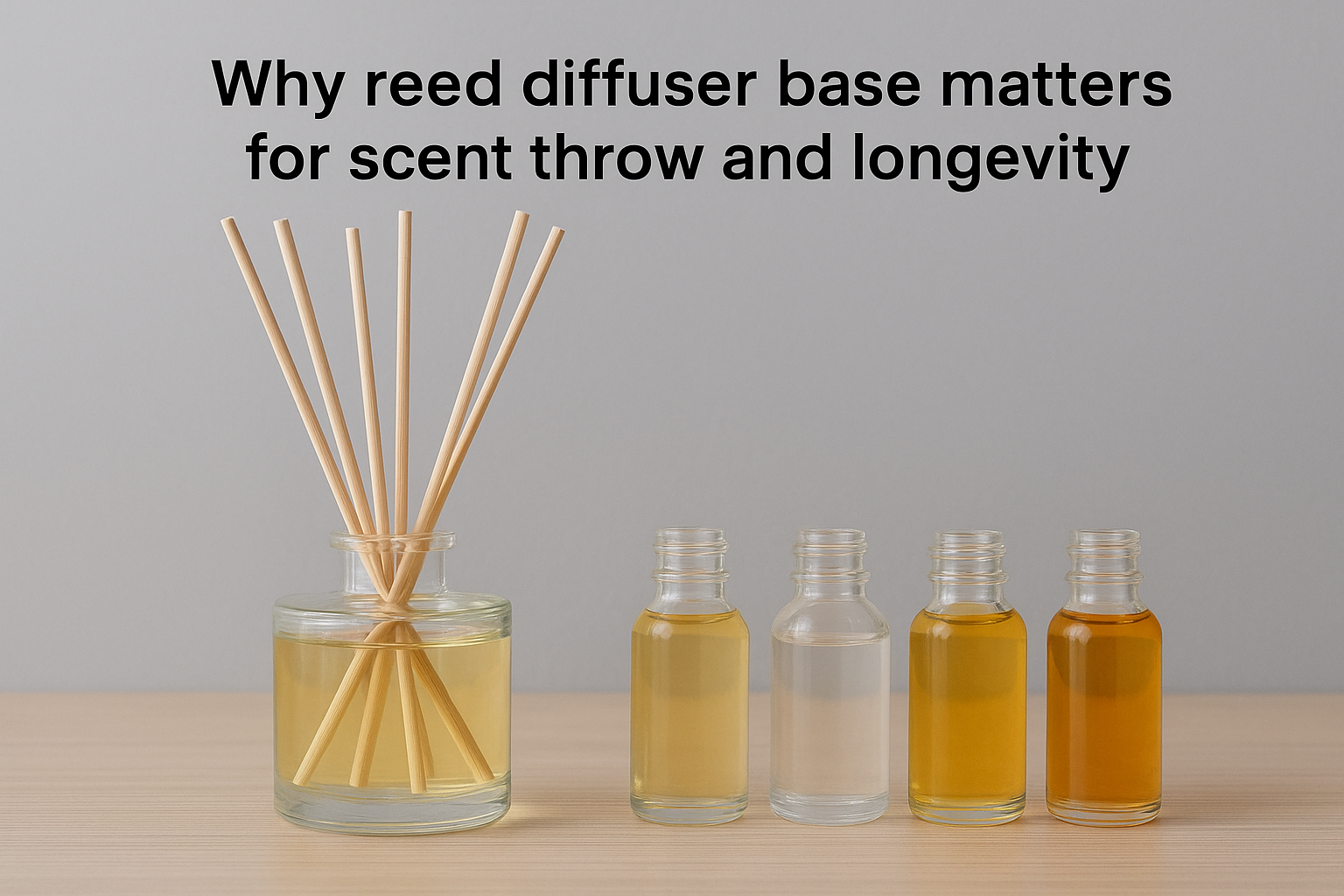
Why reed diffuser base matters for scent throw and longevity
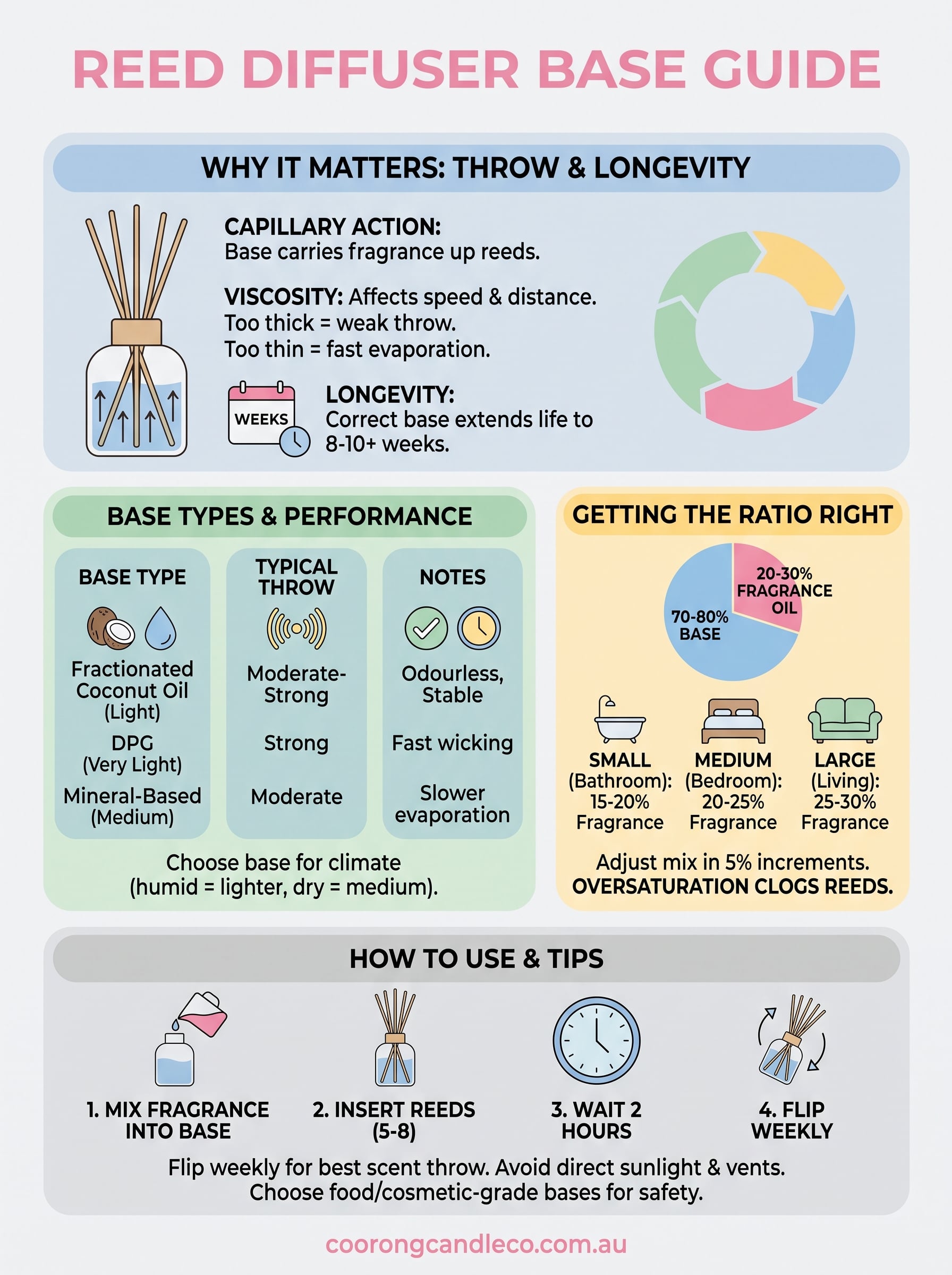
Capillary action is the physical process that makes a reed diffuser work at all. The reeds draw liquid upward through tiny channels in the fibre, and the viscosity of the carrier oil decides how fast and how far that liquid travels. Too thick, and the oil barely reaches the top of the reed before it evaporates. Too thin, and it floods the reed, drips onto your shelf, and burns off in days rather than weeks. A properly formulated reed diffuser base sits in the sweet spot, light enough to climb the reed steadily but stable enough to keep fragrance molecules suspended rather than separated.
Without the right base, fragrance oil on its own tends to be too heavy and too concentrated to travel well through natural fibre reeds. It clings low in the reed, the tips harden, and within a week or two the scent throw drops off almost completely. This is the single biggest reason DIY diffusers underperform compared to shop-bought ones.
A weak scent throw is almost never the fragrance oil's fault. It's the carrier base doing too little of the work.
Different base oils behave in noticeably different ways, which matters when you're choosing one for your own bottles.
| Base type | Viscosity | Typical scent throw | Notes |
|---|---|---|---|
| Fractionated coconut oil | Light | Moderate to strong | Odourless, stable, popular in Australian DIY kits |
| DPG (dipropylene glycol) | Very light | Strong | Fast wicking, common in commercial diffusers |
| Mineral-based carrier oil | Medium | Moderate | Budget-friendly, slower evaporation |
| Undiluted fragrance oil | Heavy | Weak, short-lived | Clogs reeds quickly, not recommended alone |
Longevity depends just as much on this choice as throw does. A base with a slower evaporation rate stretches your diffuser's life to eight or ten weeks, while a poorly matched oil can leave you topping up the bottle within a fortnight. If you've ever wondered why a supermarket diffuser fades fast while an artisan one lasts a season, the answer sits in the base blend, not the bottle design or the reeds themselves.
How to use reed diffuser base at home
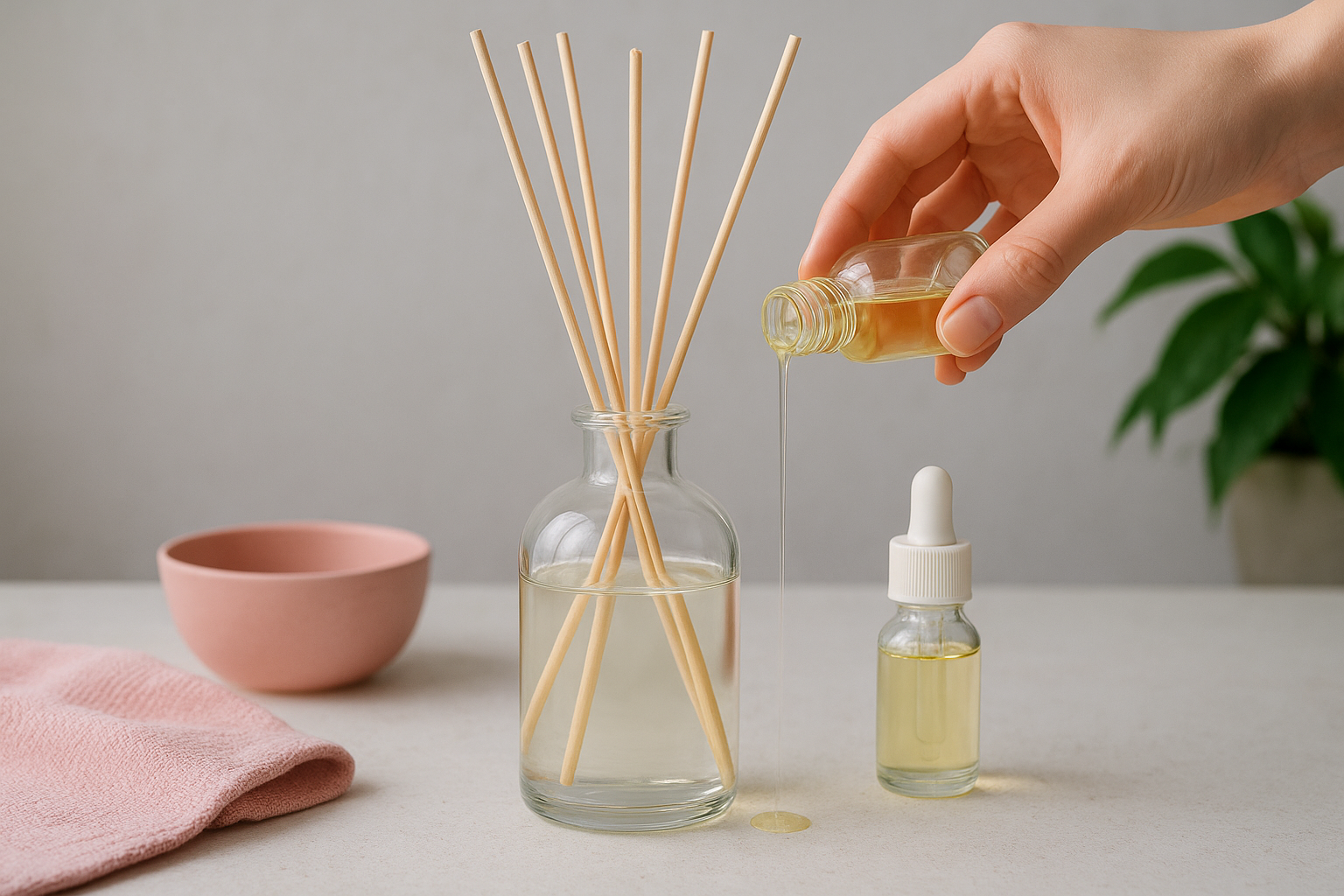
Setting up a reed diffuser with a separate reed diffuser base is simple once you know the order of operations. Mix your fragrance oil into the base first, in a clean glass bottle, then let the blend sit for a few minutes before adding reeds. This gives the fragrance time to disperse evenly through the carrier rather than floating on top.
Here's the basic process we use for our own regional collections at home:
- Pour your carrier base into the diffuser bottle, leaving about a centimetre of headspace.
- Add your fragrance oil and swirl gently to combine, don't shake, as this introduces air bubbles that slow wicking.
- Insert five to eight natural fibre reeds, depending on bottle neck size and how strong you want the throw.
- Leave the reeds untouched for the first two hours to let capillary action begin.
- Flip the reeds every five to seven days to refresh the scent as the tips dry out.
Flipping the reeds weekly does more for scent throw than adding extra fragrance oil ever will.
Placement matters too. Keep the diffuser away from direct sunlight and air-conditioning vents, both of which speed up evaporation and shorten the diffuser's working life. A hallway console or a bathroom shelf away from an open window tends to give the steadiest, longest-lasting throw.
Getting the fragrance-to-base ratio right
Getting the ratio wrong is the fastest way to waste good fragrance oil. Too much oil and the mix turns cloudy, clogs the reeds, and wastes money. Too little and you get a diffuser that looks pretty but does nothing. Most Australian home fragrance makers work with a fragrance-to-base ratio of 20 to 30 percent oil to 70 to 80 percent carrier, adjusted depending on how strong you want the throw and how concentrated your oil already is.
The right ratio isn't fixed. It's the strongest mix your room and your reeds can carry without flooding.
Starting ratios by room type
Smaller spaces need less fragrance oil than open-plan living areas, so scale your mix to the room rather than using one formula everywhere.
- Bathroom or small hallway: 15 to 20% fragrance oil, 80 to 85% base
- Bedroom or study: 20 to 25% fragrance oil, 75 to 80% base
- Living or open-plan area: 25 to 30% fragrance oil, 70 to 75% base
Fine-tuning after your first batch
Watch your first bottle for three or four days before deciding whether to adjust anything. If the throw is weak after a week, add fragrance oil in small five percent increments rather than doubling it outright, since oversaturating the base clogs reeds and shortens the diffuser's working life instead of improving scent. If the mix smells sharp near the bottle but fades a metre away, the base likely needs a touch more fragrance, not less.
Choosing the right reed diffuser base for your home
Climate plays a bigger role in base selection than most Australians realise. In humid coastal areas like the Coorong, a lighter carrier oil wicks faster and needs topping up sooner, while in drier inland regions a medium-viscosity base holds its scent longer without drying out. If you live somewhere with big seasonal swings, it's worth keeping two bottles of base on hand, one lighter blend for summer and a slightly heavier one for winter, so your scent throw stays consistent all year.
Skin and pet safety matter just as much as performance. Choose a base labelled food-grade or cosmetic-grade, since these are refined to remove impurities that can irritate skin or trigger reactions in curious cats. Avoid anything marketed purely as an industrial solvent, even if it's cheap, because the fragrance oil compatibility and safety data simply aren't there.
A base that's safe around pets and skin will always outlast one chosen for price alone.
For most home diffuser projects, we recommend starting with a ready-mixed reed diffuser base rather than sourcing raw carrier oil and fragrance separately. It removes the guesswork on ratios, it's formulated specifically for natural fibre reeds, and it's the same approach we use across our own regional collections, where consistency between batches matters. Once you've got a feel for how one base performs in your home, experimenting with your own blends becomes far easier.
Finding your signature home scent
Getting your reed diffuser base right is mostly about patience and observation. Watch how your first bottle performs over a week, adjust the ratio in small steps, and match your carrier oil to your climate rather than guessing. Once you've nailed the balance, a home diffuser project can genuinely rival anything you'd buy ready-made.
Not everyone wants the trial and error of mixing their own, though, and that's completely fair. If you'd rather skip the guesswork and enjoy a diffuser that's already tuned for scent throw and longevity, have a look through our own reed diffuser collection, hand-blended in South Australia using fragrances drawn from the Coorong landscape itself. Whether you DIY or buy ready-made, the goal is the same: a home that smells like somewhere you actually want to be.