
If a new lotion leaves your skin red, itchy or tight within minutes, you already know something's not right. Working out what is sensitive skin versus a one-off reaction can feel confusing, especially when the same product feels fine on everyone else you know. It's a genuine skin condition, not a personality trait or an excuse to avoid trying new things.
In simple terms, sensitive skin means your skin's protective barrier reacts more strongly than normal to everyday triggers, whether that's a fragrance, a fabric, hot water or even weather changes. The reaction usually shows up as stinging, redness or dryness, and it can be genetic, environmental or linked to an underlying condition like eczema or rosacea. Recognising your specific triggers is the first step towards calmer, more comfortable skin.
This article walks through the real causes behind sensitive skin, the common symptoms to watch for, and practical ways to manage it day to day. We'll also touch on why gentle, natural ingredients matter so much here, which is exactly the thinking behind our own soy-based candles and bath products at Coorong Candle Co.
Why sensitive skin deserves your attention
Sensitive skin isn't a minor inconvenience you should just push through. Roughly half of Australians report some form of skin sensitivity, according to dermatology research cited by the Australasian College of Dermatologists, yet most people never work out what's actually causing their reactions. They swap products at random, blame the weather, or assume they've just got "fussy skin". Left unaddressed, sensitive skin tends to get worse over time, not better, because repeated irritation slowly wears down your skin's ability to protect itself.
What's actually happening under the surface
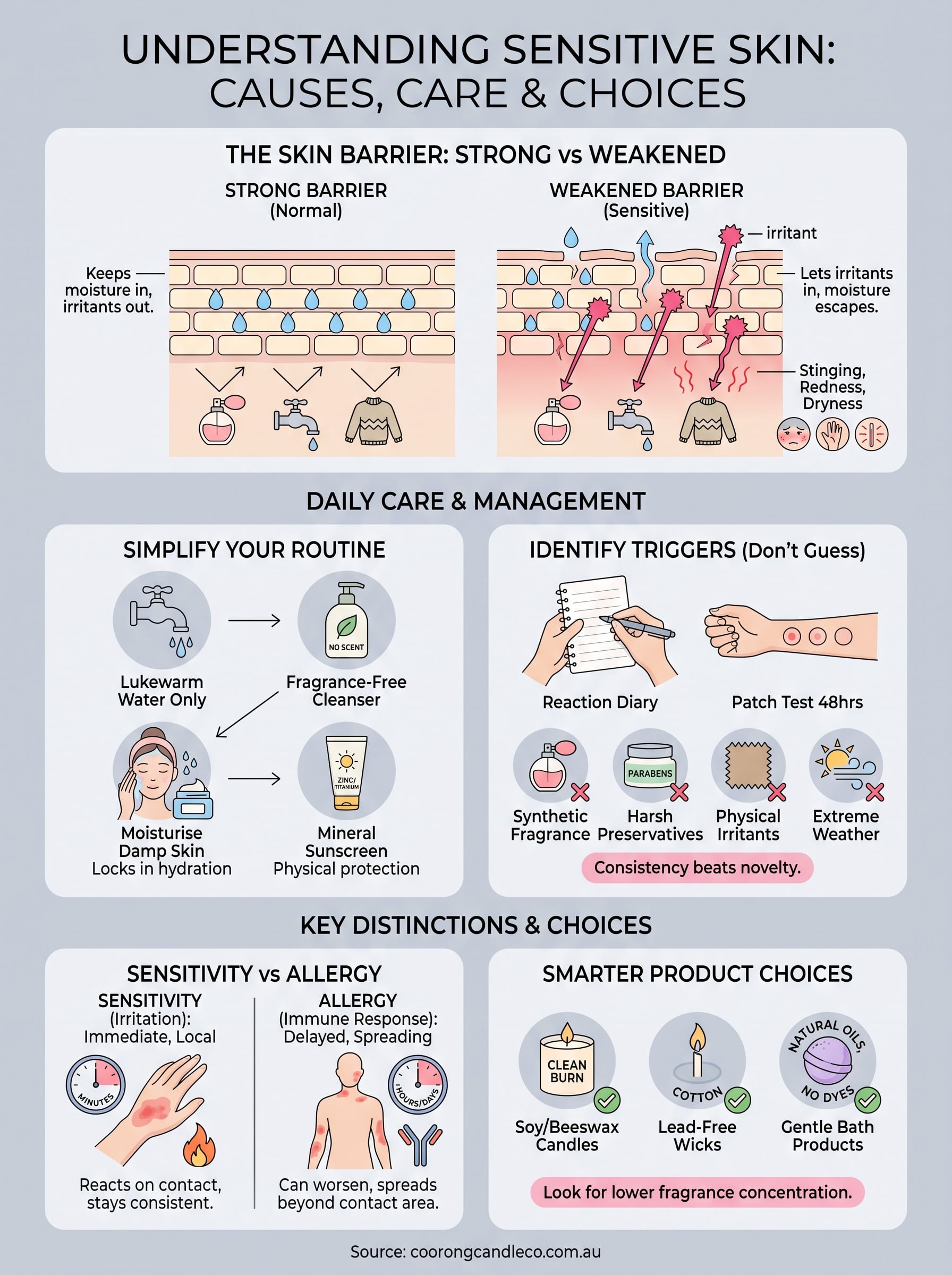
Understanding sensitive skin starts with your skin barrier, the thin outer layer made of skin cells and lipids that keeps moisture in and irritants out. When that barrier is compromised, whether from genetics, over-cleansing, or environmental stress, things that wouldn't normally bother you (a splash of hot water, a scented moisturiser, even wool fabric) can trigger a noticeable reaction. This is why two people can use the exact same product with completely different results. One person's barrier handles the ingredients fine; the other's lets them straight through to nerve endings, causing that familiar sting or flush.
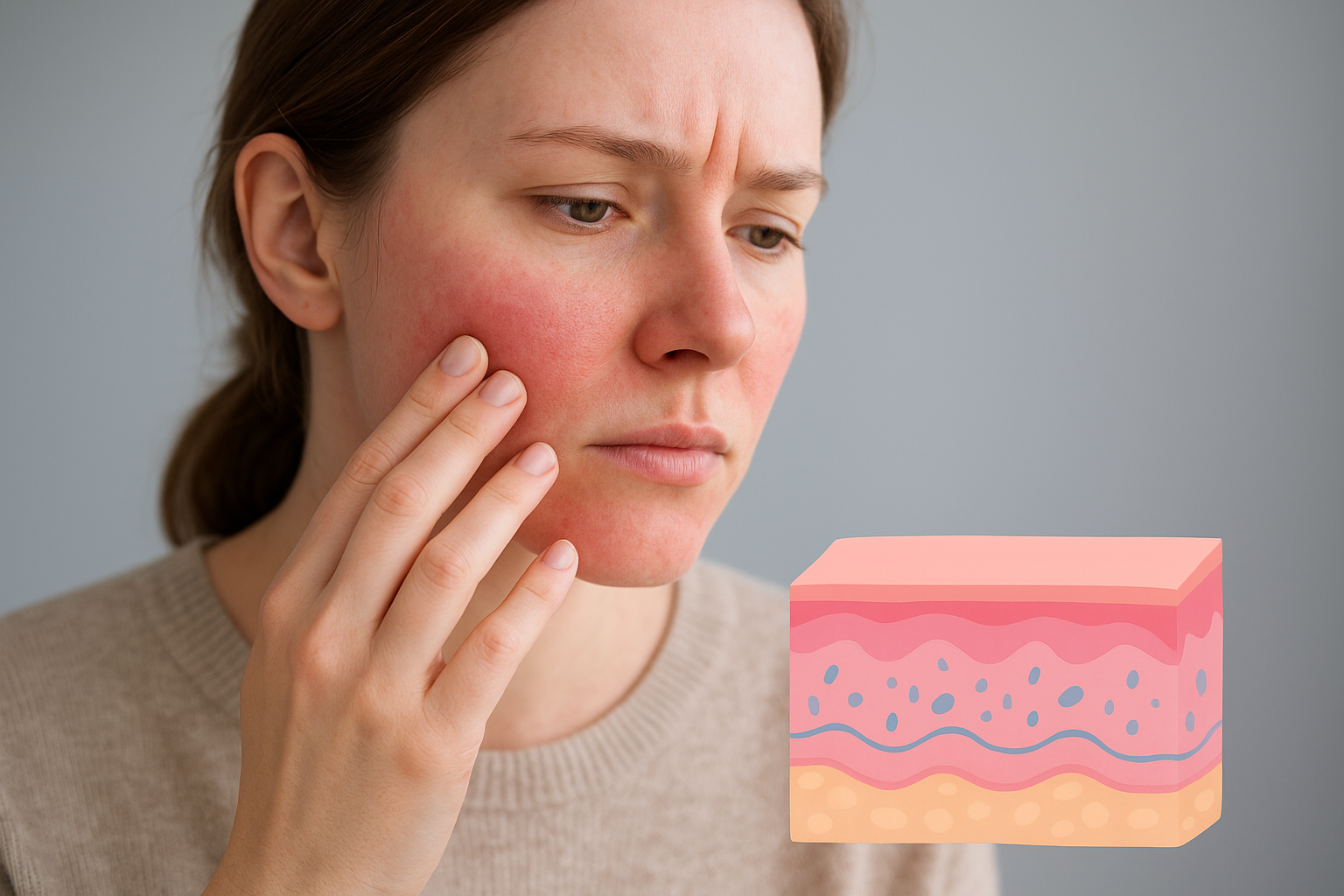
Sensitive skin isn't about being "too fussy", it's a weakened barrier letting everyday triggers through where they shouldn't go.
Why this matters more than people realise
Ignoring sensitive skin doesn't just mean putting up with occasional redness. Chronic irritation can lead to a cycle where your skin becomes reactive to more and more products over time, a process some dermatologists call sensitisation. You start eliminating things you love, from your favourite laundry powder to that scented candle a friend gave you, without ever identifying the real culprit. This is exhausting, and it's also unnecessary once you understand what's driving the reaction.
There's also a quality-of-life cost that's easy to underestimate. People with genuinely reactive skin often report avoiding social situations involving new products, feeling anxious about gifts that might contain fragrance, or simply giving up on self-care rituals like bath soaks and home fragrance altogether. That's a real loss, especially when so many gentler alternatives exist.
The scale of the problem in Australia
Australia's climate adds another layer to this. Harsh UV exposure, dry heat in summer, and sudden temperature drops in winter all put extra strain on the skin barrier, particularly for anyone already prone to reactions. Combine that with widespread use of synthetic fragrances and harsh preservatives in mainstream skincare and home products, and it's easy to see why sensitivity complaints are so common here.
| Common contributing factor | Why it matters |
|---|---|
| Genetics (family history of eczema, rosacea, allergies) | Predisposes you to a weaker, more reactive skin barrier |
| Harsh climate (UV, heat, dry winds) | Strips moisture and accelerates barrier breakdown |
| Synthetic fragrances and dyes | Common trigger for stinging, redness and contact irritation |
| Over-cleansing or hot showers | Removes natural oils, thinning the protective lipid layer |
| Underlying conditions (eczema, rosacea, psoriasis) | Sensitivity is often a symptom rather than a standalone issue |
Taking it seriously without overreacting
None of this means you need to panic or strip your home of every scented product. It does mean paying attention when your skin reacts, rather than dismissing it as random bad luck. Keeping a simple mental note, or even a written log, of what you used before a flare-up gives you real information to work with. That's the foundation for everything else covered in this article, from identifying your specific triggers to choosing candles and bath products that won't set your skin off in the first place.
How to identify your sensitive skin triggers
Finding your specific triggers takes a bit of detective work, but it's far more reliable than guessing. Most people with reactive skin can trace their flare-ups back to a handful of repeat offenders once they start paying proper attention, rather than blaming "sensitive skin" as a vague catch-all. The goal isn't to eliminate everything scented or new from your life. It's to work out precisely what your skin objects to, so you can avoid those specific ingredients while still enjoying everything else.
Start with a patch test routine
Before introducing any new product, whether it's a moisturiser, a candle, or a bath soak, test it on a small patch of skin first. Apply a small amount to your inner forearm or behind your ear, then wait 24 to 48 hours before judging the result. This simple habit catches most problem ingredients before they ever reach your face or a larger area of skin.
- Choose an inconspicuous test spot, like the inner elbow or wrist
- Apply a small amount and leave it uncovered
- Check at 20 minutes, then again at 24 and 48 hours
- Look for redness, itching, swelling or a burning sensation
- Only proceed to full use if there's no reaction after two days
If a product fails a 48-hour patch test, it fails full stop, no matter how good it smells or how many people recommend it.
Keep a simple reaction diary
A written record beats memory every time, especially when several products and environmental factors are in play at once. Note the date, what you used or wore, what the weather was doing, and exactly what reaction followed, including how long it took to appear and how long it lasted. Over a few weeks, patterns usually jump out, maybe it's always synthetic musk fragrances, or always after a hot shower rather than a lukewarm one.
Know the usual suspects
Rather than testing everything at random, it helps to know where sensitivity most commonly comes from. The table below covers the categories worth checking first.
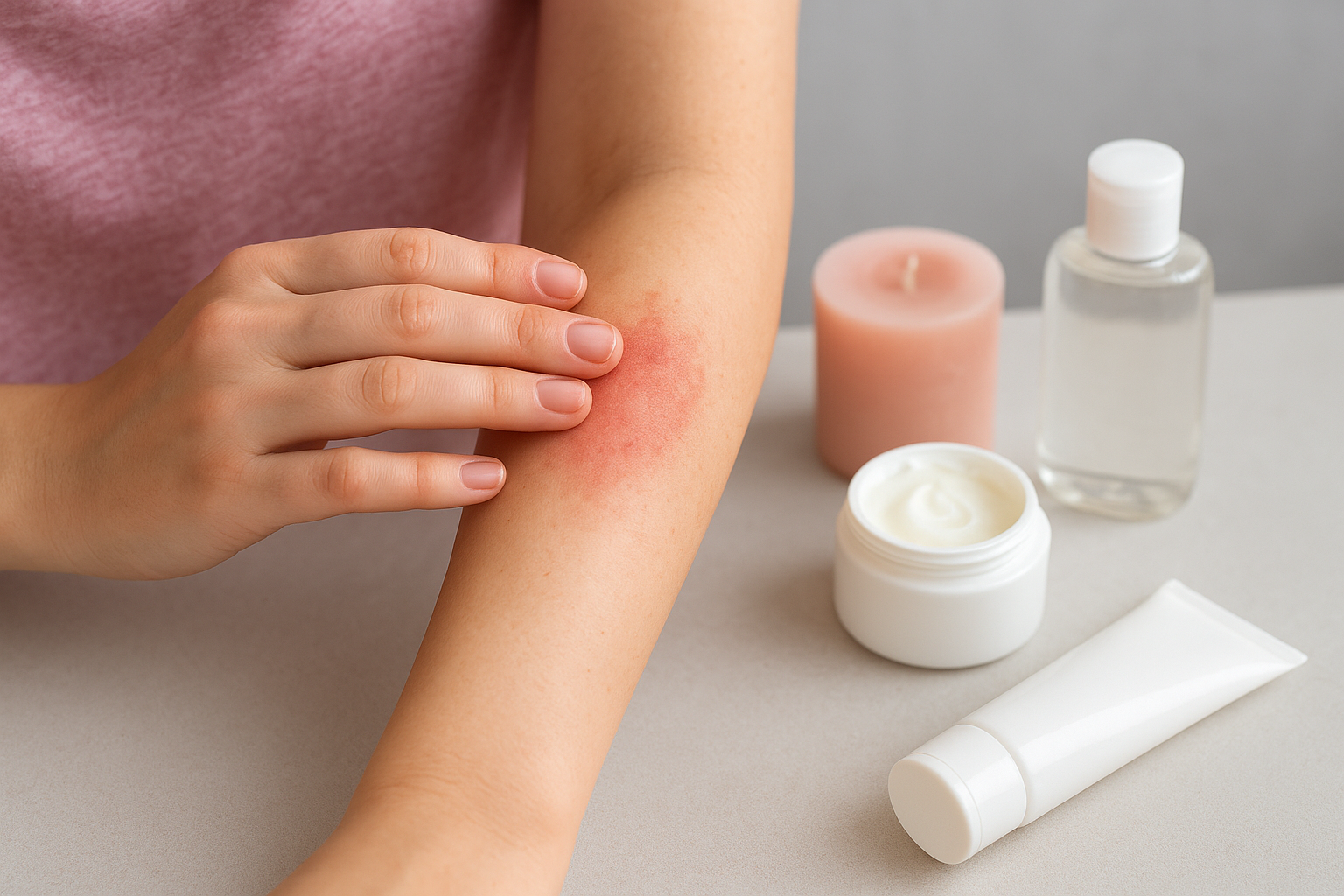
| Trigger category | Typical examples |
|---|---|
| Synthetic fragrance | Perfumes, scented candles, air fresheners, laundry powder |
| Preservatives | Parabens, formaldehyde-releasers in creams and lotions |
| Physical irritants | Wool, rough fabrics, hot water, harsh scrubbing |
| Chemical actives | Retinoids, alpha-hydroxy acids, benzoyl peroxide |
| Environmental factors | UV exposure, wind, sudden temperature changes |
Once you've narrowed things down using a diary and patch testing, checking ingredient labels against this list becomes second nature. That's genuinely the fastest route to fewer surprises and calmer skin day to day.
How to care for sensitive skin every day
Building a routine around sensitive skin doesn't mean overhauling your entire bathroom cabinet overnight. Small, consistent choices protect your skin barrier far more effectively than an expensive one-off treatment. The aim is simplicity: fewer products, gentler ingredients, and a routine you can actually stick to without second-guessing every step.
Simplify your cleansing routine
Hot water feels good but strips the natural oils that keep your barrier intact, so switch to lukewarm water for washing your face and body. Choose a fragrance-free cleanser with a low-foaming formula, since heavy lathering agents like sodium lauryl sulfate are common irritants. Limit face washing to twice a day and keep showers under ten minutes where possible, especially in Australia's drier winter months when skin already loses moisture faster.
Moisturise while your skin is still damp
Applying moisturiser within a few minutes of washing traps residual water against the skin, which works better than slathering on cream to dry skin later. Look for ceramide-based formulas or products containing squalane and glycerin, ingredients that support the barrier rather than just sitting on top of it. Avoid anything with added fragrance or essential oils in your everyday moisturiser, even if it smells lovely, since daily exposure to fragrance is one of the most common causes of slow-building sensitisation.
The best skincare routine for sensitive skin is usually the shortest one, fewer ingredients means fewer chances for a reaction.
Protect against sun and weather
UV exposure damages an already compromised barrier faster than most people realise, so a mineral sunscreen with zinc oxide or titanium dioxide is worth prioritising over chemical filters, which irritate more readily. Reapply after swimming or heavy sweating, and consider a lightweight hat or long sleeves during peak UV hours rather than relying on sunscreen alone. Wind and sudden cold snaps deserve the same respect, since they pull moisture from skin just as effectively as heat does.
Build a routine you can trust
Consistency beats novelty when you're managing reactive skin, so resist the urge to chase new product launches just because they promise instant results.
- Cleanse with lukewarm water and a fragrance-free wash
- Pat skin dry rather than rubbing
- Apply a barrier-supporting moisturiser while skin is damp
- Use mineral sunscreen every morning, rain or shine
- Patch test anything new before adding it to the routine
Sticking to this order, morning and night, gives your skin the predictability it needs to calm down and stay calm, rather than constantly adjusting to whatever product you tried last.
Choosing candles and bath products for sensitive skin
Home fragrance and bath rituals shouldn't be off-limits just because your skin reacts easily. Most flare-ups linked to candles and bath products come down to a handful of avoidable ingredients, not the whole category. Once you know what to look for, you can still enjoy a scented room or a warm soak without triggering redness or itching the next morning.
What to check before you buy
Look past the marketing on the front of the box and read the actual ingredient list, since terms like "natural fragrance" carry no legal weight in Australia and can still contain irritating compounds. Prioritise products that state their wax type, wick material and whether any essential oils are phthalate-free, because vague labelling usually means the maker doesn't want you asking questions.
- Choose soy or beeswax over paraffin, which releases more soot and synthetic byproducts when burned
- Look for lead-free cotton wicks rather than metal-core wicks
- Check bath products for added dyes, since these sit directly on skin far longer than a candle's scent lingers in the air
- Avoid heavily concentrated synthetic musks, common in cheaper diffuser oils
Why fragrance concentration matters
Concentration, not just the presence of fragrance, determines how likely a product is to cause a reaction. Mass-market candles often use high fragrance loads to maximise scent throw, which means more volatile compounds released into the air you're breathing and, in bath products, more direct skin contact. Lower, well-balanced fragrance concentrations still deliver a pleasant scent without overwhelming a reactive barrier.
A candle that smells subtle from across the room is usually kinder to sensitive skin than one that fills the whole house.
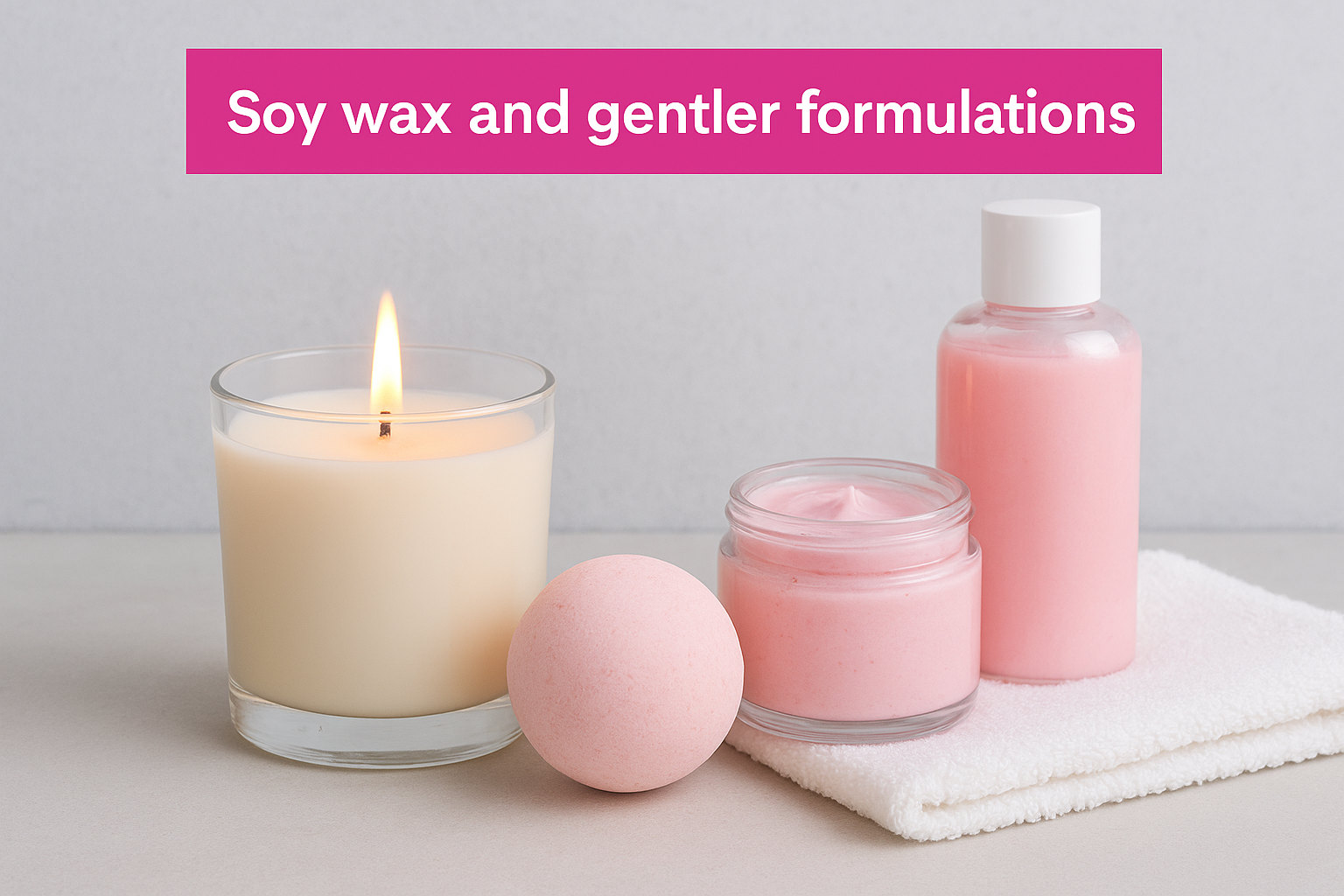
Soy wax and gentler formulations
Soy wax burns cooler and cleaner than paraffin, which matters because paraffin is a petroleum byproduct known to release more airborne irritants as it melts. This is exactly why our hand-poured candles at Coorong Candle Co use renewable soy wax and lead-free cotton wicks, paired with fragrance levels calibrated for comfort rather than maximum throw. Bath bombs and diffusers built the same way, with gentler oils and no harsh dyes, let you keep your self-care rituals intact instead of quietly giving them up because your skin can't handle the mainstream alternatives.
When sensitive skin signals something more serious
Most sensitive skin reactions settle down once you remove the trigger, but sometimes redness and irritation point to something that needs proper medical attention rather than a gentler moisturiser. Persistent symptoms, especially ones that don't improve after weeks of careful product choices, deserve a proper look rather than another round of guessing.
Red flags worth taking seriously
Certain symptoms go beyond typical sensitive skin reactions and suggest an underlying condition is driving the flare-ups. Watch for these signs in particular:
- Redness that doesn't fade within a few days of avoiding the suspected trigger
- Thickened, scaly or cracked patches, particularly around joints or the face
- Painful, swollen or weeping areas rather than simple itchiness
- Symptoms that worsen despite a genuinely simplified skincare routine
- Visible blood vessels or persistent flushing across the cheeks and nose
Skin that won't calm down after you've removed the obvious triggers is telling you it needs more than a product change.
Conditions often mistaken for simple sensitivity
Eczema, rosacea and psoriasis all commonly present as "sensitive skin" in the early stages, which is why so many people manage them for years without a diagnosis. Eczema tends to show up as dry, itchy patches that flare with stress or weather changes, while rosacea usually causes persistent facial redness and visible small blood vessels, often triggered by heat, alcohol or spicy food rather than skincare products. Psoriasis, by contrast, produces thicker, silvery-scaled patches that don't respond to standard moisturisers no matter how gentle. Each of these conditions has its own treatment pathway, and none of them improve much from simply switching to fragrance-free products alone.
When to see a doctor
Getting a proper diagnosis matters because treating rosacea like everyday sensitivity, or vice versa, wastes time and can make things worse. According to Healthdirect Australia, you should see your GP or a dermatologist if a rash spreads, doesn't respond to basic care within two to three weeks, or comes with pain, swelling or fever. A dermatologist can also run patch testing for specific allergens, something that's far more precise than trial and error at home. There's no shame in needing that extra step. Plenty of people spend years blaming "sensitive skin" for what turns out to be a manageable, well-understood condition once someone actually looks at it properly.
Sensitive skin vs allergies: spotting the difference
People often use "sensitive" and "allergic" interchangeably, but they describe two completely different processes happening in your body. Understanding what is sensitive skin compared to a true allergy changes how you treat it, because one is a barrier problem and the other is an immune response. Mixing them up means you might avoid the wrong products for years while the real culprit sits untouched in your cupboard.
The core distinction: irritation vs immune response
Genuine sensitivity is a direct irritation, your skin barrier lets a substance through and it reacts on contact, usually within minutes and only where the product touched. An allergy, by contrast, involves your immune system producing antibodies against a specific compound, which means the reaction can appear anywhere on the body, sometimes hours or days after exposure, and tends to worsen with repeated contact rather than staying the same. This is why someone can use a lanolin-based lotion for years, then suddenly develop a full allergic reaction to it, while sensitivity symptoms usually show up the very first time.
Sensitivity reacts to what touches your skin, an allergy reacts to what your immune system has decided is a threat.
Spotting a true allergic reaction
Certain signs point firmly towards allergy rather than simple sensitivity. Watch for these together, since one alone isn't conclusive:
- Hives, welts or swelling, especially around the eyes or lips
- Reactions that spread beyond the contact area
- Symptoms appearing hours or even a day after exposure
- Breathing difficulty, throat tightness or dizziness (seek urgent care immediately)
- Reactions that get worse with repeated exposure to the same product
| Feature | Sensitive skin | Allergic reaction |
|---|---|---|
| Onset | Minutes, on contact | Minutes to 48 hours later |
| Location | Usually just the contact area | Can spread beyond contact point |
| Mechanism | Barrier irritation | Immune system response |
| Severity over time | Stays roughly consistent | Often worsens with repeat exposure |
| Confirmed by | Patch testing, elimination | Allergy testing by a specialist |
Why the confusion happens so often
Overlap between the two makes self-diagnosis tricky, since both can produce redness, itching and swelling that look identical at first glance. Testing removes the guesswork entirely, which is why an allergist's skin prick or patch test carries far more weight than trial and error at home. Knowing the difference also changes urgency: sensitivity rarely needs emergency care, but a true allergic reaction involving swelling or breathing trouble does, every time.
Living comfortably with sensitive skin
Understanding what is sensitive skin comes down to one simple idea: your barrier reacts more strongly than most, and that's manageable once you know your triggers. Patch testing, a short reaction diary and a genuinely simple routine give you real control instead of endless guesswork. Watching for red flags that point to eczema, rosacea or a true allergy means you get proper treatment rather than years of frustration with the wrong approach.
None of this means giving up the little rituals that make home feel like a sanctuary. Choosing gentle, well-made products lets you keep candles, warm baths and soft fragrance in your life without the next-day redness. If your skin has been holding you back from those small pleasures, start with something built for it and browse our handmade bath bombs, made with naturally sourced, skin-softening ingredients from right here in South Australia.