
You drop a bath bomb into the tub expecting a proper wind-down, and instead you get fizz, a cloud of glitter, and a scent that fades before you've even sat down. That's the difference between a novelty bath bomb and genuine bath bombs aromatherapy is built on. The real thing uses actual essential oils, not synthetic fragrance oil dressed up in pretty packaging, to actually shift how you feel while you soak.
So what makes a bath bomb count as aromatherapy, rather than just a bath-time toy with a nice smell? It comes down to the ingredients doing double duty: essential oils working on your nervous system through scent while nourishing oils like shea or cocoa butter work on your skin. Lavender for calming, eucalyptus for clearing, citrus for lifting your mood, that's the therapeutic side most mass-market versions skip entirely.
In this guide, we'll walk through exactly what aromatherapy bath bombs are, the skin benefits you should expect from a well-formulated one, and how to spot the difference between authentic essential oil blends and cheap fragrance imitations, so you know precisely what to look for before your next purchase.
Why aromatherapy bath bombs matter for wellbeing
The science behind scent and relaxation
Your sense of smell connects directly to the limbic system, the part of your brain that handles emotion and memory, which is why a whiff of lavender can settle your shoulders before the warm water even touches them. Essential oils trigger this response in a way synthetic fragrance can't replicate, because the aromatic compounds are the real plant chemistry, not a lab-made copy of a smell, which is how aromatherapy works in the first place. Healthdirect Australia notes that relaxation techniques, including sensory approaches like aromatherapy, can genuinely help lower stress levels when used consistently as part of a wind-down routine.
A proper aromatherapy soak works on your nervous system through scent, not just your skin through water.
Heat, touch and oils working together
Combine that scent response with warm water opening your pores and nourishing oils softening your skin, and you get three wellbeing mechanisms firing at once instead of one. Muscles loosen in heat, skin drinks up shea or cocoa butter, and your breathing slows as you inhale eucalyptus or citrus with every ripple of steam. This layering is exactly what separates a therapeutic soak from a bath that merely smells pleasant for ten minutes.
Building a ritual, not just buying a product
Regularly is the key word here, because a single bath won't undo a stressful week, but a consistent evening ritual builds a signal to your body that it's time to switch off. People who treat their soak as a deliberate wind-down, phone away, lights low, tend to report better sleep and steadier moods than those who bathe on autopilot. That's the real value behind choosing bath bombs aromatherapy brands formulate properly, rather than grabbing whatever's cheapest and glittery at the supermarket.
How to choose the right aromatherapy bath bomb
Check the ingredient list first
Flip the bath bomb over before you buy it and look for essential oils named specifically, lavender, eucalyptus, sweet orange, rather than the vague catch-all "fragrance" or "parfum". That single word usually means synthetic fragrance oil, which smells fine on the shelf but won't do much for your nervous system in the tub, and the key differences between essential oils and fragrance oils are worth knowing before you buy. Genuine aromatherapy bath bombs also list a carrier or nourishing oil, shea butter, cocoa butter, or coconut oil, because the scent needs a skin-loving base to actually land properly.
If the label doesn't name the oil, assume it's not aromatherapy.
Match scent to your mood or need
Once you know the ingredients are real, choose based on what you actually need that evening, not just what smells nicest in the shop.
- Winding down after work: lavender or chamomile blends
- Clearing a stuffy head or tight chest: eucalyptus or peppermint
- Lifting a flat mood: citrus blends like sweet orange or grapefruit
- Easing sore muscles: a shea-heavy bomb with rosemary or eucalyptus
Browse our own bath bombs to see how these blends look when they're formulated properly, including a pack of 3 bath bombs.
Popular essential oil blends and what they do
Every essential oil brings a different effect to the water, so it helps to know what you're actually soaking in before you pick a blend. Lavender and chamomile are the classic calming pair, slowing your breathing and easing you towards sleep, which is why they head most lists of the best essential oils for relaxation and stress relief and turn up in most evening-focused ranges. Eucalyptus and peppermint sit at the other end, sharpening focus and clearing a stuffy head, better suited to a morning soak or the tail end of a cold.
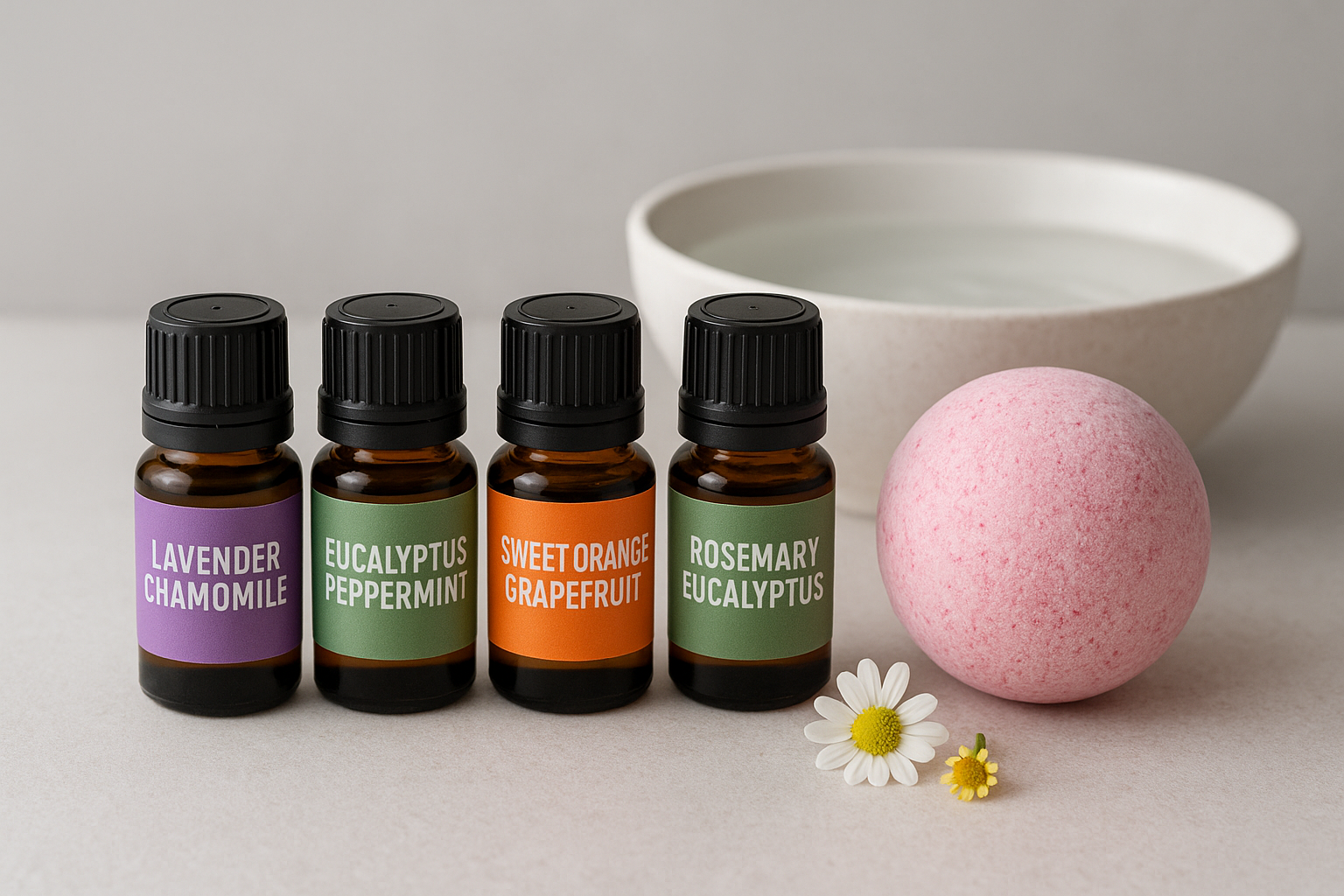
The right blend depends on the mood you're chasing, not just the scent you like best.
Citrus oils, sweet orange, grapefruit, lemon myrtle, lift a flat mood and work well when you need energy rather than sedation. Rosemary and eucalyptus together target sore, tired muscles after a long day on your feet.
| Blend | Effect | Best for |
|---|---|---|
| Lavender, chamomile | Calming, sedative | Evening wind-down |
| Eucalyptus, peppermint | Clearing, invigorating | Congestion, mornings |
| Sweet orange, grapefruit | Uplifting | Low mood, dull days |
| Rosemary, eucalyptus | Muscle relief | Post-exercise soreness |
Good aromatherapy bath bombs rarely mix more than two or three oils, since overloading a blend usually dilutes the therapeutic effect rather than strengthening it.
How to use bath bombs for the best soak
Getting the water and timing right
Draw the bath before you drop the bomb in, filling it warm rather than scalding, since heat that's too high strips natural oils from your skin instead of letting them absorb. Wait until the tub's nearly full, then drop the bomb in and let it fizz out completely before you step in, so the essential oils disperse evenly through the water rather than clinging to one spot (how long bath bombs last in water is usually only a minute or two). Fifteen to twenty minutes is the sweet spot for a proper soak, long enough for the warmth to loosen muscles and the scent to do its work on your nervous system.
A rushed five-minute dip won't give the oils time to work on your skin or your mood.
Setting up the ritual around it
Switch your phone to silent, dim the lights, and treat the soak as deliberate downtime rather than something squeezed between chores. Breathing matters too: take a few slow inhales over the water as the bomb dissolves, since that's when the aromatic compounds are strongest. Pat your skin dry afterwards instead of rubbing, so the nourishing oils from the bomb stay on rather than getting towelled straight off.
What to look for in natural, skin-friendly ingredients
Skin-nourishing bases to check for
Good aromatherapy bath bombs rest on a nourishing base, not just fizz and fragrance. Look for shea butter, cocoa butter, or coconut oil listed near the top of the ingredients, since these are what stop your skin feeling tight and dry once you're out of the tub. Sodium bicarbonate and citric acid create the fizz itself, which is fine and expected, but they shouldn't be the only thing doing work in the water, the same test that separates the best natural bath soaks from the filler-heavy ones.
The fizz is theatre, the oils and butters are the therapy.
Ingredients worth avoiding
Synthetic dyes and glitter look pretty in photos but often irritate sensitive skin and leave a ring around your tub. Steer clear of bath bombs padded out with cheap fillers or artificial colourants when you can, especially if you're prone to eczema or general skin sensitivity, and check which bath bomb ingredients to avoid for sensitive skin before you soak.
- Vague "fragrance" or "parfum" instead of named essential oils
- Mineral oil or synthetic emulsifiers
- Plastic glitter rather than biodegradable shimmer
- Artificial dyes that stain the tub or your skin
Checking these details takes seconds but saves you from a soak that irritates rather than soothes.
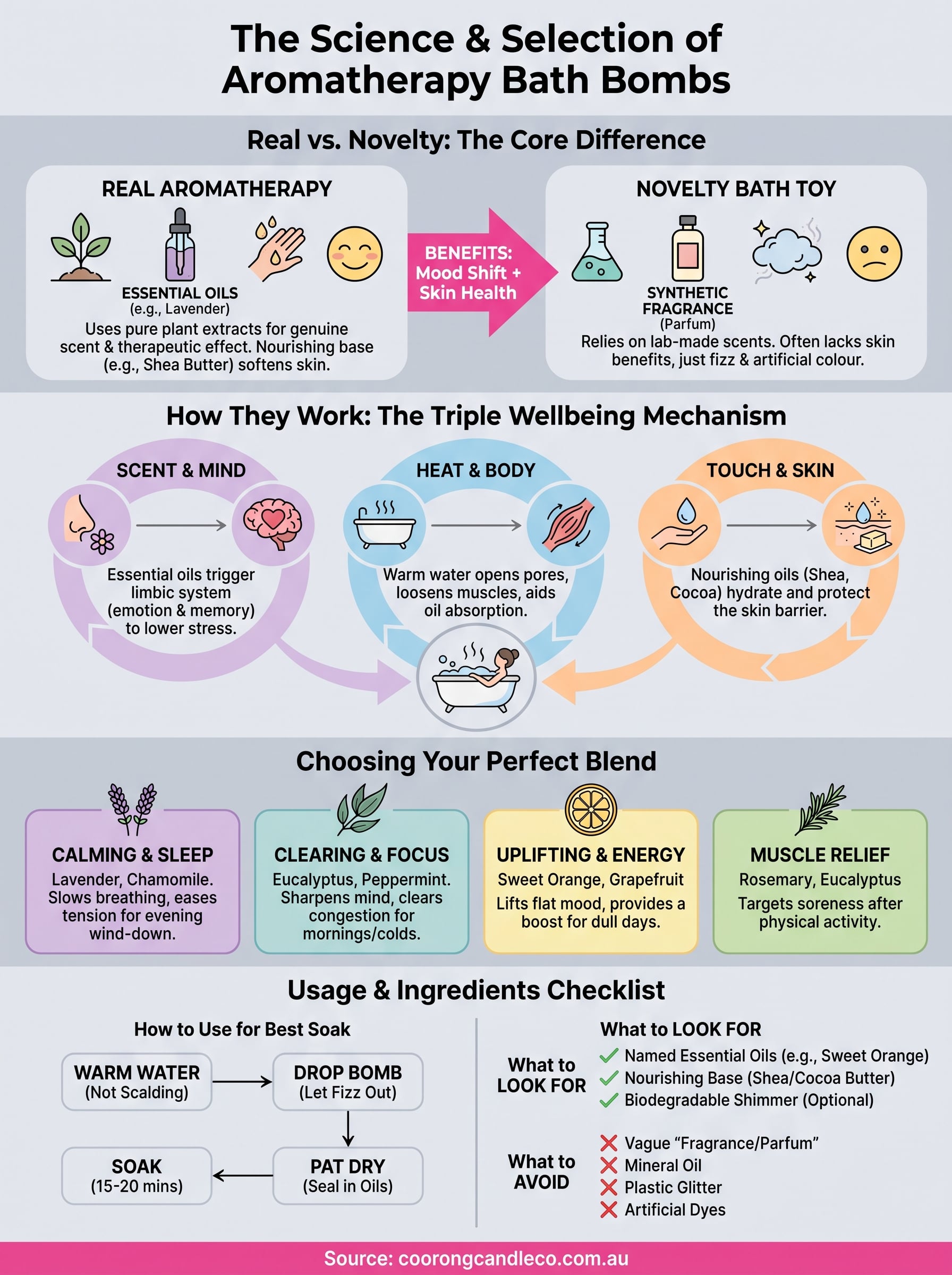
Finding your perfect soak
Getting bath bombs aromatherapy right comes down to reading the label, not the packaging photos. Named essential oils, a proper nourishing base like shea or cocoa butter, and a blend that matches what you actually need that evening, calming, clearing, or lifting, that's the whole game. Skip anything hiding behind "fragrance" with no named oils, because that's a bath toy wearing an aromatherapy label.
Once you know what to look for, choosing gets easy. Try a lavender blend on a stressful Tuesday, switch to citrus when your mood's flat, and keep eucalyptus on hand for the next cold that comes through. Your bathroom shelf should have options for different moods, not just one bomb that smells nice.
Ready to build that shelf properly? Shop our handmade bath bombs, each one made in small batches with real essential oils and skin-nourishing butters, ready for your next proper soak.