
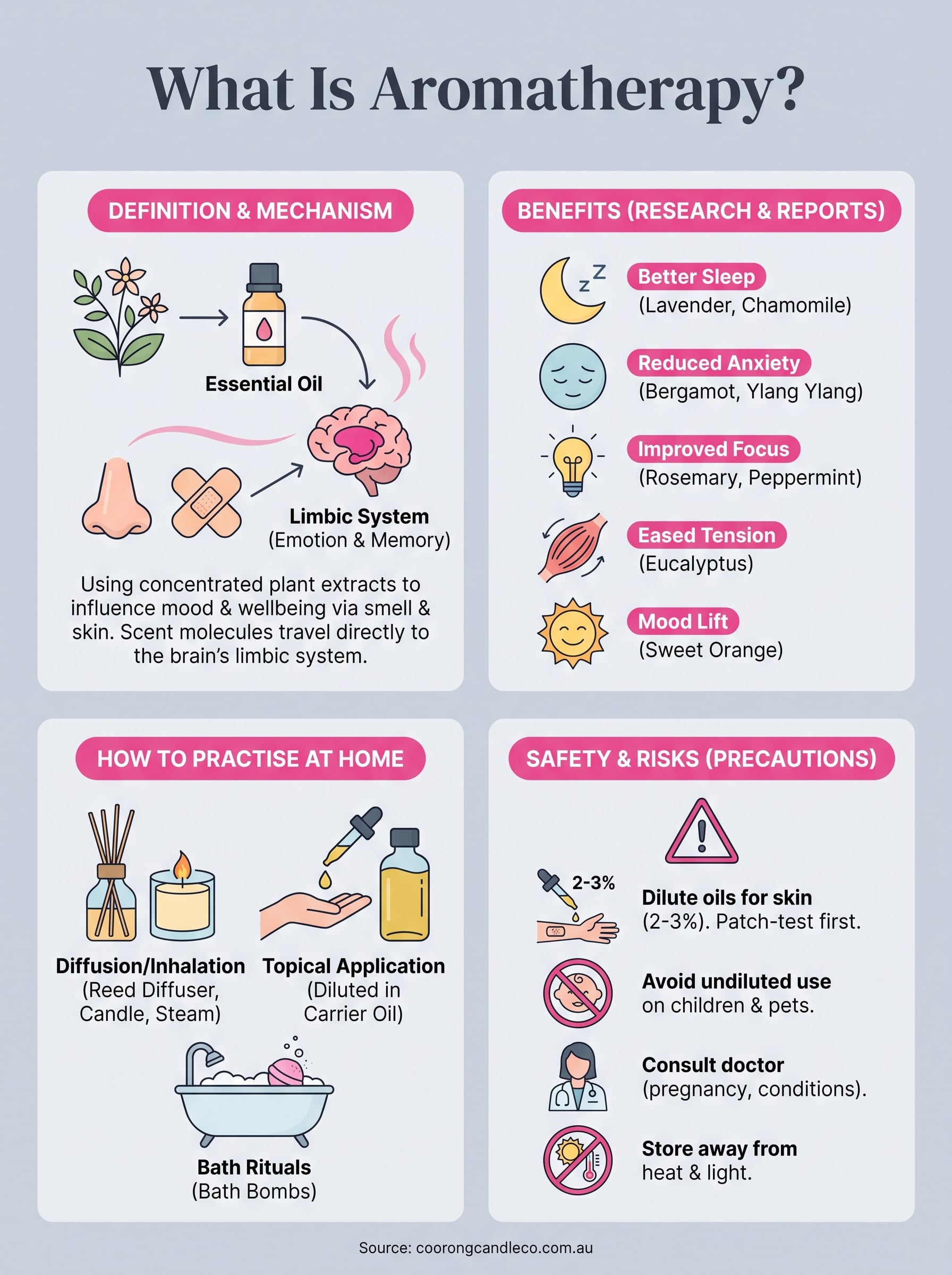
So you keep hearing the word tossed around, on candle labels, spa menus, and wellness blogs, but you want an actual answer. What is aromatherapy, really, beyond a nice-smelling room? At its core, it's the practice of using concentrated plant extracts, mostly essential oils, to influence mood, stress levels, and physical wellbeing through smell and skin absorption. It's not just a marketing word slapped on a candle jar, though plenty of brands use it that way.
Aromatherapy works because scent molecules travel directly to the parts of your brain that manage emotion and memory, which is why a whiff of lavender can calm you faster than almost anything else you try. Used properly, it's linked to better sleep, lower anxiety, and eased tension, though it does carry some real risks if oils are misused or applied undiluted.
Below, we'll walk through how aromatherapy actually works in the body, the benefits backed by research, the risks worth knowing before you dive in, and simple ways to bring it into your own home, including through the kind of hand-poured soy candles we make here at Coorong Candle Co., inspired by South Australia's own landscape.
Why aromatherapy matters for your wellbeing
Understanding what is aromatherapy in practice means looking at why it actually works, not just what it smells like. Your sense of smell is wired directly into the limbic system, the part of your brain that handles emotion, memory, and stress response, with no detour through conscious thought first. That's why a scent can pull up a memory or shift your mood before you've even registered what you smelled. Aromatherapy uses this shortcut deliberately, choosing specific plant compounds to nudge your nervous system towards calm, focus, or energy depending on what you need.
The science behind scent and mood
Research backs up plenty of what practitioners have claimed for years, though the strength of evidence varies by oil and outcome. Lavender oil has been studied for its effect on anxiety and sleep quality, with several clinical trials showing measurable drops in cortisol and improved self-reported rest. Citrus oils like bergamot and sweet orange show promise for lifting mood and easing mild stress, while peppermint has demonstrated modest benefits for alertness and headache relief. The Cleveland Clinic notes that while aromatherapy isn't a substitute for medical treatment, it can be a useful complement to conventional care, particularly for stress and sleep-related complaints (https://health.clevelandclinic.org).
Scent bypasses logical thought and speaks directly to the part of your brain that controls how you feel.
Everyday benefits you can actually feel
Most people don't need a lab study to notice the difference; they need a stressful day, a lit candle, and ten minutes to themselves. The physical and emotional benefits people report most consistently fall into a few clear categories:
| Benefit | Common oils used | How it helps |
|---|---|---|
| Better sleep | Lavender, chamomile, sandalwood | Lowers heart rate and promotes relaxation before bed |
| Reduced anxiety | Bergamot, frankincense, ylang ylang | Calms nervous system response to stress triggers |
| Improved focus | Rosemary, peppermint, lemon | Stimulates alertness and mental clarity |
| Eased tension | Eucalyptus, marjoram, clary sage | Supports muscle relaxation and easier breathing |
| Mood lift | Sweet orange, grapefruit, geranium | Encourages a lighter, more positive emotional state |
None of these are miracle cures, and it's worth being upfront about that. What they offer is a low-cost, low-risk ritual you can build into an already busy life, whether that's five minutes with a diffuser before a meeting or a candle burning while you unwind after work.
Why this matters beyond the scent itself
Slowing down to notice a smell, breathe deliberately, and give yourself a moment is arguably as valuable as the oil itself. Wellbeing isn't only about chemistry; it's about building small pauses into your day that signal to your body it's safe to relax. That's the real reason aromatherapy has stuck around for centuries, long before essential oils had peer-reviewed studies behind them, and it's why so many Australians are folding it into home routines rather than treating it as an occasional spa indulgence.
How to practise aromatherapy at home
Once you understand what is aromatherapy on a basic level, the next question is how you actually use it without turning your lounge room into a science lab. You don't need a cabinet full of oils or a diffuser with twelve settings. Most people get real benefit from just one or two simple delivery methods used consistently, rather than a dozen products used once and forgotten in a drawer.
Diffusion and inhalation methods
The easiest entry point is inhalation, either through a reed diffuser, an electric oil diffuser, or simply a lit candle with a well-blended fragrance. Steam inhalation, where you add a few drops of oil to hot water and breathe in the vapour, works well for congestion and quick stress relief but isn't something you'd do daily. A reed diffuser or soy candle offers a gentler, ongoing release of scent that suits a bedroom or living space far better than an intense burst.
The simplest aromatherapy habit is often the one you actually stick with, not the most elaborate one.
Topical application and bath rituals
Applying oils to skin requires proper dilution in a carrier oil, which we'll cover next, but bath products sidestep that risk entirely. A bath bomb infused with essential oils lets you soak in warm water while the scent works through inhalation and gentle skin contact, without you needing to measure dilution ratios yourself.
Building a simple daily routine
Consistency matters more than variety. Try this basic structure:
- Morning: a citrus or peppermint diffuser blend for 10 to 15 minutes while you get ready
- Midday: a quick hand rub with a diluted rollerball if you need a reset
- Evening: a lavender or sandalwood candle lit an hour before bed
- Weekly: one longer bath ritual with a scented bath bomb for deeper relaxation
This kind of layered routine doesn't require much effort or expense, and it's exactly how most Australians who use aromatherapy at home actually approach it, treating scent as a small daily anchor rather than an occasional indulgence.
Choosing the right essential and carrier oils
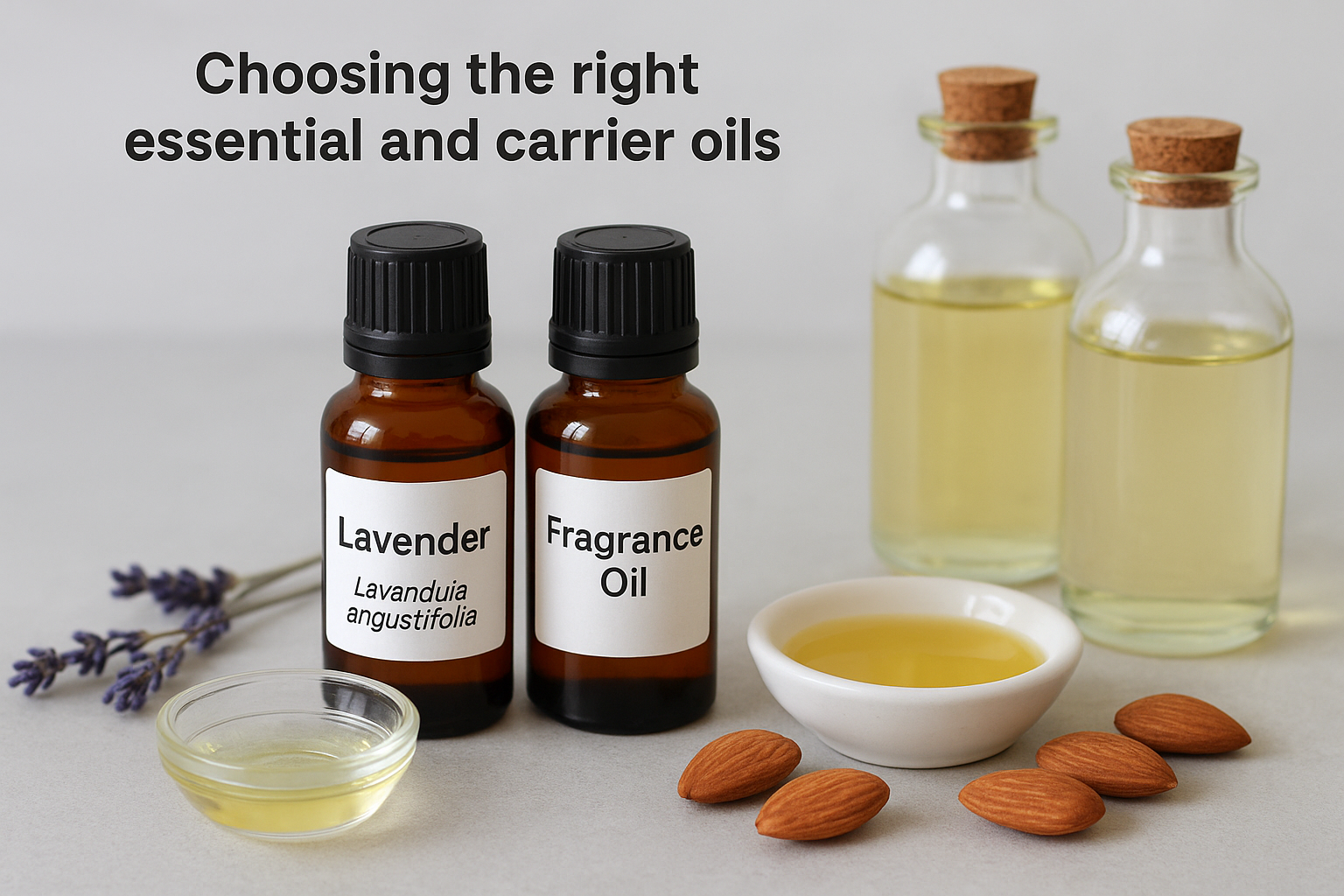
Getting a good result from aromatherapy depends heavily on the quality of oils you buy, not just the scent you pick. A cheap synthetic "fragrance oil" labelled as lavender won't give you the same calming effect as a genuine essential oil, because it lacks the natural compounds your brain actually responds to. Knowing the difference is the practical side of understanding what is aromatherapy beyond theory.
Reading labels and checking purity
Hold up two bottles side by side and you'll often see the trick straight away: one lists a botanical name like Lavandula angustifolia, the other just says "fragrance oil" with no origin at all. Genuine essential oils should show the Latin plant name, extraction method, and country of origin. If a bottle only promises a scent with no botanical detail, treat it as a candle or air freshener ingredient, not a therapeutic one.
A real essential oil tells you exactly what plant it came from; a fragrance oil never does.
Matching carrier oils to your skin
Essential oils are far too concentrated to apply directly to skin, which is where carrier oils come in. They dilute the essential oil and carry it safely across your skin without irritation.
| Carrier oil | Texture | Best for |
|---|---|---|
| Sweet almond oil | Light, fast-absorbing | Everyday massage and body oils |
| Jojoba oil | Silky, close to skin's natural oil | Sensitive or acne-prone skin |
| Coconut oil (fractionated) | Very light, non-greasy | Warm climates, quick absorption |
| Rosehip oil | Rich, slightly heavier | Dry skin and scar-prone areas |
Beginners do best sticking with sweet almond or jojoba oil, since both suit most skin types and rarely trigger reactions. Choosing well here matters just as much as choosing the right essential oil, because a poor carrier can undo any benefit the scent might offer.
Safety precautions and possible risks
Knowing what is aromatherapy also means knowing where it can go wrong. Essential oils are potent plant chemistry, not harmless water with a nice smell, and treating them casually is where most problems start. Undiluted oil on skin, oils near open flames, or oils used around pets and small children can cause real harm, not just mild irritation.
Dilution and skin reactions
Applying essential oil directly to skin is the most common mistake beginners make. Even oils considered gentle, like lavender or tea tree, can cause redness, burning, or an allergic reaction if used at full strength. Always dilute in a carrier oil at roughly 2 to 3 percent for adults, patch-test on your inner arm first, and stop immediately if you notice stinging or a rash.
No essential oil is too gentle to skip the patch test.
Who needs to be extra careful
Certain groups face higher risk and should check with a doctor before starting any routine. Pregnant women, people with asthma, epilepsy, or existing skin conditions, and anyone on medication should get medical advice first, since some oils interact with drugs or trigger reactions in sensitive airways. The Australian Department of Health advises caution with complementary therapies alongside prescribed treatment, particularly for chronic conditions.
Pets, children, and household hazards
Households with cats, dogs, or young kids need extra vigilance, since animals metabolise oils very differently from humans and children can react strongly to small amounts.
- Never apply undiluted oil to a child under two
- Keep diffusers out of reach of curious toddlers and pets
- Avoid tea tree, eucalyptus, and citrus oils around cats specifically
- Store bottles away from heat and direct sunlight to prevent degradation
Getting these basics right doesn't take much effort, and it's what separates a genuinely beneficial ritual from one that lands you at the pharmacy instead of feeling relaxed.
Popular scents and what they're used for
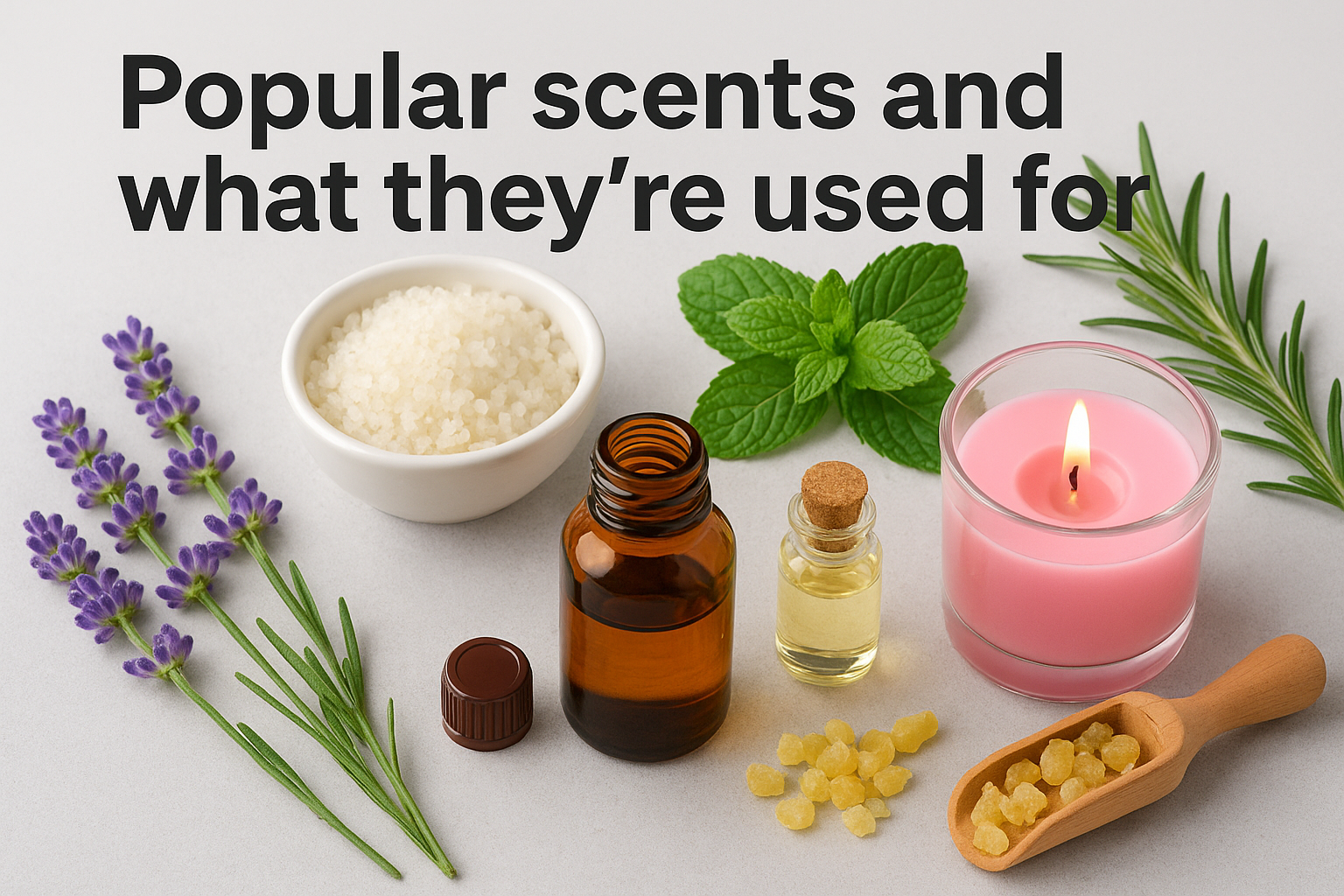
Every essential oil carries its own chemical fingerprint, which is why lavender calms you down while peppermint wakes you up. Once you understand what is aromatherapy at a practical level, picking scents becomes less about preference and more about matching the oil to the outcome you actually want. South Australian producers, ourselves included, often lean into native and regional botanicals alongside the classics, giving familiar scents a distinctly local character.
Calming and grounding scents
Lavender remains the benchmark for relaxation, but it's far from the only option worth keeping on hand. Sandalwood and frankincense add a warm, grounding base that works well in evening rituals, while chamomile suits anyone sensitive to stronger floral notes. Vetiver, though less common, offers an earthy depth that pairs beautifully with lavender in a bedtime blend.
Calming scents work best when they smell familiar enough to feel safe, not just pleasant.
Energising and uplifting scents
Citrus oils dominate this category for good reason. Bergamot, sweet orange, and grapefruit all deliver a quick mood lift without the jitteriness caffeine brings, making them a solid mid-afternoon pick-me-up. Rosemary and peppermint add mental clarity on top of the mood boost, which is why they turn up so often in study or work-from-home blends.
Quick reference: scent and purpose
| Scent | Best used for | Time of day |
|---|---|---|
| Lavender | Sleep, anxiety relief | Evening |
| Bergamot | Mood lift, mild stress | Midday |
| Peppermint | Focus, headache relief | Morning |
| Sandalwood | Grounding, meditation | Evening |
| Eucalyptus | Congestion, muscle tension | Any time |
| Geranium | Emotional balance | Afternoon |
Regional and seasonal blends
Many Australians now match scent choices to place and season rather than sticking to one signature fragrance year-round. A Barossa-inspired blend of grape leaf and fig suits warmer months, while something closer to Kangaroo Island's coastal eucalyptus feels right in winter. Bringing that sense of place into a candle or diffuser is exactly why regional collections have caught on so strongly here.
Finding your own aromatherapy ritual
Now you've got a real answer to what is aromatherapy, not just a vague notion tied to candle marketing. It's a practice grounded in genuine plant chemistry, with real benefits for sleep, stress, and focus, provided you respect the risks and dilute properly. The oils, the science, and the safety rules all matter, but so does the simple act of choosing a scent that feels right for your space and your week.
Start small. Pick one method, whether that's a diffuser, a bath ritual, or a candle burning while you wind down, and let it become a habit before adding more. Consistency beats variety every time. If you're ready to build your own ritual around scents inspired by South Australia's landscape, explore our range of handmade soy candles and find the fragrance that suits your home best.