
Your reed diffuser has gone quiet. The scent that used to greet you at the front door has faded, but the bottle and reeds still look fine, so buying a whole new diffuser feels wasteful. This is exactly where diffuser reed refills come in, and getting the right one matters more than most people realise, because not every refill oil is designed for the same reeds or the same room size.
If you're searching for a way to top up your diffuser without starting from scratch, the answer is a refill oil formulated for reed diffusion, ideally matched in fragrance strength and reed count to your existing set-up. For households going through fragrance quickly, a reed diffuser refill 1 litre bottle works out far more economical than buying small bottles every few weeks, especially once you compare cost per millilitre.
In this guide, we'll break down what a diffuser refill actually contains, how to tell when yours needs replacing, and what separates a genuinely good reed diffuser refill 1 litre cheap option from one that's cheap for a reason. We'll also cover how to choose scent strength, reed material, and bottle size so your Coorong Candle Co. diffuser keeps performing the way it did on day one.
Why topping up your reed diffuser is worth it
Most people replace their entire diffuser the moment the scent fades, without realising the glass vessel and reeds are reusable for years. Diffuser reed refills let you keep the bottle you already like and simply restore the fragrance oil inside it, which is both cheaper and less wasteful than buying a new set every time. If your diffuser still looks good and the reeds haven't gone brittle or clogged, there's no reason to throw the whole thing out.
The real cost of replacing a whole diffuser
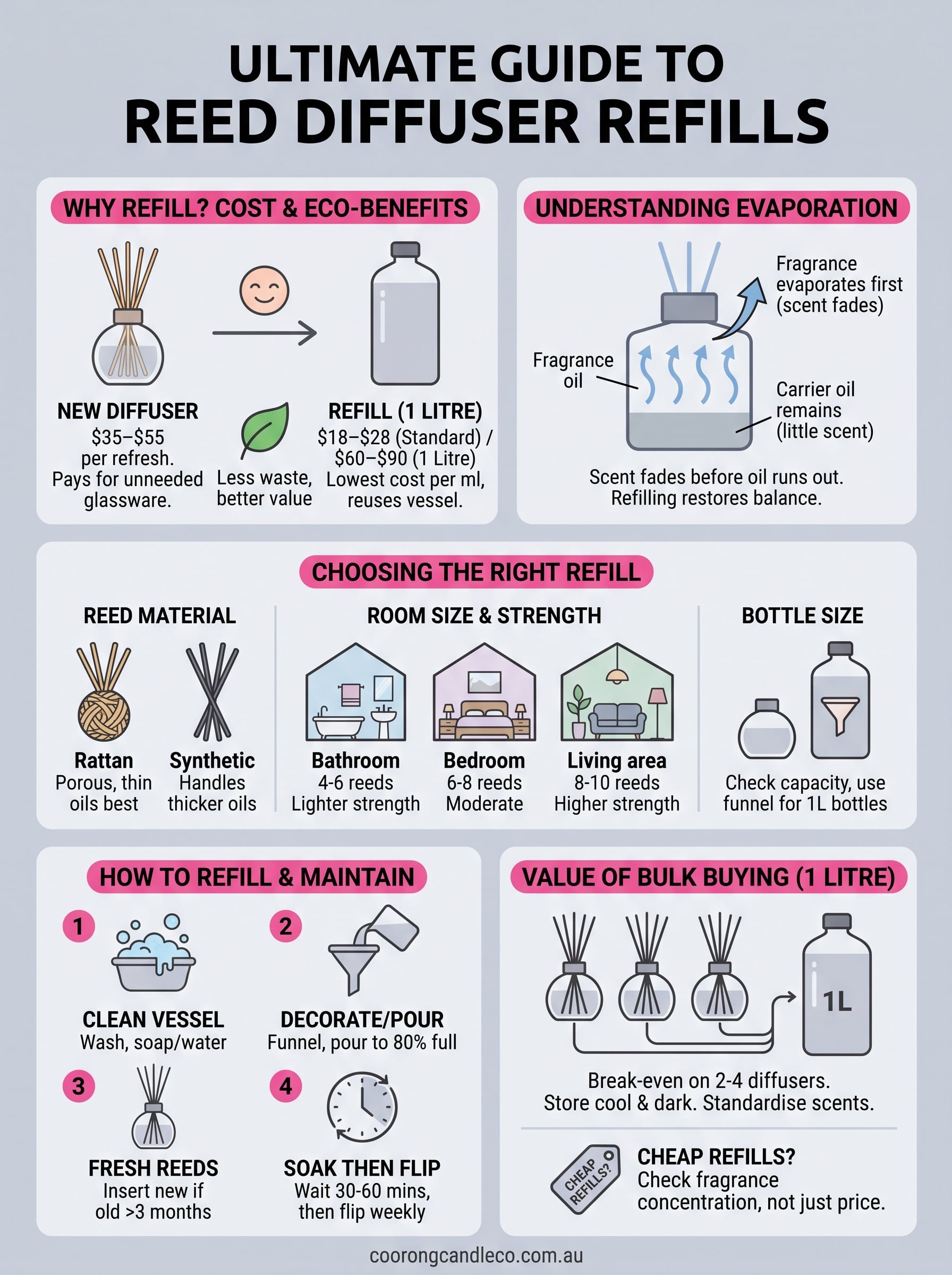
Buying a brand new diffuser every time the scent runs out adds up fast, especially if you're refreshing a few rooms in the house. A new glass vessel, reeds, and oil typically costs two to three times more than a straight oil refill, because you're paying for packaging and hardware you don't actually need again. Over a year of regular top-ups, that difference is significant.
| Approach | Approx. cost per refresh | What you're paying for |
|---|---|---|
| New diffuser set | $35–$55 | Glass vessel, new reeds, fragrance oil |
| Standard refill bottle | $18–$28 | Fragrance oil only |
| 1 litre refill (shared across rooms) | $60–$90 total | Fragrance oil in bulk, lowest cost per ml |
Topping up a diffuser you already own is almost always cheaper than replacing it outright.
Once you see the numbers side by side, it's obvious that repeat purchases of full diffuser sets are mostly paying for glassware you don't need twice.
What actually happens to fragrance oil over time
Reed diffusers don't stop working because they're broken. The fragrance oil evaporates gradually through the reeds, and the lighter aromatic compounds that carry most of the scent disappear first, leaving behind a weaker, flatter smell even though there's still liquid in the bottle. This is why a diffuser can look half full but barely throw any fragrance at all. Room temperature, airflow, and how often you flip the reeds all affect how quickly this happens, but every diffuser reaches this point eventually, usually somewhere between four and eight weeks depending on the room.
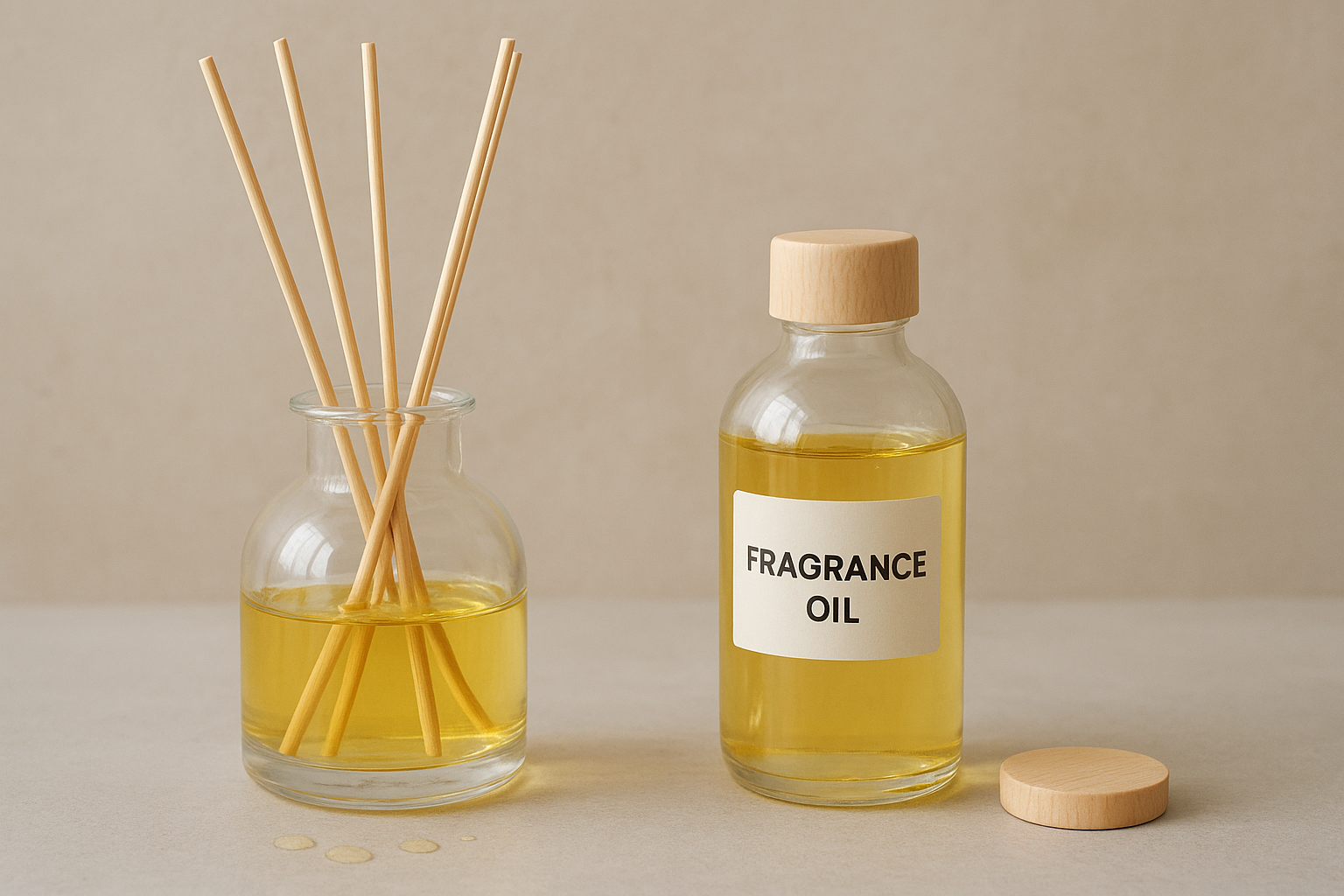
What's left behind in an old, tired diffuser is often just the carrier oil, which has little to no scent of its own. Pouring a proper refill in at this stage restores the balance between carrier and fragrance, and you'll usually notice the difference within a day as the reeds reabsorb the new oil and start carrying scent again.
The environmental case for topping up
Coorong Candle Co. leans on soy wax and lead-free wicks in its candles for the same reason topping up a diffuser makes sense environmentally: less glass, less packaging, and less product ending up in landfill for no good reason. Refilling instead of replacing cuts down on the glass vessels and reed sets that would otherwise be discarded, which matters if you're someone who already chooses natural, eco-conscious products elsewhere in the home. It's a small habit, but it adds up across a household that goes through several diffusers a year.
Buying refills also means you can standardise on scents you already know work in your space, rather than experimenting with a new bottle, new reeds, and a new scent throw every single time. Choosing the right refill, though, isn't just about grabbing any bottle labelled "diffuser oil", which is where the next section comes in.
How to choose the right reed diffuser refill
Not all bottles labelled "reed diffuser oil" are built the same, and grabbing whatever's cheapest online can leave you with a refill that barely scents a hallway, let alone a living room. Choosing the right refill means matching three things to your existing set-up: the reed material, the fragrance strength, and the bottle size. Get these wrong and you'll blame the refill when the real problem is a mismatch with your vessel or reeds.
Match the oil to your reed material
Rattan reeds and synthetic reeds pull oil differently, so a refill formulated for one won't always perform well in the other. Rattan is porous and works best with oils that have a slightly thinner viscosity, since thick oils can clog the natural fibres and slow the scent throw right down. Synthetic reeds, often used in longer-lasting diffuser kits, handle thicker, more concentrated oils without clogging, which is why swapping refill brands sometimes changes how strong your diffuser smells even with identical reeds.
Pick the right scent strength for the room
Strength matters more than most buyers expect, and it's the main reason a refill that worked beautifully in a small bathroom might do almost nothing in an open-plan living area. As a rough guide:
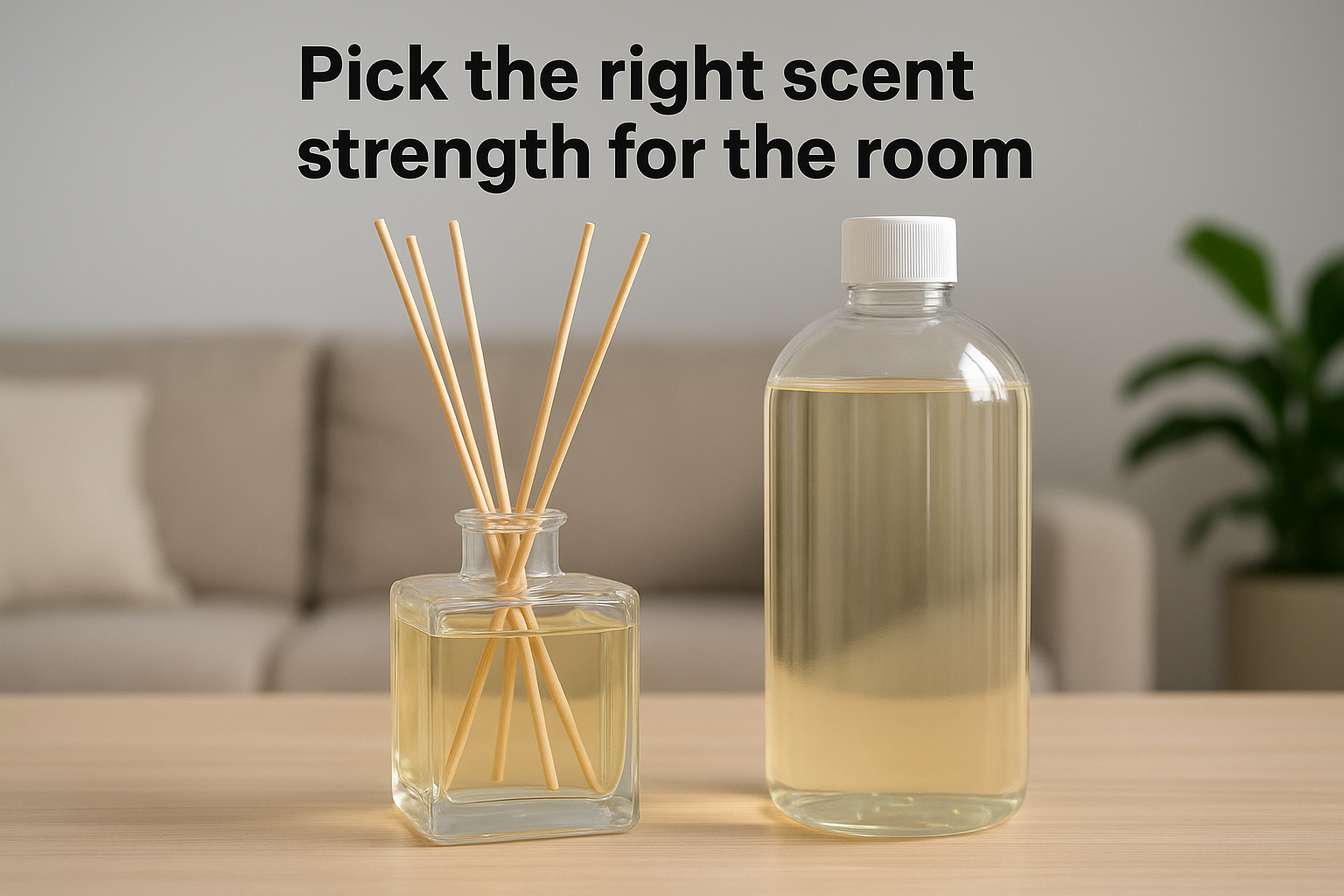
- Small rooms (bathrooms, hallways, offices): a lighter concentration and 4–6 reeds is usually enough.
- Medium rooms (bedrooms, studies): a moderate concentration with 6–8 reeds gives steady, even throw.
- Large or open-plan spaces: choose a higher-concentration refill and 8–10 reeds, or run two smaller diffusers instead of one.
A refill matched to your room size will always outperform one chosen on price alone.
Getting this right the first time saves you from buying a second bottle just weeks later because the scent never reached past the doorway.
Check bottle size against your vessel
Quantity is the part people overlook until they're standing over a vessel with oil dripping down the side. A standard reed diffuser vessel holds somewhere between 100ml and 200ml, so pouring straight from a full reed diffuser refill 1 litre bottle without decanting is asking for a mess. Buying in bulk still makes sense financially, especially if you're topping up multiple rooms, but it works best when you have a funnel or a smaller empty bottle on hand to portion it out. Sorting this out before you start refilling means the actual top-up, which we'll cover next, takes minutes rather than turning into a clean-up job.
How to refill and maintain your diffuser properly
Refilling a reed diffuser properly takes about five minutes, but skipping the prep steps is how people end up with a bottle that smells muddled or a scent throw that never quite recovers. Proper refilling starts before you pour a single drop, with a quick check of the vessel and reeds themselves, not just the new oil. Get this part right and your diffuser will smell as strong on day one hundred as it did fresh out of the box.
Clean the vessel before you pour
Old residue sitting at the bottom of the glass mixes with new fragrance oil and dulls the scent, so it pays to empty and rinse the vessel before topping up, especially if you're switching to a different fragrance. Warm water with a small amount of dish soap works fine, followed by a thorough dry, since any leftover water will dilute your new refill and throw off the fragrance balance. This step matters even more if you're swapping between different diffuser reed refills with distinct scent profiles, because leftover oil can carry a ghost of the old fragrance into the new one.
A clean vessel is the difference between a crisp new scent and a muddled one.
Follow a simple refill routine
Once the vessel is dry, the actual top-up is straightforward if you work through it in order:
1. Decant refill oil into a small pouring bottle or use a funnel if working from a 1 litre bottle.
2. Pour oil into the clean, dry vessel, filling to roughly 80% capacity.
3. Insert fresh reeds if the old ones are more than three months old or feel stiff.
4. Leave reeds to soak for 30–60 minutes before flipping for the first time.
5. Flip reeds weekly to keep fragrance circulating.
Following this order avoids the common mistake of flipping dry reeds straight away, which barely moves any scent into the room.
Know when reeds need replacing, not just oil
Reeds don't last forever, even with fresh oil going into the vessel. Rattan reeds harden and clog with dust and residue over months of use, and once that happens, no amount of refill oil will push through them properly. As a rule of thumb, replace reeds every three to four months, or sooner if you notice the scent staying weak even right after a top-up. Swapping tired reeds alongside your refill is a small habit that keeps the whole system performing the way it did when the diffuser was brand new.
Getting good value from 1 litre and bulk refills
Buying oil by the litre only makes sense once you know how you'll actually use it, and that's the part most guides skip over. A 1 litre refill is brilliant for households running several diffusers at once, or anyone refreshing rooms every four to six weeks, but it's a poor choice if you've only got one vessel and top up twice a year. Work out your real usage first, then decide whether bulk buying saves you money or just leaves oil sitting unused and slowly losing its scent strength.
When a 1 litre bottle actually pays off
Scale is where a reed diffuser refill 1 litre bottle earns its keep. Splitting one bottle across a hallway, bathroom, and living room diffuser brings the cost per millilitre down well below what you'd pay buying three separate 100ml bottles, and you're not restocking every month either. As a rough guide:
- One diffuser, occasional top-ups: a standard 100ml–200ml bottle is more practical.
- Two to four diffusers around the home: a 1 litre bottle usually breaks even within two or three refill cycles.
- Gifting or sharing with family: decanting from one large bottle into smaller containers works out cheaper than buying separate gifts.
Spotting a cheap refill that's cheap for the wrong reasons
Price alone tells you very little about what's inside the bottle. A reed diffuser refill 1 litre cheap listing can be a genuine bargain if the fragrance concentration matches what you're used to, but plenty of budget oils are diluted with extra carrier oil to hit a low price point, which means you'll be pouring more of it in for a weaker result. Check the listing for fragrance concentration or scent throw claims before buying purely on price, and be wary of bottles with no fragrance details at all.
Cheap only means good value if the concentration still does the job.
Storing bulk oil so it doesn't go to waste
Leftover oil from a large bottle won't stay fresh forever once it's opened. Store it somewhere cool and out of direct sunlight, with the cap tightened properly between uses, since heat and light both speed up evaporation of the lighter fragrance notes. Transferring smaller amounts into secondary bottles as you go, rather than leaving the full litre open and exposed each refill, keeps the remaining oil performing closer to how it smelled the day you bought it.
Keeping your home beautifully scented
A reed diffuser only needs two things to keep performing: fresh oil at the right strength, and reeds that haven't clogged up with age. Once you know how to match a diffuser reed refill to your reeds, room size, and vessel, topping up becomes a five-minute habit rather than a guessing game, and buying a reed diffuser refill 1 litre bottle stops feeling like a gamble and starts looking like the obvious money-saver it is.
The real win here is that you get to keep the glassware and reeds you already like, without the fading scent that made you consider replacing the whole thing in the first place. If your current vessel is past saving or you're ready to try a new fragrance altogether, browse Coorong Candle Co.'s reed diffuser range for South Australian scents that are just as easy to refill down the track.