
Not every soy candle on the market is actually a pillar candle, and not every pillar candle is actually soy. If you've spent twenty minutes scrolling through listings trying to work out which is which, you're not alone. Free-standing wax, no jar, no tin, just a solid block of scent sitting on your mantelpiece, that's the appeal of soy candles pillar styles, but picking a good one takes more than glancing at a product photo.
This guide is built for anyone searching for pillar soy candles with a genuine burn worth paying for, whether you're shopping local South Australian makers or comparing options nationally. We'll walk through what separates a candle that burns evenly for hours from one that tunnels, smokes, or collapses halfway through a dinner party.
You'll learn how to check wax purity, choose the right wick for soy candles at different pillar diameters, judge fragrance load without it turning synthetic, and spot the difference between genuine soy pillar candles australia makers produce and imported blends passed off as artisan. We'll also touch on what to look for if you're keen to pour your own at home.
What to know before you buy a soy pillar candle
Before you add anything to your cart, it helps to understand why pillar candles soy blends behave so differently from the jar candles most Australians grew up with. A jar candle has walls holding the wax pool in place as it melts, so the wax itself can stay fairly soft. A pillar has nothing but its own structure. If the wax is too soft, it slumps, bulges, or leans sideways within an hour of lighting. That's why straight soy wax rarely works alone in a freestanding shape, and why the best makers blend in small amounts of stearic acid or a vegetable-based hardener to keep the pillar upright through a full burn.
Understanding this changes what you look for on a product page. A candle marketed simply as "soy" tells you almost nothing about how it'll actually perform once it's out of the jar and standing on its own. You want a maker who's transparent about their wax blend, because that transparency usually signals they've tested the candle properly rather than copying a jar recipe and hoping it holds its shape.
A genuine soy pillar candle is a wax science problem before it's a fragrance one, if the structure fails, the scent never gets a chance to matter.
Pillar, jar, and tin candles compared
Since Coorong Candle Co. and most Australian makers sell across all three formats, from our hand-poured pillar candles to jars and tins, it's worth knowing how they differ before you decide which one actually suits your space.
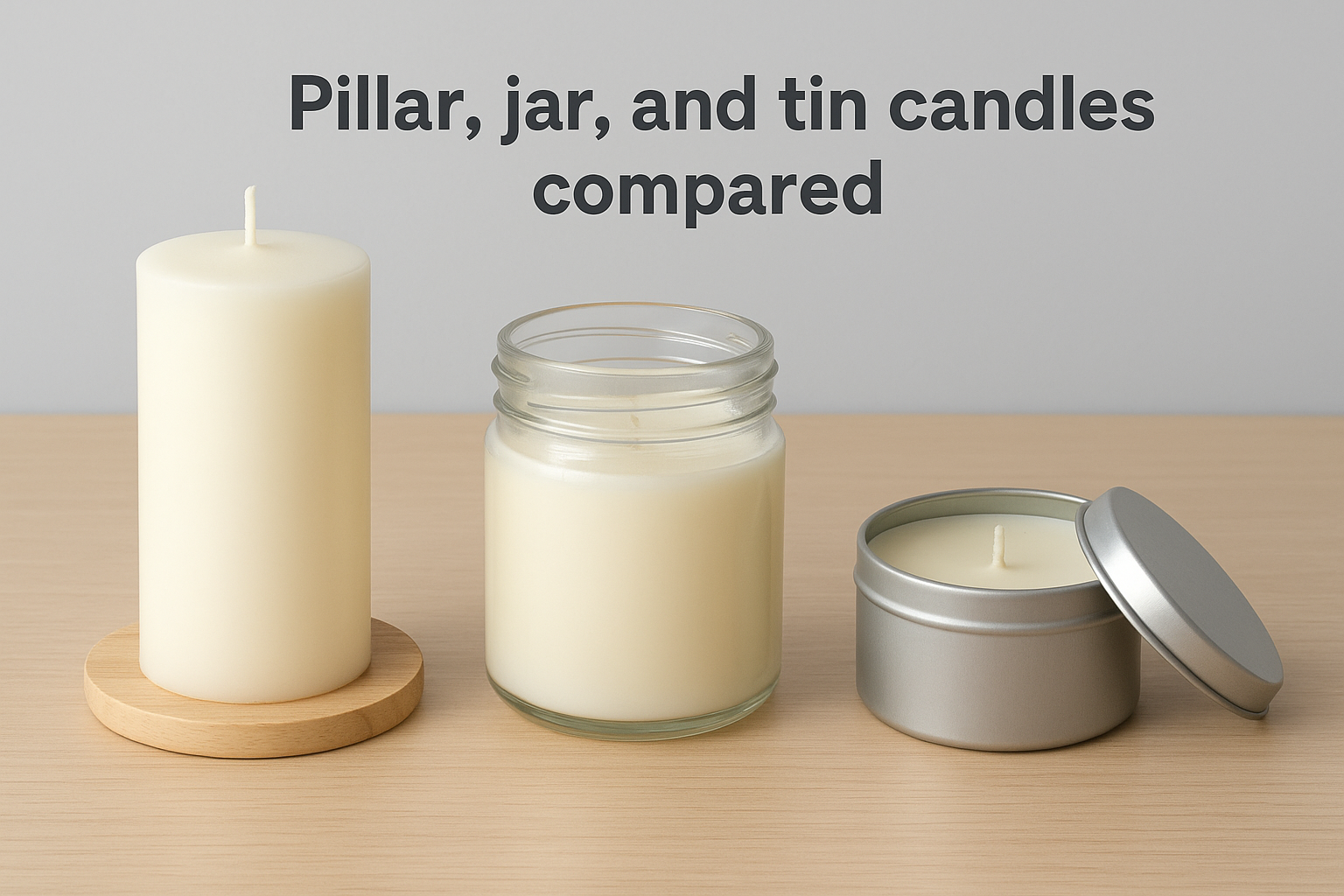
| Format | Wax needs | Typical burn | Best for |
|---|---|---|---|
| Pillar | Firmer soy blend, higher melt point | Even burn if wick matches diameter | Mantels, dining tables, display shelves |
| Jar candle | Softer soy wax, no additives needed | Long, consistent burn pool | Everyday ambient scenting |
| Travel tin (165g) | Similar to jar wax | Shorter burn, highly portable | Travel, gifting, smaller rooms |
Seeing the differences laid out like this, including the 165g soy travel candles in tins, makes it obvious why a pillar bought on looks alone can disappoint. It's not a smaller version of a jar candle, it's a different engineering challenge wearing the same soy label.
Thinking about where the candle will actually live also matters here. A pillar destined for a breezy verandah needs a firmer structure than one sitting undisturbed on an indoor shelf, and a maker who asks about that, or at least explains their wax firmness on the listing, is already ahead of most competitors selling generic imported stock.
Step 1. Confirm the wax is genuine soy
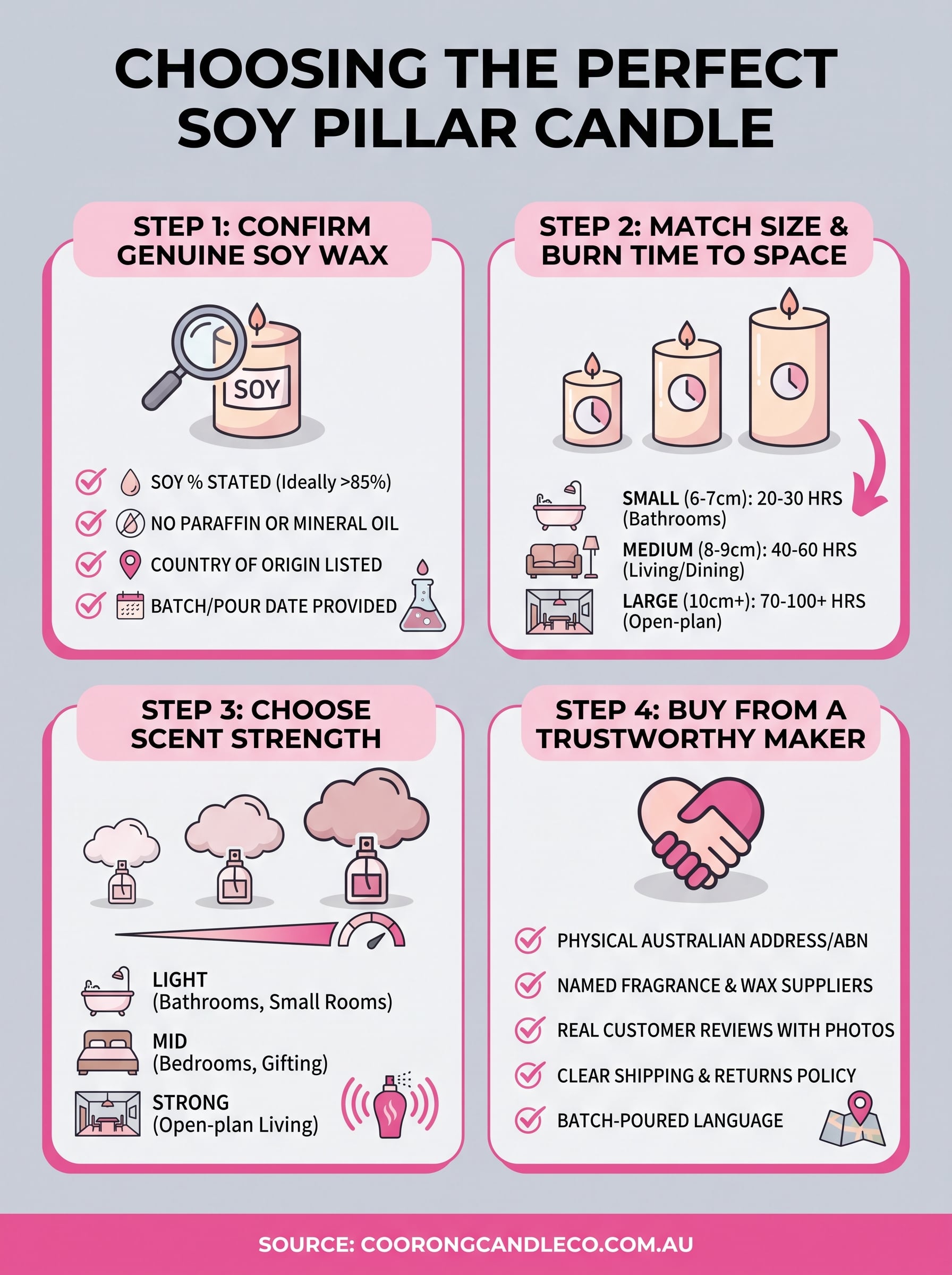
Check the ingredient list before anything else, because "soy blend" and "soy wax" aren't the same promise. Plenty of budget pillars are labelled soy when the base is actually a paraffin blend with a fraction of soy added for marketing purposes, and it's worth knowing the difference between soy and paraffin candles before you decide. Genuine soy pillar candles should list soy wax as the primary ingredient, often paired with a small percentage of a vegetable-based hardener like stearic acid to hold the pillar shape. If a listing hides behind vague terms like "natural wax blend" with no percentages, treat that as a red flag rather than reassurance.
If a maker can't tell you what's in the wax, they probably can't tell you how it'll burn either.
What to look for on the label
Run through this quick checklist before you buy:
- Soy percentage stated, ideally 85% or higher, with the remainder disclosed as a named hardener
- No mineral oil or paraffin listed unless clearly disclosed as a small structural additive
- Country of origin for the wax, not just where the candle was assembled
- Batch or pour date, which signals a maker tracking quality rather than shipping mystery stock
Australian-grown soybean crops feed most of the soy wax used locally, though plenty of raw wax is still imported and simply poured here, so origin claims deserve a second look.
Genuinely transparent sellers usually welcome the question if you email and ask what percentage of the pillar is soy versus hardener. Vague or defensive answers tell you plenty about how the rest of the buying experience will go, long before the candle ever arrives on your doorstep.
Step 2. Match the size and burn time to your space
Size isn't just about how a pillar looks on your shelf, it dictates how long you'll actually get to enjoy it. A wider diameter needs a bigger wick, or sometimes two, to melt the wax pool evenly right to the edge. Buy a narrow pillar with a single small wick and you risk tunnelling, where the centre burns down while a thick wall of unmelted wax stays standing around it, wasting most of what you paid for, though there are ways to fix candle tunneling once it starts.
Diameter also changes total burn time more than height does, since a wider candle holds more wax mass per centimetre of drop. Before buying, check the listing for an estimated burn time in hours, not just weight in grams, because how long soy candles burn by size varies enormously, and two 350g pillars of different shapes can last very different lengths of time.
Buy for the room you'll actually burn it in, not the photo you liked on the product page.
Pillar candle size and burn time guide
| Pillar size | Typical diameter | Estimated burn time | Best suited to |
|---|---|---|---|
| Small pillar | 6-7cm | 20-30 hours | Bathrooms, side tables |
| Medium pillar | 8-9cm | 40-60 hours | Living rooms, dining tables |
| Large pillar | 10cm+ | 70-100+ hours | Open-plan spaces, statement display |
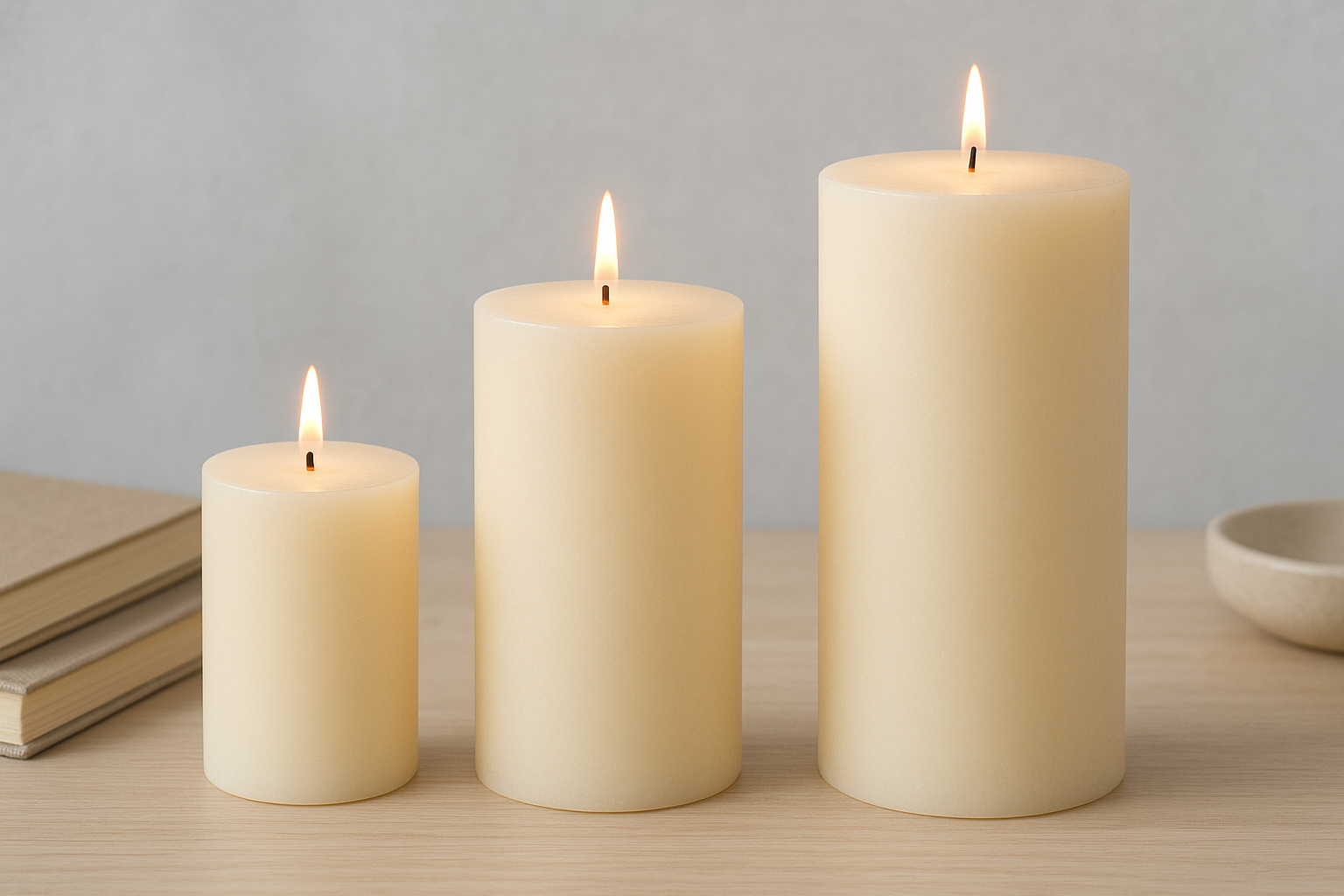
Consider, too, that a soy pillar candles australia shoppers pick for a breezy verandah or open living area will burn faster than the same candle in a closed bathroom, simply because airflow pulls more heat away from the wax pool. If you're buying as a gift and don't know the room it'll live in, a medium pillar is the safer, more universally useful choice.
Step 3. Choose a scent strength you'll love
Scent throw, the strength of fragrance a candle releases when lit, comes down to fragrance oil load rather than how strong a cold sniff of the wax seems in the jar before you buy. A pillar soy candles maker who cures soy candles for a week or two before selling will usually throw better than one who pours and ships the same day, because the oil needs time to bind properly with the wax. Cheaper listings sometimes oversell scent strength using synthetic fragrance oils at a high load, which can smell sharp or headachy in a closed room rather than pleasant.
The best test of scent strength isn't the sniff test in the jar, it's how the room smells twenty minutes after you blow the candle out.
Matching scent load to your room
Use this as a rough guide when comparing listings:
- Bathrooms and small rooms: a lighter fragrance load avoids overwhelming a small, enclosed space
- Open-plan living areas: look for a stated "strong throw" or higher fragrance percentage, since the scent disperses further, and see which candles fill a large room best
- Bedrooms: mid-strength scents work best, since you don't want something overpowering right before sleep
- Gifting: choose crowd-pleasing, less polarising scents like coastal, botanical, or subtle woody notes over anything heavily spiced or musky, or pick an indulgence gift set that pairs a candle with a diffuser and bath bomb
Regional collections tied to actual South Australian landscapes, think coastal brine, native eucalyptus, or Barossa Valley grape and oak notes, tend to sit in that pleasant middle ground rather than the artificial extremes some mass-market brands chase. Scent is personal, so if a maker offers sample sizes or a scent guide describing top, middle, and base notes, use it before committing to a full-sized pillar you might not love.
Step 4. Buy from a trustworthy Australian maker
Once you know what to look for in the wax, size, and scent, the last filter is the maker themselves. Small-batch producers who actually pour in Australia will happily show you photos of their workspace, list their location on the About page, and answer questions about ingredients without deflecting. Overseas dropshippers rebadging generic pillars rarely offer any of that, because there's no workshop behind the listing to show you, which is why it pays to seek out local candle makers near you.
A maker with nothing to hide about their process usually has nothing to hide about their wax either.
Signs you're buying from a genuine local producer
Run through this before checking out:
- Physical Australian address or ABN listed somewhere on the site, not just a vague "Australian owned" badge
- Named fragrance and wax suppliers, or at least a willingness to disclose them on request
- Real customer reviews with photos, showing the pillar as it actually arrives and burns
- Clear shipping and returns policy, since a maker confident in their product isn't afraid of a refund request
- Batch-poured, small-quantity language, rather than "in stock: 4,000 units"
At Coorong Candle Co., every pillar and jar candle is hand-poured in South Australia using renewable soy wax and lead-free cotton wicks, with fragrance profiles tied to real Coorong region landmarks rather than generic scent names pulled from a supplier catalogue. Browsing a maker's regional collections, like those inspired by Kangaroo Island or McLaren Vale, tends to tell you more about their authenticity than any marketing copy could, because the story either checks out or it doesn't. If a seller can't tell you where their soy wax is poured, that's usually answer enough.
Finding the right glow for your home
Choosing a good soy pillar candle comes down to four checks: real soy in the wax, a size matched to your room, a scent load that suits the space, and a maker willing to show their work. Skip any one of these and you're gambling on tunnelling, weak throw, or a pillar that slumps by dinner. Get them right and you end up with a candle that actually earns its spot on the mantelpiece, burning evenly and smelling like something worth lighting again.
If you're ready to see what genuine South Australian craftsmanship looks like, explore our handmade candles inspired by the Coorong and pick a fragrance tied to a landscape you actually love. Every pillar is poured in small batches, tested for burn quality, and backed by people happy to answer exactly the questions this guide told you to ask.